Thirumalapuram Rock-Cut Cave Temples

Two Pandyan-era rock-cut cave temples were hewn into the Varanasi hill around the 7th-8th century AD and are now protected by the Archaeological Survey of India.

Thirumalapuram Rock-Cut Cave Temples, Thirumalapuram
Practical guide

Plan Thirumalapuram Rock-Cut Cave Temples

Who's going?Tailor Thirumalapuram Rock-Cut Cave Temples to your trip
Typeheritage
Nearest baseThirumalapuram
DistrictTenkasi
Best timeChoose a cooler daylight visit and…
Time neededAllow about one to two hours at…
The story

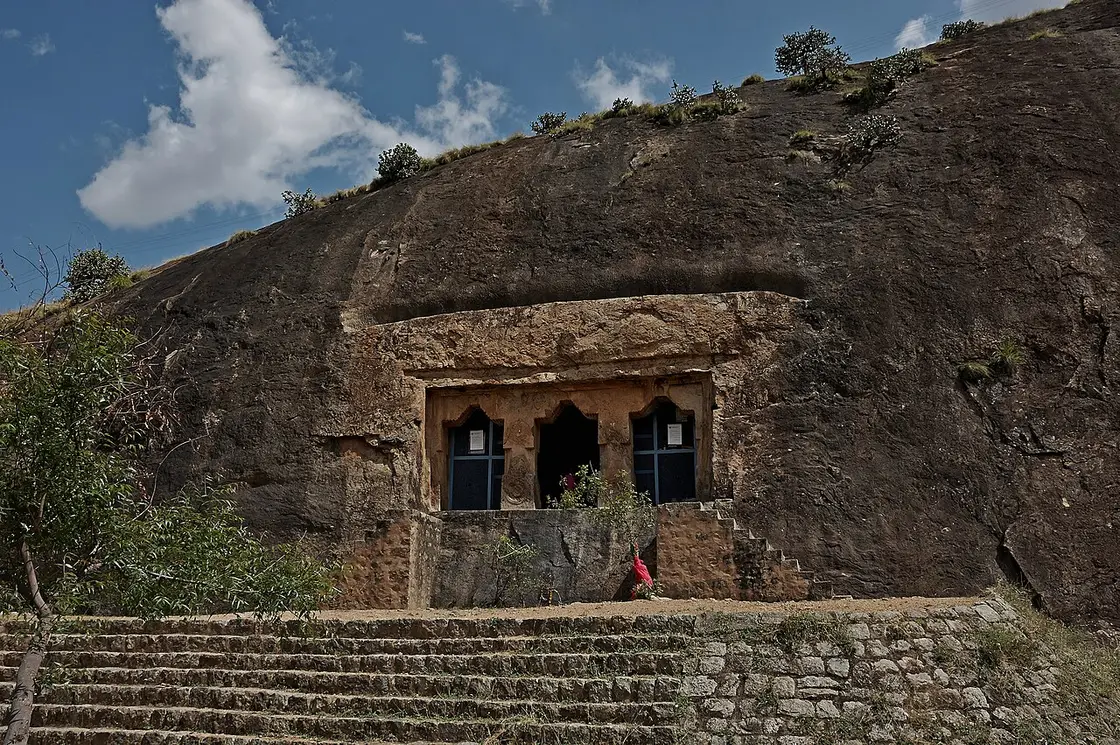
Two Pandyan-era rock-cut cave temples were hewn into the Varanasi hill around the 7th-8th century AD and are now protected by the Archaeological Survey of India. The finished cave holds a rectangular ardha-mandapa with bas-relief sculptures of Shiva, Brahma, Vishnu, Nataraja and Vinayaka, along with two Pandyan-period inscriptions. Neolithic tools and Iron Age burial finds nearby, linked to the Adichanallur culture, point to very ancient human habitation at the site.

The story of Thirumalapuram Rock-Cut Cave Temples

For Thirumalapuram Rock-Cut Cave Temples, two Pandyan-era rock-cut cave temples were hewn into the Varanasi hill around the 7th-8th century AD and are now protected by the Archaeological Survey of India. For Thirumalapuram Rock-Cut Cave Temples, the finished cave holds a rectangular ardha-mandapa with bas-relief sculptures of Shiva, Brahma, Vishnu, Nataraja and Vinayaka, along with two Pandyan-period inscriptions. For Thirumalapuram Rock-Cut Cave Temples, neolithic tools and Iron Age burial finds nearby, linked to the Adichanallur culture, point to very ancient human habitation at the site. For Thirumalapuram Rock-Cut Cave Temples, this is a living place of worship, so its architecture and history should be read without turning devotional tradition into proven chronology.

A sensible plan for Thirumalapuram Rock-Cut Cave Temples begins in Thirumalapuram: settle the return journey, carry water and keep time in reserve for a closed gate or a slower rural road. For Thirumalapuram Rock-Cut Cave Temples, do not infer toilets, food, parking or step-free access from the existence of a map pin.

At Thirumalapuram Rock-Cut Cave Temples, the most important distinction is between inscription or documented patronage and the traditions through which devotees understand the shrine. For Thirumalapuram Rock-Cut Cave Temples, both belong in the story, but a belief, healing claim or foundation legend should remain clearly labelled as tradition.

Do not make Thirumalapuram Rock-Cut Cave Temples responsible for an overfilled district itinerary. For Thirumalapuram Rock-Cut Cave Temples, one carefully observed visit, followed by a meal or transport break in Thirumalapuram, is more reliable than assuming several rural sites share the same hours and facilities.
Read the full history of Thirumalapuram Rock-Cut Cave Temples 59 more words

Why visit

Visit Thirumalapuram Rock-Cut Cave Temples for the specific surviving archaeological evidence and its setting described on this page, rather than as a generic stop in Tenkasi.

The most useful visit combines close observation at Thirumalapuram Rock-Cut Cave Temples with a realistic return plan through Thirumalapuram; it does not depend on an unverified ticket, unrestricted access or a promised experience.

What to expect

Highlights

  • Read the defining shrine and living worship tradition of Thirumalapuram Rock-Cut Cave Temples.
  • Understand how Thirumalapuram Rock-Cut Cave Temples belongs to Thirumalapuram and Tenkasi rather than treating it as an isolated map pin.
  • Separate documented evidence from local tradition, later alteration and unsupported online claims.
Getting there

How to visit

  • Reach Thirumalapuram, then enter Thirumalapuram Rock-Cut Cave Temples through the public worship entrance indicated locally.
  • Plan around the shrine's published worship sessions and allow for footwear storage, security checks and festival queues.
  • Keep the return journey separate from darshan time, especially for an evening visit.
Timing

Best time

Choose a cooler daylight visit and verify the current operating or worship session for Thirumalapuram Rock-Cut Cave Temples; festivals, maintenance and weather can change access.

Weather in Thirumalapuram Rock-Cut Cave TemplesSeasonal guide

Live forecast loads in your browser.

Today at Thirumalapuram Rock-Cut Cave Temples
Sunrise6:08 am
Sunset6:03 pm
Golden hour best light5:03 pm–6:03 pm
Blue hour after sunset6:03 pm–6:28 pm
Sun sets toward compass bearingW · 261°
Moon tonight🌒 Waxing crescent · 24%

Sun and moon are calculated for this location and shown in IST. Photography windows are the hour around sunrise and sunset; the sunset bearing is degrees clockwise from true north. Moon phase is accurate to about half a day.

Visitor notes

  • Confirm the exact visitor entrance, current access and last safe return from Thirumalapuram Rock-Cut Cave Temples on the day of travel.
  • Ask before photographing interiors, worship, residents or working areas at Thirumalapuram Rock-Cut Cave Temples.
Safety

Good to know

  • Obey barriers and staff instructions at Thirumalapuram Rock-Cut Cave Temples; do not climb structures, enter restricted ground or block worship and working access.
  • Use suitable footwear, carry water and keep enough daylight for the return to Thirumalapuram.
Stay · eat · do · rent · see · shop

Stays, food & things to do near Thirumalapuram Rock-Cut Cave Temples

Verified hotels, homestays, restaurants, experiences, sights, shops and rentals around Thirumalapuram Rock-Cut Cave Temples — commission-free, with direct contact. Filter by what you need.

Verified inventory is being added here.

Verified places are being added. The category filters will fill in as approved stays, restaurants, experiences, sights, shops and nature listings go live.

List your place

Roampedia is commission-free — own or know a stay, eatery, guide or shop near Thirumalapuram Rock-Cut Cave Temples? List it and it appears here once verified.

Add a nearby business
Before you go

Thirumalapuram Rock-Cut Cave Temples — at a glance

TimingsUse Thirumalapuram Rock-Cut Cave Temples's published worship schedule and expect festival days to alter queues or visitor movement.
Best timePrefer a cooler daylight session and recheck current access on the day.
Getting here

How to reach Thirumalapuram Rock-Cut Cave Temples

Reach Thirumalapuram, follow the map link to Thirumalapuram Rock-Cut Cave Temples, and use the entrance indicated for worshippers and visitors.

Do

Things to do

  • Identify the feature that gives Thirumalapuram Rock-Cut Cave Temples its visitor value.
  • Read the site in relation to Thirumalapuram and Tenkasi.
  • Distinguish documented history from living tradition and later alteration.
  • Combine it only with genuinely nearby stops that preserve a safe return margin.
Plan

Good to know

  • Save the route offline before leaving Thirumalapuram.
  • Carry water and sun or rain protection.
  • Accept an exterior-only visit when current access does not permit entry.
Facilities

On site

  • Use refreshments and toilets in Thirumalapuram before the visit if needed, and respect Thirumalapuram Rock-Cut Cave Temples's rules for food and drinking water in worship areas.
  • Use the shrine office or staff on duty for darshan, offerings or accessibility assistance.
Stay safe

Safety

  • Follow current site, worship and security instructions.
  • Do not cross barriers, climb structures or enter unstable, private or restricted ground.
  • Keep enough daylight and transport margin for the return to Thirumalapuram.
Getting around Thirumalapuram Rock-Cut Cave Temples

If you need step-free access, contact the site before travelling. Ask about a level entrance, steps along the route, the nearest drop-off point, seating and accessible toilets.

If you need help at Thirumalapuram Rock-Cut Cave Temples
112All emergencies (police · fire · medical)The single number to call in any emergency (ERSS).

Emergency numbers are verified against official government and state tourism sources. 112 works anywhere in India.

Nearby

What’s near Thirumalapuram Rock-Cut Cave Temples

heritagePuli Thevar Memorial Palace, Nerkattumseval

A government-built memorial at the former seat of the 18th-century Palaiyakkarar Puli Thevar, one of the earliest chieftains to resist the East India Company; displays weapons, statues and a library.

11.4 km · ~19 min by cab · straight line
U
Uthumalai Palace
Place
heritageUthumalai Palace

The seat of the Uthumalai zamindari, a landed estate held by Maravar polygar chieftains and recognised by the British East India Company after the Polygar Wars. By 1917 it was the third-largest zamindari in the district, comprising 63 villages across about 123 square miles. The palace survives as a reminder of the region's little-kingdom past.

17.1 km · ~29 min by cab · straight line
K
Kadagalishwarar Temple
Place
heritageKadagalishwarar Temple

A Hindu temple in the trading town of Kadayanallur dedicated to Lord Shiva, locally revered as Kadagalishwarar. Built in the Dravidian style, it has carved pillars, gopurams and sculptures depicting scenes from Hindu mythology. It reflects Kadayanallur's growth as a commercial centre under the Chola, Vijayanagara and Nayak periods.

18.8 km · ~31 min by cab · straight line
damKaruppanadhi Dam

An earthen dam built 1971-77 across the Karuppanadhi River at the Western Ghats foothills near Chokkampatti, irrigating the Kadayanallur area and offering boating and scenic views.

21.4 km · ~36 min by cab · straight line
R
Rajagopala Swamy Temple, Sundarapandiapuram
Place
heritageRajagopala Swamy Temple, Sundarapandiapuram

One of the oldest temples in Sundarapandiapuram, dedicated to Lord Rajagopala Swamy (Krishna) with his consorts Rukmini and Satyabhama. It stands in the same village celebrated for its sunflower fields near Tenkasi. It is a modest but locally venerated Vaishnavite shrine.

21.8 km · ~36 min by cab · straight line
S
Sundarapandiapuram Sunflower Fields
Place
heritageSundarapandiapuram Sunflower Fields

A village near Tenkasi known for its wide sunflower fields at the foothills of the Western Ghats. The fields became famous as a shooting location for Mani Ratnam's 1992 film Roja and have since appeared in numerous songs and films. The village is also known for its rose cultivation.

22.1 km · ~37 min by cab · straight line
templeAyikudi Balasubramanya Swami Temple

A Murugan temple on the banks of the Hanuman River where the deity is worshipped as Balasubramanya (Rama Subramanya) Swamy; a notable pilgrimage stop near Tenkasi.

23.0 km · ~38 min by cab · straight line
templeKasi Viswanathar Temple, Tenkasi

A major living Shiva temple in Tenkasi, notable for its monumental rajagopuram and Ulagamman shrine.

29.3 km · ~49 min by cab · straight line
S
Sengottai Perumal Temple
Place
heritageSengottai Perumal Temple

An old Hindu temple in the town of Shencottai dedicated to Lord Vishnu (Perumal). Shencottai lies at the Sengottai gap of the Western Ghats near the Kerala border and is one of the taluk towns of Tenkasi district. The temple is known locally for its Dravidian architecture and carvings.

32.9 km · ~55 min by cab · straight line
templeThirumalaikumaraswamy Temple, Panpoli

A hilltop Murugan temple at about 400 m in the Western Ghats near the Kerala border, reached by roughly 600 steps, with much of the present structure dating to the 15th century.

33.7 km · ~56 min by cab · straight line
templeKutralanathar Temple, Courtallam

A living Shiva temple beside the Main Falls and one of the Tevaram-hymned shrines.

34.3 km · ~57 min by cab · straight line
waterfallChitraruvi, Courtallam

The named Small Falls in the Courtallam cluster. Water access and safety controls vary with current flow.

34.4 km · ~57 min by cab · straight line
On the map

Where Thirumalapuram Rock-Cut Cave Temples is

Good to know

Thirumalapuram Rock-Cut Cave Temples — frequently asked

What should I verify before visiting Thirumalapuram Rock-Cut Cave Temples?

Confirm the current public entrance, opening session, permission or ticket rule and return transport from Thirumalapuram. Site management and local notices take priority over an undated listing.

How much time should I allow for Thirumalapuram Rock-Cut Cave Temples?

Allow about an hour at the site, plus the complete approach, any worship or security queue and a comfortable daylight margin for returning to Thirumalapuram.

When is the best time to visit Thirumalapuram Rock-Cut Cave Temples?

Choose a cooler daylight visit and verify the current operating or worship session for Thirumalapuram Rock-Cut Cave Temples; festivals, maintenance and weather can change access.

What are the entry fee and timings at Thirumalapuram Rock-Cut Cave Temples?

Timings: Use Thirumalapuram Rock-Cut Cave Temples's published worship schedule and expect festival days to alter queues or visitor movement.

How do I reach Thirumalapuram Rock-Cut Cave Temples?

Reach Thirumalapuram, then enter Thirumalapuram Rock-Cut Cave Temples through the public worship entrance indicated locally. Plan around the shrine's published worship sessions and allow for footwear storage, security checks and festival queues. Keep the return journey separate from darshan time, especially for an evening visit.

How much time do I need for Thirumalapuram Rock-Cut Cave Temples?

Allow about one to two hours at Thirumalapuram Rock-Cut Cave Temples, plus the complete approach, any queue and the return to Thirumalapuram.

What else is near Thirumalapuram Rock-Cut Cave Temples?

Nearby you can pair Puli Thevar Memorial Palace, Nerkattumseval (11.4 km), Uthumalai Palace (17.1 km), Kadagalishwarar Temple (18.8 km), Karuppanadhi Dam (21.4 km).

What should I know before visiting Thirumalapuram Rock-Cut Cave Temples?

Obey barriers and staff instructions at Thirumalapuram Rock-Cut Cave Temples; do not climb structures, enter restricted ground or block worship and working access. Use suitable footwear, carry water and keep enough daylight for the return to Thirumalapuram.

Image credits

Photographs: R.K.Lakshmi, CC BY-SA 4.0, via Wikimedia Commons (CC BY-SA 4.0), Thangamani balasubramanian (CC BY-SA 4.0), R.K.Lakshmi (CC BY-SA 4.0), Paramatamil (CC0). Wikimedia Commons.