Sidlaghatta is a working silk town in Chikkaballapur district. The government cocoon market and the surrounding raw-silk economy make it a place to understand livelihoods and materials, with visitor access arranged around trade rather than a sightseeing timetable.
The useful starting point is the Government Silk Cocoon Market. Chikkaballapur’s Sericulture Department identifies Sidlaghatta as the district’s Class I cocoon market. This is a regulated trading place used by growers and reelers, not a retail silk showroom or a museum created for tourists.
The market sits within a wider chain of work. The district account describes mulberry cultivation, silkworm rearing, government grainages, cocoon markets and reeler families. These are different stages: cocoons are an input to reeling, and raw or twisted silk is not a finished sari. Understanding that distinction gives the visit more meaning than simply looking for brightly coloured fabric.
The town’s small industries are workplaces. The district explicitly describes production of raw and twisted silk and its movement to other states. A public road beside a reeling unit does not give visitors permission to enter, film machinery or handle materials. Ask through the relevant operator or market authority and accept a refusal without turning a working doorway into a viewing platform.
Photographs require particular care here. Traders may be handling money, recording weights or moving a lot of cocoons. Keep aisles and loading space clear; obtain consent before photographing a person, a transaction or a work process. A genuine observation visit can be worthwhile even when a camera stays in the bag.
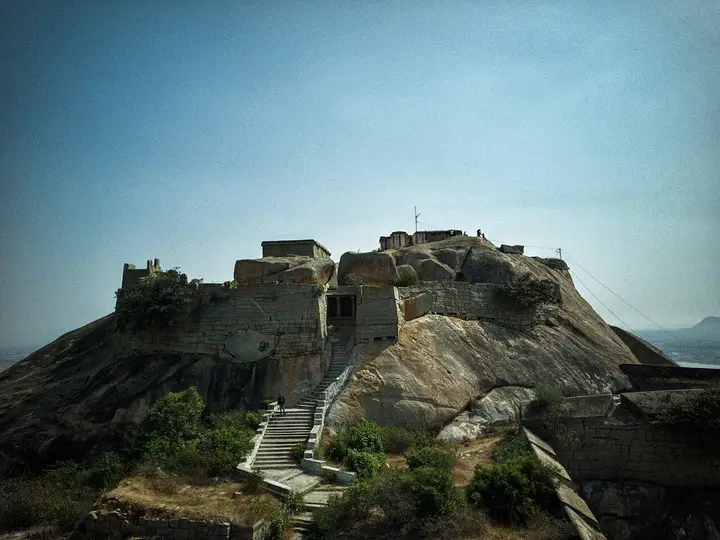
The district also names Kaiwara and Thalakayala Betta near Diburahalli among places around Sidlaghatta. Those are separate road destinations. An unverified hill trail should not be sold as an easy extension of a market walk, and a temple elsewhere in the taluk should not be presented as a building in the town centre.
Make the journey around a confirmed market visit, then leave time for a meal and the return connection. If the market cannot admit observers that day, the honest alternative is a town visit or a separately planned nearby temple, not a promise that a private silk unit will take walk-ins. This page treats the working economy as the subject and makes permission part of the plan.
Legend & myth
The living practice relevant to a visit is silk production and trade. It is a livelihood rather than a staged demonstration, so growers, buyers and workers set the rhythm of a visit.
A cocoon market should not be confused with a silk-sari shopping district. Ask where a product was reeled, twisted or woven, and let the seller explain the distinction instead of assuming every finished textile was made in Sidlaghatta.
Village jatra traditions provide another side of Sidlaghatta taluk. Local reports describe a float festival at Chikkadasarahalli, a chariot festival and cattle fair at Talakayalabetta, and a Tambittu lamp procession at Melur. These are religious events with locally confirmed dates, not daily performances for market visitors.
More about Sidlaghatta
History
The district’s own economic account identifies Sidlaghatta with raw and twisted silk production and small industries supplying other states.
The Sericulture Department describes a district system of grainages, technical services and markets, with the Class I cocoon market at Sidlaghatta.
Figures on that departmental page sit beside older programme tables. They are not reproduced here as a current census of traders, output or market turnover.
Why visit
Understand the cocoon stage of silk production in a town whose official identity is tied to raw and twisted silk.
Observe a working market respectfully, when its authority agrees to admit visitors.
Learn the difference between silkworm rearing, cocoon trading, reeling, twisting and weaving before buying a finished textile.
Use a focused livelihood visit to complement a separately planned temple or cultural outing in the district.