Hangal Fort

Hangal Fort is the low, fragmentary fortified seat of the Hangal Kadambas at their former capital Panungal, where the nationally protected Veerabhadra temple and the remains of a Jain basadi survive within the old enclosure.

Hangal Fort, Hangal

The small ruined Jain temple in Hangal Fort, photographed by Henry Cousens in 1885.

Practical guide

Plan Hangal Fort

Who's going?Tailor Hangal Fort to your trip
Typefort
Nearest baseHangal
DistrictHaveri
Best timeOctober to February, preferably in the…
Time neededAllow 45–75 minutes for the fort remains…
Places to visit2Listed businesses3

This is not a complete stone citadel with a ticket gate and battlements. Gazetteer descriptions identify a mud fort with bastions, while the surviving religious buildings provide the clearest material evidence inside it. Arrive expecting an archaeological landscape woven into a living town.

Hangal was capital of a Kadamba branch that ruled as feudatories of the Kalyani Chalukyas. The fort’s Veerabhadra temple is listed by the Archaeological Survey of India as a Monument of National Importance; the designation applies to the monument and its protected setting even when no staffed visitor office is visible.

The story

Hangal Fort is the low, fragmentary fortified seat of the Hangal Kadambas at their former capital Panungal, where the nationally protected Veerabhadra temple and the remains of a Jain basadi survive within the old enclosure.

The story of Hangal Fort

This is not a complete stone citadel with a ticket gate and battlements. Gazetteer descriptions identify a mud fort with bastions, while the surviving religious buildings provide the clearest material evidence inside it. Arrive expecting an archaeological landscape woven into a living town.

Hangal was capital of a Kadamba branch that ruled as feudatories of the Kalyani Chalukyas. The fort’s Veerabhadra temple is listed by the Archaeological Survey of India as a Monument of National Importance; the designation applies to the monument and its protected setting even when no staffed visitor office is visible.

Henry Cousens photographed the small Jain temple ruin here in 1885. Its roofless hall and lathe-turned pillars make that image valuable evidence, but the historical photograph should be used to compare carefully with permitted present-day views, not as an invitation to climb or handle displaced stone.

Tarakeshwara, less than a kilometre away, is the architectural anchor of a Hangal visit. Give its elaborate ceiling and active worship separate time, then use the fort to understand the political town that surrounded it.

Tradition and living practice

The Veerabhadra shrine is a religious place as well as protected heritage. Remove footwear and follow local worship instructions where it remains active.

Stories identifying Hangal with Viratanagara belong to regional tradition; they should not replace inscriptional history or be presented as proven archaeology.

Read the full history of Hangal Fort 122 more words

History

Hangal appears as Panungal in early records and served as the capital of the Hangal Kadambas.

ASI lists the Veerabhadra temple in Hangal Fort as a nationally important monument associated with the Chalukyas of Kalyana.

An 1885 photograph by Henry Cousens documents the roofless Jain temple hall inside the fort.

The larger earthen enclosure has lost much of the monumental completeness suggested by the word “fort”; describe surviving elements rather than reconstructing vanished walls in prose.

Why visit

Read a former Kadamba capital through fragments that still occupy the modern town.

See a nationally protected Chalukya-period shrine without claiming the whole enclosure is intact.

Use a nineteenth-century archaeological photograph as evidence of change.

Pair political history at the fort with architectural history at Tarakeshwara.

What to expect

Highlights

  • Locate the surviving fort line and bastions without climbing unstable earth or masonry.
  • Study the protected Veerabhadra temple from permitted ground.
  • Compare the Jain basadi remains with Cousens’s 1885 photograph.
  • Walk or take an auto to Tarakeshwara for the town’s finest surviving architecture.
Getting there

How to visit

  • Start in morning daylight and ask locally for the current public approach to the Veerabhadra temple and Jain ruin.
  • Keep worship and archaeological observation separate: follow shrine etiquette and do not touch carved or displaced stone.
  • Use shoes with grip for the fort ground; remove them only where the active shrine directs.
  • Continue to Tarakeshwara as a separate visit and confirm your return to Haveri or Hubballi before evening.
Timing

Best time

October to February, preferably in the cooler morning. Avoid the earthen ruins after heavy rain and complete the visit in daylight.

Weather in Hangal FortSeasonal guide

Live forecast loads in your browser.

Today at Hangal Fort
Sunrise6:21 am
Sunset6:07 pm
Golden hour best light5:07 pm–6:07 pm
Blue hour after sunset6:07 pm–6:32 pm
Sun sets toward compass bearingW · 260°
Moon tonight🌔 Waxing gibbous · 59%

Sunset is in about 1 hour.

Sun and moon are calculated for this location and shown in IST. Photography windows are the hour around sunrise and sunset; the sunset bearing is degrees clockwise from true north. Moon phase is accurate to about half a day.

Visitor notes

  • Use the operator or gate notice for the day’s activities, and arrange local return transport; a map pin or old photograph is not an opening notice.
  • Keep the named place separate from nearby monuments, worship sites and private or working land.
Safety

Good to know

  • The enclosure is uneven and partly ruined; keep off unstable walls, loose earth, wells and unrailed drops.
  • Go in daylight, wear closed shoes and do not enter private plots or use a gap in a wall as presumed public access.
  • Do not chalk, rub, climb or move stone at the Jain and Veerabhadra remains.
  • Retain a local return plan; heritage designation does not guarantee a staffed gate, toilets or transport.
Stay · eat · do · rent · see · shop

Stays, food & things to do near Hangal Fort

Browse local stays, food, activities and useful shops. Confirm current service directly; rural options identify their own locality.

3 things to do near Hangal Fort

Do
New Bus Stand
1.3 km · 16 min walk

This named do is in Hangal. Use it as a mapped local reference and confirm present access, hours and services on arrival.

Directions Commission-freeView details
Do
Hanagal KSRTC Bus stand
1.3 km · 16 min walk

This named do is in Hangal. Use it as a mapped local reference and confirm present access, hours and services on arrival.

Directions Commission-freeView details
Do
Hangal Bus Depot
2.7 km · ~7 min by auto

This named do is in Hangal. Use it as a mapped local reference and confirm present access, hours and services on arrival.

Directions Commission-freeView details

Book with the place itself. India’s cyber-crime coordination centre warned in April 2025 that convincing copies of hotel and pilgrimage booking sites are being pushed through sponsored search and social ads, taking payment for rooms the property never hears about. Every listing here links to the business’s own contact details and its own Google or Bing profile — we take no commission and sit in nobody’s payment path. If a booking page reached you through an ad, check the address bar against the property’s own site before you pay. Fraud can be reported on cybercrime.gov.in or on 1930.

Ranked guides

Top experiences around Hangal

Choose a local circuit or a separate road outing. Check worship, market and forest access independently; these places do not share one admission or timetable.

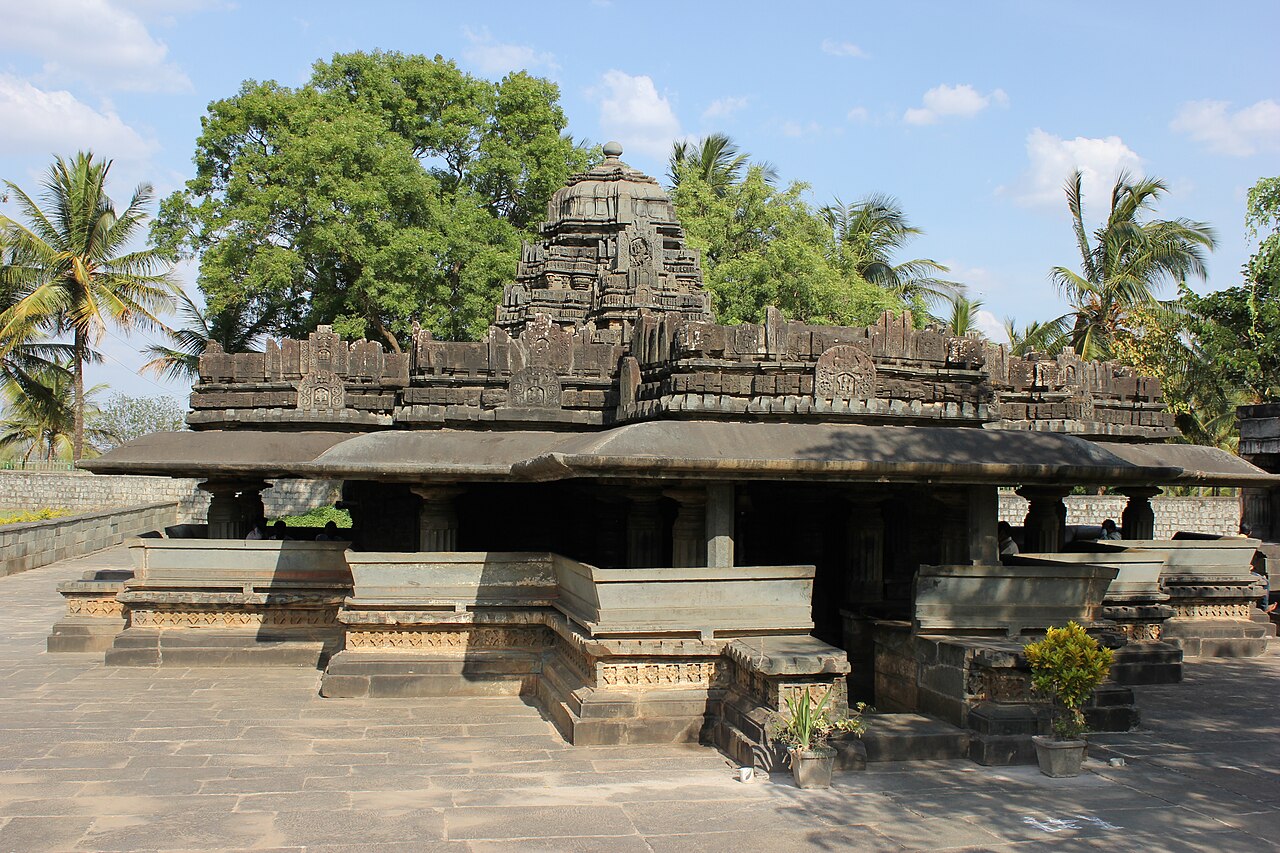
Tarakeshwara Temple at Hangal.

Tarakeshwara Temple at Hangal.

Kadamba–Chalukya templeTarakeshwara Temple, Hangal

Hangal’s principal monument is famous for its deeply carved domed ceiling and lathe-turned pillars. It is a living protected temple and deserves its own unhurried hour.

B
Billeshwara Temple, Hangal
Place
historic templeBilleshwara Temple, Hangal

The incomplete Billeshwara shrine preserves an elaborate doorway and sculptural panels south of the old fort area. Ask for the public approach and do not touch the carving.

V
Veerabhadra Temple in Hangal Fort
Place
protected shrineVeerabhadra Temple in Hangal Fort

This Chalukya-period temple is the nationally protected monument within the fort enclosure. Follow worship etiquette and distinguish shrine access from permission to roam every ruin.

The Jain temple ruin in Hangal Fort in 1885.

The Jain temple ruin in Hangal Fort in 1885.

archaeological remainsJain basadi remains, Hangal Fort

A roofless pillared Jain shrine documented by Henry Cousens in 1885 survives in the fort landscape. View it from the permitted route and use the old photograph as evidence of change.

Roampedia is commission-free — own or know a stay, eatery, guide or shop near Hangal Fort? List it and it appears here once verified.

Add a nearby business
Before you go

Hangal Fort — at a glance

TimingsVisit in daylight and confirm worship access locally. No reliable staffed daily opening schedule is published for the fort enclosure.
Best timeOctober to February, preferably in the cooler morning. Avoid the earthen ruins after heavy rain and complete the visit in daylight.

Entry: No current admission tariff is published for the open monument area. Do not confuse donations or worship offerings with a mandatory fort ticket.

Photography: Exterior heritage photography from public ground is the safe assumption. Ask before shrine interiors, worshippers, flash, tripods or any restricted monument area.

Parking: Use a locally directed legal space on a town street and keep shrine entrances, homes and lanes clear; no supervised fort car park is promised.

Getting here

How to reach Hangal Fort

  • ✈︎ By air Hubballi Airport is the practical regional air gateway when its current services suit; continue by road to Hangal.
  • 🚆︎ By train Haveri is the useful railhead for a wider range of trains. Check the day’s service and arrange the roughly 35–40 km road transfer to Hangal.
  • 🚗︎ By road Enter Hangal town and ask for the Veerabhadra temple in the old fort. The protected monument coordinate is about 14.75949, 75.12706; use it as orientation, not proof of a vehicle entrance.
  • 🚌︎ By bus Use a current service to Hangal from Haveri or Hubballi and confirm the last return at the bus stand before walking to the monument area.
  • ⛴︎ By boat No boat component: Hangal Fort is reached through the town by road and on foot. Nearby tanks are not an access route.
Getting around

Getting around Hangal Fort

Hangal’s fort, Tarakeshwara and Billeshwara are town-scale stops, but heat and unclear lanes make an auto useful. Ask for each named temple rather than “the fort” alone.

Online taxis: Do not rely on finding an app taxi at Hangal Fort. Agree the return with an auto or driver before the visit, especially for an evening or out-of-town stop.

Getting back

If you are travelling by bus or ferry, check the return service with the operator before setting out. Leave time to reach the stop or jetty after your visit.

Ask at the jetty or stand for the time of the last service back, not the next one. If you miss it, an auto or app cab is the fallback — agree the fare before you get in.

Do

Things to do

  • Locate the surviving fort line and bastions without climbing unstable earth or masonry.
  • Study the protected Veerabhadra temple from permitted ground.
  • Compare the Jain basadi remains with Cousens’s 1885 photograph.
  • Walk or take an auto to Tarakeshwara for the town’s finest surviving architecture.
Plan

Good to know

  • Start in morning daylight and ask locally for the current public approach to the Veerabhadra temple and Jain ruin.
  • Keep worship and archaeological observation separate: follow shrine etiquette and do not touch carved or displaced stone.
  • Use shoes with grip for the fort ground; remove them only where the active shrine directs.
  • Continue to Tarakeshwara as a separate visit and confirm your return to Haveri or Hubballi before evening.
Facilities

On site

  • No staffed ticket office, drinking water, toilet, locker or first-aid post is reliably documented at the fort.
  • Use Hangal town for water, food, an auto and essential services.
  • The Veerabhadra temple’s worship facilities should not be treated as general visitor infrastructure.
Stay safe

Safety

  • The enclosure is uneven and partly ruined; keep off unstable walls, loose earth, wells and unrailed drops.
  • Go in daylight, wear closed shoes and do not enter private plots or use a gap in a wall as presumed public access.
  • Do not chalk, rub, climb or move stone at the Jain and Veerabhadra remains.
  • Retain a local return plan; heritage designation does not guarantee a staffed gate, toilets or transport.
Getting around Hangal Fort
From the entrance
No continuous step-free circuit across the fort ground is documented. Ask about the closest firm-surface drop-off to Veerabhadra temple and whether the Jain ruin can be viewed without rough ground.
Step-free access
No continuous step-free circuit across the fort ground is documented. Ask about the closest firm-surface drop-off to Veerabhadra temple and whether the Jain ruin can be viewed without rough ground.
  • The enclosure is uneven and partly ruined; keep off unstable walls, loose earth, wells and unrailed drops.
  • Go in daylight, wear closed shoes and do not enter private plots or use a gap in a wall as presumed public access.
  • Do not chalk, rub, climb or move stone at the Jain and Veerabhadra remains.
  • Retain a local return plan; heritage designation does not guarantee a staffed gate, toilets or transport.

Checked 5 September 2026 against source 1source 2source 3. Conditions change and surfaces vary with weather — if step-free access is essential, confirm with the site before you travel.

Practical things near Hangal Fort

For toilets, drinking water or a cash machine, ask at the site or a nearby business. No local service locations are available on this page.

If you need help at Hangal Fort
112All emergencies (police · fire · medical)The single number to call in any emergency (ERSS).

Emergency numbers are verified against official government and state tourism sources. 112 works anywhere in India.

Eat nearby

What to eat in Hangal

Use Hangal town for food and water; there is no documented café inside the fort. Keep food away from shrines and archaeological remains.

Explore food in Hangal →
01

Jolada rotti meal

A north Karnataka staple where a current local kitchen serves it.

02

Simple tiffin and tea

A practical stop near the bus stand before the monument walk; check the day’s opening.

Nearby

What’s near Hangal Fort

Local stops come first, followed by separate district outings. Check each place’s own access and return journey; this is a choice of visits, not a single walking circuit.

Tarakeshwara Temple at Hangal, a separate living monument near the fort.

Tarakeshwara Temple at Hangal, a separate living monument near the fort.

templeTarakeshwara Temple, Hangal

The town’s architectural centrepiece, with a celebrated domed ceiling and polished pillars. Visit as a living protected temple and allow devotees priority.

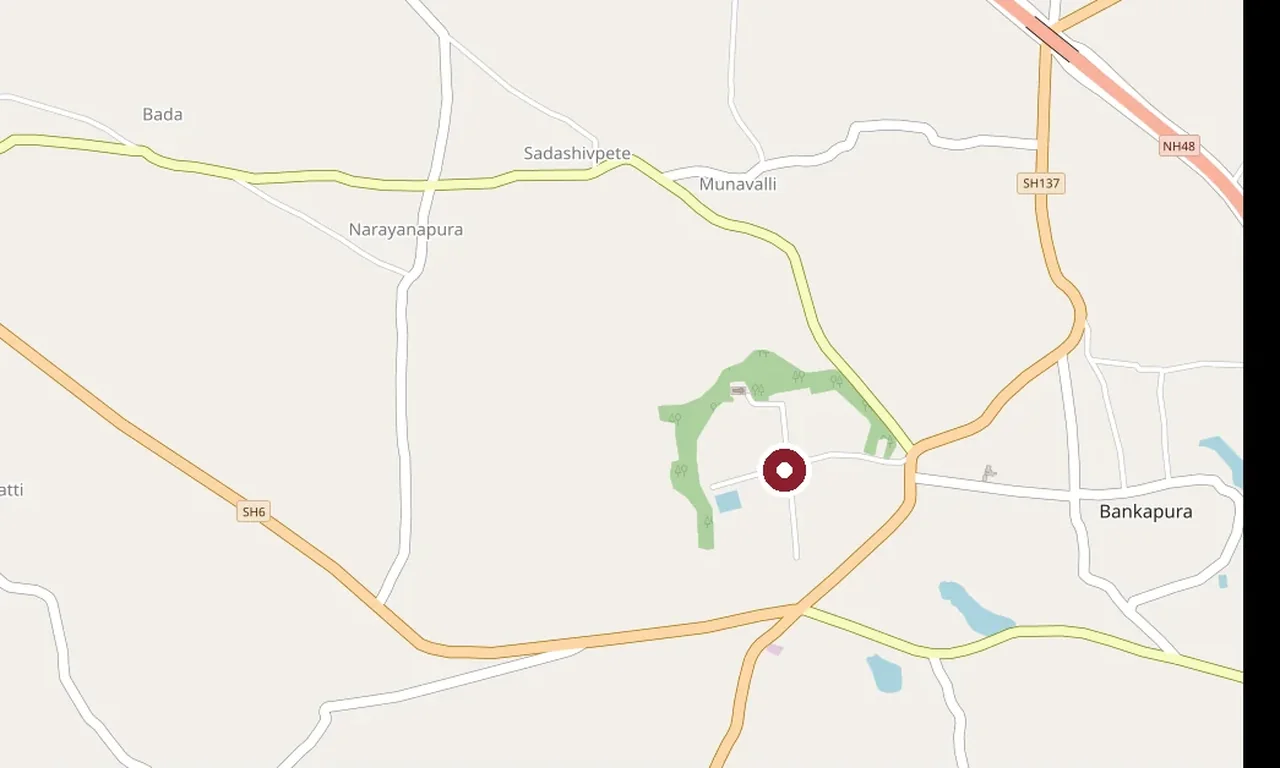
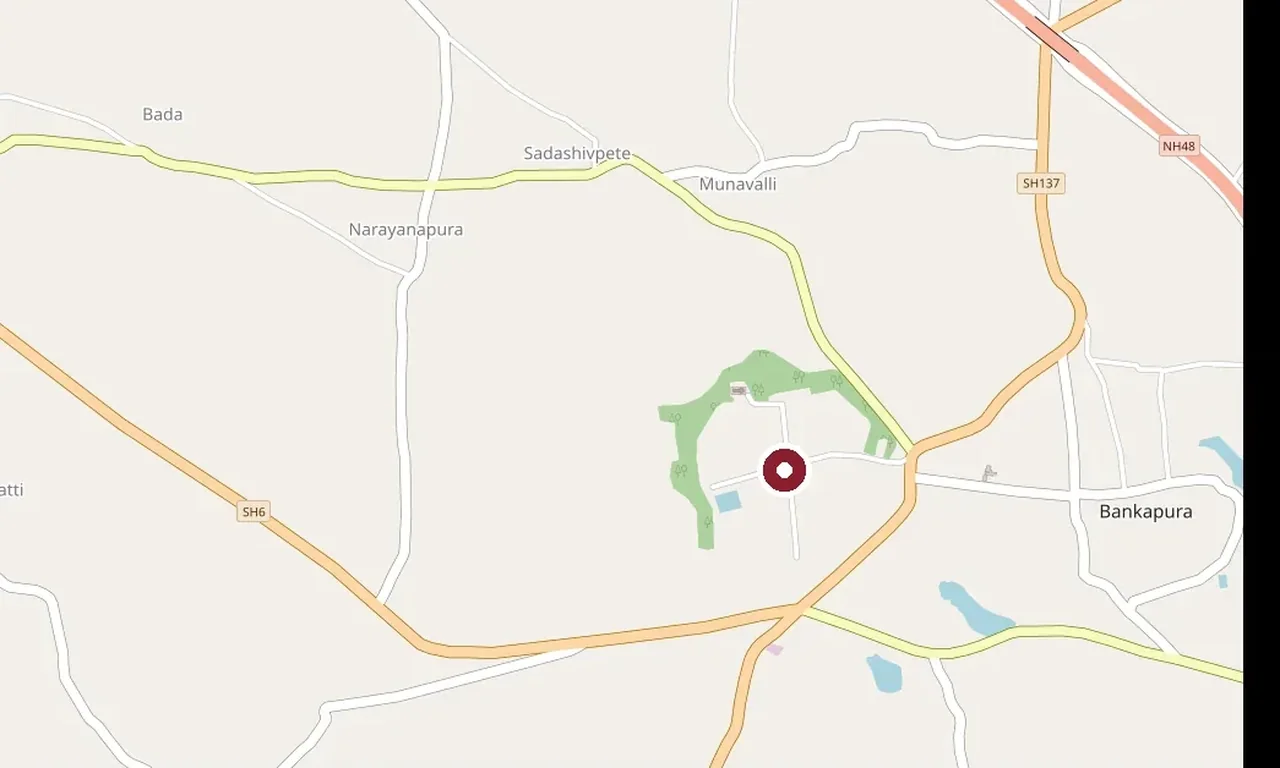
OpenStreetMap view centred on Bankapura Fort; the marker identifies the mapped subject, not a guaranteed public entrance.

OpenStreetMap view centred on Bankapura Fort; the marker identifies the mapped subject, not a guaranteed public entrance.

fortBankapura Fort

A layered fort landscape whose grounds overlap the peacock sanctuary. Stay on public or permitted tracks and keep archaeology and wildlife protection in the same plan.

N
Nagareshwara Temple, Bankapura
Place
templeNagareshwara Temple, Bankapura

The sixty-pillar Western Chalukya hall anchors Bankapura’s heritage circuit. Pair it with the fort and sanctuary only with confirmed road transport and daylight.

Indian peafowl shown as species context; wildlife sightings are never guaranteed.

Indian peafowl shown as species context; wildlife sightings are never guaranteed.

wildlifeBankapura Peacock Sanctuary

A protected peafowl habitat in the old fort landscape. Cooler hours improve the chance of activity, but no particular sighting is guaranteed.

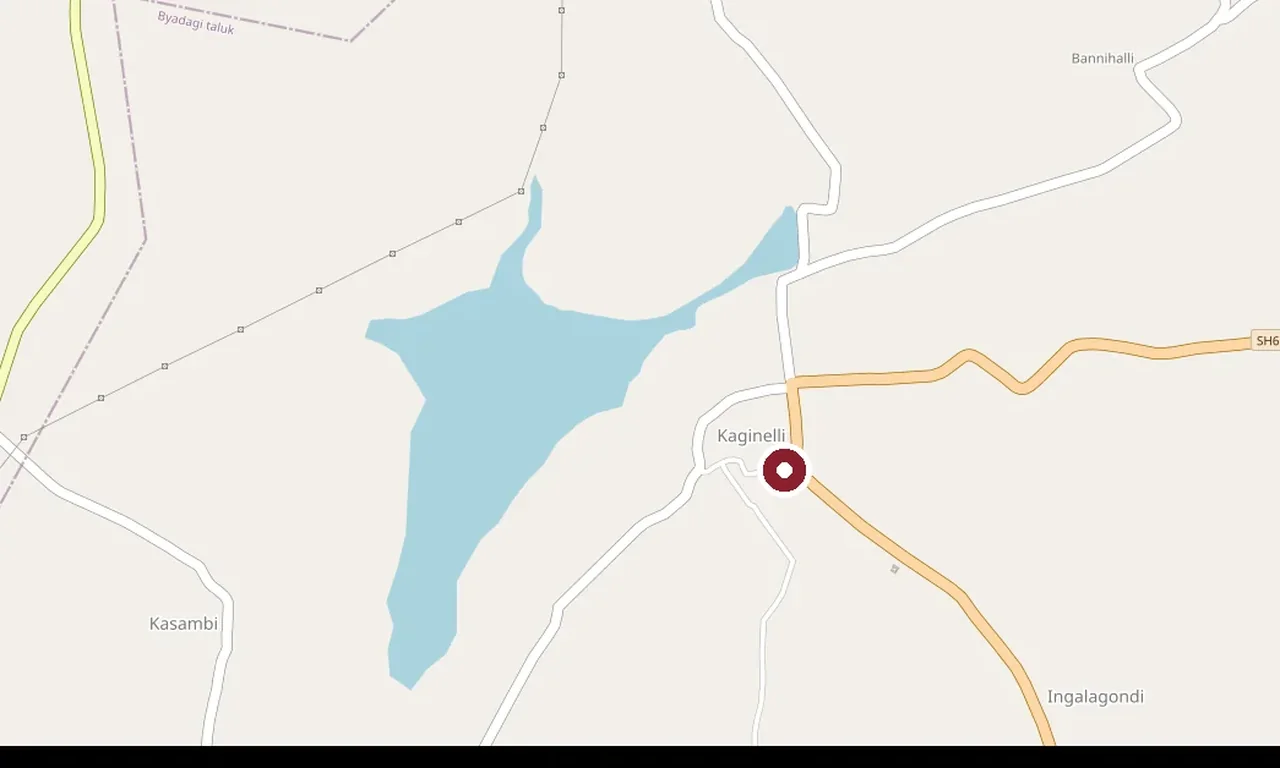
OpenStreetMap view centred on Kaginele Kanaka Guru Peetha; the marker identifies the mapped subject, not a guaranteed public entrance.

OpenStreetMap view centred on Kaginele Kanaka Guru Peetha; the marker identifies the mapped subject, not a guaranteed public entrance.

templeKaginele Kanaka Guru Peetha

A pilgrimage centre associated with the saint-poet Kanakadasa. Confirm worship access, dress appropriately and plan the village road leg independently.

A rural-life sculpture at Utsav Rock Garden, a separately managed attraction.

A rural-life sculpture at Utsav Rock Garden, a separately managed attraction.

museumUtsav Rock Garden, Gotagodi

A separately ticketed open-air sculpture park depicting rural Karnataka life. Use its published session and allow enough time; it is not a quick roadside sculpture stop.

Siddheshwara Temple, Haveri

Siddheshwara Temple, Haveri

templeSiddheshwara Temple, Haveri

An ornate Western Chalukya temple in Haveri town consecrated in the late 11th century, with dated inscriptions of 1087 and 1108 CE — unusually west-facing, and celebrated for the loose deity sculptures collected around it.

One of Savanur’s mature baobabs, photographed in May 2007; the image does not establish the tree’s precise age.

One of Savanur’s mature baobabs, photographed in May 2007; the image does not establish the tree’s precise age.

heritageSavanur

The former princely seat of the Savanur Nawabs, with surviving fort gates and walls — and, at the Doddahunase Matha nearby, ancient baobab trees of enormous girth, a rare botanical heritage of the town.

Byadgi Chilli Market

Byadgi Chilli Market

heritageByadgi Chilli Market

A working agricultural market associated with the GI-tagged Byadgi chilli. Ask permission before photographing traders and protect eyes and throat from chilli dust.

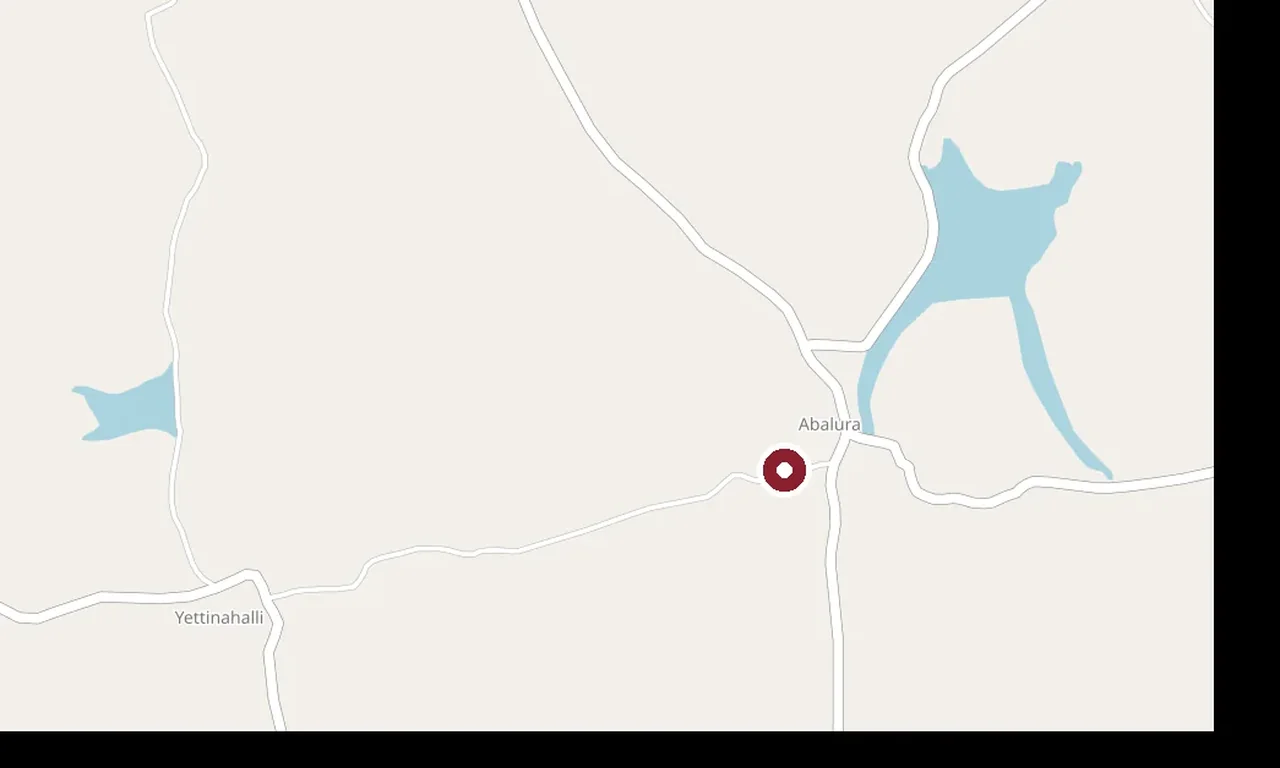
OpenStreetMap view centred on Someshwara & Veerabhadra Temples, Abalur; the marker identifies the mapped subject, not a guaranteed public entrance.

OpenStreetMap view centred on Someshwara & Veerabhadra Temples, Abalur; the marker identifies the mapped subject, not a guaranteed public entrance.

heritageSomeshwara & Veerabhadra Temples, Abalur

The Someshwara and Veerabhadra temples of Abalur (Ablur) in Hirekerur taluk, site of the Ekantada Ramayya legend — their inscriptions are key sources on the medieval Shaiva–Jain conflict and the rise of early Veerashaivism.

All 2 places to visit in Hangal →

Nearby toilets, pharmacies, ATMs, seating and vets are community-mapped and may be incomplete or out of date. Map data © OpenStreetMap contributors | Walking times © openrouteservice.org by HeiGIT

On the map

Where Hangal Fort is

The locator identifies the temple precinct. Use the currently open worship entrance and follow any procession diversions.

Good to know

Hangal Fort — frequently asked

What is Hangal Fort?

Hangal Fort is the low, fragmentary fortified seat of the Hangal Kadambas at their former capital Panungal, where the nationally protected Veerabhadra temple and the remains of a Jain basadi survive within the old enclosure.

How do I reach Hangal Fort?

Enter Hangal town and ask for the Veerabhadra temple in the old fort. The protected monument coordinate is about 14.75949, 75.12706; use it as orientation, not proof of a vehicle entrance. Use a current service to Hangal from Haveri or Hubballi and confirm the last return at the bus stand before walking to the monument area.

When should I visit Hangal Fort?

October to February, preferably in the cooler morning. Avoid the earthen ruins after heavy rain and complete the visit in daylight.

What does Hangal Fort cost?

No current admission tariff is published for the open monument area. Do not confuse donations or worship offerings with a mandatory fort ticket.

How long should I allow?

Allow 45–75 minutes for the fort remains and another hour for Tarakeshwara.

Is Hangal Fort wheelchair accessible?

No continuous step-free circuit across the fort ground is documented. Ask about the closest firm-surface drop-off to Veerabhadra temple and whether the Jain ruin can be viewed without rough ground.

When is the best time to visit Hangal Fort?

October to February, preferably in the cooler morning. Avoid the earthen ruins after heavy rain and complete the visit in daylight.

What are the entry fee and timings at Hangal Fort?

Entry: No current admission tariff is published for the open monument area. Do not confuse donations or worship offerings with a mandatory fort ticket. Timings: Visit in daylight and confirm worship access locally. No reliable staffed daily opening schedule is published for the fort enclosure.

How much time do I need for Hangal Fort?

Allow 45–75 minutes for the fort remains and another hour for Tarakeshwara.

What else is near Hangal Fort?

Nearby you can pair Tarakeshwara Temple, Hangal, Bankapura Fort, Nagareshwara Temple, Bankapura, Bankapura Peacock Sanctuary.

What should I know before visiting Hangal Fort?

The enclosure is uneven and partly ruined; keep off unstable walls, loose earth, wells and unrailed drops. Go in daylight, wear closed shoes and do not enter private plots or use a gap in a wall as presumed public access. Do not chalk, rub, climb or move stone at the Jain and Veerabhadra remains. Retain a local return plan; heritage designation does not guarantee a staffed gate, toilets or transport.