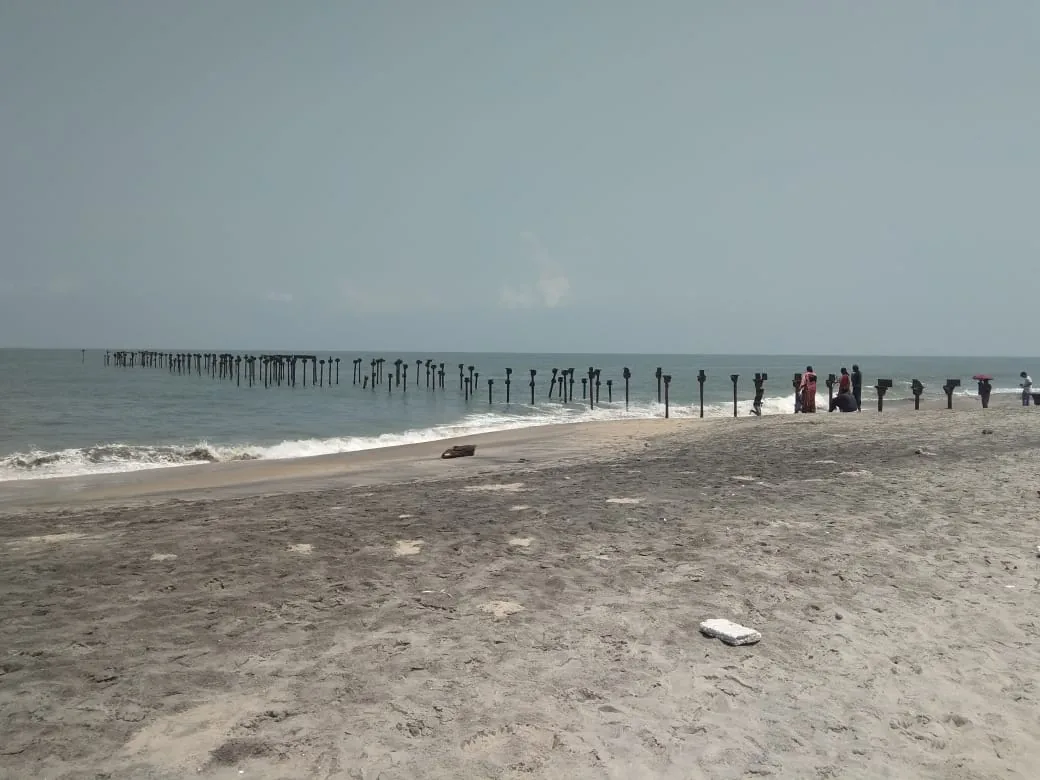
Most people come to Alappuzha beach for the sunset. They sit on the sand, watch the waves, and notice a row of rusted iron posts marching out into the sea. Some take a photograph of it. Few ask what it was. Those posts are the bones of Kadal Palam, the "sea bridge", and for many years they were the busiest door into Travancore.
The pier existed because Alappuzha had a problem. As the story of Raja Kesavadas building the port tells, the town was built to trade. But big ships could not come close to this flat, sandy shore. So the port reached out to them instead. A long pier ran from the beach into deeper water, where cargo could be passed between ship and shore. Outlook Traveller describes it as a sea bridge for loading and unloading cargo from ships.
How old is it? That question has two answers. Travel writers, including Outlook Traveller, say the 1,000-foot pier was built in 1862 by a Captain Hugh Crawford. But the Directorate General of Lighthouses says that in the 18th century, before Alappuzha had a proper lighthouse, ships were guided by a light placed on the pier head. So there was a pier here long before 1862, and the structure the travel writers describe may be a later version of it. What is certain is that 1862 was a big year for the shoreline. The same lighthouse authority records that the town’s new lighthouse was first lit on 28 March 1862.
From the pier, the goods had to reach the warehouses in town, and here the second part of the story is under your feet. Conservation architect Benny Kuriakose’s studio, which has worked on restoring the old port, notes that traces of old railway tracks still run, lined with street lamps, from the sea pier towards the old storage godowns. The old port office building stands on Beach Road too. Walk along it and look down, and you can follow the route the cargo once took from the sea into the town.
For a long time that route was busy. Outlook Traveller describes Alappuzha in its prime as the busiest coast south of Mumbai, and in the 19th century the town was also an important centre for making and shipping coir. Then trade moved north. As the port at Kochi grew, Alappuzha lost its importance at sea, and the Benny Kuriakose studio writes that the port buildings, the sea pier and the railway tracks were simply left behind.
The sea has been working on the pier ever since. Visitors could once walk out over the water on its boards, but by 2017 Outlook Traveller was calling it "a mere skeleton of its past", with bricks fallen away and the structure risky to walk on. So enjoy it from the sand, not from the pier itself. The best time is late afternoon, when the light drops behind the posts and the old line of the pier shows clearly against the sea.
When you turn back towards town, you are following the cargo. The goods that came off this pier went to large warehouses along the canals, and many of them are still standing. Their story, and the coir trade that took them over, is told in the warehouses on the canals.
Frequently asked questions
What is Kadal Palam?
The local name, meaning "sea bridge", for the old pier on Alappuzha beach where cargo was once loaded and unloaded from ships.
When was Alappuzha pier built?
Travel writers date the 1,000-foot pier to 1862 and Captain Hugh Crawford. The lighthouse authority notes a pier with a light on its head already existed in the 18th century.
Can you walk on Alappuzha pier?
It is badly damaged and risky to walk on. View it from the beach.
Are there old railway tracks in Alappuzha?
Yes. Traces of tracks that ran from the sea pier to the old godowns can still be seen near Beach Road, according to conservation architect Benny Kuriakose’s studio.