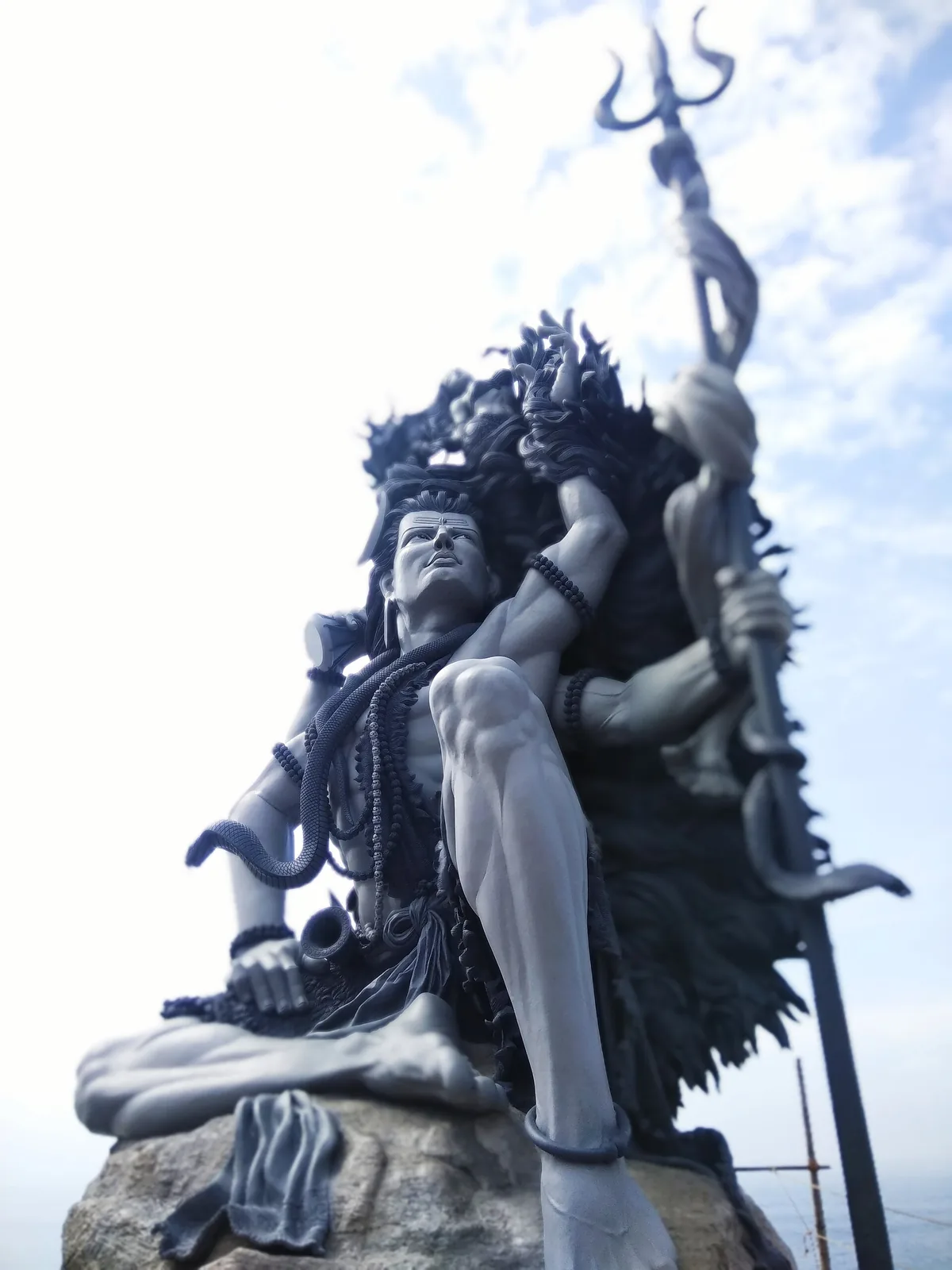
Aazhimala sits at Pulinkudi on the coast south of Kovalam. Kerala Tourism’s Kovalam guide describes a Shiva temple with a newer large sculpture; its photo record identifies the figure as a 58-foot Gangadhareshwara. The temple is a place of worship as well as a coastal viewpoint, and those two uses need different visitor expectations.
Two layers at one site
The sculpture shows Shiva receiving the Ganga in his hair, the familiar Gangadhara episode. Its scale made it an instantly recognisable landmark. The temple’s existing religious life is not simply a backdrop to the photograph: worship hours, dress rules and access to the shrine are controlled locally. Treat the sculpture and the sanctum as parts of one active site.
Where it fits in a coastal day
The temple’s official contact page gives Pulinkudi, Mulloor PO as its address. Kerala Tourism’s Poovar page lists Azhimala among nearby attractions, so it can fit a road trip linking Kovalam and Poovar. Check your actual route and travel time rather than treating all three as one walkable beach strip.
Hours and facilities need a direct check
The temple site publishes morning and evening hours but also warns that the timetable has not been updated recently. Call before a trip built around entering the shrine. Do the same for parking, access to the meditation chamber and any mobility requirement. A photograph of the sculpture cannot confirm whether every part of the complex is open today.
The coast beside the shrine
The sea and rock make the setting powerful, but they do not create a public swimming area. Keep to permitted paths and platforms, follow local barriers, and avoid wet rocks for a closer photograph. If you want a beach stop as well, choose it separately and check its current sea conditions.
For the sculpture’s subject, read the Gangadhara story. For the exact approach and nearby places, use the Aazhimala place page.
A shrine and a public artwork share the cliff
The Gangadhara figure draws cameras because of its size and the sea behind it. The temple remains a place of worship with rules that do not disappear at a viewpoint. Ask about current dress, photography and access before entering, and keep ritual areas clear. The Gangadhara story explains the image’s subject without treating every sculpture visitor as a temple pilgrim.
Aazhimala fits geographically between Kovalam’s beaches and Poovar, but it needs a separate stop. Coastal travel times and temple hours can shift; confirm the latter with the temple itself because its published timetable carries an update warning.
Stand back long enough to see the sculpture in relation to the rock and sea. The visit makes more sense when its artwork, worship and exposed coast are allowed to be three parts of one site.
Frequently asked questions
Where is Aazhimala Shiva Temple?
The temple’s own contact page gives Pulinkudi, Mulloor PO, Thiruvananthapuram district.
How tall is the Shiva sculpture?
Kerala Tourism describes the Gangadhareshwara figure as 58 feet tall.
What are the opening hours?
The temple website publishes morning and evening hours but says the timetable may be outdated. Confirm directly before travelling for shrine entry.
Can I swim below the temple?
Do not treat the rocks below as a swimming beach. Follow current local access restrictions and choose a designated beach separately.