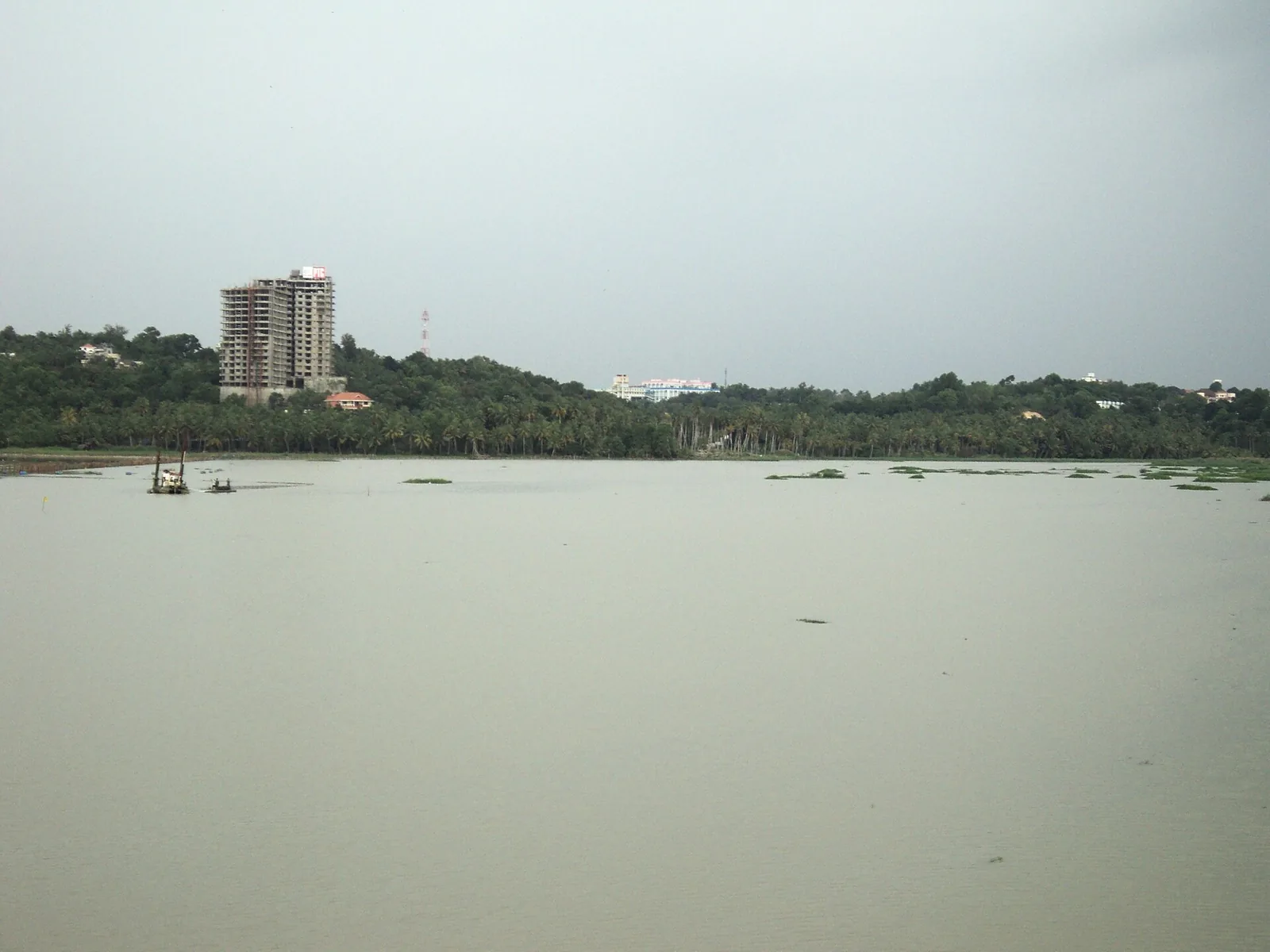
The headline number sounds almost reassuring: more than 99% of the studied metal contaminants were held in the sediment of the Akkulam–Veli lake system. If nearly all of it is in the mud, what is left in the water? A 2026 research paper answers that question in a way a glance across Akkulam Lake cannot: the researchers found concerning metals in water samples as well.
First, the lake bed
The researchers analysed water and sediment samples for heavy metals and mapped land-use change from 2014 to 2023. They reported elevated lead, zinc, nickel and chromium in sediment, with lead at some sites up to 6.5 times a cited limit. They also reported zinc, cadmium, iron and chromium in water samples, at concentrations that sometimes exceeded drinking-water standards. A sediment reservoir does not make the water clean.
Then, the water above it
The paper describes sediment as the main store for the contaminants it studied. Metals can bind to particles and accumulate on a lake bed over time. That finding is about the measured metal burden in this lake system; it is not a statement that 99% of every pollutant in Akkulam is in the sediment, nor a test of whether a particular boating or swimming activity is safe today.
The unanswered question upstream
The paper identifies hotspots near Parvathy Puthanar and Kochuveli and discusses urban development, dredging and untreated discharges as pressures. It also calls for further work on seasonal variation and the sources of contamination. That is a reason to avoid assigning the measured metals to one named drain, household use or factory without a proper source study.
What the surface cannot settle
The paper turns a simple-looking lake into two connected places: water that can change from sample to sample and a bed that stores a longer history. It cannot certify current boating, bathing, fishing or play at the edge. Check posted notices and current local advice for any water contact. Its lasting lesson is the question it leaves open: how will the city manage what has accumulated below the surface while reducing what still enters above it?
A percentage is not a clean bill
The striking 99% figure describes how the studied contaminants were distributed in the samples. It does not say the lake is 99% clean or that the water is safe to use. Sediment can act as a store that is disturbed by dredging, flooding or changing chemistry. Understanding the number requires asking what was measured, where the samples were taken and when.
The Parvathy Puthanar story traces part of the connected drainage system. The new waterway story asks what an opening means for boats. Pollution is the common condition under those plans, not a separate problem hidden below an attractive lake view.
From the bank, the sediment is mostly invisible. The study gives it a place in the story, and that changes how an apparently calm surface should be read.
Frequently asked questions
Is 99% of all Akkulam pollution in the mud?
No such general claim follows from the study. The 2026 paper says more than 99% of the contaminants it analysed were retained in the sediment of the Akkulam–Veli system. It also measured heavy metals in water.
Does the study say the water is safe to swim in?
No. It was a heavy-metal study, not a current bathing-water clearance. Check local rules and current water-quality advice; do not judge safety from appearance.
Where were the pollution hotspots?
The authors highlighted sites near Parvathy Puthanar and Kochuveli. They called for more work on seasonal changes and contaminant sources.
Why does sediment matter?
Sediment can retain metals over time. Even if a surface sample changes, the stored burden can remain relevant to monitoring and any disturbance of the lake bed.