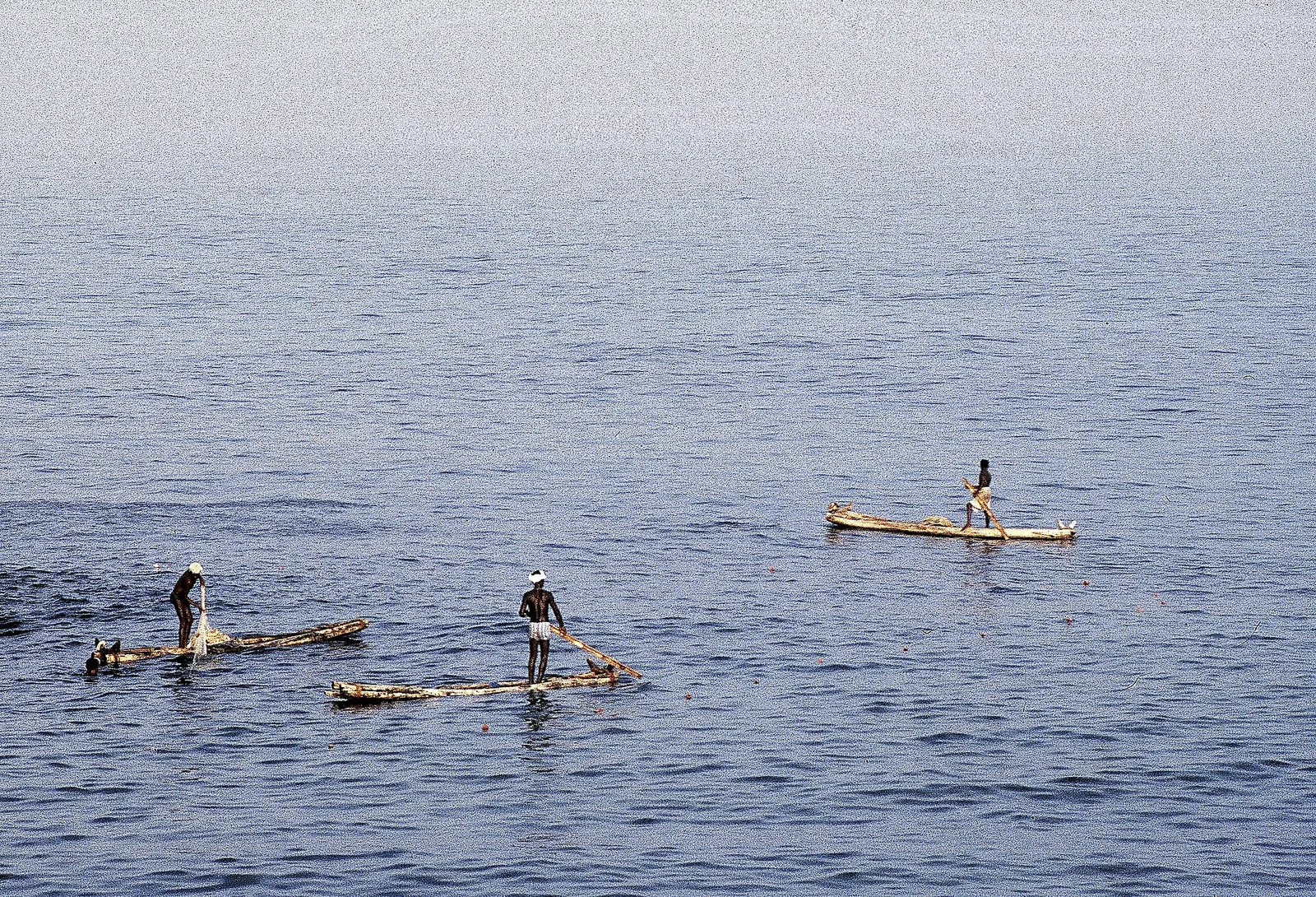
The English word “catamaran” now often brings to mind two hulls joined by a deck. Its older meaning was different. The Online Etymology Dictionary traces it to Tamil kattu-maram, “tied wood,” a name for a log raft recorded in English from the seventeenth century. A modern twin-hulled yacht carries a word borrowed from a much simpler craft.
A word that outlived one shape
The older description is literal: wood fastened together so it floats as a working platform. English speakers later used the same word for other multi-part craft. The shift makes a useful question for anyone looking at a fishing boat on the Kerala coast: what is this particular vessel made of, and how does it actually work? The name alone no longer answers.
What Kovalam advertises today
Kerala Tourism advertises catamaran cruises at Kovalam, and its Kovalam guide lists catamaran rides among beach activities. Those pages establish a visitor offer, not that every craft is a traditional lashed-log raft or that a particular trip runs every day.
If the craft itself interests you, ask an operator what type of boat is used, where it launches, who pilots it and what safety equipment is provided. Kerala Tourism’s water-sports advice recommends checking availability and restrictions in advance and wearing a life jacket. Coastal rides can be suspended in rough weather.
The story to take away
A term for tied timber travelled into English and widened until it could name vessels with very different construction. Kovalam’s tourism use of “catamaran” is one more chapter in that journey. The interesting thing is the change in meaning; it is not a guarantee that any boat beside Hawa Beach is the unchanged original.
A word can outlast its first shape
The journey from tied timber to a modern two-hulled tourist craft shows how a borrowed word can change meaning while retaining a coastal echo. That does not make every advertised “catamaran cruise” a ride on a traditional raft. Ask what craft an operator actually uses; its design, safety arrangements and route matter more than a familiar label.
The shore-seine story follows one kind of fishing work near Kovalam. The Hawa naming story follows another travelling word on the same middle cove. Neither establishes that a kettumaram launches here every morning, but both show how language and work overlap at a beach resort.
At the shore, identify the boat in front of you rather than assuming the old word specifies its form. That small act of attention is the point of the etymology: it connects a global boat name back to material people once bound together and took to sea.
Frequently asked questions
Where does the word catamaran come from?
The Online Etymology Dictionary traces it to Tamil kattu-maram, meaning tied wood, originally used for a log raft.
Can I book a catamaran ride at Kovalam?
Kerala Tourism advertises catamaran cruises there. Confirm the current operator, craft, safety equipment, price and sea conditions before paying.
Are all Kovalam catamarans log rafts?
The tourism sources do not establish that. Ask about the craft used for a specific trip rather than inferring it from the word.