On a Sunday in August 2024, a group of eight young people drove up to Kariyathumpara after a wedding at Ulliyeri. It was the kind of trip that families and friends make every weekend in Kozhikode, because the place looks gentle and close. Before the day ended, one of them, a twenty-year-old second-year medical student, had drowned in the river, and local residents found his body in the stretch the village calls Pappanchadikayam. Kariyathumpara safety begins with that day, because it shows where the danger at this pretty place really lies.
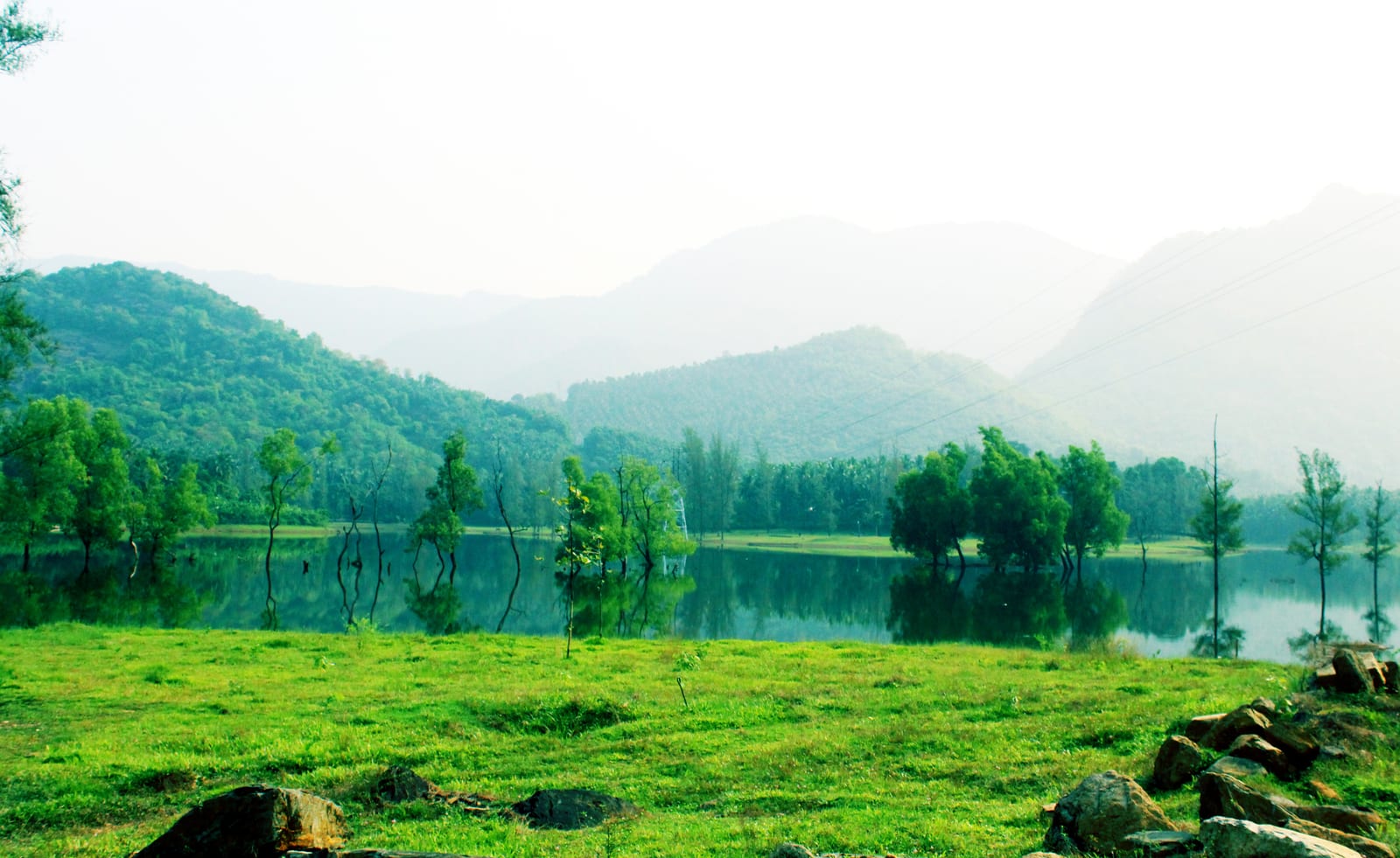
The danger is easy to miss, because nothing at Kariyathumpara looks threatening. Kerala Tourism describes it as a green retreat in Koorachund panchayat, about 45 km from Kozhikode, with rolling hills, gentle streams, natural springs and rock-formed pools of clear water. Those pools are exactly what draws people into the water, and they are also what makes it hard to judge. A rock pool shows its surface and hides its depth, so a swimmer who steps off a ledge finds out how deep it is only after the step.
The water also belongs to something larger than a picnic stream, which is why it behaves the way it does. The meadow looks out over a reservoir, and Onmanorama reported in November 2025 that the beach area here is land owned by the Irrigation Department. That reservoir is the Peruvannamuzhi Dam backwater, filled from the Kuttiyadi river, and how the two dams on that river shape this shore is told in the place two dams made. For a visitor standing on the bank, the result is simple: the calm surface is part of a managed body of water, and calm does not mean shallow.
The river is not the only thing that has gone wrong here, and the second danger grew out of neglect. In the same November 2025 report, Onmanorama described overgrown vegetation and thick weeds spreading across the site while clearing work was delayed. Snakes had settled in the dense bushes, and a child visiting with a tourist group was taken to hospital after a snakebite. The report also found no shelter anywhere on the grounds, so visitors caught by a sudden shower or the midday sun have nowhere to go.
That neglect is why residents turned angry, because the site still earns money. Visitors pay a ₹30 ticket, and the centre is run by a District Tourism Management Committee, while the land itself stays with the Irrigation Department. Residents protested that good ticket revenue kept coming in while basic upkeep and safety were left undone.
None of this makes Kariyathumpara a place to avoid, and the people who enjoy it most treat it as what it is. They come for the meadow, the reflections on the water and the hills behind, and they sit at the edge of the rock pools rather than jump into them. Families keep small children on the mown grass and away from the long weeds, and they carry an umbrella because the grounds have no roof.
The meadow is only one stop on this road, and the hills above it hold the rest of the valley. Further up, the Kakkayam Dam holds the Kuttiyadi in a forest reservoir, and the Malabar Wildlife Sanctuary wraps around the water. The Kariyathumpara place page and the Kakkayam hub bring the whole stretch together.
Frequently asked questions
Has anyone drowned at Kariyathumpara?
Yes. In August 2024 a 20-year-old medical student drowned in the river here after visiting with seven others; residents recovered his body from the Pappanchadikayam stretch.
Why is the water dangerous?
The rock pools hide their depth, and the calm water is part of the Peruvannamuzhi reservoir backwater, so a still surface is not a shallow one.
Are there snakes at Kariyathumpara?
Onmanorama reported in November 2025 that thick weeds hid snakes and that a visiting child was hospitalised after a snakebite.
Is there shelter on the site?
No. The November 2025 report found no shelter from rain or sun anywhere on the grounds.