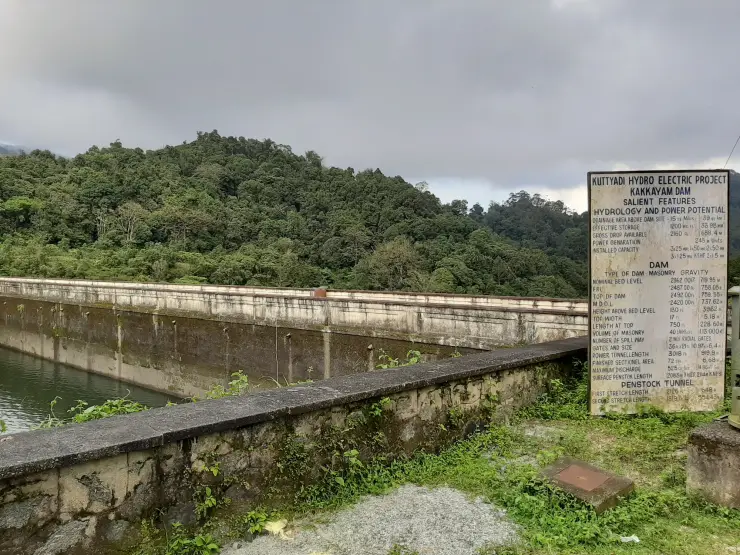
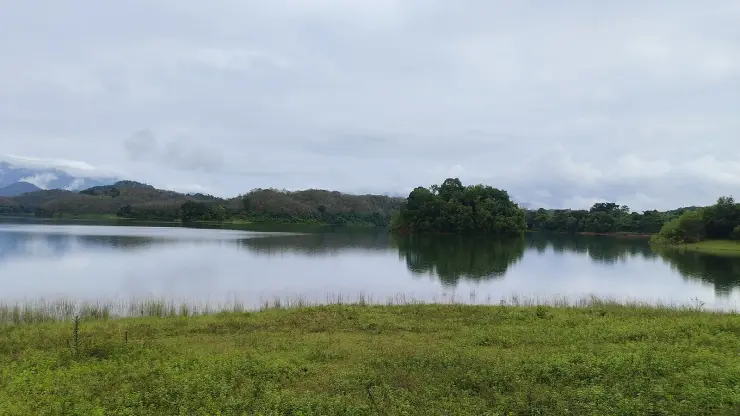
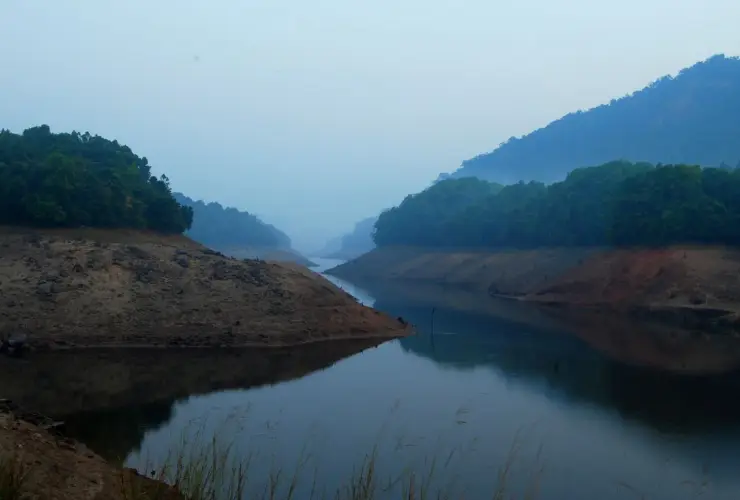
Kakkayam is a hill village in Koorachundu Grama Panchayat, in Koyilandy taluk of Kozhikode district, about 45 kilometres by road from Kozhikode and fourteen more up a single steep road to the reservoir everyone comes for. That distance is the thing visitors get wrong first: the dam is not in the village, it is above it, and the village is older than the road. Kakkayam is settler country, cleared from reserve forest and estate land by families who came north from Travancore from 1940 onwards, and its institutions are the institutions of a frontier — a lower primary school named after a power project, a police aid post, a ration shop, a health centre, a church and a cross shrine. It is also the one Kerala place-name that stopped being only a place.
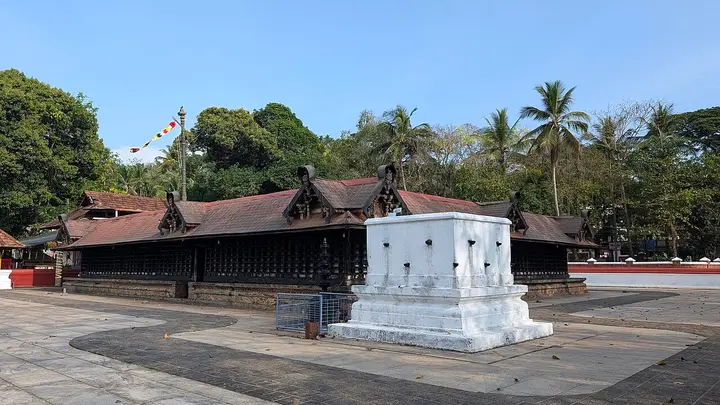
Start with what is actually here, because almost nothing written about Kakkayam is. The settlement sits at about 11.5505°N, 75.8956°E, mapped by OpenStreetMap as a town, strung along the last tarred stretch before the ghat road turns upward. Within a few hundred metres of the junction there is a post office, a primary health centre, a police aid post, a ration shop, a Kerala State Electricity Board inspection bungalow, a Roman Catholic church dedicated to St Sebastian and a small kurishu palli — a wayside cross shrine. The primary school is called KHEP GLP School. KHEP is the Kuttiyadi Hydro Electric Project. In most Kerala villages the school is named for a saint, a founder or a locality; here it is named for the power station, which tells you in four letters who built the place and when.
The dating is not vague. Koorachundu Grama Panchayat was constituted on 2 September 1969 by bifurcating Kayanna panchayat, drawing in parts of four revenue villages — Kayanna, Kanthalad, Chakkittapara and Koorachundu — and it began with eight wards, which successive delimitations have taken to thirteen. Kakkayam is one of the eastern wards, and so are Thonikkadavu and Vayalada. That is a panchayat created in the same decade as the power project and out of the same growth, and it is worth holding on to when you read that Kakkayam is an ancient forest village. It is not. It is roughly as old as Indian independence.
The people came from the south. Malayalam Wikipedia describes Kakkayam plainly as a kudiyettam area — a migration settlement — and its article on Koorachundu dates the first arrivals to 1940, on land that had belonged to the Kizhakkedath branch of the Balussery royal house. This is the Malabar migration, the great twentieth-century movement of Syrian Christian and other smallholding families out of Travancore and into the Malabar hills in search of land, and its calendar in Koorachundu is recorded almost as a parish register: an elementary school on 3 July 1947, recognised on 5 April 1948; the parish formed in 1950; roads to the outlying settlements in 1951; a new church completed in 1969; a bus service and a primary health centre in 1971; the government hospital and mains electricity in 1975; a high school in 1978. Electricity reached the households of Koorachundu three years after the turbines started at Kakkayam. The ml.wikipedia article also carries a sharply worded and explicitly unsourced sentence about the settlers’ politics, flagged on the page itself as needing a citation; we do not repeat it, because it is an allegation nobody has stood behind.
The place-names are the best social history in the valley, and they are all industrial or administrative. Kakkayam is approached through Estate Mukku — estate junction. Below the village are localities called Company Mukku and 28th Mile, the second a survivor of a milestone counted from somewhere else entirely. There is a Laksham Veedu Colony at Kallanode, from the Kerala one-lakh-houses scheme of the 1970s. There is Panikkar Bhagam, a share of land carrying a family title. Nearby smallholdings are mapped as cocoa and nutmeg farms. Not one of these names is mythological. In older Kerala villages the toponymy is thick with gods and groves; here it is thick with companies, mile posts, estates and government schemes, and that difference is the whole point.
The road is the other thing worth understanding, because it is both the reason the village exists and its standing hazard. The fourteen-kilometre Kakkayam Dam Site Road was built in the 1960s for plant access, and a former ward member, Andrews Kattikkana, told Onmanorama in August 2024 that roughly a kilometre of it was cut through rock — which is why boulders keep arriving on it from the cut face above. In the first days of August 2024 successive landslips closed the road on consecutive days and the public works department shut it, cutting off the eco-tourism centres at a stroke. That is not an exotic event. It is the ordinary consequence of a hurried plant road that has been carrying tourist traffic for fifty years.
Landslides are the sharpest fact of life here and they belong on this page rather than on any of the scenic ones. Illippilayi, near Kallanode and a few kilometres below the village, lost nine lives in a landslide in 2019. Onmanorama, reporting again in August 2024, described residents there as being evacuated as a matter of routine every monsoon, with a ward member, Simily Biju, saying that a huge boulder above Manichery Mala now threatens the families living in the valley and that the taluk and district authorities had been asked to act. At Periamala an acre of land was lost and a farmhouse damaged in June of that year. A visitor drives through this in an hour and sees only green. The people who live under the cut slopes are counting monsoons.
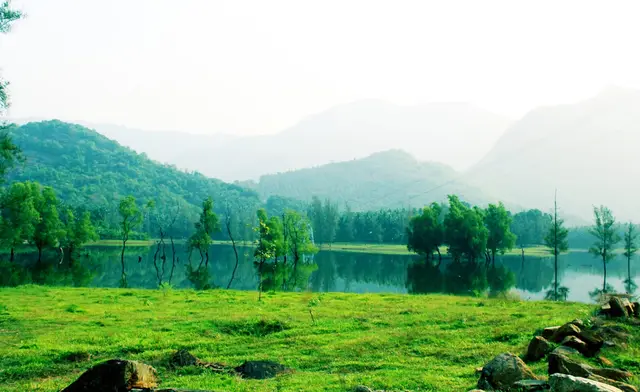
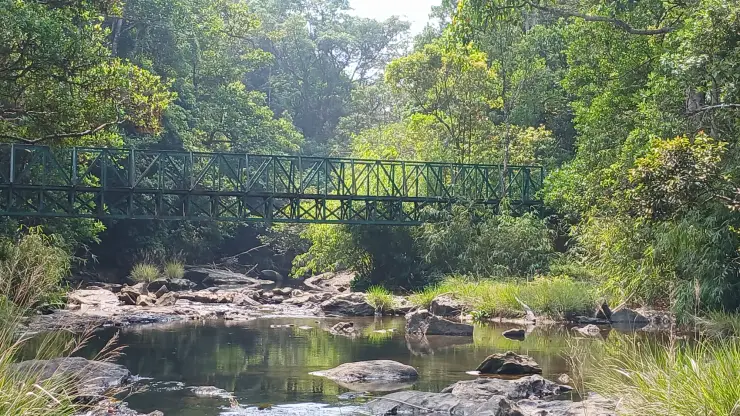
The working landscape is layered and it is easy to misread. Below the village the Kuttiyadi tailrace stream runs out of the last of the four powerhouses across a low weir, past coconut and areca gardens and a concrete power pole, with the ranges standing behind — a scene that looks pastoral and is in fact the outflow of a generating chain. Above it, reserve forest. Between them, smallholdings of pepper, rubber, cocoa and nutmeg. Kakkayam is a village that lives inside a machine and inside a sanctuary at the same time, and the boundaries between the three are administrative rather than visible.
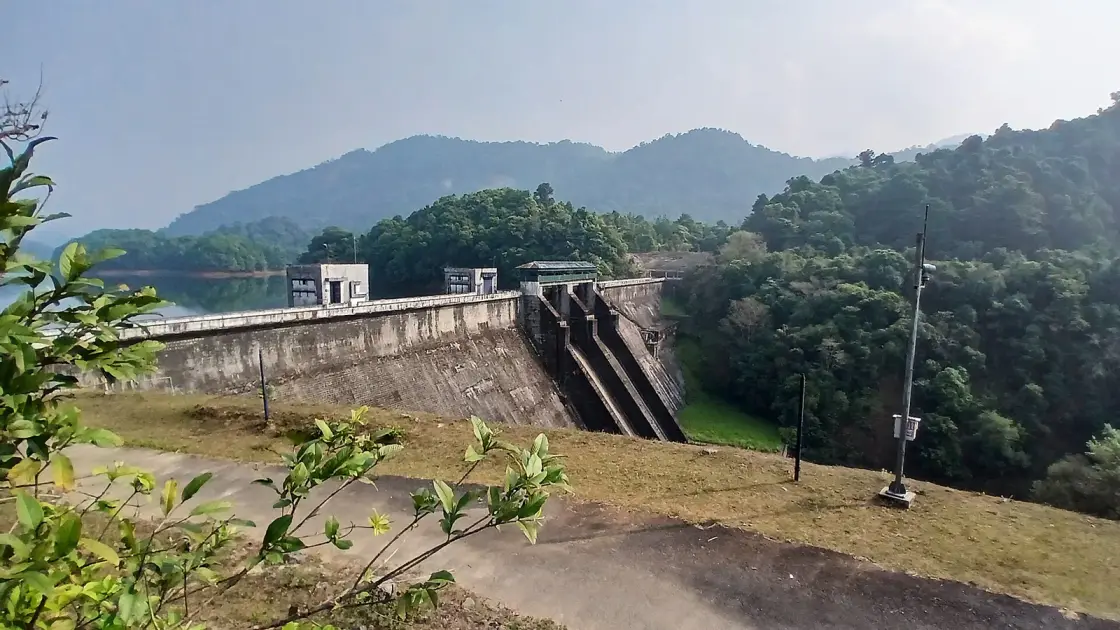
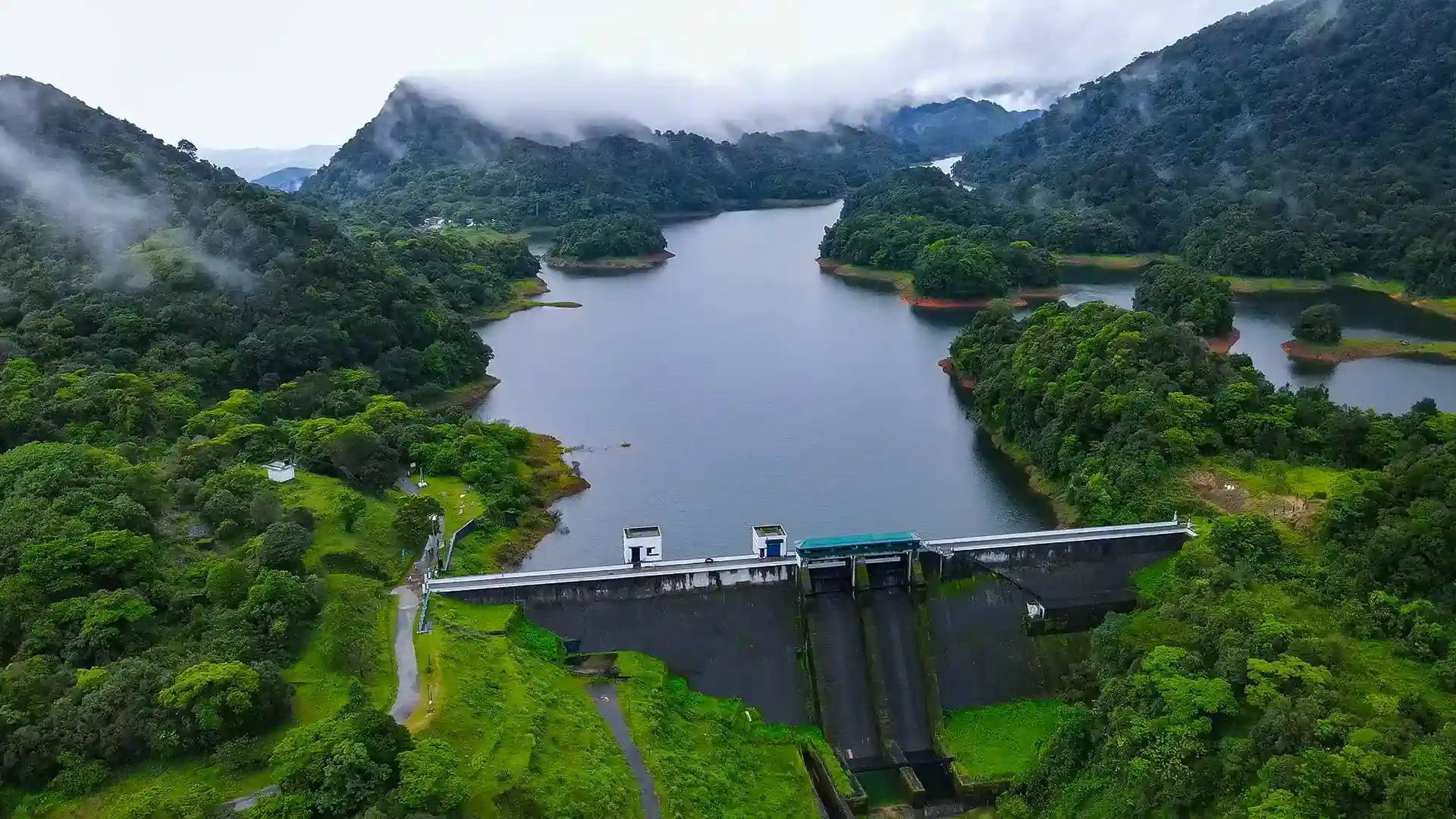
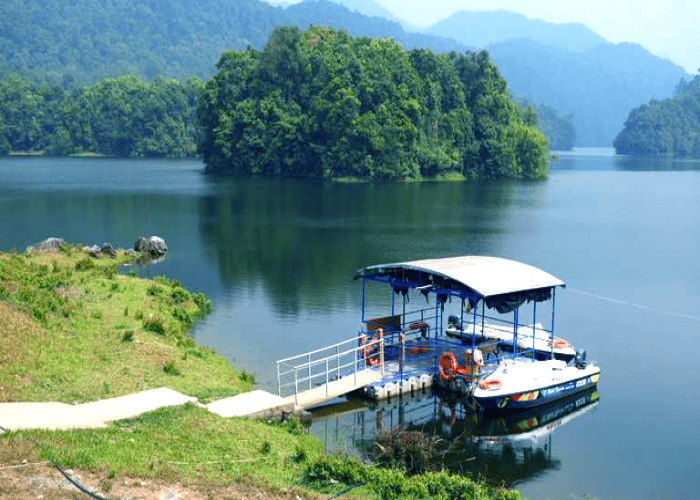
The visitor infrastructure sits at the two ends of the settlement rather than in it. The Kerala Hydel Tourism Centre and the KSEB inspection bungalow are on the village edge; the ticket points, the checkpost and the treks are fourteen kilometres up. There is no bazaar to speak of, no strip of hotels, no ATM row. Private buses run up from Kozhikode by way of Balussery, Estate Mukku and Thalayad and terminate here, at the bottom of the climb. If you have come for the reservoir, Kakkayam is where you change gear. If you have come for the village, it is the whole of it.
And then there is the name. In the years after 1977 Kakkayam stopped being only a village in Koorachundu panchayat and became a word. Journalists reaching for a comparison when someone dies in a police station in Kerala do not have to explain it; the Mathrubhumi report of 14 April 2010 that Malayalam Wikipedia cites in its articles on custodial torture is headlined, in full, വീണ്ടും ഒരു കക്കയം — another Kakkayam. No other Kerala village name does this work. It is a strange and heavy inheritance for a place of a few hundred households, and the people who live here did not choose it.
Legend & myth
The first thing to refuse is a temple that is not here. Search for Kakkayam and a temple, and the strongest English result is a page for the Kakkayam Sree Kirathamoorthy Temple, filed on templesofkerala.org under Kozhikode district and describing Kakkayam as a picturesque village near Calicut. Its own contact address, printed on the same page, reads Punnathura, and Malayalam Wikipedia’s list of Kirathamurti shrines places the Punnathura Kakkayam Kirathamoorthy temple at Ettumanoor, in Kottayam district, about two hundred and fifty kilometres away. There is more than one Kakkayam in Kerala — there is one in Pampakuda panchayat in Ernakulam too — and a directory has filed a Kottayam temple under the wrong district on the strength of a shared name. We name the temptation and decline it. That shrine is not in this valley and its festival is not this village’s festival.
The second thing is harder and more honest: this village has no ancient legend, and that is a finding rather than a gap. We searched in Malayalam as well as English — the place-name in Malayalam script paired with ക്ഷേത്രം, ഐതിഹ്യം, ഉത്സവം, ഭഗവതി and സർപ്പക്കാവ്, the ml.wikipedia articles for കക്കയം and കൂരാച്ചുണ്ട്, the panchayat’s own pages, and the mapped religious institutions of the valley. What comes back is a Christian settlement calendar and two small unnamed roadside shrines. The reason is in the dates. Until the twentieth century this was reserve forest and estate land with no village on it to accumulate a legend; the parish was formed in 1950 and the church rebuilt in 1969. An old coastal village with no folklore would be an absence worth doubting. A hill settlement seventy-odd years old with none is simply a settlement seventy-odd years old.
What lore the valley does have belongs one administrative level up, to Koorachundu, and it should be attributed there rather than borrowed. The name Koorachundu is explained locally as a compound: a deep pool once lay in the stream that curves through the settlement, and it held a great many of a fish called koorathi, so koorathi-kundu — the pool of the koorathi — became koorachikundu and contracted to Koorachundu. Malayalam Wikipedia records this in the hedged form Kerala folk etymology usually takes, that it is said to be so, and we pass it on the same way. It is the panchayat’s story. Kakkayam has no equivalent of its own that we could source at all, and we would rather say so than invent one.
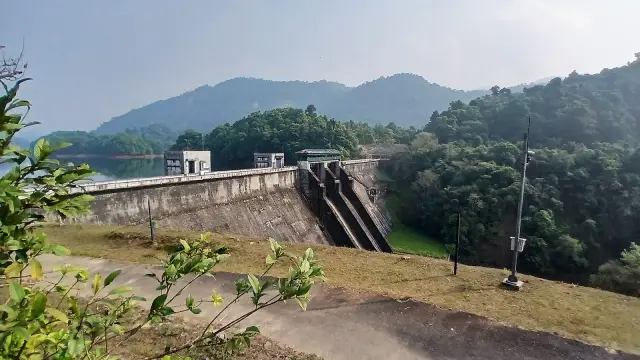
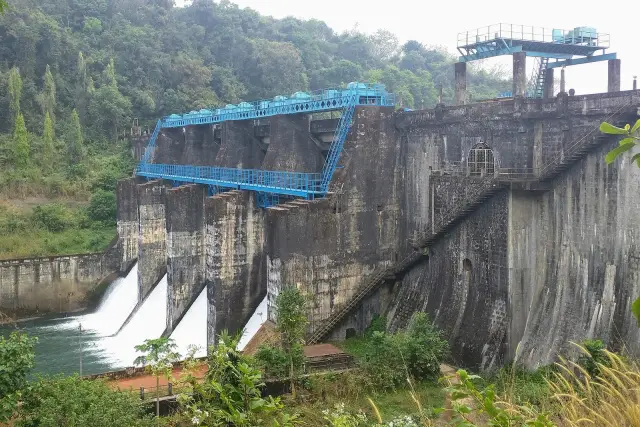
The third correction is geographic and it is the one that spoils the most trips. Kakkayam is not the dam. The village sits at about 758 metres below the reservoir, not on it, and the dam site is fourteen kilometres further up a single climbing road with a checkpost on it. Malayalam Wikipedia gives 67 kilometres from Kozhikode town to the dam site and about 45 kilometres to Kakkayam by another route, and both figures are right because they measure different destinations. Plan a day here as a village plus a climb, not as an arrival.
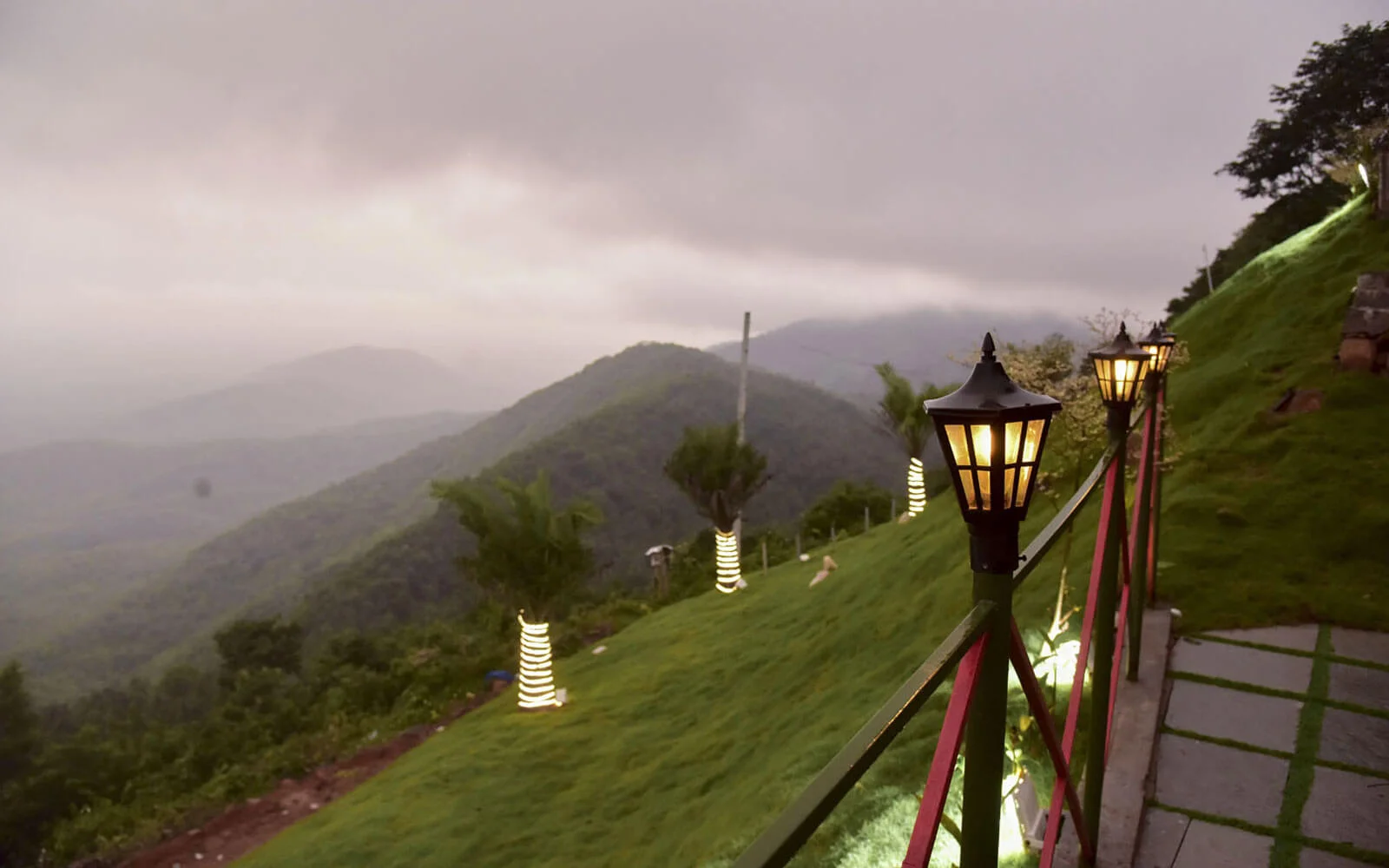
Nor is Kakkayam a hill station, whatever the photographs of layered blue ridges suggest. There is no promenade, no view-point strip, no cluster of hotels, no cool-season season. It is a working panchayat ward with a health centre, a ration shop and a school named after a power project, on a road that the public works department closed twice in two days in August 2024 because rock was falling onto it.
The fourth is the one that needs stating gently and clearly. There is nothing left of the 1976 police camp to visit, there is no memorial at Kakkayam, no plaque and no marked site, and anyone arriving expecting to find one will be disappointed and should be. What memorial there is stands sixty kilometres away at the institution P. Rajan was studying at. An All Kerala Rajan Memorial Music Competition was begun at the Regional Engineering College, Calicut in 1977, and since 1987 the institute — now the National Institute of Technology Calicut — has held its annual cultural festival, Ragam, in his memory. The commemoration is where he lived, not where he died.
Which leaves the strangest thing about the name, and it is not a misconception but a fact about the Malayalam language. Kakkayam has become a common noun. When a death in custody is reported in Kerala, the comparison does not have to be explained: Mathrubhumi’s report of 14 April 2010, cited by Malayalam Wikipedia in its articles on uruttal and on garudan thookkam as methods of beating, is titled വീണ്ടും ഒരു കക്കയം — another Kakkayam. A journalist called Appukuttan Vallikkunnu, then of Deshabhimani, wrote the series that did most to fix the word in place after the Emergency, കക്കയം ക്യാമ്പ് കഥ പറയുന്നു, the Kakkayam camp tells its story, later published as a book simply called Kakkayam; the same series was later criticised for the political colouring it gave Rajan, which is worth recording alongside its influence. A play was staged under the name Kakkayam Camp. None of this is folklore in the usual sense, and all of it is how a village of a few hundred households came to lend its name to an idea.
More about Kakkayam
History
The valley’s documented history divides cleanly at 1969 and 1972 — a panchayat, then a power station — and then there is 1976, and the reason Kakkayam is known at all. What follows is the court record, stated as narrowly as the record allows, because this is a real family and the difference between what was found and what was alleged is the whole of the story.
On 1 March 1976, during the Emergency, P. Rajan, a final-year student of the Regional Engineering College, Calicut — now NIT Calicut — was taken from his college hostel into police custody along with a fellow student, Joseph Chaaly, and brought to the investigation camp at Kakkayam. Rajan did not come back and his remains have never been found. His father, T. V. Eachara Warrier, a retired professor of Hindi at the Government Arts and Science College, Calicut, spent the following year writing to the Home Minister of Kerala, the Chief Minister, the Home Minister of the Government of India and every Member of Parliament from the state, and received, in the Supreme Court’s own summary of the record, no answer to his piteous queries about the whereabouts of his son. Nothing could be done in court while the Emergency ran, because the Supreme Court’s own majority in ADM Jabalpur had closed that door.
The habeas corpus petition was filed in the High Court of Kerala on 25 March 1977. Counter-affidavits, including K. Karunakaran’s, were sworn on 31 March and filed on 4 April; twelve affidavits in support of the petitioner followed on 6 April. The High Court delivered judgment on 13 April 1977, issuing a writ directing the respondents to produce Rajan on 21 April and providing that if they could not, a memorandum was to be filed on 19 April. The memorandum came on 19 April: Rajan could not be produced, police officers had been suspended, the Deputy Inspector General had been moved out of the Crime Branch, and Crime No. 304/77 had been registered by the Crime Branch CID under sections 342, 323 and 324 read with section 34 of the Indian Penal Code — wrongful confinement and causing hurt, not murder. The High Court refused leave to appeal on 23 April and the Supreme Court rejected the special leave petition on 25 April 1977. Karunakaran resigned as Chief Minister at the end of that month.
The admission came a month later, and it came from the state. In a second affidavit filed in the High Court on 22 May 1977, Karunakaran — by then a Member of the Legislative Assembly rather than Chief Minister — stated that Rajan, after being taken into custody, was belaboured by the police and that there was every reason to think he met his death while in police custody, compliance with the writ having become impossible on account of Sri Rajan having died as a result of police torture at the Kakkayam Investigation Camp on 2-3-1976, while in unlawful custody of the police. That sentence is quoted verbatim in the Supreme Court’s reported judgment. It is the single most authoritative statement that exists about what happened in this village, and the government made it.
The perjury proceeding followed. On 13 June 1977 the High Court, after an enquiry under section 340(1) of the Code of Criminal Procedure, found a prima facie case under section 193 of the Indian Penal Code — giving false evidence — and sanctioned complaints against Karunakaran and against two police officers, the Deputy Inspector General, Crime Branch and a Superintendent of Police, while declining to act against the Home Secretary and the Inspector General. Karunakaran appealed by special leave. On 16 November 1977, in Criminal Appeal No. 272 of 1977, a bench of Goswami and Tulzapurkar JJ dismissed the appeal, holding that the High Court’s order was neither perverse nor palpably unjust and that the matter must go to trial — while taking care to say that none of the reasons recorded by either court should weigh with the criminal court, which would have to decide independently and on evidence. The Supreme Court was explicit that it was not dealing with a conviction.
The criminal case over Rajan’s death was transferred, at the accused’s request, to the sessions court at Coimbatore, and it is here that the record thins into disappointment. Eachara Warrier’s memoir — which won the Kerala Sahitya Akademi award for autobiography in 2004 and is available in English as Memories of a Father — records that the case was heard by Justice M. Fakir Mohamed with almost a hundred witnesses, some eighty of them men who had been tortured at the Kakkayam camp, and that all of them turned hostile, withdrawing their earlier statements on the ground that those had themselves been given under torture. The court held only Crime Branch officers responsible, found the charge of torturing and killing Rajan not proved beyond doubt, exempted the three from the murder charge and sentenced them to one year’s simple imprisonment on a lesser count. All three appealed to the Madras High Court and all three were acquitted. That is where it stands. A court established that Rajan was taken into custody; the state admitted he died there under torture; and no one has ever been convicted of causing his death.
Why visit
It is the only Kerala village whose name entered the language, and standing in it changes what the name means.
The settlement is a legible piece of twentieth-century social history — a 1940s migration frontier with its calendar of school, parish, road, bus and electricity still readable in what is built here.
The place-names alone repay the trip: Estate Mukku, Company Mukku, 28th Mile, Panikkar Bhagam, a Laksham Veedu colony.
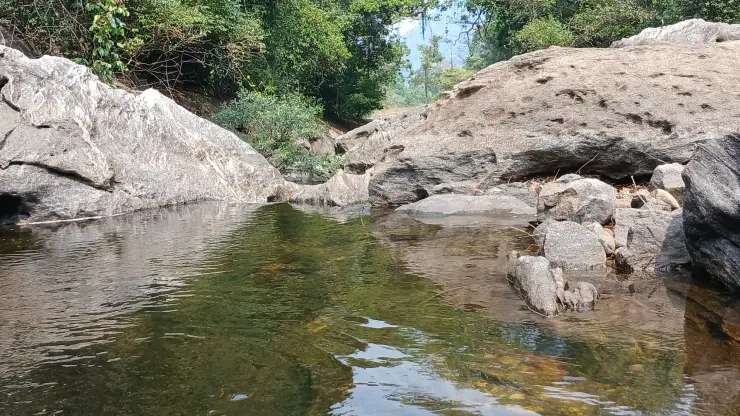
The tailrace stream below the village is the quietest water in the valley and almost nobody stops at it.
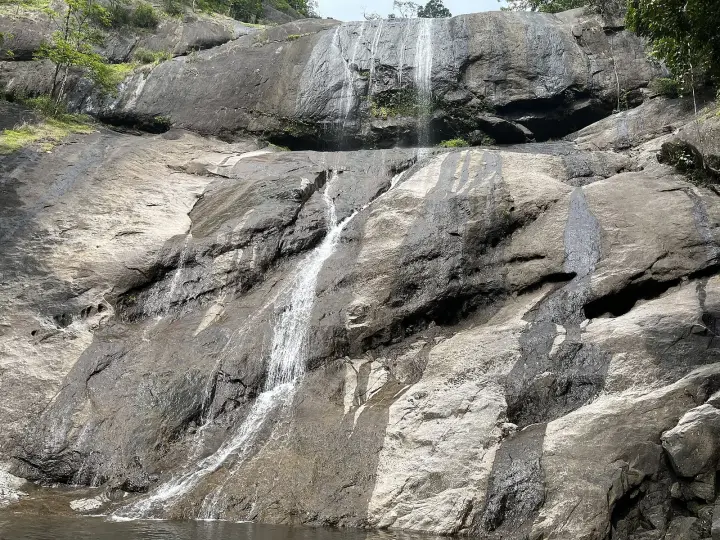
It is the bottom of the fourteen-kilometre climb, so everything above — reservoir, forest, falls — starts from here.
Coming for the village first, and the reservoir second, is the order that makes sense of both.