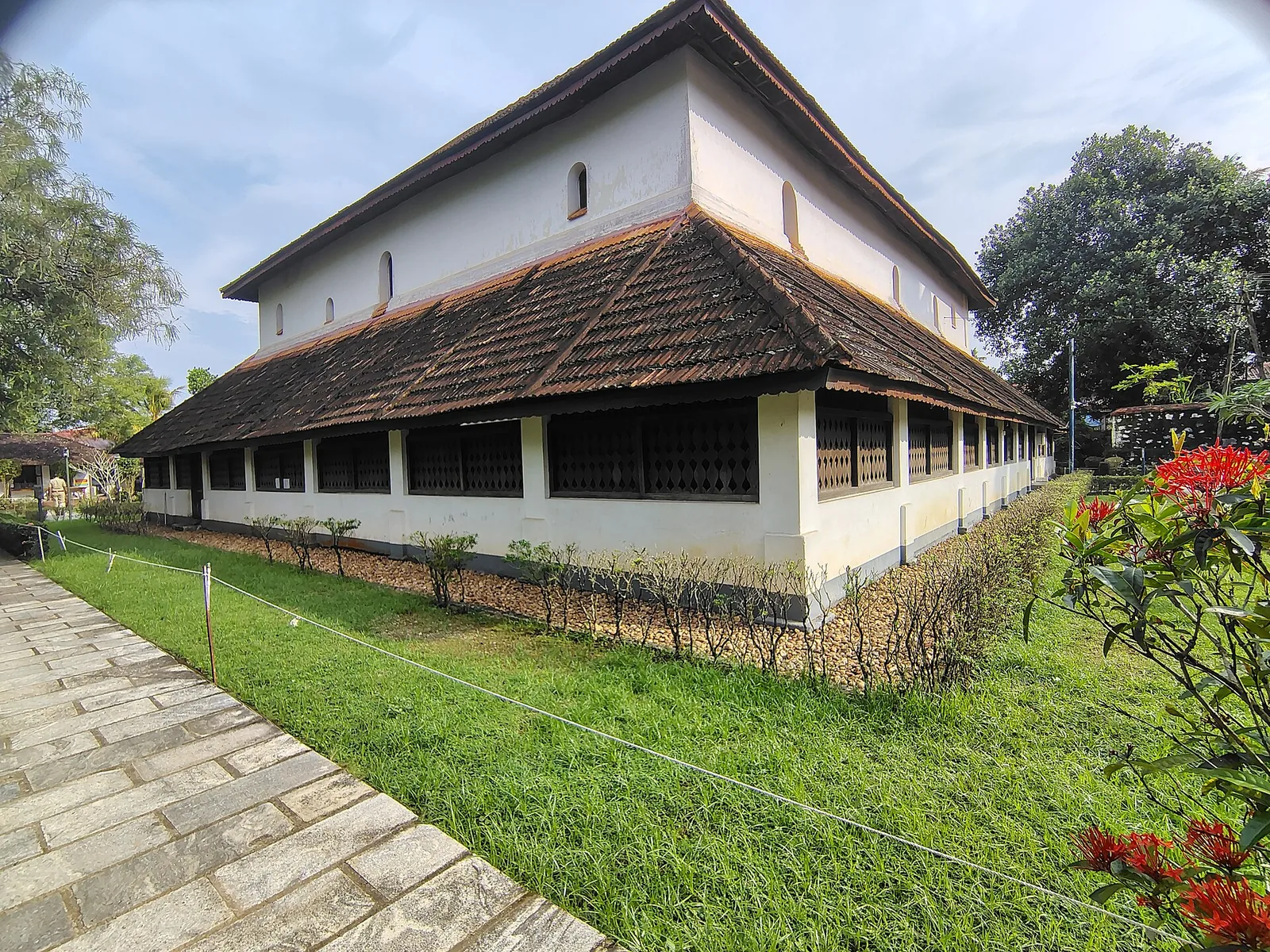
Inside Koyikkal Palace, the coin museum changes the scale of the visit. A royal house becomes a place to examine objects small enough to hold in a hand, but large enough to carry a ruler’s name, metal, script and image. Kerala Tourism’s descriptions place local issues beside coins from far beyond Nedumangad.
Start close to home
The tourism collection account names Travancore and Kochi issues, including Anantharayan Panam and Kochi Puthen. Those names are better starting points than a sweeping claim that every coin in the room circulated through the palace. A coin’s design and attribution can connect it to a minting tradition; the museum display alone does not establish exactly who brought it to this building or how it changed hands.
Look at the label and then the object. Does it identify metal, ruler or period? Can you see an emblem or writing on the surviving face? Coins are evidence of the systems that made them, but a case containing several periods is a collection assembled later. The order in the gallery need not be the order in which those coins reached Kerala.
The long-distance temptation
Kerala Tourism also describes Roman and Venetian coins in the museum. Their presence makes the collection wider than a local dynastic display, but it should not be turned into a claim that every coin proves a direct journey from its place of issue to Nedumangad. An object can travel through many hands or arrive in a modern collection. Provenance needs records beyond the face of the coin.
The account repeats a tradition that a Venetian “Amaida” coin was given to Jesus Christ. That extraordinary connection is not established by the coin’s presence or by the tourism description. It belongs on the page as a claim attributed to the collection material, with the evidence limit made explicit. The stronger question for a visitor is how the coin was identified, dated and acquired.
The room’s real breadth
A wooden coin-counting board described by Kerala Tourism points to another side of money history: handling and calculation. It makes the display more than a sequence of rare pieces behind glass. Compare an ordinary tool of exchange with the coins that tourism copy calls exceptional, and the collection begins to tell a story of use as well as prestige.
The Chandravalayam story follows the palace’s folklore collection, while the nalukettu story looks at the building itself. Give each room its own evidence. The coin museum is most compelling when it invites close looking and careful questions, rather than asking one sensational label to carry all of Kerala’s trade history.