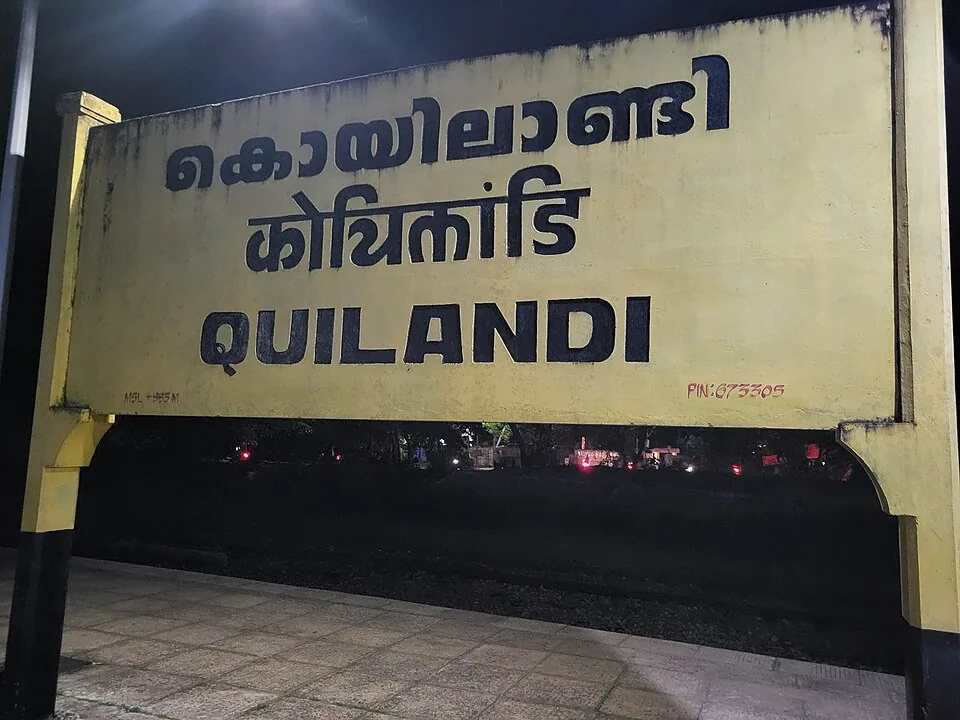
Koyilandy is a small fishing town in Kozhikode district, just north of Kappad. Its best-known object is not a building. It is a water pipe. In the Gulf it is called the Malabar hookah, and at home it is the Koyilandy hookah. Its story runs from the merchants who first ordered it to the few families who still make it.
The story begins with traders from Yemen. More than five hundred years ago, merchants from West Asia came to Koyilandy, and some of them settled in the town. They wanted hookahs, so they asked local artisans to make them. The craft stayed in the town long after those first buyers.
The makers learned a clever design. The water bowl is a large coconut shell, and the shells come from Malabar. A brass body is moulded around the shell, and silver is sometimes added for shine. The moulds are made of wax, clay or wood. The designs range from royal floral patterns to Arabic patterns made for a single client. The master craftsmen are called Moosharis, and some pieces still carry their marks.
For more than three centuries the pipes crossed the sea to Arabia. Many still sit in royal collections in the Middle East. Exports went on until the 1980s and 1990s. One Koyilandy exporter, Hashim K.M., has sent hookahs abroad since 1979. In the 1980s and 1990s he shipped three or four containers a year, with up to 6,000 pieces in all.
Prices tell how the trade once paid. In 1972, the craftsman Rajan Kavil earned 150 to 200 rupees for a fifteen-inch hookah. A larger piece earned him up to 350 rupees. He had started helping his father at fourteen, and he later moved into sales.
Then the market fell away. The Gulf War in the early 1990s was the first blow, and the civil war in Yemen made things worse. Export subsidies were withdrawn, and making each piece by hand stayed costly. Around two hundred families once made hookahs in Koyilandy. Today only a handful still do. Rajan Kavil puts it simply: the craft ends with him in his family.
A few people are working to keep it alive. Chandrashekaran Mooshari now casts brass and bronze items for temples, but his son Abhilash still makes hookahs. ARPO, a not-for-profit group, began by making a documentary about the last makers. It has since helped one of them sell about a dozen hookahs.
The town keeps older traditions too. In the village of Kollam, near Koyilandy, stands the Pisharikavu temple of the goddess Bhadrakali. It has two shrines, and one is for Shiva. The legend says the goddess gave a sword, the Nandakam, to an ancestor of the Ettuveettil family of diamond merchants and asked him to build her a temple. Its eight-day festival falls in the Malayalam month of Meenam. On the last day, Kaliyattom, the Nandakam goes around the temple on the back of a female elephant. The Ravari community, whose name comes from the Malayalam word for merchant, holds the right to conduct it.
Merchants, then, run through the whole town: the Yemeni traders who ordered the first pipes and the merchant family behind the temple. The Koyilandy page covers the town itself, and the Kappad hub covers the coast around it. Crafts from across Kerala are on show at Iringal Sargaalaya, a short drive north.
Frequently asked questions
What is a Koyilandy hookah?
It is a water pipe with a coconut-shell bowl inside a moulded brass body. In the Gulf it is called the Malabar hookah.
Who first ordered them?
Traders from Yemen who settled in Koyilandy more than five hundred years ago.
How many families still make them?
About two hundred families once did. Only a handful do today.
When is the Pisharikavu festival?
It runs for eight days in the Malayalam month of Meenam and ends with the Kaliyattom procession.