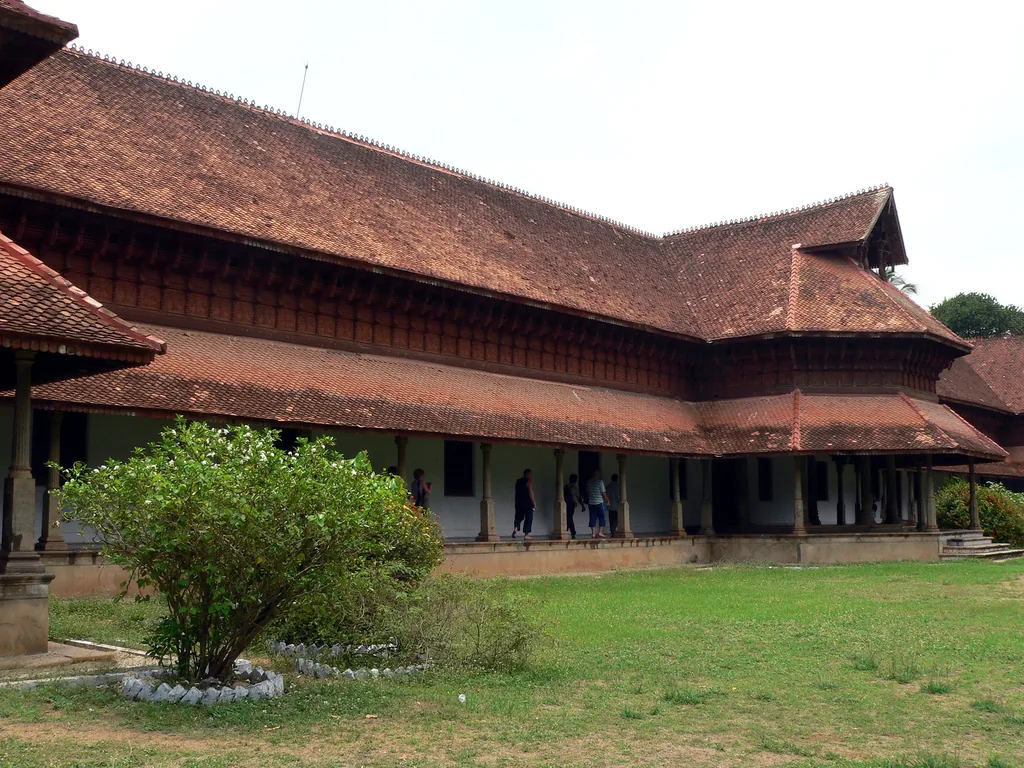
The wooden horses under Kuthiramalika’s eaves give visitors a neat number to remember. Inside, the museum offers a less tidy story. Kerala Tourism describes paintings, sculptures, mirrors and Kathakali figures among its collections. They do not all belong to one moment or tell the same tale, but together they show what a palace kept and what a later museum chose to show.
A room is not an inventory
Some accounts of Kuthiramalika circulate precise numbers for rooms and for those open to the public. Such figures can change with restoration or route management, and the material reviewed here does not establish a permanent nineteen-room visitor circuit. Let the current museum arrangement be the guide. The important question is not whether a count can be repeated, but what each accessible room lets a visitor understand.
Look for the difference between a building detail and an object brought into it. The verandah and timber work belong to the palace’s architecture. A mirror, painting or figure may point toward taste, display, ceremony or later collecting. A label with an object’s date and origin will tell more than a general claim that every piece was personally used by Swathi Thirunal.
The court beyond the king
Swathi Thirunal commissioned the palace in the 1840s, according to Kerala Tourism. He is strongly associated with music, yet the museum contains more than the biography of one composer ruler. The music story follows that connection; the architecture story follows the carved exterior. The collection adds the everyday question of how a royal household represented itself and stored things of value.
The museum also belongs to the present. Curators arrange and preserve objects, staff manage access and visitors bring new questions. A display can be reinterpreted as research improves; uncertainty in a label is useful when it stops a beautiful object being assigned a false origin.
A better way through
Begin outside with the horses and shaded eaves, then follow the approved room route slowly enough to read the labels. Notice which objects have a clear date or provenance and which are described more generally. Ask a guide when a connection is unclear rather than filling the gap with a palace legend.
The building’s famous number draws people in. What gives the visit depth is the movement from count to context: from 122 horses under a roof to a varied collection inside a house that has had more than one life.
Frequently asked questions
What is displayed inside Kuthiramalika?
Kerala Tourism names Kathakali figures, white-marble sculpture, Belgian mirrors and paintings among the museum objects.
Are exactly nineteen rooms open?
The official visitor sources used here do not confirm a current room count. Ask the museum about access on the day of your visit.
Can I photograph the collection?
Confirm the current photography rules with the museum before visiting; they may differ between exterior and interior spaces.