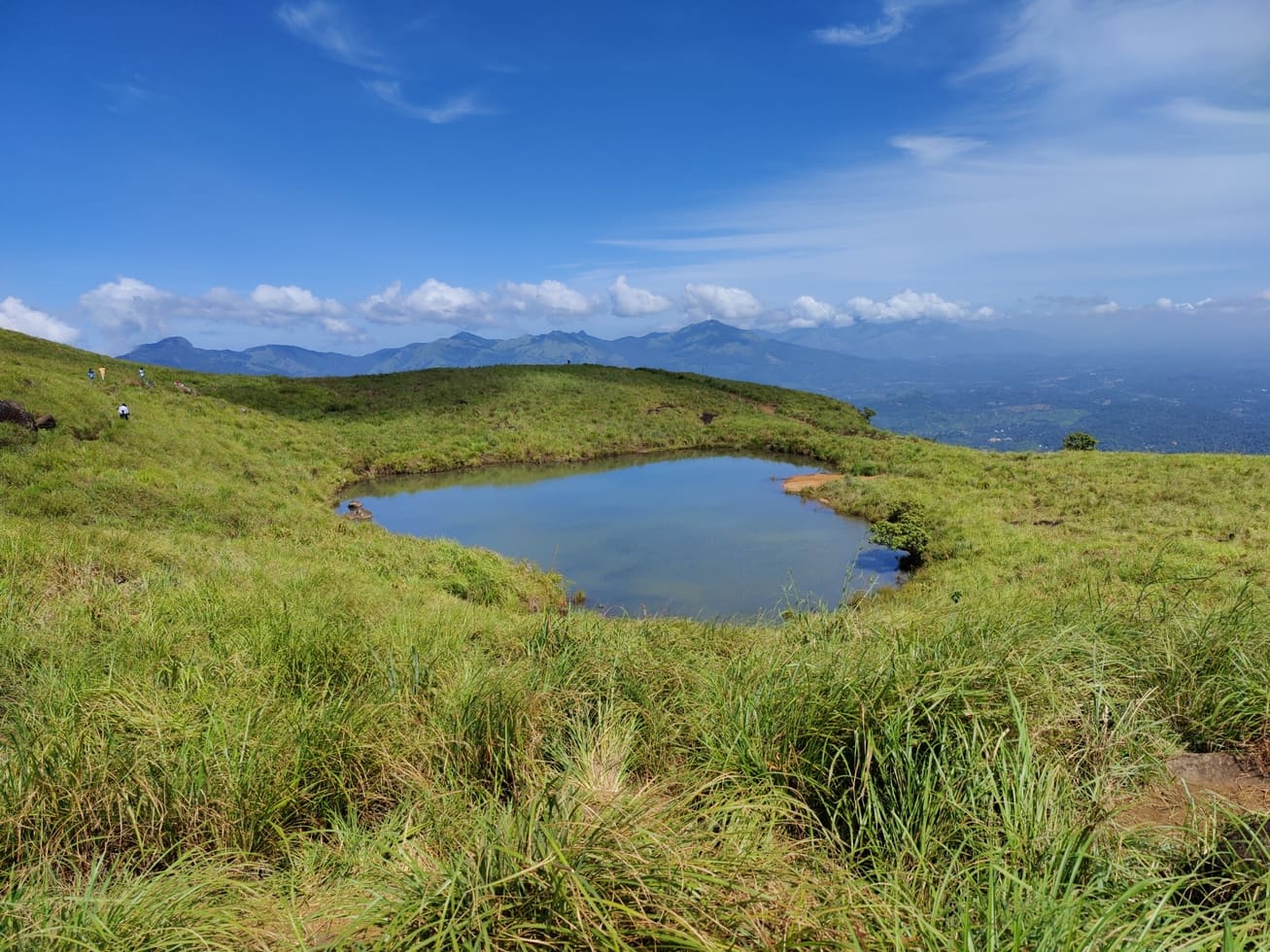
High above Meppadi, the steep cliffs of the Vellarimala massif rise to more than 2,200 metres, and below them three settlements once followed the river down the valley. Down To Earth names them as Punchirimattam, Mundakkai and Chooralmala. On 30 July 2024, after days of extreme rain, the slopes gave way. The Mundakkai Chooralmala landslide sent millions of tonnes of mud, boulders and uprooted trees down onto the homes below. It was the worst disaster in Wayanad's recorded history, and this story is told with that weight in mind.
The scale became clear only in the months that followed. Down To Earth reported in July 2026 that the official death toll stands at 298. A further 32 people were never found, and they were later declared dead, so no one is still officially listed as missing. Nearly 1,000 houses were destroyed or left unfit to live in, and more than 1,000 people lost their homes. In Mundakkai alone, Onmanorama reported two days after the disaster that only 30 of about 400 houses had survived.
The debris also cut the valley in two, and that made the first days of rescue so hard. The landslide had destroyed the 100-foot concrete bridge that joined Chooralmala to Mundakkai, so rescuers on one side could not easily reach the people and wreckage on the other. The Indian Army answered with a bridge of its own. Onmanorama reported that 144 soldiers of the Madras Engineer Group began work at 9 am on 31 July, using steel panels brought in by 20 trucks. By 6 pm on 1 August, about 31 hours later, a 190-foot Bailey bridge stood across the gap. It rested on a single pier, was 3 metres wide and could carry 24 tonnes. During the same night the soldiers also built a footbridge of about 100 feet beside it, between 3 am and 6 am.
Once the bridge opened, the search could reach deep into the valley. Rebuilding lives was harder and slower, because the families who survived had nowhere left to go home to. Down To Earth reported that more than 400 families were found eligible for permanent new houses. Those families wanted one thing above all. Chief Minister Pinarayi Vijayan put it simply when he opened the first homes: "Those who had lived together wanted to remain together, and the government fulfilled that wish."
That wish shaped where the new homes went. The state built a model township on the Elstone Estate near Kalpetta, a former tea estate, with the Uralungal Society as the agency doing the work. The Chief Minister opened its first phase on 1 March 2026, Onmanorama reported, and promised that every affected family would have a house before the next monsoon. The move itself took longer than the ceremony. By the end of March, Onmanorama found the 178 first-phase houses still empty while construction work went on.
Progress came in stages through 2026. As of July 2026, Onmanorama reported that 178 houses had been handed over to families. A further 157 houses under construction were due by 30 September, and the last 62 by December. Work had begun on a health centre, and a playground, an anganwadi and a waste collection centre were to follow. The state also released ₹5.58 crore to banks to write off the loans of survivors in the first phases. Our Elstone township story follows that town as it grows on the old tea estate.
The government township was not the only answer, because other groups built homes for survivors too. Down To Earth reported that at Thrikkaipatta, 51 furnished houses out of a planned 105 were finished on 11 acres. Public donations of more than ₹37 crore paid for them, and families moved in during April 2026. A separate project of 100 houses was planned at Kunnampatta in Meppadi. Still, about 70 families from Padavettikkunnu, Attamala and School Road were seeking to be added to the beneficiary lists, so the work of rehousing was not yet complete.
The hills around the valley have not grown quiet, either. Down To Earth reported that eight workers were killed in a landslide and tunnel collapse at the Anakkampoyil–Kalladi–Meppadi twin tunnel project. That site lies barely five kilometres from Chooralmala and Mundakkai. On the second anniversary, on 30 July 2026, Down To Earth described Wayanad and Kerala as standing at a crossroads over how to build safely on these slopes.
For a visitor, this history changes how Wayanad reads. The road to Meppadi and Chembra still leads to tea estates, waterfalls and the Chembra Peak trek. But the valley beyond Meppadi is a place of grief, not a sight, because the homes of the people who died still lie under its mud. Travellers who stay in Kalpetta pass close to the new township, where families are rebuilding ordinary lives.
So the landslide's story does not end in the valley where it happened. It continues on a former tea estate outside Kalpetta, where hundreds of families are starting again as neighbours. Read how that new town is taking shape in our Elstone township story, or begin with the wider district in our Wayanad guide.
Frequently asked questions
When did the Mundakkai–Chooralmala landslide happen?
It struck on 30 July 2024, below the Vellarimala massif above Meppadi in Wayanad.
How many people died in the Wayanad landslide?
The official toll is 298. Another 32 people were never found and were later declared dead.
What is the Chooralmala Bailey bridge?
It is a 190-foot steel bridge that the Army's Madras Engineer Group built in about 31 hours in 2024. It reconnected Chooralmala and Mundakkai.
Where are the landslide survivors being rehoused?
In a model township on the Elstone Estate near Kalpetta. As of July 2026, 178 houses had been handed over, with more due by December 2026.