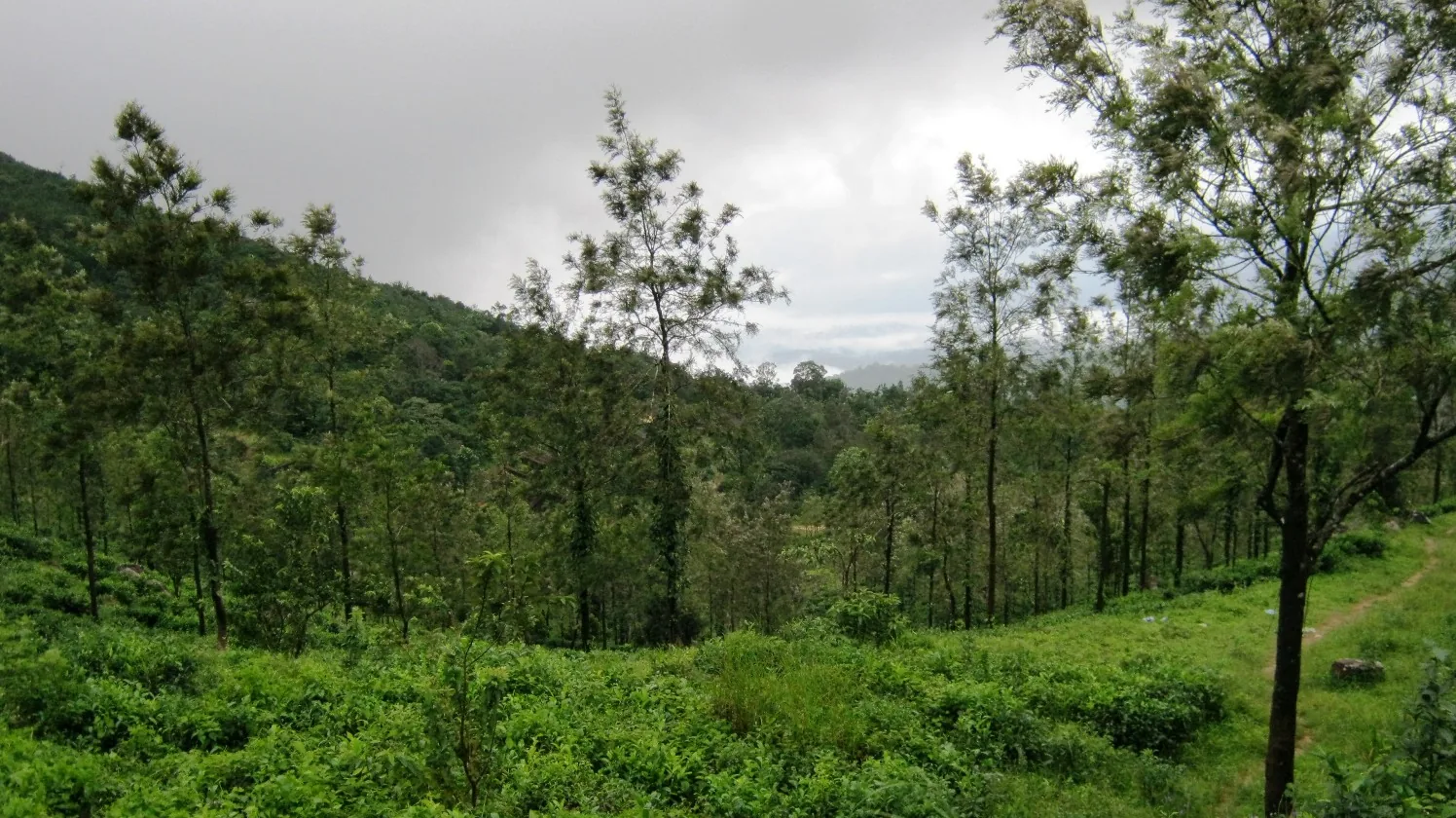
The hills around Ponmudi are often presented as one sweep of green. Their place names interrupt that postcard. Brymore appears in Kerala Tourism’s estate history; Bonacaud appears in its account of the permitted Agasthyakoodam trek. The names sit in the same wider highland region, but they should not be turned into two open stops on a casual viewpoint drive.
Brymore was more than a tea estate
Kerala Tourism’s 2015 article says Brymore Estate had been noted since 1880 and describes tea, rubber, coffee and spices across a large property. That mixed cultivation matters. “Tea country” is an easy visual shorthand for any planted hill, but the documented estate had several crops and the work that goes with them. The article also locates Mankayam forest check post as a gateway and describes streams, waterfalls and forest nearby.
The same account mentions a route from Brymore toward Ponmudi and explicitly says forest permission is necessary. A historic route description is not an invitation to leave a public road or enter working land. Estate access, forest access and a tourist viewpoint are different arrangements. Contact the current forest operator for any trek and the estate for any visit to its property.
Bonacaud belongs to a different journey
Bonacaud enters Kerala Tourism’s trekking account as the starting point for the protected-forest route to Agasthyakoodam. That is a multi-day permitted expedition described with a forest picket station, a base camp and limited booking. It is not the same undertaking as driving to Ponmudi for a view. The distinction matters to someone reading a map of nearby names and assuming all of them are available on one afternoon.
The tourism article also names a seasonal trek window. Treat that as a description of the programme at the time it was written, then check the Forest Department’s current notice before making plans. Protected habitat, permit limits and weather can change the actual arrangements. A remembered estate name does not override those rules.
Read the landscape without entering it
At a public Ponmudi stop, the planted slopes can be read as working ground rather than untouched scenery. Brymore’s record offers one documented example of how varied that work could be. Bonacaud’s place in the trekking record shows where a different kind of journey starts. The hills carry several histories at once, but a view across them is not a right of access to each one.
Continue with what the Ponmudi mist changes if the weather shapes your day, or the Agasthyakoodam route story if you are researching a permitted trek. Keeping the routes distinct makes both stories more useful than a list of estate names gathered from a map.