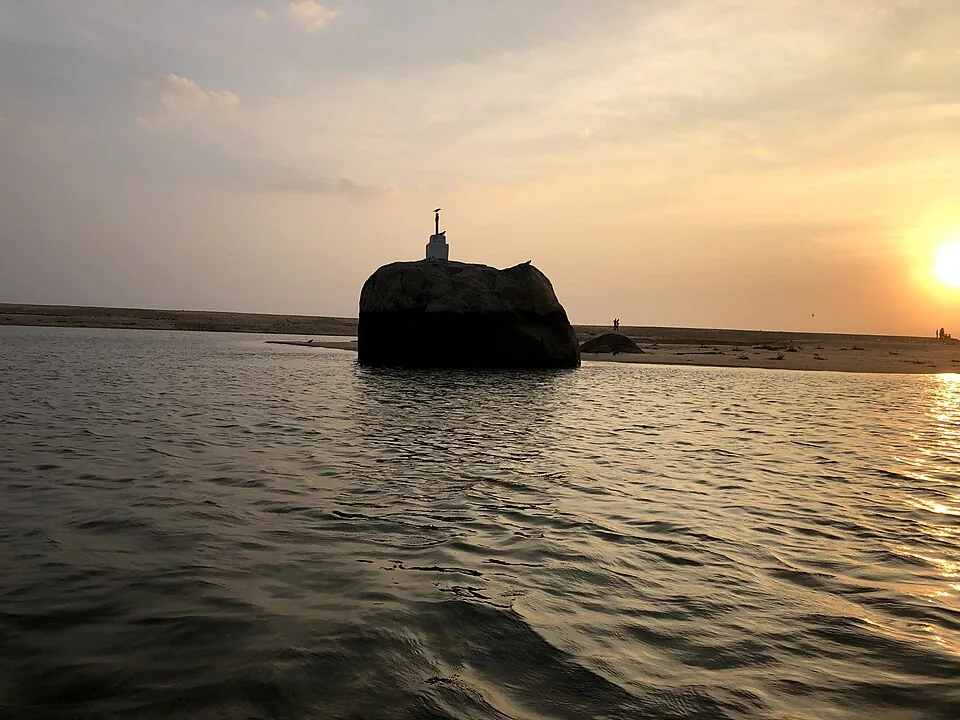
A river reaches the sea at Poovar, carrying a name that sounds as if it came from a picture: poo, flower, and aar, river. The best-known explanation brings a Travancore prince to its bank as blossoms drift on the water. Another part of the same local tradition remembers the man said to have protected that prince. The two scenes make a story, provided they are told as tradition rather than as a documented naming ceremony.
The merchant and the fugitive
In the local account, a merchant called Moosa Marikkar shelters the young Marthanda Varma during a period of danger. A Kerala Tourism-hosted travel account records this version and remembers the settlement through the merchant’s name. The larger political setting is historical: Marthanda Varma became Travancore’s ruler in 1729 and consolidated the kingdom. The precise shelter at Poovar and the merchant’s role are details of local memory, not events established by the tourism article’s archival evidence.
That distinction makes the merchant more interesting, not less. A place-name legend often concentrates a broad history into a small human exchange. Here it lets a coastal trading household enter a royal tale. The story implies hospitality given before anyone could be certain that the fugitive would become king.
The flower river
The naming scene then turns to the landscape. Flowers in the Neyyar are said to have prompted the name Poovar. Some retellings join that sight to Marthanda Varma; others simply explain the word through the river. The petals are easy to imagine at a green estuary, but there is no dated contemporary record showing when the name replaced an earlier one or who spoke it first.
It is tempting to sharpen the tale into a king deliberately erasing his host’s name. The surviving visitor material does not support that motive. What it does give us is a pair of memories: a merchant associated with the old settlement and a poetic explanation for the modern name. Leaving the gap visible keeps both memories in view.
What the place gives the story
On the Poovar backwater route, the river, creek and sea are close together. It is a fitting setting for a story that travels between an inland kingdom and a trading coast. The mangroves have their own ecological story, and the moving sandbar has a different river story. Neither proves the naming legend; both explain why the water has always mattered here.
A good legend need not masquerade as a land record. Poovar’s name can carry the image of flowers and the memory of a merchant while the historical question stays open. That is a fuller account than a one-line translation of “flower river.”
- Kerala Tourism-hosted Poovar travel account: Moosa Marikkar and the flower-river tradition
- This is a published retelling of a local tradition, not proof of the shelter episode or a documented village renaming.