Puthuvype is usually described as a drive-in beach, which is accurate and slightly misleading, because for almost the whole of its existence you could not drive to it at all.
Vypin is an island. Until twenty-odd years ago the only way onto it from Kochi was a boat — the ferries from Fort Kochi and Ernakulam, carrying people, bicycles, motorbikes and the day’s fish, on a timetable and at the mercy of the water.
Four months in 2003–04
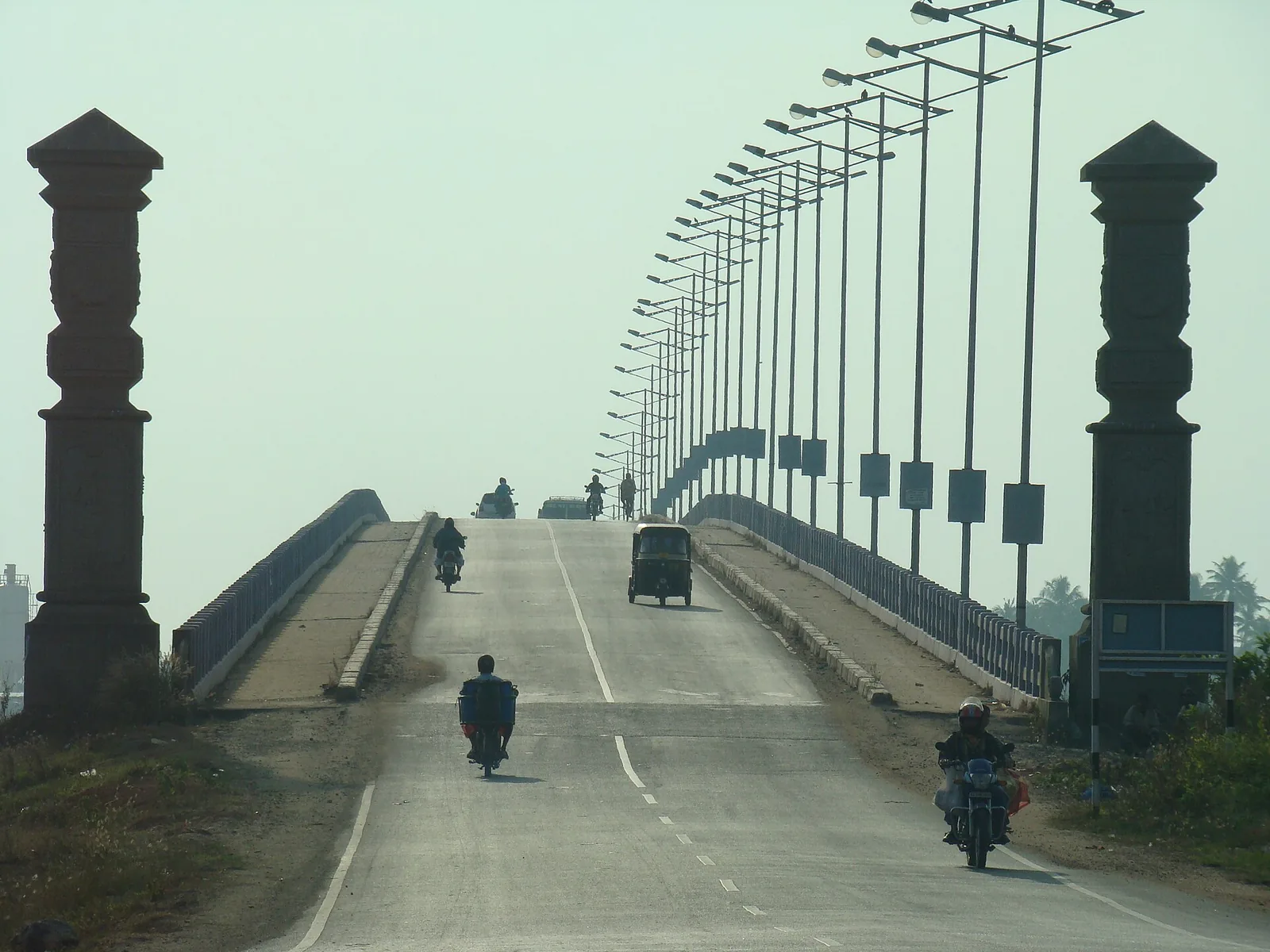
The Goshree bridges changed that, and they did it quickly once they were finally under way. The foundation stone went down on 29 December 2000. The first segment, Ernakulam to Bolgatty, opened on 29 December 2003 — three years to the day. Bolgatty to Vallarpadam followed on 10 February 2004. The last segment was completed on 17 March 2004, and the whole system was formally opened on 5 June that year.
They were built by the Goshree Island Development Authority, set up by the Government of Kerala, and the financing has a neat circularity to it: the construction was funded from the sale proceeds of reclaimed land adjacent to the bridges. The islands paid for their own connection with ground that had not previously existed — which, on an island created by a river in 1341, is at least consistent.
What it changed
For Kochi, the answer is the port. The bridges made the International Container Transshipment Terminal at Vallarpadam possible; you cannot run a container terminal off a ferry. That is the reason the project existed and the reason it was funded.
For Puthuvype, the effect was subtler and is the thing you are looking at. A shoreline that had been the far end of a boat journey became somewhere a family from Kakkanad could reach in forty minutes after work. That is why the beach reads as it does today: no boardwalk, no ticket gate, no row of shacks, but cars parked close to the sand and people watching the sunset from near their vehicles. It was never developed as a resort beach because it was unreachable when resort beaches were being developed, and by the time it was reachable it had a container terminal and an LNG facility for neighbours.
The quietness travellers prize here is not preservation. It is a timing accident.
Take the ferry anyway
The crossings did not stop. The Fort Kochi–Vypin ferry still runs, still carries motorbikes and bicycles, and still costs a few rupees, and it remains the best short boat ride in the city — a working commuter service rather than a cruise, which is exactly why it is worth doing.
The best version of a Vypin day uses both: ferry across in the morning with the commuters, work north up the island — Puthuvype and its lighthouse, then Cherai, Pallipuram Fort and Munambam at the top — and come back over the bridges in the dark. Twenty years ago that itinerary would have taken two days and a good deal of waiting on jetties.
Frequently asked questions
When did the Goshree bridges open?
In stages. Foundation stone 29 December 2000; Ernakulam–Bolgatty opened 29 December 2003; Bolgatty–Vallarpadam 10 February 2004; the final segment completed 17 March 2004, with the whole system formally opened on 5 June 2004.
How did people get to Vypin before that?
By boat. Ferries from Fort Kochi and Ernakulam carried people, bicycles and motorbikes across the harbour, and that was the only route onto the island from the city.
Who built them and how were they paid for?
The Goshree Island Development Authority, constituted by the Government of Kerala. Construction was funded from the sale proceeds of reclaimed land adjacent to the bridges.
Why did Kochi build them?
Road connectivity for Vypin, Bolgatty and Vallarpadam — and, decisively, to make the International Container Transshipment Terminal at Vallarpadam possible. A container port cannot be served by ferry.
Do the ferries still run?
Yes. The Fort Kochi–Vypin ferry still operates, carries motorbikes and bicycles, and costs very little. It is a commuter service rather than a tourist boat, which is what makes it worth taking.
Why is Puthuvype so undeveloped compared with other beaches near Kochi?
Largely timing. It was unreachable by road while Kerala’s resort beaches were being developed, and by the time the bridges opened in 2004 it had a container terminal and an LNG facility as neighbours. The emptiness that visitors like is an accident of sequence rather than a conservation decision.