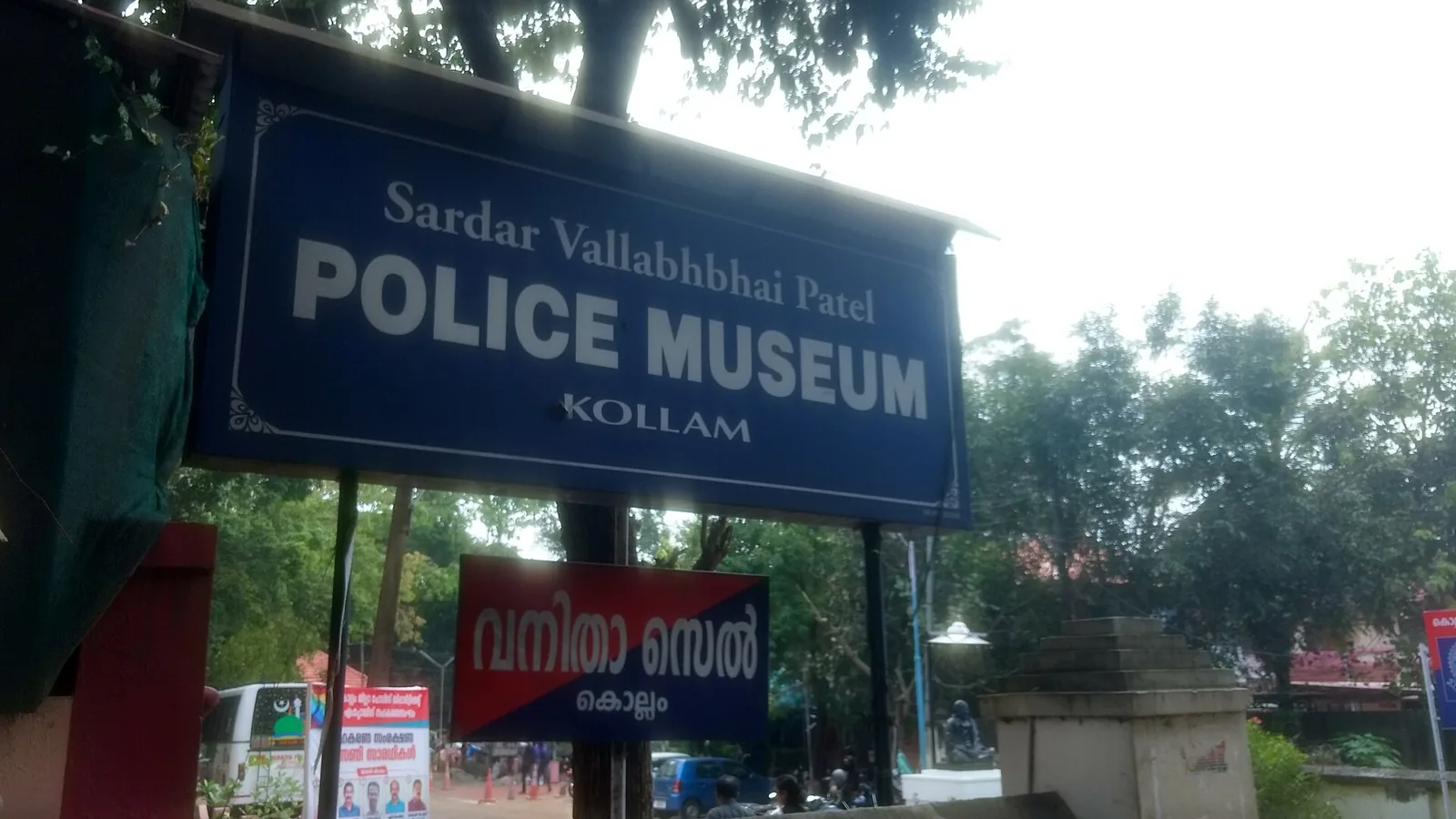
Kollam’s police museum joins a history of equipment to a history of evidence. Old arms introduce one part of the collection; charts about fingerprints and DNA introduce another. Kerala Police’s institutional history provides this thread through the Sardar Vallabhbhai Patel Police Museum.
A museum takes shape in 1999
The department credits B. Sandhya, then Kollam’s Superintendent of Police, with initiating the museum. DGP B. S. Shastri inaugurated it in 1999. The account places it within Kollam East Police Station’s limits and records the station’s move to new premises that year.
From equipment to traces
The history describes eighteenth- and nineteenth-century arms and ammunition. Guns and other equipment give the collection tangible objects through which to consider earlier police work.
Information charts on DNA tests, human bones and fingerprints shift attention towards material examined in an investigation. Following them after the arms changes the question: how can traces become evidence? That is an interpretation of the collection’s sequence, rather than a claim that visitors conduct forensic experiments.
Police-dog photographs and medals broaden the account. Training and recognition belong beside equipment and investigative information in the history the department preserves.
People remain part of the history
Kerala Tourism also identifies a Martyrs’ Gallery commemorating personnel who died in the line of duty. Allow time for that section alongside the objects. Equipment, investigative information and remembrance each explain a part of the institution’s history.
Use the Police Museum visitor page to plan the stop and confirm current access before travelling. The institutional book’s 2020 foreword dates the account; it is historical evidence rather than a current gallery inventory. For a wider Kollam history day, continue with the Asramam Residency story or the port’s calendar story.