What to expect
Highlights
- Museum visit at Sardar Vallabhbhai Patel Police Museum
- Indoor cultural or historical context
- Easy pairing with nearby food and heritage stops
Kollam’s Sardar Vallabhbhai Patel Police Museum introduces the history of policing through arms, equipment and investigation displays. It offers an indoor history stop during a city outing. Check the museum’s session before choosing your day, and leave time to read the displays.
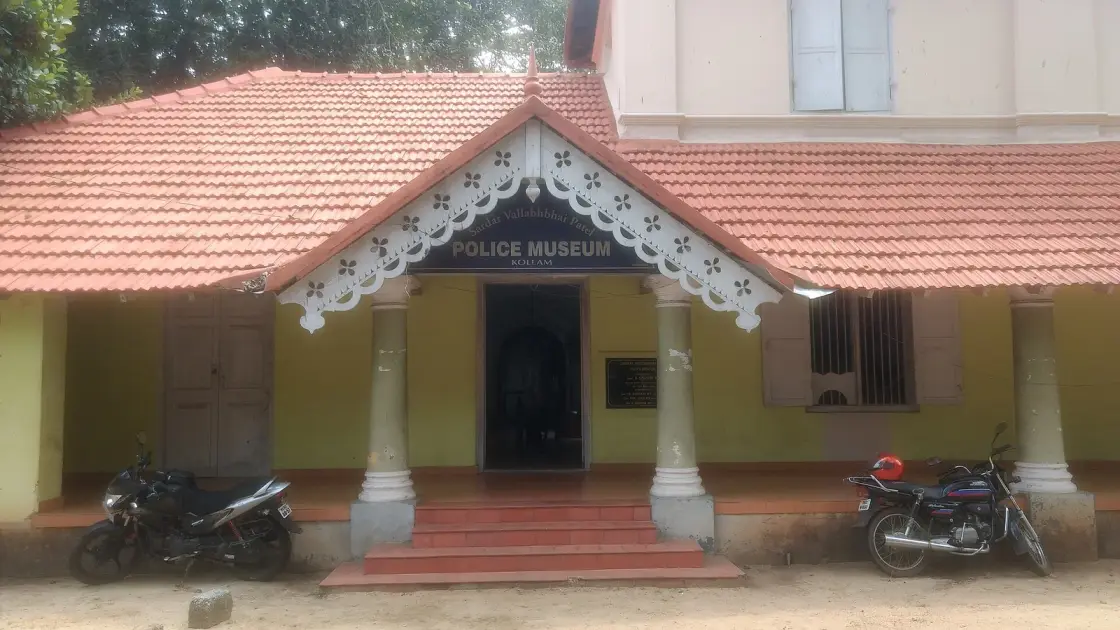
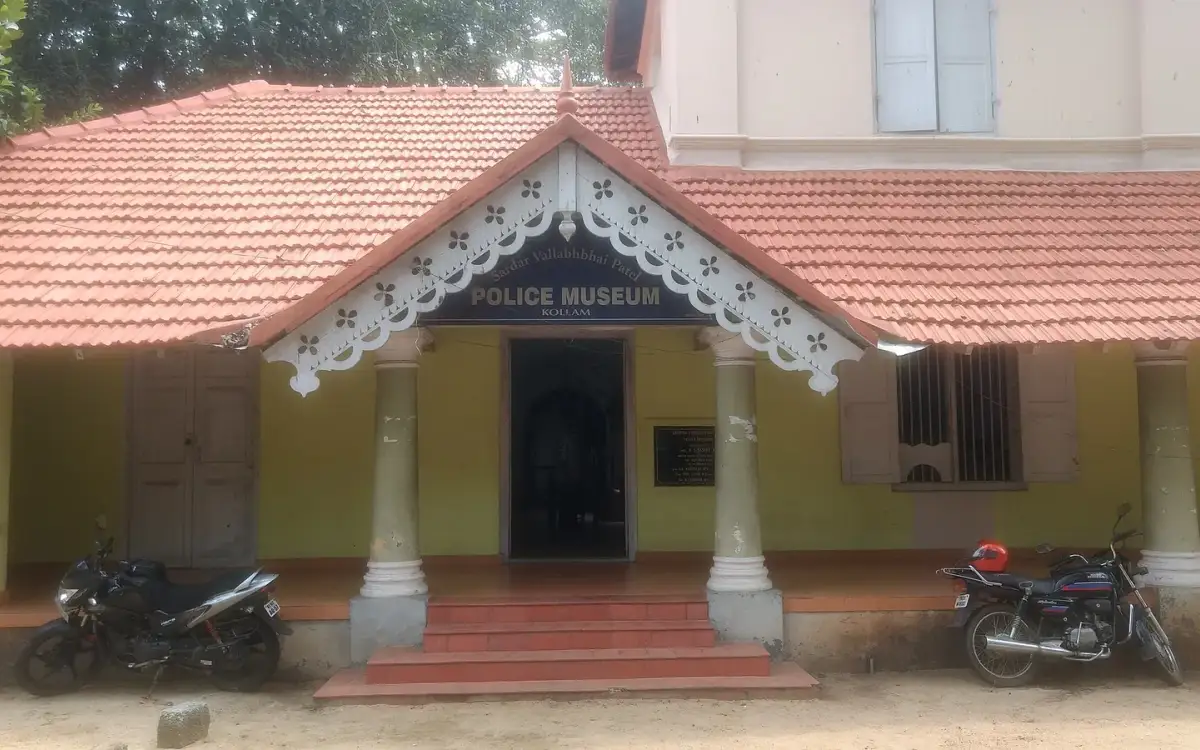
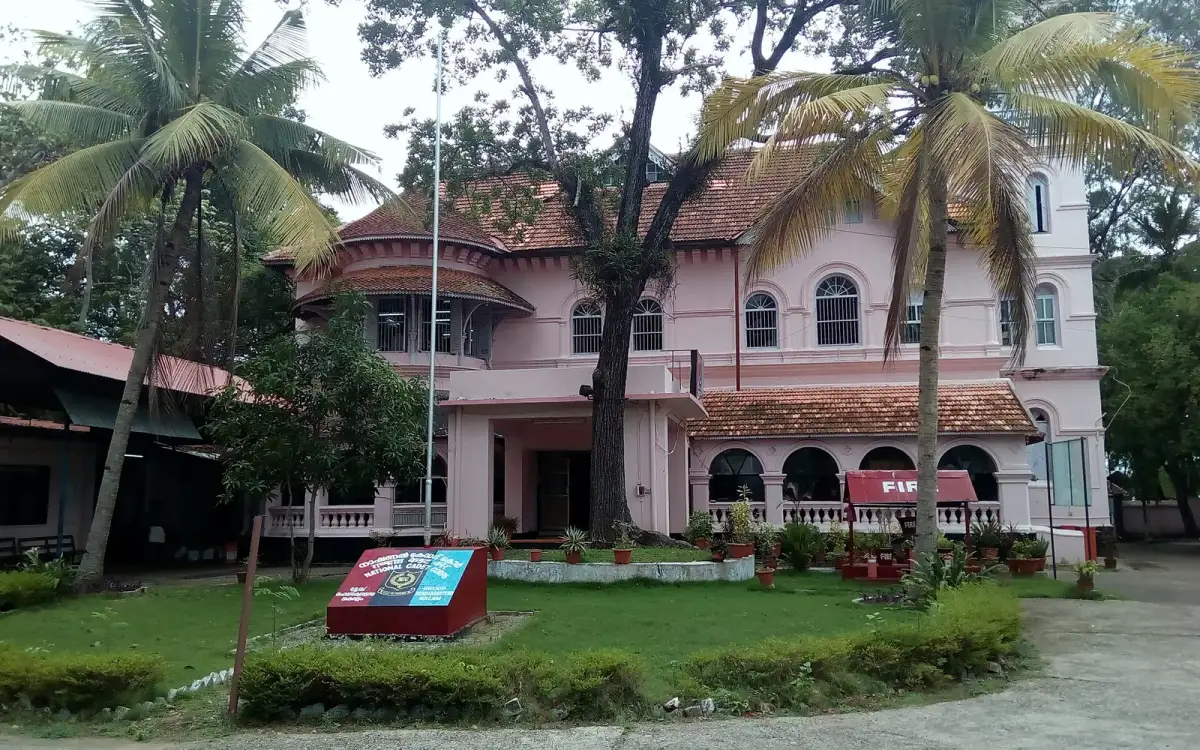
A low tiled bungalow opposite Kollam Junction, painted olive green, with a fretwork porch and two motorbikes parked outside — and inside it, the guns, the medals, the fingerprint charts and the martyrs of the Kerala Police. Two official Kerala sources will tell you it is the only museum of its kind in India. It is not, and the museum has never claimed it: the plaque screwed to its own wall is more modest, more precise and a great deal more interesting than anything written about it online.
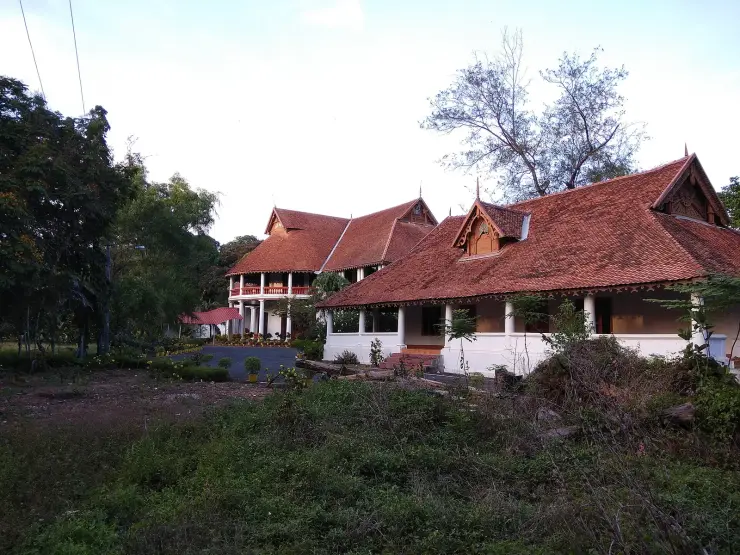
The building comes first, because it is the reason the place has any atmosphere at all. This is not a purpose-built museum. It is an old single-storey mansion with a tiled roof, olive-green walls, a white columned porch and a scalloped timber bargeboard — DTPC Kollam describes it as having four courtyards — sitting in a compound directly across from Kollam Junction railway station. You could walk here from the platform in two minutes, and almost nobody does.
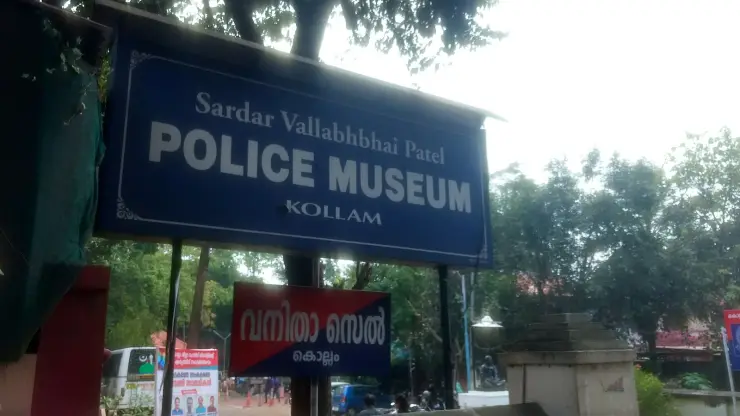
It is also a working police compound rather than a visitor attraction dropped into a park. The board at the gate carries the museum's name in white on blue; immediately below it, another board reads വനിതാ സെൽ കൊല്ലം — the Kollam Vanitha Cell, the women's cell. People come through this gate to report crimes as well as to look at exhibits, which gives the whole thing a texture that a purpose-built heritage centre never has.
What is inside is exactly what the name promises and slightly more than you expect. The core is arms: police weapons and ammunition of the eighteenth and nineteenth centuries, guns, bullets and machines, laid out as a sequence. There is a Martyr's Gallery for officers killed in service, which both Kerala Tourism and DTPC single out. And there is a forensics section that is oddly compelling — information charts on fingerprints, on DNA testing, on human bones — alongside photographs of police dogs and a long run of medals awarded to policemen of every rank.
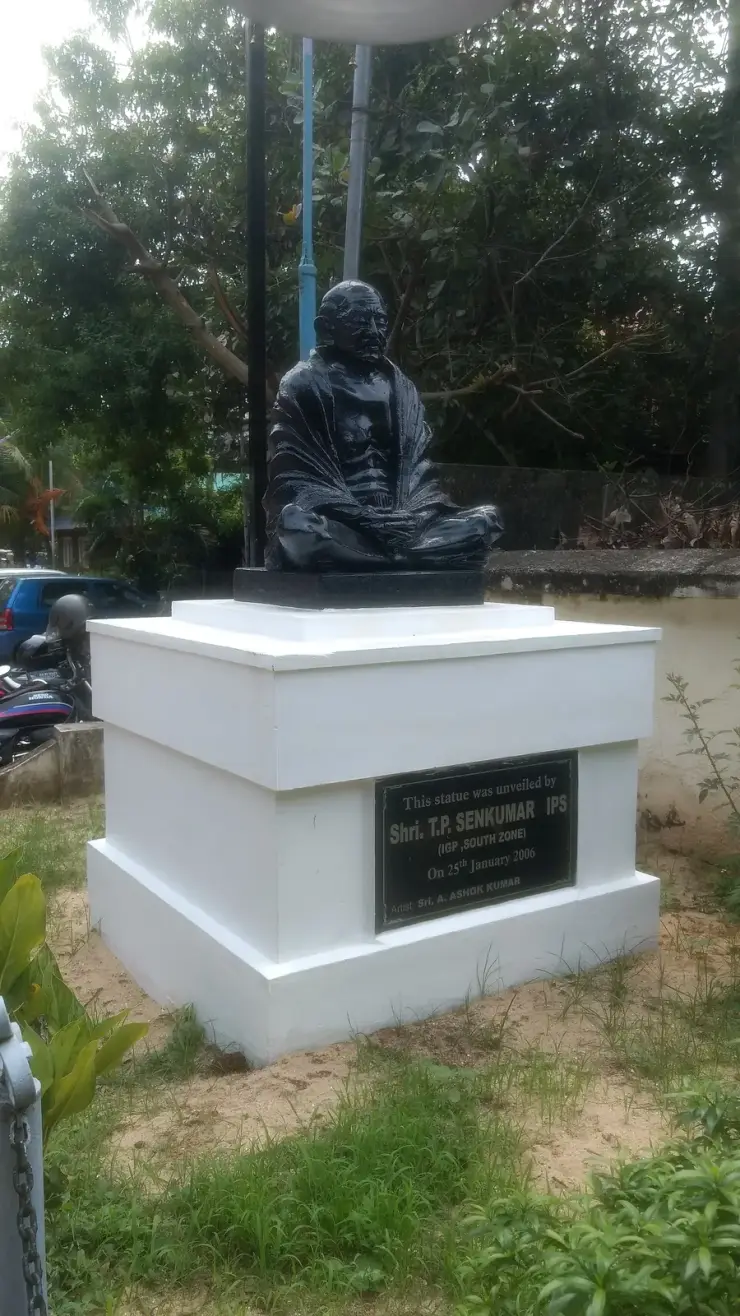
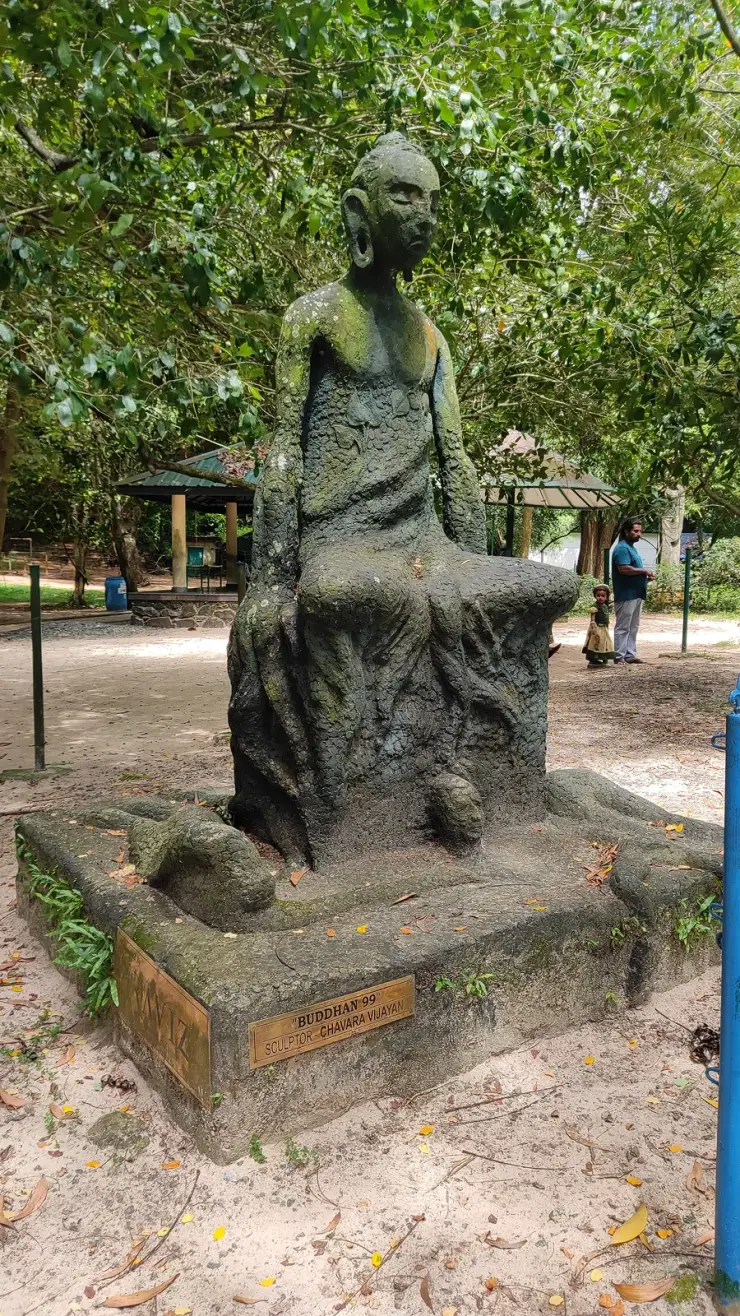
Outside in the compound stand two black statues on plinths. One is Sardar Vallabhbhai Patel, upright, holding a book; the other is Gandhi, seated cross-legged, on a white plinth under a lamp. Both carry their own dedication plaques, and between those two plaques and the one inside the porch, this museum documents itself better than any website documents it.
The forensics room is the part that surprises people, and it is worth going in with the right expectation of it. This is not a modern interactive science centre; it is a set of information charts, patiently lettered, explaining how a fingerprint is classified, what a DNA test establishes, and what a human skeleton can tell an investigator about the person it belonged to. Read as displays they are dated. Read as an argument — a district force in 1999 deciding that the public ought to understand how evidence actually works — they are rather more interesting than a slicker version would be.
The medals are the other quiet pleasure. They run a long way, awarded to policemen of every rank, and because they are grouped rather than curated into a story you end up reading them as a list of ordinary careers. Alongside the Martyr's Gallery they give the collection its real subject, which is not weaponry at all but service: who did this job, what it asked of them, and which of them did not come home from it.
That is the genuine pleasure of the place and the reason it earns a page. It is small, it is cheap, it is two minutes from a railway station most travellers pass through anyway, and it is one of the very few museums in Kerala where the most reliable source of information about the institution is the institution's own brasswork.
The claim to deal with here is not a legend. It is a superlative, and it is being made by the two organisations with the most authority to make it.
Kerala Tourism's official page for this museum describes it as distinguished as the only museum of its kind in the country. DTPC Kollam, the district's own tourism promotion council, says the same thing: the only such museum in India dedicated to police history and evolution. Between them these are the state tourism department and the district tourism body. If you were going to trust anybody on a question about a Kerala museum, it would be those two.
The claim is not correct, and it is not correct by a wide margin.
The Delhi Police Museum was established in 1991, initially on the ground floor of the CBI headquarters. That is eight years before Kollam's museum was inaugurated on 10 May 1999 — so this museum was not the only one of its kind in India even on the day it opened. It was not first either.
Since then the field has become considerably more crowded. The National Police Museum in Chanakyapuri, New Delhi — an underground museum within a 6.12-acre memorial complex, with a 30-foot, 238-tonne black granite central sculpture and a Wall of Valour — was inaugurated by the Prime Minister on 21 October 2018, and covers policing in the subcontinent across more than two thousand years, back to Kautilya. The Tamil Nadu Police Museum opened on Pantheon Road in Egmore, Chennai, in September 2021, tracing that state's force from the Raj to the present.
So: at least three others, one of them older, one of them national and enormous, one of them next door in Tamil Nadu.
There is a second, quieter claim in the same family that we have also declined to print, and it is worth explaining why. Several listings describe this as the first police museum in India, which is a different assertion from being the only one and is refuted by exactly the same fact: the Delhi Police Museum was already eight years old when the ribbon was cut at Kollam. Neither superlative survives a single date check, and they tend to travel together, so if you see one you should assume the other is nearby.
It is worth being careful about what this does and does not damage, because the temptation is to swing too far the other way. The wording both Kerala sources use — the only museum of its kind — is loose enough that a generous reading might stretch it to mean the only one in Kerala, which we found no reason to doubt. And nothing in the correction touches what the museum actually is. A district police force in 1999, with a district SP pushing for it, put its own history into an old mansion beside a railway station and has kept it open ever since, for twenty rupees. That is a genuinely unusual thing for a police department to do, and it does not need to be the only one in India to be worth an hour of your time.
It is also worth saying plainly what a police museum is for, because the category sounds stranger than it is. A force that displays its own weapons, its own forensic methods and above all its own dead is making an argument about itself in public — that it has a history, that the history is accountable to the people looking at it, and that the officers killed doing the work have names. Whether any particular force lives up to that argument is a separate question and not one a museum can settle. But the gesture is real, and here it is being made in a building small enough to walk round in an hour, by a district force, for the price of a bus fare.
What the correction does damage is the habit. This superlative has travelled from official pages into every aggregator listing about the place, and it travelled because nobody checked a claim that takes about four minutes to check. We would rather print the museum's real founding plaque, with the name of the DGP who cut the ribbon and the correct rank of the officer who made it happen, than repeat a boast the building itself never makes.
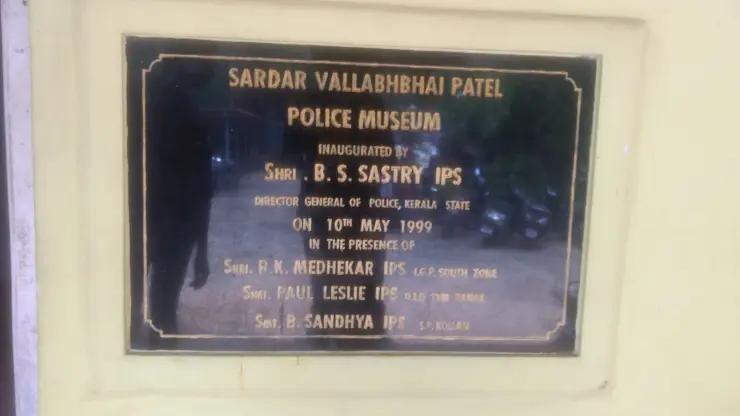
The founding is recorded on a plaque mounted in the entrance porch, and we read it off the photograph rather than off a website, which turned out to matter. It says: SARDAR VALLABHBHAI PATEL POLICE MUSEUM, INAUGURATED BY Shri. B. S. Sastry IPS, Director General of Police, Kerala State, ON 10th MAY 1999, IN THE PRESENCE OF Shri. R. K. Medhekar IPS, I.G.P. South Zone; Shri. Paul Leslie IPS, D.I.G. Trivandrum Range; Smt. B. Sandhya IPS, S.P. Kollam.
That is a more precise record than exists anywhere online. No travel source we found names B. S. Sastry, the Director General of Police who actually inaugurated it, at all. The date, 10 May 1999, matches the English Wikipedia infobox; the museum is generally described as having formally opened to the public in 2000.
🔴 And the plaque corrects the one claim about this museum that is repeated everywhere. Travel sites describe the museum as the brainchild of the then Inspector General of Police, B. Sandhya IPS. The plaque records her, in 1999, as S.P. Kollam — Superintendent of Police for the district. Her published service record agrees precisely: she was SP Kollam from 1998 to 1999, and she did not reach Inspector General until 2007, eight years later. The attribution to her is very likely right, and it fits — she went on to conceptualise a Kerala Police history website and to edit a short history of the force, so an interest in the department's past is documented. It is the rank that is wrong, and it is wrong because a later rank has been read back onto an earlier posting.
The two statues in the compound were added later, and they are dated on their own plinths. The Patel statue's plaque reads: This statue was unveiled by Shri. T.P. Senkumar IPS, IGP (SZ), On 25th January 2006, in the presence of Shri. Anil Kant IPS (DIG Tvpm Range); Shri. A. R. Santhosh Varma IPS (SP Kollam & President, Police Museum); Shri. M. N. Jayaprakash (DySP, Kollam); Shri. N. A. Rasheed (CI Kollam East & Secretary, Police Museum). The Gandhi statue carries a matching plaque — same officer, same day, 25 January 2006 — and names its artist as Sri. A. Ashok Kumar.
🔴 That is the second correction. The English Wikipedia article, and the travel pages that follow it, date the Patel statue to January 2005. Both plaques in the compound say 25 January 2006. The statue itself is described as 1.1 tons of concrete, sculpted by a police constable named Santosh — that attribution comes from Wikipedia rather than from the plinth, and it applies to the Patel figure; the Gandhi statue's own plaque credits a different artist entirely, so the two should not be run together.
One incidental thing those plaques give away, which no source states outright: the museum is run by a committee. The 2006 plaque lists the Superintendent of Police, Kollam as President of the Police Museum and a Circle Inspector, Kollam East, as its Secretary. It is a police-society institution, not a department directorate — which explains both its modest scale and its survival.
It is about a hundred metres from Kollam Junction — English Wikipedia says 100 m, DTPC about 150 m — so it fits into the gap between trains better than almost any attraction in Kerala.
It costs twenty rupees. DTPC Kollam publishes ₹20 for adults and ₹10 for children, which makes it one of the cheapest hours in the state.
The building is the exhibit as much as the contents: a low tiled colonial-era mansion with four courtyards, a columned porch and a fretwork bargeboard, still in use inside a working police compound.
The Martyr's Gallery, singled out by both Kerala Tourism and DTPC, gives the place a seriousness that the guns and medals alone would not.
The forensics displays — fingerprints, DNA, human bones — are an unexpectedly good half hour, and are not what anyone expects from a small district museum.
And for anyone who likes primary evidence, the three dedication plaques in the compound are a small masterclass: between them they correct two dates and one rank that every website about this museum gets wrong.
Road km to Kollam; ghat roads and traffic vary — allow extra.
Midday works well for museums, especially when outdoor heat is high.
Live forecast loads in your browser.
Sun and moon are calculated for this location and shown in IST. Photography windows are the hour around sunrise and sunset; the sunset bearing is degrees clockwise from true north. Moon phase is accurate to about half a day.
Verified hotels, homestays, restaurants, experiences, sights, shops and rentals around Sardar Vallabhbhai Patel Police Museum — commission-free, with direct contact. Filter by what you need.
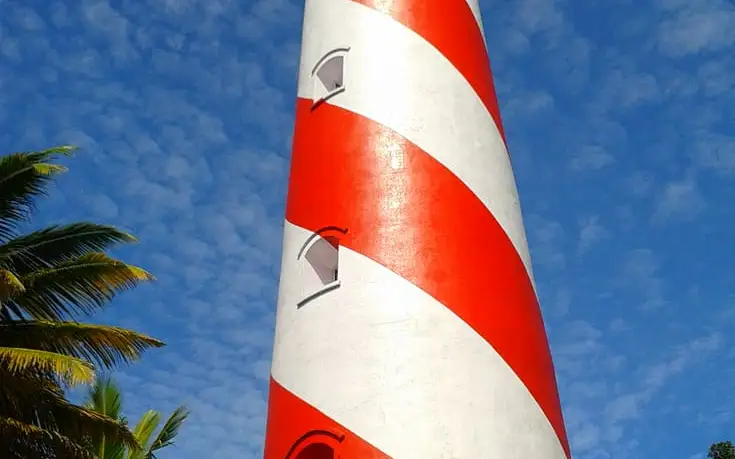
The working lighthouse above Thangassery, climbable for the coast view — the one vertical in a flat port town. Timings are the department’s, not ours; confirm before the walk out.
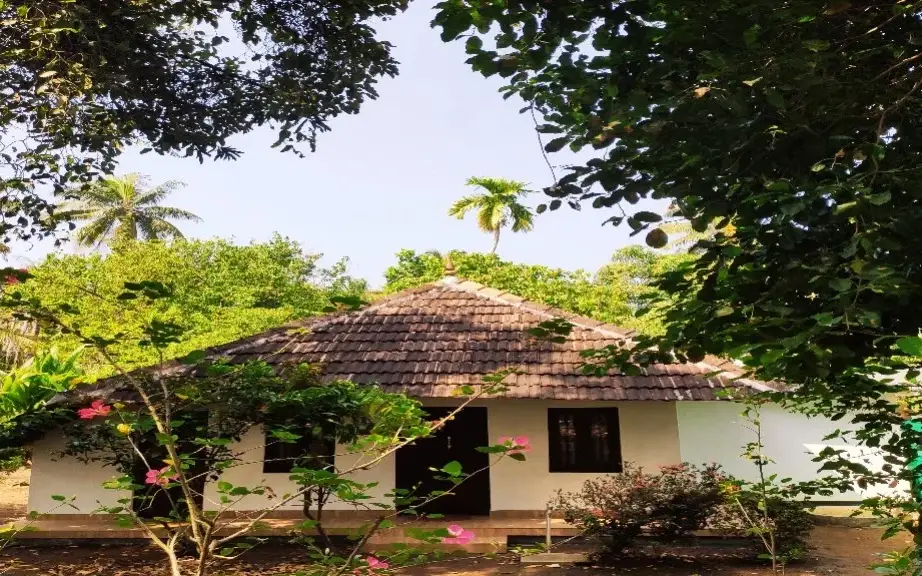
A family homestay reached by a short boat ride on Munroe Island in the Ashtamudi backwaters. Offers two AC rooms with home-cooked breakfasts.
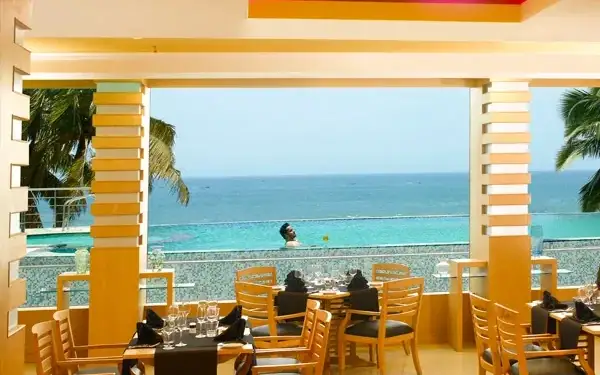
Seafood restaurant at the five-star Quilon Beach Hotel. It plates the day's catch beside panoramic Arabian Sea views.
Poolside multi-cuisine restaurant at The Quilon Beach Hotel. Open-air dining right on Kollam beach. Beach Road, Kollam - 691006, Kerala.
The 24-hour coffee shop at The Quilon Beach Hotel. All-day light meals and beverages beside the sea.
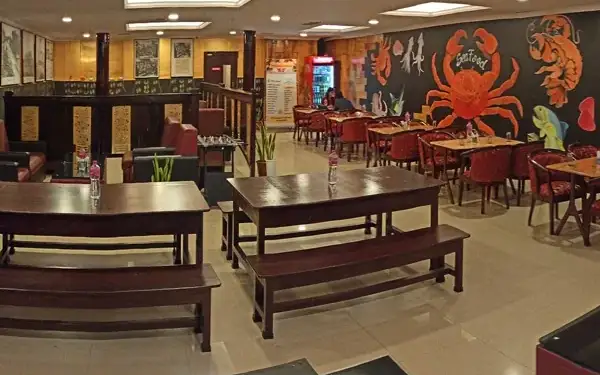
Multi-cuisine restaurant in the Bishop Jerome complex, Chinnakada. Blends Kerala spice with Chinese woks and North Indian tandoor.
Boutique hotel with 28 rooms and original artwork in the heart of Kollam, overlooking the city's Clock Tower.
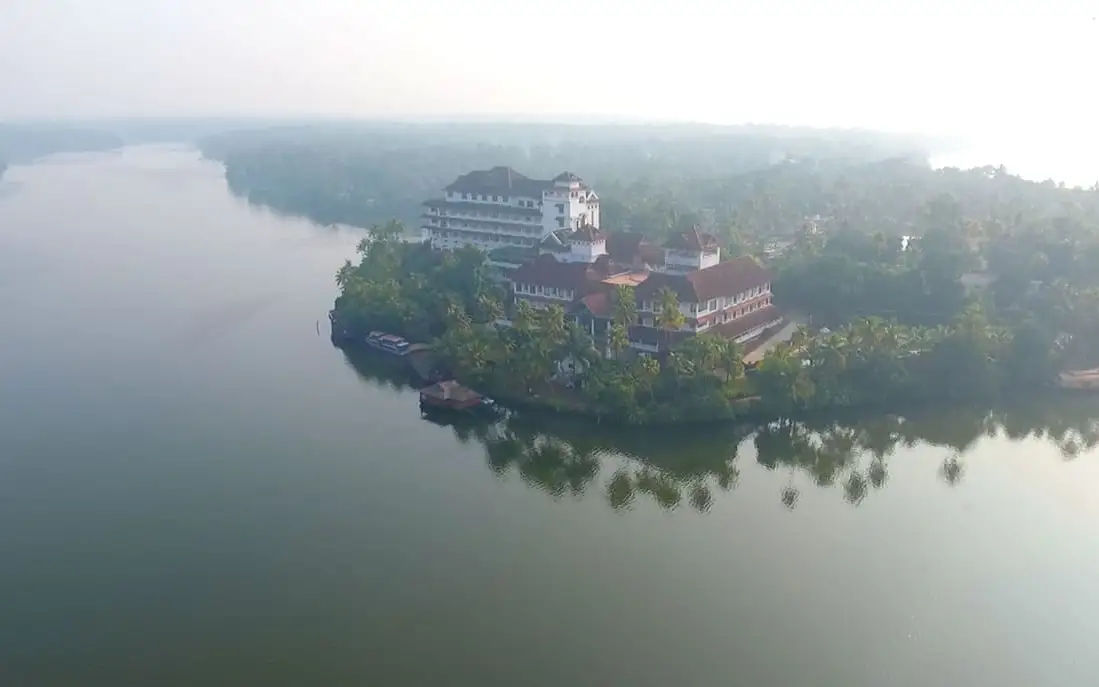
A lakefront resort where all 20 rooms and suites face Ashtamudi Lake. Runs its own houseboat cruises and shoreside Ayurveda treatments.
A backwater resort where Ashtamudi Lake meets the Kallada River. Named after Colonel John Munroe, it offers canoe tours and houseboat cruises.
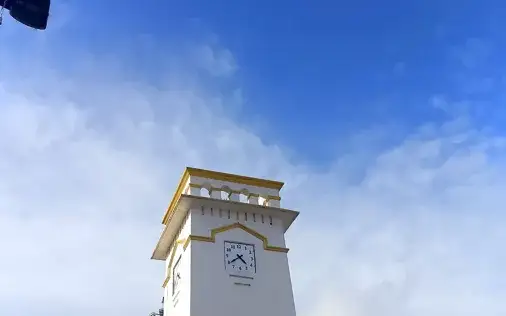
The clock tower at Chinnakada junction — the point the town measures everything else from, and the natural start of any walk through Kollam.
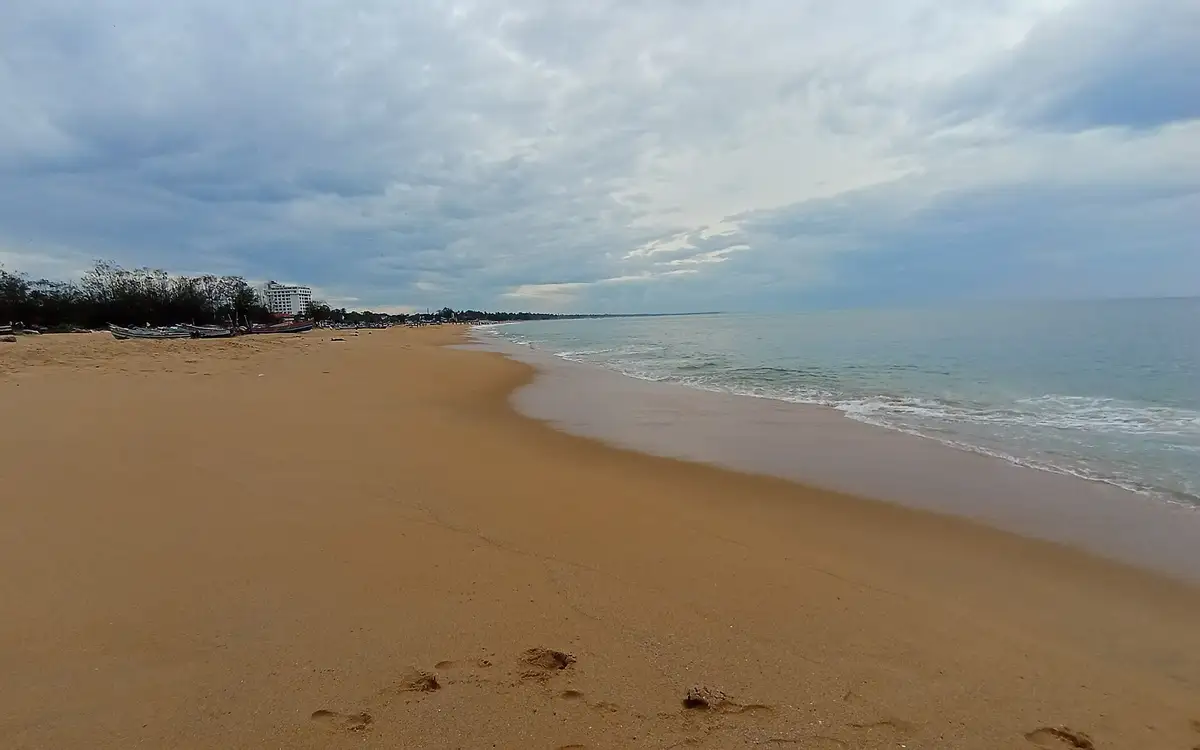
The town’s own beach — an open Arabian Sea shore with no verified lifeguard cover, best used as an early-evening walk when the fishing fleet works. Not a resort beach, and not Varkala.
The police museum 600 m from the centre — one of the town’s few ticketed indoor sights, and paired naturally with the Asramam green. Timings unverified; check before a special trip.
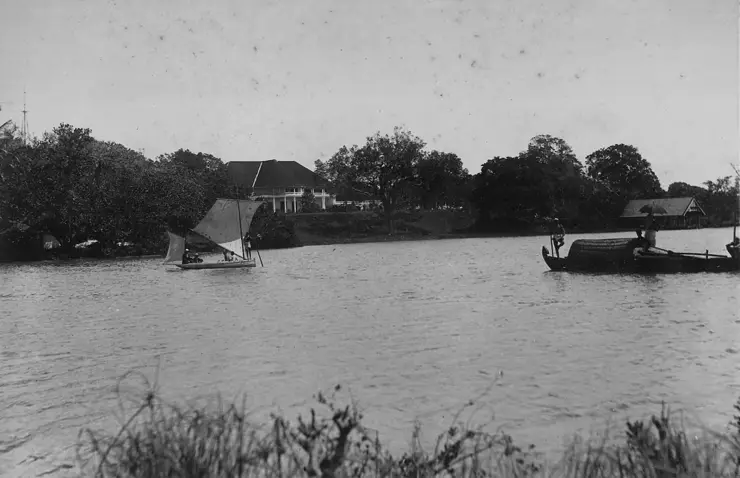
The palace across the water from Asramam, part of Kollam’s small colonial-era quarter on the lake side. Viewed from outside unless current access says otherwise.
The eight-armed lake that is the reason Kollam exists — a Ramsar wetland, quieter and cheaper than Alappuzha’s water, with the canoe country at Munroe Island up the same system.
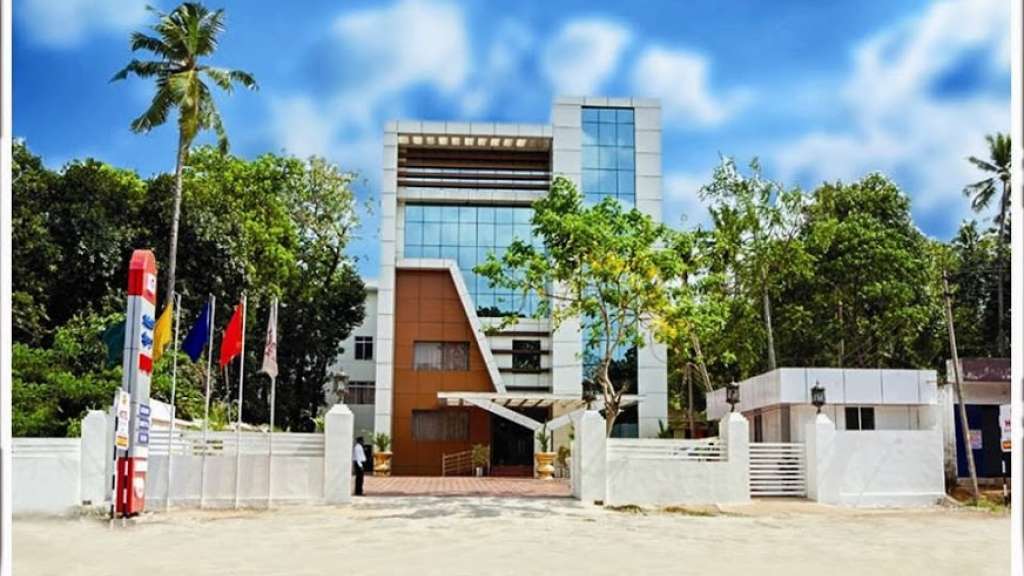
Modern budget hotel at Aadichanalloor on the Kollam–Thiruvananthapuram highway side of Kollam district, south of the town. It offers clean, value air-conditioned rooms with a restaurant and parking, a low-cost highway base for travellers passing through greater Kollam.
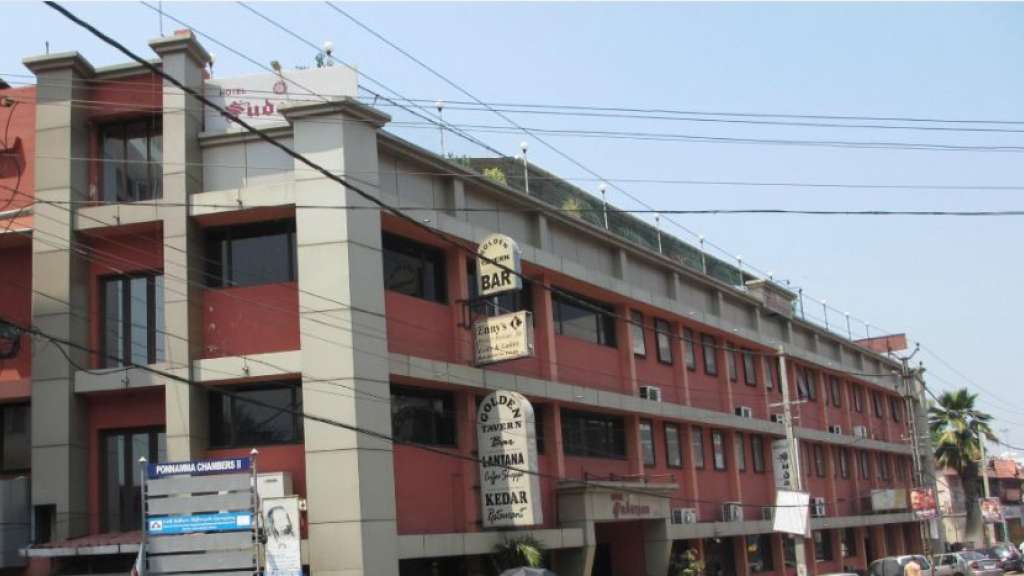
Long-running budget hotel at Parameswar Nagar in central Kollam, rated two-star class by travel directories. It offers value air-conditioned rooms with the Kedar multi-cuisine restaurant and Golden Tavern bar, a practical low-cost town-centre base for transit and business travellers.
Government-run KTDC Easy budget hotel in the Guest House compound at Ashramom, beside Ashtamudi Lake on the quiet edge of Kollam town. It offers simple, low-cost air-conditioned and non-air-conditioned rooms with a restaurant, run under the Kerala Tourism Development Corporation budget brand.
Long-running three-star-class hotel near the KSRTC bus station on Jetty Road in central Kollam, a short walk from the Ashtamudi backwater boat jetty. It offers 44 air-conditioned rooms, a multi-cuisine restaurant, bar, travel desk and boating assistance, a practical mid-range base for backwater and transit travellers.
Kerala Tourism-classified three-star hotel at Kottiyam on the Kollam–Thiruvananthapuram highway, in the southern part of Kollam district. It offers air-conditioned rooms, a multi-cuisine restaurant, bar, banquet hall and travel desk, a comfortable mid-range highway base a short drive south of Kollam town.
Kerala Tourism-classified three-star hotel on NH-47 directly opposite Kollam Railway Station, in the heart of Kollam town. It offers air-conditioned rooms, a multi-cuisine restaurant, bar, banquet and conference halls and 24-hour room service, a convenient mid-range base for rail and business travellers.
Kerala Tourism-classified Ayurveda centre on the banks of Ashtamudi Lake at Ashtamudi, on the backwater edge of Kollam. It runs residential Ayurveda and Panchakarma programmes in rustic laterite cottages beside the water, focused on treatment stays rather than casual spa visits.
Kerala Tourism Green Leaf-classified Ayurveda and spa centre at The Leela Ashtamudi (Raviz), Thevally, overlooking Ashtamudi Lake in Kollam. Its therapy rooms offer classical Kerala Ayurveda treatments and rejuvenation packages with backwater views, run to the Green Leaf standard rather than as a generic hotel spa.
Kerala Tourism Ayur Diamond-classified Ayurveda resort at Thangassery near the Kollam lighthouse, on the seafront edge of Kollam town. It offers doctor-supervised classical Ayurveda and Panchakarma treatments alongside resort rooms, run by the D-Fort group as a dedicated wellness retreat.
Fragrant Nature at Paravur is a lake-side resort outside central Kollam. Allow separate road journeys for Thangassery, city dining and onward rail travel.
Book with the place itself. India’s cyber-crime coordination centre warned in April 2025 that convincing copies of hotel and pilgrimage booking sites are being pushed through sponsored search and social ads, taking payment for rooms the property never hears about. Every listing here links to the business’s own contact details and its own Google or Bing profile — we take no commission and sit in nobody’s payment path. If a booking page reached you through an ad, check the address bar against the property’s own site before you pay. Fraud can be reported on cybercrime.gov.in or on 1930.
Find food, accommodation and activities across Kollam town. Browse the guides for places to eat, stay and explore along your route.
13 more places around Kollam town. Open a guide to plan the visit and onward journey.
1.3 km · 17 min walk
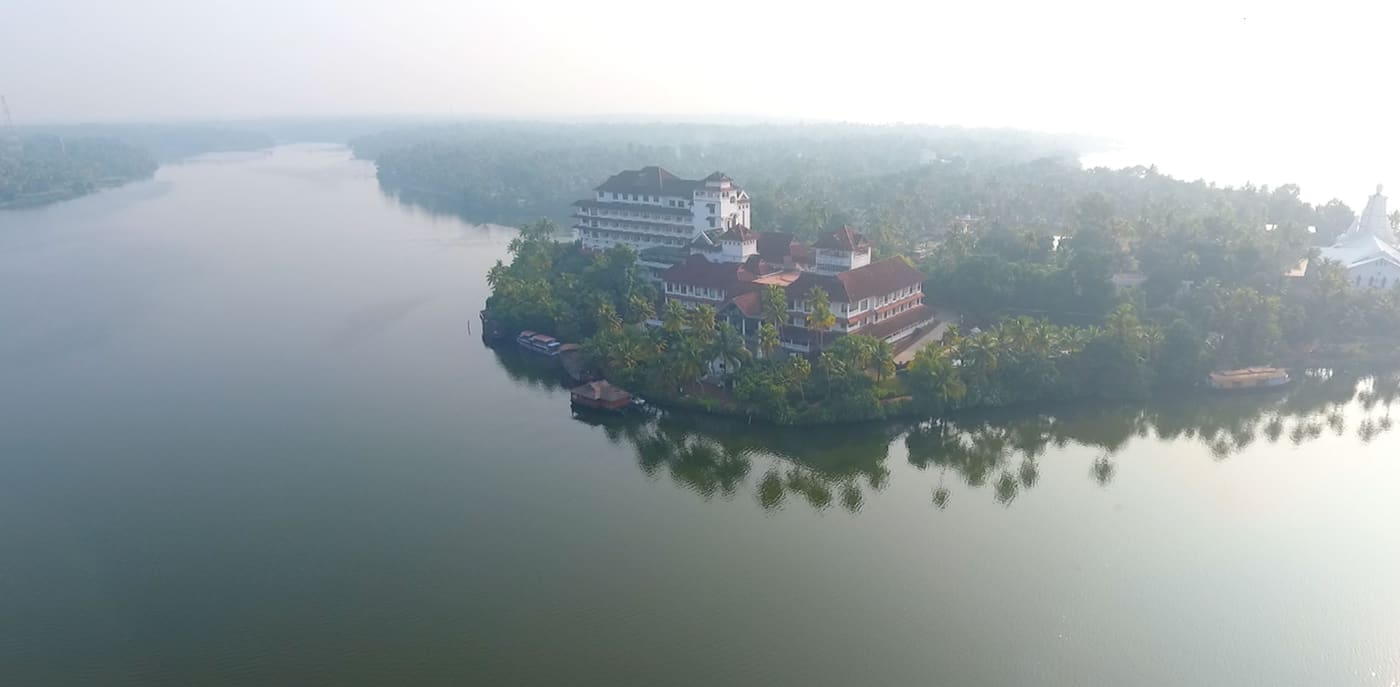
Large palm-fringed backwater system and houseboat base around Kollam.
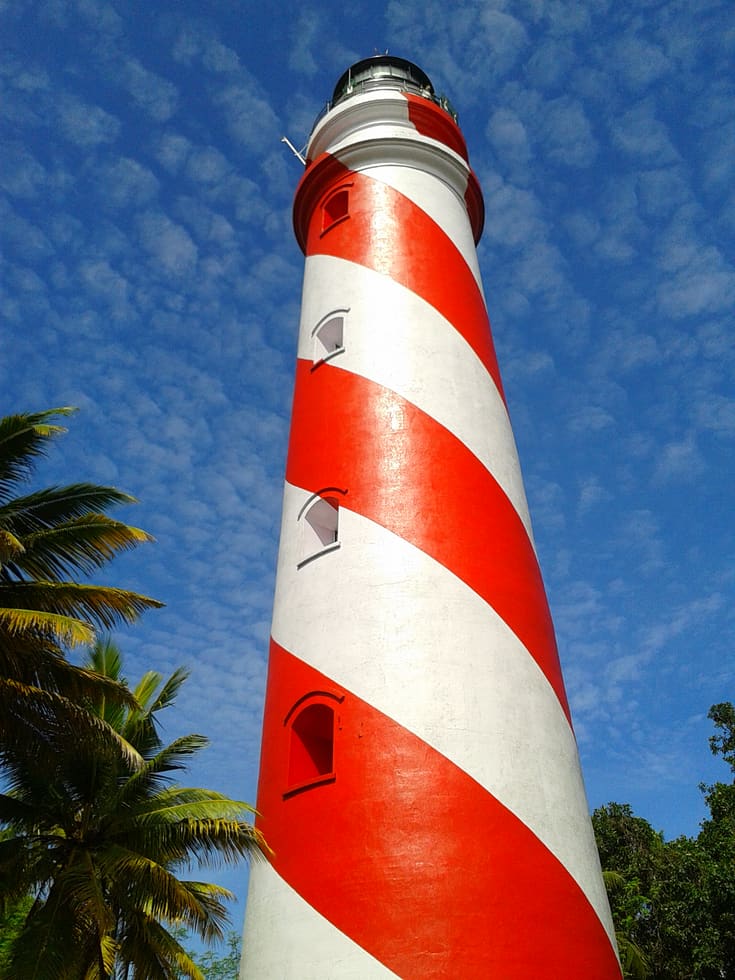
3.1 km · ~8 min by auto
Thangassery Lighthouse raises Kollam’s sea view above a historic coastal neighbourhood. The red-and-white tower is a working navigation landmark with a separate visitor session.
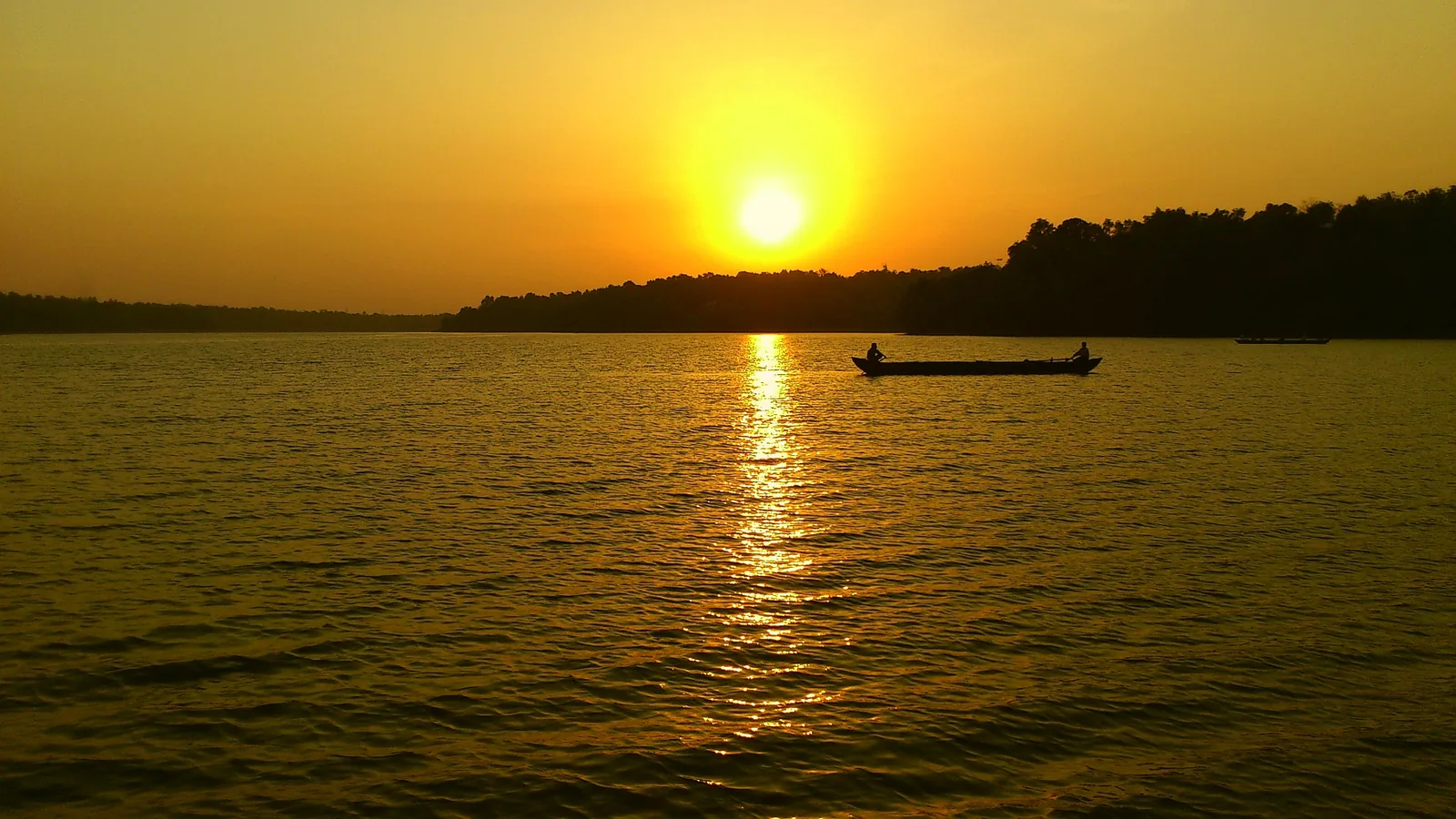
Kerala’s largest freshwater lake, a Ramsar wetland ringed by hills and a Sastha temple, north of Kollam.
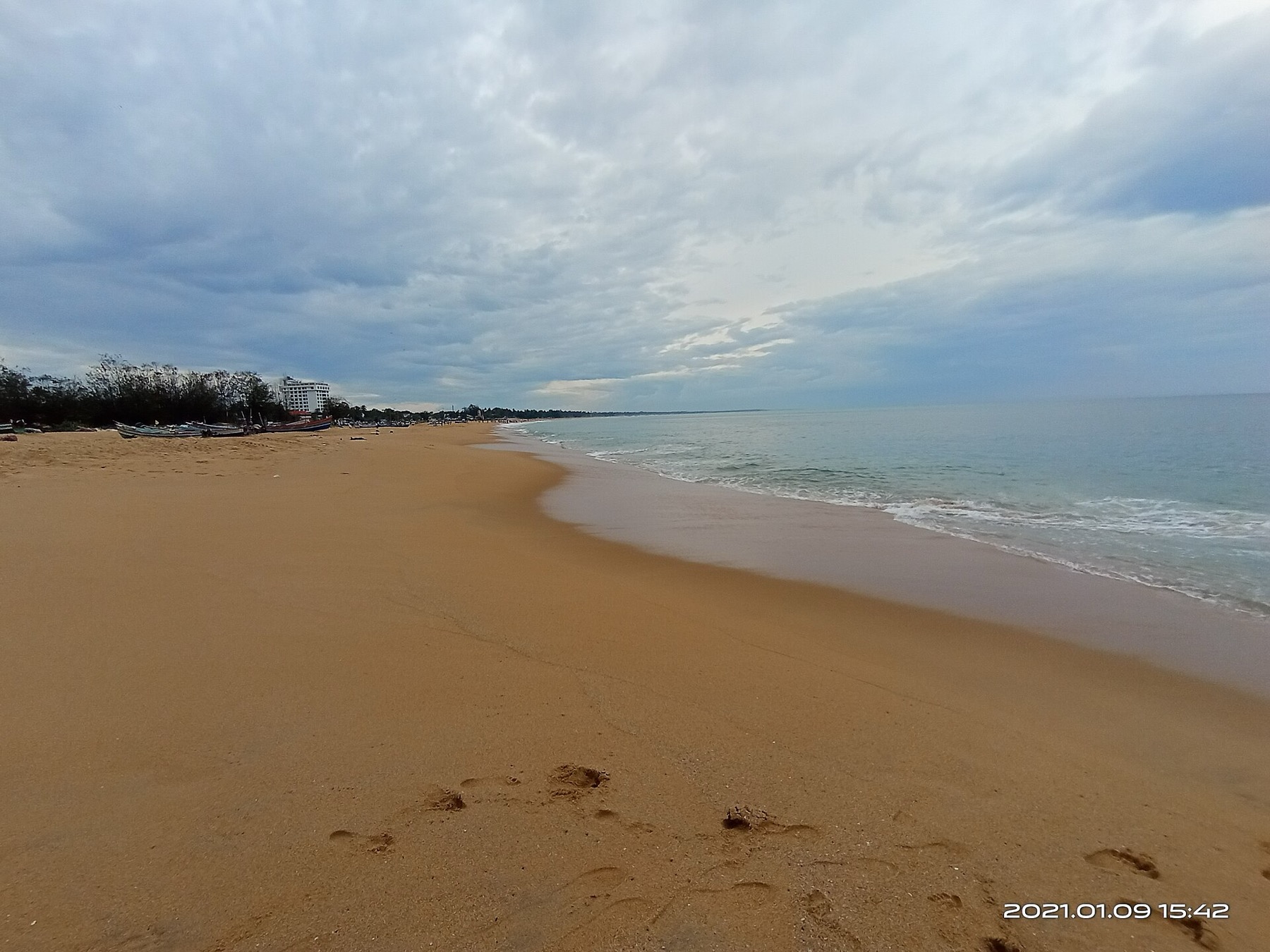
1.1 km · 14 min walk
The city’s Mahatma Gandhi beach and park on the Arabian Sea, a popular evening spot near Kollam town.
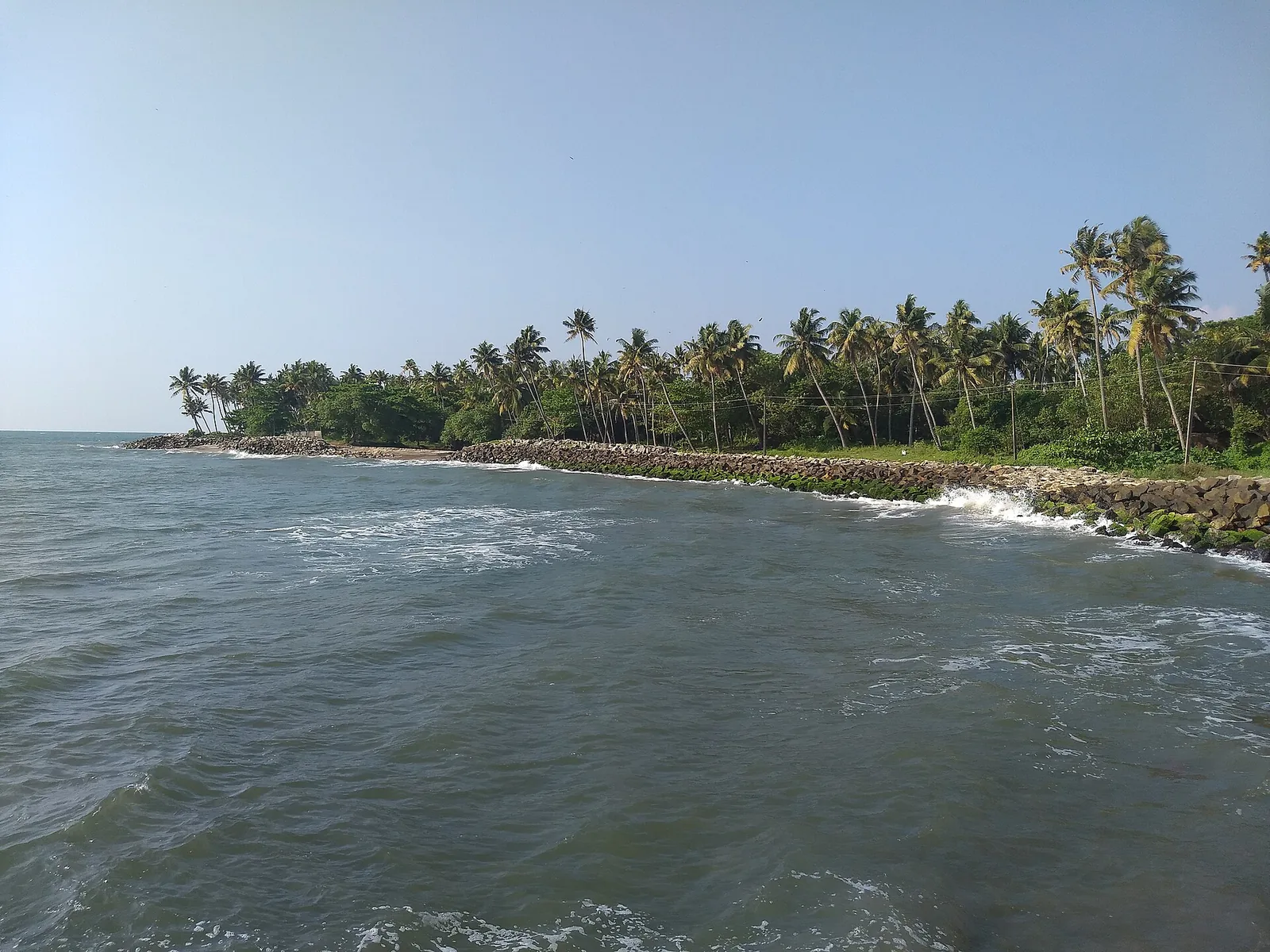
4.5 km · ~11 min by auto
A quiet, curved bay beach west of Kollam town, calmer than the city beach and good for a relaxed evening.
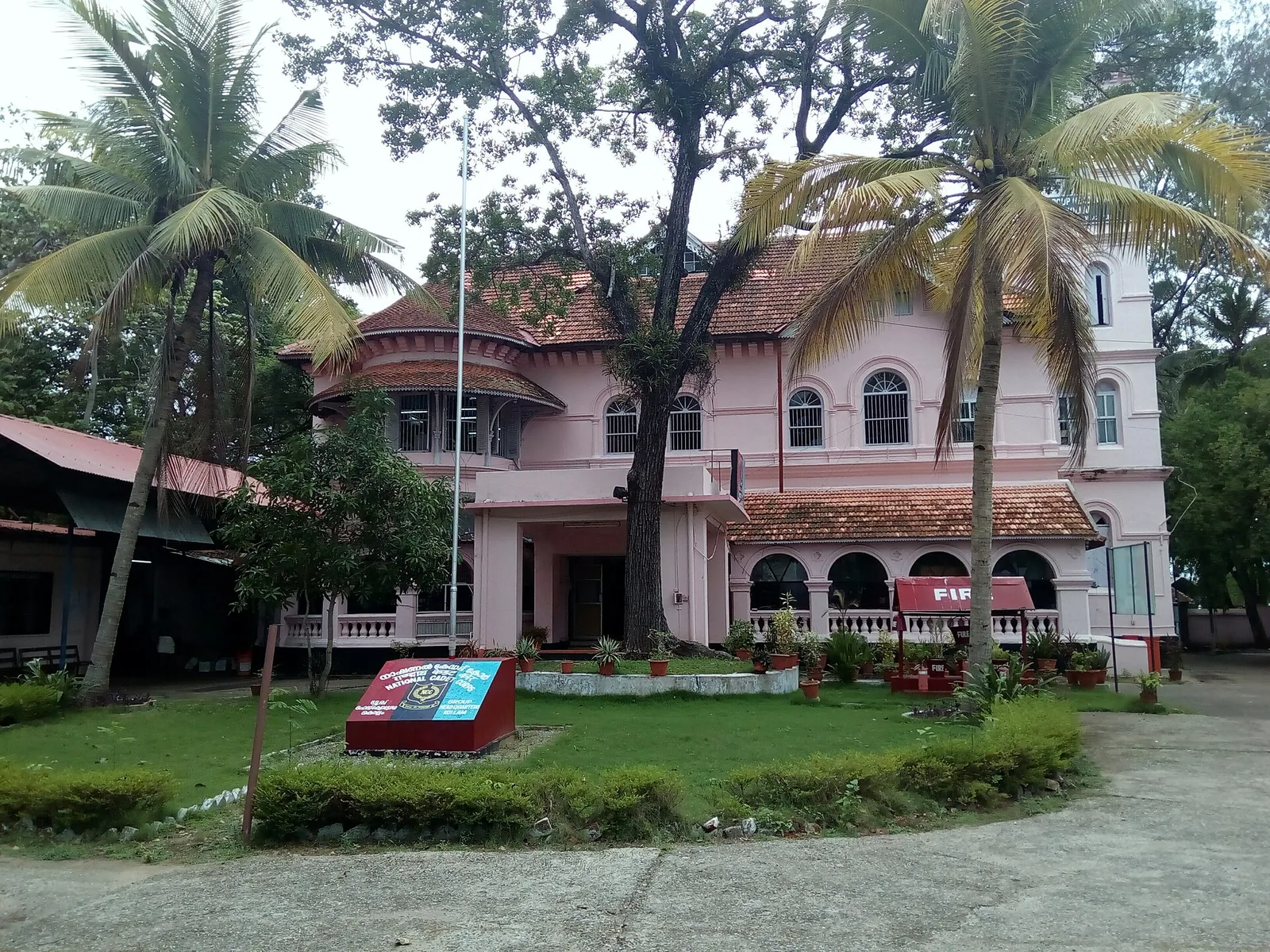
2.5 km · ~6 min by auto
A Travancore royal residence on the Ashtamudi shore in Kollam, built to be arrived at by boat and now a working NCC establishment — viewed from outside or from the water.
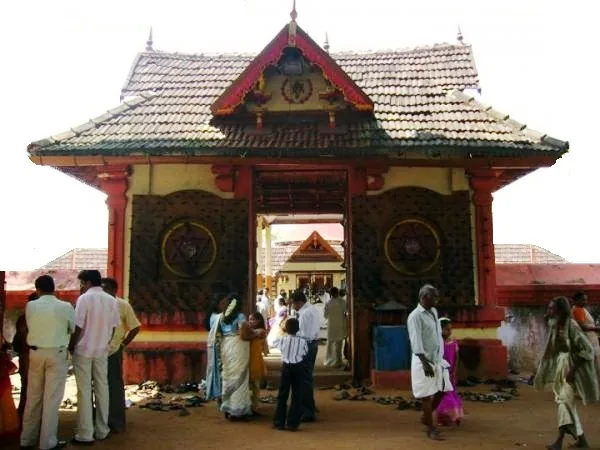
2.5 km · ~6 min by auto
Anandavalleeswaram is an active Shiva temple in Kollam, with an Anandavally shrine and a ten-day annual festival in March or April. Ritual processions and cultural performances bring another dimension to the temple visit. Follow its worship session, admission and photography rules.
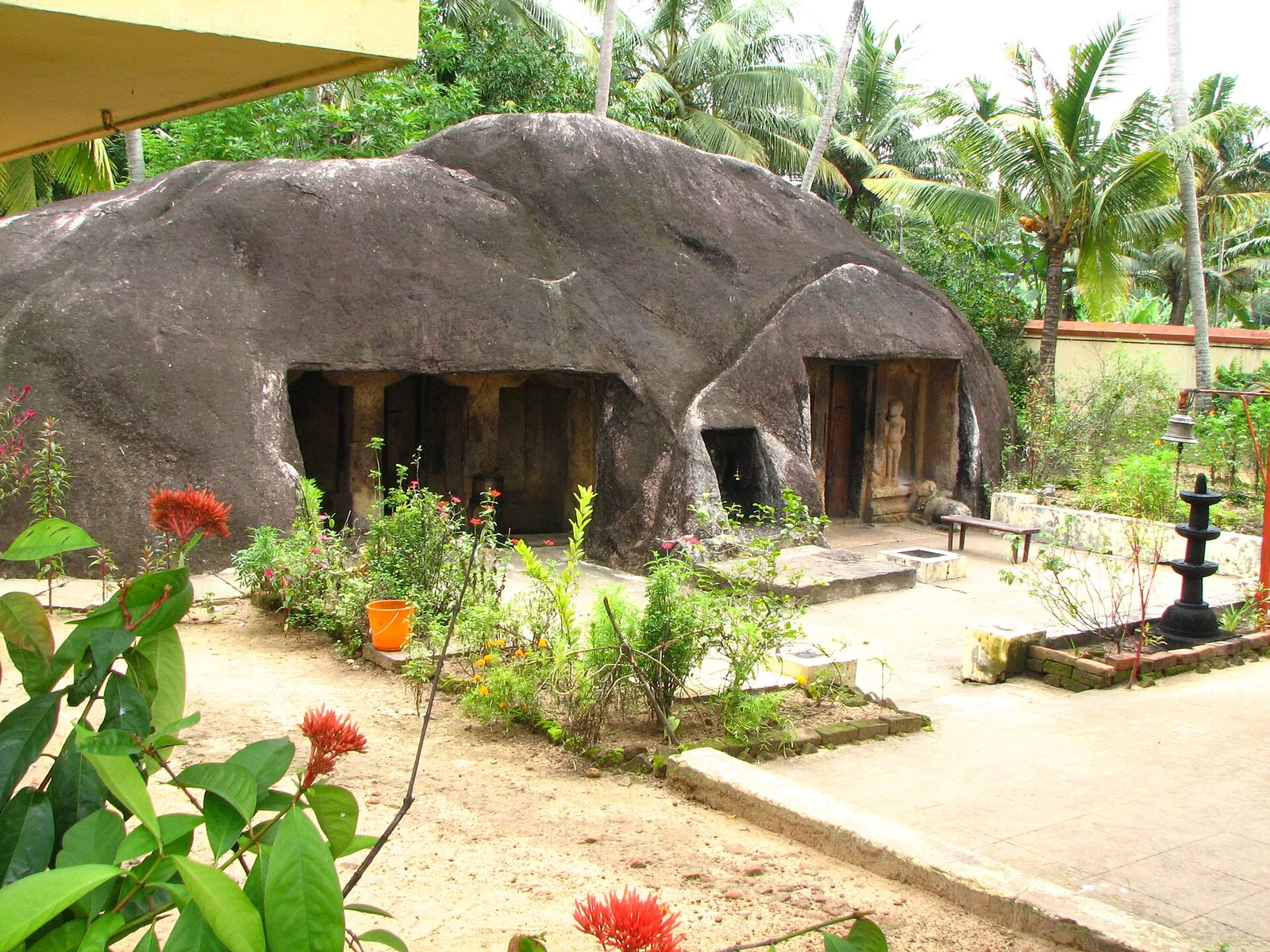
A monolithic rock-cut cave temple near Anchal/Kadakkal in south Kollam, carved with a Shiva shrine.
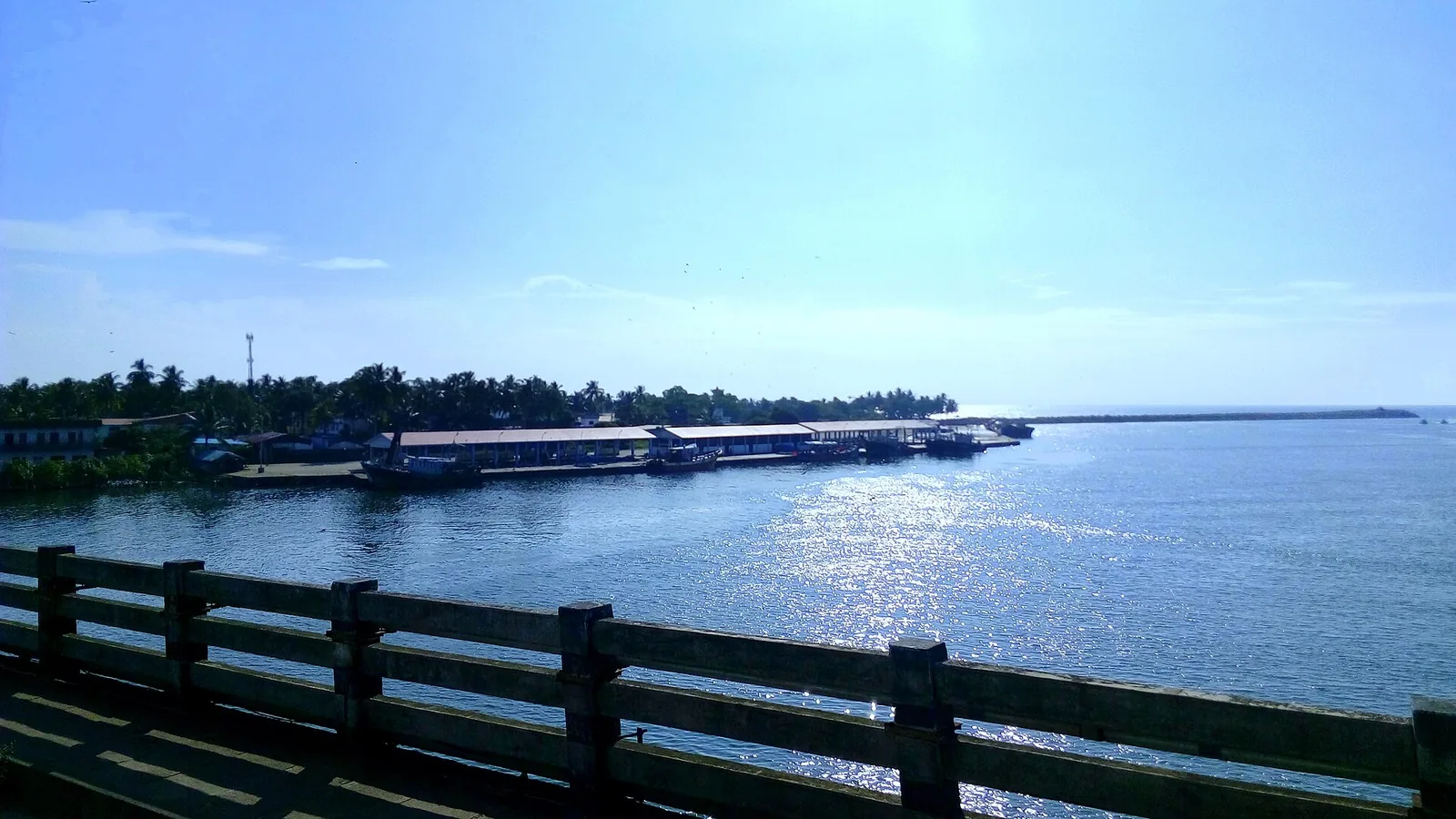
8.4 km · ~14 min by cab
By most accounts Kerala’s largest fishing harbour, at the mouth of Ashtamudi Lake about 9 km from Kollam town, and where Indian fishing was mechanised; two bridges cross the confluence and the early-morning auction is the sight to catch.
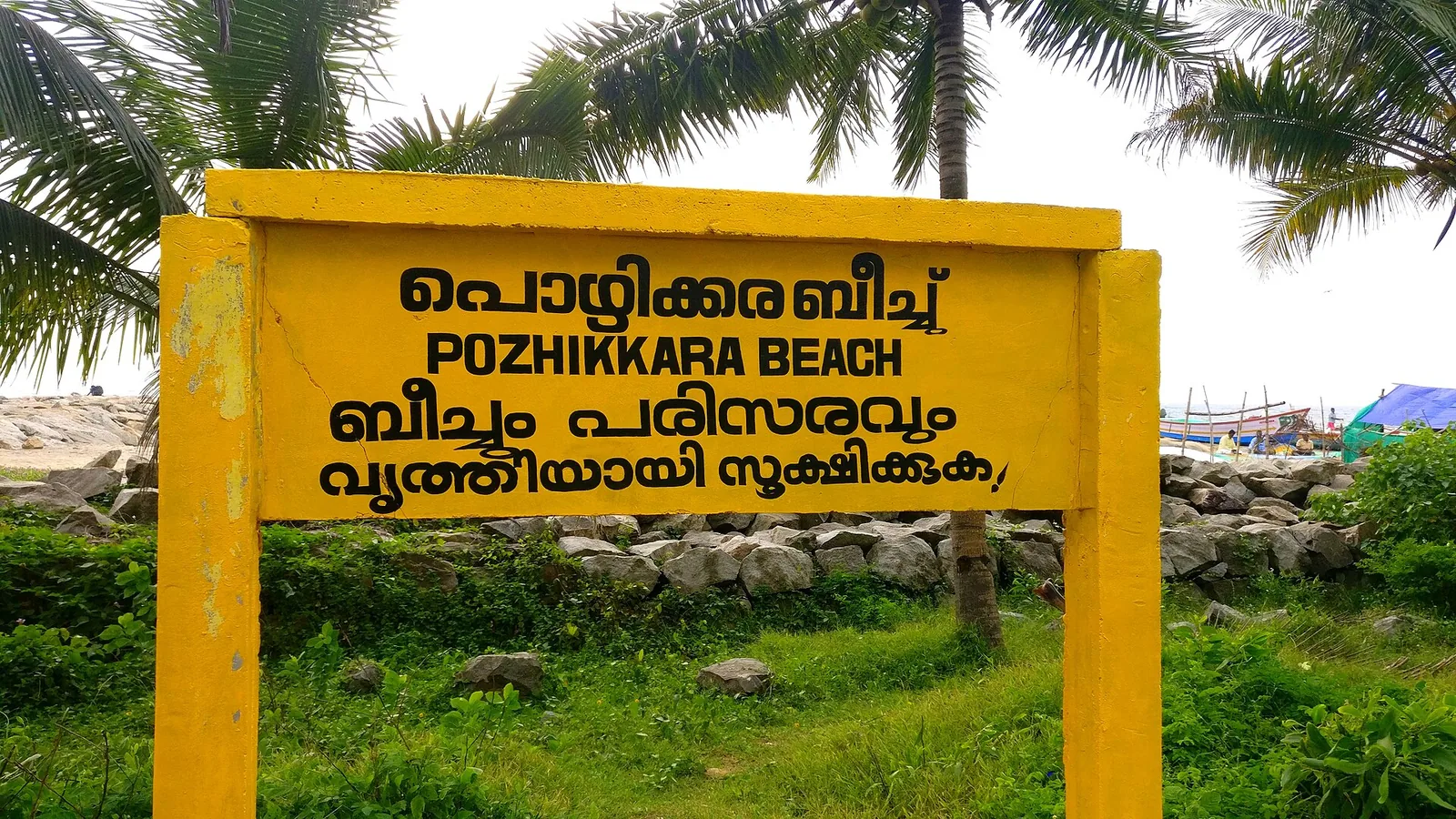
10.1 km · ~17 min by cab
The estuary and beach at Paravur south-east of Kollam, where the Paravur backwaters meet the sea across a sandbar — a quiet spot known for its regulator bridge, the TS Canal and calm backwater-and-sea scenery.
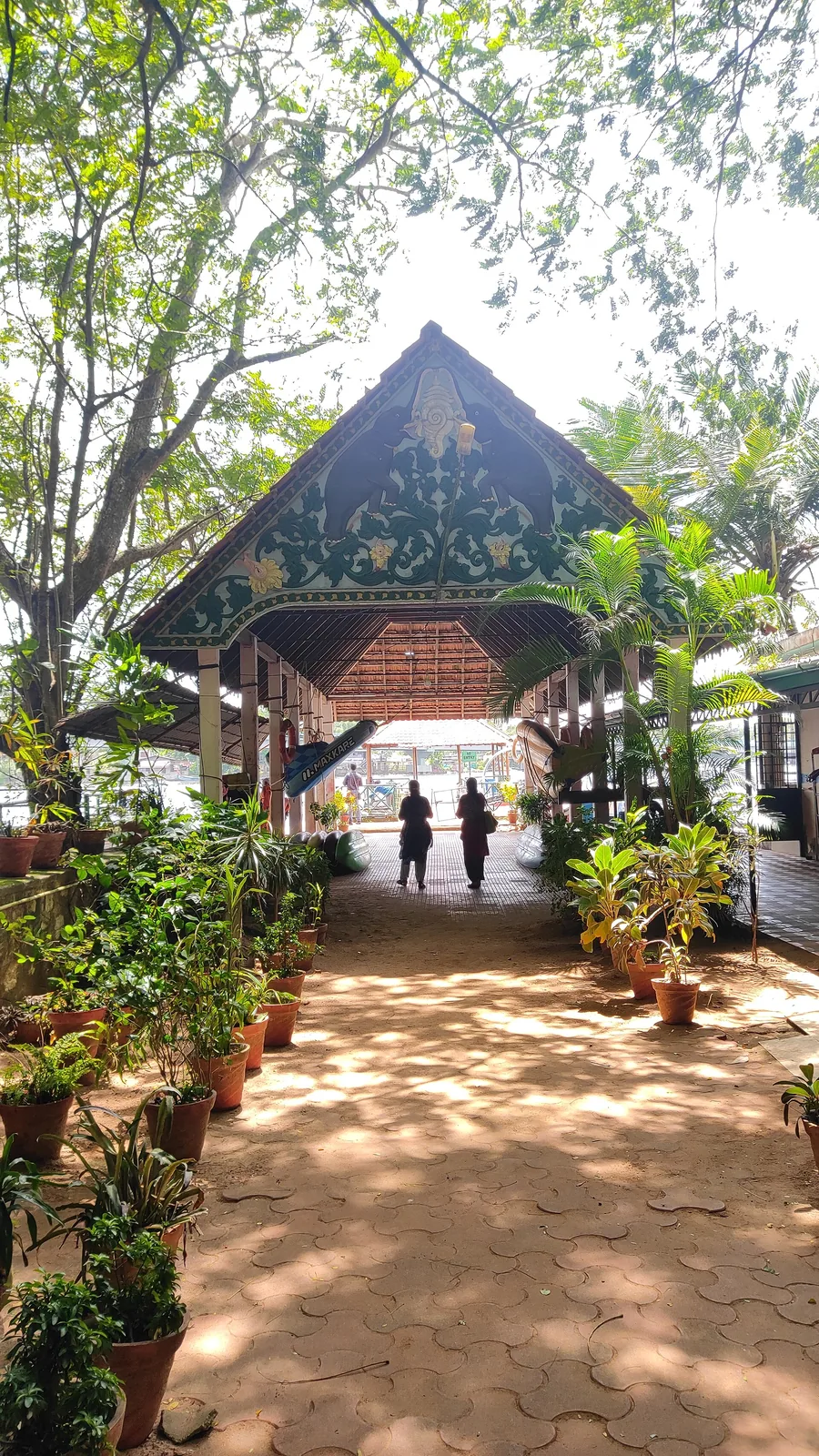
1.6 km · 20 min walk
Forty-eight acres of municipal park on the Ashtamudi shore in the middle of Kollam, run by the DTPC — boating and kayaking off a painted jetty, ziplines and rope courses, a heritage walkway of terracotta reliefs, contemporary sculpture left behind by a 2012 festival, and a mangrove wetland with a state biodiversity heritage tag.
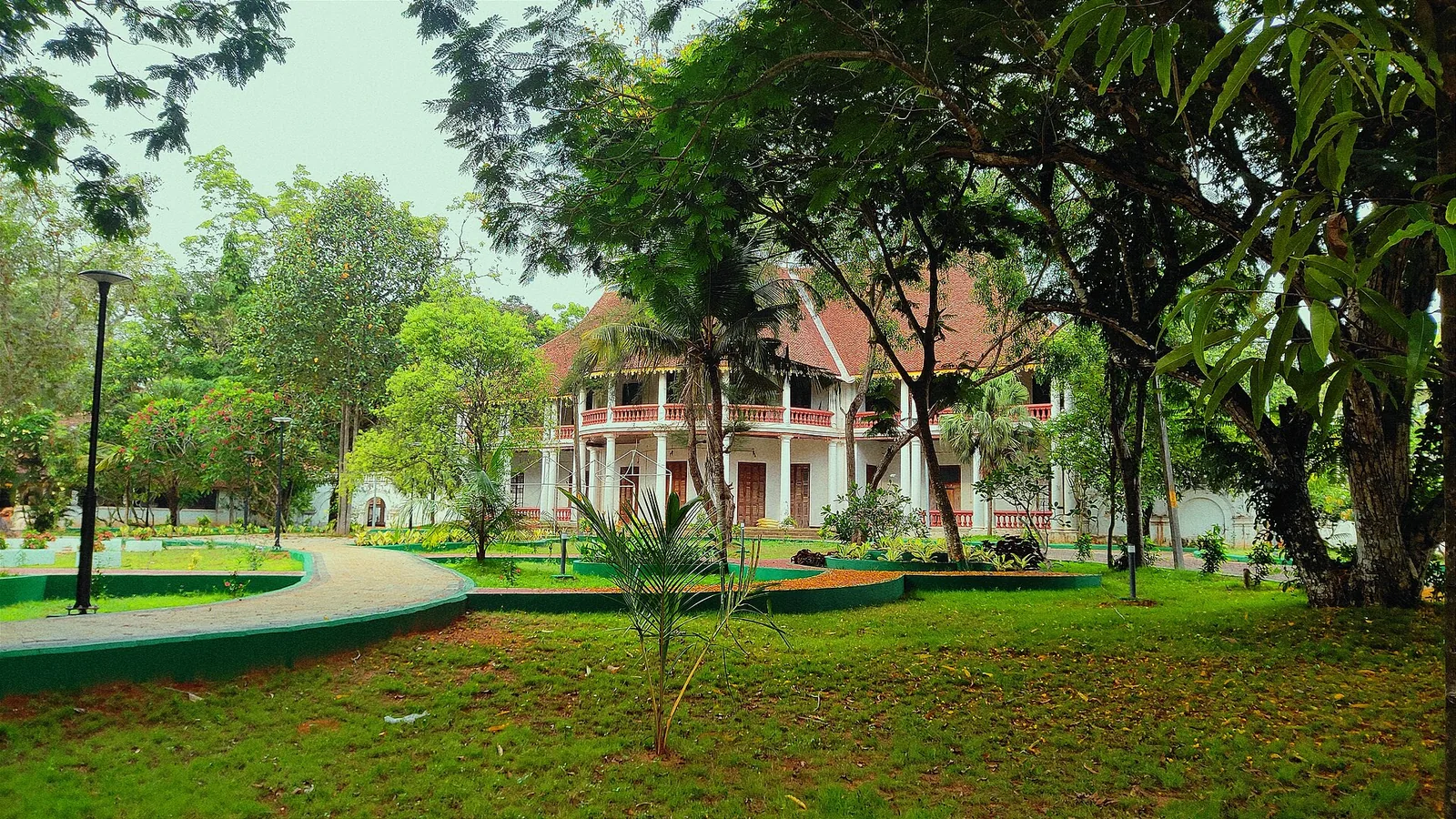
1.7 km · 21 min walk
The former British Residency at Asramam survives as a government guest house beside Kollam’s backwater landscape. Its architecture is the attraction, with access governed by its working use.
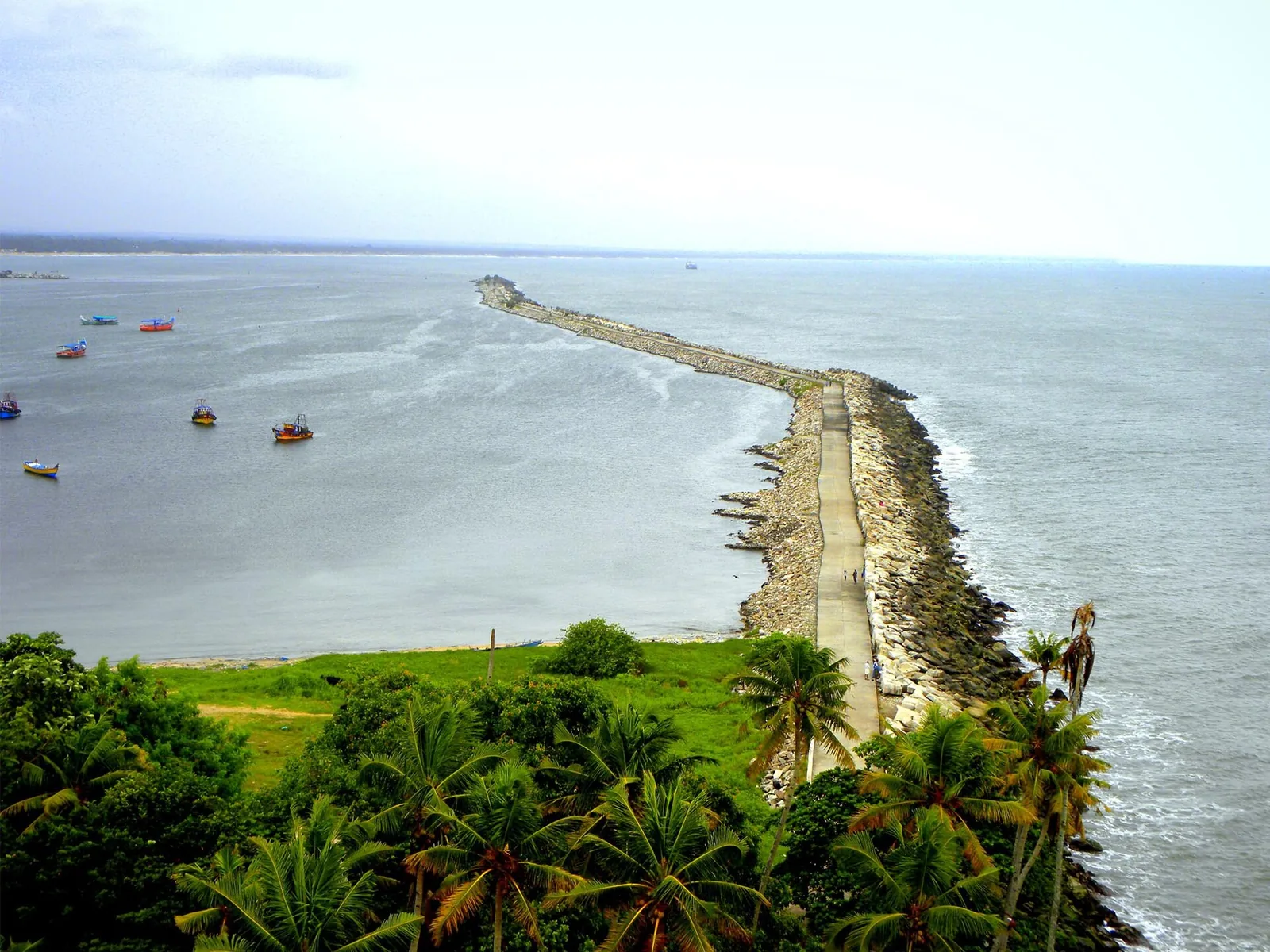
1.4 km · 17 min walk
The working wharf and breakwater at Thangassery, conventionally founded in AD 825 — the event the Malayalam calendar counts from. A short cargo quay and a long public breakwater walk, above a seabed that has produced Tang and Song coins and Lower Palaeolithic tools.
Roampedia is commission-free — own or know a stay, eatery, guide or shop near Sardar Vallabhbhai Patel Police Museum? List it and it appears here once verified.
Add a nearby businessGovernment monuments, museums and forest reserves in India often charge foreign visitors more. We have not verified whether this site does — ask at the counter.
Fees change without notice. Check the current rate at the counter.
Entry: ₹20 for adults and ₹10 for children, published by DTPC Kollam, offline booking only. ⚠ Other listings in circulation give ₹50. Kerala Tourism publishes no fee at all. Carry a little more than any figure you read online, including this one.
If you are travelling by bus or ferry, check the return service with the operator before setting out. Leave time to reach the stop or jetty after your visit.
Ask at the bus stand for the time of the last service back, not the next one. If you miss it, an auto or app cab is the fallback — agree the fare before you get in.
If you need step-free access, contact the site before travelling. Ask about a level entrance, steps along the route, the nearest drop-off point, seating and accessible toilets.
Charge cap and free-transaction limits: Reserve Bank of India, in force since 1 May 2025.
These services are listed within about 1.2 km of Sardar Vallabhbhai Patel Police Museum. Walking distances follow mapped routes; access and opening hours can change. Other services may be closer but are not included here.
Emergency numbers are verified against official government and state tourism sources. 112 works anywhere in India.
The city’s Mahatma Gandhi beach and park on the Arabian Sea, a popular evening spot near Kollam town.
1.1 km · 14 min walk · straight lineLarge palm-fringed backwater system and houseboat base around Kollam.
1.3 km · 17 min walk · straight lineThe working wharf and breakwater at Thangassery, conventionally founded in AD 825 — the event the Malayalam calendar counts from. A short cargo quay and a long public breakwater walk, above a seabed that has produced Tang and Song coins and Lower Palaeolithic tools.
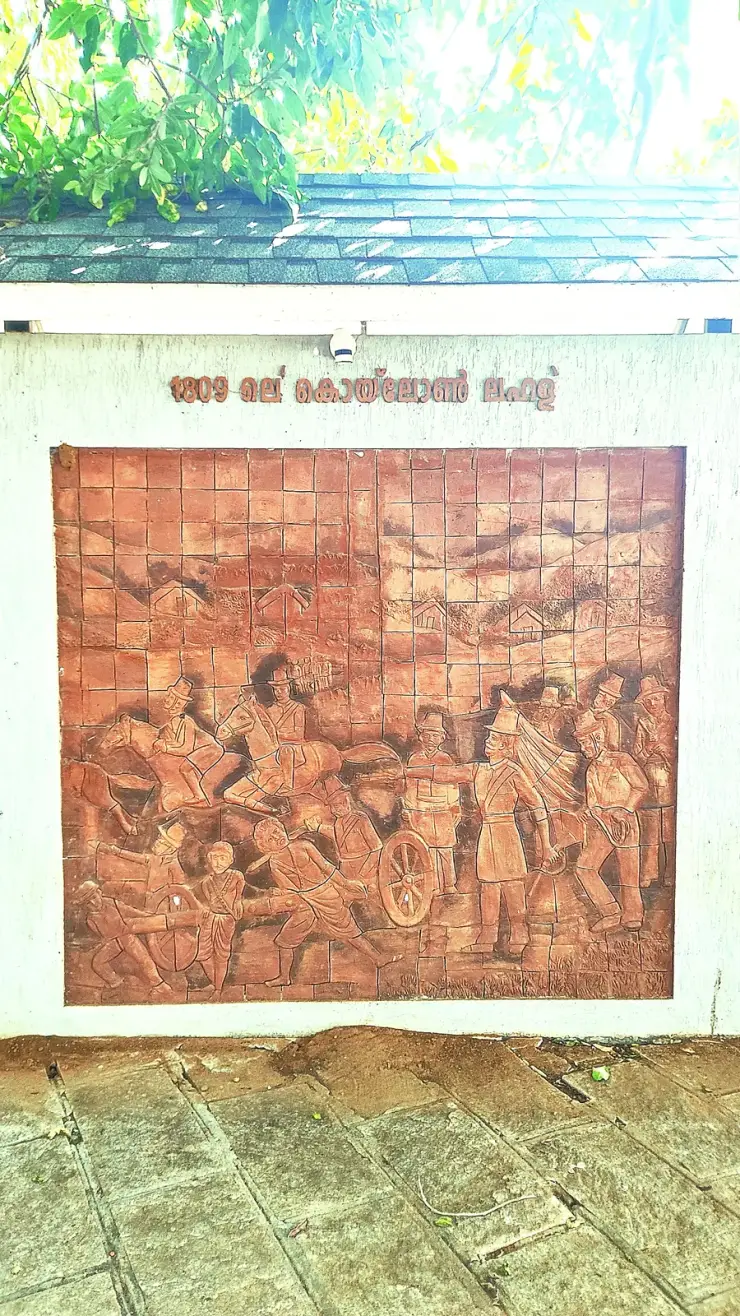
1.4 km · 17 min walk · straight lineForty-eight acres of municipal park on the Ashtamudi shore in the middle of Kollam, run by the DTPC — boating and kayaking off a painted jetty, ziplines and rope courses, a heritage walkway of terracotta reliefs, contemporary sculpture left behind by a 2012 festival, and a mangrove wetland with a state biodiversity heritage tag.
1.6 km · 20 min walk · straight lineThe former British Residency at Asramam survives as a government guest house beside Kollam’s backwater landscape. Its architecture is the attraction, with access governed by its working use.
1.7 km · 21 min walk · straight lineAnandavalleeswaram is an active Shiva temple in Kollam, with an Anandavally shrine and a ten-day annual festival in March or April. Ritual processions and cultural performances bring another dimension to the temple visit. Follow its worship session, admission and photography rules.
2.5 km · ~6 min by auto · straight lineA Travancore royal residence on the Ashtamudi shore in Kollam, built to be arrived at by boat and now a working NCC establishment — viewed from outside or from the water.
2.5 km · ~6 min by auto · straight lineThangassery Lighthouse raises Kollam’s sea view above a historic coastal neighbourhood. The red-and-white tower is a working navigation landmark with a separate visitor session.
3.1 km · ~8 min by auto · straight lineA quiet, curved bay beach west of Kollam town, calmer than the city beach and good for a relaxed evening.
4.5 km · ~11 min by auto · straight line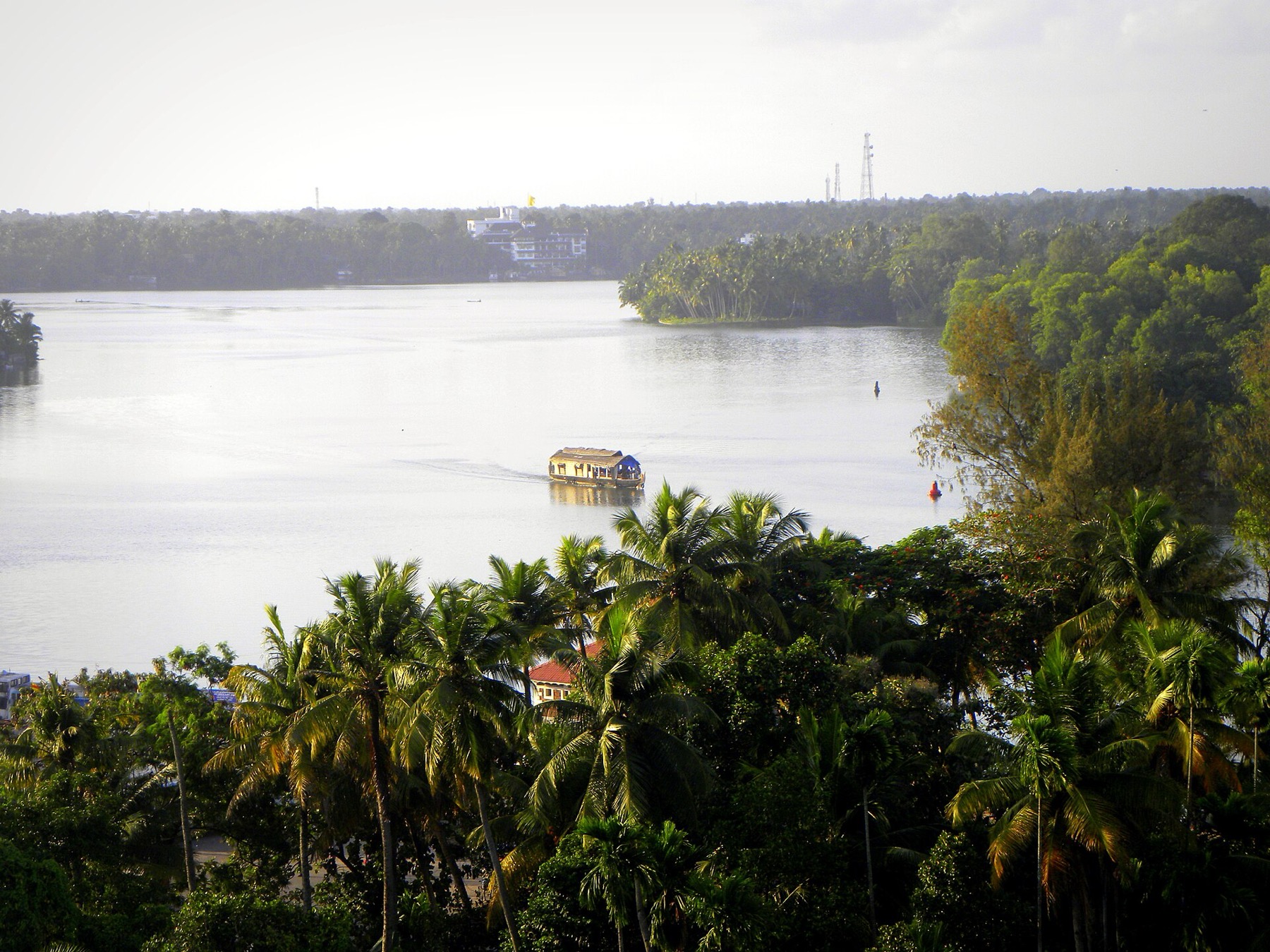
The open-water outlooks on the Munroe Island and Perumon side of Ashtamudi, where the lake widens out — the wide views the canal trips themselves do not give you.
8.2 km · ~14 min by cab · straight lineBy most accounts Kerala’s largest fishing harbour, at the mouth of Ashtamudi Lake about 9 km from Kollam town, and where Indian fishing was mechanised; two bridges cross the confluence and the early-morning auction is the sight to catch.
8.4 km · ~14 min by cab · straight lineThe estuary and beach at Paravur south-east of Kollam, where the Paravur backwaters meet the sea across a sandbar — a quiet spot known for its regulator bridge, the TS Canal and calm backwater-and-sea scenery.
10.1 km · ~17 min by cab · straight lineNearby toilets, pharmacies, ATMs, seating and vets are community-mapped and may be incomplete or out of date. Map data © OpenStreetMap contributors | Walking times © openrouteservice.org by HeiGIT
No, although both Kerala Tourism and DTPC Kollam say so. The Delhi Police Museum was established in 1991, eight years before this one was inaugurated in 1999; the National Police Museum in New Delhi was inaugurated on 21 October 2018; and the Tamil Nadu Police Museum opened in Chennai in September 2021. It may well be the only one in Kerala, which is a claim we found no reason to doubt.
DTPC Kollam publishes ₹20 for adults and ₹10 for children, and hours of 9:00 to 18:00 daily. ⚠ Two warnings. Other listings give the entry fee as ₹50, and some state that the museum is closed on Sundays while DTPC lists no weekly closing day at all. Kerala Tourism publishes neither a fee nor a timing. If you are making a special trip, especially on a Sunday, ring ahead.
Directly opposite Kollam Junction railway station, in the Karbala area — English Wikipedia gives 100 m from the station, DTPC about 150 m. DTPC also gives roughly 1.7 km to the Kollam KSRTC bus stand and about 65.5 km to Thiruvananthapuram International Airport.
The plaque in the porch records the museum as inaugurated by Shri B. S. Sastry IPS, Director General of Police, Kerala State, on 10 May 1999, in the presence of R. K. Medhekar IPS (IGP South Zone), Paul Leslie IPS (DIG Trivandrum Range) and B. Sandhya IPS (SP Kollam). ⚠ Travel sites credit the museum to “the then Inspector General of Police, B. Sandhya IPS”. The plaque and her own service record both put her as Superintendent of Police, Kollam in 1999; she became an Inspector General only in 2007.
Both on 25 January 2006, unveiled by T. P. Senkumar IPS, then IGP (South Zone) — the date is on both plinths. ⚠ English Wikipedia and the pages that follow it say January 2005. The Patel figure is described as 1.1 tons of concrete sculpted by a police constable named Santosh; the Gandhi statue's plaque names a different artist, Sri A. Ashok Kumar.
Police arms and ammunition of the 18th and 19th centuries — guns, bullets, machines — a Martyr's Gallery for officers killed in service, information charts on fingerprints, DNA testing and human bones, photographs of police dogs, and medals awarded to policemen of various ranks. Allow about an hour.
Because the sources disagree with the building. The plaques, the porch sign and the board at the gate all read Sardar Vallabhbhai Patel — as does the English Wikipedia article. Wikimedia Commons filenames, DTPC Kollam and Kerala Tourism spell it Vallabhai. We follow the building.
Midday works well for museums, especially when outdoor heat is high.
Entry: ₹20 for adults and ₹10 for children, published by DTPC Kollam, offline booking only. ⚠ Other listings in circulation give ₹50. Kerala Tourism publishes no fee at all. Carry a little more than any figure you read online, including this one. Timings: DTPC Kollam publishes 09:00 to 18:00 daily and gives NO weekly closing day. 🔴 THIS IS A REAL DISAGREEMENT AND IT MATTERS: other listings state the museum is open every day EXCEPT SUNDAYS. Kerala Tourism publishes no timings whatsoever. If you are making a special trip, and particularly on a Sunday, ring ahead — this is a police compound and someone will answer. The rupee figure quoted is the Indian adult rate. Government monuments, museums and forest reserves in India often charge foreign visitors more, and we have not verified whether this site does.
Base yourself in Kollam town or a nearby town in Kollam, then confirm the last-mile route locally before leaving. Check weekly closure day and ticket counter timings before going. If the visit depends on forest, temple, boat, ferry, weather or seasonal access, check the official/local rule on the day before travel.
1 to 2 hours.
Nearby you can pair Kollam Beach (1.1 km), Ashtamudi Lake (1.3 km), Port of Kollam (1.4 km), Asramam Adventure Park (1.6 km).
Use official ticket counters and cloakroom rules. Keep bags and cameras within permitted areas.
Written about Sardar Vallabhbhai Patel Police Museum itself — its history, its legends and the arguments about them.
These guides explore Kollam town and the surrounding area. Choose a visit that fits your interests, allowing separately for travel between stops.
Route-level itineraries and practical guides for the rest of Kerala.
Photographs: Pranav Mohan (CC BY-SA 4.0). Wikimedia Commons.