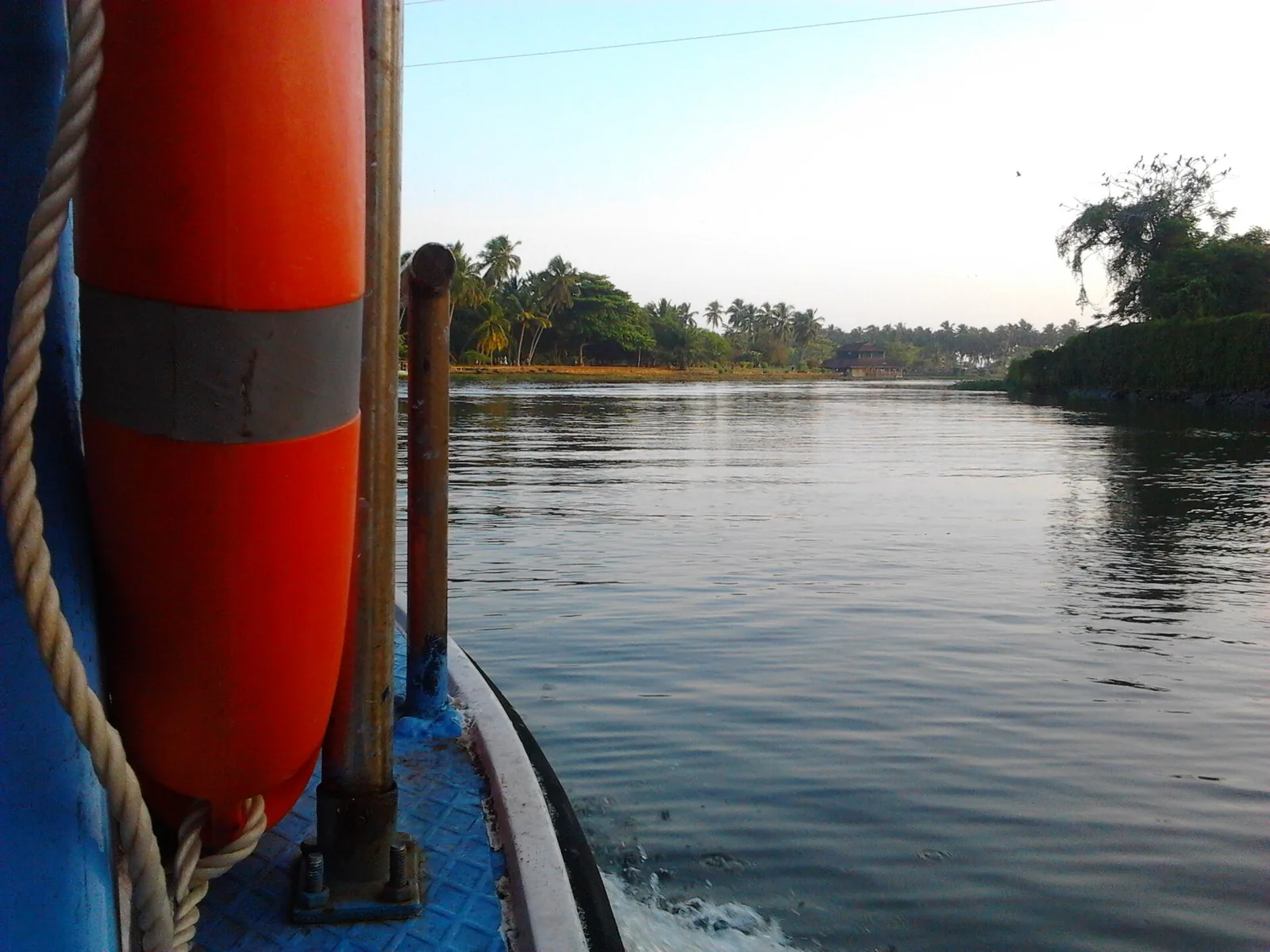
Almost every description of Veli Tourist Village leads with the boating. Pedal boats, speed boats, safari craft running up the backwater towards Akkulam. It is what the place is for.
Reporting on the village tells a different story, and a visitor planning a day is better served by it than by the brochure. Boating at Veli has been shut for months at a stretch, with the four safari boats operated by the Kerala Tourism Development Corporation out of service awaiting repairs and clearances.
What the reporting describes
Besides the boats: the floating restaurant, one of the village’s signature features, with its top deck closed to the public. Toilets and cloakrooms promised as part of the revamp still not operating. A site that reads, from outside, as a functioning municipal park and, from inside, as one running on a fraction of its advertised offer.
Set against that is the ₹60 crore development package directed at the site, of which about ₹10 crore went on the solar-powered miniature train flagged off in 2020 — a 2.5 km circuit, three bogies, capacity around 45. The train still runs. The boats do not.
Capital-rich, operations-poor
This is a recognisable pattern rather than a scandal, and it is worth naming because it explains a great deal about public leisure infrastructure in India generally.
Capital expenditure is politically legible. A minister can flag off a train; there is a ribbon, a photograph, a number in a press release. Operating expenditure is not. Nobody inaugurates a maintenance contract for four boat engines, and the officer who keeps the toilets working gets no photograph at all. So the money goes where the visibility is, and the running costs — the boat repairs, the survey clearances, the cleaning staff — compete every year against the next capital project.
The result is a site that acquires new assets faster than it can keep the old ones working. It is not that the ₹10 crore train was a bad thing. It is that a park needs both kinds of spending and only one kind is easy to authorise.
What is dependable
A good deal, in fact, and that is the fair other half of this. The setting does not depend on a maintenance budget: the sandbar where the lagoon meets the Arabian Sea, and the ability to stand between calm water and open surf, is the reason the village was put here and it is unaffected by anything KTDC does or fails to do.
The Kanayi Kunhiraman sculptures are stone and are still there — the Conch of 1986 above all, by the sculptor who also made the Yakshi at Malampuzha and the 23-metre Sagarakanyaka down the coast at Shankumugham. The gardens are gardens. The floating bridge is a pontoon walkway that rolls under you and delivers you to the beach. The children’s play area works. The miniature train runs.
Which means Veli remains a genuinely good evening out. It just is not the one the listings describe, and the difference matters most to the family that drove out specifically to put children on a boat.
How to plan around it
Ring ahead or ask at the gate, and ask specifically — “is boating running today” rather than “is the park open”, because the park is always open. Treat the boating as a bonus rather than the reason for the trip. Go late in the afternoon, when the site is at its best regardless of what is operating, and pair it with the sandbar and the beach.
And take the closures as information about the place rather than as a reason to skip it. A park that a city keeps using while its operator struggles to keep the boats in the water is telling you something about how much the city wants it.
Frequently asked questions
Is boating running at Veli Tourist Village?
Not reliably. Reporting on the village describes boating shut for months at a stretch, with the four KTDC safari boats out of service pending repairs and clearances. Ask specifically whether boating is operating on the day, rather than whether the park is open.
What else is closed?
Reporting describes the floating restaurant’s top deck closed to the public, and toilets and cloakrooms promised under the revamp still not operating. The gardens, sculptures, floating bridge, children’s play area and miniature train are the dependable parts of a visit.
What is the solar miniature train?
Kerala Tourism’s solar-powered miniature train, flagged off in 2020 and described as India’s first of its kind: a 2.5 km circuit through the grounds, three bogies, capacity around 45, built at roughly ₹10 crore within a wider ₹60 crore development package for the site.
Is Veli still worth visiting?
Yes — but for the setting rather than the activities. The sandbar where the lagoon meets the Arabian Sea, the Kanayi Kunhiraman sculptures, the gardens and the floating bridge are all unaffected by the operational problems. Just do not travel out specifically to go boating without checking first.
Who runs Veli Tourist Village?
It is a state tourism site, with the boating operated by the Kerala Tourism Development Corporation (KTDC). The recent development programme was a state investment package of roughly ₹60 crore.
Why do the capital works get done and the repairs not?
Because capital spending is politically visible and operating spending is not. A new train can be inaugurated; a boat-engine maintenance contract cannot. The pattern of new assets arriving while existing ones sit idle is common across public leisure infrastructure, and Veli is a clear local example of it.
