Most descriptions of Veli Tourist Village begin with boating and rides. Kerala Tourism’s account includes them too, then pauses over a conch sculpture by Kanayi Kunhiraman in the landscaped garden. That change of subject matters. The sculpture gives a public place an identity that does not depend on which machine or boat is running today.
A shell in a place between two waters
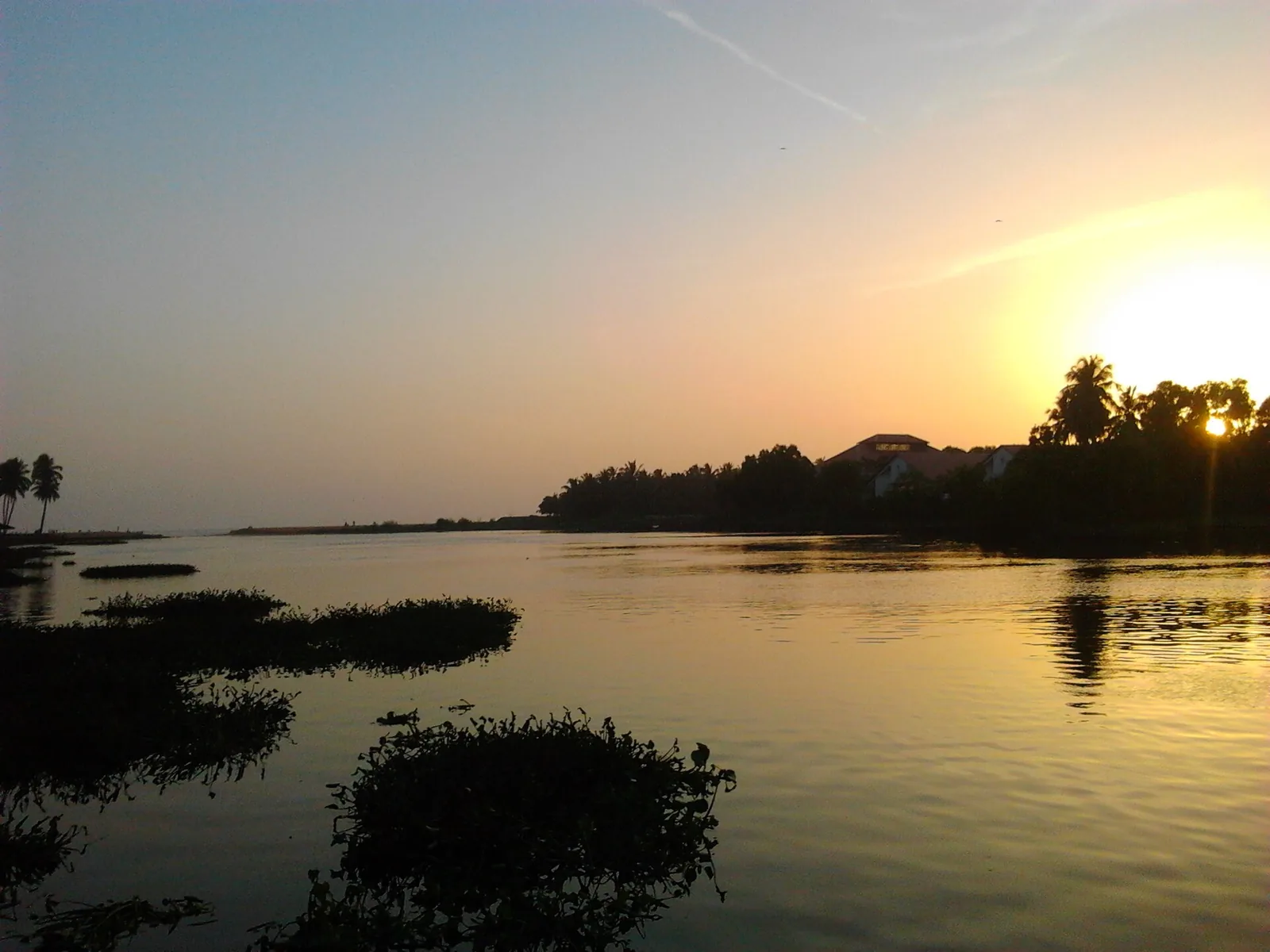
Veli sits beside a lagoon separated from the Arabian Sea by a sandbar. Kerala Tourism describes the garden on the southern bank and a bridge linking it toward the beach. The conch belongs within this planned landscape, not inside an art gallery. Garden paths and seating create the approach; water and coast provide the wider setting. Its shape can suggest sea sound and ritual to a viewer, but the tourism source does not publish an artist’s explanation of the symbolism. That reading should stay an interpretation, not a quotation placed in Kunhiraman’s mouth.
Walk around the work before choosing a photograph. From one position the garden may hold most of the frame; from another, the lagoon or coastal strip changes the relationship. Public sculpture asks for that movement. It occupies space with visitors rather than facing them from a wall, and the setting is part of the encounter.
The artist has a name; the work deserves one
Kanayi Kunhiraman is named by Kerala Tourism as the maker of Veli’s conch. Crediting him prevents the sculpture from being treated as anonymous resort decoration. The source does not establish a construction date, dimension or definitive reading of the form, so those claims should not be added merely to make the story sound complete. What it does establish is a made artwork placed deliberately among the village’s public features.
That is a different way of valuing Veli. A miniature train, pedal boat or café depends on staffing and maintenance. The conch does not provide a ride, yet it can make the garden recognisable to people who return. A family may come for an activity and find that the artwork is what they remember. The village contains both kinds of experience, and neither has to pretend to be the other.
A slower route through Veli
Begin with a walk through the landscaped garden. Find the conch, view it from more than one side, then continue to the public bridge or lagoon edge if those routes are open. Compare the sheltered water with the sea beyond the sandbar. The Veli lagoon story explains that geography; the miniature train story explains why a newly built attraction is not the same as a reliably operating one.
This route leaves the sculpture where it belongs: in a functioning public place. Rides may add energy and the lagoon may supply the view, but Kunhiraman’s conch gives a visitor reason to stop, circle and look. It is a small change in pace that makes Veli more than a checklist of facilities.
- Kerala Tourism: Kanayi Kunhiraman’s conch at Veli
- The coastal reading is an interpretation; the source establishes the artist and site.