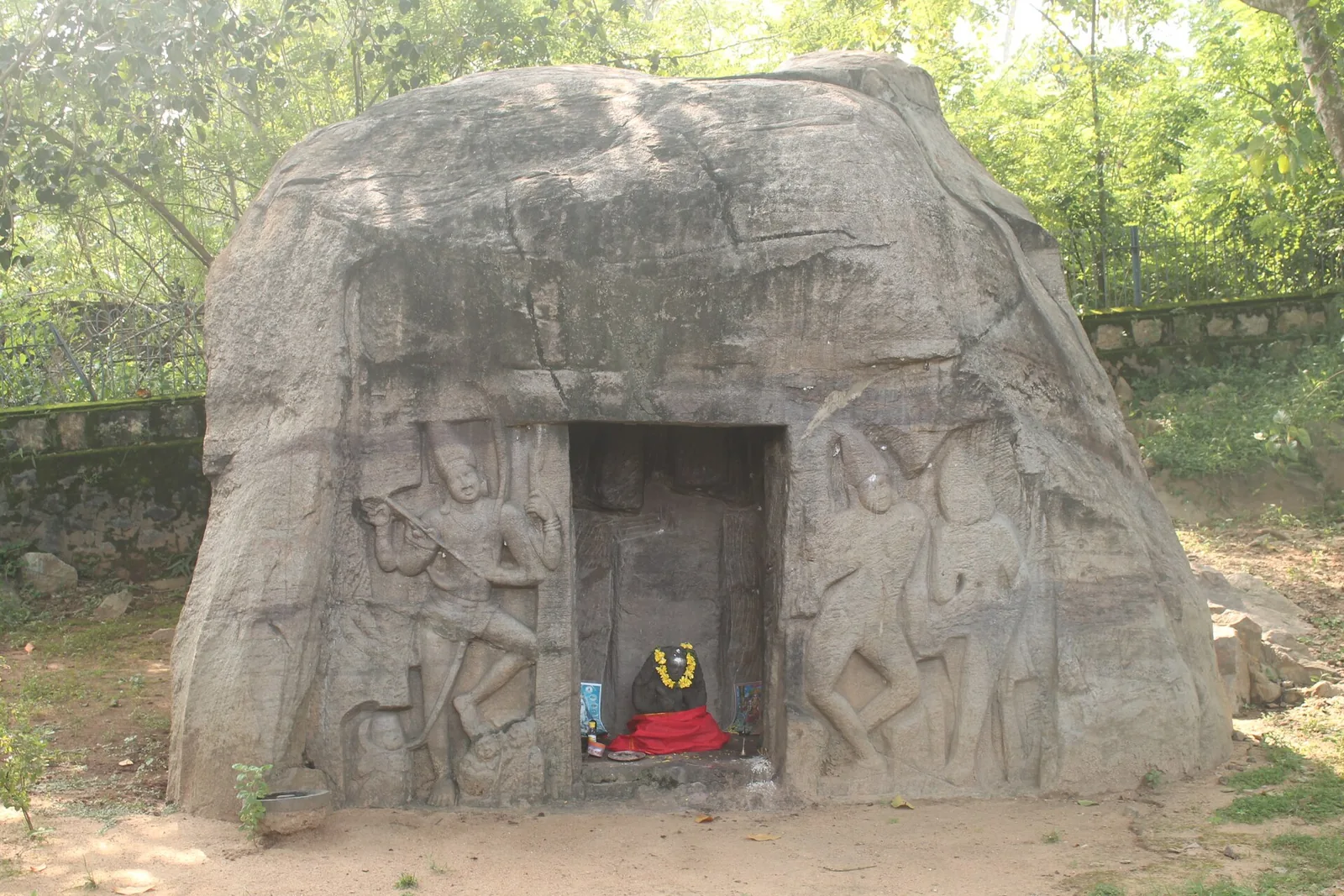
Kerala Tourism describes the Vizhinjam rock-cut cave as an eighth-century monument. That is a useful period label for a visitor, but it is not an exact construction date. The Archaeological Survey of India’s protected-monuments list identifies the rock-cut cave and adjacent land at Vizhinjam under central protection without giving a year of excavation.
A date repeated is not a dated record
A tourism page can tell us how the site is classified and presented. It cannot, on its own, show which archaeological observation produced the eighth-century date. The longer Kerala Tourism destination page mentions inscriptions in Vattezhuthu, but it does not publish a transcription or explain whether any inscription dates the cave itself. That limits what can honestly be inferred from the visitor material.
What the cave itself does show
The monument is a small chamber cut into rock with relief work on its face, close to the coastal settlement of Vizhinjam. Unlike a free-standing temple, it was made by removing material from a boulder. That construction choice connects it to a wider south Indian rock-cut tradition, while the exact date and patron need specialist evidence rather than a confident guess at the gate.
Why protection matters now
Its central protected status is not a marketing phrase. An Archaeological Survey of India works notice from 2025 identifies maintenance at the Vizhinjam rock-cut cave. The site is being managed as a monument, even though the public summary of its early history remains thin. Visitors can respect the fenced setting and look closely without turning uncertainty into a mystery invented for effect.
The most accurate short description is therefore “a protected rock-cut shrine generally dated by Kerala Tourism to the eighth century.” An exact year, a named patron or a claim that no inscription exists would need a stronger published record.
A date is an argument, not a label
When a shrine has no secure founding inscription, scholars compare its form, carving and regional context with better dated examples. That can suggest a period, but it cannot turn an estimated century into the date a named ruler ordered work. A travel page should preserve the difference between a style-based attribution and a documented event.
The four-figure carving story shows why even iconographic labels require care. The rarity story places the shrine within Kerala’s broader built heritage. Neither can supply a missing foundation record, but both make the surviving evidence more meaningful.
At Vizhinjam, look for what is actually cut into the rock before reading a precise date online. The uncertainty is part of the site’s research story, and honesty about it leaves room for better evidence to emerge.
Frequently asked questions
Is the Vizhinjam cave temple from the eighth century?
Kerala Tourism assigns it to the eighth century. The publicly available visitor sources used here do not establish an exact year.
Does the cave have an inscription?
Kerala Tourism’s longer destination page says it has Vattezhuthu inscriptions, but does not provide a transcription or show that one dates the cave. Do not state either presence or absence more precisely without archaeological documentation.
Who protects the site?
It appears on the list of centrally protected monuments in Kerala under the Archaeological Survey of India.