Vizhinjam Rock-Cut Cave Temple

An 8th-century rock-cut cave shrine near Kovalam with carved reliefs of Shiva, from the Ay dynasty period. This cave guide is organized from Kovalam in Thiruvananthapuram district, with practical planning for routes, timing, nearby stays, food, operators and direct local inventory. Use it to compare what to see, how long to spend, when to go and which verified stays, local guides, jeep or taxi operators, food stops, permits and safety-aware activity providers should be verified around Vizhinjam Rock-Cut Cave Temple.

Vizhinjam Rock-Cut Cave Temple, Kovalam
Practical guide

Plan Vizhinjam Rock-Cut Cave Temple

Who's going?Tailor Vizhinjam Rock-Cut Cave Temple to your trip
Typecave
Nearest baseKovalam
Best timeDry months are easiest
Time needed1
EntryFree
Nearest town/baseKovalam
DistrictThiruvananthapuram
Place typecave
Time needed1.5 to 3 hours.

An 8th-century rock-cut cave shrine near Kovalam with carved reliefs of Shiva, from the Ay dynasty period. This cave guide is organized from Kovalam in Thiruvananthapuram district, with practical planning for routes, timing, nearby stays, food, operators and direct local inventory. Use it to compare what to see, how long to spend, when to go and which verified stays, local guides, jeep or taxi operators, food stops, permits and safety-aware activity providers should be verified around Vizhinjam Rock-Cut Cave Temple.

Vizhinjam Rock-Cut Cave Temple belongs under Kovalam, one of the practical travel bases in Thiruvananthapuram district. Use Kovalam for stays, food, local transport and operators, then plan this place as a focused stop rather than an isolated pin.

The story

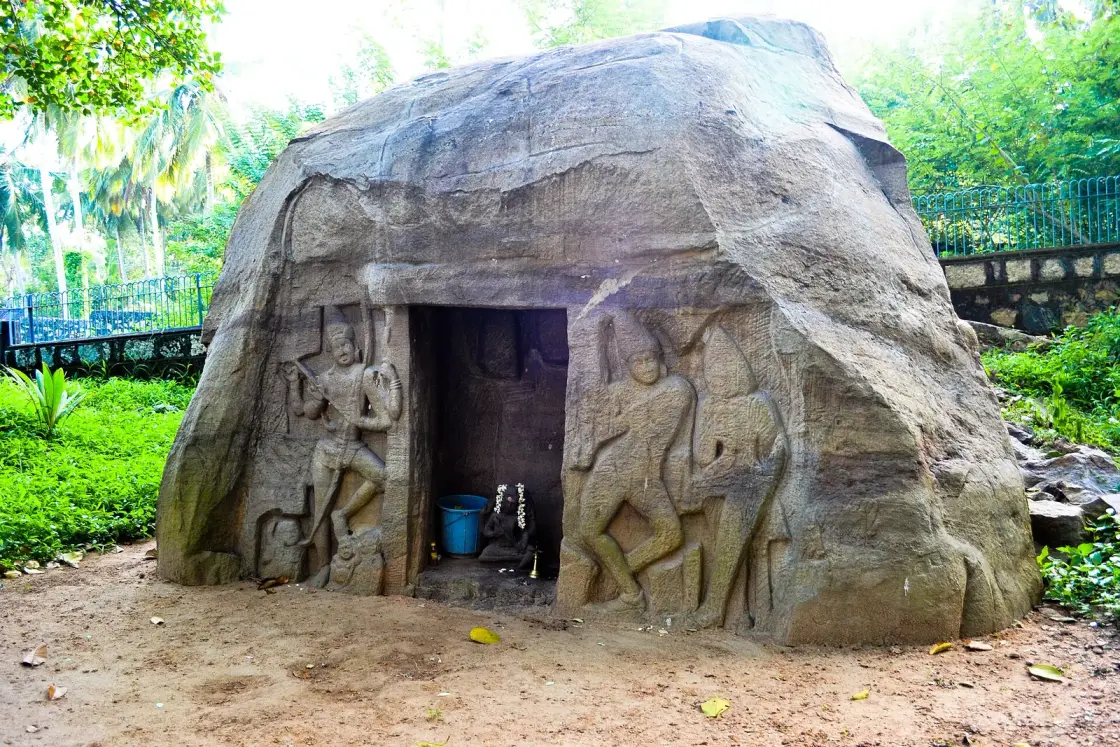
On a rise above the fishing harbour at Vizhinjam sits a single boulder with a doorway cut into it. Inside are carved reliefs usually dated to around the eighth century — among the oldest surviving sculpture in this part of Kerala, from the Ay dynasty that ruled this coast from the port below.

The story of Vizhinjam Rock-Cut Cave Temple

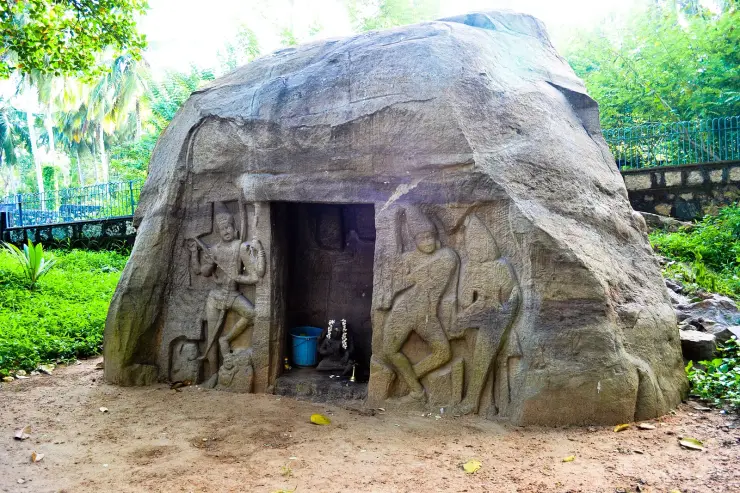
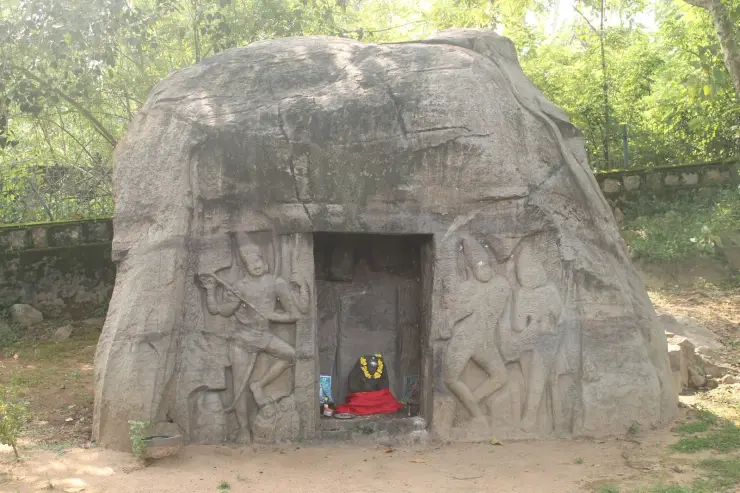
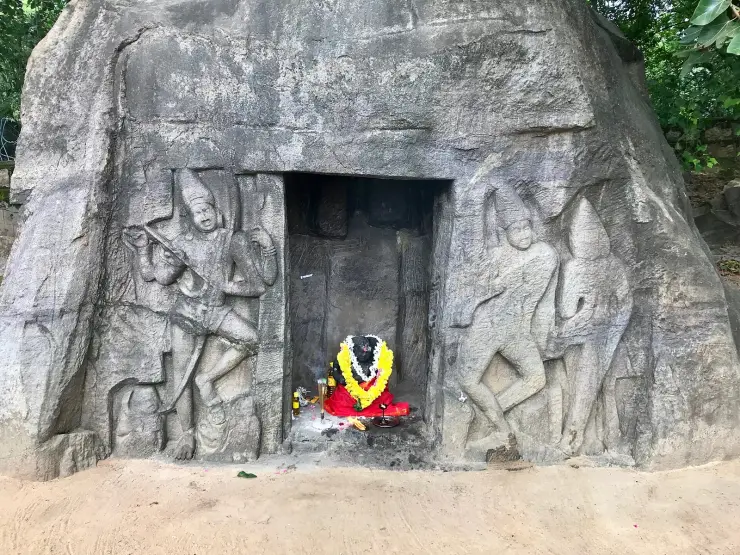
The shrine is small enough to miss and unassuming enough to walk past. It is a cave temple in the strict sense — not built but excavated, cut back into a free-standing granite boulder, with a modest opening and a chamber behind it. There is no compound, no tower, no elaboration. That plainness is precisely what makes it old.

Inside, the interest is the sculpture. The rear and side walls carry relief figures, and the identifications generally offered locally are of Shiva with Parvati and of a dancing form of the god — Tripurantaka and Dakshinamurti also appear in various accounts. It is worth saying that the readings differ between sources: this is early, weathered, unlabelled sculpture, and art historians do not entirely agree on the iconography. The page you are reading should not pretend to more certainty than the field has.

The dating is on firmer ground, if still approximate. The shrine is generally placed at around the eighth century and attributed to the Ay dynasty, the ruling line of the far south whose port and sometime capital was Vizhinjam. Rock-cut architecture of this kind is far commoner in the Tamil country to the east than in Kerala, and the Vizhinjam cave is one of a small handful of examples on this side of the Ghats — which is why it matters out of all proportion to its size.

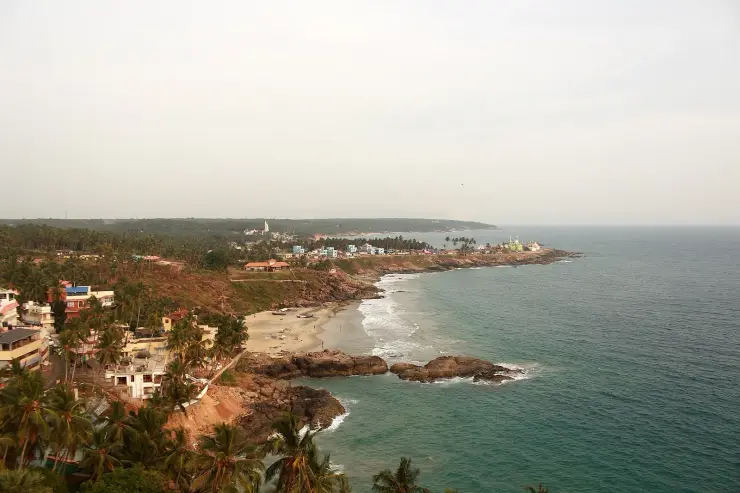
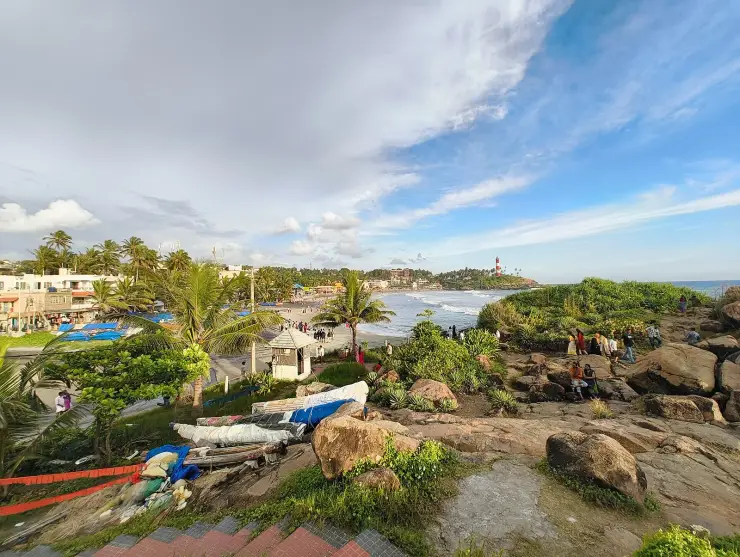
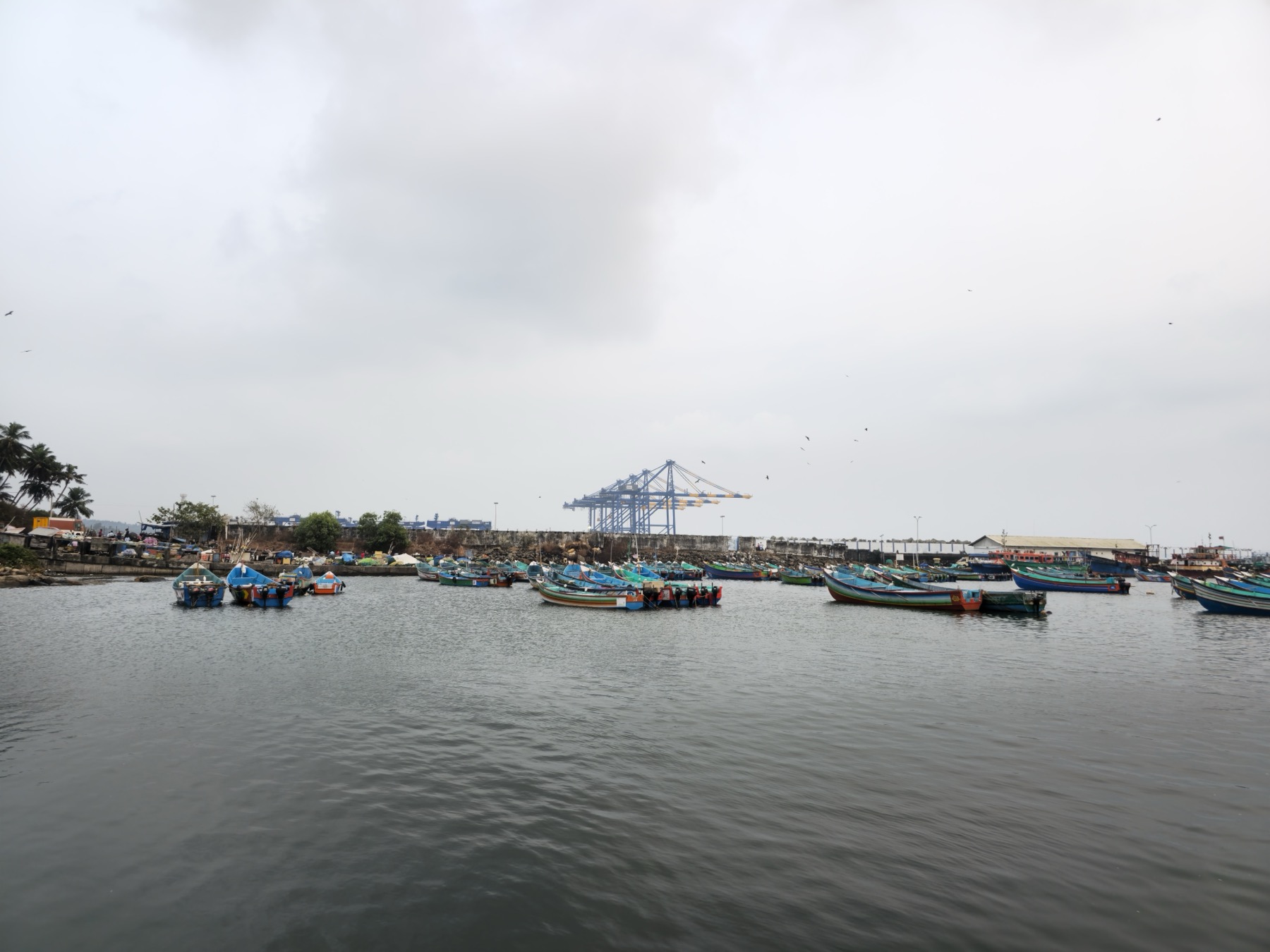
The context is the other half of the visit. This is a shrine on a hill above a harbour that the Cholas and Pandyas fought over, in a town that was an Ay capital, looking out now at the breakwater of India's first deepwater container transhipment terminal. Very few places let you stand between the eighth century and the twenty-first quite so directly.

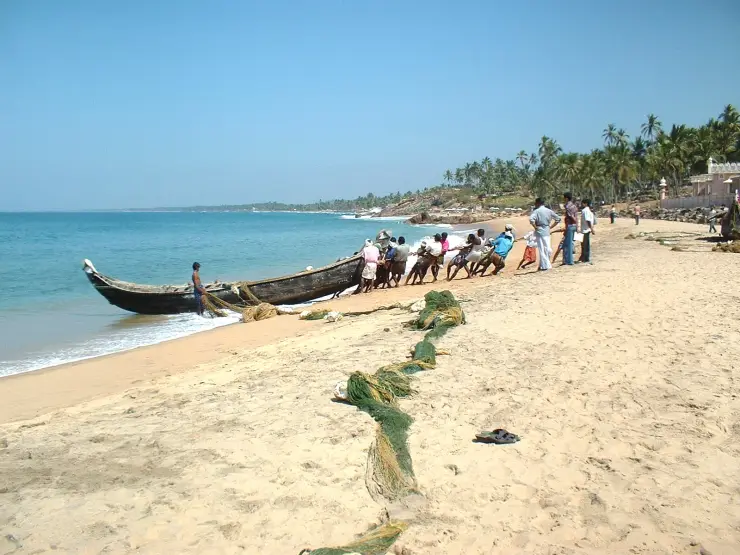
Practically it takes ten or fifteen minutes and should be combined with the harbour below — go early for the fish auction, then walk up. The shrine is a short, steep climb from the harbour area and is an active place of worship as well as a monument, so the ordinary courtesies apply.

Legend & myth

Local tradition reads the principal reliefs as Shiva with Parvati and as the god in a dancing form, and connects the shrine to the sage-and-king traditions that cluster along this stretch of coast. These identifications are traditional and widely repeated locally; the scholarly readings of the iconography differ, and no single interpretation should be taken as settled.

The most confidently repeated fact about this shrine is its date, and it is the one that deserves the most caution. Almost every account gives it as eighth century. The shrine carries no dated inscription and says nothing about itself. That century is an art-historical estimate, arrived at by comparing the carving style with dated rock-cut work elsewhere in south India and by placing it within what is known of Ay dynasty patronage. It is a considered judgement by people who know the material, and it is probably about right — but it is an inference, not a record, and accounts differ. Anyone quoting it as a hard date is quoting a scholarly opinion with the hedges stripped off.

The iconography is more specific than our own earlier wording suggested, though still not unanimous. The best-documented reading identifies four figures across the two flanking panels: Nataraja, Shiva in the dance, with Parvati beside him on one side, and Tripurantaka — Shiva as destroyer of the three cities — together with Dakshinamurti, the god as the teacher facing south, on the other. One documented variant reads the Dakshinamurti figure as veenadhari, holding the veena, which is a distinct and rarer form. We had summarised all of this as Shiva with Parvati and a dancing form, which is not wrong but flattens a genuinely unusual programme into something generic.

There is a bigger point buried in that. Rock-cut architecture is common in the Tamil country to the east and rare on the Kerala side of the Ghats, and this shrine is one of a very small number of surviving examples here. So the interesting question is not which god is which but why the technique appears at all on this coast — and the likely answer is the harbour below. Vizhinjam was the Ay port, contested by the Cholas and the Pandyas, connected eastwards by sea and by conquest. The style arrived the way everything else arrived at Vizhinjam: through the anchorage. The shrine is best read as evidence of contact rather than as an isolated curiosity.

One practical caution about identity, since two things here share a name. This is the rock-cut cave shrine on the rise above the old fishing harbour. It is not the Vizhinjam International Seaport, whose breakwater you can see from the same spot, and it is not the town's modern temples. Older listings sometimes file the cave under Thiruvananthapuram city rather than Kovalam because of how district records were kept; it is at Vizhinjam, about 2 km from the Kovalam beaches and some 12 km from the city.

Finally, a word about what unfinished means here. Parts of the carving are noticeably less resolved than others, and this is sometimes described as weathering. Weathering is certainly a factor on exposed granite near the sea, but incomplete excavation is common in early rock-cut shrines across south India — work stopped when patronage stopped — and the two causes look similar to a casual eye. We are not in a position to say which applies at Vizhinjam, and neither, on the published record, is anyone else.

Read the full history of Vizhinjam Rock-Cut Cave Temple 599 more words

History

The cave temple is generally dated to around the eighth century and attributed to the Ay dynasty, whose port and periodic capital was Vizhinjam. It is excavated from a free-standing granite boulder rather than built, and carries relief sculpture on its interior walls.

Rock-cut shrines of this type are far more common in the Tamil country than in Kerala, and the Vizhinjam cave is among a small number of surviving examples on the Kerala side of the Western Ghats, which gives it disproportionate art-historical importance.

Vizhinjam itself appears in early inscriptions and in Tamil literature as a significant harbour, contested repeatedly during the rivalries of the Cholas, the Pandyas and the Chera–Ay powers, and later falling within the territory of the Venad rulers who became the Travancore royal house.

The shrine survives on the rise above the modern fishing harbour, a short distance from the breakwater of the Vizhinjam International Seaport.

The Ay dynasty that produced it is among the oldest ruling lines of the far south, and its arrangement was unusual: rather than sitting inland on agricultural surplus with a port attached, the Ays organised themselves around the anchorage itself. Vizhinjam has no hinterland resource of consequence. Its entire historical weight rests on deep water lying close inshore on a coast that is otherwise shallow and silting — the same feature that, twelve centuries later, brought a container terminal to the same bay.

That is the context the shrine belongs to. Rock-cut excavation was a mature tradition in the Tamil country during the seventh and eighth centuries, under Pallava and Pandya patronage, and it is scarce on the Kerala side of the Western Ghats. Its appearance at Vizhinjam is most naturally explained by the harbour's eastward connections — by trade, by contested control, and by the movement of craftsmen that both bring. The shrine is a small piece of evidence for something larger: that this coast was not culturally sealed off by the mountains behind it.

Its later history is largely silence. As European trade concentrated at Kochi and the Travancore capital settled at Thiruvananthapuram, Vizhinjam's strategic importance drained away, and the shrine passed several centuries as a minor local place of worship rather than a monument. It remains an active shrine today as well as a protected antiquity, which is why you may find offerings, a garland and a lamp at the deity when you arrive.

That long dormancy is the reason so little is documented. There is no foundation inscription, no chronicle entry, no record of who commissioned the work or when it stopped. What survives is the boulder itself and the comparison it invites with dated shrines elsewhere — which is why every account of this place, including this one, is built on inference. It is an honest position rather than a weak one: the shrine is securely early, securely Shaiva, securely of the Ay period in style, and imprecise in every particular beyond that.

Why visit

It is among the oldest surviving pieces of built religious architecture in this part of Kerala, generally dated to around the eighth century.

Rock-cut shrines are rare on the Kerala side of the Ghats — this is one of a small handful, and the technique belongs more to the Tamil country to the east.

It is a direct survival of the Ay dynasty, which ruled this coast from the harbour immediately below.

Standing here you can see an eighth-century shrine, a working artisanal fishing harbour and a brand-new deepwater container port in one view.

It takes fifteen minutes and combines perfectly with the morning fish auction at the harbour below.

What to expect

Highlights

  • Cave visit at Vizhinjam Rock-Cut Cave Temple
  • Rock formations, archaeology or natural history
  • Short hike and viewpoint potential
Getting there

How to visit

  • Base yourself in Kovalam or a nearby town in Thiruvananthapuram, then confirm the last-mile route locally before leaving.
  • Start early and check access rules, trail condition and ticket counter status.
  • If the visit depends on forest, temple, boat, ferry, weather or seasonal access, check the official/local rule on the day before travel.

Distance by road

  • Kochi208 km
  • Madurai271 km
  • Kozhikode375 km
  • Coimbatore383 km
  • Mysuru541 km

Road km to Thiruvananthapuram; ghat roads and traffic vary — allow extra.

Timing

Best time

Dry months are easiest; avoid heavy rain due to slippery approaches.

Weather in Vizhinjam Rock-Cut Cave TempleSeasonal guide

Live forecast loads in your browser.

Today at Vizhinjam Rock-Cut Cave Temple
Sunrise6:15 am
Sunset6:39 pm
Golden hour best light5:39 pm–6:39 pm
Blue hour after sunset6:39 pm–7:04 pm
Sun sets toward compass bearingWNW · 285°
Moon tonight🌒 Waxing crescent · 1%
South-west monsoon. June to September brings heavy rain to Kerala. Trails, falls and ghat roads can be slippery, swollen or closed at short notice, and forest departments sometimes suspend access. Check locally on the day before you travel.

Check the official alert before you travel. Kerala’s beaches, waterfalls and trekking routes close at short notice during heavy rain, and district alert levels change day to day. We do not publish an alert level of our own — read it from the state authority: Kerala State Disaster Management Authority, or the district control room on 1077.

Sun and moon are calculated for this location and shown in IST. Photography windows are the hour around sunrise and sunset; the sunset bearing is degrees clockwise from true north. Moon phase is accurate to about half a day.

Visitor notes

  • Wear shoes with grip and carry water.
  • Expect steps or uneven terrain.
Safety

Good to know

  • Do not enter closed sections.
  • Avoid slippery rock surfaces during rain.
Stay · eat · do · rent · see · shop

Stays, food & things to do near Vizhinjam Rock-Cut Cave Temple

Verified hotels, homestays, restaurants, experiences, sights, shops and rentals around Vizhinjam Rock-Cut Cave Temple — commission-free, with direct contact. Filter by what you need.

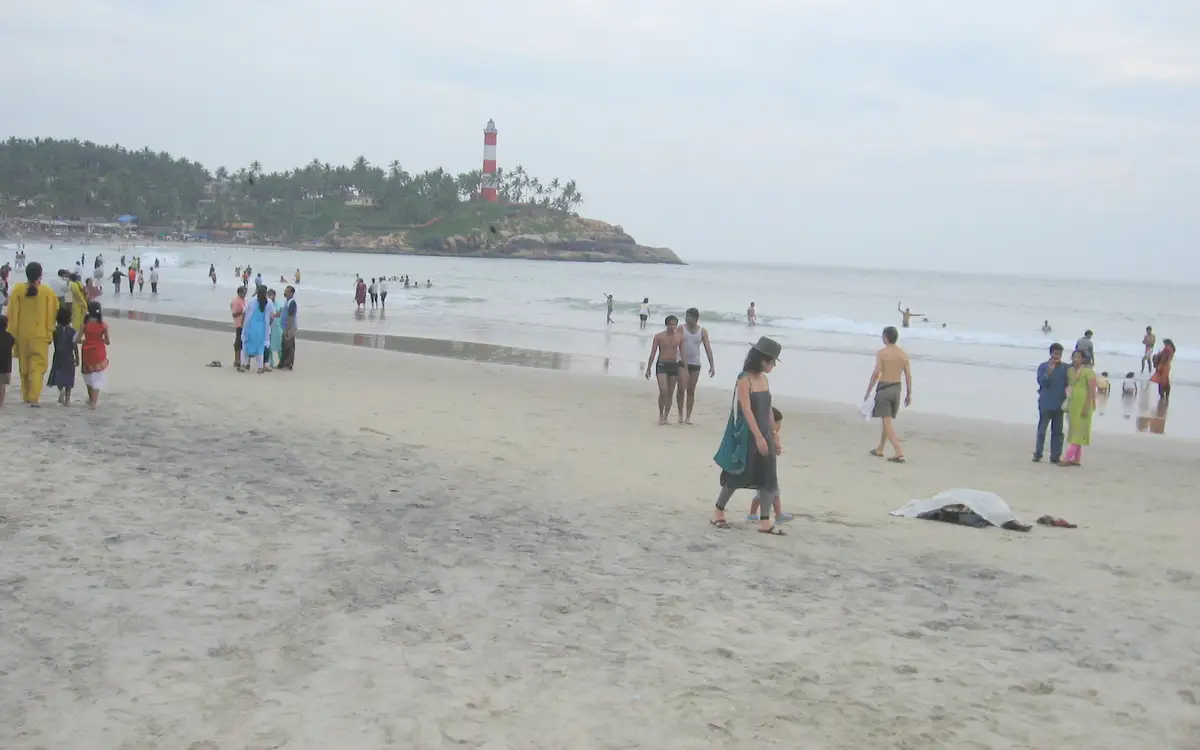
Kovalam Beach, Kerala Tourism — Official beach destination in Kovalam
Top pick Verified
Official beach destination · Kovalam
Kovalam Beach, Kerala Tourism

Official Kerala Tourism destination record for Kovalam's crescent beaches, lighthouse views, Ayurveda, dining and water activity context.

View guide
Taj Green Cove Resort & Spa Kovalam — 5-star deluxe beach resort in Kovalam
Top pick Verified
5-star deluxe beach resort · Kovalam
Taj Green Cove Resort & Spa Kovalam

Kerala Tourism-listed 5-star deluxe Taj resort on GV Raja Vattapara Road with direct phone, email, restaurants, Ayurveda, boating, spa and travel services.

Commission-freeView details
Lighthouse Beach, Kovalam - Kerala Tourism — Official beach attraction in Kovalam
Top pick Verified
Official beach attraction · Kovalam
Lighthouse Beach, Kovalam - Kerala Tourism

Official Kerala Tourism record for Lighthouse Beach, its 36-metre Vizhinjam Lighthouse, swimming, water sports and beachside dining.

View guide
Uday Samudra Leisure Beach Hotel & Spa — Samudra Beach hotel and wellness resort in Kovalam
Top pick Verified
Samudra Beach hotel and wellness resort · Kovalam
Uday Samudra Leisure Beach Hotel & Spa

Kerala Tourism-listed 5-star Samudra Beach hotel with direct phone/email, restaurants, Ayurveda, yoga, spa and travel services.

Commission-freeView details
Bond Safari Kovalam — Scuba diving and water sports operator in Kovalam
Verified
Scuba diving and water sports operator · Kovalam
Bond Safari Kovalam

Official Bond Safari contact page lists Suseela Tower, Kovalam address, phones, email, booking links and scuba diving/water-sports evidence.

Commission-freeView details
Kovalam Surf Club — Surf school and surf club in Kovalam
Verified
Surf school and surf club · Kovalam
Kovalam Surf Club

Official Kovalam Surf Club contact page lists Lighthouse Beach opposite Hotel Wilson with phone, email, WhatsApp and surf-school/rental context.

Commission-freeView details
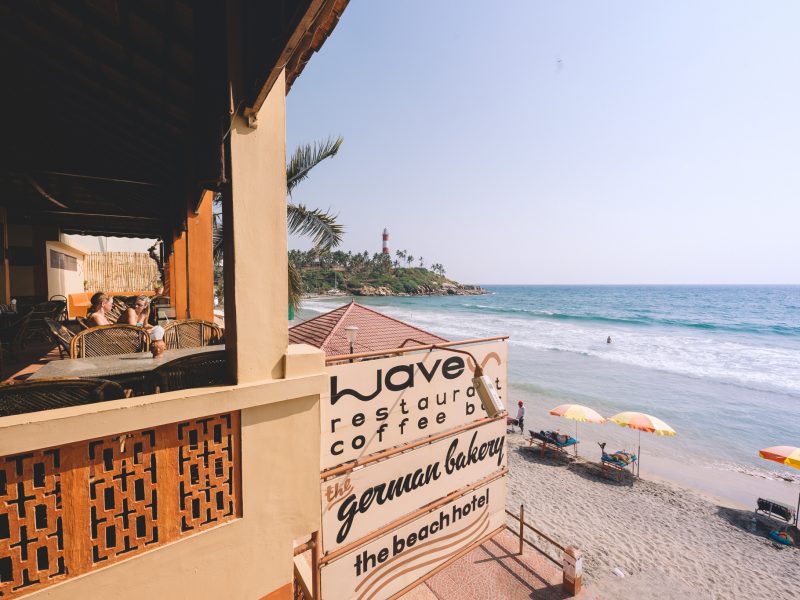
The German Bakery & Waves Kovalam — Beachfront bakery and restaurant in Kovalam
Verified
Beachfront bakery and restaurant · Kovalam
The German Bakery & Waves Kovalam

Official Beach Hotel restaurant page lists German Bakery & Waves at Lighthouse Beach with western/Asian food, baked goods, seafood and Ayurveda-friendly food.

Commission-freeView details
Guruprakash Ayurvedic Centre Kovalam — Hereditary Ayurvedic hospital in Kovalam
Verified
Hereditary Ayurvedic hospital · Kovalam
Guruprakash Ayurvedic Centre Kovalam

Official Guruprakash site lists Vellar/Kovalam address, phones, hereditary Ayurvedic hospital context and Kerala Tourism Green Leaf evidence.

Commission-freeView details
Bait at Taj Green Cove Kovalam — Seafood restaurant in Kovalam
Verified
Seafood restaurant · Kovalam
Bait at Taj Green Cove Kovalam

Official Taj dining page names Bait at Taj Green Cove Kovalam, with seafood/regional dining context and direct table-booking phone.

Commission-freeView details
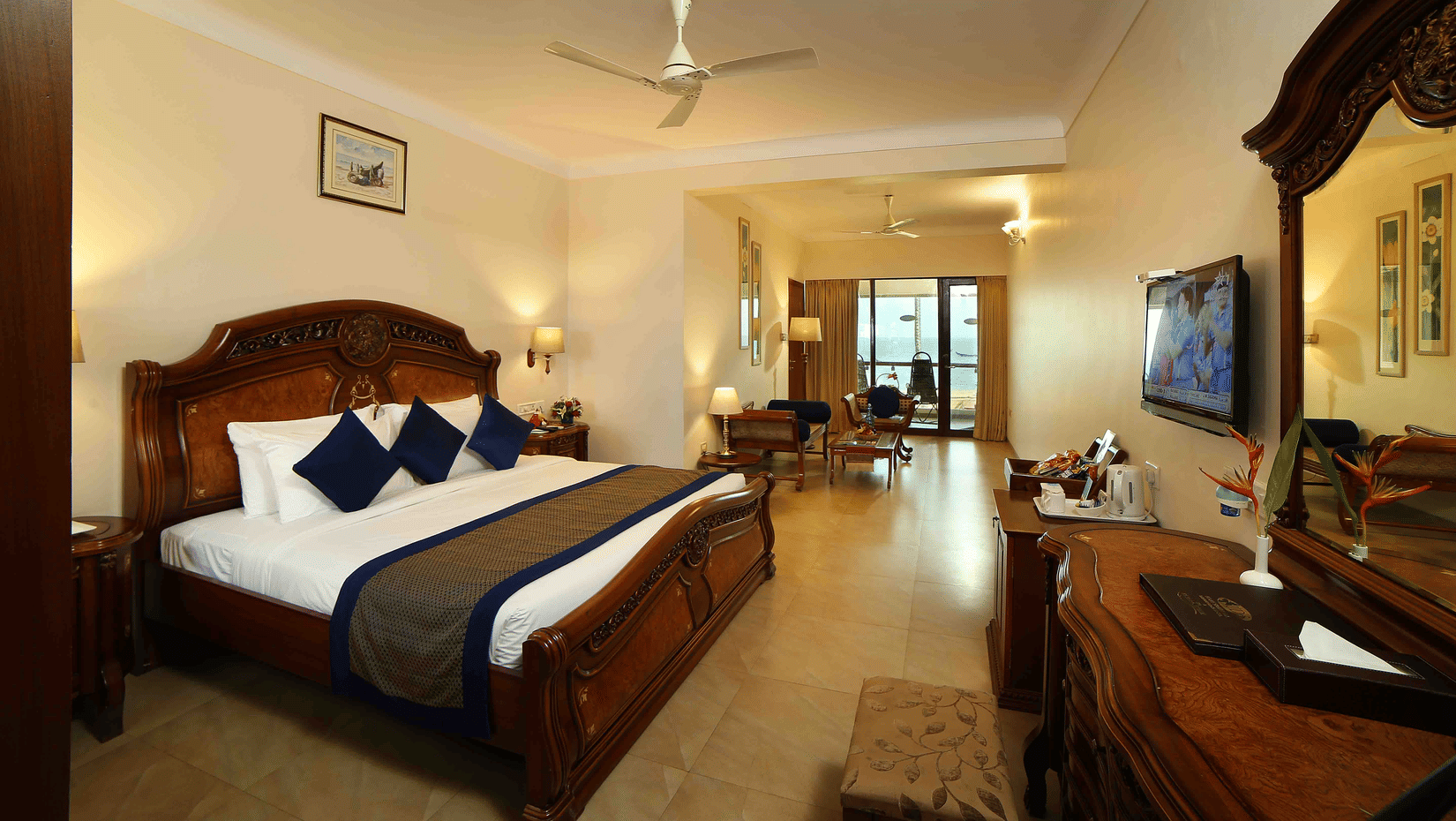
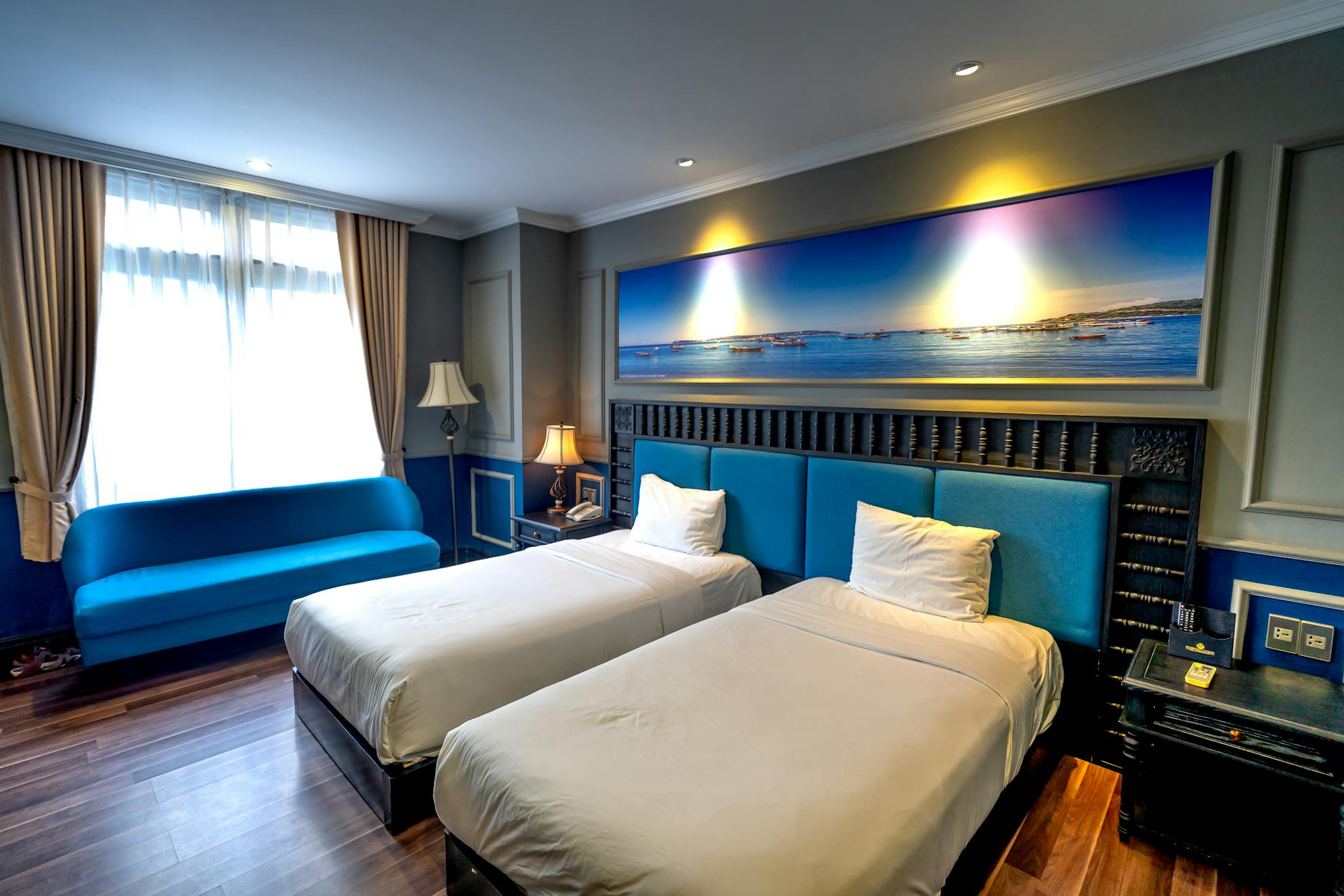
The Beach Hotel Kovalam — Lighthouse Beach hotel in Kovalam
Verified
Lighthouse Beach hotel · Kovalam
The Beach Hotel Kovalam

Official Beach Hotel page lists Lighthouse Beach/Vizhinjam address, direct email and sea-facing hotel-room evidence.

Commission-freeView details
Hotel Seaface Kovalam — Hawa Beach hotel in Kovalam
Verified
Hawa Beach hotel · Kovalam
Hotel Seaface Kovalam

Official Hotel Seaface contact page lists NUP Beach Road, Kovalam address, phones, email and Hawa Beach hotel context.

Commission-freeView details
Ayurveda Healing Ashram Kovalam — Ayurveda and yoga healing centre in Kovalam
Verified
Ayurveda and yoga healing centre · Kovalam
Ayurveda Healing Ashram Kovalam

Official Ayurveda Healing Ashram contact page lists Vandithadam/Pachaloor/Kovalam address, phones and email for Ayurveda, Panchakarma and yoga programs.

Commission-freeView details
Fusion Restaurant & Coffee Bar Kovalam — Fusion restaurant and coffee bar in Kovalam
Verified
Fusion restaurant and coffee bar · Kovalam
Fusion Restaurant & Coffee Bar Kovalam

Official Beach Hotel restaurant page names Fusion Restaurant & Coffee Bar with east-west fusion food, cocktails, coffee and an Ayurveda menu.

Commission-freeView details
Water's Edge Beach Resort Kovalam — Beach resort with restaurant and rooms in Kovalam
Verified
Beach resort with restaurant and rooms · Kovalam
Water's Edge Beach Resort Kovalam

Official Water's Edge contact page lists Vellar Junction near Samudra Beach Road with phone, mobile, email, Ayurvedic/spa and restaurant-room services.

Commission-freeView details
Greenview Homestay Kovalam — Homestay (Kerala Tourism listed) in Kovalam
Verified
Homestay (Kerala Tourism listed) · Kovalam
Greenview Homestay Kovalam

Kerala Tourism-listed family homestay on Bharathi Amma Road at Kovalam, a short walk from Kovalam's international beach. The resident hosts offer clean, budget-friendly guest rooms with authentic Kerala hospitality, giving beach visitors a home-away-from-home stay rather than a resort.

Commission-freeView details
Hotel Beach Florra Inn Kovalam — Budget beach hotel in Kovalam
Verified
Budget beach hotel · Kovalam
Hotel Beach Florra Inn Kovalam
₹₹

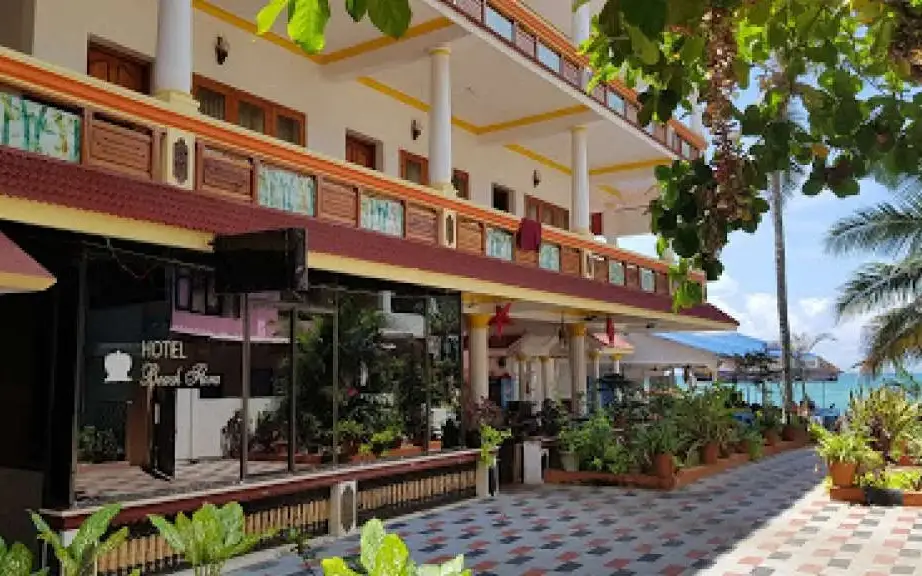
Budget beach hotel on Kovalam's Lighthouse Beach promenade, a few metres from the sea and the beachfront restaurants. It offers simple air-conditioned rooms with a restaurant and direct beach access, giving budget travellers a low-cost base in the heart of Kovalam's main beach strip.

Commission-freeView details
Hotel Sea View Palace Kovalam — Budget beach hotel in Kovalam
Verified
Budget beach hotel · Kovalam
Hotel Sea View Palace Kovalam
₹₹

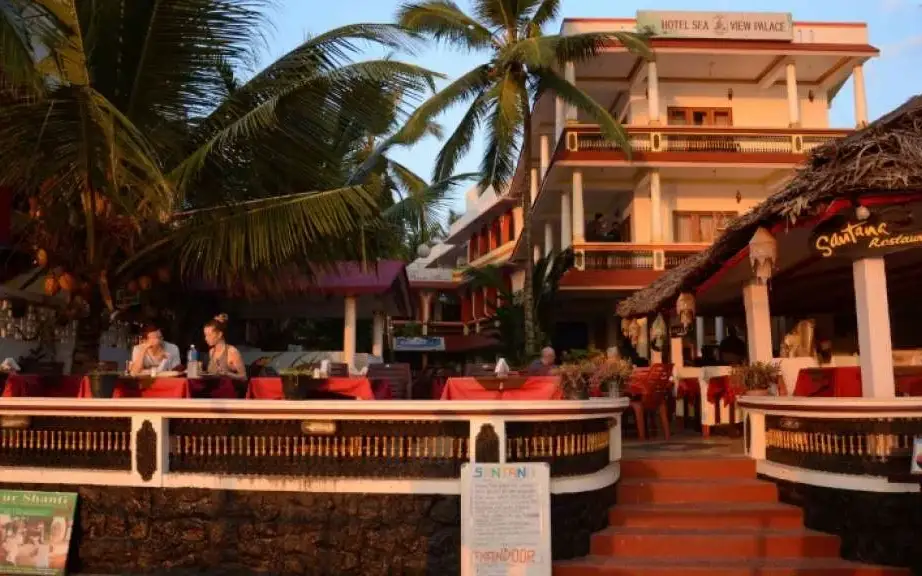
Budget beachfront hotel right on Kovalam's Lighthouse Beach, with sea-facing rooms and balconies a few steps from the sand. It runs 10 well-maintained air-conditioned rooms above the Santana beach restaurant, with a bar and an Ayurveda centre, making it an inexpensive base for beachgoers rather than a luxury resort.

Commission-freeView details
Hotel Sea Face Kovalam — 3-Star beach hotel in Kovalam
Verified
3-Star beach hotel · Kovalam
Hotel Sea Face Kovalam
₹₹₹ 3-star

Kerala Tourism-classified three-star beachfront hotel on N.U.P. Beach Road right on Kovalam beach, facing the Arabian Sea. It has a sea-view swimming pool, a multi-cuisine restaurant and bar and an Ayurveda spa, giving beach visitors a comfortable mid-range base a few steps from the sand.

Commission-freeView details
Kovalam Surf Club Lessons — Surf school in Kovalam
Verified
Surf school · Kovalam
Kovalam Surf Club Lessons

Kovalam surf school record for lessons, surf sessions and beach activity planning. Contact direct / check current rules · kovalam, do, Surf school.

Commission-freeView details
S
South Holidays - Tour Operator & Car Rentals
Vehicle rental
Verified
Self-drive car rental · Kovalam
South Holidays - Tour Operator & Car Rentals
5.0 (4)

Self-drive car rental in kovalam — confirm vehicles, rates, documents and deposit directly. Rated 5.0 from 4 reviews · car rental, self drive, rent a car.

Commission-freeView details
R
Rent a car kuttusan scootys rental
Vehicle rental
Verified
Self-drive car rental · Kovalam
Rent a car kuttusan scootys rental
5.0 (4)

Self-drive car rental in kovalam — confirm vehicles, rates, documents and deposit directly. Trivendrum, balaramapuram, Kottukalkonam, Thiruvananthapuram, Kerala 695501, India · rated 5.0 from 4 reviews · car rental, self drive, rent a car.

Commission-freeView details
K
Kuttusan car rent available
Vehicle rental
Verified
Self-drive car rental · Kovalam
Kuttusan car rent available
5.0 (2)

Self-drive car rental in kovalam — confirm vehicles, rates, documents and deposit directly. Kovalam Beach, side, Thiruvananthapuram, Kerala 695521, India · rated 5.0 from 2 reviews · car rental, self drive, rent a car.

Commission-freeView details
K
Kovalam Tours, Travels & Bike Rental
Vehicle rental
Verified
Bike & scooter rental · Kovalam
Kovalam Tours, Travels & Bike Rental
4.1 (76)

Bike & scooter rental in kovalam — confirm vehicles, rates, documents and deposit directly. Kovalam Beach Rd, near Kovalam Police Station Road, Thiruvananthapuram, Kerala 695527, India · rated 4.1 from 76 reviews · bike rental, scooter rental, self drive.

Commission-freeView details
R
Royal Brothers - Bike Rentals - NH66 Bypass - Trivandrum
Vehicle rental
Verified
Bike & scooter rental · Kovalam
Royal Brothers - Bike Rentals - NH66 Bypass - Trivandrum
3.3 (151)

Bike & scooter rental in kovalam — confirm vehicles, rates, documents and deposit directly. 91/1042(2):Ground Floor: Tritvam Building NH Bypass near Karikkakom Temple, Anayara-1, opp: JEEP Showroom, near Karikkakom Devi Temple, Karikkakam, Thiruvananthapuram, Kerala 695029, India · rated 3.3 from 151 reviews · bike rental, scooter rental, self drive.

Commission-freeView details

Book with the place itself. India’s cyber-crime coordination centre warned in April 2025 that convincing copies of hotel and pilgrimage booking sites are being pushed through sponsored search and social ads, taking payment for rooms the property never hears about. Every listing here links to the business’s own contact details and its own Google or Bing profile — we take no commission and sit in nobody’s payment path. If a booking page reached you through an ad, check the address bar against the property’s own site before you pay. Fraud can be reported on cybercrime.gov.in or on 1930.

Roampedia is commission-free — own or know a stay, eatery, guide or shop near Vizhinjam Rock-Cut Cave Temple? List it and it appears here once verified.

Add a nearby business
Before you go

Vizhinjam Rock-Cut Cave Temple — at a glance

TimingsIndicative, confirm locally: daytime access.

Entry: Free (open rock-cut shrine).

Getting here

How to reach Vizhinjam Rock-Cut Cave Temple

At Vizhinjam near Kovalam, about 17 km south of the city; reachable by auto-rickshaw or bus from Kovalam.

Getting back

Work out your return before you settle in for the sunset. Services on this coast thin out sharply in the evening, and Vizhinjam Rock-Cut Cave Temple is easier to reach than to leave. We do not publish departure times: there is no official live feed we are permitted to republish, and a wrong time here would strand you. Check the operator directly on the day.

Ask at the jetty or stand for the time of the last service back, not the next one. If you miss it, an auto or app cab is the fallback — agree the fare before you get in.

Best time: October to March. An 8th-century Ay-dynasty rock-cut cave shrine with a carved Shiva relief; combine it with a Kovalam trip.

Getting around Vizhinjam Rock-Cut Cave Temple

We have not assessed physical access at this place yet. Across India, step-free routes, handrails and accessible toilets are the exception rather than the rule, and pavements are often interrupted — if step-free access matters to you, contact the site or a local operator before committing to the trip.

Practical things near Vizhinjam Rock-Cut Cave Temple
What the cash actually costs
  • Withdrawing from a bank that is not your own is free for a set number of times a month, then costs up to ₹23 plus GST — about ₹27 a withdrawal. This is not one of the RBI’s six metro centres, so the allowance here is the higher one: at least five free other-bank withdrawals a month, and at least five at your own bank.
  • That free allowance belongs to Indian bank accounts. On a card issued abroad your own bank’s international withdrawal and exchange charges apply instead. If the machine offers to bill you in your home currency, choose rupees — the conversion rate on that offer is set by the machine, not by your bank.
  • Given a choice, use an ATM inside or attached to a branch: it sits in view of staff and cameras, and there is someone to ask if the machine keeps your card. A machine standing alone on a tourist street is the one to be wary of. Banks are listed here alongside the ATMs, but the map data does not record which ATMs sit inside a branch — check when you get there.

Charge cap and free-transaction limits: Reserve Bank of India, in force since 1 May 2025.

Mapped within about 1.2 km of Vizhinjam Rock-Cut Cave Temple, with real walking routes rather than straight-line distances. Community-mapped data: opening hours are shown only where they are recorded, and this is not a complete list — something unmapped may well be closer. Please confirm on the ground.

If you need help at Vizhinjam Rock-Cut Cave Temple
112All emergencies (police · fire · medical)The single number to call in any emergency (ERSS).

Emergency numbers are verified against official government and state tourism sources. 112 works anywhere in India.
Nearby

What’s near Vizhinjam Rock-Cut Cave Temple

townVizhinjam 70 m · 1 min walk
beachLighthouse Beach 1.5 km · 19 min walk
beachKovalam 1.7 km · 21 min walk
beachHawa Beach 1.9 km · 24 min walk
beachSamudra Beach 2.5 km · ~6 min by auto
backwaterVellayani Lake 9.4 km · 12 min drive
backwaterPoovar 11.3 km · ~19 min by cab
backwaterPoovar backwaters 12.0 km · ~20 min by cab
heritageKuthiramalika Palace 13.2 km · 14 min drive

All 6 places to visit in Kovalam →

Walking and driving times are real routed distances, not straight lines. Fare figures are estimates from Kerala’s notified auto/taxi tariff and exclude waiting and night charges. Routing: © openrouteservice.org by HeiGIT | Map data © OpenStreetMap contributors

Nearby toilets, pharmacies, ATMs, seating and vets are community-mapped and may be incomplete or out of date. Map data © OpenStreetMap contributors | Walking times © openrouteservice.org by HeiGIT

On the map

Where Vizhinjam Rock-Cut Cave Temple is

Good to know

Vizhinjam Rock-Cut Cave Temple — frequently asked

How old is the Vizhinjam cave temple?

It is generally dated to around the eighth century and attributed to the Ay dynasty, whose port was Vizhinjam. As with most early Kerala monuments the dating is approximate rather than documented, but it is firmly among the oldest surviving built religious structures in this region.

What are the carvings inside?

Relief figures on the interior walls, most often identified locally as Shiva with Parvati and as a dancing form of the god. It is worth knowing that readings of the iconography differ between sources — this is early, weathered, unlabelled sculpture and there is no single agreed interpretation.

What makes a rock-cut temple different from a built one?

It is excavated rather than constructed — cut back into living rock, here a free-standing granite boulder, rather than assembled from blocks or timber. The technique is far commoner in the Tamil country east of the Ghats, which is part of why the Vizhinjam example is significant on the Kerala side.

Is it still an active place of worship?

Yes, as well as being a monument, so the ordinary courtesies apply — dress conservatively, remove footwear where indicated and be unobtrusive.

How do I combine it with Vizhinjam harbour?

Go early for the fish auction on the quay, between roughly six and eight in the morning, then walk up the rise to the shrine afterwards. Together they make a compact and very rewarding hour, three kilometres from Kovalam.

Is the eighth-century date reliable?

It is a considered scholarly estimate rather than a record, and worth treating as such. The shrine carries no dated inscription and says nothing about itself; the century comes from comparing the carving style with dated rock-cut work elsewhere in south India and from what is known of Ay dynasty patronage. It is probably about right, and accounts do differ. Anyone quoting it as a hard fact is quoting an art-historical opinion with the hedges removed.

Which figures are carved on the shrine?

The best-documented reading identifies four across the two flanking panels: Nataraja — Shiva in the dance — with Parvati beside him on one side, and Tripurantaka, Shiva as destroyer of the three cities, together with Dakshinamurti, the god as teacher facing south, on the other. One variant reads the Dakshinamurti figure as veenadhari, holding the veena, a rarer form. Readings differ between sources; this is early, weathered, unlabelled sculpture.

Why is a rock-cut shrine unusual in Kerala?

Because the technique belongs mainly to the Tamil country east of the Ghats, where Pallava and Pandya patrons excavated shrines extensively in the seventh and eighth centuries. Only a small number survive on the Kerala side. The most natural explanation for one appearing at Vizhinjam is the harbour below it — an anchorage with strong eastward connections through trade and through repeated contested control, which is how styles and craftsmen travel.

How long does a visit take, and is it a hard climb?

Fifteen minutes covers it comfortably. The shrine is a short but steep walk up from the harbour area, on uneven ground, and there is no visitor infrastructure — no ticket office, no interpretation panel and little shade. Go in the early morning while it is cool, which also lines the visit up with the fish auction on the quay below.

Why are rock-cut shrines so rare on this side of the Ghats?

Mostly geology and rainfall. Kerala's coastal belt is dominated by laterite, which makes good building blocks but a poor excavated chamber, and workable granite occurs as scattered boulders rather than the continuous scarps that Tamil Nadu offers — which is why this shrine is cut into a single free-standing boulder rather than a hillside. Very heavy twin-monsoon rain also favours steep overhanging roofs and replaceable timber, defences an excavated chamber cannot have. Kerala answered with the pyramidal timber-and-copper temple form instead, and rock-cutting never took root here.

When is the best time to visit Vizhinjam Rock-Cut Cave Temple?

Dry months are easiest; avoid heavy rain due to slippery approaches.

What are the entry fee and timings at Vizhinjam Rock-Cut Cave Temple?

Entry: Free (open rock-cut shrine).. Timings: Indicative, confirm locally: daytime access.. Fees and timings are indicative — confirm on site before you travel.

How do I reach Vizhinjam Rock-Cut Cave Temple?

Base yourself in Kovalam or a nearby town in Thiruvananthapuram, then confirm the last-mile route locally before leaving. Start early and check access rules, trail condition and ticket counter status. If the visit depends on forest, temple, boat, ferry, weather or seasonal access, check the official/local rule on the day before travel.

How much time do I need for Vizhinjam Rock-Cut Cave Temple?

1.5 to 3 hours.

What else is near Vizhinjam Rock-Cut Cave Temple?

Nearby you can pair Vizhinjam (70 m), Lighthouse Beach (1.5 km), Kovalam (1.7 km), Hawa Beach (1.9 km).

What should I know before visiting Vizhinjam Rock-Cut Cave Temple?

Do not enter closed sections. Avoid slippery rock surfaces during rain.

Image credits
  • Vizhinjam Rock-Cut Cave Temple:Prasad0224 · CC BY-SA 3.0