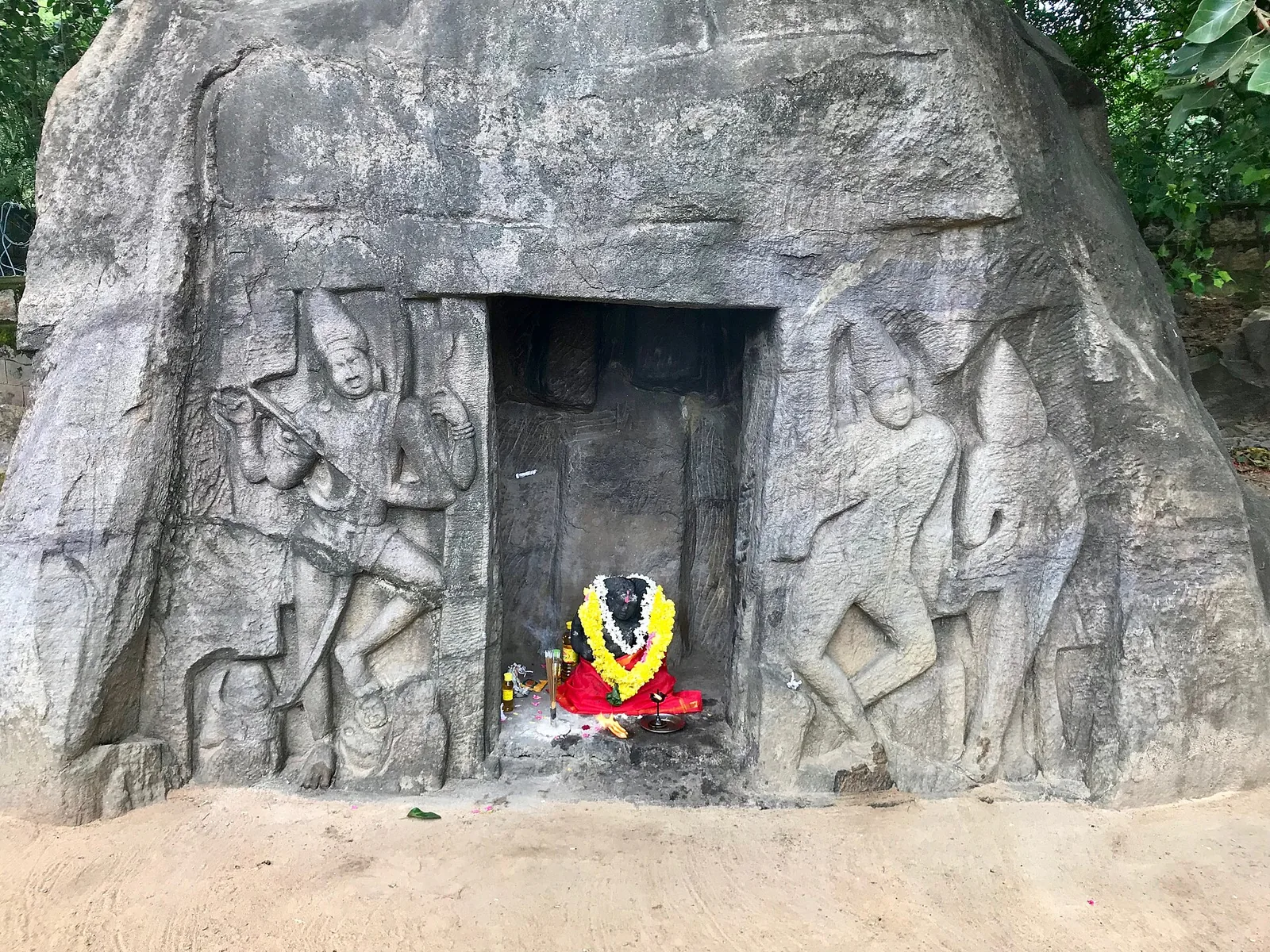
The entrance at Vizhinjam’s cave shrine is framed by figures carved into the same rock as the chamber. In the photograph, bent legs, raised arms and tall head forms make the panels lively even where the surface is weathered. The doorway is more than a gap in the boulder: the carving gives the approach a subject of its own.
Begin at the edge of the opening
Look separately at the two sides of the entrance. Compare the figures’ outlines, the space around their limbs and their relationship to the straight edges of the doorway. Parts of the stone retain a rougher surface; other parts have been worked into recognisable forms. Following those differences reveals the sculptural work more clearly than trying to read the whole façade at once.
The sacred image visible within the chamber is a separate object from the reliefs attached to the rock face. That distinction matters to the way the shrine is seen. A photograph can bring façade and interior into one frame, while a visit gives each its own depth and position.
A documented Shaivite setting
The archaeological inventory hosted by IGNCA describes Shiva as Kirata and Shiva–Parvati among the carved subjects. Kirata refers to Shiva in a hunter form; the paired identification brings Parvati into the account. The entry relates the sculpture to Pallava and Pandya models and uses that comparison in its approximate eighth-century dating.
Published visitor accounts use other names for individual figures, including Dakshinamurthy for the chamber image. Those short descriptions do not settle every attribute of the façade. The inventory supplies a documented Shaivite context, while detailed names for each weathered panel still depend on the interpretation being used. Ask about a current site label or specialist account if a particular identification interests you.
The stone gives the visit its pace
Give the outlines time to become legible. Look for the relationship between an arm and the surrounding rock, then step back on permitted ground to see the figures around the opening again. This movement between detail and whole is the simplest way to appreciate how sculpture and architecture share one boulder.
The history story places the work within its approximate period. For an outing, use the visitor guide and confirm access before travelling. Leave the carving untouched; attention to the surviving forms is enough to make this small entrance a rewarding stop.