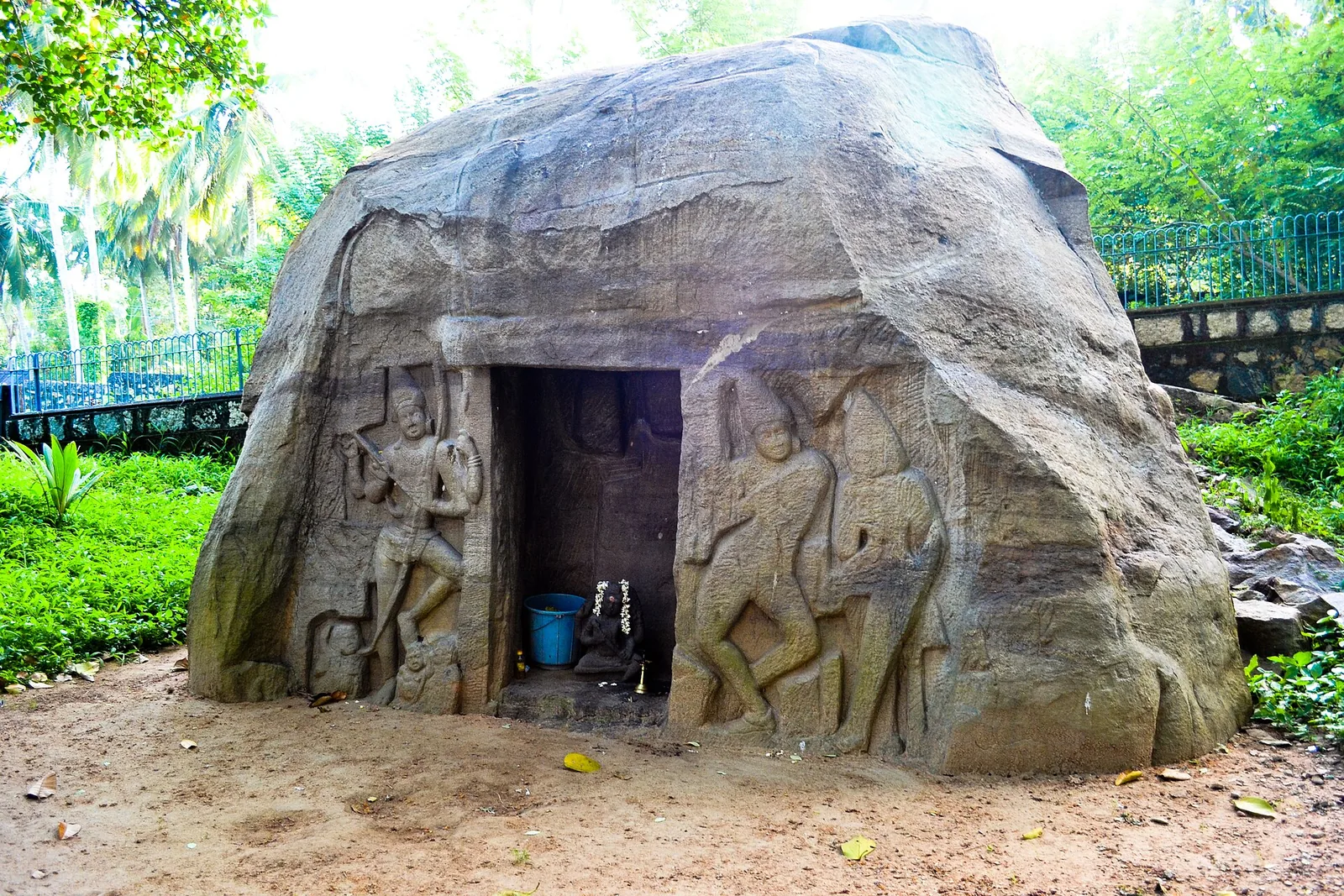
Kerala’s rock-cut temples take different forms. At Vizhinjam, the rounded boulder remains a strong presence above the carved doorway. It is easy to remember the shrine as a single unusual stop near Kovalam. Carry that image inland, though, and other Kerala monuments begin a conversation with it. Kottukal and Kaviyoor show different ways in which a place of worship could be excavated from rock.
One boulder on the southern coast
Vizhinjam’s archaeological inventory places it in the Ay historical setting and dates it approximately to the eighth century through sculpture comparisons. Its small scale rewards close attention: the enclosing rock, the reliefs beside the opening and the chamber belong to one architectural encounter. The carvings story follows that relationship at the entrance.
Paired cells at Kottukal
Kerala Tourism identifies Kottukal in Ittiva Panchayat, Kollam district. Its description gives two cells, each with a Shiva lingam, and a central projection bearing Ganapathy. The paired arrangement introduces another way to organise sacred space within rock: attention moves across the front as well as toward the interior.
That makes Kottukal a useful comparison with Vizhinjam. Ask how the openings, central form and enclosing stone relate to one another. A shared building method does not require an identical plan or an identical set of carved subjects.
The architectural connection at Kaviyoor
The official Pathanamthitta tourism brochure places a rock-cut cave temple at Kaviyoor near Thiruvalla, attributes it to the eighth century and notes its resemblance to Pallava architecture. This introduces a northern comparison within Kerala. Rather than treating the southern coastal shrine as isolated, the brochure helps place it beside another documented example of early stone work.
The comparison works best when each site is allowed its own character. Study the shape of the rock, the arrangement of the shrine and the carving that survives. The monuments establish that Kerala has a varied rock-cut heritage; they do not, by themselves, explain how often every early patron chose this method or why later temple forms developed differently.
Make the comparison across separate visits
Vizhinjam, Kottukal and Kaviyoor belong to different approaches and districts. Choose one as the main heritage stop for an outing and confirm its visitor arrangements. The link between them is architectural rather than a promise of a convenient single-day circuit. Remember one detail from the first shrine—a doorway, a paired cell or a carved figure—and look for a corresponding idea on the next visit.