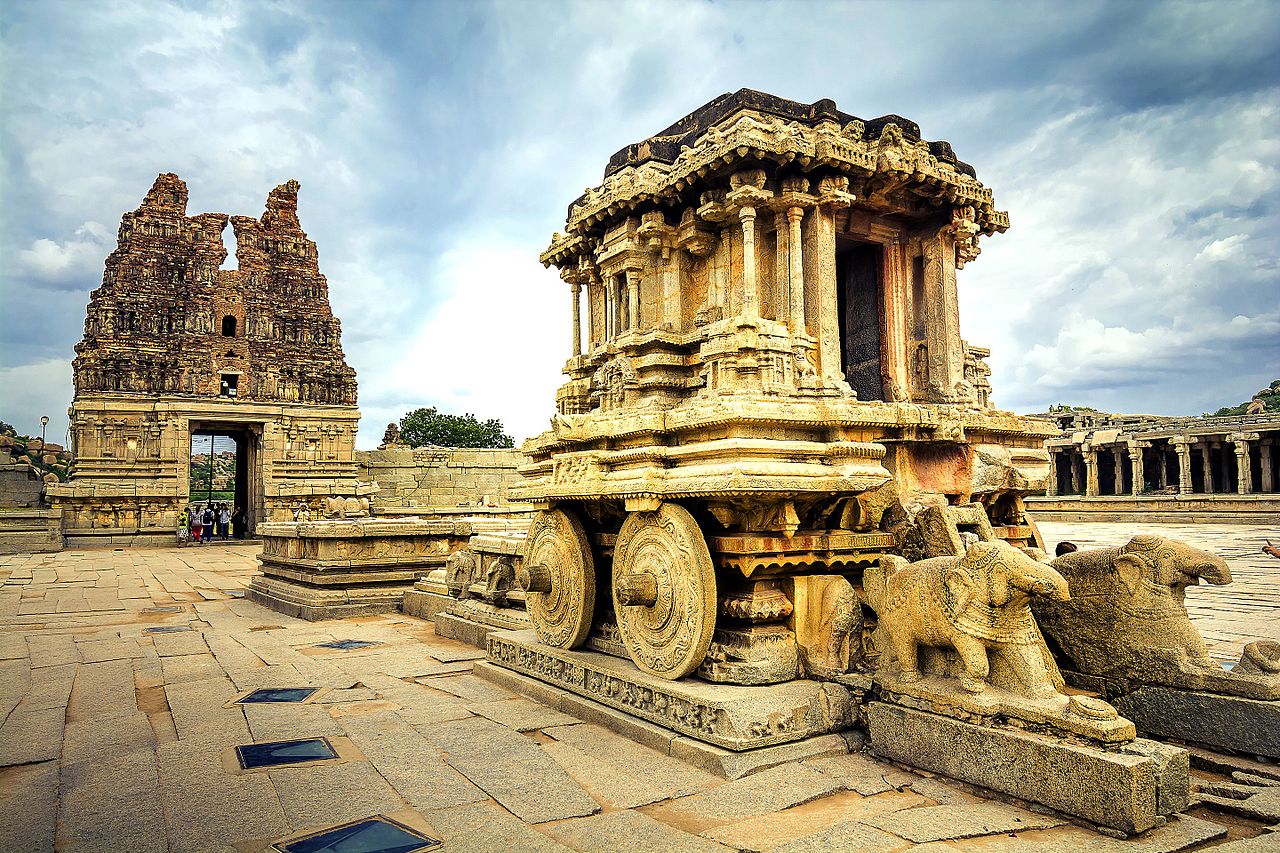
Hampi rewards slow looking, but a focused weekend is enough to see its greatest monuments without rushing. This two-day itinerary splits the Hampi ruins into two natural halves: the Sacred Centre of living temples and riverside monoliths on day one, and the Royal Centre of palaces and enclosures on day two, with a sunset to close each day. The nearest railhead is Hosapete (Hospet), about 13 km away, with trains from Bengaluru, Hubballi, Hyderabad and Goa; from there it is a short auto or bus ride to the ruins. Because the site is a UNESCO World Heritage landscape that is vast and the granite radiates heat by midday, the plan front-loads temples in the cool morning light and keeps the hilltop climbs for dawn and dusk.
- Day 1 — Sacred Centre: Virupaksha, Hampi Bazaar, Hemakuta Hill, Vittala Temple and the stone chariot.
- Day 2 — Royal Centre: Lotus Mahal, Elephant Stables, Hazara Rama, Queen's Bath and a riverside sunset.
- Best season: October to February for cool, clear days.
- Sunrise: Matanga Hill. Sunset: Hemakuta Hill, or Anjanadri Hill across the river.
- Base yourself in Hosapete (Hospet), about 13 km away, or near Hampi Bazaar.
Day 1: the Sacred Centre
Day one belongs to the Sacred Centre, the temple heart of Hampi within walking or short-ride distance of the bazaar. Begin early at the Virupaksha Temple, the only major temple still in daily worship, whose eastern gopuram rises about 50 m over the river; look for the inverted pinhole image of the tower in a rear chamber. Step straight out onto Hampi Bazaar, the long colonnaded market street that once traded in diamonds and horses, then walk up the low Hemakuta Hill just south, dense with early stepped-tower temples, pausing at the monolithic Sasivekalu Ganesha carved from a single boulder. Save the middle of the day for Hampi's masterpiece, the Vittala Temple about 3 km east, where the iconic stone chariot and the roped-off musical pillars stand in a carved courtyard — buy the ASI ticket here, as it also admits the Lotus Mahal and Elephant Stables the same day. End the afternoon at the quiet Achyutaraya Temple and climb from there up Matanga Hill, the highest point in central Hampi, for a 360-degree sunset over the ruins; the climb is short but steep and rocky, so wear good shoes and go in a group.

Day 2: the Royal Centre
Day two shifts south to the Royal Centre, the walled world of palaces, enclosures and waterworks around Kamalapura. Start in the Zenana enclosure at the graceful Lotus Mahal, a two-storey Indo-Saracenic pavilion named for its lotus-bud silhouette, then step next door to the Elephant Stables, a symmetrical row of eleven domed chambers that once housed the royal elephants. Nearby stand the Hazara Rama Temple, the kings' private chapel lined with Ramayana relief panels, and, at the southern edge, the Queen's Bath, a plain-walled pavilion hiding an arcaded interior around a large sunken tank. On the way back toward Hemakuta, stop at the Lakshmi Narasimha Statue, the 6.7 m man-lion monolith carved in 1528 and Hampi's largest single-stone image. For the last light, either drive out to the Tungabhadra Dam near Hosapete for its garden and evening musical fountain, or cross the river to Anegundi, the older settlement on the north bank, and climb Anjanadri Hill for a wide sunset over the boulder landscape.

A flexible 2-day Hampi plan — adjust to the heat and the light.
| Time | Stop | Notes |
|---|---|---|
| Day 1, early morning | Virupaksha Temple & Hampi Bazaar | Go at opening for cool air and rituals; footwear off, dress modestly. |
| Day 1, late morning | Hemakuta Hill & Ganesha monoliths | Easy temple cluster and monoliths beside the bazaar. |
| Day 1, midday | Vittala Temple & stone chariot | Buy the ASI ticket here; it also covers the Lotus Mahal & Elephant Stables the same day. |
| Day 1, sunset | Matanga Hill (from Achyutaraya) | Steep, rocky climb; sturdy shoes and go in a group. |
| Day 2, morning | Lotus Mahal & Elephant Stables | Zenana enclosure; Indo-Saracenic architecture. |
| Day 2, late morning | Hazara Rama Temple & Queen's Bath | Ramayana relief panels; arcaded bathing pavilion. |
| Day 2, afternoon | Lakshmi Narasimha monolith | Hampi's largest monolith, 6.7 m, carved in 1528. |
| Day 2, sunset | Tungabhadra Dam or Anjanadri Hill | Dam garden and fountain, or cross to the Anegundi side for the view. |
How to reach and tips
The nearest railhead is Hosapete (Hospet) Junction, about 13 km away, with trains from Bengaluru, Hubballi, Hyderabad and Goa; the closest airports are Jindal Vidyanagar (~40 km), Hubballi (~145 km) and Bengaluru (~340 km). Getting around is half the fun: cycles, mopeds and autos cover the distances between clusters, a battery-powered vehicle runs on the Vittala road, and coracles ferry visitors across the Tungabhadra to the north bank. Carry water, a hat and sunscreen — shade is scarce among the boulders — and keep the open, unshaded sites for early morning or late afternoon. The combined ASI ticket is valid for one day only, so buy it at Vittala when you tackle the eastern temples on day one, and pick up a fresh ticket at the Zenana enclosure on day two.
Two days covers the headline monuments, but Hampi keeps unfolding the longer you stay — a third day lets you slow down over Anegundi, the coracle crossing and the outlying temples. For more ideas on filling the gaps between the big sites, see our guide to things to do in Hampi.
Frequently asked questions
Is 2 days enough for Hampi?
Yes — two days is enough to see the main Sacred Centre temples and the Royal Centre enclosures at a steady pace. Add a third day if you want to explore Anegundi across the river, take the coracle crossing and visit the outlying temples without rushing.
What is the best time to visit Hampi?
October to February brings the coolest, clearest weather. Whatever the month, plan temples and open sites for early morning and late afternoon and rest through the harsh midday heat, since the boulder landscape offers little shade.
How do you get to Hampi?
The nearest railhead is Hosapete (Hospet), about 13 km away, with trains from Bengaluru, Hubballi, Hyderabad and Goa. The closest airports are Jindal Vidyanagar (about 40 km), Hubballi (about 145 km) and Bengaluru (about 340 km); from Hosapete it is a short auto or bus ride to the ruins.
Hampi or Badami — which should you choose?
Both are worth it, and they suit different tastes. Hampi is the vast 14th–16th century Vijayanagara capital of temples and royal ruins; Badami, about 140 km away, has the older Chalukya rock-cut cave temples. With time, many travellers combine the two.
Where are the best sunrise and sunset spots in Hampi?
Matanga Hill is the classic sunrise viewpoint over the whole ruin field. For sunset, the easy climb up Hemakuta Hill beside Virupaksha is the most popular, while Anjanadri Hill on the Anegundi side gives a wide view across the river.