Chincholi Wildlife Sanctuary

Chincholi Wildlife Sanctuary covers 134.88 sq km of the eastern edge of Kalaburagi district, right up against the Telangana border. When the state notified it in 2011 — 14,958 hectares of forest, Karnataka’s twenty-first sanctuary — it became the first dry-land wildlife sanctuary in South India. That is the whole point of the place: almost every other reserve in the state protects the wet, green forest of the Western Ghats, and this one protects the opposite.

Chincholi Wildlife Sanctuary, Chincholi
Practical guide

Plan Chincholi Wildlife Sanctuary

Who's going?Tailor Chincholi Wildlife Sanctuary to your trip
Typewildlife
Nearest baseChincholi
DistrictKalaburagi
Best timeOctober to February, when the heat has…
Time neededHalf a day for the short trail and the dam
Places to visit2

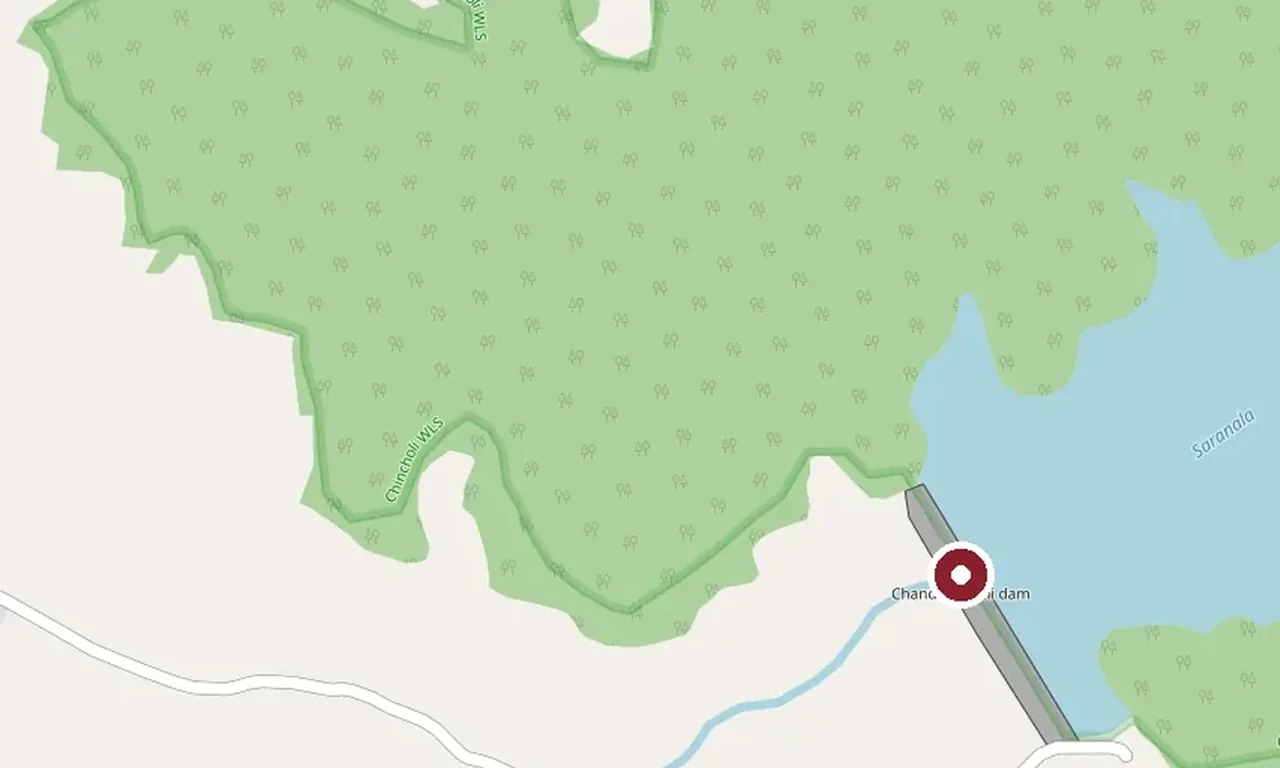
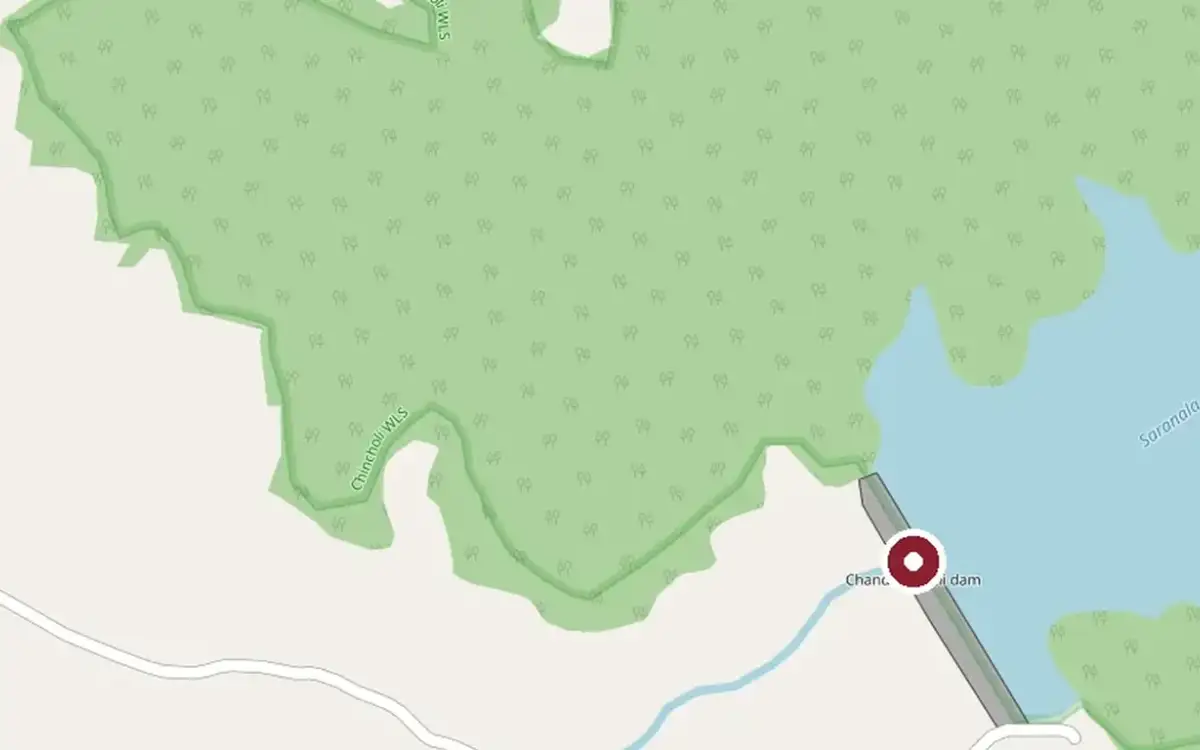
The core is dry and moist deciduous forest, with acacia and teak plantations along the fringes and stands of sandalwood (ಶ್ರೀಗಂಧ) and red sanders (ರಕ್ತಚಂದನ) that the department lists among its reasons for protecting the block at all. Chandrampalli reservoir and four smaller dams hold the water that keeps it alive through a hard, hot summer.

The animal that put Chincholi in the scientific literature is the dhole, the Asiatic wild dog. Camera traps run here between October and November 2023 — 104 locations, 1,650 trap days, set out to count leopards — caught dholes at nine of them. That was the first documented record of the species in the Kalyana-Karnataka region since the Mysore State Gazetteer of 1966, and the nearest known populations are about 400 km away in the Western Ghats and 200 km away in the Eastern Ghats.

The same survey found golden jackal and Bengal fox alongside them, and exactly one photograph of a leopard in all 1,650 trap days. The researchers read that as a bottleneck rather than a triumph, and warned that both animals could go locally extinct without deliberate conservation. Blackbuck, four-horned antelope, nilgai, chital, wild pig, langur and porcupine make up the prey base. Ignore the circulating species lists that add gaur: that is a Western Ghats animal and does not belong to this country.

Until recently there was no way for a visitor to see any of it. A marked forest trek from Chandrampalli opened to the public in late 2024, billed by the minister who launched it as South India’s first deciduous-forest trek, and in March 2026 a jungle safari, boating on the Chandrampalli reservoir and tented accommodation were added. It is still a quiet, lightly-run place rather than a Bandipur or a Nagarhole, and that is much of its appeal.

The story

South India protects its rain forest first and its dry forest almost never. This is the exception — 134.88 sq km of Deccan scrub, teak and sandalwood on the Telangana border, and for thirteen years after it was protected there was no way for a visitor to walk into it at all.

The story of Chincholi Wildlife Sanctuary

Look at a map of South Indian wildlife sanctuaries and the bias is impossible to miss. There is a dense green chain running down the Western Ghats, and then a thin scatter across the entire dry Deccan interior — hundreds of kilometres of country with almost nothing on it. Wet forest photographs well. It holds tigers and elephants, it fills a jeep, it sells a lodge. Dry forest does none of that, and so for most of the twentieth century it was simply not thought of as the kind of thing you protect.

Chincholi is where that changed. In 2011 Karnataka notified 14,958 hectares of Chincholi taluk — 134.88 sq km — as its twenty-first wildlife sanctuary, and in doing so created the first dry-land wildlife sanctuary in South India. Not the first sanctuary in a dry district, which is a different and much easier claim: the first one where the dry deciduous forest itself is the thing being protected, on its own terms, rather than as the buffer around something wetter.

What is actually inside the boundary is dry and moist deciduous woodland, with acacia and teak plantations along the fringes and stands of sandalwood — ಶ್ರೀಗಂಧ — and red sanders, ರಕ್ತಚಂದನ, which the forest department names among its reasons for protecting the block at all. Chandrampalli reservoir and four smaller dams carry the water through a summer that is genuinely punishing. The Kannada name for the area’s forest character does more work than the English: this is not scrub in the sense of wasteland, it is a specific and increasingly rare kind of woodland.

The strange thing about visiting is how recent visiting is. For thirteen years after notification there was no marked route into the sanctuary for a member of the public. The forest was protected and it was closed, which is a defensible position and was also, in practice, the reason almost nobody outside Kalaburagi district had heard of the place. A marked forest trek from Chandrampalli opened in early November 2024, billed by the minister who launched it as South India’s first deciduous-forest trek. It is called the Chandrampalli Nature Trail and it comes in two lengths: a long route of about 9 km from Chandrampalli out to Gottamgotta, and a short one of about 4 km looping around Chandrampalli itself. In March 2026 a jungle safari, boating on the Chandrampalli reservoir and tented accommodation were added.

So the honest description is a sanctuary in its first years of being visitable, run lightly, by a small staff, with arrangements that have already changed once since they were announced. It is nothing like the machinery at Bandipur or Nagarhole, and for a particular kind of visitor that is the entire appeal. On a weekday you may be the only vehicle at the gate.

One thing to carry with you: there are Lambani tandas — hamlets of a scheduled tribal community — inside the sanctuary. Since January 2025 the forest department has been trying to persuade one of them, Sheribikanahalli, to move out to Venkatapur 13 km away; reports give 98 families and 219 people, and a package of either ₹15 lakh or two acres of land plus ₹10 lakh. No completion has been reported since. If you pass a tanda, it is somebody’s home and not scenery.

Read the full history of Chincholi Wildlife Sanctuary 775 more words

History

The protection history is short, which is the point of it. Karnataka notified the sanctuary in 2011, at 14,958 hectares. The figure usually printed for its area is 134.88 sq km; the OSM boundary as currently drawn encloses 130.15 sq km, and the gap between a notified figure and a mapped polygon is normal rather than suspicious — it is how the boundary was confirmed to be real rather than approximate.

Before that, the written record for wildlife in this part of the state is thin to the point of absence. The last documented dhole — the Asiatic wild dog — anywhere in the Kalyana-Karnataka region was in the Mysore State Gazetteer for Gulbarga district, published in 1966. For the next fifty-seven years, nothing.

That gap closed by accident. Between 16 October and 20 November 2023, a team from the Holématthi Nature Foundation and the Nature Conservation Foundation set 104 camera traps across the sanctuary and its adjoining reserved forests, intending to count leopards. Over 1,650 trap days they recorded twenty photographs of dholes at nine separate locations — the first documented record of the species in the region since 1966. The nearest known populations are roughly 400 km away at Bhimgad in the Western Ghats and about 200 km away near Amrabad in the Eastern Ghats. The finding was published by Gubbi, Prabhu, Komarla and Suthar in Canid Biology & Conservation 27(6):34–38 (2024).

The rest of that survey is much less cheerful, and the paper does not soften it. In 1,650 trap days the cameras recorded exactly one leopard. Golden jackal was the common canid with 83 independent events, against twelve each for the dhole and the Bengal fox. The authors read both the leopard and the dhole as sitting at a bottleneck rather than a recovery, and warn that either could go locally extinct without deliberate conservation. A first record in fifty-seven years is a good headline and a thin margin.

Two corrections worth carrying, because both are widely repeated. First, any species list for Chincholi that includes gaur should be put down: gaur is a Western Ghats animal and does not belong in this country — those lists are copied rather than counted. Second, a great deal of writing puts the sanctuary roughly 60 km east of the district city. That figure is the straight line, not the road. By road the trek start is 87 km from the Kalaburagi bus station and the town 78 km, and both Bidar at 57 km and Humnabad at 55 km are nearer than Kalaburagi is.

Why visit

Come because it is the opposite of what a South Indian wildlife trip normally is. The habitat is the exhibit here — dry deciduous forest on rocky, thin-soiled ground, protected almost nowhere else in the region — and understanding that is what turns a walk through unremarkable-looking woodland into something you are glad you did. If you want a guaranteed large mammal, go to Bandipur. If you want to see the forest type that South India forgot to protect, this is where it is.

Come for the birds, and set your expectations from the disagreement rather than from any one number. The official Karnataka Tourism listing says "over 35 species". A Kannada newspaper account puts it past 160. Neither figure is doing much work: one photographer’s Wikimedia Commons uploads from a handful of 2020 visits alone run past thirty species. The practical version is that the parakeet flocks work the millet fields on the forest edge, which is exactly why those are the easiest birds to see and why so many of the photographs were taken there rather than inside the boundary.

Come knowing the dholes are here and that you will almost certainly not see one. Twenty photographs at nine locations over 1,650 camera-trap nights is a real presence and a very low encounter rate. What it changes is what you are walking through: this is a forest that turned out to be holding an animal nobody had recorded in the region since 1966, which is a different thing to walk through than an empty one.

And come for the quiet, honestly. October to February is the window — the heat has gone and the water is still holding — and early morning is the only serious time for wildlife, which is why the trek starts at first light. March to May here is not a matter of being uncomfortable; the dry country becomes genuinely punishing. The trade for coming in the right season is that you get a sanctuary in its first years of opening, before it is organised, and that will not be true for long.

What to expect

Highlights

  • The dry-land forest itself — teak, acacia, sandalwood and red sanders on rocky, thin-soiled ground, a habitat protected almost nowhere else in South India.
  • Dholes — rediscovered here by camera trap in 2023 after nearly sixty years with no record — sharing the ground with golden jackal and Bengal fox, and blackbuck and four-horned antelope on the open patches.
  • The Chandrampalli Nature Trail — a long walk of about 8 to 9 km through the forest to Gottamgotta, or a short 4 km circuit near the dam, both with a forest guard.
  • Chandrampalli reservoir, dammed across the Mullamari (a tributary of the Bhima), with boating since March 2026 and a shoreline that raptors work in the early morning.
  • The Bakkaprabhu temple and botanical garden at Gottamgotta, deep inside the forest, which the long trek is built around.
  • Birding: the department’s own listing says over 35 species, a Kannada newspaper account puts it past 160, and the photographic record on Wikimedia Commons alone runs to more than thirty species from a handful of visits.
Getting there

How to visit

  • The way in is Chandrampalli, on the far side of Chincholi town — about 10 km beyond it by road, roughly 12 minutes. Chincholi itself is 78 km from Kalaburagi and the trek start about 87 km, which is around an hour and a half of driving. The old “about 60 km” figure that stood here was the straight line, not the road.
  • Coming from the other direction is often quicker. Bidar is 57 km from the dam, Humnabad 55 km, and Hyderabad about 153 km — the sanctuary sits on the state border, and a great many of its visitors are Hyderabad birders.
  • The nearest useful railhead is Tandur, 31 km from Chincholi town across the border in Telangana. Bidar is 62 km and Kalaburagi Junction 77 km. Kannada Wikipedia gives Tandur and Sedam as the two nearest stations at about 30 km, which matches. Nearest airports: Kalaburagi 65 km, Hyderabad 163 km.
  • The trek must be booked in advance through the forest department’s Aranya Vihaara portal (aranyavihaara.karnataka.gov.in), listed under Kalaburagi district as the Chandrampalli Nature Trail. Reports put the daily cap at 100 trekkers and ask you to report at the start between 6.00 and 6.30 am, with entry closing around 2 pm.
  • A forest guard walks with every group — this is not a trail you are allowed to wander alone, and that is also the only reason you have any chance of seeing anything.
  • Buses run from Kalaburagi and Bidar to Chincholi town, where there are budget hotels; from the town onward to Chandrampalli you will want your own vehicle or an auto.

Distance by road

  • Solapur138 km
  • Bidar118 km
  • Vijayapura149 km
  • Hyderabad232 km
  • Bengaluru610 km

Road km to Kalaburagi; ghat roads and traffic vary — allow extra.

Timing

Best time

October to February, when the heat has gone and the water is still holding. Early morning is the only serious time for wildlife — the trek starts at first light for that reason. Avoid March to May, when the dry country here becomes genuinely punishing.

Weather in Chincholi Wildlife SanctuarySeasonal guide

Live forecast loads in your browser.

Today at Chincholi Wildlife Sanctuary
Sunrise6:07 am
Sunset6:32 pm
Golden hour best light5:32 pm–6:32 pm
Blue hour after sunset6:32 pm–6:57 pm
Sun sets toward compass bearingW · 278°
Moon tonight🌗 Last quarter · 54%
South-west monsoon. June to September brings heavy rain to Karnataka. Trails, falls and ghat roads can be slippery, swollen or closed at short notice, and forest departments sometimes suspend access. Check locally on the day before you travel.

Sun and moon are calculated for this location and shown in IST. Photography windows are the hour around sunrise and sunset; the sunset bearing is degrees clockwise from true north. Moon phase is accurate to about half a day.

Visitor notes

  • Fees are not published on any official page we could find. A Kannada newspaper account of the trek gives ₹200 a head for the long route and ₹100 for the short one for adults, half those for ages 12 to 18 and free under 12. Treat that as reported, not confirmed, and check when you book.
  • The photographs on this page are all by one Hyderabad birder, and several of them are labelled “Telangana” on Wikimedia Commons. That is his error, not a different place: the sanctuary is in Karnataka, and Commons has since filed the whole set under Kalaburagi district.
  • Some of those birds were photographed in the millet fields on the edge of the forest rather than inside the boundary — the parakeet flocks work the standing crop, which is exactly why they are easy to see there.
  • Lambani tandas — hamlets of a scheduled tribal community — sit inside the sanctuary. Since January 2025 the forest department has been trying to persuade one of them, Sheribikanahalli, to move out to Venkatapur 13 km away; reports give 98 families, 219 people, and a package of either ₹15 lakh or two acres of land plus ₹10 lakh. No completion has been reported since. If you pass a tanda, it is somebody’s home, not scenery.
  • There is a waterfall, variously written Ettipotha or Ethipothala, in the Gottamgotta area, and the Kunchavaram forest block to the east of the town — neither is on the marked trail, and neither should be attempted without the department.
Safety

Good to know

  • You cannot simply turn up and walk in. Entry is by booked permit with a forest guard, and going in unaccompanied is both illegal and a good way to get lost in 135 sq km of look-alike scrub.
  • This is dry-country heat, not hill weather. Carry all your own water — there is nothing to buy past Chincholi town — and start at first light or not at all.
  • The sanctuary holds leopard, sloth bear and striped hyena, though all of them in very small numbers — a 2023 camera-trap survey caught a single leopard in 1,650 trap days. None of that is a reason to stay away, and all of it is a reason to keep behind your guard, make noise on blind corners, and never walk at dusk.
  • Ground cover is thorn scrub over loose rock. Wear boots you can walk 9 km in, watch your footing on the dam bund, and expect snakes in the warm months.
  • Phone signal is patchy inside the forest. The nearest hospital is at Chincholi town, about 10 km from the trek start; anything serious means Kalaburagi, an hour and a half away.
Stay · eat · do · rent · see · shop

Stays, food & things to do near Chincholi Wildlife Sanctuary

Verified hotels, homestays, restaurants, experiences, sights, shops and rentals around Chincholi Wildlife Sanctuary — commission-free, with direct contact. Filter by what you need.

Verified inventory is being added here.

Verified places are being added. The category filters will fill in as approved stays, restaurants, experiences, sights, shops and nature listings go live.

List your place
Ranked guides

Top experiences around Chincholi

One more place around Chincholi worth a day of its own.

damChandrampalli Dam

160 m · 2 min walk

A 1970s dam across the Mullamari tributary of the Bhima near Chincholi, its reservoir and forested backwaters a scenic day-trip and trekking spot on the edge of the wildlife sanctuary.

Roampedia is commission-free — own or know a stay, eatery, guide or shop near Chincholi Wildlife Sanctuary? List it and it appears here once verified.

Add a nearby business
Before you go

Chincholi Wildlife Sanctuary — at a glance

DifficultyEasy
DistanceTwo routes: about 9 km one way, Chandrampalli to Gottamgotta, and a short circuit of about 4 km around Chandrampalli
DurationAbout 5–6 hours for the long route with stops; 2–3 hours for the short circuit
TimingsReport at the Chandrampalli trek start between 6.00 and 6.30 am; reported entry closes around 2 pm
Best timeOctober to February; first light for wildlife. March to May is punishing on this dry country

Entry: Booked permit only, through the forest department’s Aranya Vihaara portal — no published official tariff; a Kannada press account of the trek reports ₹200 an adult for the long route and ₹100 for the short one, half for ages 12–18 and free under 12

Dress code: Closed walking shoes with grip — this is rocky, thin-soiled dry forest, not a paved trail. Full-length trousers, a sun hat and sunscreen. Carry at least two litres of water a person: nothing is sold past Chincholi town, and the dry heat here takes more out of you than the distance suggests.

Photography: Good for dry-deciduous landscape and for birds, especially the parakeet flocks working the millet fields along the forest edge. Assume drones are not permitted over a notified sanctuary without written Forest Department permission.

Permit: Compulsory. Nobody walks the trail alone — a forest guard accompanies every group, and entry is by booked permit rather than at the gate.

Booking: Through the forest department’s Aranya Vihaara portal, aranyavihaara.karnataka.gov.in. ⚠ Checked 24 Aug 2026, that portal was not listing Chincholi or Chandrampalli on its front page, so call the Chincholi range office as well rather than relying on an online slot appearing.

Getting here

How to reach Chincholi Wildlife Sanctuary

  • ✈︎ By air Kalaburagi airport is about 65 km away; Hyderabad about 163 km and far better served.
  • 🚆︎ By train Tandur is the nearest railhead, 31 km from Chincholi town, then Bidar at 62 km and Kalaburagi Junction at 77 km.
  • 🚗︎ By road The way in is Chandrampalli, 10 km north of Chincholi town. By road it is 87 km from Kalaburagi bus station (about 1 hr 25), 57 km from Bidar, 55 km from Humnabad and about 153 km from Hyderabad — roughly three and a half hours from Hyderabad, which is much the easier approach.
  • 🚌︎ By bus Buses run to Chincholi town from Kalaburagi, Bidar and Humnabad. The last 10 km to Chandrampalli is not a bus route — arrange a taxi or auto from the town, and arrange the return leg at the same time.
Getting back

Work out your return before you settle in for the sunset. Public transport here thins out sharply in the evening, and Chincholi Wildlife Sanctuary is easier to reach than to leave. We do not publish departure times: there is no official live feed we are permitted to republish, and a wrong time here would strand you. Check the operator directly on the day.

Ask at the bus stand for the time of the last service back, not the next one. If you miss it, an auto or app cab is the fallback — agree the fare before you get in.

Do

Things to do

  • Walk the long route, Chandrampalli to Gottamgotta, about 9 km through dry and moist deciduous forest.
  • Take the short 4 km circuit around Chandrampalli instead if you are starting late or travelling with children.
  • Stand at the Chandrampalli dam, built across the Mullamari — one of the main tributaries of the Bhima — which is what keeps the forest alive through the summer.
  • Bird the forest edge at first light; the parakeet flocks in the millet are the easiest sighting and the reason so many photographs come from there.
  • Look for sandalwood and red sanders in the understorey — the trees the department names among its reasons for protecting the block.
  • Take the reservoir boating or the jungle safari added in March 2026, if either is running when you visit.
Stay safe

Safety

  • You cannot walk the trail alone; a forest guard accompanies every group, and that is the rule rather than an offer.
  • Carry all your own water. Nothing is sold past Chincholi town.
  • The gate shuts around 2 pm because of the heat, not for administrative convenience — March to May is genuinely punishing on this dry country.
  • The Ettipotha (Ethipothala) waterfall in the Gottamgotta area and the Kunchavaram forest block east of the town are not on the marked trail and should not be attempted without the department.
  • Lambani tandas — hamlets of a scheduled tribal community — sit inside the sanctuary. If you pass one, it is somebody’s home, not scenery.
Getting around Chincholi Wildlife Sanctuary

We have not assessed physical access at this place yet. Across India, step-free routes, handrails and accessible toilets are the exception rather than the rule, and pavements are often interrupted — if step-free access matters to you, contact the site or a local operator before committing to the trip.

If you need help at Chincholi Wildlife Sanctuary
112All emergencies (police · fire · medical)The single number to call in any emergency (ERSS).

Emergency numbers are verified against official government and state tourism sources. 112 works anywhere in India.

Nearby

What’s near Chincholi Wildlife Sanctuary

damChandrampalli Dam 160 m · 2 min walk · straight line
heritageMalkhed (Manyakheta) 49.4 km · ~82 min by cab · straight line
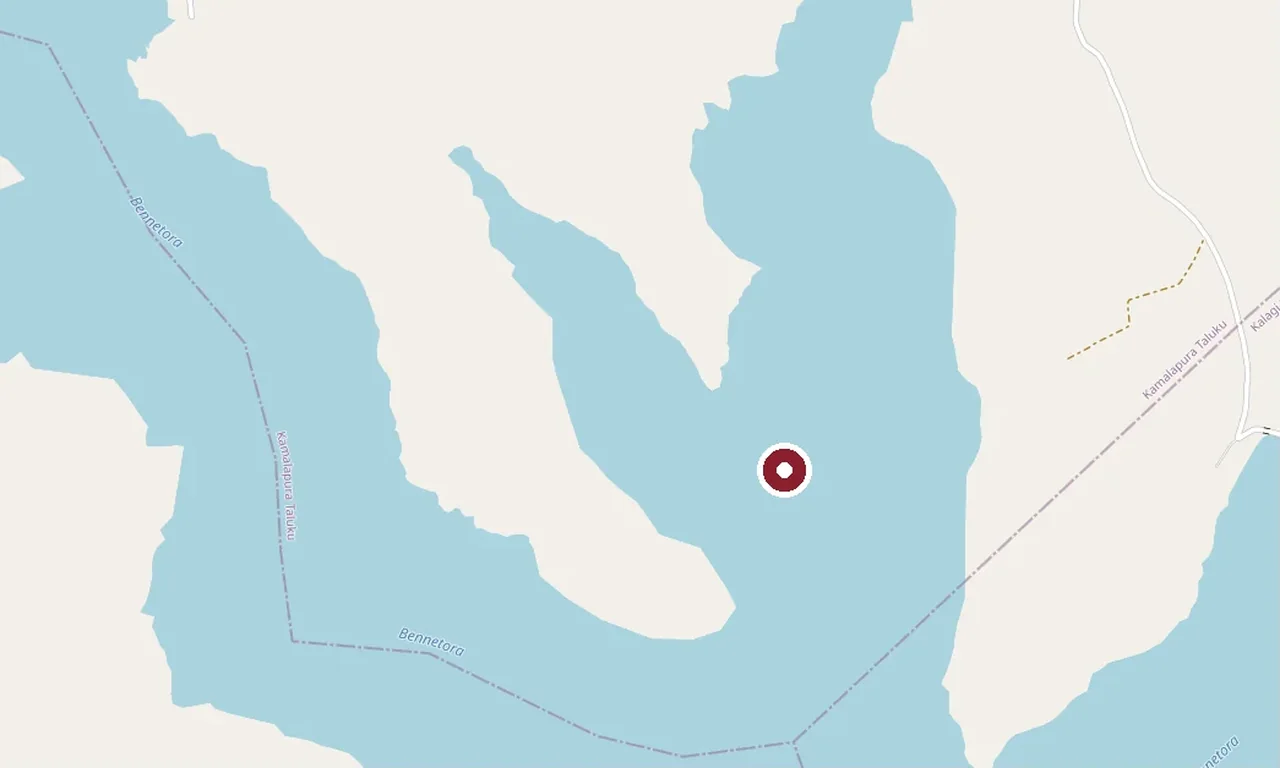
damBennethora Dam 50.0 km · ~83 min by cab · straight line
heritageBuddha Vihar 65.4 km · ~109 min by cab · straight line
heritageKhwaja Bande Nawaz Dargah 68.1 km · ~114 min by cab · straight line
heritageHaft Gumbaz 68.7 km · ~115 min by cab · straight line
mosqueLangar Ki Masjid 69.4 km · ~116 min by cab · straight line

All 2 places to visit in Chincholi →

Walking and driving times are real routed distances, except the few marked “straight line”, which are direct-line estimates and will read short. Routing: © openrouteservice.org by HeiGIT | Map data © OpenStreetMap contributors

On the map

Where Chincholi Wildlife Sanctuary is

Good to know

Chincholi Wildlife Sanctuary — frequently asked

What makes Chincholi Wildlife Sanctuary different from Karnataka’s other sanctuaries?

It is the first dry-land wildlife sanctuary in South India. Almost every other reserve in the state protects the wet, green forest of the Western Ghats; this one protects dry and moist deciduous woodland on the Deccan, which is a habitat type that had been almost entirely passed over. Karnataka notified it in 2011 as its twenty-first sanctuary.

How big is the sanctuary?

14,958 hectares were notified in 2011, and the area is usually printed as 134.88 sq km. The OpenStreetMap boundary as drawn encloses 130.15 sq km. A small gap between a notified figure and a mapped polygon is ordinary.

Can I actually go inside? Is there a trek?

Yes, but only recently. For thirteen years after notification there was no visitor route at all. A marked forest trek from Chandrampalli opened in late 2024 — described at its launch as South India’s first deciduous-forest trek — and in March 2026 a jungle safari, boating on the Chandrampalli reservoir and tented accommodation were added. It is lightly staffed and very new, so confirm current arrangements before travelling rather than relying on anything written earlier, this page included.

Are there really wild dogs here?

Yes, and the record is recent and specific. A camera-trap survey run between 16 October and 20 November 2023 — 104 traps, 1,650 trap days, by the Holématthi Nature Foundation and the Nature Conservation Foundation — produced twenty dhole photographs at nine locations. It was the first documented record of the species in the Kalyana-Karnataka region since the Mysore State Gazetteer for Gulbarga district in 1966. Published as Gubbi, Prabhu, Komarla and Suthar, Canid Biology & Conservation 27(6):34–38, 2024. Your chance of seeing one on a visit is very low.

What about leopards and other large animals?

The same 1,650 trap days recorded exactly one leopard. Golden jackal was the common canid at 83 independent events, with twelve each for the dhole and the Bengal fox. The prey base is blackbuck, four-horned antelope, nilgai, chital, wild pig, langur and porcupine. The paper’s own conclusion is that the leopard and the dhole are both at a bottleneck and could go locally extinct without deliberate conservation.

I have seen gaur on a species list for Chincholi. Is that right?

No. Gaur is a Western Ghats animal and does not occur in this dry Deccan country. Lists carrying it have been copied from elsewhere rather than counted here.

How many bird species are there?

Nobody has settled it. The official Karnataka Tourism listing says "over 35 species"; a Kannada newspaper account puts it past 160. One photographer’s Wikimedia Commons uploads from a handful of 2020 visits alone cover more than thirty species, which suggests the low figure is far too low. Treat any single number you read as unverified.

How far is it from Kalaburagi, really?

Further than most writing says. The figure of roughly 60 km that is usually quoted was measured as the straight line, not along the road. By road the trek start is 87 km from the Kalaburagi bus station and Chincholi town is 78 km, both measured on the road network. Official Karnataka Tourism gives 100 km from Kalaburagi and 609 km from Bengaluru; treat the difference as a matter of which end of a large sanctuary is being measured to. Bidar at 57 km and Humnabad at 55 km are both closer than Kalaburagi, and Hyderabad is about 153 km.

Which is the nearest railway station?

Tandur, about 31 km away, is the nearest railhead.

When should I visit?

October to February, when the heat has gone and the water is still holding. Early morning is the only serious time for wildlife, which is why the trek starts at first light. Avoid March to May: the dry country here becomes genuinely punishing rather than merely hot.

Do people live inside the sanctuary?

Yes. Lambani tandas — hamlets of a scheduled tribal community — sit inside the boundary. Since January 2025 the forest department has been trying to persuade one of them, Sheribikanahalli, to relocate to Venkatapur 13 km away; reports give 98 families and 219 people and a package of either ₹15 lakh or two acres of land plus ₹10 lakh. No completion has been reported. If you pass a tanda, treat it as somebody’s home.

Is there a waterfall?

There is one, written variously as Ettipotha or Ethipothala, in the Gottamgotta area, and there is the Kunchavaram forest block east of the town. Neither is on the marked trail and neither should be attempted without the forest department.

Is there a trek, and how long is it?

Yes — the Chandrampalli Nature Trail, opened to the public in early November 2024 and described at its launch by the state minister Priyank Kharge as South India’s first deciduous-forest trek. There are two routes: a long one of about 9 km from Chandrampalli to Gottamgotta, and a short one of about 4 km around Chandrampalli. A forest guard accompanies trekking parties.

What are the trek timings?

Entry runs from about 6 am to 2 pm, and the usual advice is to report at the trek start between 6:00 and 6:30 am. That is not only a formality — early morning is the only serious window for wildlife here, and the heat later in the day is the reason the gate shuts at two.

How do I book the trek, and what does it cost?

Entry is by booked permit through the forest department’s Aranya Vihaara portal (aranyavihaara.karnataka.gov.in). There is no official published tariff we can find; a Kannada press account of the trek reports ₹200 an adult for the long route and ₹100 for the short one, half price for ages 12 to 18 and free under 12. Treat those as reported rather than official. One caution: checked on 24 August 2026, the Aranya Vihaara front page was not listing Chincholi or Chandrampalli among its treks, so do not assume a slot will simply be bookable online — contact the Chincholi range office as well. Private operators also sell packaged Chincholi forest treks out of Bengaluru, which is a different transaction from a forest-department permit.

Where does the trek actually start, and what is at the far end?

It starts at Chandrampalli, about 10 km north of Chincholi town, by the Chandrampalli dam — which is built across the Mullamari, one of the main tributaries of the Bhima. The long route ends at Gottamgotta, which is also the area the local waterfall is in. The short route stays around the dam.

Is it closer to Hyderabad than to Bengaluru?

By a long way, and this catches people out. It is roughly 140 km from Hyderabad, about three and a half hours, against 609 km from Bengaluru by the official Karnataka Tourism figure. The forest is nonetheless Karnataka Forest Department land, so the rules, the permits and the range office are Karnataka’s, not Telangana’s.

Why are some photographs of this sanctuary labelled Telangana?

Because the photographer labelled them that way. The images most often used for Chincholi are by one Hyderabad birder, and several carry "Telangana" on Wikimedia Commons. That is his error rather than a different place: the sanctuary is in Karnataka, and Commons has since filed the set under Kalaburagi district. Some of those birds were also photographed in the millet fields at the forest edge rather than inside the boundary.

When is the best time to visit Chincholi Wildlife Sanctuary?

October to February, when the heat has gone and the water is still holding. Early morning is the only serious time for wildlife — the trek starts at first light for that reason. Avoid March to May, when the dry country here becomes genuinely punishing.

What are the entry fee and timings at Chincholi Wildlife Sanctuary?

Entry: Booked permit only, through the forest department’s Aranya Vihaara portal — no published official tariff; a Kannada press account of the trek reports ₹200 an adult for the long route and ₹100 for the short one, half for ages 12–18 and free under 12. Timings: Report at the Chandrampalli trek start between 6.00 and 6.30 am; reported entry closes around 2 pm.

How do I reach Chincholi Wildlife Sanctuary?

The way in is Chandrampalli, on the far side of Chincholi town — about 10 km beyond it by road, roughly 12 minutes. Chincholi itself is 78 km from Kalaburagi and the trek start about 87 km, which is around an hour and a half of driving. The old “about 60 km” figure that stood here was the straight line, not the road. Coming from the other direction is often quicker. Bidar is 57 km from the dam, Humnabad 55 km, and Hyderabad about 153 km — the sanctuary sits on the state border, and a great many of its visitors are Hyderabad birders. The nearest useful railhead is Tandur, 31 km from Chincholi town across the border in Telangana. Bidar is 62 km and Kalaburagi Junction 77 km. Kannada Wikipedia gives Tandur and Sedam as the two nearest stations at about 30 km, which matches. Nearest airports: Kalaburagi 65 km, Hyderabad 163 km. The trek must be booked in advance through the forest department’s Aranya Vihaara portal (aranyavihaara.karnataka.gov.in), listed under Kalaburagi district as the Chandrampalli Nature Trail. Reports put the daily cap at 100 trekkers and ask you to report at the start between 6.00 and 6.30 am, with entry closing around 2 pm. A forest guard walks with every group — this is not a trail you are allowed to wander alone, and that is also the only reason you have any chance of seeing anything. Buses run from Kalaburagi and Bidar to Chincholi town, where there are budget hotels; from the town onward to Chandrampalli you will want your own vehicle or an auto.

How much time do I need for Chincholi Wildlife Sanctuary?

Half a day for the short trail and the dam; a full day, starting before dawn, for the long walk to Gottamgotta and back.

What else is near Chincholi Wildlife Sanctuary?

Nearby you can pair Chandrampalli Dam (160 m), Malkhed (Manyakheta) (49.4 km), Bennethora Dam (50.0 km), Buddha Vihar (65.4 km).

What should I know before visiting Chincholi Wildlife Sanctuary?

You cannot simply turn up and walk in. Entry is by booked permit with a forest guard, and going in unaccompanied is both illegal and a good way to get lost in 135 sq km of look-alike scrub. This is dry-country heat, not hill weather. Carry all your own water — there is nothing to buy past Chincholi town — and start at first light or not at all. The sanctuary holds leopard, sloth bear and striped hyena, though all of them in very small numbers — a 2023 camera-trap survey caught a single leopard in 1,650 trap days. None of that is a reason to stay away, and all of it is a reason to keep behind your guard, make noise on blind corners, and never walk at dusk. Ground cover is thorn scrub over loose rock. Wear boots you can walk 9 km in, watch your footing on the dam bund, and expect snakes in the warm months. Phone signal is patchy inside the forest. The nearest hospital is at Chincholi town, about 10 km from the trek start; anything serious means Kalaburagi, an hour and a half away.

Read before you go

Chincholi Wildlife Sanctuary guides, stories & itineraries

Stories & history of Chincholi Wildlife Sanctuary

Written about Chincholi Wildlife Sanctuary itself — its history, its legends and the arguments about them.

Karnataka-wide guides & itineraries

Route-level itineraries and practical guides for the rest of Karnataka.

See all 7 Kalaburagi guides & stories →

Image credits

Photographs: Hari K Patibanda, CC BY 2.0, via Wikimedia Commons (CC BY 2.0), Hari K Patibanda (CC BY 2.0). Wikimedia Commons.