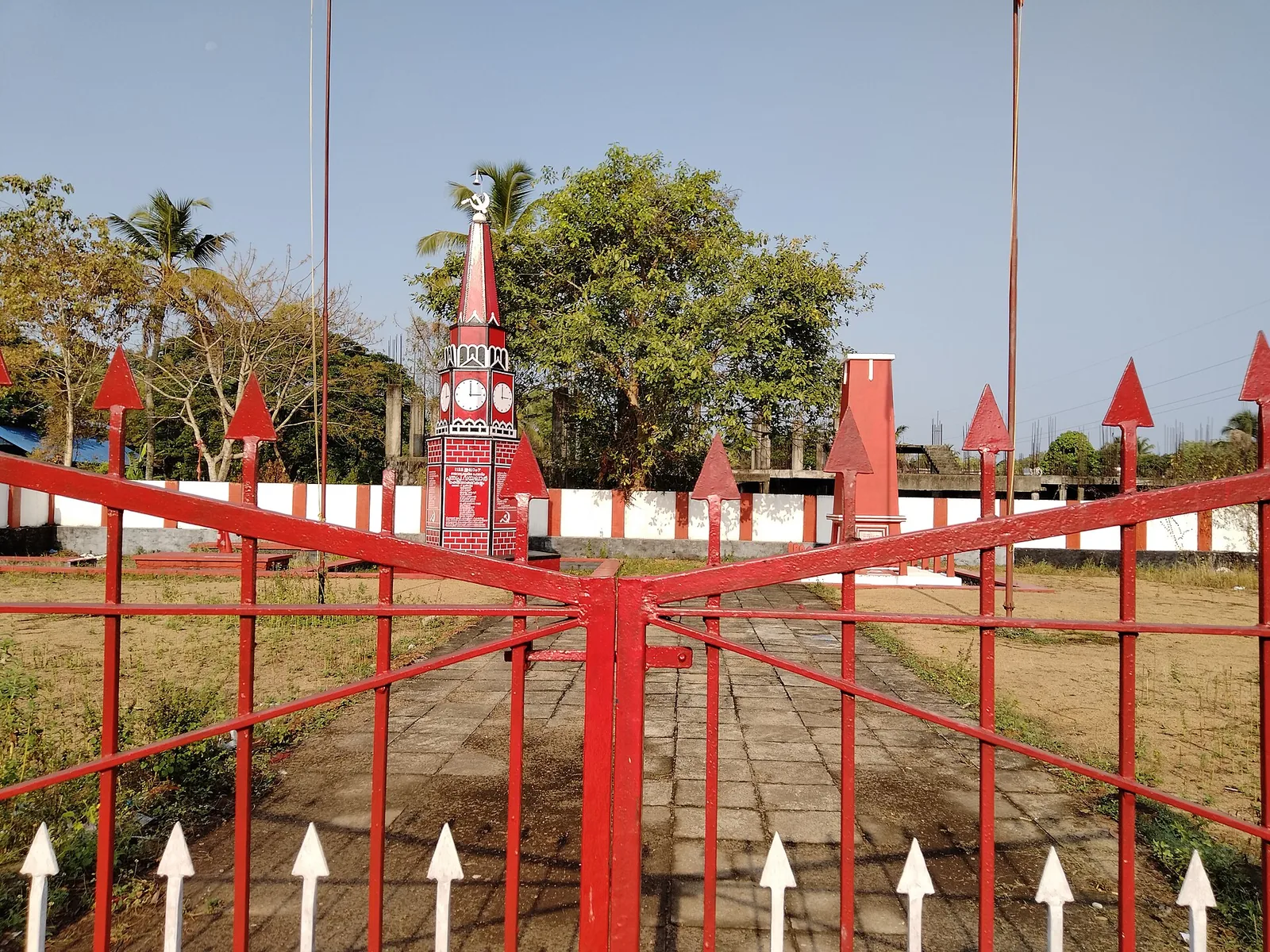
Most visitors know the 1946 uprising, if at all, by two names: Punnapra to the south and Vayalar to the north. Look at a map and you will see Mararikulam lying between them, along the same coast as Marari Beach. That position put the village directly in the path of the events.
The uprising grew out of the coir and farm workers of this coast. They were organised by the Communist Party and the trade unions and stood against the rule of the Travancore Diwan, C.P. Ramaswamy Iyer. According to South First, the unions called a general strike from 22 October 1946. The fighting itself lasted four days. As Kerala’s Chief Minister put it at the 2025 commemoration, reported by ThePrint, workers fought the machine guns of the Diwan’s army "from October 24 to 27, 1946".
Mararikulam’s part came next. The Travancore army needed to move north towards Vayalar, where workers had gathered. The Week reports that during those days the workers pulled down the wooden bridge at Mararikulam to stop the army reaching Vayalar. It was a simple, desperate act: in a land cut through by water, a broken bridge could hold back soldiers.
It came at a cost. South First reports that six workers lost their lives in a police firing at Mararikulam, and they are remembered among the Punnapra–Vayalar martyrs. Soon afterwards, troops surrounded Vayalar and opened fire, and the uprising was crushed. The total number of dead has never been firmly settled; estimates in published sources range very widely, so this page does not give one.
The story still matters on this coast, and it is still argued over. South First, writing for the 80th anniversary in November 2026, describes how the uprising continues to stir debate within Kerala’s Left. People here may hold strong views about it. Listen with respect, and do not treat the memorials as a photo stop.
If you want to stand at one of the places tied to the uprising, the best known is the Punnapra–Vayalar memorial south of Alappuzha town. It is an easy trip from Marari on the same coastal belt.
The uprising also helps explain everything that came after in these villages. Coir was at the heart of 1946, and coir was still the main living here fifty years later, when its collapse pushed the women of Mararikulam to start their own businesses. To trace that thread, read coir in Mararikulam’s villages and the Mararikulam Experiment. Then come back to the sand with the Marari Beach guide, or read how the local temple’s god is carried to this shore in the day the god walks to the sea.
Frequently asked questions
What happened at Mararikulam in 1946?
Workers pulled down the wooden bridge to stop the Travancore army reaching Vayalar (The Week), and six workers were killed in a firing at Mararikulam (South First).
When did it happen?
During the four days of fighting, 24 to 27 October 1946.
Who took part in the Punnapra–Vayalar uprising?
Mainly coir and farm workers of the Alappuzha coast, organised by the Communist Party and trade unions (South First; The Week).
Is there a memorial near Marari Beach?
The best-known memorial is at Punnapra, south of Alappuzha town.