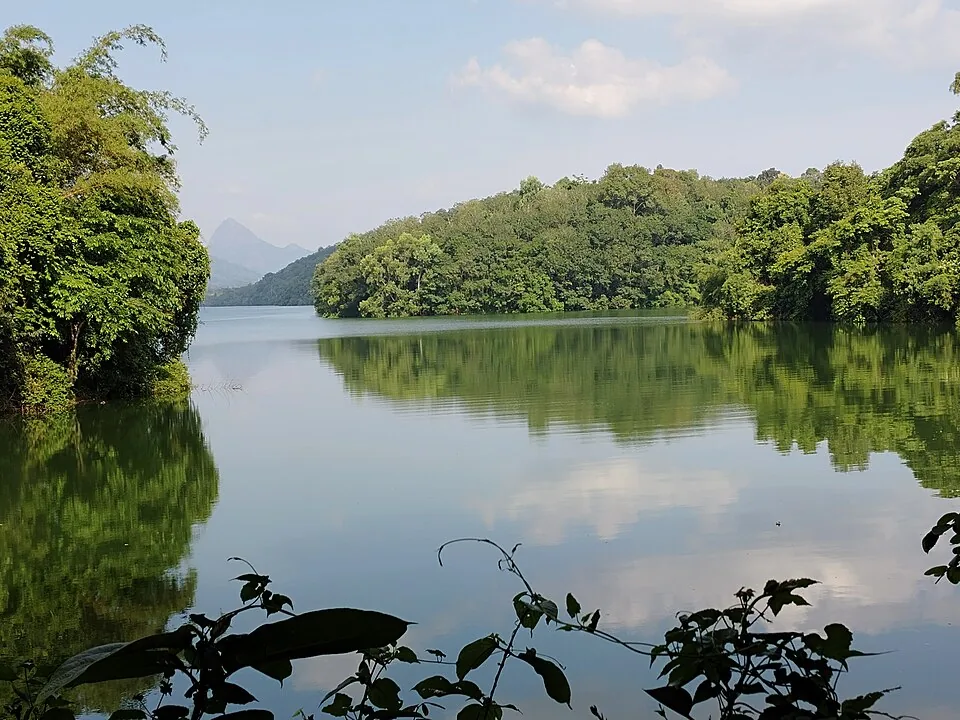
Kerala Tourism lists elephants, leopards, deer and birds among animals associated with Neyyar Wildlife Sanctuary. It would be easy to turn that list into a promise for a short dam-side outing. The public visitor area touches only an edge of a much larger protected landscape, and animals do not appear on a timetable.
The reservoir is the first encounter
The water gives a clear line into the hills. Kerala Tourism describes Neyyar within a basin fed by streams including the Mullayar and Kallar, while the Forest Department records a sanctuary extending well beyond the dam. A boat or viewpoint can help a visitor understand that scale. It cannot show every habitat or every animal named in a brochure.
A good guide can explain the catchment, vegetation and current routes. Ask what is operating before arrival: boating, a permitted walk and a managed safari are different activities with different rules. The lion safari story explains why a dated listing does not confirm a specific attraction’s current status.
What the species list leaves out
A sanctuary inventory tells a reader that an animal belongs to the protected area’s recorded life. It does not say that animal is near the public shore or can be seen in daylight from a particular boat. The larger and denser the landscape, the less useful a checklist becomes as a day plan. Taking that seriously can make a visit calmer: there is more to notice than the failure to spot a leopard.
Use public routes and do not ask an operator to pursue wildlife or enter closed forest for a photograph. A sighting is best left at a distance where it does not change the animal’s behaviour. The water and forested ridges remain the place’s central features on a day when no notable animal appears.
Let the river connect the outing
The sanctuary-boundary story traces the protected basin upstream. The dam story follows the irrigation project downstream. On a public visit, the reservoir is where those two accounts meet.
Leave with a better question than “what did I see?” Ask where the water comes from, what part of the forest was actually accessible, and which rules protect the rest. Those answers are available even when the wildlife keeps its distance.
- Kerala Tourism: Neyyar sanctuary and visitor activities
- Kerala Forest Department: sanctuary area and formation
- Confirm current boating, guide and route access with the operator. Do not enter forest or water beyond permitted areas.