Vadakara carries a reputation as the home of kalaripayattu, and the reason lies in songs rather than in a founding date, because kalaripayattu Vadakara stories reach most people through the Vadakkan Pattukal, the ballads of North Malabar. Kerala Tourism describes those ballads as tales of battles between princely states and feuds between families and clans. In almost every one of them kalaripayattu experts fight, either as members of the warring groups or as mercenaries hired to fight for others.
Those ballads gave the art its heroes, and the greatest of them was born in this town. Kerala Tourism records that Thacholi Othenan, the legendary hero of the ballads, was born in Vadakara, and that visitors still come to the Thacholi Manikkoth arena where he practised his martial feats. Aromal Chekavar and Unniyarcha are sung in the same cycle. The stories give these warriors such a semi-divine aura that Othenan and Aromal also appear in Theyyam and Thira, the ritual arts of North Malabar. So the town's fame as a martial heartland grew from the place the songs were set.
The art itself, however, was never confined to one town, which is why the claim that it was invented at Vadakara goes too far. Kerala Tourism's own history of kalaripayattu describes experts across Kerala being hired for princely armies, for duels over inheritance disputes, for revenge and for personal scores. It also tells of a separate southern tradition, the Thekkan Pattukal, which recount the exploits of Idanaadan and Iravikutty Pillai. An art that served kings and families from Malabar to the south grew across the whole of Kerala, while Vadakara became the place its northern songs remembered.
The art's fortunes also turned on events far beyond the town. Its popularity fell after the invasions of Hyder Ali and Tipu Sultan in the eighteenth century, and under the Portuguese, Dutch and British colonisers who followed. The revival came later, alongside the freedom struggle led by K. Kelappan. Its moves still live inside other Kerala arts too, because Kathakali, Kolkali, Poorakkali, Chavittu Natakam, Patayani and Mudiyettu all carry stylised combat steps drawn from the kalari.
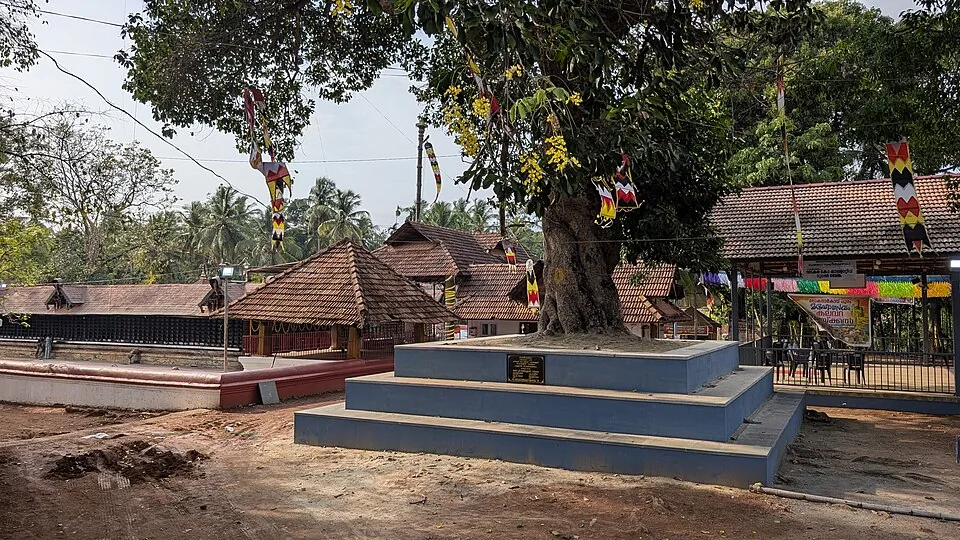
The one place where the ballads touch a building is the temple at Memunda, near the town. Lokanarkavu Temple is dedicated to the goddess Durga, and Kerala Tourism notes that it served as a spiritual centre for kalaripayattu warriors and that Othenan is believed to have worshipped there. Thacholikali, a folk dance that re-enacts the exploits of warriors such as Othenan, belongs to this temple, and the nearby Lokanarkavu Kalaripayattu Academy now draws students from around the world. So the link that began in song continues in training halls today.
That living link is what most visitors come to find, and the temple festivals are when it shows most clearly. The Lokanarkavu Utsavam falls in November and December and again in March and April, with Theyyam and Thira among its folk arts. The temple's own story is told in Lokanarkavu and the Vadakkan Pattukal, and the duels of the ballads in the ankam duels and the kalari.
A day in the ballad country rarely stops at the temple. The Iringal Sargaalaya craft village on the Moorad river and the turtle shore at Kolavipalam Beach lie close by, and the Vadakara hub gathers the rest of the town.
Frequently asked questions
Was kalaripayattu invented at Vadakara?
No. The art grew across Kerala, while Vadakara is the home of the Northern Ballads and their hero Thacholi Othenan.
Why is Vadakara called the martial heartland?
Because Othenan was born here and the Vadakkan Pattukal that celebrate kalaripayattu warriors are set in this country.
What is Lokanarkavu's link to kalaripayattu?
It was a spiritual centre for kalaripayattu warriors, Othenan is believed to have worshipped there, and a kalaripayattu academy stands nearby.
What is Thacholikali?
A folk dance at Lokanarkavu that re-enacts the exploits of warriors such as Thacholi Othenan.