Places to Visit in Denkanikottai

Historic western town, base for Betrayaswamy and Venugopala temples and the Melagiri forests.

Aiyur Eco Tourism Park (Aiyur Reserve Forest), Denkanikottai
Practical guide

Plan Denkanikottai

Who's going?Tailor Denkanikottai to your trip
DistrictKrishnagiri
RoleWestern-town base
Places to visit5
What to expect

Highlights

  • Betrayaswamy Temple (Sri Beteraya Swamy) — This roughly thousand-year-old Vishnu temple in Denkanikottai town is built in the Hoysala architectural style and is counted among the traditional Divya Desam-associated shrines of the region. The presiding deity is worshipped as Devaperumal (Betraya Swamy) with his consort Lakshmi as Soundaryavalli. Its grand annual car (ther) festival in March-April is the town's biggest religious event, drawing devotees from across Denkanikottai taluk. The carved stonework reflects the temple's long medieval heritage.
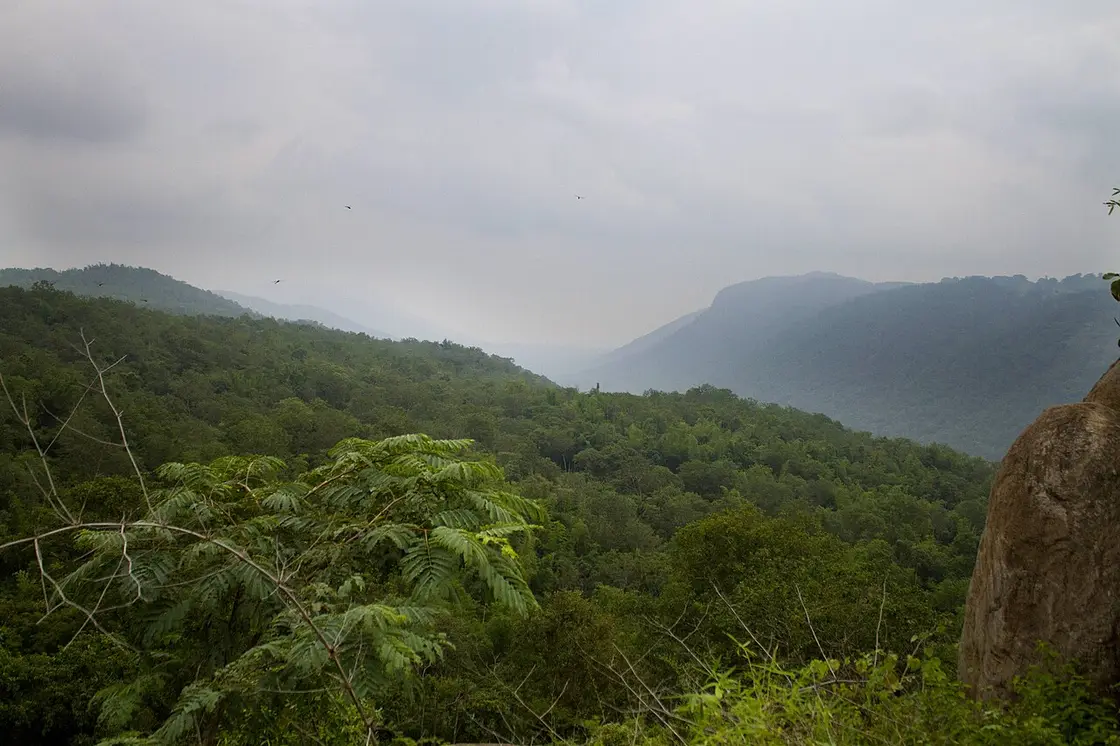
  • Aiyur Eco Tourism Park (Aiyur Reserve Forest) — Situated inside the Aiyur reserve forest about 20 km from Denkanikottai at around 1,060 metres elevation, this Tamil Nadu Forest Department eco-park offers a forested Western Ghats setting in the north of the Melagiri hills. Facilities include bamboo cottages, heritage and modern cottages, dormitories, and both a conventional and a tree-top watch tower for wildlife and landscape viewing. It is a base for eco-tourism, birdwatching and forest treks, and the surrounding shola forest is home to native allal and naki trees. Stays are booked through the Forest Department's eco-tourism system.
  • Venugopala Swamy Temple — A revered Vishnu temple in Denkanikottai town, known for its fine carvings and serene setting, dedicated to Krishna as Venugopala Swamy. It is noted for its annual car festival, traditionally held in May, which draws devotees from the surrounding taluk. Along with the nearby Betrayaswamy temple, it anchors Denkanikottai's temple heritage. The shrine reflects the town's long tradition of Vaishnavite worship.
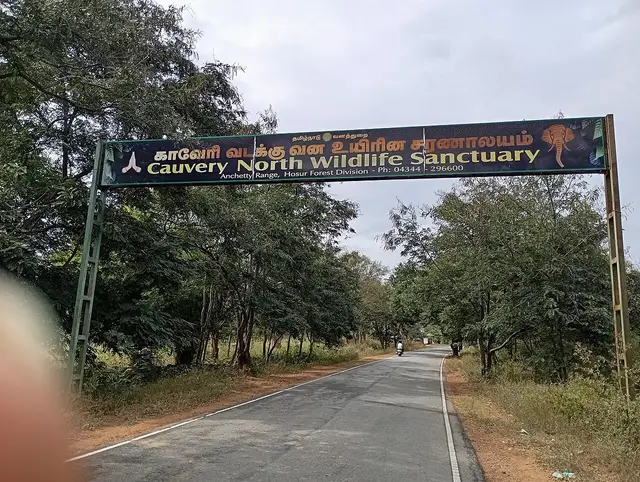
  • Cauvery North Wildlife Sanctuary (Krishnagiri sector) — Declared in 2014, this large sanctuary spreads across the Melagiri hill ranges in Dharmapuri and Krishnagiri districts, with its Krishnagiri portion falling in the Denkanikottai taluk under the Hosur forest division. It protects elephants, leopards, spotted deer and rich birdlife along the rugged Cauvery-basin terrain. The sanctuary forms part of an important elephant corridor linking Tamil Nadu and Karnataka forests. Access is regulated by the Forest Department to safeguard the wildlife.
  • Denkanikottai Dargah — A revered Muslim shrine (dargah) in Denkanikottai town that serves as an important place of worship for the local Islamic community and attracts devotees across faiths during its annual urs. It reflects the composite religious fabric of the Denkanikottai region alongside its temples. The shrine is one of the recognised holy places listed for the district. Its urs festival is a notable local gathering.
Timing

Best time to visit Denkanikottai

Weather in DenkanikottaiSeasonal guide

Live forecast loads in your browser.

Today at Denkanikottai
Sunrise6:09 am
Sunset6:00 pm
Golden hour best light5:00 pm–6:00 pm
Blue hour after sunset6:00 pm–6:25 pm
Sun sets toward compass bearingW · 261°
Moon tonight🌒 Waxing crescent · 26%

Sun and moon are calculated for this location and shown in IST. Photography windows are the hour around sunrise and sunset; the sunset bearing is degrees clockwise from true north. Moon phase is accurate to about half a day.

Stay · eat · do · rent · see · shop

Places in Denkanikottai

Every verified place in Denkanikottai — filter by what you’re after.

Verified inventory is being added here.

Verified places are being added. The category filters will fill in as approved stays, restaurants, experiences, sights, shops and nature listings go live.

List your place
Places to visit

The places themselves, around Denkanikottai

The best tourist places to visit in Denkanikottai — temples, viewpoints, lakes, heritage and nature, each with a full guide, how to reach it and what to see nearby.

B
Betrayaswamy Temple (Sri Beteraya Swamy)
No photograph yet
PlaceBetrayaswamy Temple (Sri Beteraya Swamy)

This roughly thousand-year-old Vishnu temple in Denkanikottai town is built in the Hoysala architectural style and is counted among the traditional Divya Desam-associated shrines of the region. The presiding deity is worshipped as Devaperumal (Betraya Swamy) with his consort Lakshmi as Soundaryavalli. Its grand annual car (ther) festival in March-April is the town's biggest religious event, drawing devotees from across Denkanikottai taluk. The carved stonework reflects the temple's long medieval heritage.

Open guide →
Aiyur Eco Tourism Park (Aiyur Reserve Forest), Denkanikottai
PlaceAiyur Eco Tourism Park (Aiyur Reserve Forest)

Situated inside the Aiyur reserve forest about 20 km from Denkanikottai at around 1,060 metres elevation, this Tamil Nadu Forest Department eco-park offers a forested Western Ghats setting in the north of the Melagiri hills. Facilities include bamboo cottages, heritage and modern cottages, dormitories, and both a conventional and a tree-top watch tower for wildlife and landscape viewing. It is a base for eco-tourism, birdwatching and forest treks, and the surrounding shola forest is home to native allal and naki trees. Stays are booked through the Forest Department's eco-tourism system.

Open guide →
V
Venugopala Swamy Temple
No photograph yet
PlaceVenugopala Swamy Temple

A revered Vishnu temple in Denkanikottai town, known for its fine carvings and serene setting, dedicated to Krishna as Venugopala Swamy. It is noted for its annual car festival, traditionally held in May, which draws devotees from the surrounding taluk. Along with the nearby Betrayaswamy temple, it anchors Denkanikottai's temple heritage. The shrine reflects the town's long tradition of Vaishnavite worship.

Open guide →
Cauvery North Wildlife Sanctuary (Krishnagiri sector), Denkanikottai
PlaceCauvery North Wildlife Sanctuary (Krishnagiri sector)

Declared in 2014, this large sanctuary spreads across the Melagiri hill ranges in Dharmapuri and Krishnagiri districts, with its Krishnagiri portion falling in the Denkanikottai taluk under the Hosur forest division. It protects elephants, leopards, spotted deer and rich birdlife along the rugged Cauvery-basin terrain. The sanctuary forms part of an important elephant corridor linking Tamil Nadu and Karnataka forests. Access is regulated by the Forest Department to safeguard the wildlife.

Open guide →
D
Denkanikottai Dargah
No photograph yet
PlaceDenkanikottai Dargah

A revered Muslim shrine (dargah) in Denkanikottai town that serves as an important place of worship for the local Islamic community and attracts devotees across faiths during its annual urs. It reflects the composite religious fabric of the Denkanikottai region alongside its temples. The shrine is one of the recognised holy places listed for the district. Its urs festival is a notable local gathering.

Open guide →
For hotels, homestays and local businesses

Get listed in Denkanikottai for free

Roampedia is commission-free. Travellers discover your business, book directly and contact you through official details. Basic listings are free, while Gold and Platinum package upgrades can be requested from the owner dashboard after approval.

List your business — free
Read before you go

Denkanikottai guides, stories & itineraries

Stories & history of Denkanikottai

Written about Denkanikottai itself — its history, its legends and the arguments about them.

Story & tradition
Betrayaswamy Temple (Sri Beteraya Swamy): story and tradition

This roughly thousand-year-old Vishnu temple in Denkanikottai town is built in the Hoysala architectural style and is counted among the traditional Divya Desam-associated shrines of the region. The presiding deity is worshipped as Devaperumal (Betraya Swamy) with his consort Lakshmi as Soundaryavalli. Its grand annual car (ther) festival in March-April is the town's biggest religious event, drawing devotees from across Denkanikottai taluk. The carved stonework reflects the temple's long medieval heritage.

4 min read · Read →
Place story
The story of Cauvery North Wildlife Sanctuary (Krishnagiri sector)

Declared in 2014, this large sanctuary spreads across the Melagiri hill ranges in Dharmapuri and Krishnagiri districts, with its Krishnagiri portion falling in the Denkanikottai taluk under the Hosur forest division. It protects elephants, leopards, spotted deer and rich birdlife along the rugged Cauvery-basin terrain. The sanctuary forms part of an important elephant corridor linking Tamil Nadu and Karnataka forests. Access is regulated by the Forest Department to safeguard the wildlife.

4 min read · Read →
Story & tradition
Venugopala Swamy Temple: story and tradition

A revered Vishnu temple in Denkanikottai town, known for its fine carvings and serene setting, dedicated to Krishna as Venugopala Swamy. It is noted for its annual car festival, traditionally held in May, which draws devotees from the surrounding taluk. Along with the nearby Betrayaswamy temple, it anchors Denkanikottai's temple heritage. The shrine reflects the town's long tradition of Vaishnavite worship.

4 min read · Read →

Nearby in Krishnagiri

Wider reading from Krishnagiri. The stories about Denkanikottai itself are above.

Place story
The story of Mallachandram Dolmens

Spread across two hillocks near Samalpallam, about 19 km from Krishnagiri town, Mallachandram is one of Tamil Nadu's largest megalithic burial complexes, with more than 200 dolmens (stone burial chambers) dating to roughly 1200-300 BCE. Excavations here have yielded black-and-red ware pottery, iron objects, cairn circles and urn burials, and some slabs carry rare prehistoric white-ochre rock paintings depicting hunts, houses and rituals. It is a protected Archaeological Survey of India site, though many chambers were damaged by treasure-hunters over the years. Reaching it involves a short walk up the rocky hillocks from the village.

4 min read · Read →
Place story
The story of Arulmigu Chandra Choodeswarar Temple

Set on a hillock beside National Highway 44 at Hosur, this Shiva temple is reached by a flight of steps and is one of the most popular pilgrimage spots in the district, drawing hundreds of devotees daily from Tamil Nadu, Karnataka and Andhra Pradesh. Stone inscriptions trace its origins to the 11th-century Chola period under Raja Raja Chola and Kulothunga Chola, with Shiva worshipped as Chandra Choodeswarar alongside the goddess Maragathambigai. Its annual car festival falls in March-April, and the municipality maintains gardens, a children's park and an observatory nearby. The elevated setting also offers views over Hosur town.

4 min read · Read →
Place story
The story of Shree Parshwa Padmavathi Shaktipeeth Tirth Dham

Located at Shree Parshwa Padmavati Nagar near Sadhanpalli and Orappam, about 6-7 km outside Krishnagiri, this modern Jain pilgrimage complex is promoted as one of the tallest Jain temples in the world, rising around 365 feet. It is dedicated to Parshwanath, the 23rd Tirthankara, and to the goddess Padmavati Devi, and draws Jain devotees from across India. The towering shikhara and the sculpted Tirthankara imagery make it a striking landmark on the Krishnagiri skyline. The peaceful campus also serves as a centre for spiritual learning.

4 min read · Read →

Tamil Nadu-wide guides & itineraries

Route-level itineraries and practical guides for the rest of the state.

Story & tradition
Kattu Veera Anjaneya Temple: story and tradition

This ancient Hanuman shrine on the Krishnagiri-Bengaluru highway is traditionally said to be around 2,500 years old and is famous as a wish-fulfilment temple. Devotees carry a saffron bag with coconut and betel leaves and perform eleven circumambulations while chanting, believing their prayers are answered within three months. A natural Nandi rock formation within the temple is revered as marking the presence of Lord Shiva. Its roadside location on NH44 makes it a popular stop for travellers between Krishnagiri and Bengaluru.

4 min read · Read →
Story & tradition
Sri Lakshmi Narasimha Swamy Temple, Oldpet: story and tradition

Standing at the foot of a large hillock in Pazhapettai (Oldpet), Krishnagiri, this Vaishnavite temple is believed to be more than 1,200 years old and is traditionally attributed to the Pallava ruler Karivaradha Rangaraja Pallava, with the deity's consecration linked in legend to Arjuna. Dedicated to Lakshmi Narasimha, it was in ruinous condition for decades before a full renovation and rededication in January 2018. It remains one of the town's important heritage shrines, valued for its antiquity and hillside setting.

4 min read · Read →
Story & tradition
Sri Lakshmi Narasimha Swamy Temple, Varatanapalli: story and tradition

Built into a rock cave at the foot of the Varadagiri hills in Varatanapalli (historically called Gangaraya Chathurvedi Mangalam), this cave temple enshrines Lakshmi Narasimha seated facing east with Goddess Lakshmi on his lap. Local tradition holds that it was hewn and consecrated in a single day. Its unusual cave form and hill setting distinguish it among the district's Narasimha shrines. The rock-cut sanctum gives the temple a distinctive, austere character.

4 min read · Read →

See all 22 Krishnagiri guides & stories →

Map

Where things are in Denkanikottai

FAQ

Denkanikottai travel FAQs

What are the best places to visit in Denkanikottai?

Top places to visit in Denkanikottai include Betrayaswamy Temple (Sri Beteraya Swamy), Aiyur Eco Tourism Park (Aiyur Reserve Forest), Venugopala Swamy Temple, Cauvery North Wildlife Sanctuary (Krishnagiri sector), Denkanikottai Dargah — each has a full guide with how to reach it and what to see nearby on this page.

What is the best time to visit Denkanikottai?

November to February is the coolest, most comfortable season to visit Denkanikottai and the rest of Tamil Nadu. April to June is very hot, and the October–December north-east monsoon brings the delta its main rains.

Image credits