What to expect
Aravankadu railway station
The next halt up the mountain line from Wellington and the reason there is a factory town in this valley at all: Aruvankadu was chosen in 1898 for the Cordite Factory because making cordite needs a cool climate, nitroglycerine freezing at forty degrees Fahrenheit. The station serves a township that the Nilgiris district administration counts alongside Wellington Cantonment as one of its two local bodies outside the panchayat system, and the factory itself is a defence installation you look at from the road and no closer.

Practical guide
Plan Aravankadu railway station
Who's going?Tailor Aravankadu railway station to your trip
Typeheritage
Nearest baseWellington
DistrictThe Nilgiris
Best timeOctober to March is the cooler, drier…
Time neededAbout an hour
EntryFree
Places to visit10→Listed businesses11→Aravankadu railway station is planned from Wellington, one of the travel bases in The Nilgiris district. Use Wellington for stays, food and local transport, then plan this place as a focused stop.
Getting there
How to visit
- Base yourself in Wellington or nearby in The Nilgiris, then confirm the last-mile route locally before travel.
- If access depends on temple, museum or seasonal rules, check on the day before you go.
Timing
Best time
October to March is the cooler, drier season in the Cauvery delta.
Weather in Aravankadu railway stationSeasonal guide
Live forecast loads in your browser.
Today at Aravankadu railway station
Sunrise6:12 am
Sunset6:05 pm
Golden hour best light5:05 pm–6:05 pm
Blue hour after sunset6:05 pm–6:30 pm
Sun sets toward compass bearingW · 261°
Moon tonight🌒 Waxing crescent · 25%
Sun and moon are calculated for this location and shown in IST. Photography windows are the hour around sunrise and sunset; the sunset bearing is degrees clockwise from true north. Moon phase is accurate to about half a day.
Stay · eat · do · rent · see · shop
Stays, food & things to do near Aravankadu railway station
Verified hotels, homestays, restaurants, experiences, sights, shops and rentals around Aravankadu railway station — commission-free, with direct contact. Filter by what you need.
11 places to stay near Aravankadu railway station
Top pick
Nature stay with a restaurant
Sleeping Beauty, AruvankaduA nature stay in the hamlet of Aruvankadu, 2.76 km up the line from Wellington station, looking across at the ridge that gives it its name. Its eight rooms are named after the characters in the 1959 film and it keeps its own restaurant, Fable, on the same terrace.
Commission-freeView details

Top pick
Members' club with cottages and an 18-hole golf course
Wellington Gymkhana ClubA garrison club at Barracks Post that dates itself from an 1873 cricket pavilion and runs an eighteen-hole hill golf course at about six thousand feet. It has fourteen named cottages and publishes a non-member tariff, but it is a members' club: a stay or a round is arranged through a member or an affiliated club.
Commission-freeView details
Top pick
Bed and breakfast
Drop Zone, WellingtonA registered bed and breakfast at 3/3 G4 in the Defence Enclave on Othanhatty Road, which is one of the very few addresses inside the cantonment's own ring that takes paying guests. Its registered address names Wellington, and the register is the only description of it we will print.
Commission-freeView details
Top pick
Bed and breakfast
Werifesteria, BearhattyA four-bedroom villa at Forestdale, Bearhatty, registered with the Ministry of Tourism under Wellington's own postal code. It trades as an amã Stays & Trails property, and its operator's website will not serve a page to anything but a browser, so we are printing the register.
Commission-freeView details
Top pick
Bed and breakfast
Waterloo Bungalow, WellingtonA bed and breakfast at IV/155 Mountain Dew Colony in Ward V of the Wellington cantonment, registered with the Ministry of Tourism. It takes its name from the bridge below it, which was the Waterloo Bridge before it was renamed for Field Marshal Manekshaw.
Commission-freeView details
Bed and breakfast
Sleeping Beauty Annex, AruvankaduThe annexe to Sleeping Beauty, registered separately with the Ministry of Tourism at Block No 1 in Aruvankadu. It is run by the same company and shares the same reservations line, and we are printing what the register holds and no more.
Commission-freeView details
Bed and breakfast
Villa Aruvi, AruvankaduA registered bed and breakfast inside the Safa Crest compound at Aruvankadu, a little over two and a half kilometres from Wellington station. Aruvi is the Tamil word for a waterfall, and the house takes its name from the stream below it.
Commission-freeView details
Bed and breakfast
Anchorage, WellingtonA registered bed and breakfast at 3/3 G-1 on Othanatty Road, in the same Defence Enclave block as Drop Zone at 3/3 G4. Two doors in one service-housing block are separately registered with the Ministry of Tourism, which is the sort of thing only a register shows you.
Commission-freeView details
Bed and breakfast
Aberdeen, BearhattyA registered bed and breakfast at Aberdeen, Forestdale, Bearhatty, on the same 643231 postal code as Wellington itself. It is registered by Trivedi Global Enterprises and the register is the whole of what we can honestly tell you about it.
Commission-freeView details
Bed and breakfast
Amaalfi, WellingtonA registered bed and breakfast at 2-304 on Sugar Loaf Hill at Chinna Vandisolai, with Wellington in its own registered address and Wellington's postal code. No web search turned it up; the government register did.
Commission-freeView details
Homestay
Anugraha Homestay, WellingtonA registered homestay at 3/3 G3 on Othanatty, the third separately registered door in the Defence Enclave block. It is registered as a Homestay rather than a bed and breakfast, which under the Ministry's own scheme means the family lives there.
Commission-freeView details
Book with the place itself. India’s cyber-crime coordination centre warned in April 2025 that convincing copies of hotel and pilgrimage booking sites are being pushed through sponsored search and social ads, taking payment for rooms the property never hears about. Every listing here links to the business’s own contact details and its own Google or Bing profile — we take no commission and sit in nobody’s payment path. If a booking page reached you through an ad, check the address bar against the property’s own site before you pay. Fraud can be reported on cybercrime.gov.in or on 1930.
Ranked
More ways to explore Wellington
Find food, accommodation and activities across Wellington. Browse the guides for places to eat, stay and explore along your route.
Across the whole of Wellington
Ranked guides
Top experiences around Wellington
9 more places around Wellington. Open a guide to plan the visit and onward journey.
R
Ralliah Dam
Place
heritageRalliah Dam
Ralliah (Rallia) Dam sits on the Coonoor-Kattabettu-Kotagiri road and was built in 1914 as a catchment supplying drinking water to Coonoor and Kotagiri. Ringed by eucalyptus forest and reached by a short walk, it is a peaceful, little-visited spot popular for gentle trekking.

heritageWellington railway station
1.8 km · 23 min walk
The cantonment's own halt on the Nilgiri Mountain Railway, and the point every distance on the Wellington page is measured from, because the town has no bus stand at all. It sits above the rack: the toothed third rail that hauls the train up the gorge ends at Coonoor, so everything through this single platform runs on plain track, and the station opened in 1908 with the extension to Udhagamandalam rather than with the line itself in 1899 — the barracks below it were forty-eight years old before the train arrived.
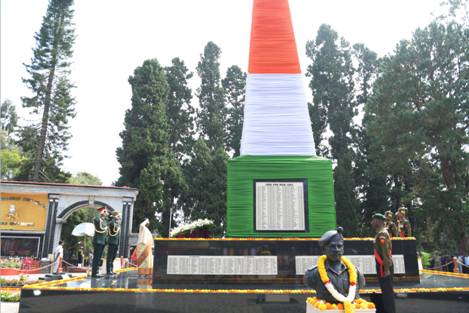
heritageMadras Regiment War Memorial
2.4 km · 30 min walk
The memorial of the Madras Regiment, the oldest infantry regiment of the Indian Army, raised in 1758 and at Wellington since February 1947. The Cantonment Board's own history places the Defence Services Staff College directly in front of it, which makes this small square the centre of military Wellington rather than the barracks themselves; the ground around it is cantonment land, and what you may photograph is decided at the gate, not by the memorial.
heritageWellington Gymkhana Club
2.9 km · ~7 min by auto
A garrison club that dates itself from the brick cricket pavilion put up for the troops in 1873, though it only took the name Wellington Gymkhana in 1916, and it now runs an eighteen-hole hill golf course at about six thousand feet. Its own history records a race course here before Ooty's longer track was built, nine-hole golf, polo and rugby by the 1930s, its first Indian member in 1943, and the fact that the whole club stands on military land and pays a yearly rent to the Defence Department.
F
FM Manekshaw Bridge
Place
heritageFM Manekshaw Bridge
1.2 km · 15 min walk
The bridge that separates the barracks from the bazaar, first thrown across the Mynala stream in 1878 as the Waterloo Bridge and known for a century as the Black Bridge because it was built of Burmese teak and painted black. It was rebuilt in March 2009 — forty-three and a half metres of it — and renamed for Field Marshal Sam Manekshaw, who died at the Military Hospital here on 27 June 2008.

heritageWellington Cantonment
1.0 km · 12 min walk
The barracks quarter on the far side of the stream from the market, begun in 1852 and finished in 1860, called Wellington Barracks for a century and renamed Srinagesh Barracks after General S. M. Srinagesh, the first Indian Colonel of the Madras Regiment. The Cantonment Board still governs the whole 1,647-acre town from here under the Ministry of Defence, which is why Wellington has a board and seven wards rather than a municipality and a mayor.

heritageCordite Factory, Aruvankadu
860 m · 11 min walk
India's first smokeless propellant factory, opened on 19 January 1904 and still an ordnance factory today, three and a half kilometres up the valley from Wellington station. Captain Babington was sent to find a site in 1898 and chose about 350 acres here for a reason that is pure Nilgiris — cordite has to be made in a cool climate, because nitroglycerine freezes at forty degrees Fahrenheit — and the Kateri hydroelectric dams of 1902 and 1916 were built to power it. It is a prohibited place within the meaning of the Official Secrets Act: you see the township, the school and the gate from the road, and you photograph none of it.
S
St. George's Garrison Church, Wellington
Place
churchSt. George's Garrison Church, Wellington
The Anglican garrison church of the cantonment, and by local reckoning the largest church in the Nilgiris, seating about six hundred under a vaulted roof carried on six Ionic columns, with a white marble altar and a lit cross on the spire. The Wellington Cantonment Board's own history records it as built in 1885 to the design of Major Morant of the Royal Engineers — the same officer who argued the mountain railway into existence — with the Roman Catholic St. Joseph's following in 1888; it passed to the Church of South India in 1947. Some travel accounts instead give 1826 and Colonel J. T. Boileau, a date that predates the barracks the church served. Because published directions can lead to St. Antony's Church in Coonoor, identify the garrison church through Wellington Cantonment before setting out.
H
Hidden Valley, Coonoor
Place
heritageHidden Valley, Coonoor
A wooded fold in the hills behind the Wellington golf course, with quiet shola and grassland well away from the tour-bus circuit. Public sources place it in the Wellington side of Coonoor but do not publish a dependable visitor entrance. Arrange the approach with a responsible local guide or property, respect cantonment and private-land restrictions, and do not attempt an unguided route based on a generic online marker.
Roampedia is commission-free — own or know a stay, eatery, guide or shop near Aravankadu railway station? List it and it appears here once verified.
Add a nearby businessBefore you go
Aravankadu railway station — at a glance
TimingsOpen around its trains
Best timeYear round
Entry: Platform ticket only
Getting here
How to reach Aravankadu railway station
2.76 km from Wellington railway station by routed road and one stop up the mountain line (openrouteservice returns 4.77 km for the road and is wrong). Coonoor 4.7 km, Ooty bus stand about 14 km.
Getting around Aravankadu railway station
If you need step-free access, contact the site before travelling. Ask about a level entrance, steps along the route, the nearest drop-off point, seating and accessible toilets.
If you need help at Aravankadu railway station
112All emergencies (police · fire · medical)The single number to call in any emergency (ERSS).100Police101Fire108Ambulance (emergency / EMS)1091Women’s helpline (distress)1098Child helpline1363Tourist helpline (India, 24×7, multilingual)
Emergency numbers are verified against official government and state tourism sources. 112 works anywhere in India.
Nearby
What’s near Aravankadu railway station
heritageCordite Factory, Aruvankadu
India's first smokeless propellant factory, opened on 19 January 1904 and still an ordnance factory today, three and a half kilometres up the valley from Wellington station. Captain Babington was sent to find a site in 1898 and chose about 350 acres here for a reason that is pure Nilgiris — cordite has to be made in a cool climate, because nitroglycerine freezes at forty degrees Fahrenheit — and the Kateri hydroelectric dams of 1902 and 1916 were built to power it. It is a prohibited place within the meaning of the Official Secrets Act: you see the township, the school and the gate from the road, and you photograph none of it.
860 m · 11 min walk · straight lineheritageWellington Cantonment
The barracks quarter on the far side of the stream from the market, begun in 1852 and finished in 1860, called Wellington Barracks for a century and renamed Srinagesh Barracks after General S. M. Srinagesh, the first Indian Colonel of the Madras Regiment. The Cantonment Board still governs the whole 1,647-acre town from here under the Ministry of Defence, which is why Wellington has a board and seven wards rather than a municipality and a mayor.
1.0 km · 12 min walk · straight lineF
FM Manekshaw Bridge
Place
heritageFM Manekshaw Bridge
The bridge that separates the barracks from the bazaar, first thrown across the Mynala stream in 1878 as the Waterloo Bridge and known for a century as the Black Bridge because it was built of Burmese teak and painted black. It was rebuilt in March 2009 — forty-three and a half metres of it — and renamed for Field Marshal Sam Manekshaw, who died at the Military Hospital here on 27 June 2008.
1.2 km · 15 min walk · straight lineheritageWellington railway station
The cantonment's own halt on the Nilgiri Mountain Railway, and the point every distance on the Wellington page is measured from, because the town has no bus stand at all. It sits above the rack: the toothed third rail that hauls the train up the gorge ends at Coonoor, so everything through this single platform runs on plain track, and the station opened in 1908 with the extension to Udhagamandalam rather than with the line itself in 1899 — the barracks below it were forty-eight years old before the train arrived.
1.8 km · 23 min walk · straight lineheritageMadras Regiment War Memorial
The memorial of the Madras Regiment, the oldest infantry regiment of the Indian Army, raised in 1758 and at Wellington since February 1947. The Cantonment Board's own history places the Defence Services Staff College directly in front of it, which makes this small square the centre of military Wellington rather than the barracks themselves; the ground around it is cantonment land, and what you may photograph is decided at the gate, not by the memorial.
2.4 km · 30 min walk · straight lineA
All Saints Church, Coonoor
Place
heritageAll Saints Church, Coonoor
An Anglican church in Coonoor, now of the Church of South India, on the Kattabettu road out of the town — stained glass, antique woodwork and an old pipe organ in a Gothic hall. Its founding is published as both 1851 and 1854 and we have found no official source that settles it, so both are printed. We have no checked coordinate for it, so no distance to it is printed.
2.6 km · ~6 min by auto · straight lineL
Lady Canning's Seat
Place
heritageLady Canning's Seat
Lady Canning's Seat is an elevated colonial-era vantage point near Coonoor named after the wife of Lord Canning, Viceroy of India. It is prized for its sunrise and sunset views over the surrounding valleys and tea slopes.
2.8 km · ~7 min by auto · straight lineheritageWellington Gymkhana Club
A garrison club that dates itself from the brick cricket pavilion put up for the troops in 1873, though it only took the name Wellington Gymkhana in 1916, and it now runs an eighteen-hole hill golf course at about six thousand feet. Its own history records a race course here before Ooty's longer track was built, nine-hole golf, polo and rugby by the 1930s, its first Indian member in 1943, and the fact that the whole club stands on military land and pays a yearly rent to the Defence Department.
2.9 km · ~7 min by auto · straight lineC
Coonoor railway station
Place
heritageCoonoor railway station
The hinge of the Nilgiri Mountain Railway, 370 m from the Coonoor bus stand. The Abt rack section that carries the train up the gorge from Kallar ends at this platform and the run on to Udhagamandalam above it is worked on plain track, which is why the locomotive shed is here and why the Coonoor-Ooty shuttles exist. Southern Railway gives the whole line as 45.88 km of metre gauge, opened to Coonoor on 15 June 1899.
2.9 km · ~7 min by auto · straight line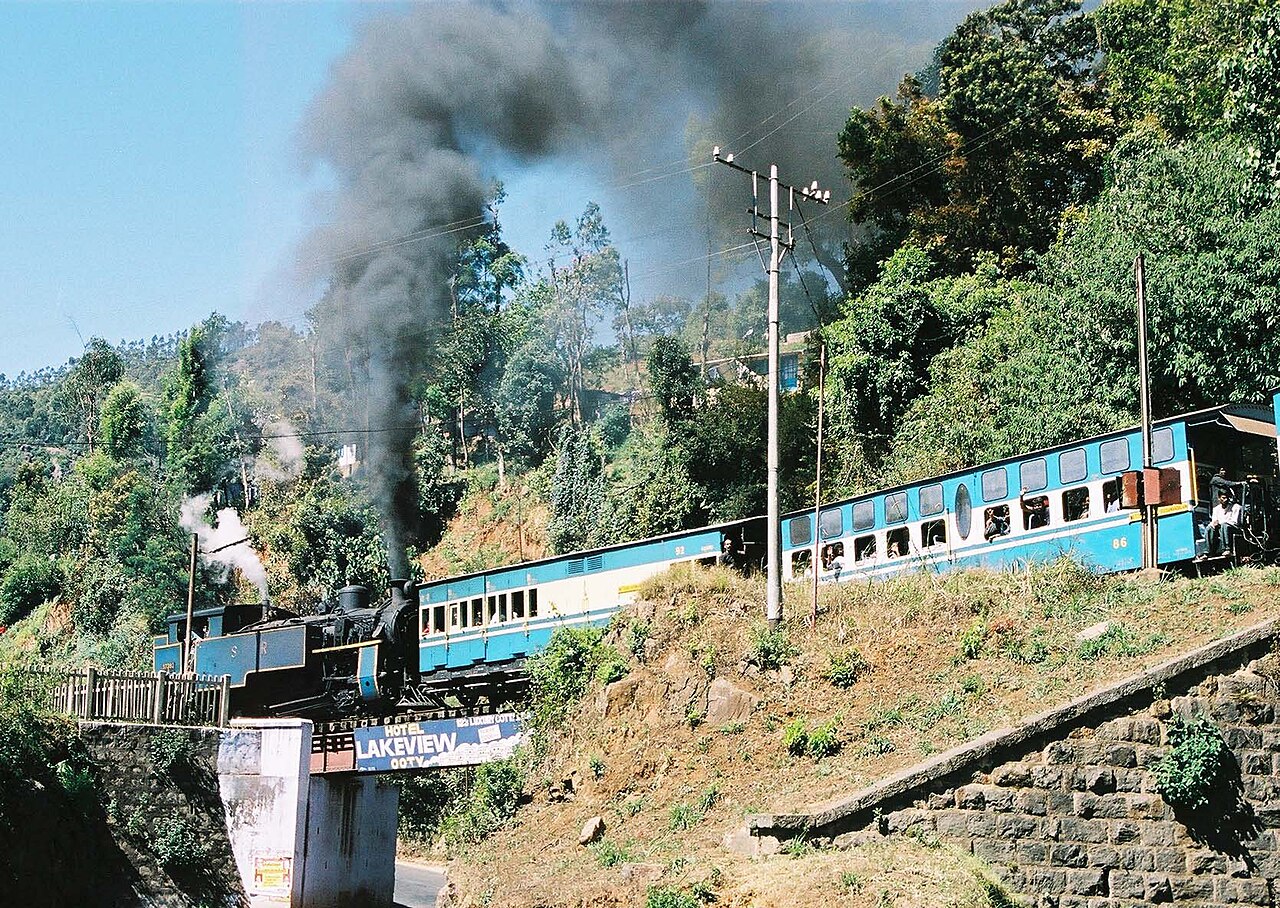
activityNilgiri Mountain Railway
A UNESCO World Heritage metre-gauge rack railway connecting Mettupalayam to Ooty via Coonoor, opened in stages between 1899 and 1908.
3.0 km · ~7 min by auto · straight line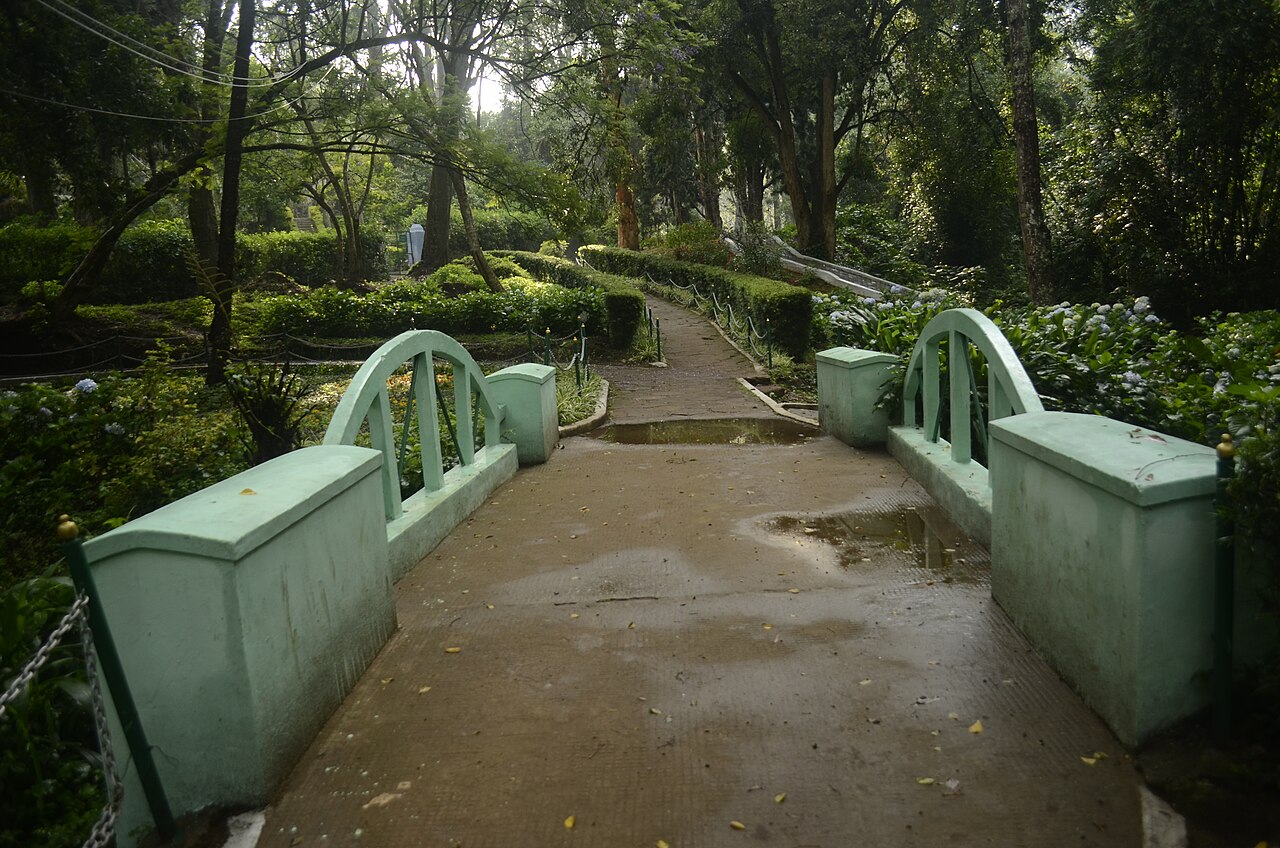
parkSim's Park
A 12-hectare botanical park in Coonoor established in 1874, laid out in irregular Japanese style with a small lake and rare tree species.
3.3 km · ~8 min by auto · straight lineP
Pasteur Institute of India, Coonoor
Place
heritagePasteur Institute of India, Coonoor
A vaccine institute on sixteen acres above the town, founded after Lily Pakenham Walsh died of hydrophobia in 1902 without reaching treatment in time. One lakh rupees of Henry Phipps's gift to Lord Curzon paid for it, Coonoor was chosen for its cool and equitable climate, and it began work on 6 April 1907. It has made antirabies vaccine ever since and DPT vaccines since 1982. A manufacturer, not a clinic.
3.4 km · ~9 min by auto · straight lineOn the map
Where Aravankadu railway station is
Good to know
Aravankadu railway station — frequently asked
When is the best time to visit Aravankadu railway station?
October to March is the cooler, drier season in the Cauvery delta.
What are the entry fee and timings at Aravankadu railway station?
Entry: Platform ticket only. Timings: Open around its trains.
How do I reach Aravankadu railway station?
Base yourself in Wellington or nearby in The Nilgiris, then confirm the last-mile route locally before travel. If access depends on temple, museum or seasonal rules, check on the day before you go.
How much time do I need for Aravankadu railway station?
About an hour.
What else is near Aravankadu railway station?
Nearby you can pair Cordite Factory, Aruvankadu (860 m), Wellington Cantonment (1.0 km), FM Manekshaw Bridge (1.2 km), Wellington railway station (1.8 km).
Read before you go
Aravankadu railway station guides, stories & itineraries
We have not published a story about Aravankadu railway station itself yet. These cover Wellington and the wider district, with separate journeys between stops.
Tamil Nadu-wide guides & itineraries
Route-level itineraries and practical guides for the rest of Tamil Nadu.
The story of St. Michael's Church, Shanthoor
Place story
The story of St. Michael's Church, Shanthoor
4 min read · Read →
The story of Hethai Amman Shrine, Ketti
Place story
The story of Hethai Amman Shrine, Ketti
4 min read · Read →
The story of All Saints Church, Coonoor
Place story
The story of All Saints Church, Coonoor
4 min read · Read →
The story of Elk Falls, Kotagiri
Place story
The story of Elk Falls, Kotagiri
4 min read · Read →
The story of John Sullivan Memorial (Kannerimukku Bungalow), Kotagiri
Place story
The story of John Sullivan Memorial (Kannerimukku Bungalow), Kotagiri
4 min read · Read →
The story of Wax World Museum, Ooty
Place story
The story of Wax World Museum, Ooty
4 min read · Read →
Image credits
Photographs: Rainer Halama (CC BY-SA 4.0). Wikimedia Commons.