Places to Visit in Wellington

An army cantonment of about twenty thousand people three kilometres above Coonoor, governed by a board under the Ministry of Defence rather than by a municipality, and home to the Madras Regimental Centre and the Defence Services Staff College. It has no bus stand: its station on the Nilgiri Mountain Railway is the way in.

Wellington
Practical guide

Plan Wellington

Who's going?Tailor Wellington to your trip
DistrictThe Nilgiris
RoleCantonment town
Time neededHalf a morning, and it belongs inside a…
Places to visit8Listed businesses2
What to expect

Highlights

  • Wellington railway station — The cantonment's own halt on the Nilgiri Mountain Railway, and the point every distance on the Wellington page is measured from, because the town has no bus stand at all. It sits above the rack: the toothed third rail that hauls the train up the gorge ends at Coonoor, so everything through this single platform runs on plain track, and the station opened in 1908 with the extension to Udhagamandalam rather than with the line itself in 1899 — the barracks below it were forty-eight years old before the train arrived.
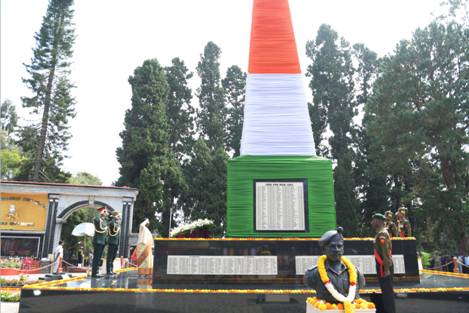
  • Madras Regiment War Memorial — The memorial of the Madras Regiment, the oldest infantry regiment of the Indian Army, raised in 1758 and at Wellington since February 1947. The Cantonment Board's own history places the Defence Services Staff College directly in front of it, which makes this small square the centre of military Wellington rather than the barracks themselves; the ground around it is cantonment land, and what you may photograph is decided at the gate, not by the memorial.
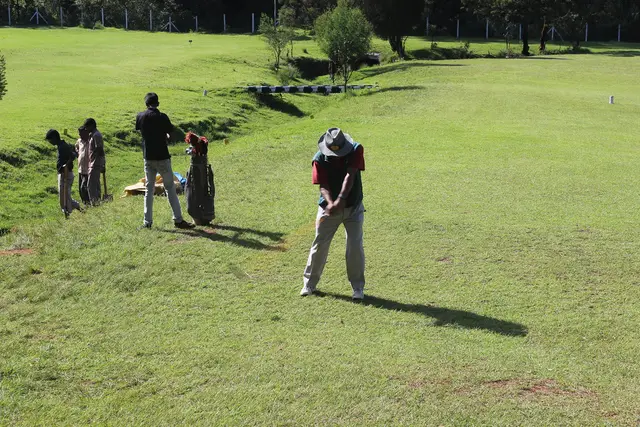
  • Wellington Gymkhana Club — A garrison club that dates itself from the brick cricket pavilion put up for the troops in 1873, though it only took the name Wellington Gymkhana in 1916, and it now runs an eighteen-hole hill golf course at about six thousand feet. Its own history records a race course here before Ooty's longer track was built, nine-hole golf, polo and rugby by the 1930s, its first Indian member in 1943, and the fact that the whole club stands on military land and pays a yearly rent to the Defence Department.
  • FM Manekshaw Bridge — The bridge that separates the barracks from the bazaar, first thrown across the Mynala stream in 1878 as the Waterloo Bridge and known for a century as the Black Bridge because it was built of Burmese teak and painted black. It was rebuilt in March 2009 — forty-three and a half metres of it — and renamed for Field Marshal Sam Manekshaw, who died at the Military Hospital here on 27 June 2008.
  • Wellington Cantonment — The barracks quarter on the far side of the stream from the market, begun in 1852 and finished in 1860, called Wellington Barracks for a century and renamed Srinagesh Barracks after General S. M. Srinagesh, the first Indian Colonel of the Madras Regiment. The Cantonment Board still governs the whole 1,647-acre town from here under the Ministry of Defence, which is why Wellington has a board and seven wards rather than a municipality and a mayor.
  • Aravankadu railway station — The next halt up the mountain line from Wellington and the reason there is a factory town in this valley at all: Aruvankadu was chosen in 1898 for the Cordite Factory because making cordite needs a cool climate, nitroglycerine freezing at forty degrees Fahrenheit. The station serves a township that the Nilgiris district administration counts alongside Wellington Cantonment as one of its two local bodies outside the panchayat system, and the factory itself is a defence installation you look at from the road and no closer.
Getting there

How to visit

  • Nearest airport: Coimbatore International (CJB), 86.0 km by routed road from the station and about an hour and three quarters — marginally the shortest airport run of anywhere on this shelf of the plateau, two and a half kilometres shorter than from the Coonoor bus stand and about seventeen shorter than from Ooty, because Wellington sits low and near the edge. That is a consequence of the geography rather than a reason to come here. There is no airport in the Nilgiris and no airstrip, and the last forty kilometres are the Kallar ghat whichever hill town you are aiming at.
  • Rail gateway: Wellington has its own station, and it is the town’s front door rather than a sight — code WEL, one platform, opened in 1908 with the extension above Coonoor rather than with the original line of 1899. It stands above the rack section, so everything through it runs on plain track; in practice that means the Coonoor–Udhagamandalam shuttles, which run several times a day, are the useful service, and the single through train from Mettupalayam is the famous one. Up the line: Aravankadu 2.76 km, Ketti 7.81 km, Lovedale 13.86 km, Udhagamandalam 15.95 km. Down it: Coonoor 2.02 km, Kateri 5.76 km, Runneymede 7.82 km, Hill Grove 17.37 km, Kallar 27.89 km. For arriving in the hills rather than sightseeing, the main-line railhead is Coimbatore Junction, 85.2 km, and Mettupalayam, where the mountain line starts, is 46.0 km.
  • There is no bus stand in Wellington — the nearest thing mapped as one anywhere near is Coonoor’s, 1.97 km away — so the railway platform is the point every distance on this page is measured from, and buses are flagged at two roadside stops on the Mettupalayam–Ooty highway about 370 metres from it. By routed road from the station: the Cantonment General Hospital 0.89 km, the Manekshaw Bridge 1.47 km, the war memorial and the Staff College frontage 1.72 km, the Srinagesh Barracks quarter 1.90 km, Coonoor bus stand 1.97 km, Coonoor railway station 2.02 km, the Military Hospital 2.28 km, the Gymkhana Club 2.47 km, Aravankadu station 2.76 km, Bedford 3.78 km, the Cordite Factory 3.86 km, Sim’s Park 4.04 km, Highfield tea factory 4.93 km, Kattery Park 7.71 km, Ketti station 7.81 km, Ralliah Dam 8.78 km, Lamb’s Rock 9.07 km, Brooklane tea factory 9.78 km, Katary Falls 12.19 km, Dolphin’s Nose 13.94 km, Ooty 16.55 km, Kotagiri 18.78 km, Doddabetta 20.53 km, Mettupalayam 45.99 km, Gudalur 65.54 km, Coimbatore Junction 85.2 km, the airport 86.0 km, Mysuru 171.8 km, Bengaluru 310.7 km, Chennai 545.4 km. ⚠ Four of the short hops are ones our two routing engines disagree about by more than a fifth — Aravankadu station, Old Aruvankadu, the golf course and Highfield — and the figures above are the ones that match the map.

Distance by road

  • Coonoor1.97 km
  • Ooty16.55 km
  • Kotagiri18.78 km
  • Mettupalayam45.99 km
  • Gudalur65.54 km
  • Coimbatore Junction85.2 km
  • Coimbatore International Airport86 km
  • Mysuru171.8 km
  • Bengaluru310.7 km
  • Chennai545.4 km

Road distances measured on real routed roads to Wellington itself, not to the district headquarters, on 22 August 2026. Driving time is deliberately not published: free-flow routing badly understates these roads, so allow more than the distance suggests.

Timing

Best time to visit Wellington

The same season as the rest of the Nilgiris, with one wrinkle of its own. March to June is the hill season and it is when the valley is busiest and the rooms in Coonoor cost the most. September to November is the quieter and, for a first visit, the better answer — the south-west monsoon has finished with these slopes, the air is clear and the walk through the cantonment is at its best. December to February is cold and bright: Wellington’s published summer range is about 27°C by day and 14°C at night, and in winter about 18°C by day and 11°C at night, with frost in the valley bottoms on the coldest mornings. There is no separate long-run rainfall record for Wellington itself; the nearest published figures are Coonoor’s, and its own page prints two of them — Southern Railway’s 1,400 mm a year and the town’s 1991–2020 climate record of 1,667.7 mm — which is the range this valley sits in. The wrinkle is the one that decides a day here rather than a month: this is a working military station, and ceremonial dates, courses assembling and security alerts close gates that are otherwise open. If the museum or a particular building is the reason you are coming, ring first, whatever the season.

Weather in WellingtonSeasonal guide

Live forecast loads in your browser.

Today at Wellington
Sunrise6:13 am
Sunset6:34 pm
Golden hour best light5:34 pm–6:34 pm
Blue hour after sunset6:34 pm–6:59 pm
Sun sets toward compass bearingW · 279°
Moon tonight🌖 Waning gibbous · 83%
South-west monsoon. June to September is the south-west monsoon in Tamil Nadu. Expect heavy showers, mostly in bursts rather than all day — carry rain cover, allow extra time for getting around, and note that ferries and open-air sites are the first things affected.

Sun and moon are calculated for this location and shown in IST. Photography windows are the hour around sunrise and sunset; the sunset bearing is degrees clockwise from true north. Moon phase is accurate to about half a day.

The story

The story of Wellington

An army cantonment three kilometres above Coonoor that is not a municipality, has no bus stand, and is governed by a board under the Ministry of Defence — twenty thousand people on sixteen hundred acres, a third of them soldiers.

Wellington is a town you can walk into and not through. It sits at about 1,850 metres on the Coonoor–Ooty road, sixteen hundred and forty-seven acres of it, and roughly a third of the people inside that boundary are army. It has a railway station on the mountain line, a market, seven wards, a board that collects its rates and a hospital that treats its people, and it has no municipal council, no mayor and no bus stand. The Nilgiris district administration lists it not among the district’s municipalities or town panchayats but on its own, with Aruvankadu Township, as a separate kind of local body altogether.

That is the first thing to understand about the place, and almost everything else follows from it. A cantonment is not a town with a garrison in it; it is a piece of defence estate with a civil population living on it, administered under the Cantonments Act by a board that answers to the Ministry of Defence rather than to the state. Wellington is a Class II cantonment, which is a size classification, and its board runs the schools, the water, the street lighting, the market and the general hospital. Its president is the station commander. Its chief executive officer is a central government appointment. You are, from the moment you cross the bridge, on the army’s ground and under the army’s arrangements.

The census numbers give it away faster than any description. At the 2011 count Wellington held 19,462 people — 12,673 civilians and 6,789 military — in 4,949 houses across seven wards. Its literacy rate was 94.31 per cent against Tamil Nadu’s 80.09 and Coonoor’s 84.79. And there were 791 women for every thousand men, against 996 for the state and 1,058 in Coonoor two kilometres down the road. No hill town has a sex ratio like that; a regimental centre and a staff college do. A quarter of the population is Christian, which is the other mark left by a hundred and seventy years of garrison, and the two churches that Major Morant designed in 1885 and 1888 are still standing.

The shape of the place on the ground is simple and old. The barracks are on one side of a stream and the bazaar is on the other, and between them is a bridge — first built in 1878, of Burmese teak, painted black, and known as the Black Bridge for a century longer than it was ever called the Waterloo. The Cantonment Board’s own history still describes the market by its original name, the native Bazaar. Above the barracks are the Staff College and the war memorial; east of them the golf course; west, along the railway, Aruvankadu and its factory. The whole of it is about a twenty-five minute walk end to end, and a good part of it you may not enter.

Which is the honest problem with Wellington as a place to visit, and the page will not dress it up. The Madras Regimental Centre, the Defence Services Staff College, the Military Hospital and the Cordite Factory are the four things that make this town what it is, and a visitor may go inside none of them without an arrangement. What is open is the railway station, the road through, the church, the market, the bridge, and — if you have a member or an affiliated club behind you — the Gymkhana. That is a morning, not a holiday, and it is best taken as an hour out of a stay in Coonoor rather than as a destination of its own.

Legend & myth

The name is a piece of Victorian flattery attached to a Badaga word, and both halves are still in use. The place was Jakkatalla — Jacketallah in the older spelling — after the Badaga village of that name just to the north. In 1852 Sir Richard Armstrong, then Commander-in-Chief, recommended that it be renamed Wellington in honour of the Duke, who, the Cantonment Board’s history says, "from the first had evinced an interest in the establishment of sanatorium on the Nilgiris". Eight years later Sir Charles Trevelyan held that "this interesting Military Establishment could not be connected with a more appropriate name" and ordered that Jakkatalla Station be called Wellington henceforth. The Iron Duke had been dead for eight years by then and had never been within four thousand miles of the hill named after him.

The bridge has two names for the same reason and neither is the one on the sign. It went up in 1878 as the Waterloo Bridge, which is Wellington-flattery again; everybody called it the Black Bridge, because it was Burmese teak with black paint on it; and since it was rebuilt in March 2009 it has officially been the Manekshaw Bridge, after the Field Marshal who died at the hospital up the hill nine months before. Ask for the Black Bridge and you will be understood. Ask for the Waterloo and you will not.

More about Wellington

History

The cantonment began as a hospital, not as a garrison. British troops in the Madras Presidency died of the plains, and from the 1820s the Nilgiris were being argued about as somewhere to send them to recover. Repeated attempts to establish a cantonment at Ootacamund itself came to nothing. In 1843 the Marquis of Tweeddale, Governor of Madras, settled instead on the ground at Jakkatalla, and what was built there first was a Convalescent Home for British soldiers. That decision is why there is a town here at all, and it is the same reasoning — cool, even, temperate air inside the tropics — that would later put a vaccine institute above Coonoor and a cordite factory at Aruvankadu.

The barracks came next and took eight years. Construction began in 1852, the year of the renaming, and finished in 1860, the year the name became official. They were Wellington Barracks for the best part of a century and are now Srinagesh Barracks, after General S. M. Srinagesh, the first Indian Colonel of the Madras Regiment. The Madras Regimental Centre has occupied them since February 1947 — one of the very first things the Indian Army did with the estate it inherited was to put its oldest regiment into its coolest barracks. The regiment itself was raised in 1758 by Major Stringer Lawrence out of the Madras Levies, which makes it the senior infantry regiment of the Indian Army; its soldiers are the Thambis, and its motto, adopted on 8 June 1955, is Swadharme Nidhanam Shreyaha — it is a glory to die doing one’s duty.

Partition gave Wellington the institution it is now best known for. The Army Staff College had been set up at Deolali in 1905 and moved to Quetta by 1907; when the subcontinent was divided, the Indian element of the Quetta staff came south under the senior-most Indian instructor, Colonel S. D. Verma, and Wellington was the site chosen. The first staff course began in April 1948 and by 1950 it had become a fully tri-service college, teaching army, navy and air force officers together with civil servants and officers of friendly foreign countries — one of very few institutions anywhere that does all three under one roof. It has not stopped: the 82nd Staff Course assembled on 1 June 2026 with over five hundred officers on it, forty-nine of them from other countries. ⚠ Who was the first commandant depends on which record you read. The accounts of the move make it Verma, promoted brigadier for the purpose. The Wellington Gymkhana Club’s own history names Major General W. D. A. Lentaigne as the first commandant. We print both rather than choose.

The railway reached the barracks half a century after the barracks were finished. The mountain line opened as far as Coonoor on 15 June 1899 and stopped there for nine years; the extension over the top to Udhagamandalam opened on 15 October 1908, and Wellington’s single platform — station code WEL — opened with it. So the toy train, which is the first thing anyone associates with these hills, is the newest thing in this town by a long way: the church is older than the station, the barracks are older than the church, and the convalescent home is older than all three. The station stands above the rack section, so nothing here is hauled by the toothed rail; that ends at Coonoor, two kilometres down.

Two twentieth-century arrivals finished the valley off. Three kilometres west, at Aruvankadu, the Cordite Factory was opened on 19 January 1904 — the first smokeless propellant factory in India. Captain Babington had been sent up in 1898 to find a site, and he chose about 350 acres in this valley for a reason that is pure Nilgiris: cordite needs a temperate climate to make, because nitroglycerine freezes at forty degrees Fahrenheit. To power it, the Kateri hydroelectric scheme was dammed in 1902 and again in 1916. And on 27 June 2008 Field Marshal Sam Manekshaw, the first Indian officer to hold that rank, died of pneumonia at the Military Hospital here, aged ninety-four; he was buried at the Parsi cemetery in Ooty, the bridge was renamed for him nine months later, and the Regimental Centre marks the date every year.

Why visit

To see what a cantonment actually is. Not a barracks with a fence round it, but a town — houses, shops, a market, seven wards, a school, a general hospital, four thousand nine hundred and forty-nine dwellings — administered by a board under the Ministry of Defence instead of by a municipality. There are only a few dozen of these left in India and this is one of the tidiest, and half an hour of walking through it explains the arrangement better than any amount of reading.

For a church that is older than almost everything around it. St. George’s Garrison Church was built in 1885 to the design of Major Morant of the Royal Engineers, the officer who spent the 1870s arguing the mountain railway into existence, and it is by local reckoning the largest church in the Nilgiris — about six hundred seats under a vaulted roof on six Ionic columns, with a lit cross on the spire that can be seen from a long way down the valley. Its Roman Catholic counterpart, St. Joseph’s, followed in 1888 from the same hand.

For the golf, if you can get on. The Wellington Gymkhana Club dates itself from the brick cricket pavilion built for the garrison in 1873 and took its present name only in 1916; it has an eighteen-hole hill course at about six thousand feet that is playable nearly all year, and its own history remembers polo, rugby, mounted sports and a race course that predated Ooty’s. It is a members’ club on military land and it pays the Defence Department rent for the ground it stands on, so this is an arrangement to make in advance through your own club, not a green fee to turn up with.

For the mountain railway’s quietest platform. Everybody rides the line from Mettupalayam or Ooty and everybody photographs it at Coonoor. Wellington is one stop up from Coonoor on plain track, its platform is a two-minute walk from the middle of the cantonment, and it is the only station on the line where the train arrives into a garrison town rather than a tourist one.

And for the plainest reason of all: it is two kilometres from Coonoor. Almost nobody staying in Coonoor comes up here on purpose, and the walk out past the cantonment is one of the better hours in the district — a bridge with three names, the barracks, the war memorial, a church, a golf course and a factory town, all in a valley narrow enough to see the end of.

Before you go

Wellington — at a glance

HoursThe cantonment keeps army hours and the army decides them on the day, which is the single most useful thing to know before coming. The road through, the market and the churchyard are ordinary daytime places. The railway platform is open around its trains. Everything else — the Regimental Centre and its museum, the Staff College, the Military Hospital, the Cordite Factory — is entered by arrangement or not at all, and the gate’s answer can change with the calendar: ceremonial days, courses assembling and any general heightening of security close things without notice and without a website to say so. The Gymkhana Club runs to club hours and to membership rather than to opening times. Assume nothing is guaranteed, ask the evening before, and build the visit round the walk rather than round a door.

Entry: Nothing to enter Wellington, and nothing to enter most of what you can actually see in it — the road through, the railway platform, the market, the bridge and the churchyard are all free. What is not free is not a ticket either, it is permission. Four of the five things that make this town what it is are working defence installations: the Madras Regimental Centre, the Defence Services Staff College, the Military Hospital and, three kilometres west at Aruvankadu, the Cordite Factory. You do not buy your way into any of them. There is a regimental museum inside the Centre and we are deliberately printing no fee and no timing for it, because there is no official one: the Indian Army’s own site lists a Museum and Motivation Hall at Wellington but publishes no English page for it, and the travel sites quote fifty rupees, twenty for children and two different sets of hours that contradict each other. Ring the Cantonment Board on 0423-2230213 or ask at your hotel in Coonoor the day before. The Gymkhana Club publishes a tariff — its cottages are ₹5,000 to ₹6,000 plus five per cent for non-members against ₹3,500 to ₹3,800 for members — but it is a members’ club and the booking goes through a member or an affiliated club, not through a counter. The district-wide single-use plastic rules that Coonoor’s page sets out apply here too; the check posts are below Coonoor, so you will already have passed them.

Getting here

How to reach Wellington

  • ✈︎ By air Coimbatore International (CJB), 86.0 km by routed road from the station and about an hour and three quarters — which makes Wellington, by a couple of kilometres, marginally closer to an aircraft than Coonoor is, and about seventeen kilometres closer than Ooty. That is not a reason to choose it; it is a consequence of sitting on the lower shelf of the plateau nearer the edge. Coimbatore Junction is 85.2 km. There is no airport in the Nilgiris and no airstrip, and the last forty kilometres are the Kallar ghat whichever hill town you are aiming for, so allow half a day from the aircraft door.
  • 🚆︎ By train This is the one that matters here, because Wellington has no bus stand and the platform is the town’s front door. Wellington station — code WEL, one platform — sits in the middle of the cantonment on the Nilgiri Mountain Railway, and it opened in 1908 with the extension over the top to Udhagamandalam, not with the original line to Coonoor in 1899. It stands above the rack: the toothed section that hauls trains up the gorge ends at Coonoor, two kilometres down, so everything through this platform runs on plain track. In practice that means the Coonoor–Udhagamandalam shuttles, which run several times a day, are the useful service here, and the single through train from Mettupalayam is the famous one. Reservations on the mountain line open ninety days ahead and the full run sells out weeks in advance between April and June; the shuttles do not. For arriving in the Nilgiris rather than sightseeing on the way, the railhead is Coimbatore Junction, 85.2 km by road, and Mettupalayam, where the mountain line begins its climb, is 46.0 km. Up the line from here: Aravankadu 2.76 km, Ketti 7.81 km, Lovedale 13.86 km, Udhagamandalam 15.95 km. Down it: Coonoor 2.02 km, Kateri 5.76 km, Runneymede 7.82 km, Hill Grove 17.37 km, Kallar 27.89 km.
  • 🚗︎ By road One road, and the town is strung along it. The Mettupalayam–Ooty highway runs straight through the cantonment, which is why a place with no bus stand is nevertheless easy to reach: everything on the Coonoor–Ooty run passes the door. Routed from the station: the Cantonment General Hospital 0.89 km, the Manekshaw Bridge 1.47 km, the war memorial and the Staff College 1.72 km, the Srinagesh Barracks quarter 1.90 km, Coonoor bus stand 1.97 km, Coonoor railway station 2.02 km, the Military Hospital 2.28 km, the Gymkhana Club 2.47 km, Aravankadu station 2.76 km, Bedford 3.78 km, the Cordite Factory 3.86 km, Sim’s Park 4.04 km, Old Aruvankadu 4.73 km, Highfield tea factory 4.93 km, Kattery Park 7.71 km, Ketti station 7.81 km, Ralliah Dam 8.78 km, Lamb’s Rock 9.07 km, Brooklane tea factory 9.78 km, Katary Falls 12.19 km, Dolphin’s Nose 13.94 km, Udhagamandalam station 15.95 km, Ooty bus stand 16.55 km, Kotagiri 18.78 km, Doddabetta 20.53 km, Mettupalayam 45.99 km, Gudalur 65.54 km, Coimbatore Junction 85.2 km, the airport 86.0 km, Masinagudi 89.29 km, Mysuru 171.8 km, Kozhikode 173.88 km, Bengaluru 310.65 km, Chennai 545.37 km. ⚠ Four of these are worth a warning because our two routing engines disagree about them by more than a fifth: Aravankadu station, where openrouteservice returns 4.77 km against OSRM’s 2.76; Old Aruvankadu, 6.88 against 4.73; the golf course, 3.04 against 2.47; and Highfield, 6.34 against 4.93. The lower figures are the ones that match the map. If your navigation app sends you the long way round to a place three kilometres off, that is why.
  • 🚌︎ By bus There is no bus stand in Wellington. This is the practical fact of the town and it surprises people: the nearest thing mapped as a bus station anywhere near here is Coonoor’s, 1.97 km away. What Wellington has instead is a pair of roadside stops on the highway, one for each direction, about 370 metres from the railway station and five minutes’ walk from it, and every service on the Coonoor–Ooty road goes past them. You flag the bus; you do not book it and there is no counter, no timetable board and no enquiry window. If you need a reserved seat, a through service or a night departure, go down to the Coonoor stand. Autos and share-taxis run up from Coonoor all day and that is how most people actually arrive.
  • ⛴︎ By boat None. There is no boating anywhere in Wellington and no water body in the cantonment large enough for it — the Mynala under the bridge is a stream. The nearest boats are the pedal boats on the little lake inside Sim’s Park at Coonoor, 4.04 km away.
Getting around

Getting around Wellington

On foot, and it takes about half an hour end to end. The cantonment is a narrow valley town on one road, and from the station platform, walking, openrouteservice makes it 98 metres to the Cantonment Ground, about 350 to the post office and the police station, 380 to the highway bus stops, 450 to the mosque and the cantonment school, 895 metres and eleven minutes to the Cantonment General Hospital, 1.7 km and about twenty minutes to the war memorial and the Staff College frontage, 2.1 km and twenty-five minutes to the Manekshaw Bridge, 2.2 km to the Military Hospital, 2.5 km and half an hour to the Gymkhana Club’s golf course, 2.6 km to the Srinagesh Barracks quarter and 2.8 km and about half an hour to Aravankadu station. Coonoor bus stand is 2.0 km and around twenty-five minutes downhill. That is the whole town: there is no local bus, there are no autos standing at the station in any number, and the sensible arrangement is to come up from Coonoor by auto or by train and walk, or to keep the car and its driver for the morning. Remember which side of the fence you are on as you walk — several of these roads are inside cantonment land and end at a gate.

  • 🚕︎ Online taxis Do not plan on an app. We have no evidence from any primary source that app cabs work reliably anywhere in this valley, and Wellington is smaller and quieter than Coonoor, which is itself thin. What exists is the offline trade two kilometres down the hill: taxi and auto stands at the Coonoor bus stand and at Bedford, hotels arranging cars by the half day, and share-jeeps out to the estate villages. Fares are agreed before you get in, there are no meters, and there is no notified tariff for this district that we can source, so we print no figures. Getting up here is five minutes and a short conversation; getting back after dark is easier arranged before you come up than found afterwards.
Do

Things to do in Wellington

  • Walk the cantonment from the railway station, which is the only way to understand what a cantonment is. Sixteen hundred and forty-seven acres, seven wards, four thousand nine hundred and forty-nine houses, a market, a school and a general hospital, all administered by a board under the Ministry of Defence instead of by a municipality — and the whole of it walkable in half an hour, station to golf course.
  • Stand on the Manekshaw Bridge, 1.47 km from the station by road. It was built in 1878 as the Waterloo Bridge, in Burmese teak painted black, and everyone called it the Black Bridge; it was rebuilt in March 2009, forty-three and a half metres long, and renamed for Field Marshal Sam Manekshaw, who had died at the Military Hospital up the hill on 27 June 2008. It is still the line between the barracks on one side and the bazaar on the other.
  • See St. George’s Garrison Church, built in 1885 to Major Morant’s design — about six hundred seats under a vaulted roof on six Ionic columns, a white marble altar, and a lit cross on what local accounts call the loftiest spire in the Nilgiris. Its Roman Catholic counterpart, St. Joseph’s, went up three years later from the same hand, and the church passed to the Church of South India in 1947.
  • Look at the Madras Regiment’s war memorial, 1.72 km out, with the Defence Services Staff College standing in front of it. The regiment was raised in 1758 and is the oldest infantry regiment of the Indian Army; the college came here from Quetta at partition and ran its first course in April 1948. Both are working establishments — this is a place to stand and read, not to wander into.
  • Take the train one stop west to Aravankadu, 2.76 km, and look at a factory town built in 1904. The Cordite Factory was put in this valley because making cordite needs cool air — nitroglycerine freezes at forty degrees Fahrenheit — and the Kateri dams of 1902 and 1916 were built to power it. The factory itself is a defence installation and closed; the township, the station and the hillside above it are not.
  • Walk the edge of the Wellington Gymkhana Club’s golf course, 2.47 km from the station — eighteen holes at about six thousand feet, on ground the club rents from the Defence Department, laid out where a garrison race course ran before Ooty had a longer one. Playing it means a member or an affiliated club; looking at it does not. ⚠ Gaur come onto this course and onto the estate roads around it.
  • Ride the shuttle rather than the through train. Wellington is above the rack on plain track and one stop up from Coonoor, and the Coonoor–Udhagamandalam shuttles run several times a day against the through train’s once — the same line and the same scenery, and the only seats on the Nilgiri Mountain Railway that are not fought over ninety days in advance.
  • Go down to Coonoor for everything else, and do not feel short-changed. Sim’s Park is 4.04 km, the Pasteur Institute knoll about the same, Lamb’s Rock 9.07 km and Dolphin’s Nose 13.94 km, Highfield tea factory 4.93 km and Brooklane 9.78 km. All of those are Coonoor’s, they are on Coonoor’s page with their own numbers, and they are twenty minutes away.
Plan

Good to know

  • Carry photo identification and expect to be asked for it. This is defence estate; the road is public and a good deal of what is either side of it is not, and an identity card settles most conversations at a gate in ten seconds.
  • Do not photograph gates, sentries, installations or the Cordite Factory. The signs say no photography and the Official Secrets Act, 1923 counts a military establishment as a prohibited place and a photograph as a sketch. The Act is narrower than the signs — it turns on intent — but the sentry is not the person to explain that to.
  • Ring before you count on the regimental museum. There is no official published timing or fee for it anywhere, the travel sites disagree with each other, and it sits inside a working regimental centre where the answer can change on the day. The Cantonment Board answers on 0423-2230213.
  • Come up on the shuttle train and walk back down. Wellington station to Coonoor bus stand is about 2 km and twenty-five minutes downhill on foot, which is a much better arrangement than the reverse, and the train up takes the climb out of the morning.
  • Treat Wellington as an hour of a Coonoor stay, not as a base. There is almost no accommodation in the cantonment, no restaurant row and no evening transport; everything you need is two kilometres down the hill and the walk between them is one of the better ones in the district.
  • Check your navigation app against the numbers on this page for the short hops. Two routing engines disagree by more than a fifth on Aravankadu station, Old Aruvankadu, the golf course and Highfield, and the longer answers send you round the valley for nothing.
  • Sunday morning is the one time the church is certain to be doing what it was built for, and it is the building in this town that a visitor is most straightforwardly welcome inside.
Facilities

On site

  • Wellington railway station, in the middle of the cantonment — one platform on the Nilgiri Mountain Railway and the town’s only arrival point; the Coonoor–Ooty shuttles are the useful service
  • Roadside bus stops on the Mettupalayam–Ooty highway, about 370 metres from the station, one in each direction — flag the bus; there is no bus stand, no counter and no timetable board anywhere in Wellington
  • Cantonment General Hospital, 0.89 km, run by the Cantonment Board itself, with a further hospital and a blood bank on the military side at 2.28 km — the military hospital is not a walk-in facility for visitors
  • The Cantonment Market, the old native Bazaar, across the Manekshaw Bridge from the barracks — the town’s shops, and the reason the bridge exists
  • Wellington post office and police station, both about 350 metres on foot from the station platform; Cantonment Board office on 0423-2230213, postal index 643231
  • Wellington Gymkhana Club, 2.47 km — eighteen-hole golf, tennis, billiards and fourteen cottages, but a members’ club: access is through a member or an affiliated club, and out-station membership applications have been closed since 3 March 2026
  • No bank of visitor services: there is no tourist office, no taxi rank of any size and no hotel row in the cantonment. Coonoor, 1.97 km, has all three
Stay safe

Safety

  • The single real rule here is not a hazard, it is the law. Wellington is a cantonment and Aruvankadu holds an ordnance factory; both are prohibited places within the meaning of the Official Secrets Act, 1923, which defines a sketch to include a photograph and provides penalties of up to fourteen years where an offence relates to a work of defence. In practice: carry identification, obey the signs and the sentries, do not photograph anything military, and do not walk through an open gate because it is open.
  • The highway is the accident risk, not the hills. The Mettupalayam–Ooty road runs straight through the cantonment with buses, lorries and tourist traffic on it and very little pavement, and the walk between Wellington and Coonoor is on it. Walk facing the traffic, use the roadside where there is one, and do not do the walk after dark.
  • Gaur come onto the golf course, the estate roads and the town’s edges — the same warning Coonoor’s page carries, and this is where the animals actually are. An Indian bison that feels crowded is dangerous. Do not approach one for a photograph, do not get between an animal and its calf, and give it the whole road.
  • Cloud is the weather here rather than bad weather, and the valley fills fast. A road that was clear at ten can be down to twenty metres of visibility by eleven, which matters more on this highway than on an estate track. If you are driving, put the lights on and slow down rather than waiting it out on a bend.
  • Leeches are in the sholas above the cantonment during and after the monsoon, including the wet ground behind the Staff College. Socks and closed shoes if you leave the tarmac, and check your ankles afterwards.
  • There is no visitor infrastructure to fall back on after dark — no taxi rank, no hotel desk, no bus counter. Arrange the way back to Coonoor before you come up, or be content to walk it in daylight.
Getting around Wellington

We have not assessed physical access at this place yet. Across India, step-free routes, handrails and accessible toilets are the exception rather than the rule, and pavements are often interrupted — if step-free access matters to you, contact the site or a local operator before committing to the trip.

If you need help at Wellington
112All emergencies (police · fire · medical)The single number to call in any emergency (ERSS).

Emergency numbers are verified against official government and state tourism sources. 112 works anywhere in India.

Nearby bases

Where to go from Wellington

Ooty Lake, OotyFeatured: Ooty Lake
Town / base

Ooty

The Nilgiris capital and queen of hill stations, base for the botanical gardens, Ooty Lake, Doddabetta and the toy train.

Ooty LakeGovernment Botanical Garden, OotyDoddabetta PeakGovernment Rose Garden, Ooty
Open Ooty guide →
Coonoor, CoonoorTea-country town
Town / base

Coonoor

Quieter second hill station below Ooty, ringed by tea estates and viewpoints like Dolphin's Nose and Lamb's Rock.

Nilgiri Mountain RailwayCoonoor railway stationSim's ParkPasteur Institute of India, Coonoor
Open Coonoor guide →
Kotagiri, KotagiriEastern hill town
Town / base

Kotagiri

The oldest of the three Nilgiri hill stations and the middle one for height, on the eastern rim of the plateau — the first place in these hills the British came up to, in 1819, and the gateway to Kodanad, Catherine Falls and a Ramsar-listed shola on the town's own edge.

Kodanad View PointCatherine FallsRangaswamy Pillar and PeakLongwood Shola
Open Kotagiri guide →
Masinagudi, MasinagudiWildlife village
Town / base

Masinagudi

The village on the Sigur plateau below the hill stations, at the edge of Mudumalai — the base for the tiger reserve, the Theppakadu elephant camp and the elephant country of the Moyar valley, and the foot of the Kalhatti ghat up to Ooty.

Theppakadu Elephant CampMudumalai National ParkMaravakandy DamMoyar Falls
Open Masinagudi guide →
Needle Rock View Point, GudalurFeatured: Needle Rock View Point
Town / base

Gudalur

The municipality at the western door of the Nilgiris, where the plateau breaks and the road drops into Kerala — a Tamil Nadu town that speaks mostly Malayalam, sitting between the Mudumalai forest, the old Wynaad gold country around Devala and the cinchona slopes of Naduvattam.

Needle Rock View PointFrog Hill View PointNadugani GhatNaduvattam
Open Gudalur guide →
Stone House, Ooty, KettiFeatured: Stone House, Ooty
Town / base

Ketti

The village in the Ketti valley on the road between Ooty and Coonoor, looked down on from the Ketti Valley view point and passed by the mountain railway.

Wax World Museum, OotyStone House, OotyDeer Park, OotyElk Hill Murugan Temple, Ooty
Open Ketti guide →
Mukurthi National Park, KundahFeatured: Mukurthi National Park
Town / base

Kundah

The high, empty western end of the plateau, a country of hydro-electric reservoirs — Upper Bhavani, Parsons Valley, Porthimund — and the Sispara pass over into Kerala, most of it needing Forest Department permission to enter.

Mukurthi National ParkSispara PassBangitappalUpper Bhavani Reservoir
Open Kundah guide →
Stay · eat · do · rent · see · shop

Places in Wellington

Every verified place in Wellington — filter by what you’re after.

W
Wellington Gymkhana Club
Place to stay
Top pick
Members' club with cottages and an 18-hole golf course
Wellington Gymkhana Club

A garrison club at Barracks Post that dates itself from an 1873 cricket pavilion and runs an eighteen-hole hill golf course at about six thousand feet. It has fourteen named cottages and publishes a non-member tariff, but it is a members' club: a stay or a round is arranged through a member or an affiliated club.

Commission-freeView details
W
Waterloo Bungalow, Wellington
Place to stay
Top pick
Bed and breakfast
Waterloo Bungalow, Wellington

A bed and breakfast at IV/155 Mountain Dew Colony in Ward V of the Wellington cantonment, registered with the Ministry of Tourism. It takes its name from the bridge below it, which was the Waterloo Bridge before it was renamed for Field Marshal Manekshaw.

Commission-freeView details

Book with the place itself. India’s cyber-crime coordination centre warned in April 2025 that convincing copies of hotel and pilgrimage booking sites are being pushed through sponsored search and social ads, taking payment for rooms the property never hears about. Every listing here links to the business’s own contact details and its own Google or Bing profile — we take no commission and sit in nobody’s payment path. If a booking page reached you through an ad, check the address bar against the property’s own site before you pay. Fraud can be reported on cybercrime.gov.in or on 1930.

Ranked

The best of Wellington, ranked

Nearest to the centre of Wellington, on foot

Ordered by a real routed walk from the town centre — a different question, and the one that decides what you can do before lunch. Straight-line distance understates a real walk by about half again, so these are walking-network figures, not lines on a map.

Everything around Wellington, by distance

Every place we hold for Wellington, ordered by a real routed drive from the town centre. Times are free-flow and a real road rarely is, so read them as the floor rather than the estimate — anything that routed over ninety minutes is left out rather than published as a number we do not trust.

  • Wellington Cantonment Hospital0.89 km · 2 min
  • FM Manekshaw Bridge1.47 km · 3 min
  • Madras Regiment War Memorial1.72 km · 4 min
  • Wellington Cantonment1.9 km · 4 min
  • Coonoor railway station2.02 km · 4 min
  • Wellington Gymkhana Club2.47 km · 6 min
  • Aravankadu railway station2.76 km · 6 min
  • Cordite Factory, Aruvankadu3.86 km · 8 min
  • Sim's Park4.04 km · 8 min
  • Highfield Tea Estate and Factory4.93 km · 10 min
  • Ketti railway station7.81 km · 15 min
  • Lamb's Rock9.07 km · 17 min
  • Dolphin's Nose, Coonoor13.94 km · 26 min
  • Doddabetta20.53 km · 34 min
Places to visit

The places themselves, around Wellington

The best tourist places to visit in Wellington — temples, viewpoints, lakes, heritage and nature, each with a full guide, how to reach it and what to see nearby.

Wellington railway station, Wellington
PlaceWellington railway station

The cantonment's own halt on the Nilgiri Mountain Railway, and the point every distance on the Wellington page is measured from, because the town has no bus stand at all. It sits above the rack: the toothed third rail that hauls the train up the gorge ends at Coonoor, so everything through this single platform runs on plain track, and the station opened in 1908 with the extension to Udhagamandalam rather than with the line itself in 1899 — the barracks below it were forty-eight years old before the train arrived.

Open guide →
PlaceWellington Cantonment

The barracks quarter on the far side of the stream from the market, begun in 1852 and finished in 1860, called Wellington Barracks for a century and renamed Srinagesh Barracks after General S. M. Srinagesh, the first Indian Colonel of the Madras Regiment. The Cantonment Board still governs the whole 1,647-acre town from here under the Ministry of Defence, which is why Wellington has a board and seven wards rather than a municipality and a mayor.

Open guide →
PlaceMadras Regiment War Memorial

The memorial of the Madras Regiment, the oldest infantry regiment of the Indian Army, raised in 1758 and at Wellington since February 1947. The Cantonment Board's own history places the Defence Services Staff College directly in front of it, which makes this small square the centre of military Wellington rather than the barracks themselves; the ground around it is cantonment land, and what you may photograph is decided at the gate, not by the memorial.

Open guide →
PlaceSt. George's Garrison Church, Wellington

The Anglican garrison church of the cantonment, and by local reckoning the largest church in the Nilgiris, seating about six hundred under a vaulted roof carried on six Ionic columns, with a white marble altar and a lit cross on the spire. The Wellington Cantonment Board's own history records it as built in 1885 to the design of Major Morant of the Royal Engineers — the same officer who argued the mountain railway into existence — with the Roman Catholic St. Joseph's following in 1888; it passed to the Church of South India in 1947. Travel writing gives the date as 1826 and credits Colonel J. T. Boileau, which would put the church twenty-six years before the barracks it was built to serve. It carries no distance here: it is not mapped under its name in OpenStreetMap, has no Wikidata coordinate and no geotagged photograph, and the pin previously held for it sat exactly on St. Antony's Church, which is a different building in Coonoor.

Open guide →
PlaceWellington Gymkhana Club

A garrison club that dates itself from the brick cricket pavilion put up for the troops in 1873, though it only took the name Wellington Gymkhana in 1916, and it now runs an eighteen-hole hill golf course at about six thousand feet. Its own history records a race course here before Ooty's longer track was built, nine-hole golf, polo and rugby by the 1930s, its first Indian member in 1943, and the fact that the whole club stands on military land and pays a yearly rent to the Defence Department.

Open guide →
PlaceFM Manekshaw Bridge

The bridge that separates the barracks from the bazaar, first thrown across the Mynala stream in 1878 as the Waterloo Bridge and known for a century as the Black Bridge because it was built of Burmese teak and painted black. It was rebuilt in March 2009 — forty-three and a half metres of it — and renamed for Field Marshal Sam Manekshaw, who died at the Military Hospital here on 27 June 2008.

Open guide →
Aravankadu railway station, Wellington
PlaceAravankadu railway station

The next halt up the mountain line from Wellington and the reason there is a factory town in this valley at all: Aruvankadu was chosen in 1898 for the Cordite Factory because making cordite needs a cool climate, nitroglycerine freezing at forty degrees Fahrenheit. The station serves a township that the Nilgiris district administration counts alongside Wellington Cantonment as one of its two local bodies outside the panchayat system, and the factory itself is a defence installation you look at from the road and no closer.

Open guide →
PlaceHidden Valley, Coonoor

A wooded fold in the hills behind the Wellington golf course that trekkers and camping outfits have made a name for, quiet shola and grassland well off the tour-bus circuit. It carries no distance and no map pin on this page for an honest reason: nothing named Hidden Valley exists in OpenStreetMap anywhere in the Nilgiris, there is no Wikidata coordinate and no geotagged photograph of it, every description on the web repeats one another, and the aggregators cannot even agree which town it belongs to — so we will tell you it is there and not pretend to know where.

Open guide →
For hotels, homestays and local businesses

Get listed in Wellington for free

Roampedia is commission-free. Travellers discover your business, book directly and contact you through official details. Basic listings are free, while Gold and Platinum package upgrades can be requested from the owner dashboard after approval.

List your business — free
Ranked guide modules

Top Wellington experiences

6 picks

The places that sit in and around Wellington itself, each with its own guide page.

Wellington railway station, Wellington#1
Wellington · heritage

Wellington railway station

The town’s front door rather than a sight: Wellington has no bus stand at all, and this single platform — code WEL, opened in 1908 with the extension above Coonoor — is how you arrive. It stands above the rack section, so every train through it runs on plain track, and the Coonoor–Udhagamandalam shuttles that stop here are the easiest seats on the whole mountain railway.

WellingtonheritageThe Nilgiris
M
Madras Regiment War Memorial
Place
#2
Wellington · heritage

Madras Regiment War Memorial

The memorial of the oldest infantry regiment in the Indian Army, raised in 1758, 1.72 km from the station — with the Defence Services Staff College standing directly in front of it, which is the Cantonment Board’s own description of where the college is. This is a working regimental centre, so what you may see, and photograph, is decided at the gate.

WellingtonheritageThe Nilgiris
W
Wellington Gymkhana Club
Place
#3
Wellington · heritage

Wellington Gymkhana Club

A garrison club that counts its age from the brick cricket pavilion of 1873 and took the name only in 1916, with eighteen holes of hill golf at about six thousand feet on ground it rents from the Defence Department. Members and their guests, not green fees — and gaur come onto the course. Routed 2.47 km, though one of our two engines insists on 3.04.

WellingtonheritageThe Nilgiris
F
FM Manekshaw Bridge
Place
#4
Wellington · heritage

FM Manekshaw Bridge

The line between the barracks and the bazaar, 1.47 km out. It went up in 1878 as the Waterloo Bridge, was built of Burmese teak and painted black, and was the Black Bridge for a century; it was rebuilt 43.5 metres long in March 2009 and renamed for Field Marshal Sam Manekshaw, who had died at the Military Hospital up the hill nine months earlier.

WellingtonheritageThe Nilgiris
W
Wellington Cantonment
Place
#5
Wellington · heritage

Wellington Cantonment

The barracks quarter 1.9 km from the station, begun in 1852 and finished in 1860, called Wellington Barracks for a century and renamed Srinagesh Barracks after the first Indian Colonel of the Madras Regiment. The Regimental Centre has held them since February 1947, and the Cantonment Board governs all 1,647 acres of the town from here under the Ministry of Defence rather than the state.

WellingtonheritageThe Nilgiris
Aravankadu railway station, Wellington#6
Wellington · heritage

Aravankadu railway station

One stop and 2.76 km up the line, the halt for a factory town built in 1904. The Cordite Factory was put in this valley precisely because making cordite needs cool air — nitroglycerine freezes at forty degrees Fahrenheit — and the Kateri dams of 1902 and 1916 were built to power it. The factory is closed to everyone; the township and the platform are not.

WellingtonheritageThe Nilgiris
Read before you go

Wellington guides, stories & itineraries

We have not published a story about Wellington itself yet. These cover The Nilgiris, the district it sits in, and travel in Tamil Nadu generally.

Nearby in The Nilgiris

We have not published a story about a place in Wellington itself yet. These are the nearest things we have written.

Tamil Nadu-wide guides & itineraries

Route-level itineraries and practical guides for the rest of the state.

See all 11 The Nilgiris guides & stories →

Map

Where things are in Wellington

FAQ

Wellington travel FAQs

Can I actually go into the cantonment, and what may I photograph?

The public road through Wellington is a public road and the station, the church, the market and the bridge are ordinary places you may walk to. The Madras Regimental Centre, the Defence Services Staff College, the Military Hospital and the Cordite Factory at Aruvankadu are not: they are working defence installations, entry is by arrangement and by the gate’s decision on the day, and there are stretches of the estate where you are simply not going. On photography, be careful and be sensible. The Official Secrets Act, 1923 defines a "prohibited place" to include any work of defence or military establishment, and its definition of a sketch expressly includes a photograph; the penalties in Section 3 run to fourteen years where the offence relates to a work of defence. The Act as written is narrower than the signs — Section 3 requires a purpose prejudicial to the safety or interests of the State, which a snapshot of a spire is not — but nobody at a gate is going to litigate that with you. Carry photo identification, do not photograph gates, sentries, installations or the factory, and if a sign or a soldier says no, that is the answer.

Is Wellington a separate town from Coonoor, or part of it?

Separate, and separately governed, which is the more interesting half of the answer. Wellington Cantonment Board is its own local body under the Ministry of Defence with its own seven wards; Coonoor is a municipality under the state. They are 1.97 km apart by routed road — station to bus stand — and the built-up ground very nearly touches. In practice most visitors treat Wellington as a suburb of Coonoor and most residents do not. The postal address is Wellington, The Nilgiris 643231, and the telephone code is Coonoor’s.

How do I get to Wellington without a car? There is no bus stand.

There is not, and that is unusual enough to plan around: the nearest amenity mapped as a bus station anywhere near is Coonoor’s, 1.97 km away. Three ways in. The mountain railway stops at Wellington’s single platform — one through train a day each way plus the Coonoor–Ooty shuttles, and this is the pleasant way. Buses on the Coonoor–Ooty road stop at the roadside in the cantonment; there are marked stops both ways about 370 metres from the station, and you flag the bus rather than book it. Or take an auto or a share-taxi from the Coonoor bus stand, which is five minutes and the way most people actually do it. The walk from Coonoor is about 1.97 km and roughly twenty-five minutes, uphill on a road with traffic.

Can I visit the Madras Regiment museum?

There is one, and we are not going to print a timing or a fee for it. The Indian Army’s own site lists a Museum and Motivation Hall among the Madras Regiment’s institutions at Wellington, along with the Regimental Centre, the War Memorial, the Officers’ Mess and two temples — but the English text of those pages is not published, only a Hindi shell marked "translation in progress", so there is no official statement of when it opens or what it costs. The travel sites quote fifty rupees, twenty for children, morning and afternoon sessions and a Tuesday closure, and they disagree with one another. Since it is inside a working regimental centre, the number that matters is not the ticket price anyway: it is whether the gate lets you in that day. Telephone the Cantonment Board on 0423-2230213 or ask at your hotel in Coonoor before you go, carry photo identification, and expect to leave your bag and your camera at the gate.

How high is Wellington, and how high is the station?

The town is usually given as about 1,850 metres, the same shelf Coonoor sits on. The station’s height is genuinely contested and we print both figures rather than pick one: Wikipedia’s article on the town gives it as 1,758 metres, and Wikipedia’s article on the station gives 1,778 metres, or 5,833 feet. The Gymkhana Club describes its own ground, a little above the station, as "approximately 6,000 feet". Nothing on this page depends on the difference.

What is the Cordite Factory, and can I see it?

It is India’s first smokeless propellant factory, opened at Aruvankadu on 19 January 1904 and formally declared open that November, and it is the reason there is a second township in this valley. Captain Babington was sent to the Nilgiris in 1898 to choose a site precisely because the manufacture needs a cool climate — nitroglycerine freezes at forty degrees Fahrenheit — and he took about 350 acres in the Aruvankadu valley south of the ghat road; the Kateri hydroelectric dams of 1902 and 1916 were built to power it. No, you cannot see it. It is an ordnance factory and a defence installation, it is fenced, and the road past it is as close as anyone gets. What you can do is get off the train at Aravankadu, which is 2.76 km from Wellington station, and look at a company town built round a factory in 1904.

Where does Wellington end and Coonoor begin, for the things on this page?

Wellington owns the cantonment, the army, this platform on the railway, the church, the golf club and the factory town west of it. Coonoor — which has its own page and is 1.97 km away — owns the tea trade and the auction, Sim’s Park, the Pasteur Institute, the two escarpment viewpoints at Lamb’s Rock and Dolphin’s Nose, the Abt rack section of the mountain railway, and the tea factories, Highfield included: Highfield is 4.93 km from this station and 3.71 km from the Coonoor bus stand, and it was moved onto Coonoor’s page in September 2026 for that reason. We do not write the same fact twice on two pages two kilometres apart.

Is there anywhere to stay in Wellington?

Barely, and honestly the answer is to stay in Coonoor. The cantonment is defence estate: most of the housing is military or board property, and the hotel trade of this valley is two kilometres down the hill where the bus stand and the bazaar are. The Gymkhana Club has fourteen cottages and publishes a non-member tariff, but it is a members’ club and a booking goes through a member or an affiliated club rather than through a website. Coonoor has the rooms, the restaurants and the transport, and Wellington is twenty-five minutes’ walk or five minutes in an auto from it.

What are the best places to visit in Wellington?

Top places to visit in Wellington include Wellington railway station, Wellington Cantonment, Madras Regiment War Memorial, St. George's Garrison Church, Wellington, Wellington Gymkhana Club, FM Manekshaw Bridge, and more — each has a full guide with how to reach it and what to see nearby on this page.

What is the best time to visit Wellington?

November to February is the coolest, most comfortable season to visit Wellington and the rest of Tamil Nadu. April to June is very hot, and the October–December north-east monsoon brings the delta its main rains.

Photographs: Rainer Halama (CC BY-SA 4.0), Gauri Wur Sem (CC BY-SA 3.0), Antony Grossy (CC BY 2.0), Prof tpms (CC BY-SA 4.0), Niranjan Ramamurthy (CC BY-SA 4.0), Sayowais (CC BY-SA 3.0), आशीष भटनागर (CC BY-SA 3.0). Wikimedia Commons.

Image credits