What to expect
Highlights
- Parthasarathy Temple, Pamba river setting and Aranmula Kannadi craft tradition.
- Seasonal vallamkali/boat-race and temple-festival context.
- Local services run to homestays, vegetarian food, craft shops, guides and drivers.
Aranmula is Pathanamthitta district's Pamba-river heritage town, known for the Parthasarathy Temple, the Aranmula Kannadi metal mirror tradition and the seasonal snake-boat pageantry. It is a compact but culturally rich stop rather than a generic village pin.
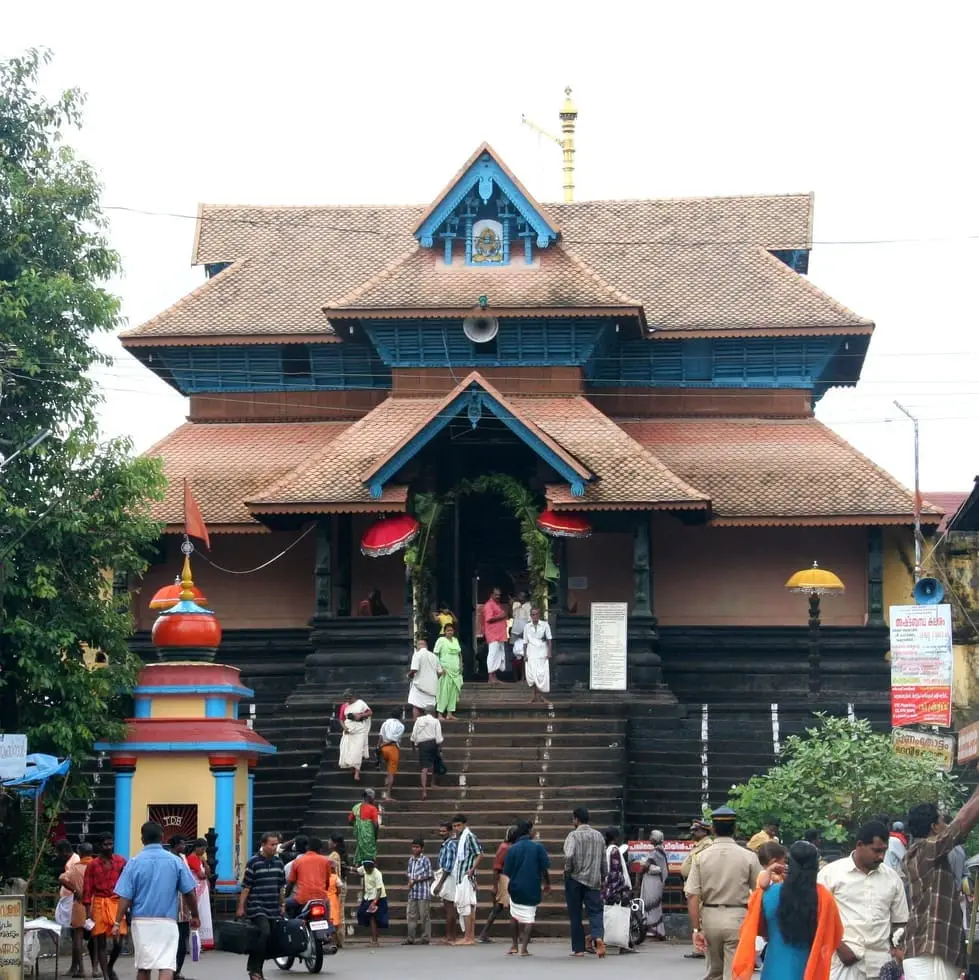
The best guide copy should separate everyday Aranmula from festival Aranmula. Normal visits are calm temple/craft/river stops; festival and boat-race periods need crowd, room, road and ritual-timing buffers.
Aranmula is a heritage temple village strung along the green banks of the Pamba river in Pathanamthitta district, where three of Kerala’s most storied traditions meet in one place — the ancient Parthasarathy Temple that honours Krishna as Arjuna’s charioteer, the thunderous Uthrattathi Vallamkali snake-boat regatta, and the mirror-bright Aranmula Kannadi, a metal looking-glass made nowhere else on earth.
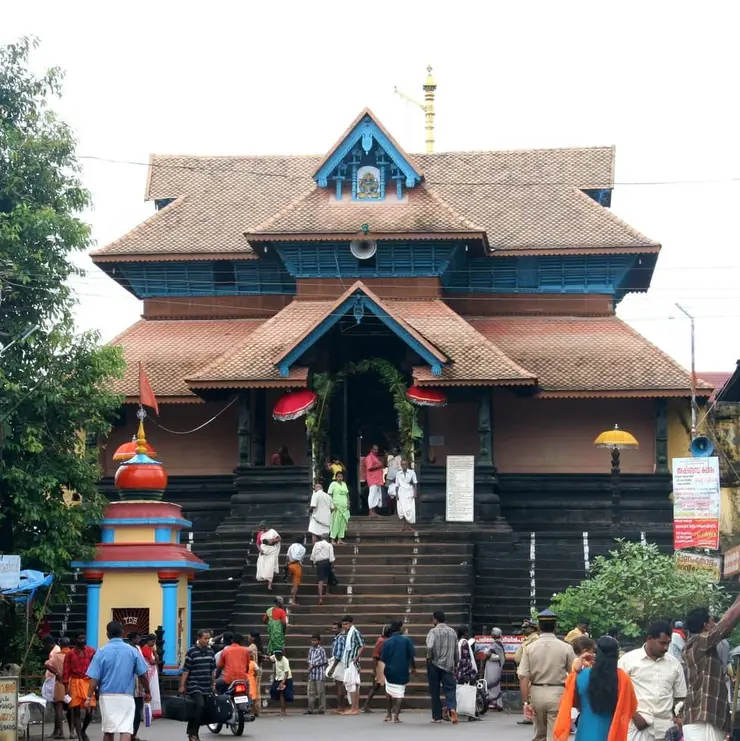
Few Kerala villages carry as much myth, craft and river-song in one bend of water as Aranmula. The Pamba slides past quietly here, and along its southern bank rises the Aranmula Sree Parthasarathy Temple — one of the 108 Divya Desams, the sacred abodes of Vishnu hymned by the Alvar poet-saints. The deity is Krishna, but worshipped in a very particular guise: Parthasarathy, the charioteer of Partha (Arjuna) who steered the prince through the Kurukshetra war and delivered the Bhagavad Gita on the battlefield. To stand before the sanctum is to stand before the friend-and-guide of the Mahabharata rather than the flute-playing cowherd of Vrindavan.
The temple sits within a broader sacred landscape. The Pamba is Kerala’s own holy river, and Aranmula is one of the ancient shrines woven into the Sabarimala pilgrimage geography — the temple is the custodian of the Thiruvabharanam, the sacred ornaments of Lord Ayyappan, which are carried in solemn procession to Sabarimala each Mandala season. That link places Aranmula on the spiritual map of millions of pilgrims, even those who never pause at its gopuram.
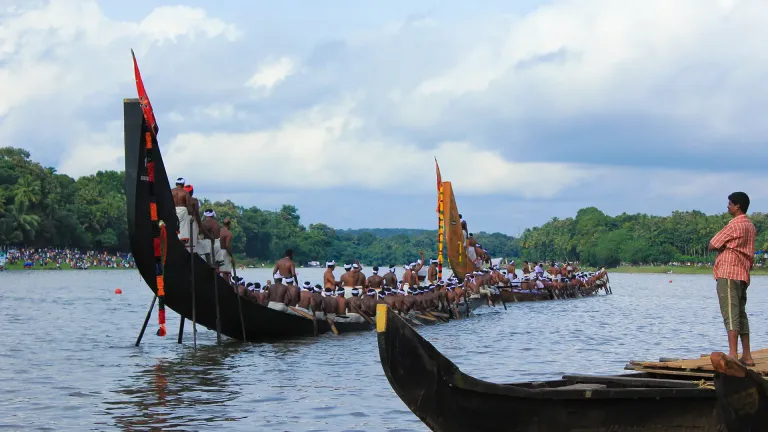
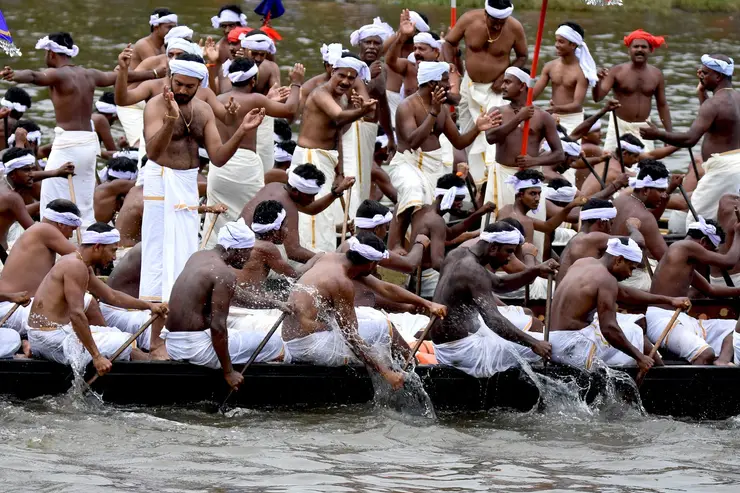
But the village’s fame travels far beyond the temple walls. On the Uthrattathi asterism during the Onam season, the Pamba erupts into the Aranmula Uthrattathi Vallamkali — a snake-boat spectacle unlike the sporting regattas elsewhere in Kerala. Here the long boats are called palliyodams, revered as the personal vessels of Lord Krishna, and the event is fundamentally a temple offering rather than a race for trophies. Crews in white mundus stand and row in rhythm to vanchippattu boat-songs, the water churning silver under a wall of sound.
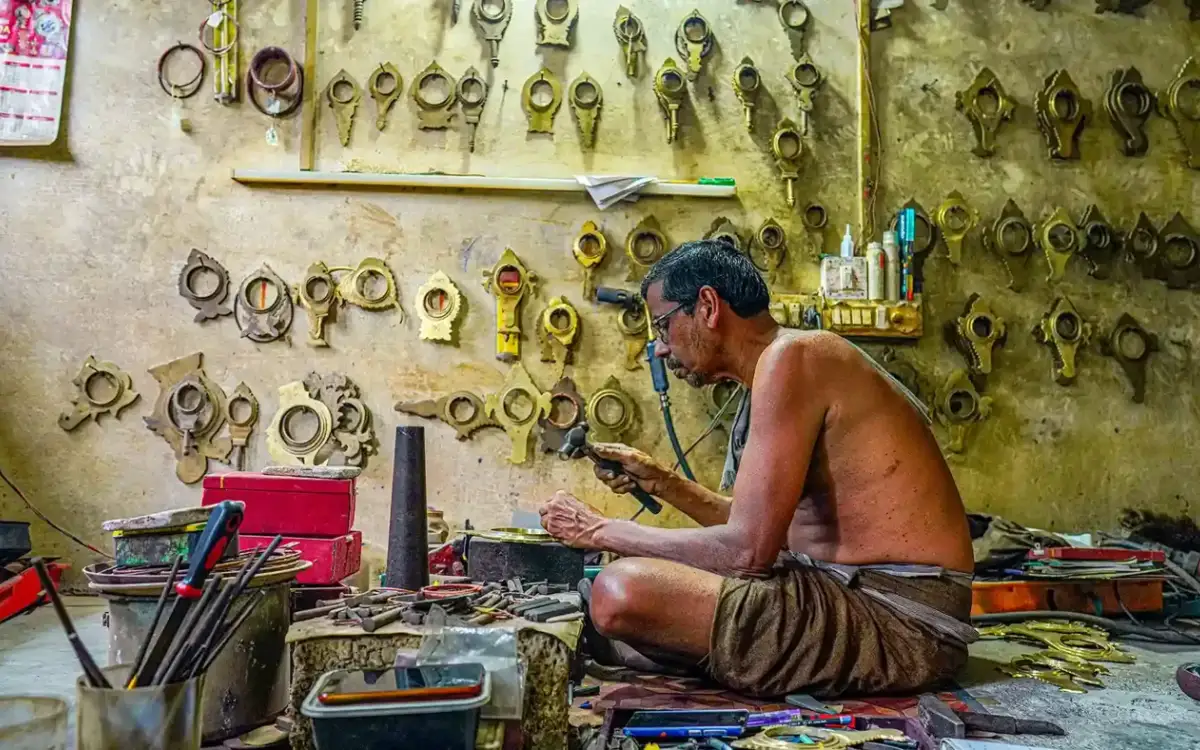
Then there is the Aranmula Kannadi — the handmade metal mirror that has made this village a byword for a craft secret. It is not glass silvered on the back but a polished front-surface alloy, giving a reflection with no double-image and startling clarity. The formula is a closely guarded family inheritance, and the mirrors are still made by hand over long months in a handful of workshops. In 2005 the craft won a Geographical Indication (GI) tag, protecting the Aranmula name.
All of this has earned Aranmula official recognition as a heritage village, a place where traditional architecture, temple ritual, boat culture and metalcraft are actively conserved rather than merely remembered. Cultural institutions such as the Vijnana Kala Vedi centre draw visitors — many from abroad — to learn Kathakali, Mohiniyattam, mural painting, Carnatic music and Kalari under resident masters.
For the traveller, Aranmula rewards a slow, respectful visit: an early darshan at the riverside temple, an unhurried look at the mirror workshops, and — if the calendar is kind — a place on the bank when the palliyodams come thundering down the Pamba. It is one of those rare Kerala destinations where faith, craft and community festival are still bound tightly together.
The village’s name is itself a legend. It is said that the presiding image of the temple was brought to this spot on a raft lashed together from six lengths of bamboo — aaru-mula in Malayalam, six pieces — and from that humble float the name Aranmula is believed to descend.
By tradition the temple is one of five shrines said to have been raised by the five Pandava brothers along the Pamba, with Aranmula credited to Arjuna. One well-loved legend holds that Arjuna built the temple in penance — an act of atonement for having killed Karna, his own half-brother, by unfair means during the great war. In this telling, the warrior who was steered by Krishna returns to install his divine charioteer as an act of contrition.
The most celebrated legend belongs to the boat race. As the story goes, a devout Brahmin once vowed to supply, at his own cost, all the provisions for the great Thiruvona feast (sadya) offered to Lord Parthasarathy — and to bring them upriver each year by boat, the sacred Thiruvona Thoni. Legend recounts that on one journey the provision-boat was set upon by enemies, and the snake boats of the surrounding villages rushed to escort and protect it safely to the temple. From that act of devotion, it is said, grew the tradition of the Uthrattathi Vallamkali — the palliyodams gathering each year not to compete but to accompany the Lord’s own vessel and offer their rowing as worship.
These stories are cherished as living faith and folk memory rather than documented history; they are recounted here as the legends that give Aranmula its meaning, not as verified fact.
The Parthasarathy Temple is reckoned to be of great antiquity, with local tradition placing its origins many centuries — by some popular accounts well over a millennium and a half — in the past. Its inclusion among the 108 Divya Desams venerated in the Tamil devotional hymns of the Alvars places it firmly within the classical Sri Vaishnava sacred canon of South India.
The temple is built in the characteristic Kerala style, with its ritual life and administration today overseen by the Travancore Devaswom Board, the statutory body that manages a large number of temples across southern Kerala. Its position on the Pamba, and its role in safeguarding and escorting the Thiruvabharanam ornaments of Ayyappan to Sabarimala, tie it into one of India’s largest annual pilgrimages.
The boat-race tradition is itself old, growing out of the temple’s Thiruvona Thoni observance and the palliyodams maintained by the surrounding karas (village units). For most of its life the Vallamkali was a purely religious offering. In 1978 the Government of Kerala reframed the event as a competitive sporting spectacle; around 2000 the older religious character was consciously restored, returning the emphasis to devotion over prize-winning.
The Aranmula Kannadi craft is traditionally traced to artisan families said to have been brought to Aranmula generations ago from the Tirunelveli region of Tamil Nadu to serve the temple. Over time these metalworkers perfected the front-surface alloy mirror — a speculum-type blend understood by metallurgists to be based on copper and tin, with the exact recipe held as a family secret. Polishing is done painstakingly by hand, traditionally with a paste of rice bran and plant oils, over a period of months per piece.
Recognition of the craft’s uniqueness and heritage value culminated in the award of a Geographical Indication (GI) tag in 2005, and in Aranmula’s designation and promotion as a heritage village — a status that supports the conservation of its temple architecture, its boat-race culture and its endangered mirror-making tradition.
Worship at a genuine Divya Desam — one of the 108 sacred abodes of Vishnu — where Krishna is honoured in his rare form as Parthasarathy, Arjuna’s charioteer of the Mahabharata.
Witness the Aranmula Uthrattathi Vallamkali, a snake-boat regatta unlike any other: the towering palliyodams are revered as Krishna’s own vessels, and the event is a temple offering rowed to the beat of vanchippattu songs rather than a race for medals.
See the making of the legendary Aranmula Kannadi, the handmade front-surface metal mirror that is a GI-tagged craft found nowhere else, and understand why its secret alloy has fascinated metallurgists.
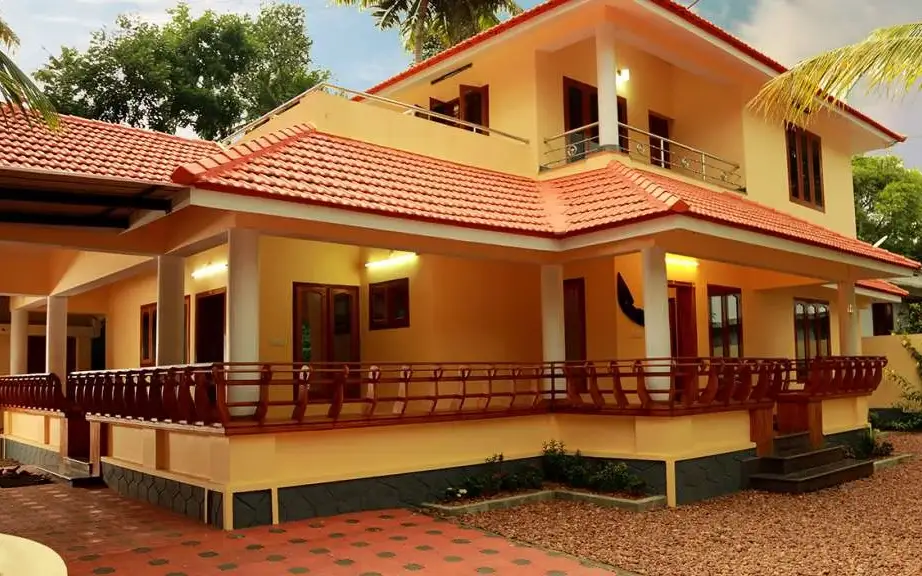
Soak in the atmosphere of a designated heritage village on the banks of the holy Pamba — traditional houses, riverside ghats, and a slow rhythm of temple life far from the tourist crowds.
Engage with living arts at cultural centres such as Vijnana Kala Vedi, where visitors can watch or learn Kathakali, Mohiniyattam, mural painting and Carnatic music from resident masters.
Feel the link to the wider sacred landscape of Kerala — Aranmula guards the Thiruvabharanam ornaments of Ayyappan that travel to Sabarimala, connecting this quiet village to one of the largest pilgrimages on earth.
Road km to Pathanamthitta; ghat roads and traffic vary — allow extra.
Normal heritage visits work from October to March. Boat-race/festival season is culturally important but much more crowded.
Live forecast loads in your browser.
Sun and moon are calculated for this location and shown in IST. Photography windows are the hour around sunrise and sunset; the sunset bearing is degrees clockwise from true north. Moon phase is accurate to about half a day.
Verified hotels, homestays, restaurants, experiences, sights, shops and rentals around Aranmula — commission-free, with direct contact. Filter by what you need.
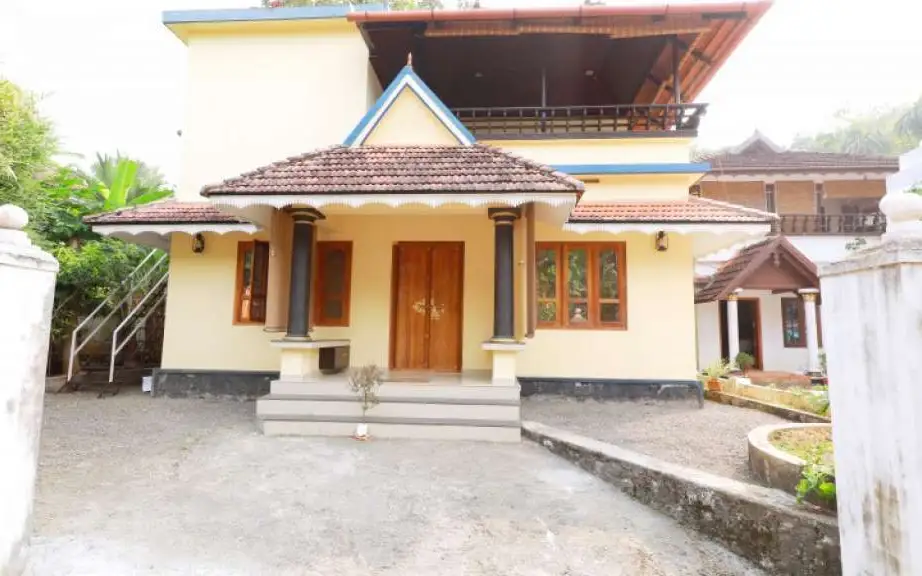
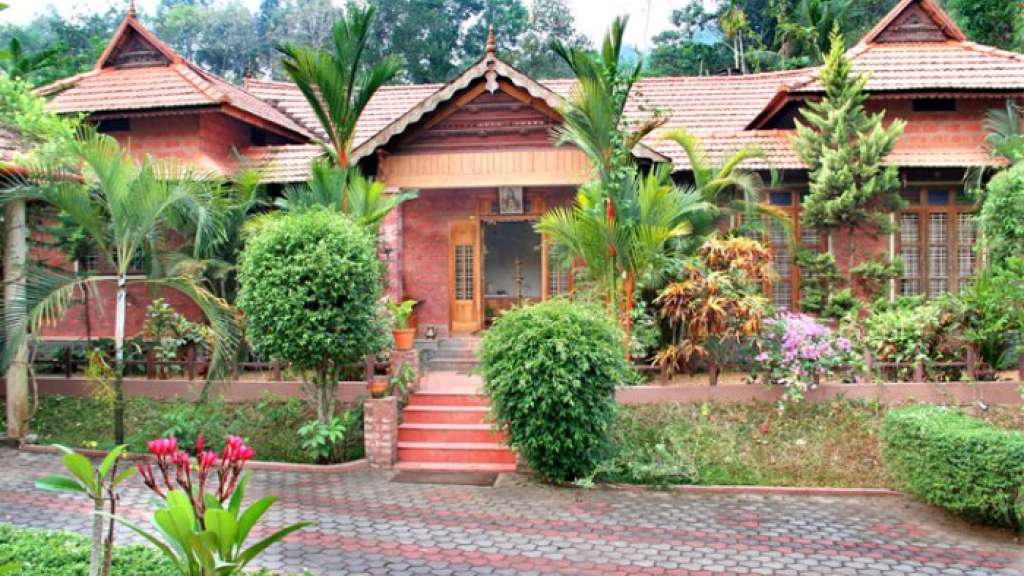
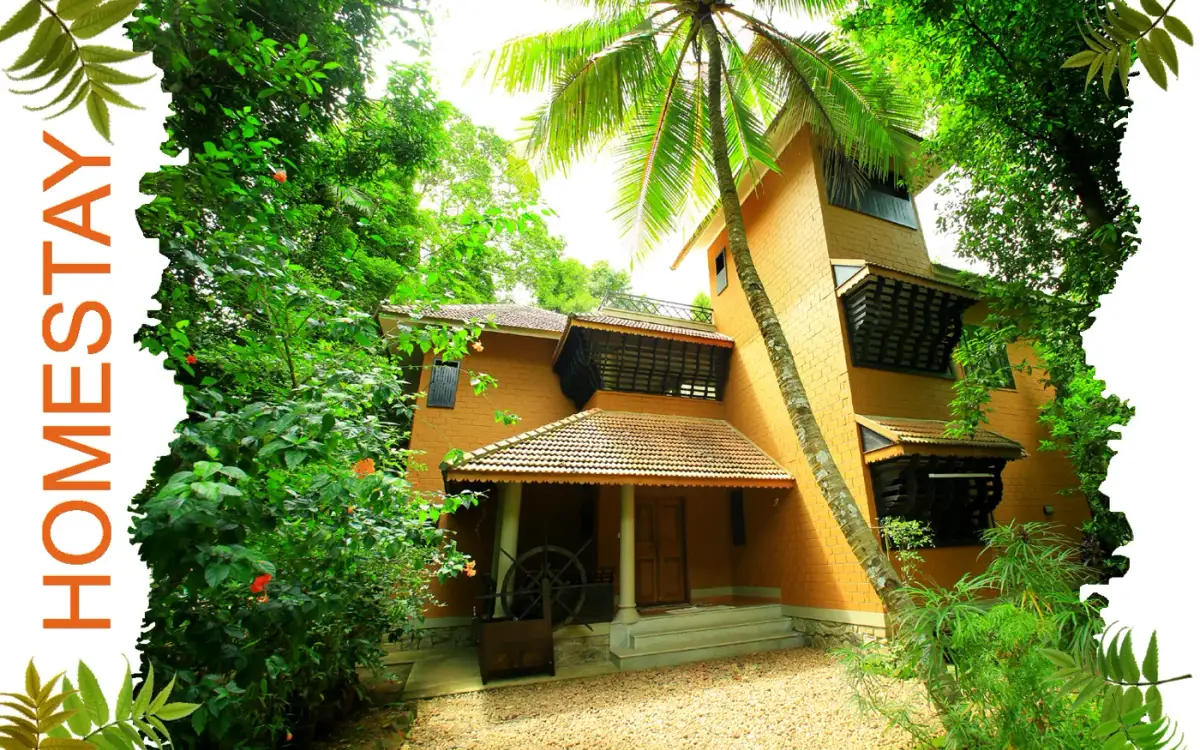
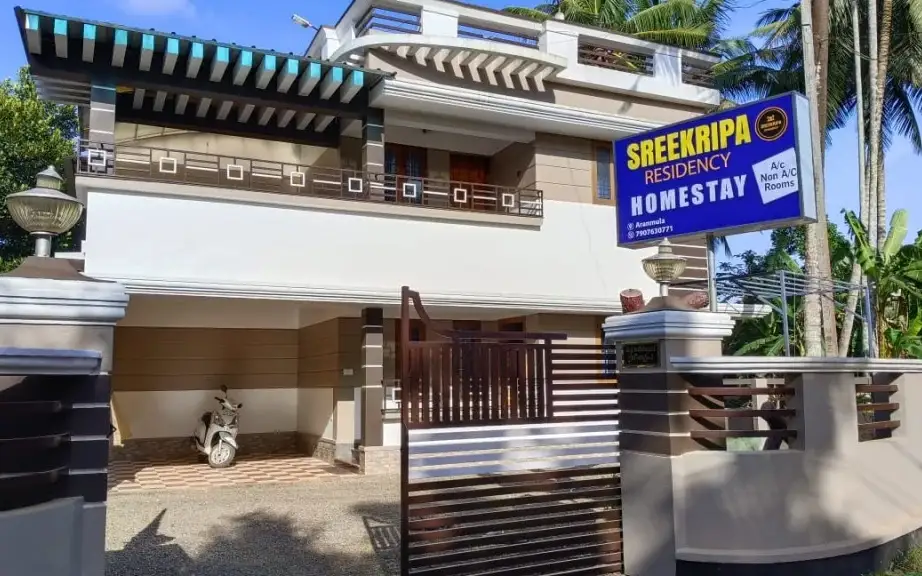
Kerala-accredited family homestay minutes from the Aranmula Parthasarathy temple. It sits by the river Pamba with home-cooked meals and cultural experiences.
Aranmula Palliyoda Seva Sangam Visit is a researched snake-boat heritage support listing added to improve section balance on the aranmula guide while keeping existing useful records intact.
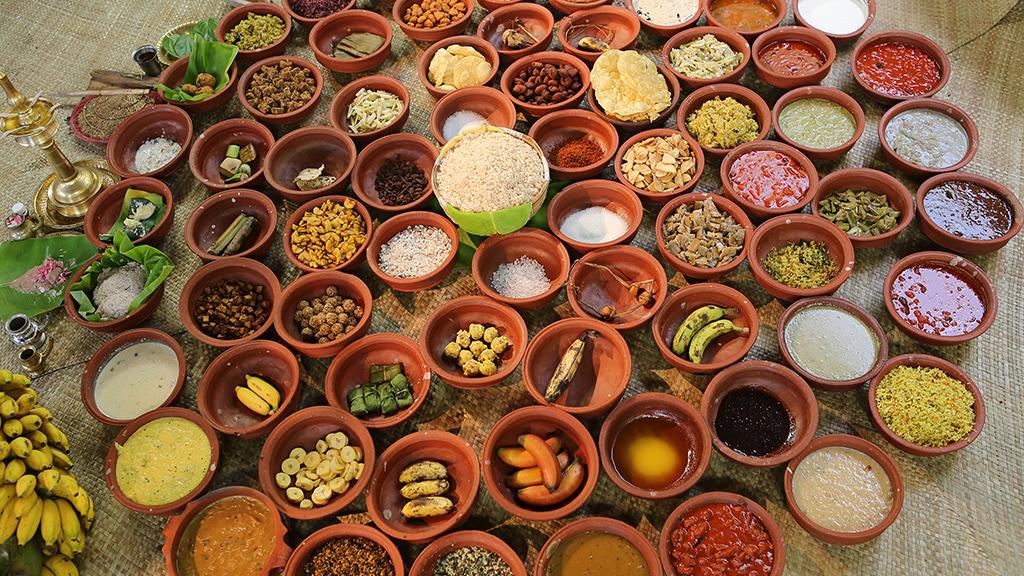
Kerala Tourism-sourced Valla Sadya ritual feast experience at Aranmula.
Kerala Tourism-listed homestay near Aranmula Parthasarathy Temple. Homestay, Temple side, Heritage stay.
Craft workshop in Aranmula. Sree Parthasarathy Handicraft Mirror Centre, Malakkara P.O., Edayaranmula, Aranmula, Pathanamthitta, Kerala 689532 · Aranmula Kannadi, Craft, Edayaranmula.
Aranmula Heritage Village is the official tourism anchor for Parthasarathy Temple context, mirror craft, boat-race traditions and Pamba river heritage. Public destination · Heritage village, Pamba River, Kerala Tourism.
Diamond-category heritage homestay in a fully furnished family home in Aranmula. It stands on the idyllic banks of the river Pamba near the Parthasarathy temple.
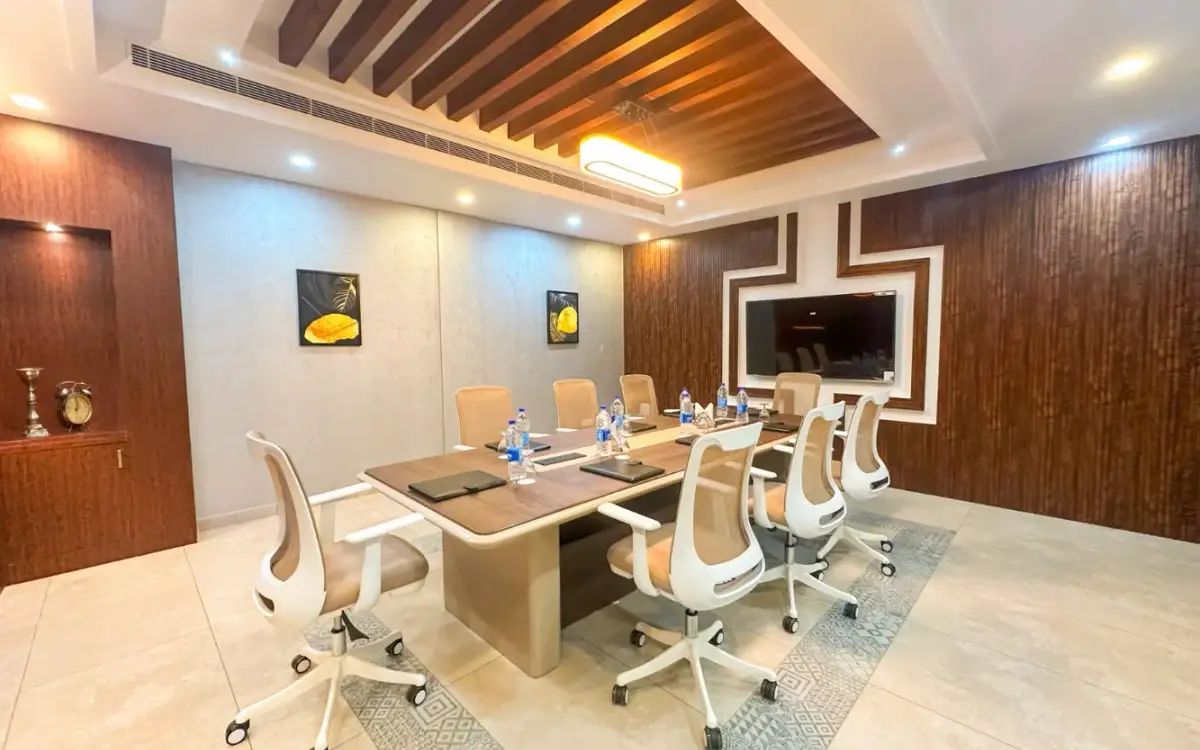
Kerala-style hotel and resort on acres of land at Maramon near Aranmula. It offers suites, an ayurveda centre and conference facilities on the Pamba.
Homestay in Aranmula. Edayaranmula, Homestay, Temple route.
Book with the place itself. India’s cyber-crime coordination centre warned in April 2025 that convincing copies of hotel and pilgrimage booking sites are being pushed through sponsored search and social ads, taking payment for rooms the property never hears about. Every listing here links to the business’s own contact details and its own Google or Bing profile — we take no commission and sit in nobody’s payment path. If a booking page reached you through an ad, check the address bar against the property’s own site before you pay. Fraud can be reported on cybercrime.gov.in or on 1930.
Find food, accommodation and activities across Aranmula. Browse the guides for places to eat, stay and explore along your route.
One more place around Aranmula worth a day of its own.

520 m · 6 min walk
The site of Asia’s largest Christian convention, held for about eight days each February on the vast Pamba river sand-bed beside the Kozhencherry bridge; organised by the Mar Thoma church since 1895, the tent seats well over a hundred thousand.
Roampedia is commission-free — own or know a stay, eatery, guide or shop near Aranmula? List it and it appears here once verified.
Add a nearby businessEntry: No entry fee for the temple. Aranmula Kannadi mirrors are sold at workshops and outlets at prices varying by size.
Dress code: Traditional dress required for temple entry: men typically remove upper garments and wear a mundu/dhoti; women wear a saree or salwar-kameez. Avoid shorts and revealing clothing.
Festivals: Aranmula Uthrattathi Vallamkali snake-boat regatta (Onam season, Aug–Sep); the ten-day temple Utsavam from Atham to Thiruvonam in the month of Makara (Jan–Feb), whose highlight is the Garuda Vahana procession; and Khandavanadahanam in the month of Dhanu (Dec–Jan), when a forest replica is ceremonially burned to symbolise the Khandava fire of the Mahabharata.
Photography: Photography is usually restricted or prohibited inside the temple sanctum — check and follow local rules. The boat race, river ghats and mirror workshops are rewarding to photograph.
Parking: Village parking near the temple on an ordinary day. On Uthrattathi and through Onam it is managed and remote — expect to leave the car well outside and walk in.
If you are travelling by bus or ferry, check the return service with the operator before setting out. Leave time to reach the stop or jetty after your visit.
Ask at the bus stand for the time of the last service back, not the next one. If you miss it, an auto or app cab is the fallback — agree the fare before you get in.
Temple facilities, expanded for festivals.No accessible toilet or wheelchair loan is advertised at the temple or the ghats.
Checked 21 August 2026 against source 1source 2. Conditions change and surfaces vary with weather — if step-free access is essential, confirm with the site before you travel.
Charge cap and free-transaction limits: Reserve Bank of India, in force since 1 May 2025.
These services are listed within about 1.2 km of Aranmula. Walking distances follow mapped routes; access and opening hours can change. Other services may be closer but are not included here.
Emergency numbers are verified against official government and state tourism sources. 112 works anywhere in India.
The site of Asia’s largest Christian convention, held for about eight days each February on the vast Pamba river sand-bed beside the Kozhencherry bridge; organised by the Mar Thoma church since 1895, the tent seats well over a hundred thousand.
520 m · 6 min walk · straight lineA breezy ridge and retreat landscape above the Pamba country near Kozhencherry, suited to a short viewpoint visit rather than being presented as a developed hill station.
5.0 km · ~13 min by auto · straight line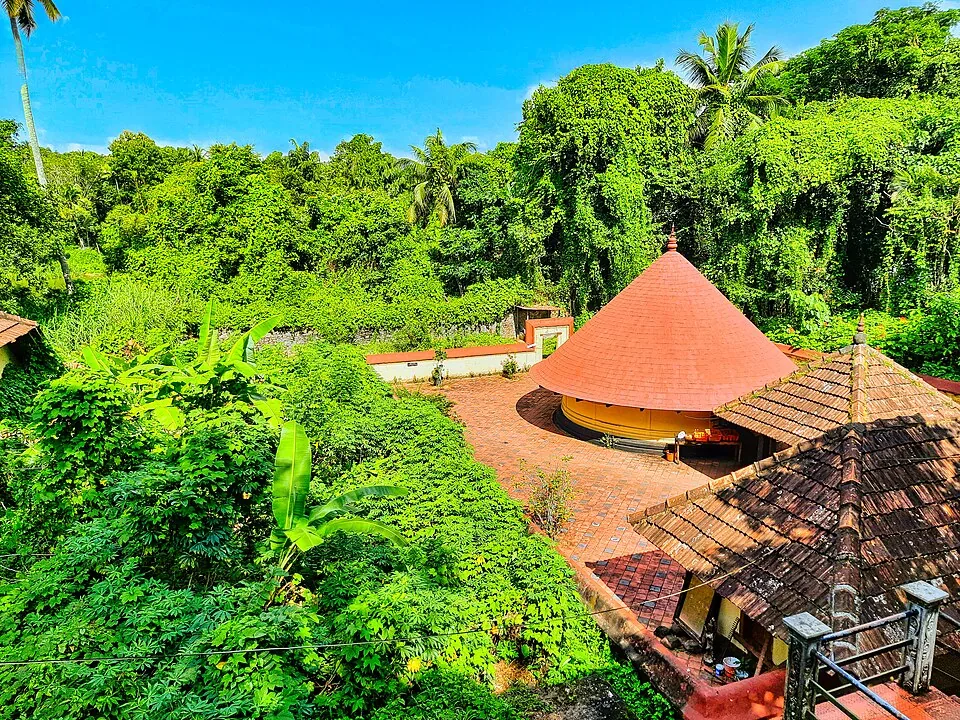
An ancient hilltop Shiva temple near Thiruvalla, with fine woodwork; the nearby Trikkakkudi rock-cut cave temple, carved from a single rock, dates to about the 8th century.
10.6 km · ~18 min by cab · straight line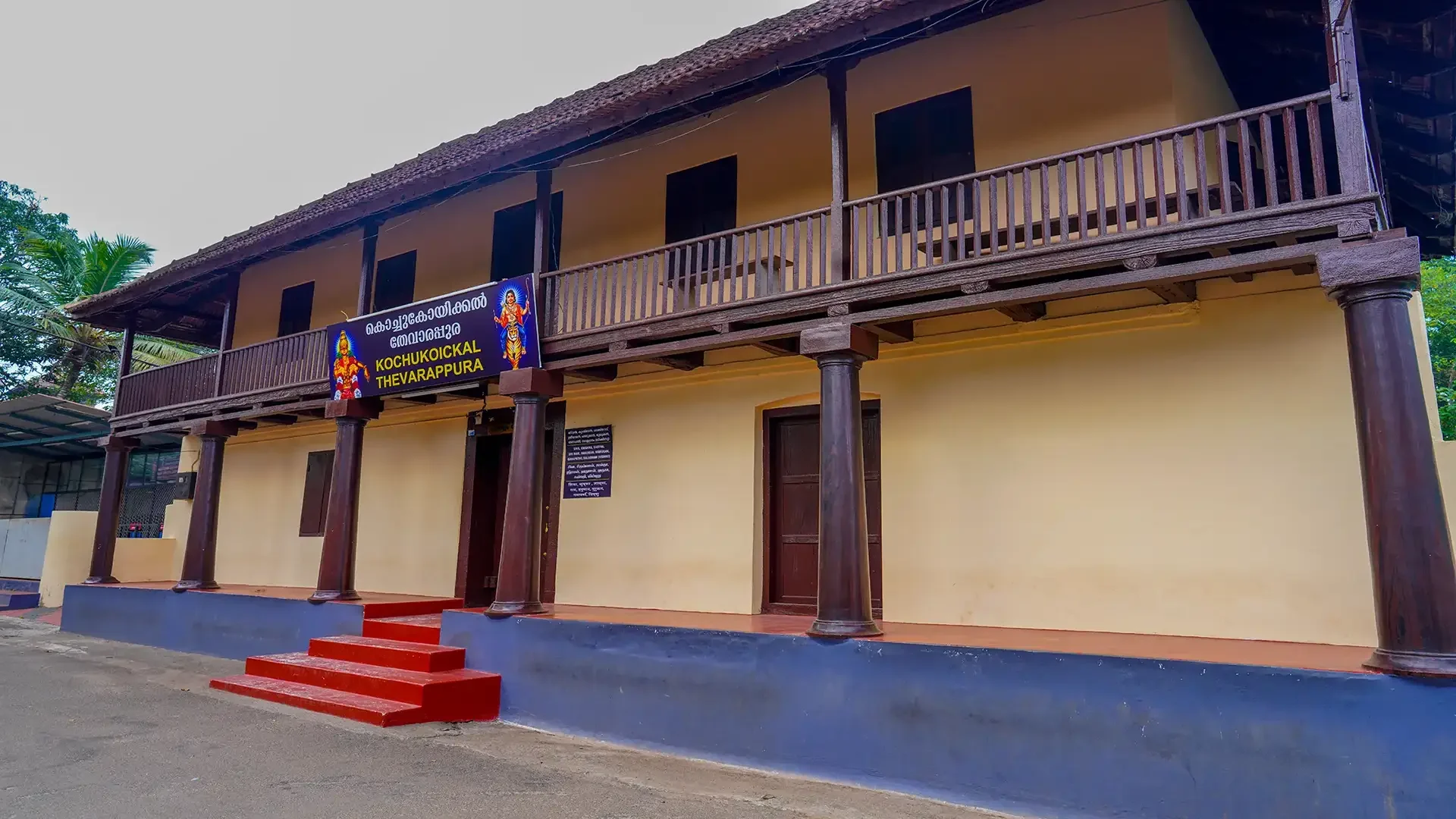
Pandalam Palace refers to a group of family buildings and worship spaces by the Achankovil river. The visitor anchor is the Valiyakoikkal-side approach, not a promise of admission to every residence or sacred room.
10.9 km · ~18 min by cab · straight line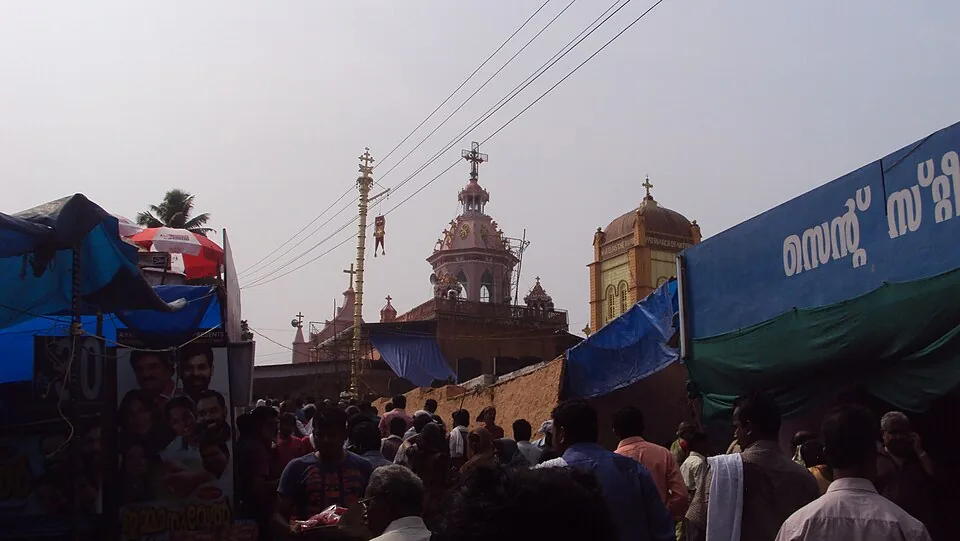
A hilltop Jacobite Syrian pilgrim centre (dayara) near Pathanamthitta, the resting place of Patriarch Ignatius Elias III; its annual perunnal draws large crowds.
11.8 km · ~20 min by cab · straight line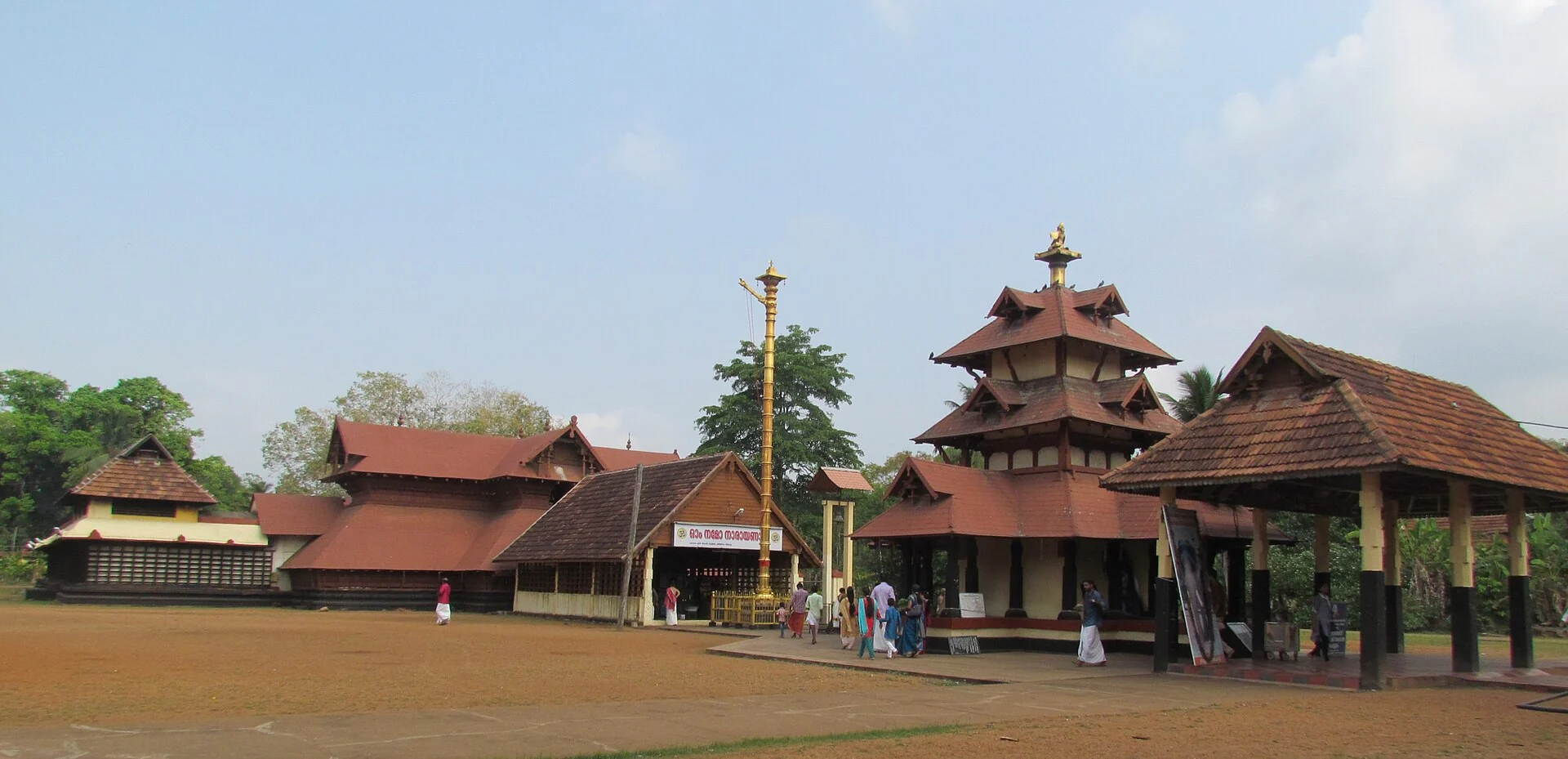
One of the oldest and largest temples in Kerala and one of the 108 Divya Desams, at Thiruvalla — famous for Kathakali performed every evening as a temple offering and for a 54-ft Garuda flag mast carved from a single granite block.
13.8 km · ~23 min by cab · straight lineThe prominent rock hill above Pathanamthitta, reached by a steep local climb with broad town and highland views; heat, wet rock and exposed edges shape the visit.
14.6 km · ~24 min by cab · straight line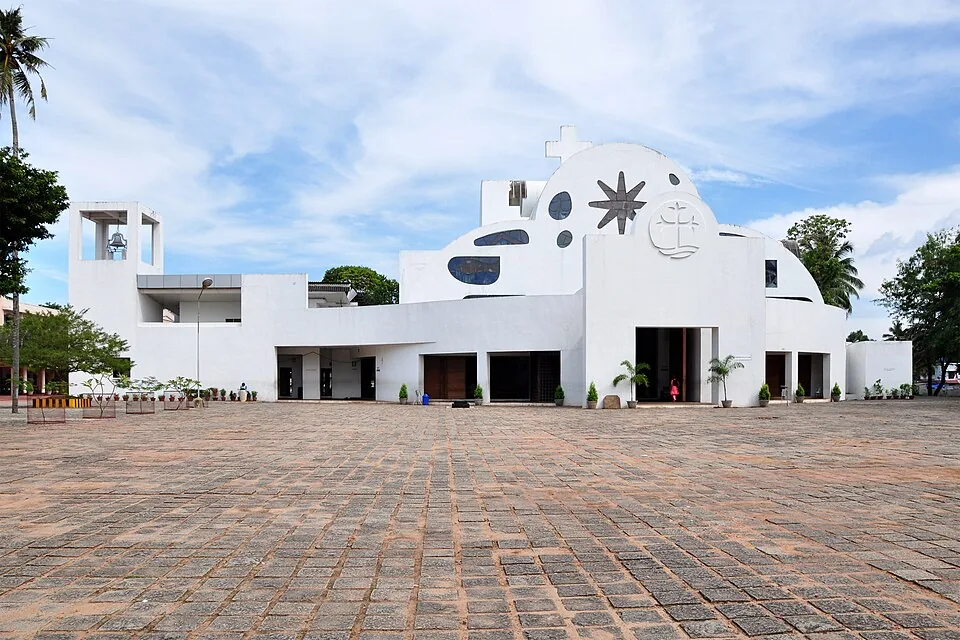
On an island in the Pamba, the church of St Gregorios of Parumala (Parumala Thirumeni) — the first canonised saint of the Malankara Orthodox Church; a major pilgrimage, busiest at the November feast.
15.7 km · ~26 min by cab · straight line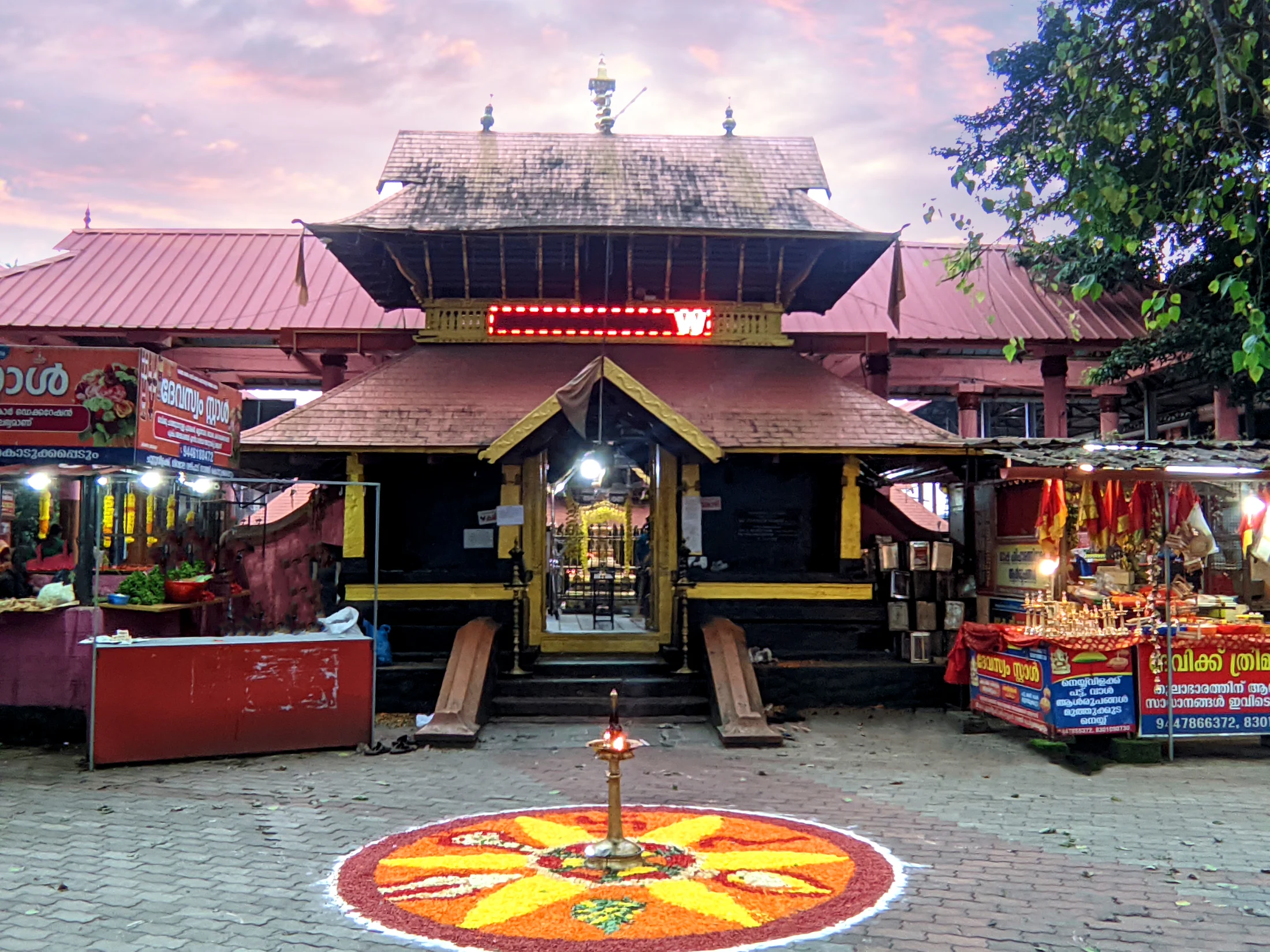
Malayalapuzha, also written Malayalappuzha, is the Bhadrakali temple near Kumbazha in Pathanamthitta district, administered by the Travancore Devaswom Board.
16.4 km · ~27 min by cab · straight line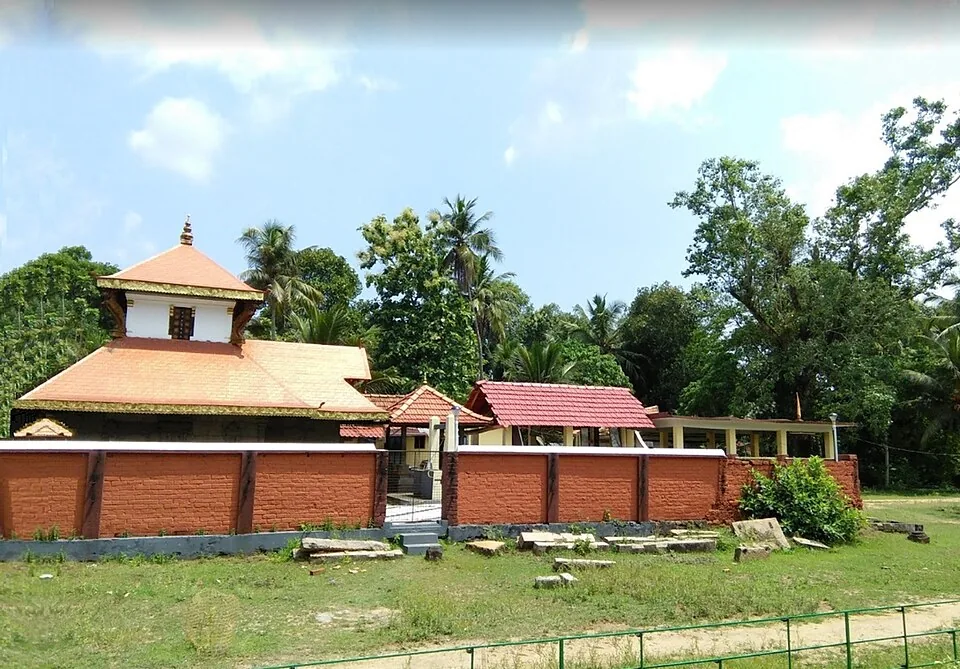
An ancient Shiva temple on the banks of the Pamba at Niranam, one of the 108 famous Shiva temples of Kerala; its deity is Dakshinamurthy (Shiva as the teacher of all knowledge), and it is tied to the Niranam (Kannassan) poets of the 14th–15th centuries.
16.7 km · ~28 min by cab · straight line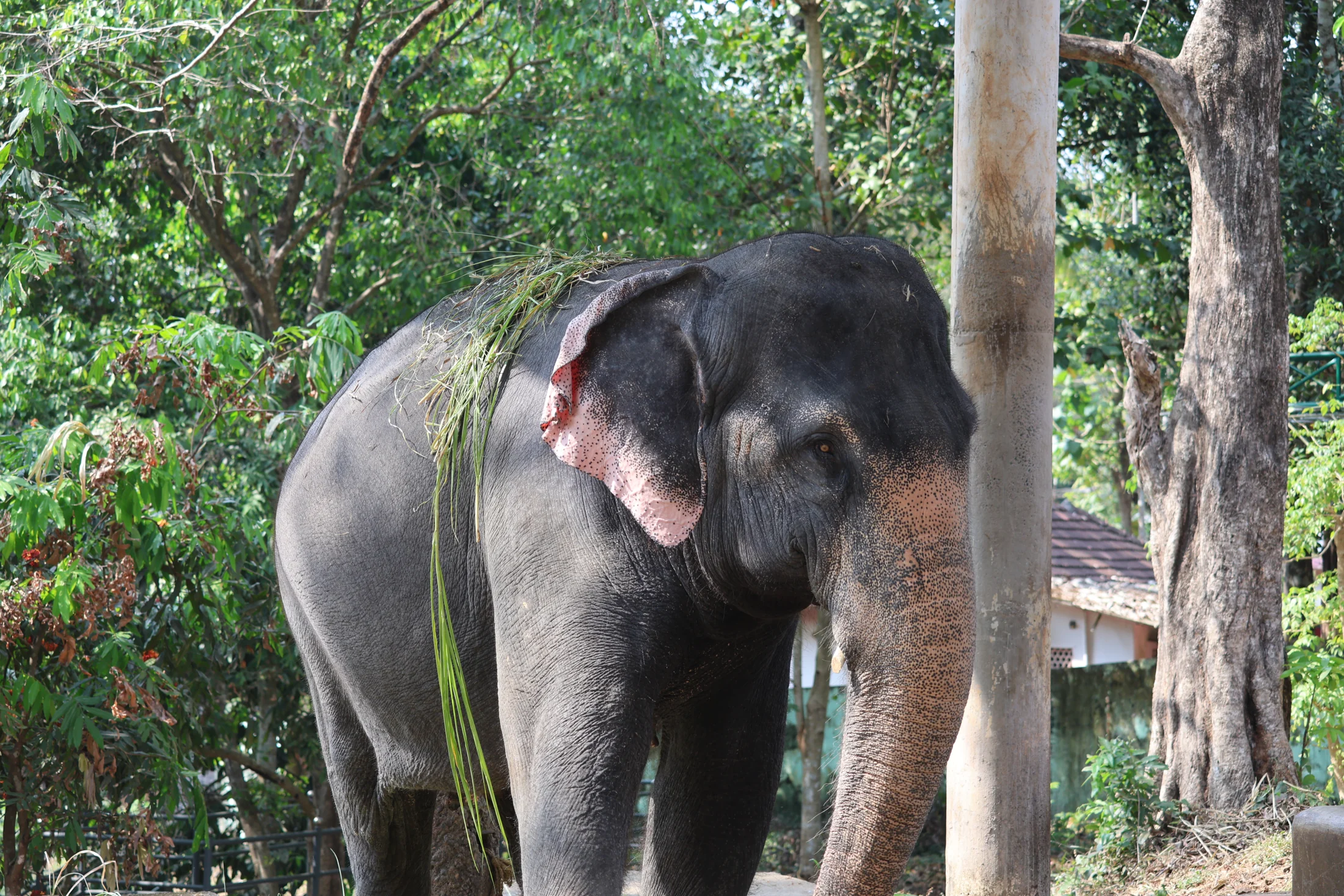
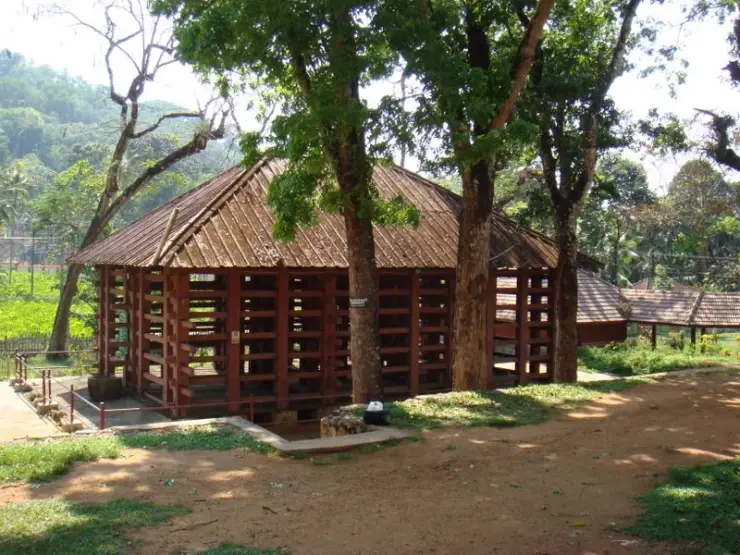
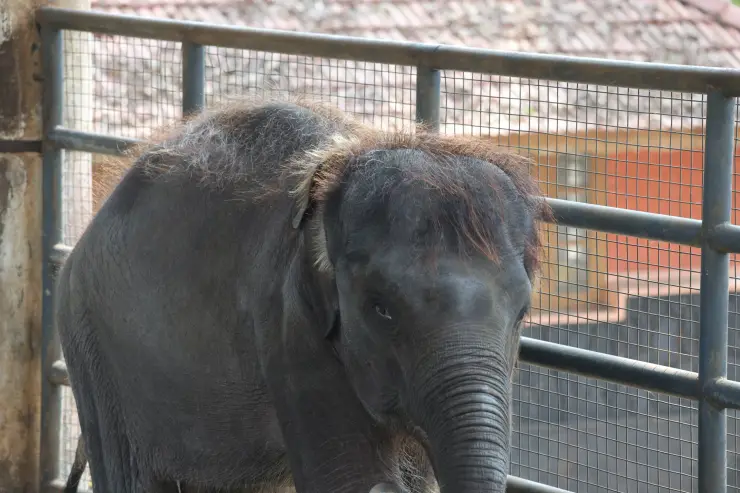
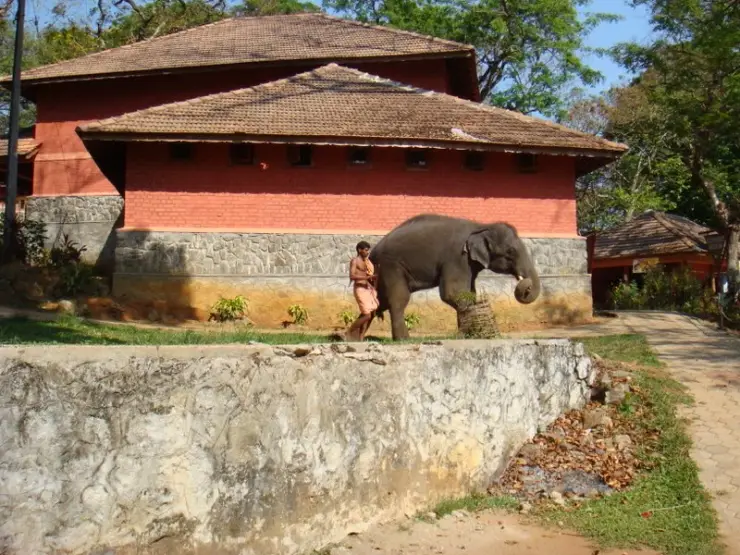
Konni’s Anathavalam combines a historic timber kraal, elephant-care areas and a museum within the Forest Department’s ecotourism campus.
21.2 km · ~35 min by cab · straight line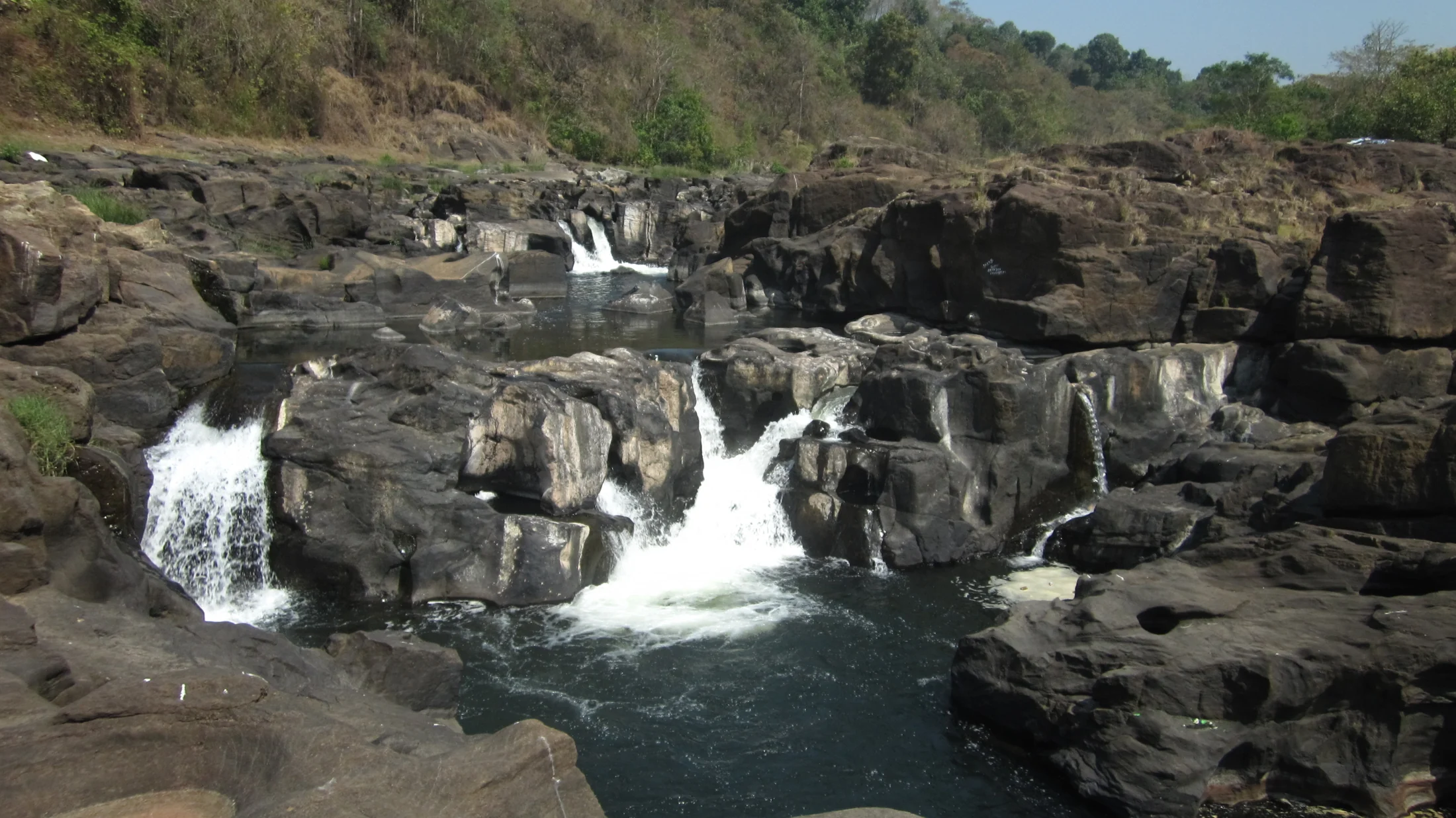
Perunthenaruvi is the broad rocky waterfall landscape in the Pamba basin near Ranni. The nearby KSEB weir and small hydel project are separate infrastructure, not the visitor waterfall entrance.
23.4 km · ~39 min by cab · straight lineNearby toilets, pharmacies, ATMs, seating and vets are community-mapped and may be incomplete or out of date. Map data © OpenStreetMap contributors | Walking times © openrouteservice.org by HeiGIT
It is one of the 108 Divya Desams — sacred Vishnu shrines hymned by the Alvar saints — and enshrines Krishna as Parthasarathy, the charioteer of Arjuna in the Mahabharata. It is also renowned for the annual snake-boat regatta on the Pamba and its role in safeguarding the sacred ornaments carried to Sabarimala.
The Aranmula Uthrattathi Vallamkali takes place on the Uthrattathi asterism in the Malayalam month of Chingam, during the Onam season — usually falling between mid-August and mid-September, a few days after Thiruvonam. Exact dates shift each year with the lunar calendar, so confirm the current year’s date before planning.
Unlike an ordinary glass mirror silvered on the back, the Aranmula Kannadi is a polished metal front-surface mirror, so the reflection sits on the very surface with no double-image or distortion. It is handmade from a secret copper-tin-based alloy by a few families, takes months to craft, and holds a Geographical Indication (GI) tag awarded in 2005.
The temple is generally open in the morning from around 4 am to 11 am and in the evening from about 5 pm to 8 pm.
The nearest railway station is Chengannur, roughly 10 km away, with good connections by taxi and bus. Onward road links reach Kozhencherry and Pathanamthitta town, and the nearest airports are at Thiruvananthapuram and Kochi (Cochin), each a few hours by road.
Yes — visit the Aranmula Kannadi mirror workshops to see the craft firsthand, stroll the heritage village and Pamba riverside ghats, and drop in at a cultural centre such as Vijnana Kala Vedi to watch traditional Kerala performing arts. The boat race, if your visit coincides with the Onam season, is the standout spectacle.
Normal heritage visits work from October to March. Boat-race/festival season is culturally important but much more crowded.
Entry: No entry fee for the temple. Aranmula Kannadi mirrors are sold at workshops and outlets at prices varying by size. Timings: Temple generally open approx. 4 am to 11 am and 5 pm to 8 pm.
2 to 4 hours; full day during festivals or with nearby river-country stops.
Nearby you can pair Maramon Convention (520 m), Charalkunnu (5.0 km), Kaviyoor Mahadeva Temple (10.6 km), Pandalam Palace (10.9 km).
Follow temple, police and riverfront crowd instructions during festivals. Avoid unsafe river edges and overloaded viewing areas. Use known transport for late festival returns.
Written about Aranmula itself — its history, its legends and the arguments about them.
Route-level itineraries and practical guides for the rest of Kerala.
Photographs: Sudhirn (CC BY 3.0), Rajeshodayanchal (CC BY-SA 3.0), Rojypala (CC BY-SA 3.0), Vinayaraj (CC BY-SA 3.0), Ssriram mt (CC BY-SA 4.0), Gnoeee (CC BY-SA 4.0), Pdhang (CC BY-SA 4.0), MissvainOriginal author: User:Dvellakat (CC BY-SA 4.0), Rajesh Nair from Bangalore, India (CC BY 2.0), Vishnuvxyz (CC BY-SA 4.0), Krishnakumarvairassery (CC BY-SA 3.0), Alenalexp (CC BY-SA 4.0), rajaraman sundaram (CC BY 3.0), Arun Sinha from India (CC BY 2.0), Suresh Babunair (CC BY 3.0). Wikimedia Commons.