What to expect
Highlights
- Vishnu pilgrimage shrine
- Carved hundred-pillared hall
- Layered temple architecture
Varadharaja Perumal Temple is a major Vishnu shrine in Kanchipuram, combining a living pilgrimage tradition with richly carved pillared architecture.
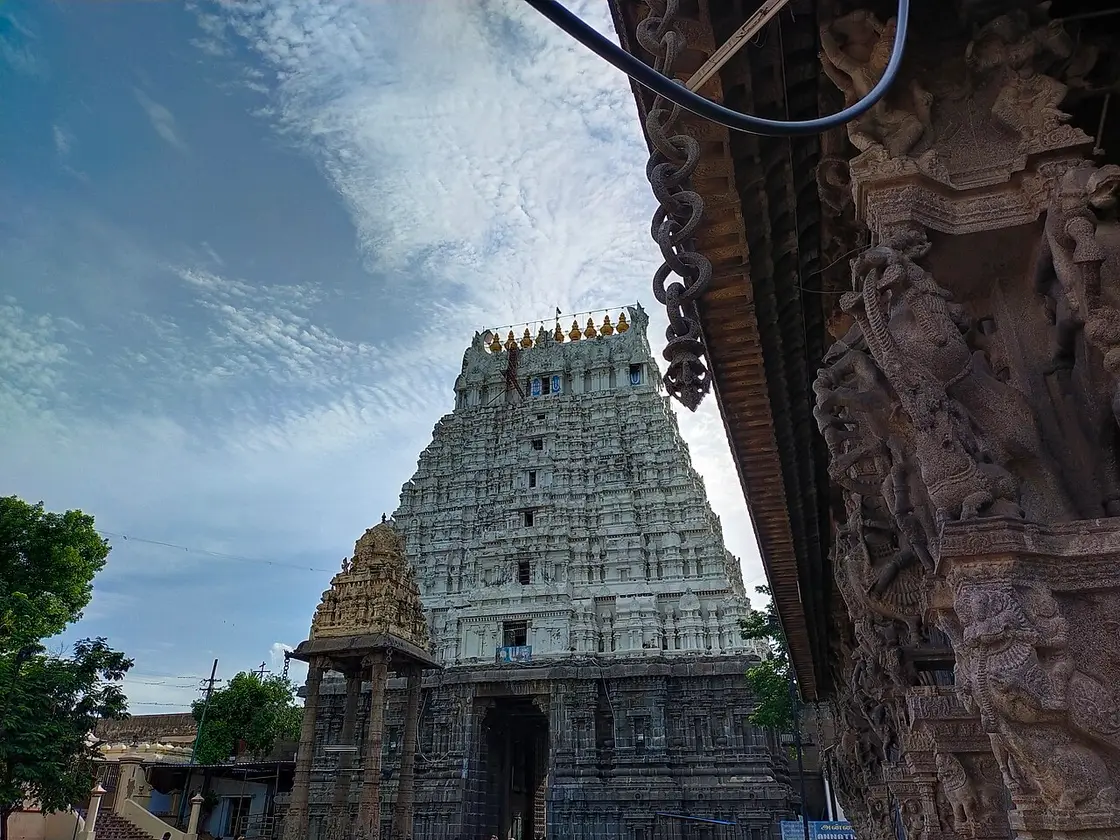
Check entry arrangements. Ask temple staff about visitor entry, dress requirements and access to the inner shrine before you travel, especially if you are visiting as a non-Hindu.
Dress respectfully and follow the institution’s admission and photography rules.
Varadharaja Perumal Temple is a major Vishnu shrine in Kanchipuram, combining a living pilgrimage tradition with richly carved pillared architecture. Leave time beyond the darshan queue: the carved hall is one of the reasons architecture-minded visitors make this a separate Kanchipuram stop.
The temple is one of the Divya Desams revered in the Vaishnava tradition. Successive patrons developed the complex, so its present form is not the work of a single moment.
The hundred-pillared hall is especially noted for its carving. Ask which architectural areas are open to visitors rather than assuming that shrine access and hall access follow the same arrangement.
Special events can transform the crowds and circulation. If your visit is connected to a particular ceremony, confirm that programme directly instead of relying on photographs from a previous festival.
For the visit itself, allow one to two hours, longer during major celebrations. The best time is an open worship session with extra time for the architectural areas. Plan this separately from the temples nearer your other city stops. Ask about hall access as well as darshan.
Road km to Kancheepuram; ghat roads and traffic vary — allow extra.
An open worship session with extra time for the architectural areas.
Live forecast loads in your browser.
Sun and moon are calculated for this location and shown in IST. Photography windows are the hour around sunrise and sunset; the sunset bearing is degrees clockwise from true north. Moon phase is accurate to about half a day.
Verified hotels, homestays, restaurants, experiences, sights, shops and rentals around Varadharaja Perumal Temple — commission-free, with direct contact. Filter by what you need.
The largest and most conventional hotel in the town, on Gandhi Road about a kilometre south of the bus stand — 1. 06 km by a routed walk. GRT's own page describes 30-odd rooms: three Standard at 160 sq ft and twenty-nine Deluxe at 161 sq ft, with a choice of queen or twin beds, plus a multi-cuisine restaurant, two banquet halls and an in-house gym, and the group lists the property as pet-friendly. Note that GRT markets it as a hotel near the Kamakshi temple; the temple is on the far side of the bus stand from here, so read that as the same town rather than the same street.
The Tamil Nadu Tourism Development Corporation's own hotel in the town — the state-run option, of the kind TTDC keeps at most of the pilgrimage centres. It stands on Railway Road out to the north-east, 1. 23 km from the bus stand by a routed walk, and the useful fact about it is what it is next to: 257 metres by footpath from Kanchipuram East station, the town's original railway station, which is why local directions still place it opposite the old station. Rooms are the usual TTDC pattern of plain twin-bed air-conditioned and non-air-conditioned units. Book through ttdconline. com and confirm at the counter.
A small guest house on Kamakshi Amman Sannadhi Street, 622 metres north of the bus stand by a routed walk and about two hundred metres from the Kamakshi Amman temple — which is the street a great many pilgrims want to be on. Treat it as a walk-in-and-ask lodge by the temple rather than something to book ahead sight-unseen.
The Kanchipuram branch of A2B — Adyar Ananda Bhavan — the Chennai sweet-shop-and-tiffin chain, on Nellukara Street 341 metres from the bus stand, about four minutes on foot. It is what it is everywhere: a sweet and savoury counter at the front, a vegetarian tiffin and meals section behind, reliable, busy, priced like a chain.
The name is the best known in the Tamil restaurant trade and is used both by the chain and by a number of unconnected local houses, so do not assume which you have walked into — the food either way is the standard tiffin and meals repertoire. Useful mainly because it is four minutes from where the buses put you down and open across the hours the temples are shut.
A restaurant 283 metres north-east of the bus stand, the closest thing on this page to a first stop off the bus. In Tamil Nadu a place calling itself a hotel on its street sign is an eating house, not a place to sleep, and this is one of them — a working local restaurant among the doctors' rooms and small hospitals on this stretch.
A pure-vegetarian restaurant 393 metres north-east of the bus stand. Pure veg matters here in practice rather than as a label: pilgrims working through the temple circuit generally want somewhere they can eat between darshans without asking questions about the kitchen.
An eating house 974 metres east-north-east of the bus stand, on the side of town that runs out towards Kanchipuram East station. Another of the town's plain restaurants — the sort that runs a tiffin service morning and evening and a set meal at midday.
A mess 1. 7 km north-west of the bus stand, out on the way towards Kailasanathar and the older western end of the city. A mess in Tamil Nadu is a plain working eating house that serves whatever has been cooked that day rather than a menu, usually as a set meal at midday, and it is the cheapest honest lunch in any Tamil town.
A neighbourhood tiffin shop in the residential streets near the Kailasanathar side of Kanchipuram. It is a practical stop for familiar South Indian breakfast and evening dishes such as idli, dosai, pongal and vadai; consider an auto-rickshaw when travelling from the bus stand in hot weather.
A bakery in Kanchipuram's commercial streets, south of the bus stand. It can be a convenient place to pick up baked snacks and something portable between temple visits, particularly during the midday break when many religious sites close to visitors.
A long-established Kanchipuram silk saree showroom whose retail business dates to 1974. The company says it works with its own handloom factory and weavers, offering everyday silks, soft silks, bridal sarees and traditional nine-yard sarees. Ask at the counter about current prices, weaving details and care instructions.
A silk shop 569 metres south-west of the bus stand, in the commercial blocks below the centre. One of the many independent counters that are not the big advertised names — usually where the price is more negotiable and the pressure lower. Whatever the shop, the test is the same: on a genuine saree the body and the contrasting border are interlocked thread by thread where they meet, not printed and not stitched.
A silk shop 820 metres south of the bus stand, on the same stretch as several others. Worth knowing because it is one of the counters you walk past rather than one of the ones advertised at you, and because comparing three shops in one afternoon is the only way to get a feel for what a given quality costs in this town.
A clothes shop on Pallikoodathan Street, 1. In a town where almost nothing publishes a timetable, that is genuinely useful.
A town park about two kilometres south-west of the bus stand, named for C. N. Annadurai — Arignar Anna, the Dravidian leader and first DMK chief minister of Tamil Nadu, after whom a great many public things in this state are named. It is a municipal park rather than a garden anyone travels for: trees, paths, benches, children in the evening. Its use to a visitor is shade and somewhere to sit, in a town that offers very little of either between temples.
A neighbourhood park in Pallava Nagar, 3. 7 km south-west of the bus stand. Take an auto; the walk is three quarters of an hour.
The town auditorium, 942 metres north-west of the bus stand — kalai arangam means arts hall. Municipal halls like this are where a Tamil town's public cultural life actually happens: music and dance programmes, school and college events, government functions, the occasional touring performance. Nothing is aimed at visitors and there is no published season, but the board outside is worth a look if you are passing, because what is on is the town's own.
One of the town's single-screen cinemas, 871 metres south-east of the bus stand. Kanchipuram still has several — Aruna, Babu and Indira among them — which is now unusual, and a Tamil single-screen on a first-day evening is a genuine spectacle whether or not you follow the film. Tickets are bought at the counter.
The district library office, about 1. 9 km south of the bus stand, with a Perarignar Anna full-time branch library beside it. Kanchipuram was described as a place of learning — a ghatikasthanam — long before it was described as a place of pilgrimage, and its public libraries are the ordinary modern end of that. Free to walk into, quiet, and cool in the middle of the day when the temples are shut.
Book with the place itself. India’s cyber-crime coordination centre warned in April 2025 that convincing copies of hotel and pilgrimage booking sites are being pushed through sponsored search and social ads, taking payment for rooms the property never hears about. Every listing here links to the business’s own contact details and its own Google or Bing profile — we take no commission and sit in nobody’s payment path. If a booking page reached you through an ad, check the address bar against the property’s own site before you pay. Fraud can be reported on cybercrime.gov.in or on 1930.
31 more places around Kanchipuram. Open a guide to plan the visit and onward journey.
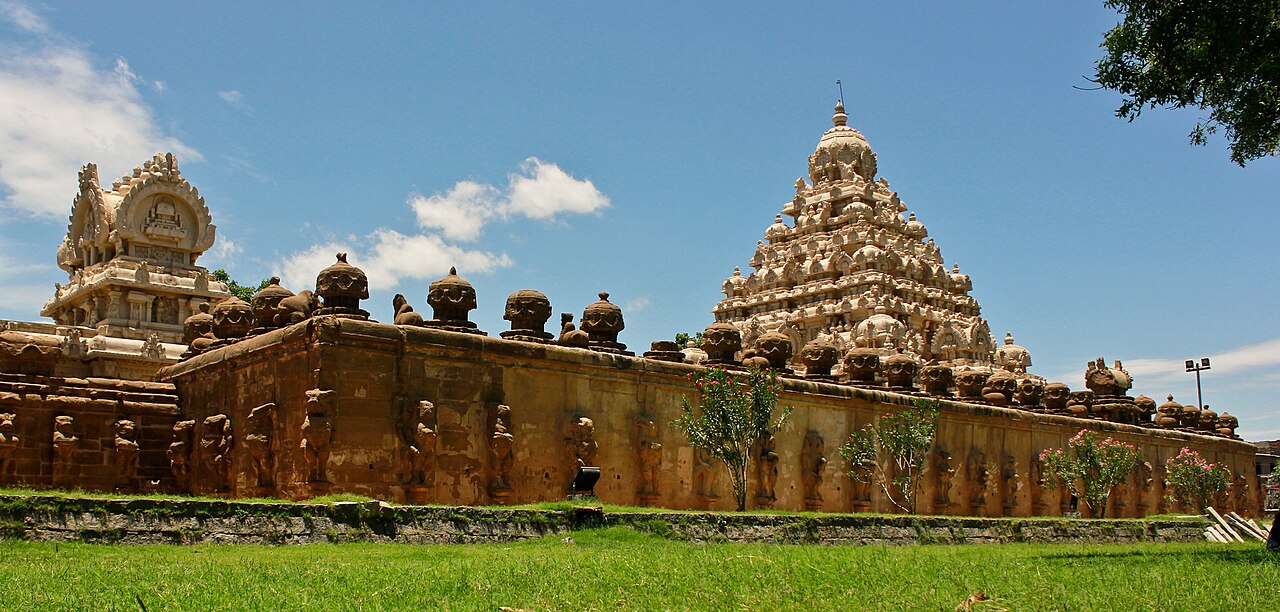
The oldest temple in Kanchipuram, this early 8th-century Shiva temple was built by the Pallava king Narasimhavarman II (Rajasimha) around 700-728 CE. It is celebrated for its sandstone superstructure, granite foundations and finely carved Pallava-era sculptures, and is protected today by the Archaeological Survey of India.
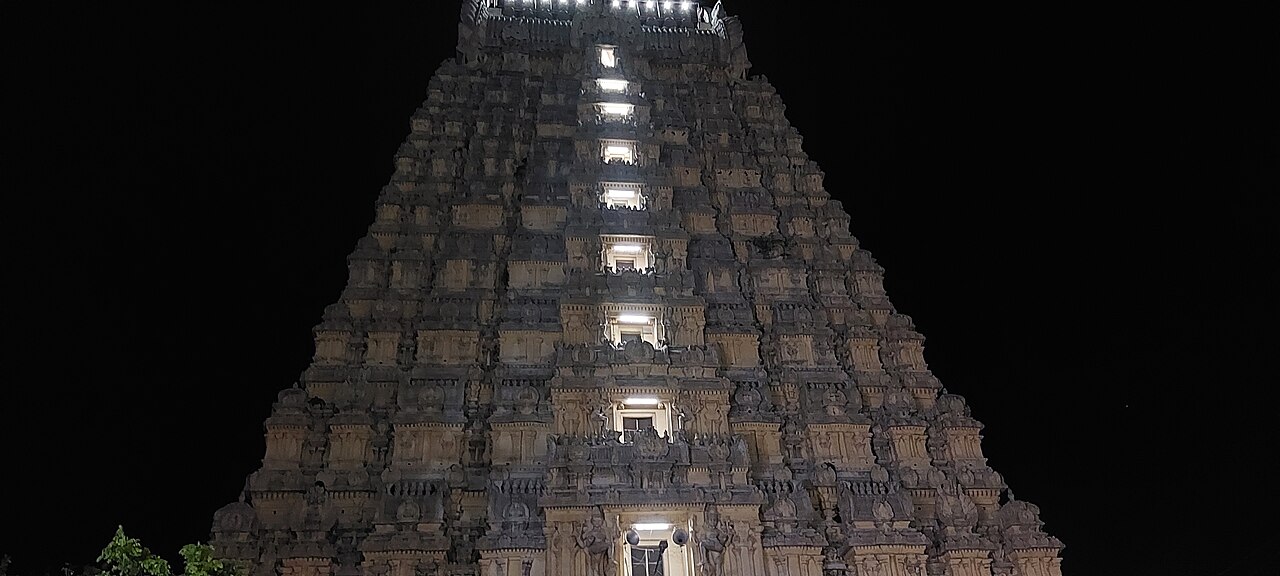
A vast and ancient Shiva temple in Kanchipuram, Ekambareswarar is one of the Pancha Bhoota Sthalams, representing the earth (Prithvi) element. It is famous for its towering gopuram, one of the tallest in South India, and a revered old mango tree that tradition holds to be its sacred temple tree.
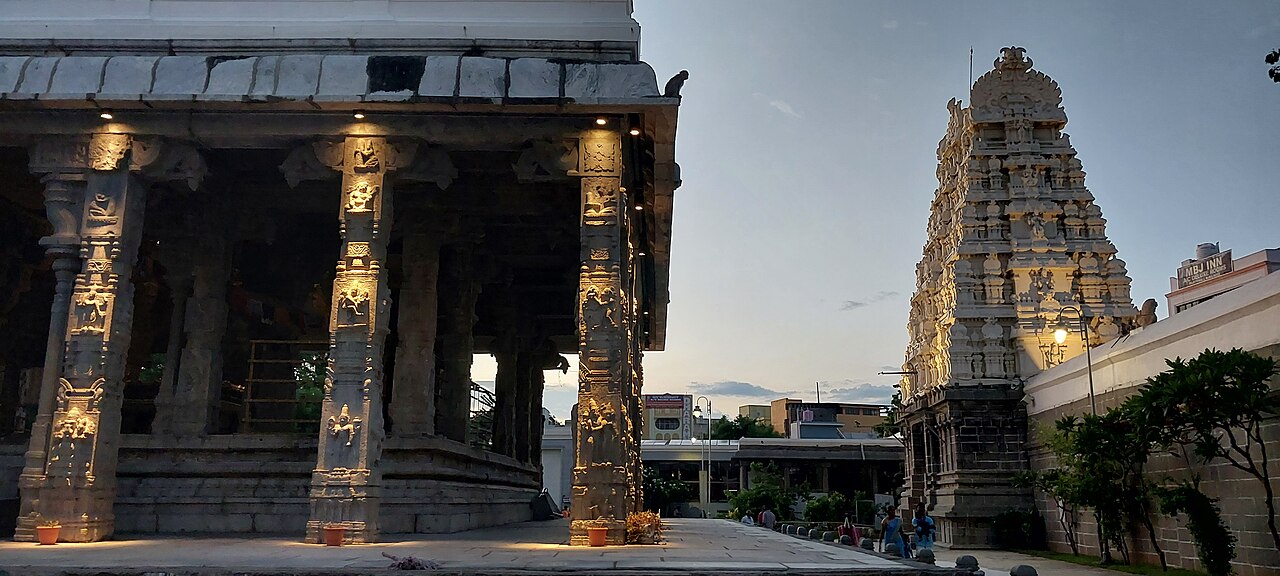
One of Kanchipuram's most important temples, Kamakshi Amman is dedicated to the goddess Kamakshi, a form of Parvati, and is revered as a principal Shakti temple. It is closely linked with Adi Shankara and the Kanchi Kamakoti Peetham, and is traditionally counted among the great Shakti shrines of India.

2.6 km · ~6 min by auto
An 8th-century Pallava Vishnu temple in Kanchipuram, also called Tiru Parameswara Vinnagaram, built by Nandivarman II Pallavamalla. It is prized by historians for its carved bas-relief panels and its unusual arrangement of three stacked sanctums.
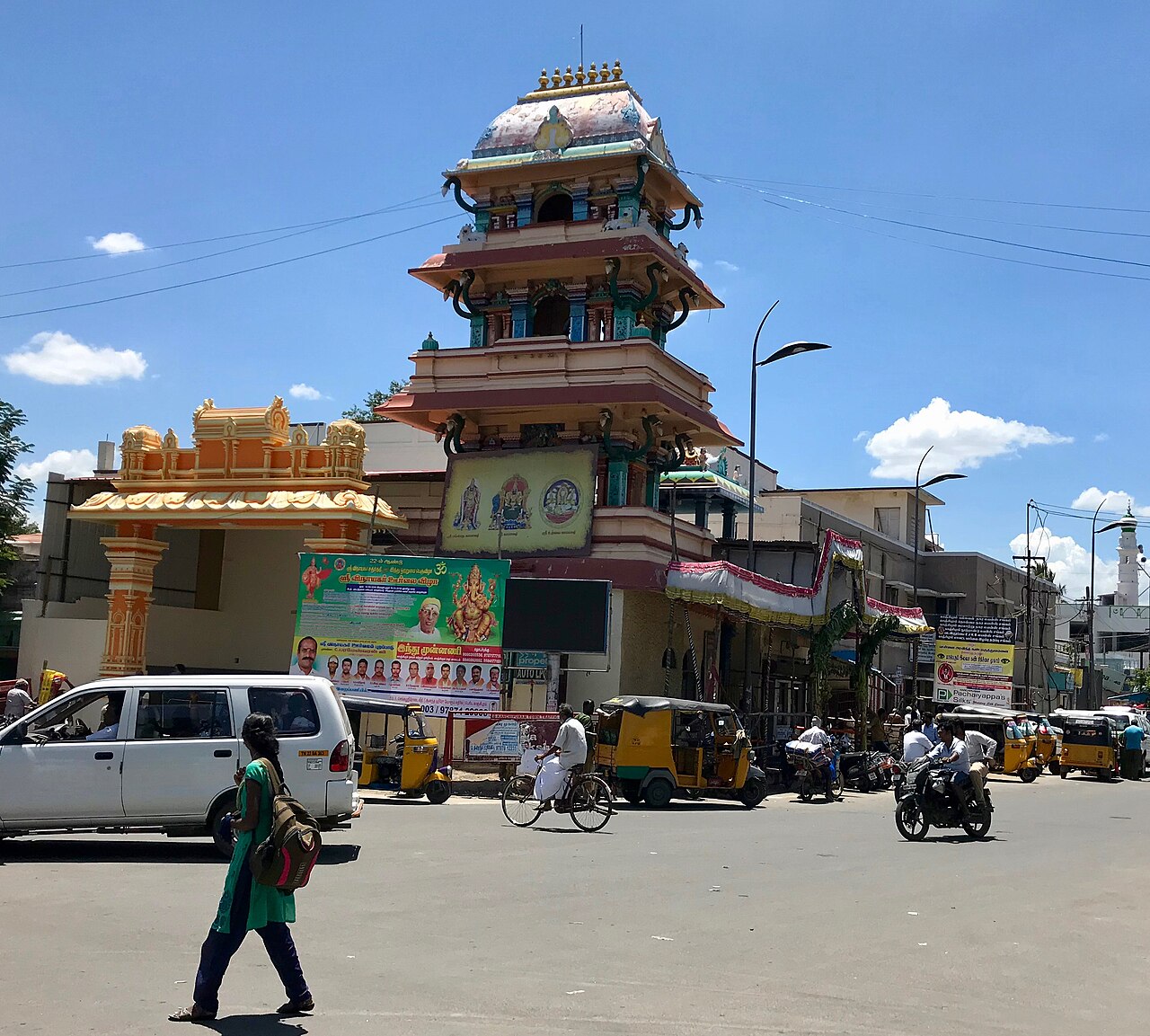
An Advaita Hindu monastery (matha) at Kanchipuram and the seat of the Shankaracharya of Kanchi. By its own tradition it was founded by Adi Shankara, though this claim and its early history are debated by scholars; today it is a well-known religious and heritage institution.
2.3 km · 29 min walk
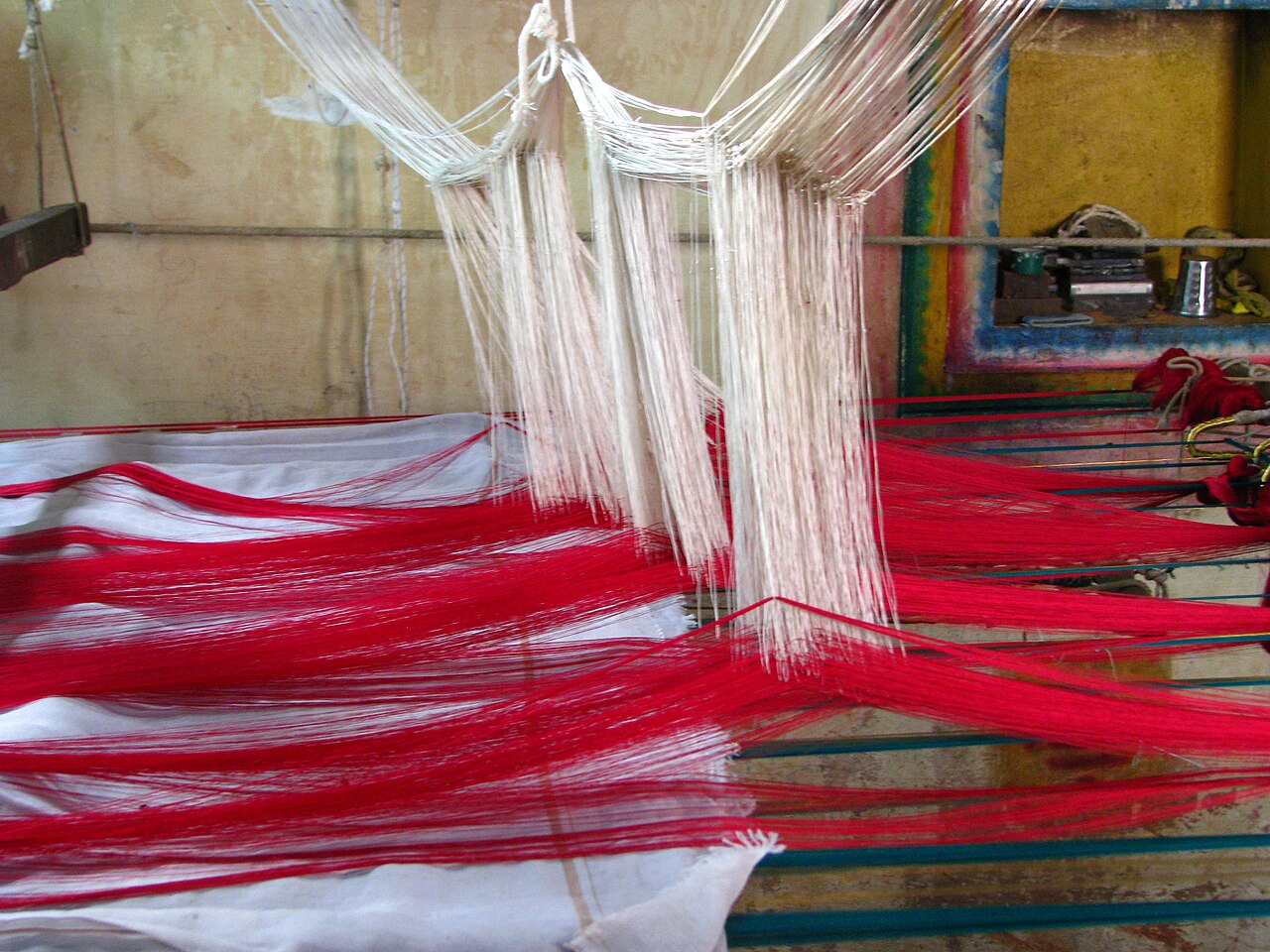
Kanchipuram (Kanjivaram) silk sarees are a centuries-old handloom tradition woven in pure mulberry silk with real gold-and-silver zari, best known for the contrast korvai border and pallu woven separately and interlocked by hand, and for temple-inspired motifs. The craft carries a Geographical Indication (GI) tag registered in 2005-06, protecting sarees genuinely made in and around Kanchipuram town by its traditional weaver communities.
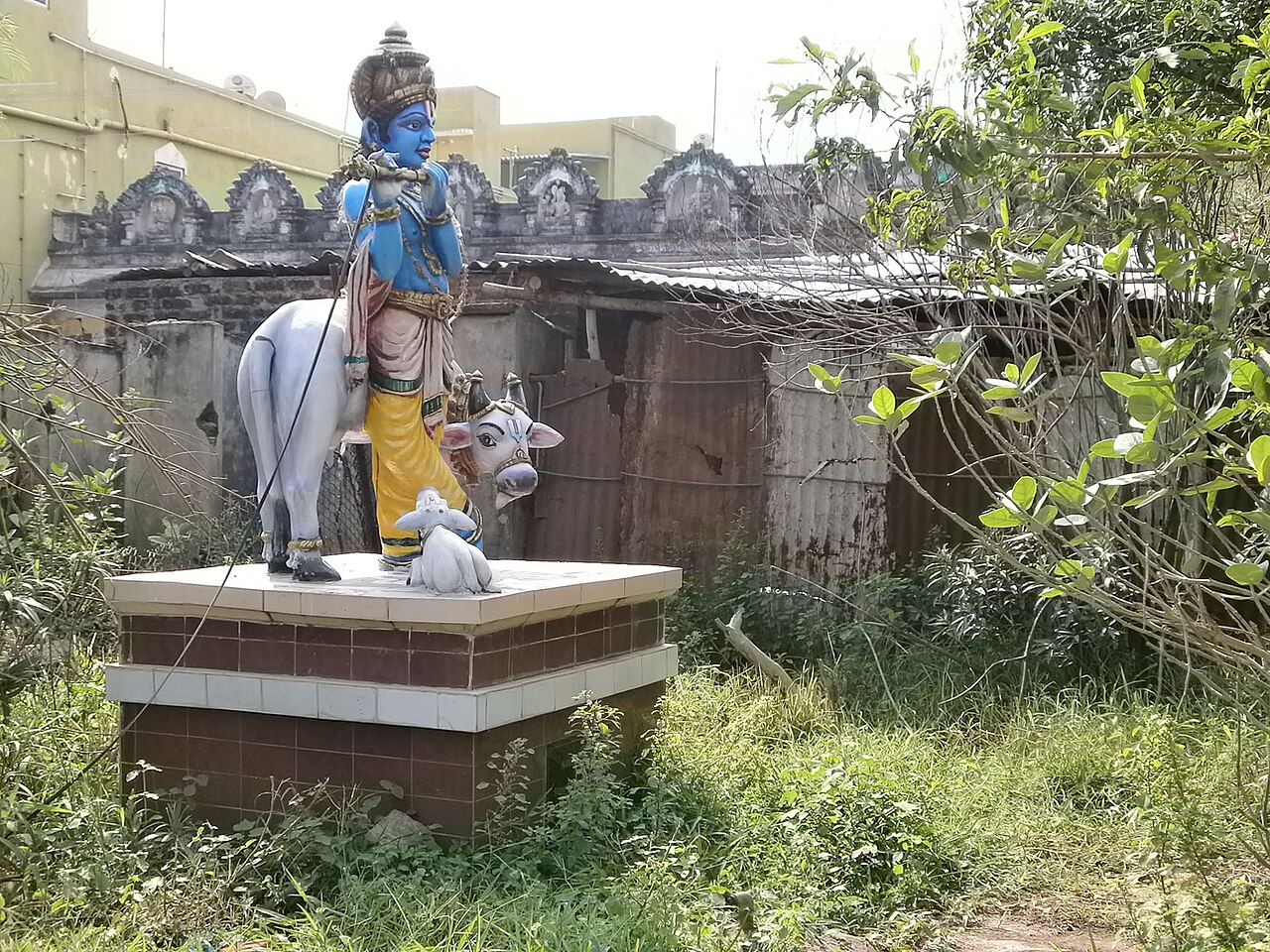
This Dravidian-style Vishnu temple at Sriperumbudur (Kancheepuram district) is revered as the birthplace of the 11th-12th century Vaishnava philosopher-saint Ramanuja (Ramanujacharya), exponent of Vishishtadvaita. Vishnu is worshipped here as Adikesava, and the temple - also called the Ramanujar temple - is an important Sri Vaishnava pilgrimage site, with a separate shrine devoted to Ramanuja.
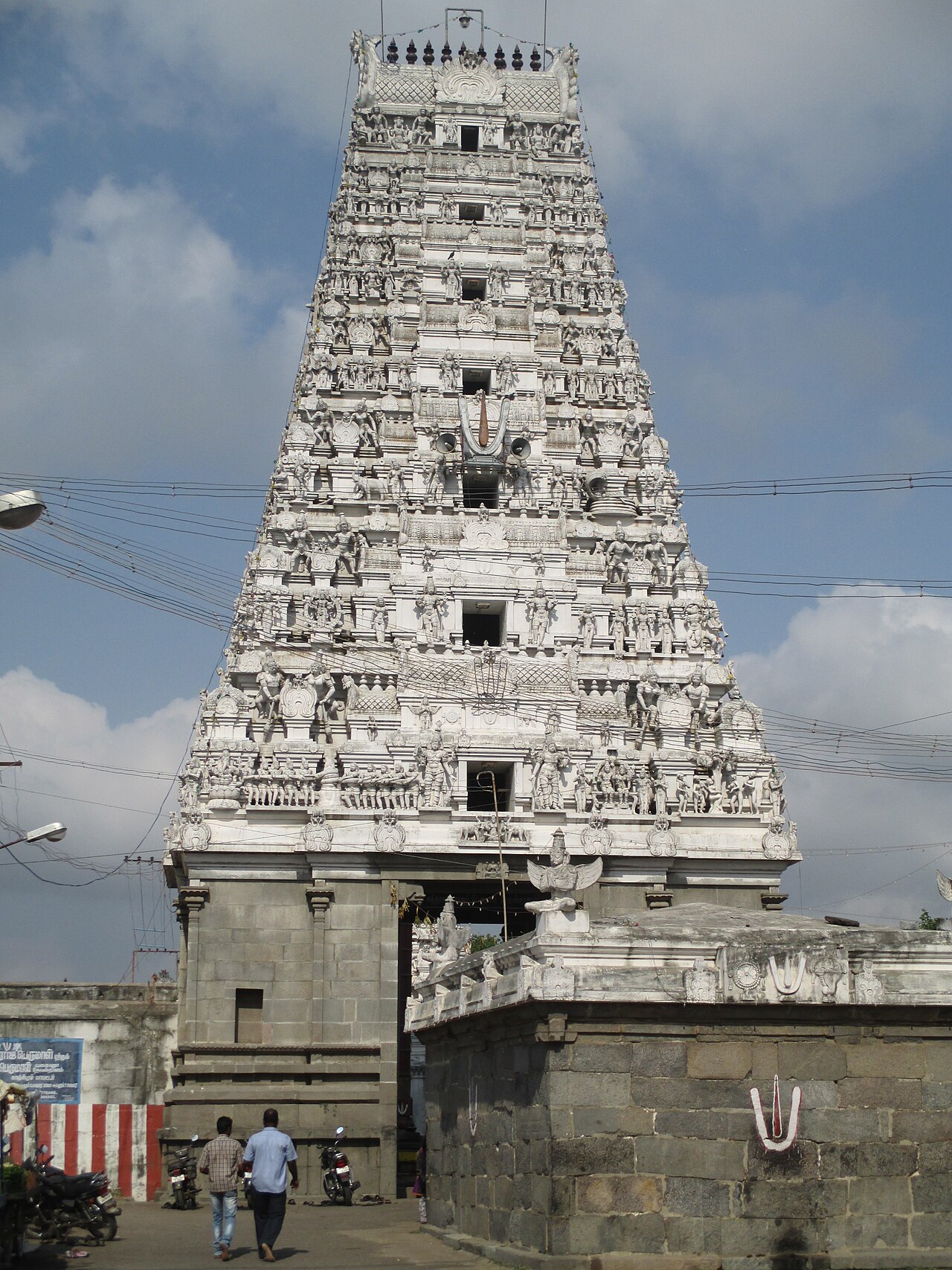
Uthiramerur, a temple town about 35 km south of Kanchipuram, is world-famous for 10th-century Chola inscriptions that record the village assembly's 'kudavolai' (pot-ticket) election system - one of history's earliest documented examples of local self-government. The town's Pallava-origin Vishnu temples, expanded by the Cholas, carry these epigraphs; the celebrated sabha-election inscriptions of Parantaka Chola I are engraved on the enclosure walls of the Vaikunta Perumal temple here, alongside the well-known Sundaravarada Perumal (Vishnu) temple.
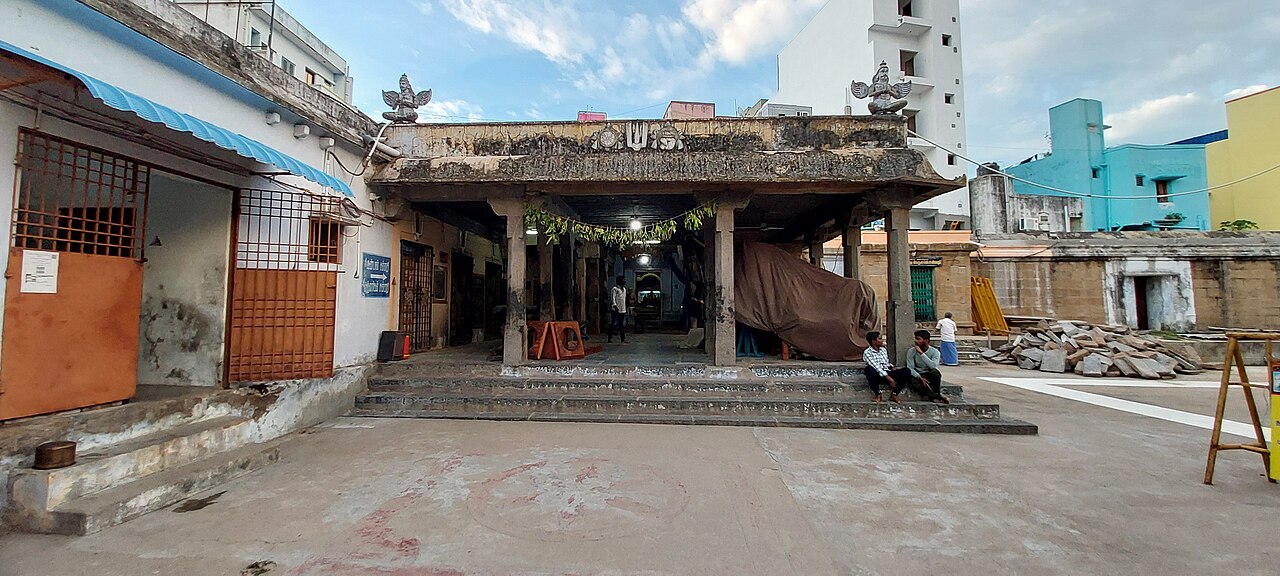
3.1 km · ~8 min by auto
A Vishnu temple in central Kanchipuram counted among the 108 Divya Desams (Tiru Ooragam), famous for its towering image of Vishnu as Trivikrama/Ulagalantha, 'he who measured the worlds,' with one leg raised. Temple tradition links the form to the Vamana avatar and the legend of King Mahabali, and the complex uniquely enshrines several Divya Desam shrines within one precinct.
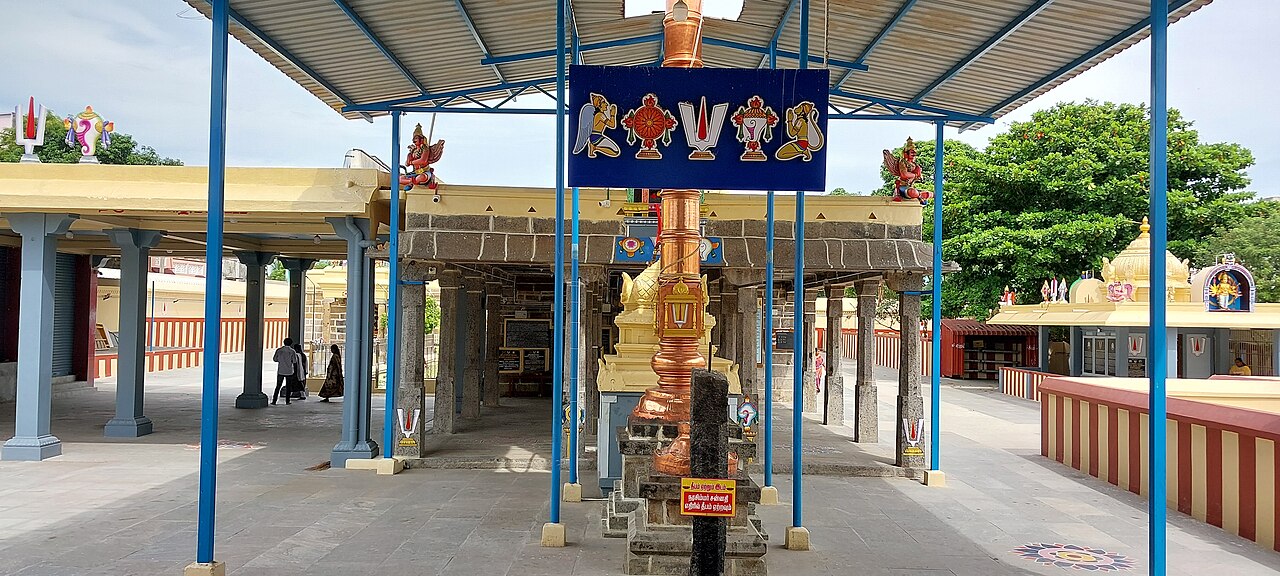
A Divya Desam Vishnu temple in Kanchipuram (Tiru Padagam) enshrining a large seated image of Vishnu worshipped as Pandava Thoothar. Temple tradition commemorates Krishna's role as the emissary or messenger who went to the Kauravas on behalf of the Pandavas before the Kurukshetra war, and it is counted among Kanchipuram's oldest temples.
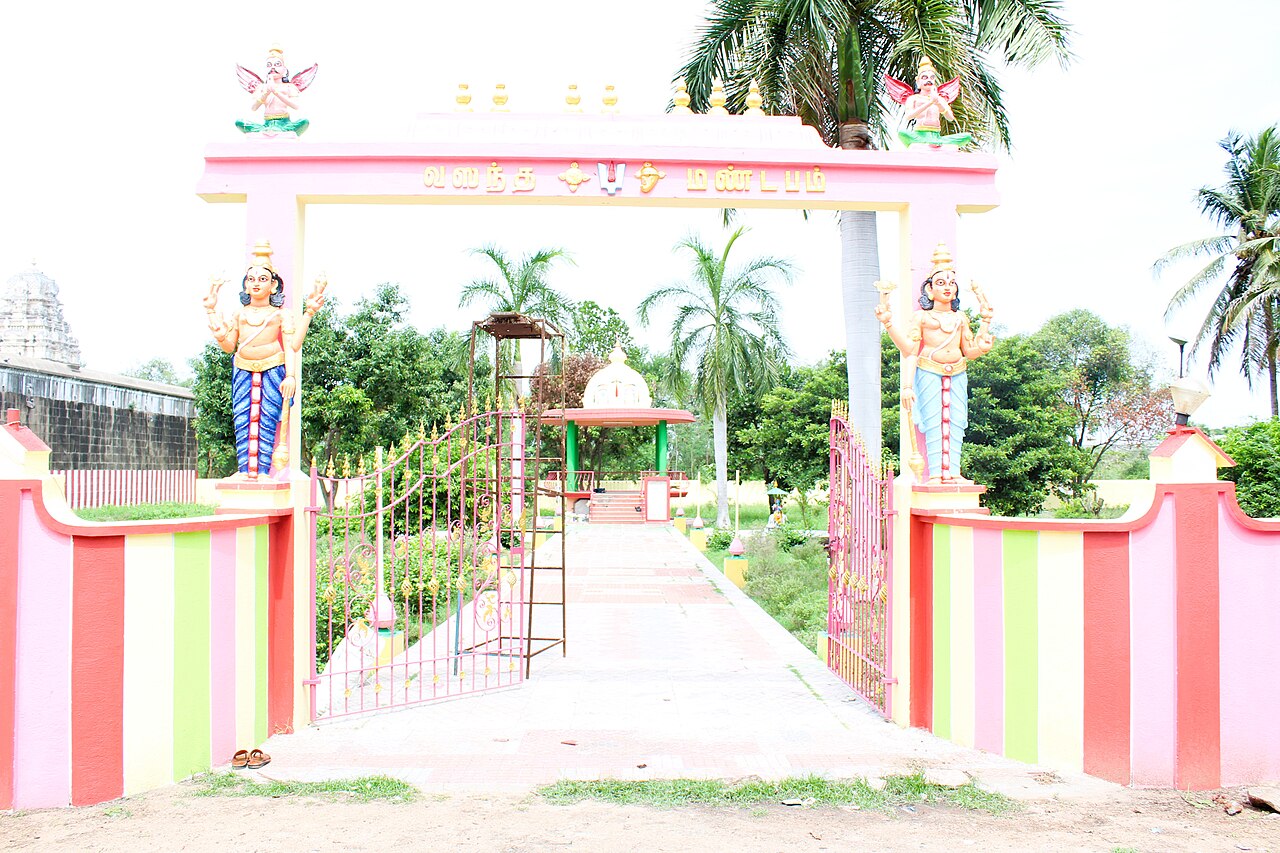
A Divya Desam Vishnu temple at Thiruputkuzhi village, roughly 12-15 km west of Kanchipuram, where the presiding deity Vijayaraghava (Rama) is depicted holding the bird Jatayu. Temple tradition links the site to the Ramayana episode of Jatayu, who fought Ravana, with a Jatayu shrine and an associated theertham (temple tank) named after him.
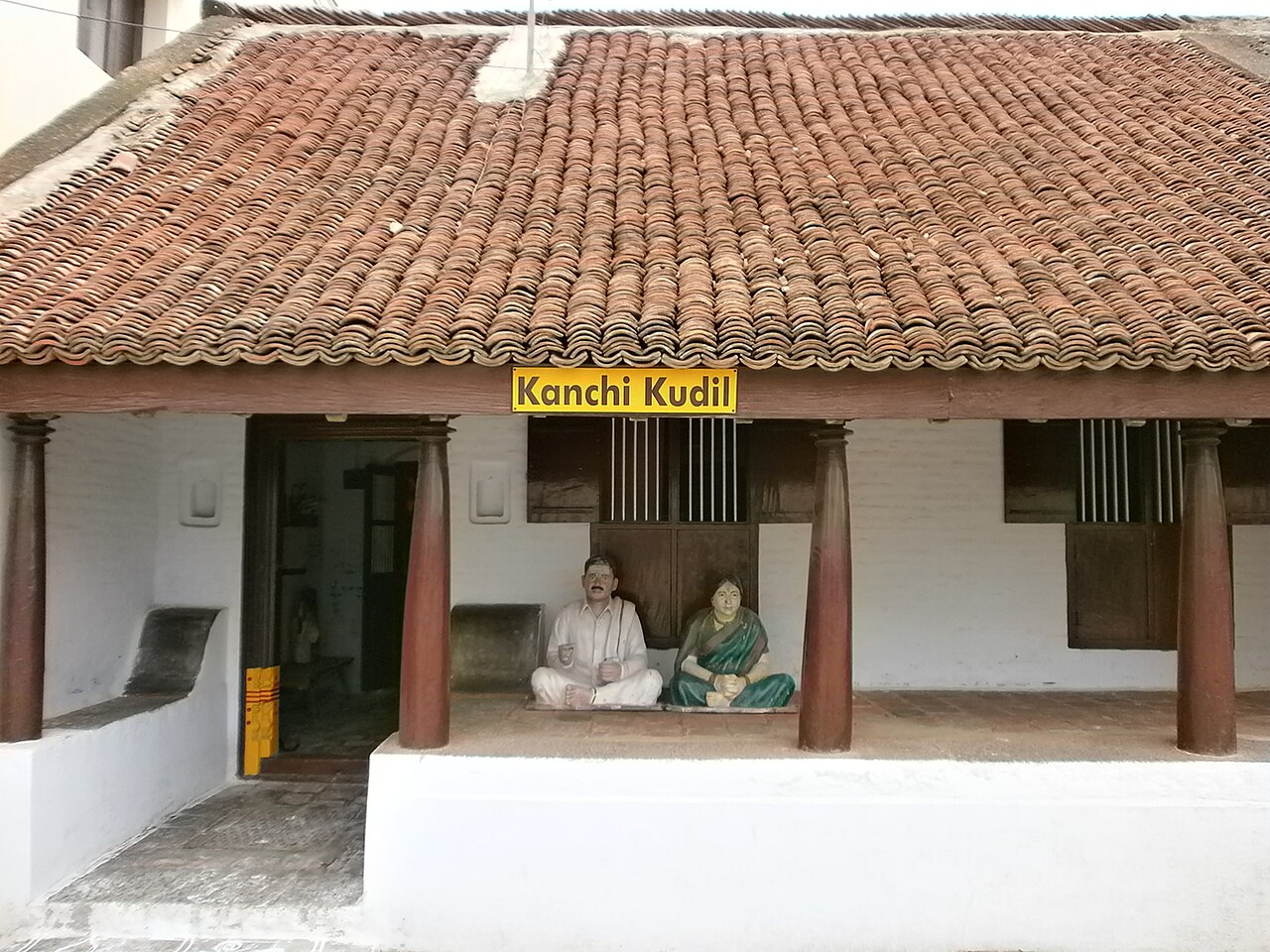
A preserved traditional Kanchipuram house, over 90 years old, opened as a heritage home museum that recreates the domestic life of an old Kanchipuram family. Visitors can walk through its courtyards and rooms to see period utensils, wooden furniture, swings and everyday objects showing the town's traditional Tamil architecture and lifestyle.
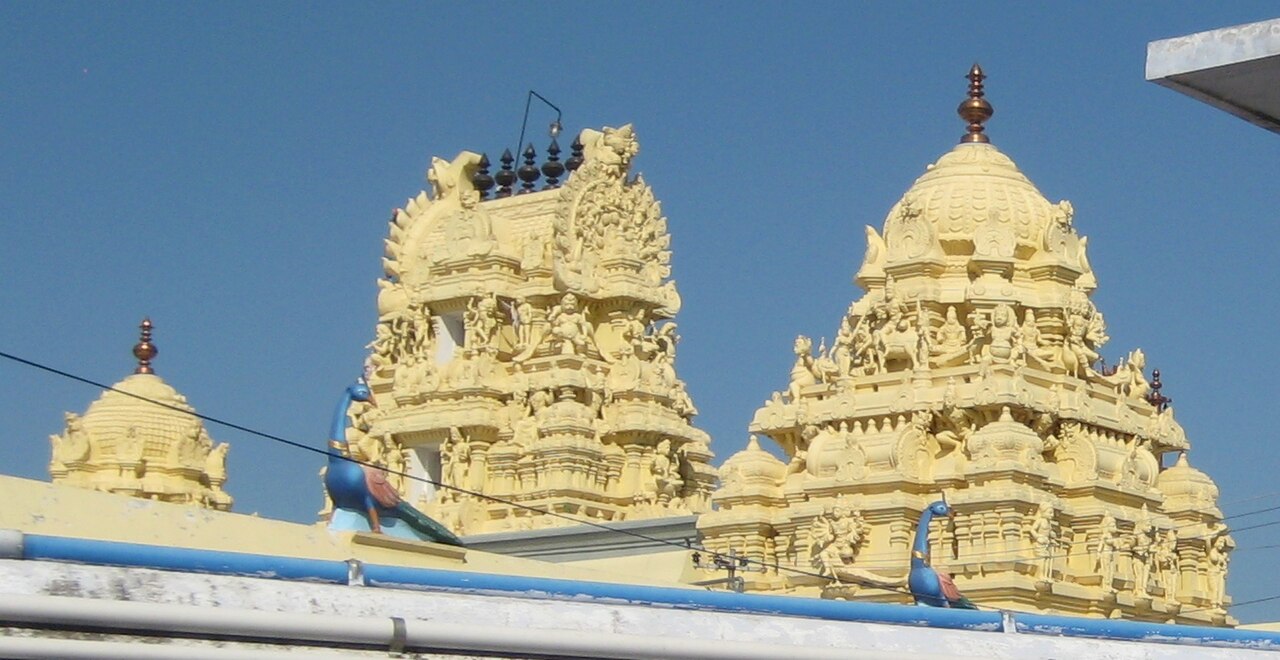
A temple to Lord Murugan (Subramanya) in central Kanchipuram, positioned between the Shiva temples (Ekambareswarar/Kailasanathar) and the Shakti temple (Kamakshi) so that the three evoke the Somaskanda arrangement of Shiva, Parvati and their son. Tradition holds that the Tamil devotional epic Kandha Puranam was composed here by the priest-poet Kachiappa Sivachariyar.
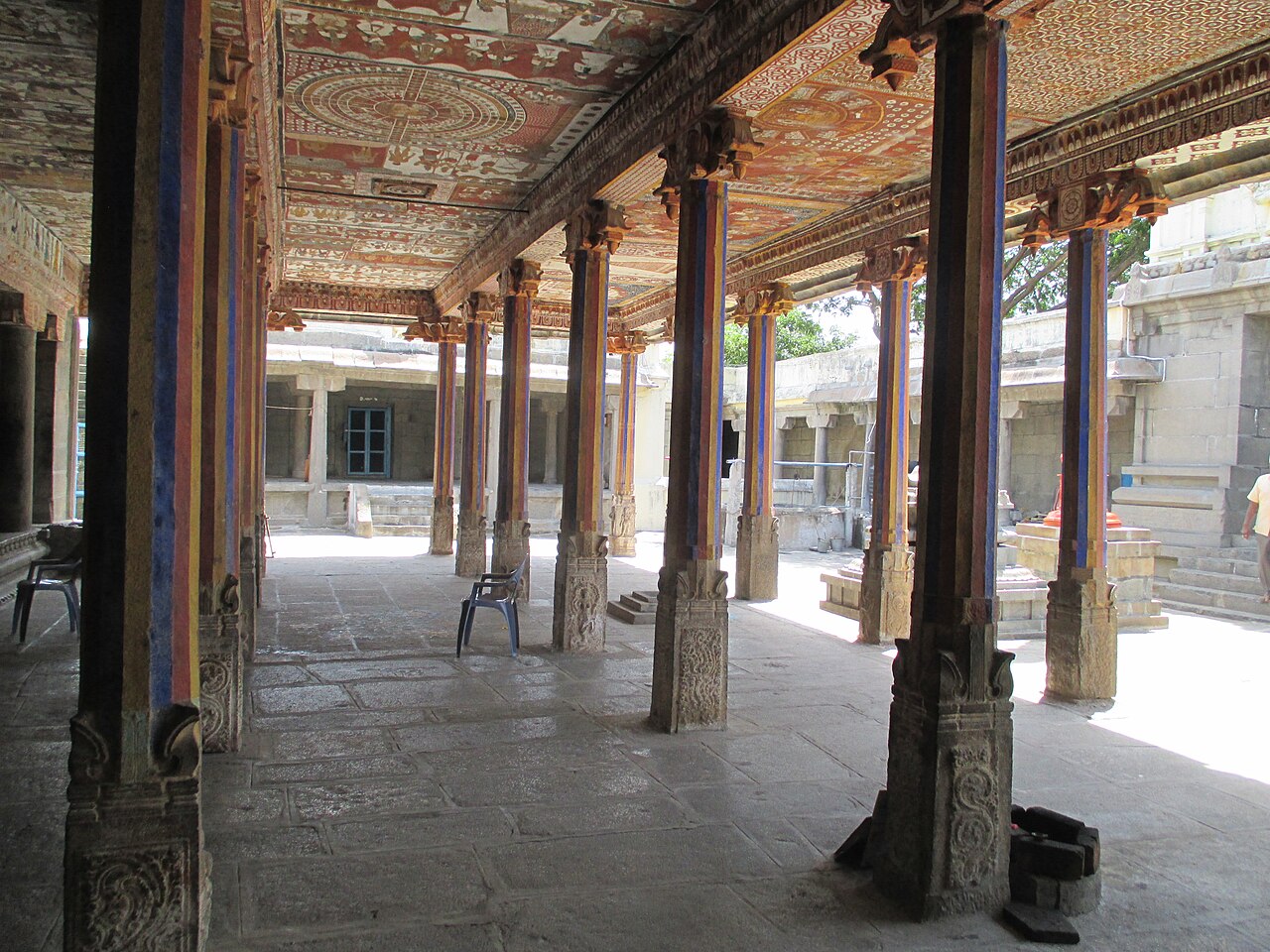
A historic Digambara Jain temple at Tiruparuttikunram (Jina Kanchi), a short trip southwest of Kanchipuram, dedicated to Trilokyanatha with shrines to Tirthankaras including Vardhamana (Mahavira), Rishabhanatha and Chandraprabha. It is a protected archaeological monument famed for its Vijayanagara-era painted ceiling panels and its Sangeetha Mandapam.
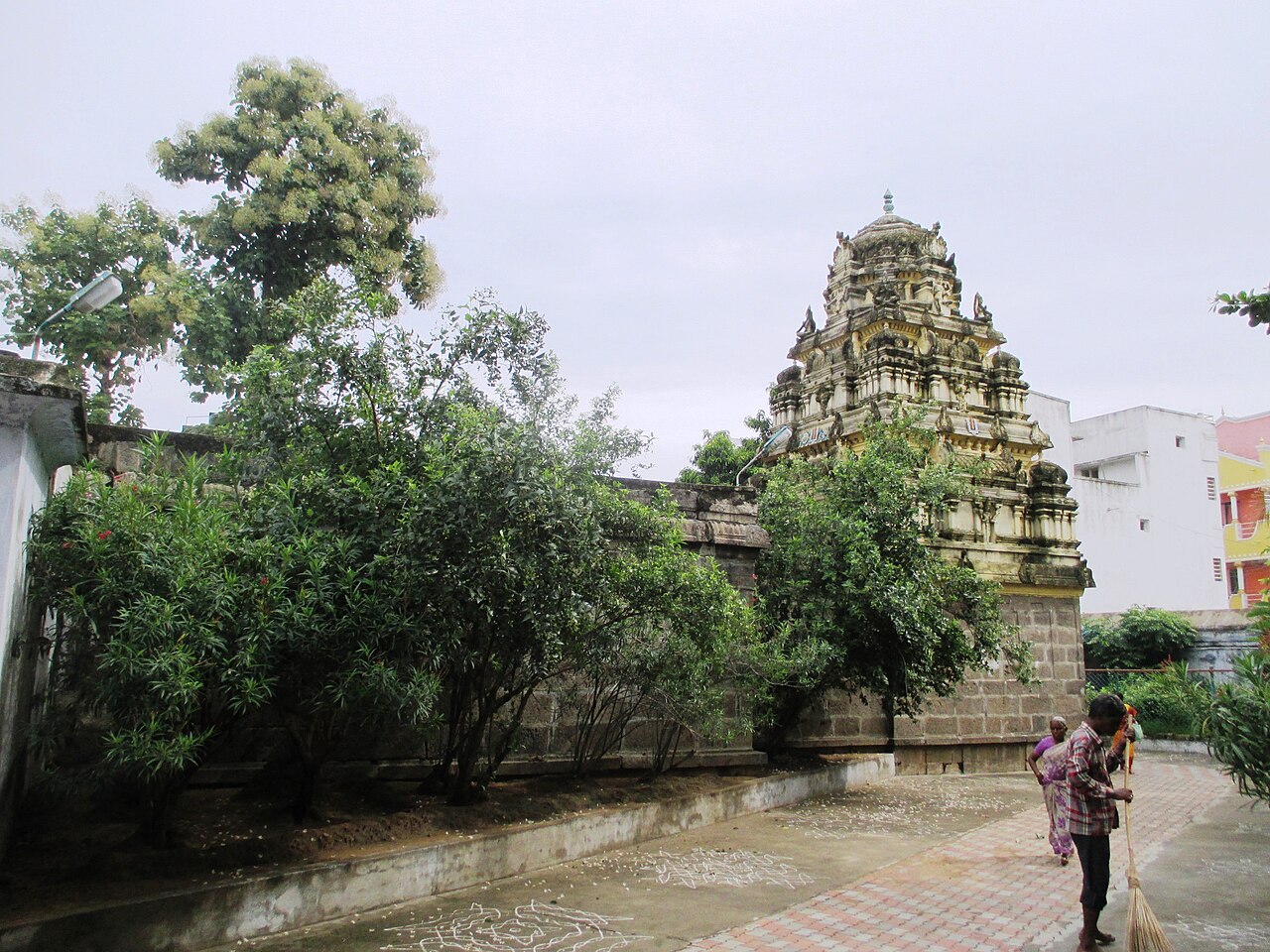
2.1 km · 26 min walk
The Yoga Narasimha (Azhagiya Singar) Perumal temple at Tiruvelukkai in Kanchipuram is one of the 108 Divya Desams, where Vishnu is worshipped as Narasimha in a rare seated yoga form. By temple tradition the site is linked to the Hiranyakashipu-Prahlada story and to sage worship, with shrines also for the consort Amruthavalli and Garuda.
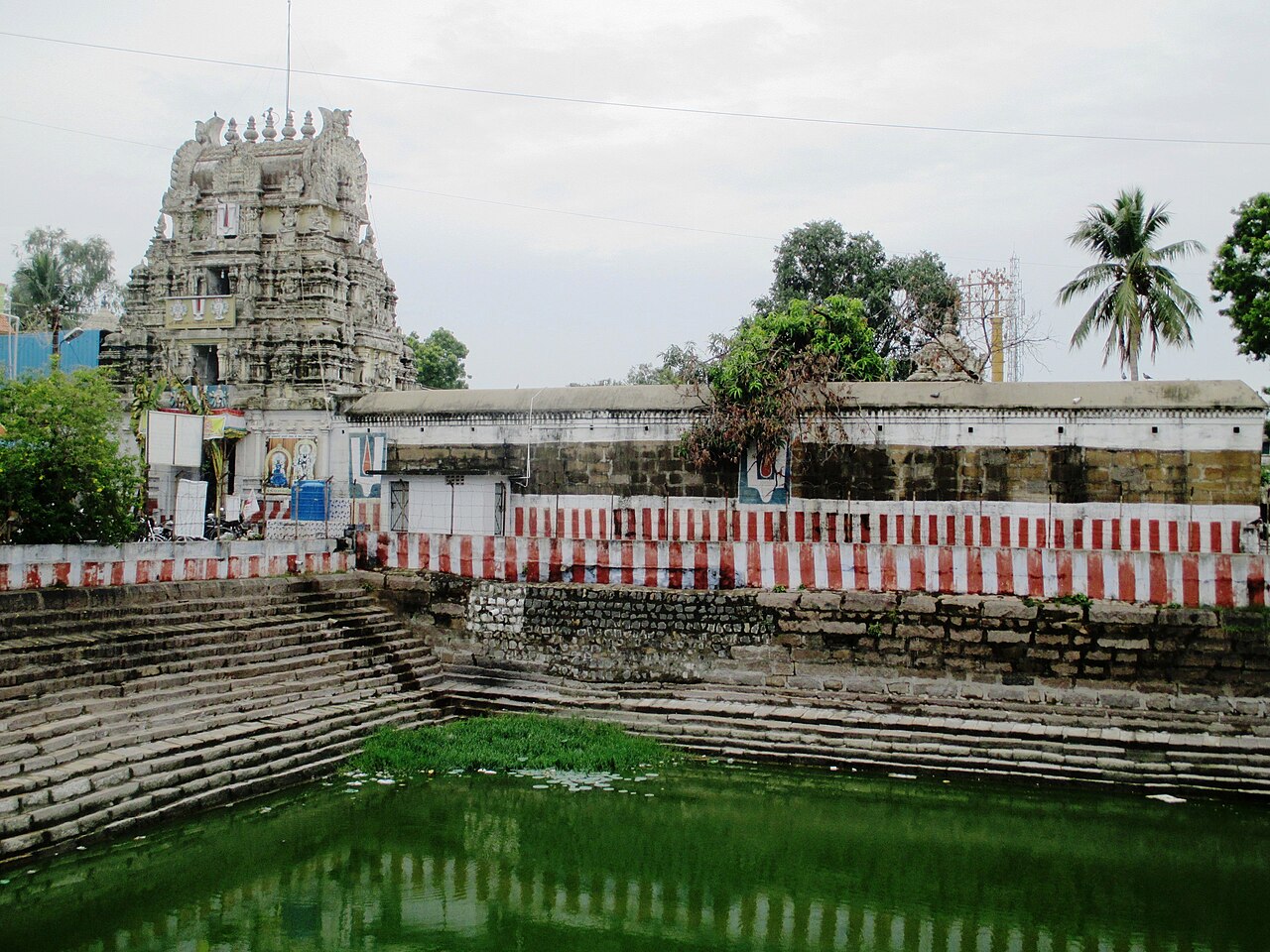
1.6 km · 20 min walk
The Ashtabhuja Perumal temple in Kanchipuram is one of the 108 Divya Desams, where Vishnu is worshipped as Ashtabhuja(m) - a striking eight-armed standing form holding weapons such as the conch, discus, bow, sword and mace. Temple tradition links this form to Vishnu protecting a sacrifice, with the consort revered as Alamelumangai.
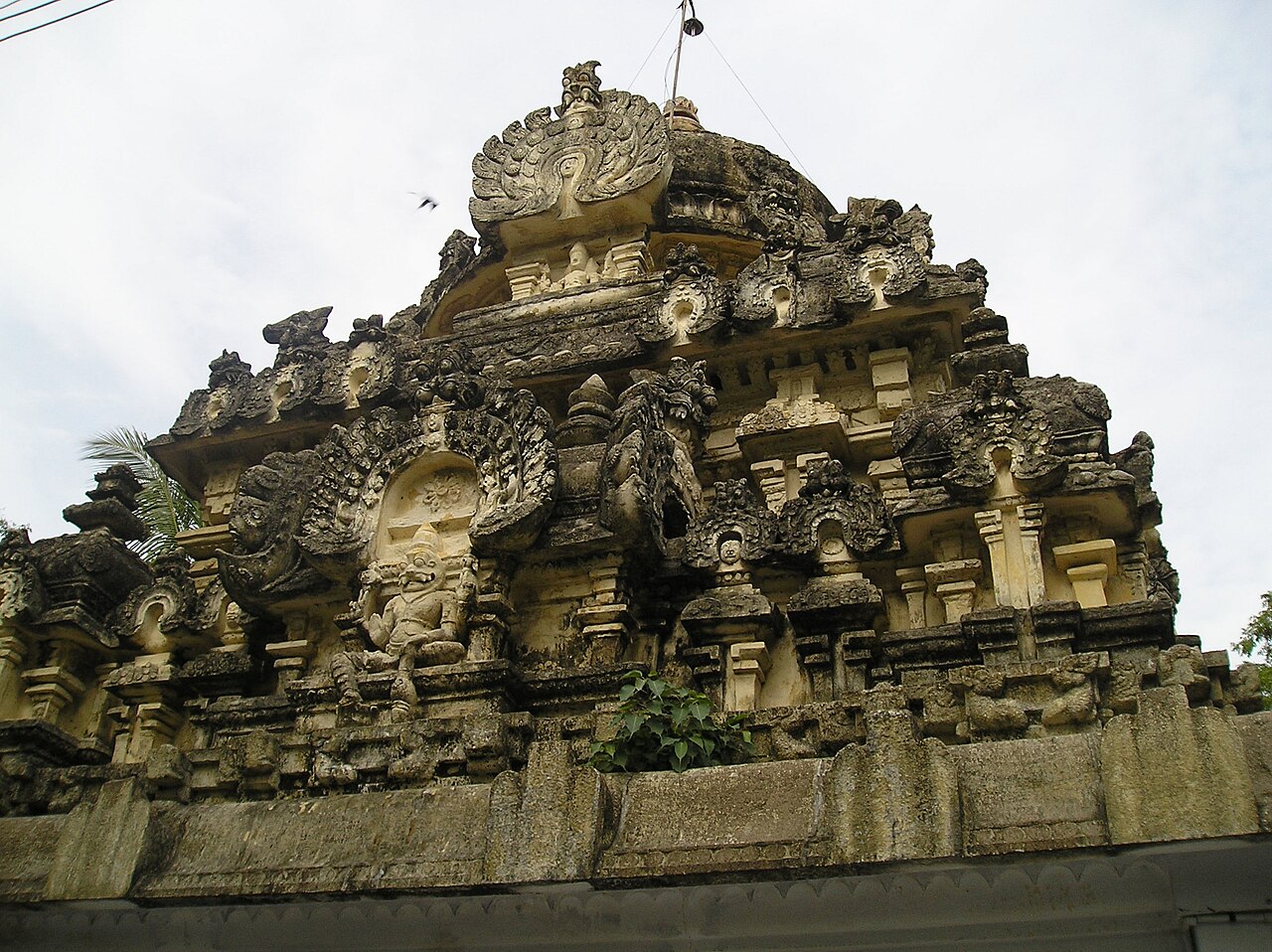
1.5 km · 19 min walk
A Vishnu temple at Tiruvekka in Kanchipuram, counted among the 108 Divya Desams, where the deity reclines as Yathothkari, also called Sonna Vannam Seitha Perumal ("the Lord who did as told"). The name and the temple are tied by tradition to the poet-saint Thirumazhisai Alvar and his consort Lakshmi is worshipped here as Komalavalli.
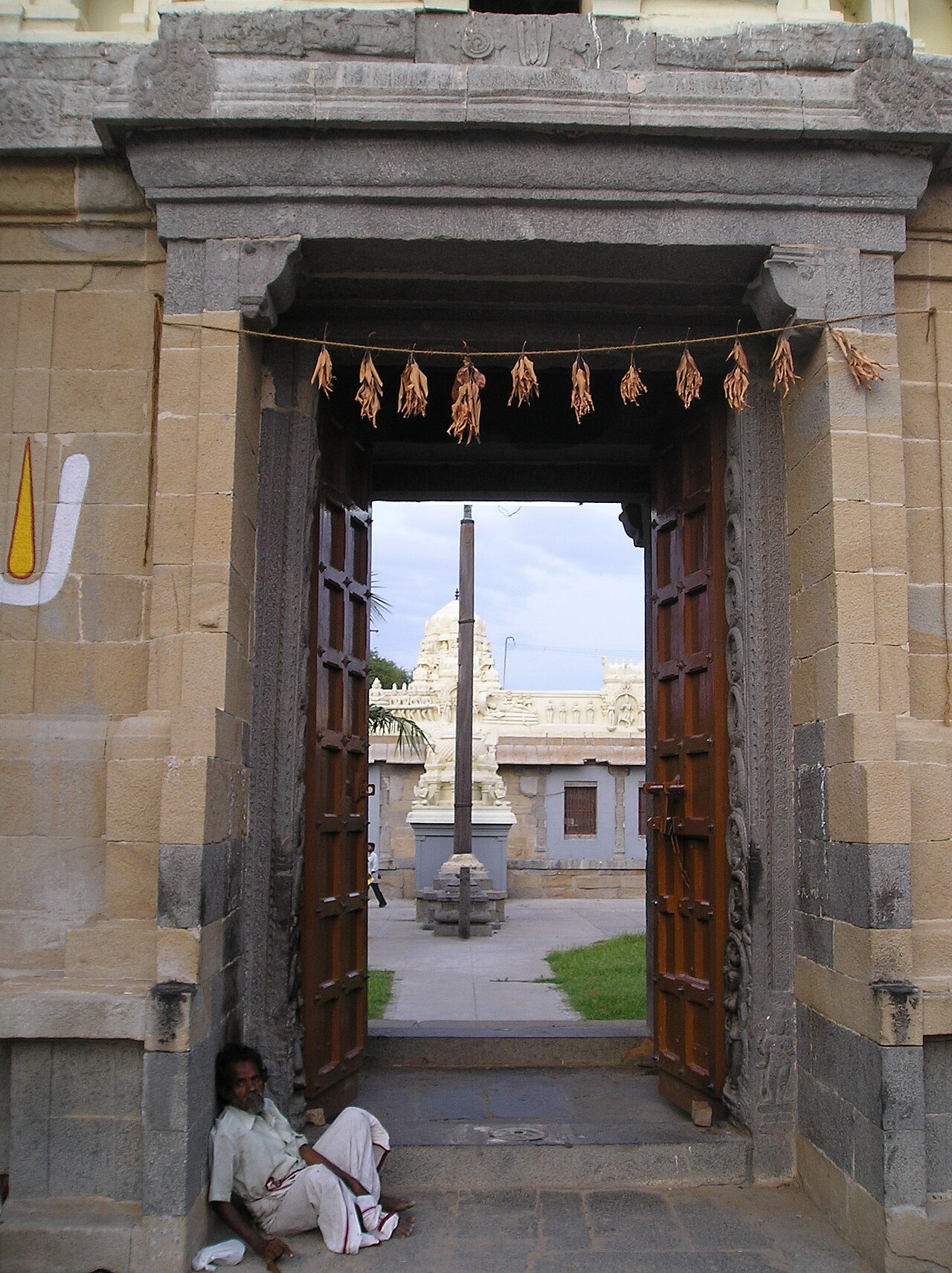
2.2 km · 28 min walk
A Vishnu temple at Thiruthanka (Thooppul), counted among the 108 Divya Desams, where the deity is worshipped as Deepaprakasar (Vilakkoli Perumal), the light-radiant one. It is revered as the birthplace of the 13th-14th century Srivaishnava philosopher-poet Vedanta Desika, whose shrine stands within. The temple also houses shrines to Hayagriva and Andal and is glorified in the hymns of the Alvars.
A Divya Desam Vishnu shrine set within the vast Ekambareswarar (Shiva) temple complex, where Vishnu is worshipped as Chandrasooda or Nilathingal Thundathan Perumal. It is one of the rare Divya Desams housed inside a Shiva temple, reflecting Kanchipuram's Shaiva-Vaishnava confluence. The name refers to the crescent moon associated with the deity.
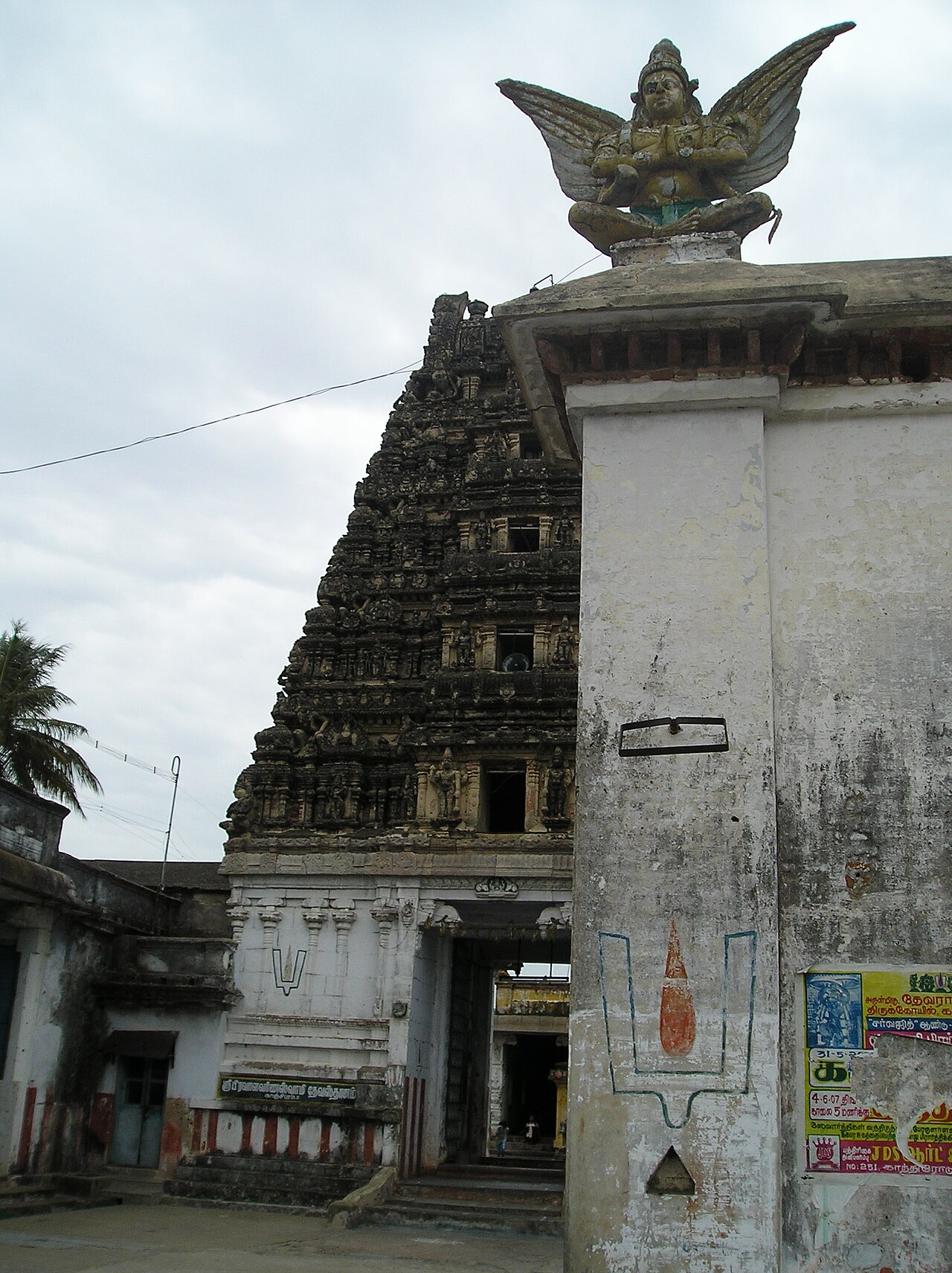
1.8 km · 23 min walk
A Divya Desam dedicated to Vishnu as Pavala Vannar, so named for the coral-red hue of the presiding deity. Tradition holds that the twin Ashvin physicians of the gods worshipped here. It is glorified in the Naalayira Divya Prabandham and forms part of the cluster of Vishnu Divya Desams that make Kanchipuram a major Srivaishnava pilgrimage centre.
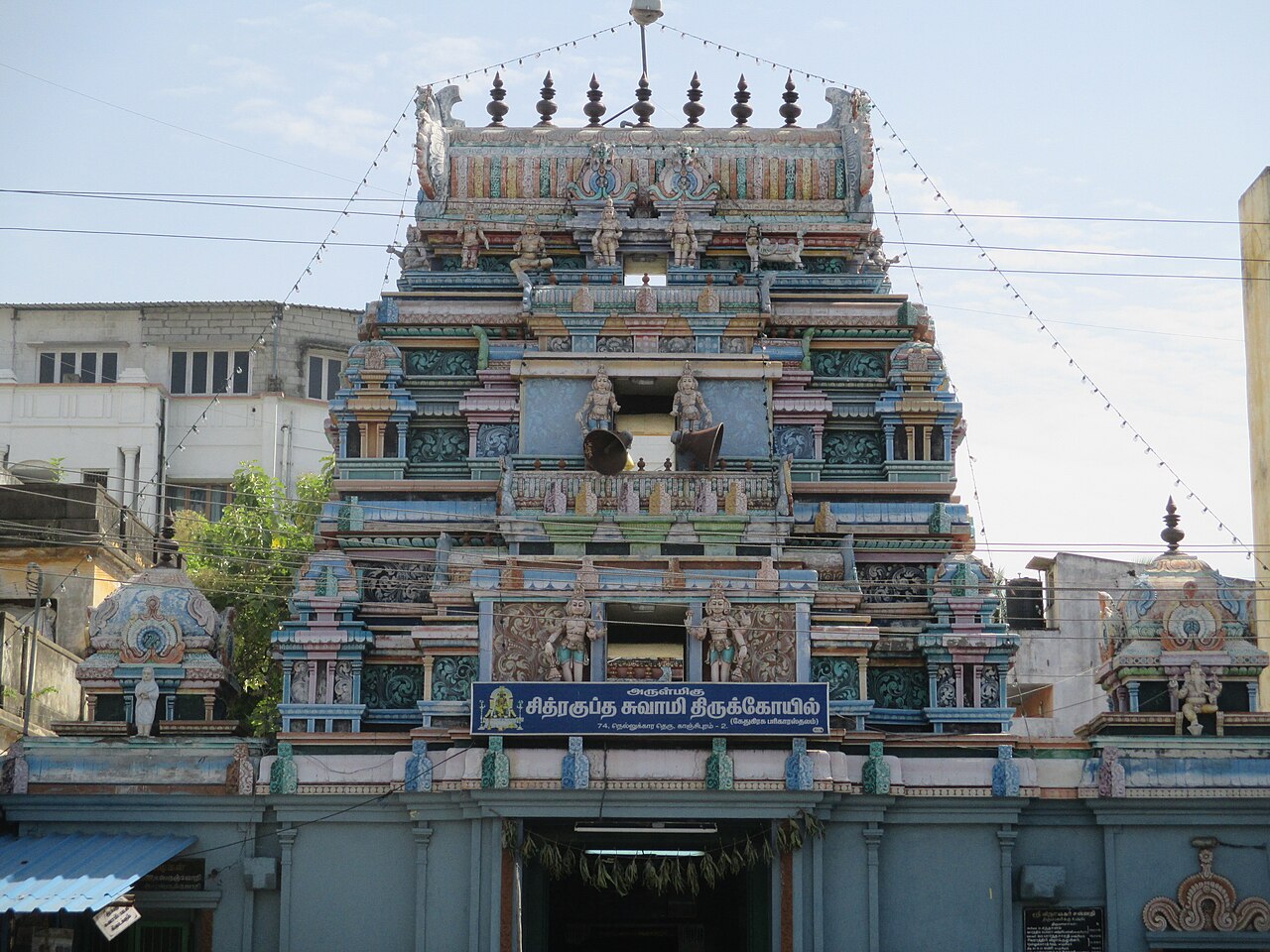
3.0 km · ~7 min by auto
Built by the Cholas in the 9th century, this is believed to be the only separate temple in India dedicated to Chitragupta, the divine accountant who records the good and bad deeds of every human. Devotees visit to seek relief from the malefic effects of the planet Ketu. Its uniqueness draws pilgrims from across South India.
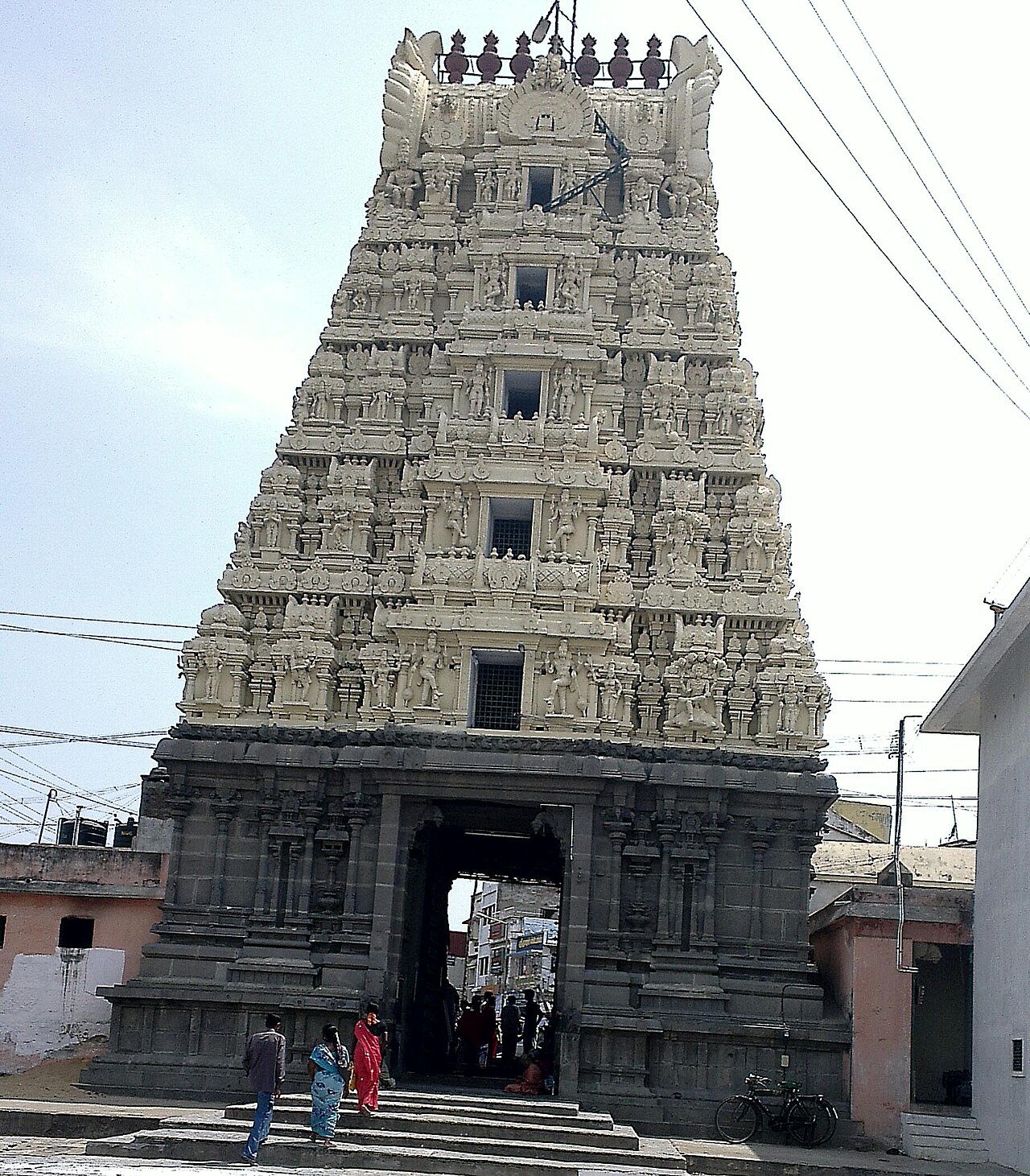
A Shiva temple of Pallava origin with later Vijayanagara additions, whose name derives from the legend that Vishnu in his tortoise (kachchapa) incarnation worshipped Shiva here. The lingam is revered as Kachabeswarar, and the temple carries fine early sculptural work. It is one of the ancient Shivalayas of the temple-city of Kanchipuram.
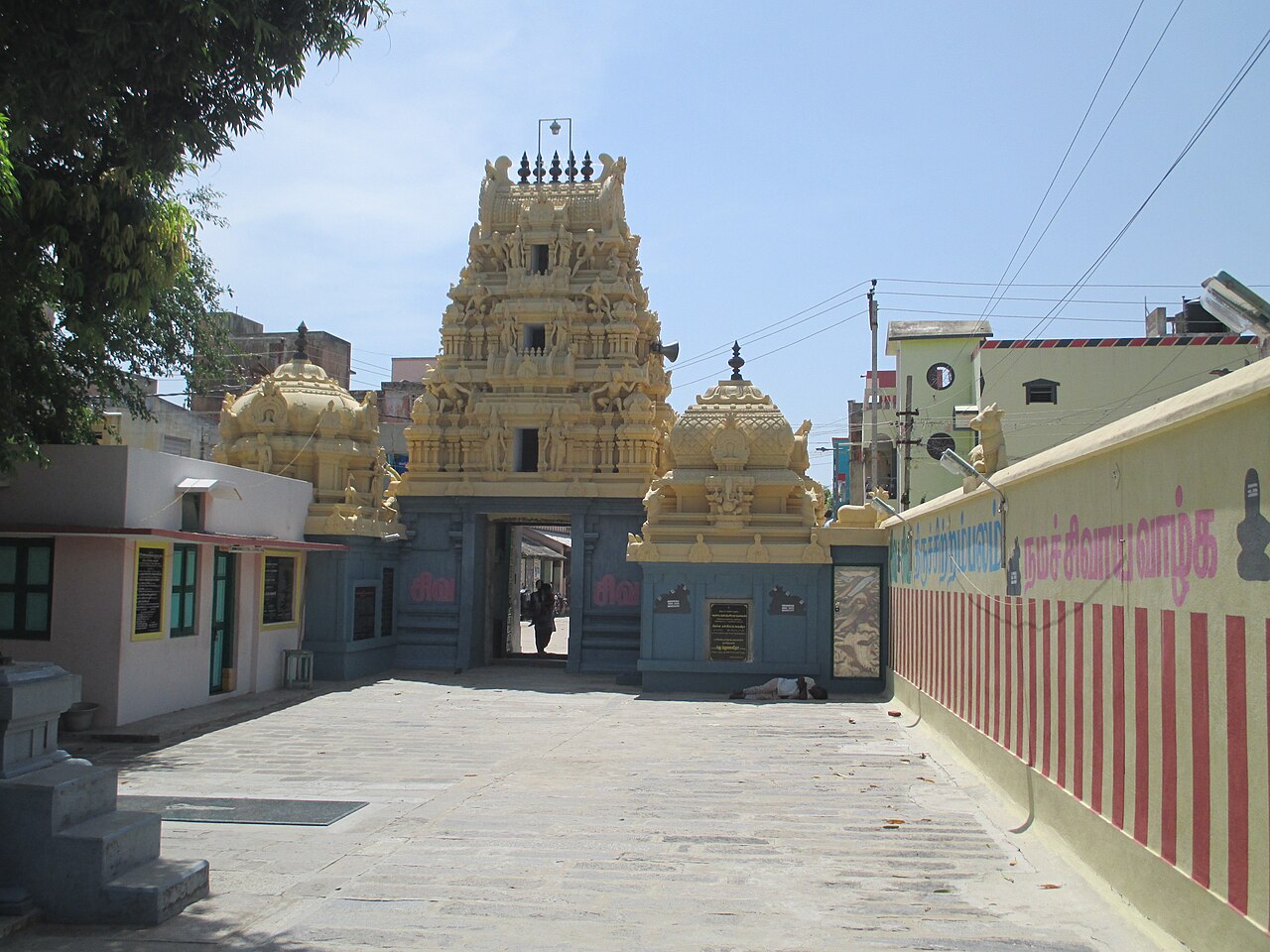
An ancient Shiva temple (Metraleeswarar) venerated in the 7th-century Tevaram hymns of the Nayanar saints Appar and Sambandar, making it a Paadal Petra Sthalam. The lingam is worshipped as Metraleeswarar. The site is one of the historic Shaiva shrines that earned Kanchipuram its fame as a city of temples.
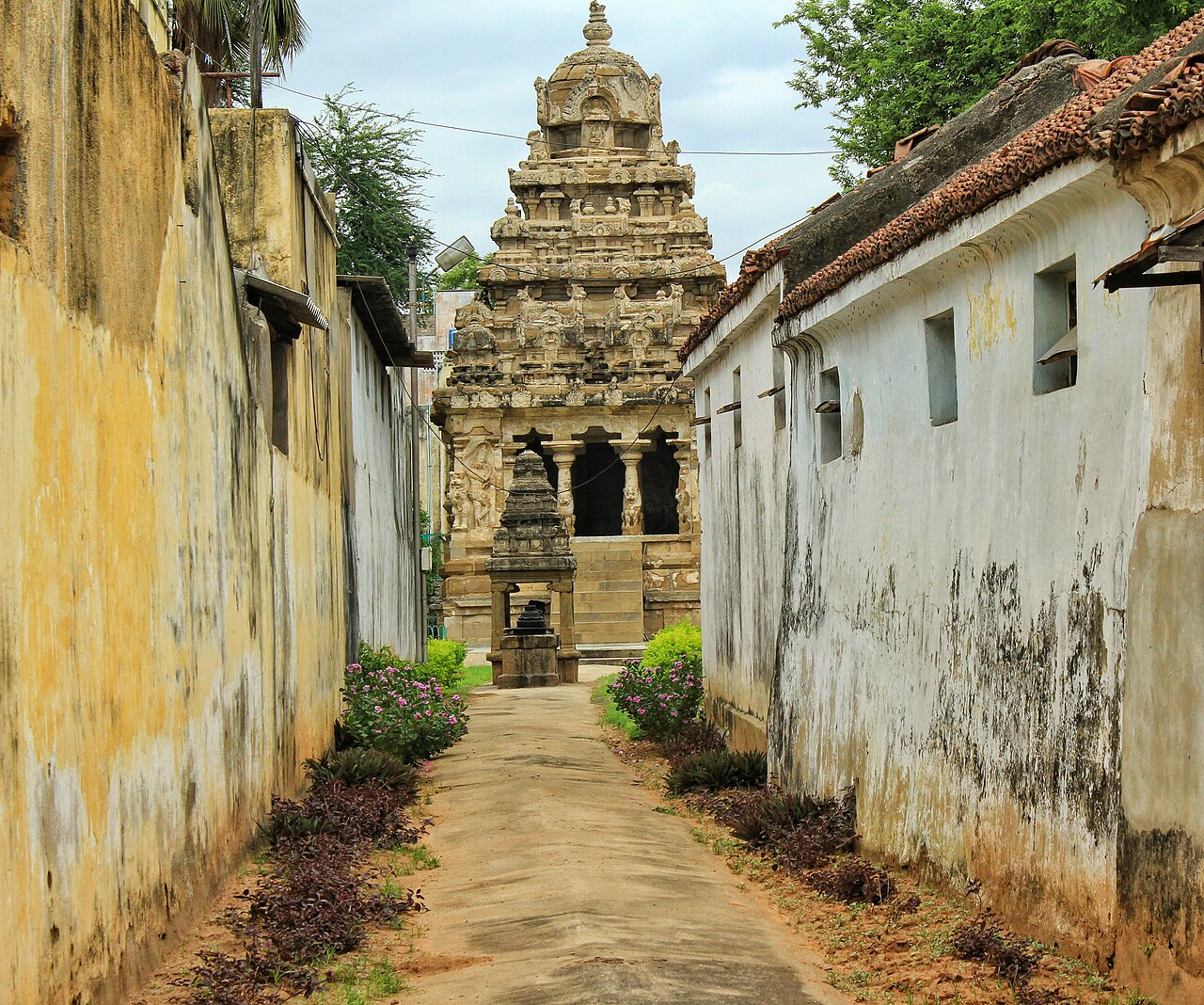
A compact Pallava-era Shiva temple built in the 8th century under the Nandivarman dynasty, prized by art historians for its bold sculptural outlines and early Dravidian vimana. Its walls carry inscriptions from the Pallava and Chola periods. It stands near the Kailasanathar temple among Kanchipuram's oldest surviving structural temples.
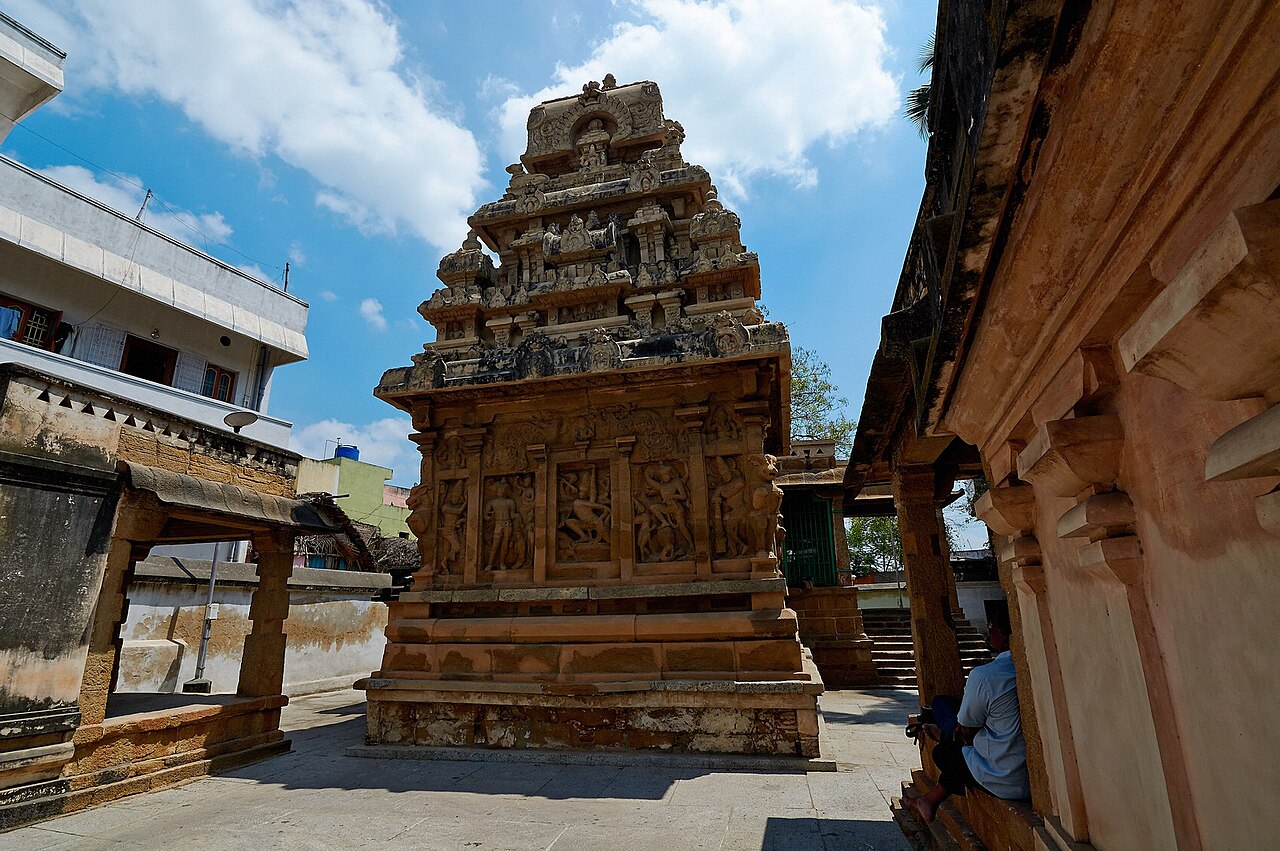
A small but architecturally important Pallava Shiva temple from the 8th century, attributed to the reign of Narasimhavarman II (Rajasimha). Built in dressed sandstone with a square vimana, it is admired as a refined example of early Dravidian structural temple design that followed the Kailasanathar temple. It preserves early Pallava-Grantha inscriptions.

A compact Pallava Shiva shrine with lion-based porch pillars, carved wall panels and a tiered stone tower. Listed by ASI as Mathangesvara Temple, it offers a close-up architectural stop in Kanchipuram.
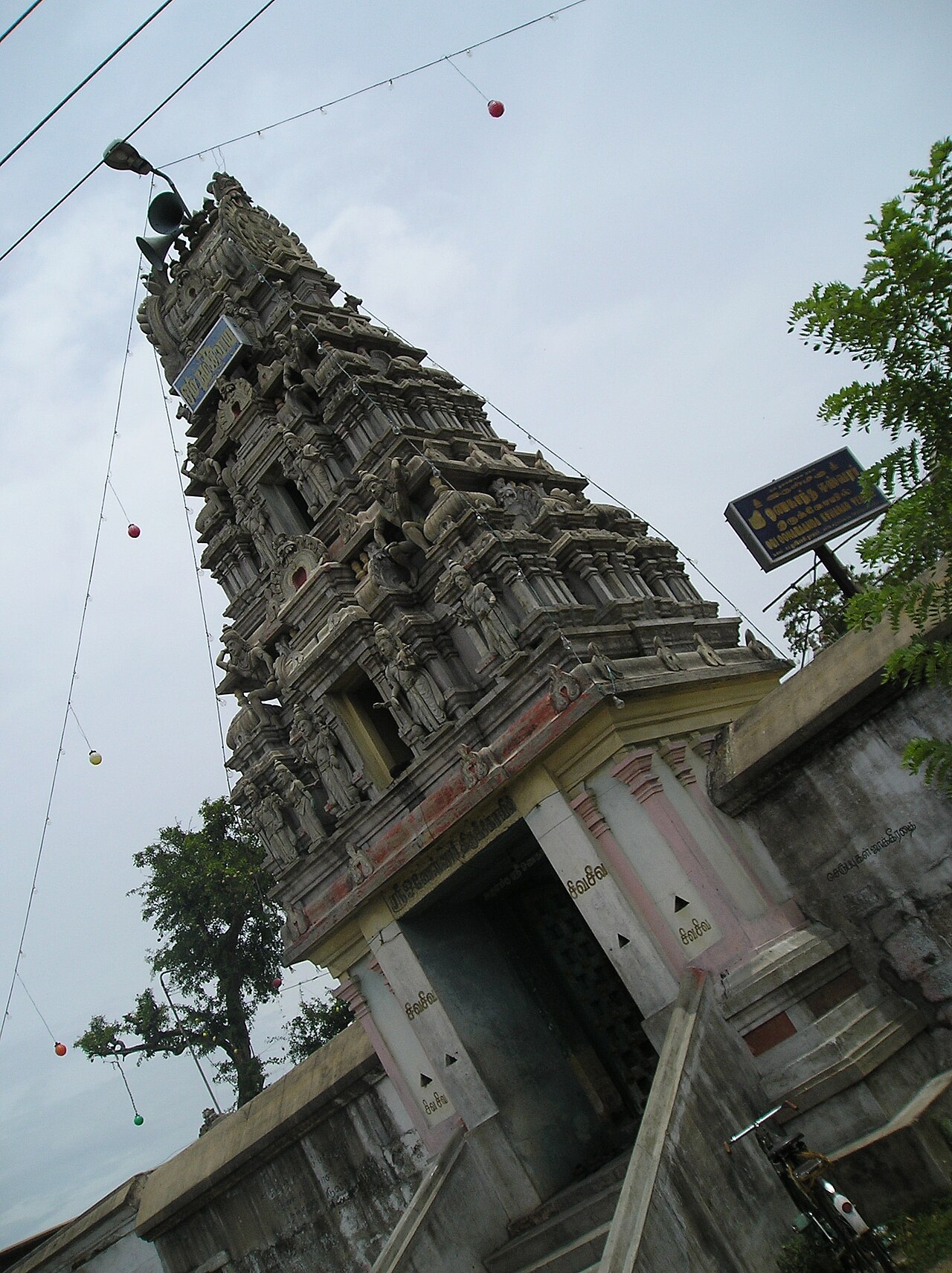
3.1 km · ~8 min by auto
An old Shiva temple where the Lord is worshipped as Ona Kantheeswarar, the lover of the Sravana (Onam) constellation, giving the shrine its distinctive name. It is one of the historic Shivalayas of Kanchipuram associated with the Tevaram tradition. Devotees born under the Sravana star hold it in special regard.
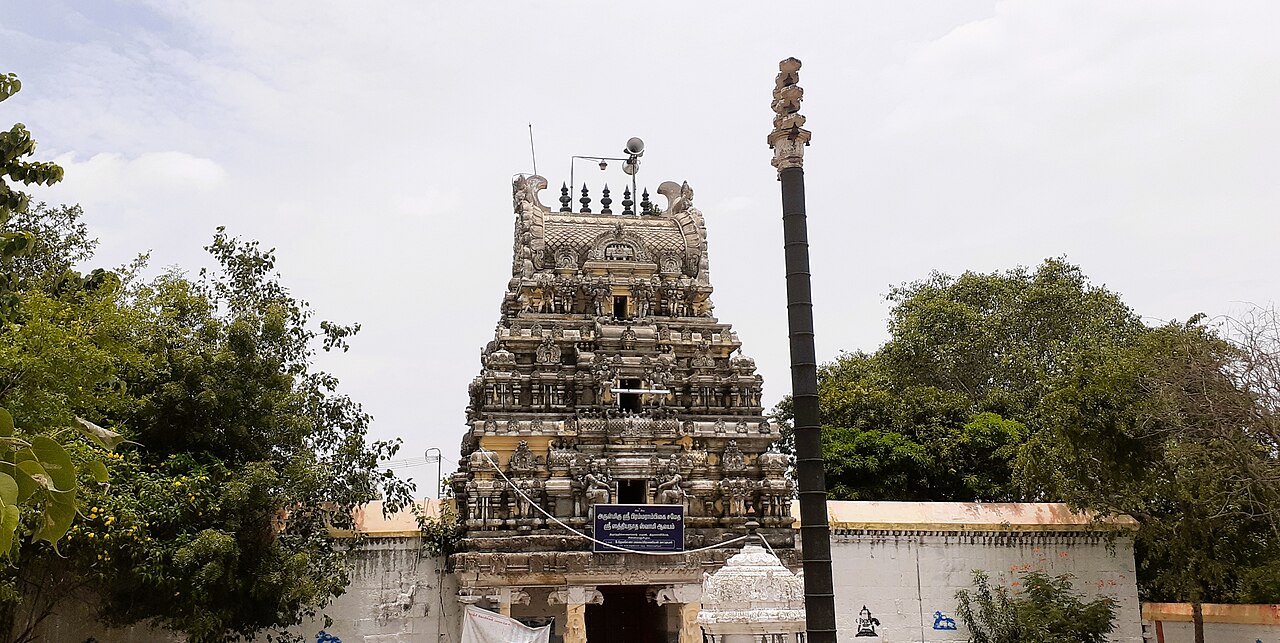
1.4 km · 17 min walk
A Shiva temple, also called Kachi Nerikkaraikkadu, venerated in the 7th-century Tevaram hymns of the saint Tirugnana Sambandar, marking it a Paadal Petra Sthalam. The presiding deity is worshipped as Sathyanatheswarar. It is among the ancient Shaiva shrines that dot the sacred landscape of Kanchipuram.
2.7 km · ~7 min by auto
A Shiva temple where the Lord is worshipped as Vazhukaruteeswarar and is traditionally believed to relieve devotees of lawsuits and litigation. This distinctive association draws people seeking resolution of legal disputes. It is one of the many specialised Shivalayas that give Kanchipuram its reputation as a city of a thousand temples.
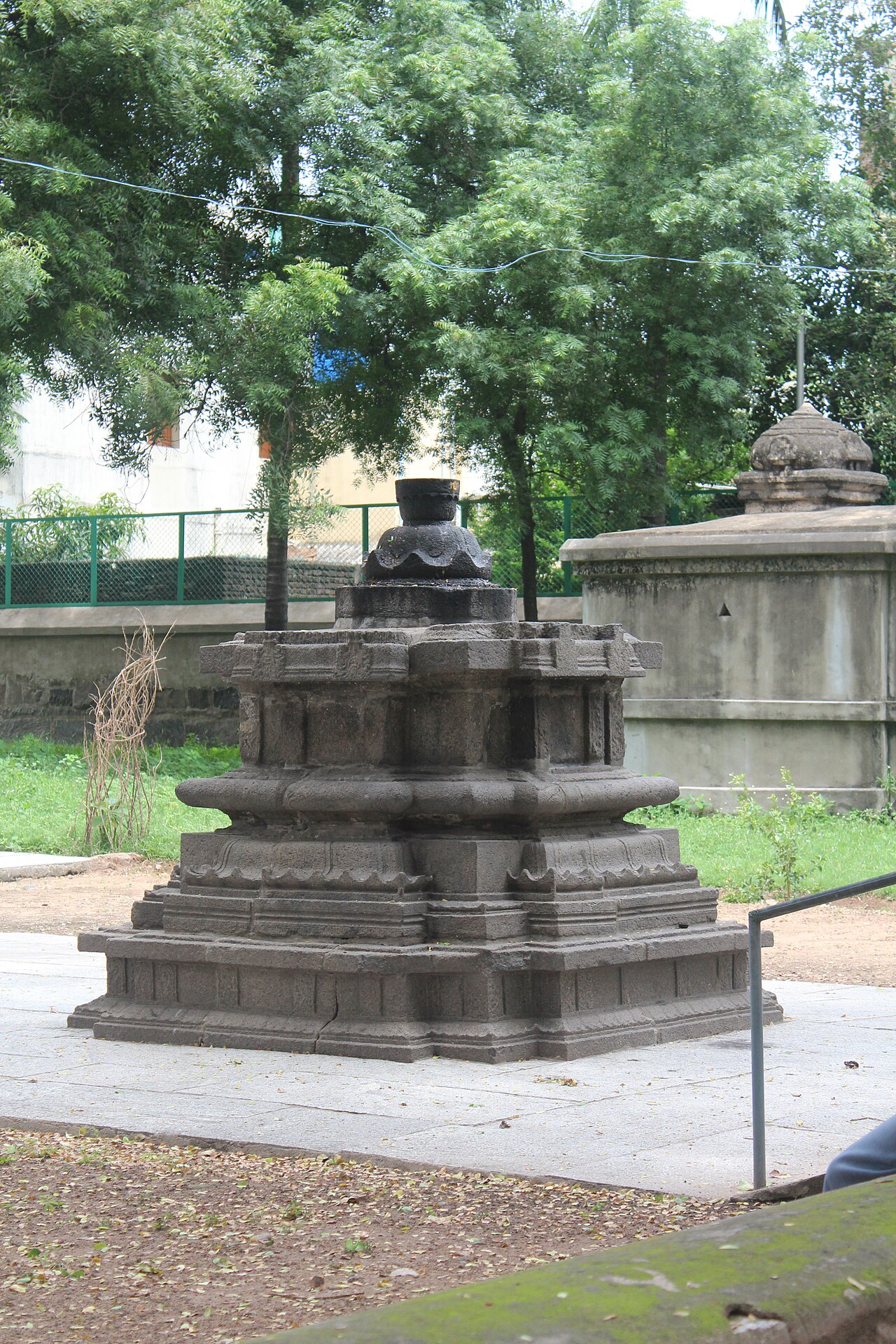
A Shiva temple whose deity, Jurahareswarar (Jvarahareswarar), is invoked to cure fevers and illness, the name literally meaning destroyer of fever. Pilgrims suffering from persistent ailments visit seeking healing. It is one of Kanchipuram's specialised Shaiva shrines linked to relief from specific afflictions.
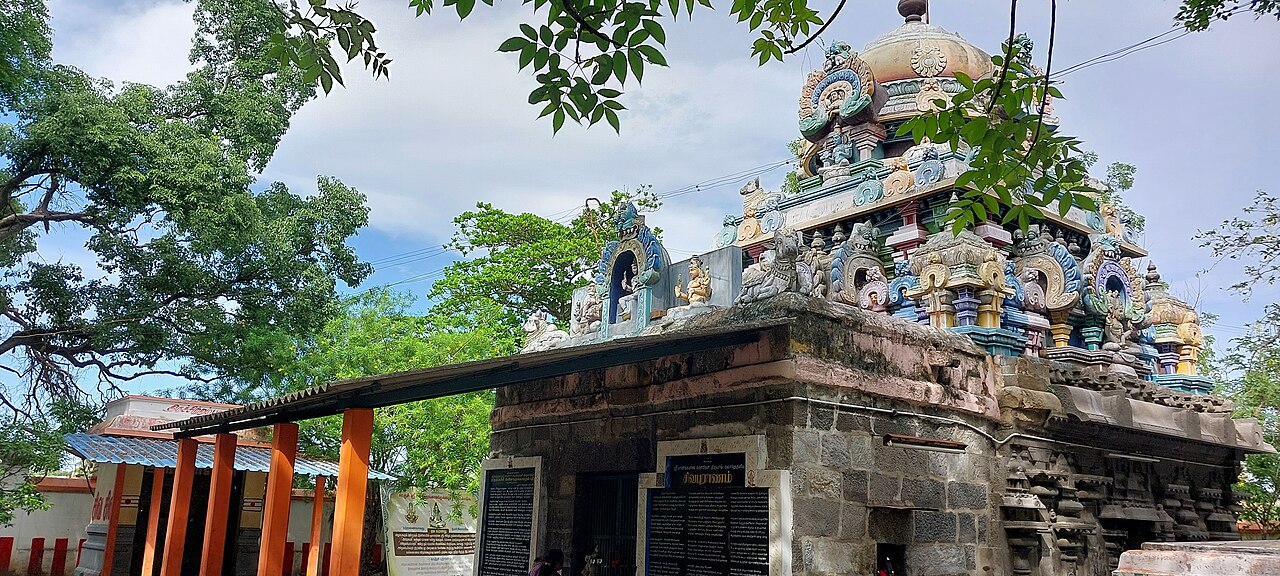
An ancient Shiva temple (Kachi Anekatangapadam) located near the Kailasanathar temple, its name evoking a forest once frequented by great crowds of people. The Lord is worshipped as Anekathangapadeswarar. It is one of the old Shivalayas woven into the dense temple fabric of Kanchipuram.
Roampedia is commission-free — own or know a stay, eatery, guide or shop near Varadharaja Perumal Temple? List it and it appears here once verified.
Add a nearby businessIf you need step-free access, contact the site before travelling. Ask about a level entrance, steps along the route, the nearest drop-off point, seating and accessible toilets.
Emergency numbers are verified against official government and state tourism sources. 112 works anywhere in India.
A Shiva temple, also called Kachi Nerikkaraikkadu, venerated in the 7th-century Tevaram hymns of the saint Tirugnana Sambandar, marking it a Paadal Petra Sthalam. The presiding deity is worshipped as Sathyanatheswarar. It is among the ancient Shaiva shrines that dot the sacred landscape of Kanchipuram.
1.4 km · 17 min walk · straight lineA Vishnu temple at Tiruvekka in Kanchipuram, counted among the 108 Divya Desams, where the deity reclines as Yathothkari, also called Sonna Vannam Seitha Perumal ("the Lord who did as told"). The name and the temple are tied by tradition to the poet-saint Thirumazhisai Alvar and his consort Lakshmi is worshipped here as Komalavalli.
1.5 km · 19 min walk · straight lineThe Ashtabhuja Perumal temple in Kanchipuram is one of the 108 Divya Desams, where Vishnu is worshipped as Ashtabhuja(m) - a striking eight-armed standing form holding weapons such as the conch, discus, bow, sword and mace. Temple tradition links this form to Vishnu protecting a sacrifice, with the consort revered as Alamelumangai.
1.6 km · 20 min walk · straight lineA Divya Desam dedicated to Vishnu as Pavala Vannar, so named for the coral-red hue of the presiding deity. Tradition holds that the twin Ashvin physicians of the gods worshipped here. It is glorified in the Naalayira Divya Prabandham and forms part of the cluster of Vishnu Divya Desams that make Kanchipuram a major Srivaishnava pilgrimage centre.
1.8 km · 23 min walk · straight lineThe Yoga Narasimha (Azhagiya Singar) Perumal temple at Tiruvelukkai in Kanchipuram is one of the 108 Divya Desams, where Vishnu is worshipped as Narasimha in a rare seated yoga form. By temple tradition the site is linked to the Hiranyakashipu-Prahlada story and to sage worship, with shrines also for the consort Amruthavalli and Garuda.
2.1 km · 26 min walk · straight lineA Vishnu temple at Thiruthanka (Thooppul), counted among the 108 Divya Desams, where the deity is worshipped as Deepaprakasar (Vilakkoli Perumal), the light-radiant one. It is revered as the birthplace of the 13th-14th century Srivaishnava philosopher-poet Vedanta Desika, whose shrine stands within. The temple also houses shrines to Hayagriva and Andal and is glorified in the hymns of the Alvars.
2.2 km · 28 min walk · straight lineKanchipuram (Kanjivaram) silk sarees are a centuries-old handloom tradition woven in pure mulberry silk with real gold-and-silver zari, best known for the contrast korvai border and pallu woven separately and interlocked by hand, and for temple-inspired motifs. The craft carries a Geographical Indication (GI) tag registered in 2005-06, protecting sarees genuinely made in and around Kanchipuram town by its traditional weaver communities.
2.3 km · 29 min walk · straight lineAn 8th-century Pallava Vishnu temple in Kanchipuram, also called Tiru Parameswara Vinnagaram, built by Nandivarman II Pallavamalla. It is prized by historians for its carved bas-relief panels and its unusual arrangement of three stacked sanctums.
2.6 km · ~6 min by auto · straight lineA Shiva temple where the Lord is worshipped as Vazhukaruteeswarar and is traditionally believed to relieve devotees of lawsuits and litigation. This distinctive association draws people seeking resolution of legal disputes. It is one of the many specialised Shivalayas that give Kanchipuram its reputation as a city of a thousand temples.
2.7 km · ~7 min by auto · straight lineBuilt by the Cholas in the 9th century, this is believed to be the only separate temple in India dedicated to Chitragupta, the divine accountant who records the good and bad deeds of every human. Devotees visit to seek relief from the malefic effects of the planet Ketu. Its uniqueness draws pilgrims from across South India.
3.0 km · ~7 min by auto · straight lineAn old Shiva temple where the Lord is worshipped as Ona Kantheeswarar, the lover of the Sravana (Onam) constellation, giving the shrine its distinctive name. It is one of the historic Shivalayas of Kanchipuram associated with the Tevaram tradition. Devotees born under the Sravana star hold it in special regard.
3.1 km · ~8 min by auto · straight lineA Vishnu temple in central Kanchipuram counted among the 108 Divya Desams (Tiru Ooragam), famous for its towering image of Vishnu as Trivikrama/Ulagalantha, 'he who measured the worlds,' with one leg raised. Temple tradition links the form to the Vamana avatar and the legend of King Mahabali, and the complex uniquely enshrines several Divya Desam shrines within one precinct.
3.1 km · ~8 min by auto · straight lineThe carved hundred-pillared hall is a principal point of interest; confirm which areas are open.
No. Check the specific event and current temple arrangements before travelling for it.
An open worship session with extra time for the architectural areas.
Plan this separately from the temples nearer your other city stops. Ask about hall access as well as darshan.
Allow one to two hours, longer during major celebrations.
Nearby you can pair Sathyanatheswarar Temple (1.4 km), Yathothkari Perumal Temple (1.5 km), Ashtabhujakaram Temple (1.6 km), Pavalavannar Temple (1.8 km).
Written about Varadharaja Perumal Temple itself — its history, its legends and the arguments about them.
These guides explore Kanchipuram and the surrounding area. Choose a visit that fits your interests, allowing separately for travel between stops.
Route-level itineraries and practical guides for the rest of Tamil Nadu.
Photographs: Luistxo (CC BY-SA 4.0), Ms Sarah Welch (CC BY-SA 4.0). Wikimedia Commons.
