What to expect
Highlights
- Delhi Gate and Arcot Fort — The surviving gateway of the 18th-century fort built by Mughal governor Daud Khan Panni, capital of the Nawabs of the Carnatic. Robert Clive's 50-day defence of Arcot in 1751 was a landmark in British expansion in India, and the fort was later razed by Tipu Sultan in 1783.
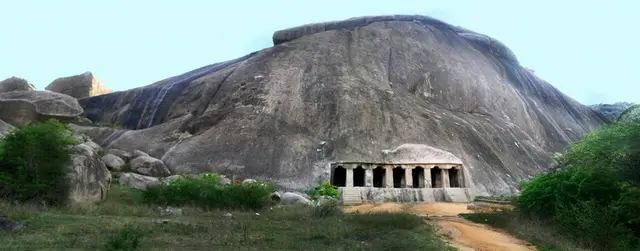
- Pancha Pandava Malai Jain Caves, Vilapakkam — A Jain rock-cut cave complex on a hillock near Vilapakkam, one of the largest excavations in the Pallava Mahendra style, with sculpted pillars, a Yakshini goddess image and early-medieval Jain inscriptions. The area was a flourishing Jain centre from about the 9th to 11th centuries and is protected as an ancient monument.
- Arcot — A historic town on the Palar that served as the capital of the Nawabs of the Carnatic and forms a tri-city with Walajapet and Ranipet. Its heritage includes the Jama Masjid, the tomb of Saadatullah Khan I, the Delhi Gate and the famous 1751 siege by Robert Clive.
- Sri Varadaraja Perumal Temple, Arcot — An ancient Vishnu temple on the banks of the Palar river at Arcot, distinguished by a towering five-tiered Rajagopuram. It is one of the principal Vaishnavite shrines of the Arcot region and is administered by the Tamil Nadu HR&CE department.
- Tipu Mastan Aulia Dargah, Arcot — The tomb-shrine of the 18th-century Sufi saint Hazrat Tipu Mastan Aulia at Arcot. Legend holds that Hyder Ali named his son Tipu Sultan after receiving the saint's blessing. The dargah is a well-known symbol of inter-faith harmony and hosts an annual urs festival drawing pilgrims across communities.
- Arcot Jama Masjid and Nawab Tombs — A Nawabi-era mosque within the old Arcot fort precinct, standing beside two tanks alongside the tomb of Saadatullah Khan, an early Nawab of the Carnatic. The masjid and adjoining structures near the citadel are ASI-protected and are among the surviving relics of Arcot's period as capital of the Carnatic Nawabs.


.JPG/1280px-Sholingar_(15).JPG)