Places to Visit in Thirubuvanam

A silk-weaving village between Kumbakonam and Mayiladuthurai, holding the last great Chola temple and the co-operative that owns the Thirubuvanam saree's GI — and sitting inside a 15 km circle of the delta's best-known temples.

Kampahareswarar Temple, Thirubuvanam
Practical guide

Plan Thirubuvanam

Who's going?Tailor Thirubuvanam to your trip
DistrictThanjavur
RoleChola-country village base
Time neededAn hour and a half does the temple…
Places to visit10Listed businesses5
What to expect

Highlights

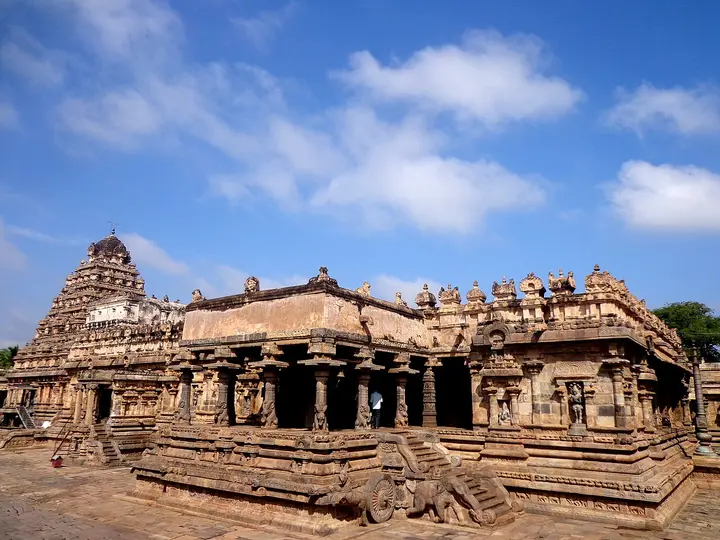
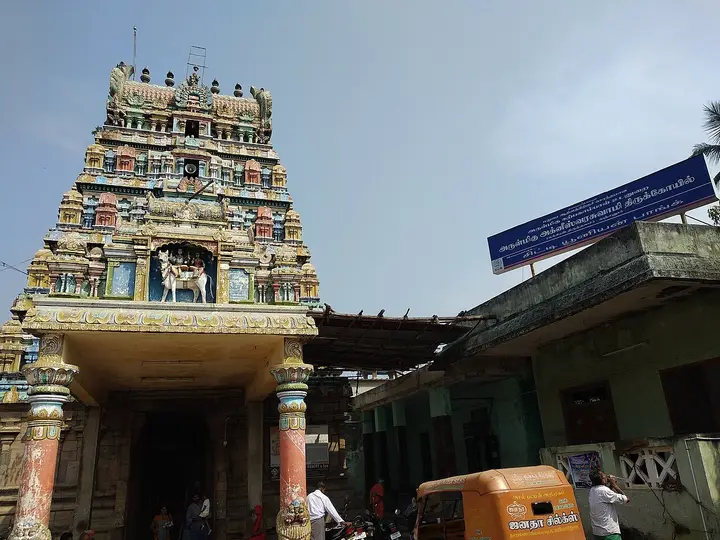
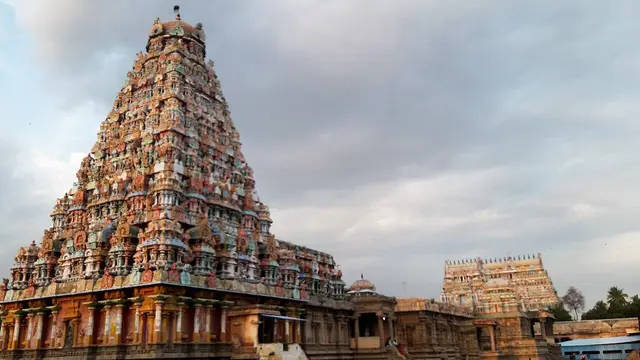
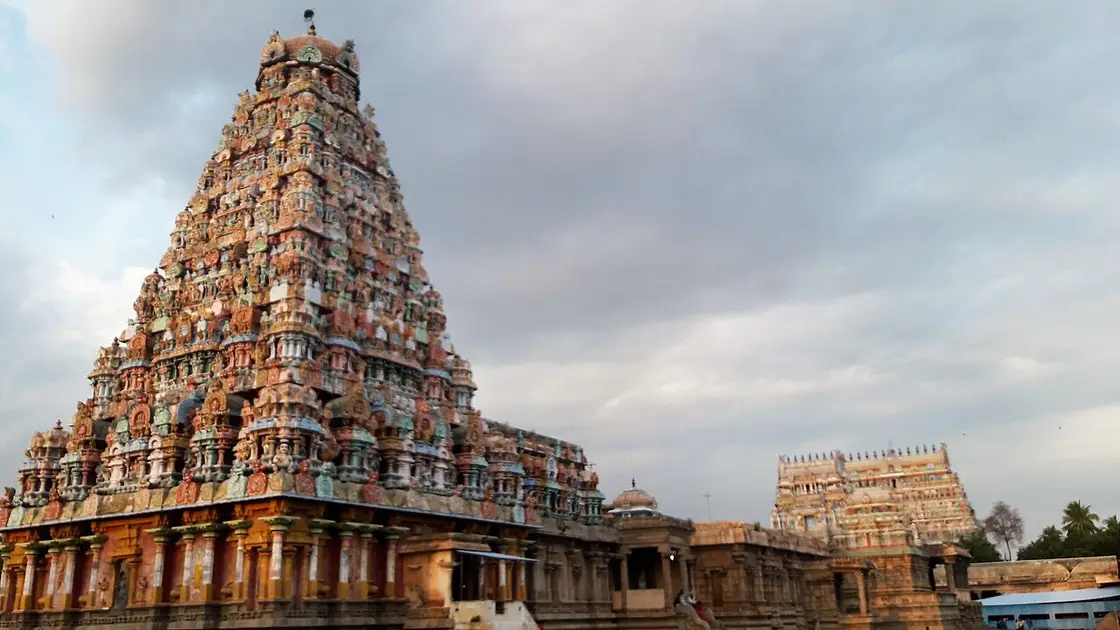
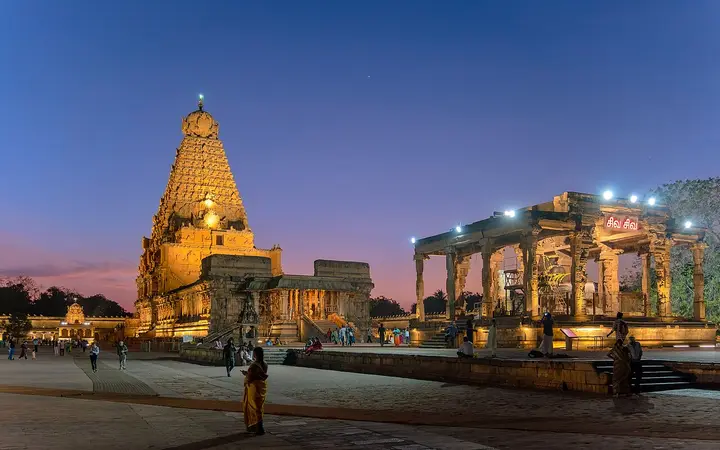
  • Kampahareswarar Temple — The last of the great Chola temples, raised by Kulothunga Chola III around 1176 CE to mark a northern campaign. Its vimana stands taller than its own gateway tower — the Chola signature shared with Thanjavur, Gangaikonda Cholapuram and Darasuram, though unlike those three it carries no UNESCO listing. It is the only temple in the country with a shrine to Sarabha, the winged lion-man form Shiva is said to have taken to calm Narasimha, and the name means "the Lord who stilled the trembling".
  • Thirubuvanam Silk Weaving — The second reason to stop here, and the one you can walk into. Thirubuvanam weaves silk sarees on pit looms set into the floors of sheds behind ordinary front doors, and the trade runs through one body — the Thirubuvanam Silk Handloom Weavers Co-operative, registered in 1955 and known as THICO — which also holds the Geographical Indication the cloth was granted in March 2019. Its counter is on Sannathi Street a couple of hundred metres east of the temple, which makes this one of the few crafts in Tamil Nadu you can buy from the society that owns its name, in the village the name refers to. What to look at before you buy: the korvai join, where a pallu of a different colour is interlocked thread by thread with the body rather than stitched on.
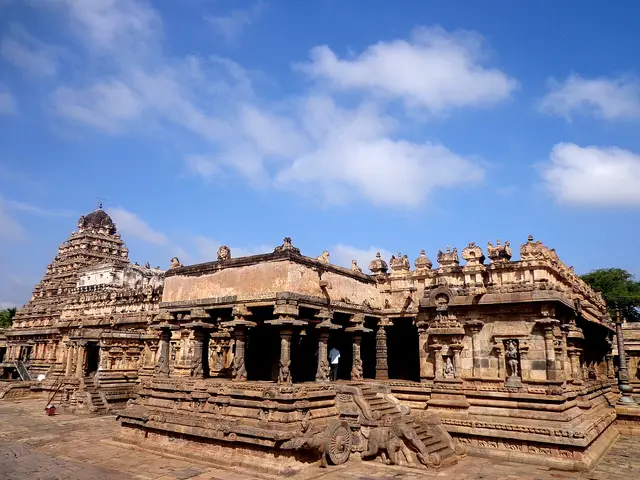
  • Airavatesvara Temple — A UNESCO-listed Great Living Chola Temple at Darasuram near Kumbakonam, built by Rajaraja Chola II in the 12th century and famous for its stone chariot-form mandapa and “musical” steps. It is a day trip east of Thanjavur.
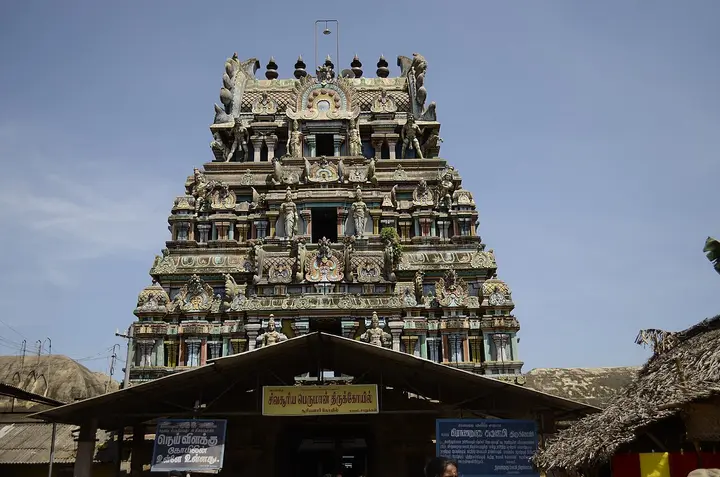
  • Sarangapani Temple — One of the largest Vishnu temples in the Cauvery delta and a Divya Desam, its towering gopuram dominates central Kumbakonam; the sanctum is shaped like a temple chariot drawn by horses and elephants.
  • Adi Kumbeswarar Temple — The principal Shiva temple of Kumbakonam and the town’s namesake, at the heart of the old bazaar; the focus of the 12-yearly Mahamaham festival at the nearby tank.
  • Swamimalai Murugan Temple — The Swaminathaswamy (Murugan) temple at Swamimalai, one of the six sacred “Padai Veedu” abodes of Murugan, reached by a flight of steps; the surrounding town is the living centre of Chola-style lost-wax bronze icon-making. About 7 km west of Kumbakonam.
Getting there

How to visit

  • Nearest airport: Tiruchirappalli (TRZ), ~55–60 km
  • Rail gateway: Thanjavur Junction (TJ)
  • Frequent TNSTC and private buses link Thanjavur with Tiruchirappalli, Kumbakonam, Madurai and Chennai; confirm current timings before travel.
Timing

Best time to visit Thirubuvanam

November to February, and mornings in any month. The delta is flat, unshaded and hot, April to June is severe, and you cross the temple courts barefoot on granite that is uncomfortable well before noon from March onwards. The north-east monsoon runs roughly October to December and brings the main rain, which can put water across low-lying delta roads. The big date is the Panguni Brahmotsavam, eighteen days in March or April — worth seeing and genuinely crowded, in a village with no infrastructure for crowds.

Weather in ThirubuvanamSeasonal guide

Live forecast loads in your browser.

Today at Thirubuvanam
Sunrise6:03 am
Sunset6:23 pm
Golden hour best light5:23 pm–6:23 pm
Blue hour after sunset6:23 pm–6:48 pm
Sun sets toward compass bearingW · 279°
Moon tonight🌖 Waning gibbous · 83%
South-west monsoon. June to September is the south-west monsoon in Tamil Nadu. Expect heavy showers, mostly in bursts rather than all day — carry rain cover, allow extra time for getting around, and note that ferries and open-air sites are the first things affected.

Sun and moon are calculated for this location and shown in IST. Photography windows are the hour around sunrise and sunset; the sunset bearing is degrees clockwise from true north. Moon phase is accurate to about half a day.

Visitor notes

  • This is a working temple, not a monument with worship attached. Leave your shoes at the stand, dress accordingly, and expect the sanctum to run on its own schedule rather than yours.
  • Non-Hindus are not admitted to the inner sanctum of some Tamil temples and practice varies from one to the next. Ask at the door rather than assuming either way.
  • The looms are in private homes. There is no tour, no workshop visit and no arrangement to see one — if you are invited in, you were invited; if not, that is a normal answer and not a snub.
  • The middle of the day is dead here in a way it is not even in Kumbakonam. The temple shuts, the shops on the main road thin out, and there is nowhere to sit and wait it out.
  • Deliberately not guessed, because we could not confirm them from a primary source: the exact opening and closing times of the temple, the camera permit charge, and the 2027 Panguni Brahmotsavam dates. Every one of those is quoted differently across travel sites and we would rather say we do not know.
The story

The story of Thirubuvanam

A delta village of about fifteen thousand people that holds two things of national standing and has no idea it is supposed to be famous for either — the last great temple the Cholas built, and a silk saree with its own GI tag.

Thirubuvanam is a panchayat town in the Thiruvidaimarudur taluk of Thanjavur district, on the road that runs east out of Kumbakonam towards Mayiladuthurai. From that road it presents about four hundred metres of frontage: a bus stop, provision shops, a medical shop, a computer centre, a branch library, and behind them streets of low houses laid out on the old temple grid — North Madavilagam, Thirumanjana Veethi, Sannathi Street. The 2011 census counted 14,989 people. It has a PIN code, 612103, a chairman and a hospital, and it is small enough that the temple gate is a five-minute walk from the middle of it, 424 metres by the actual footpath.

What the village does for a living is weave. The population is described in the plainest available terms by its own census summary — it consists primarily of silk weavers — and the trade is not folklore or a heritage exercise. It is the reason the houses are the size they are, and it is conducted almost entirely out of sight, on pit looms set into the floors of sheds behind ordinary front doors. If you walk the streets at ten in the morning what you hear is not traffic. It is the beat of a fly shuttle going across, again, again, from four or five directions at once.

The cloth those looms make is the Thirubuvanam silk saree, and on 11 March 2019 the Government of India registered it as a Geographical Indication — number 60 on the national list of GI-registered handloom products — with the proprietor named as the Thirubuvanam Silk Handloom Weavers Co-operative Production and Sale Society Ltd. The application had gone in five years earlier. What the tag protects is a specific object: roughly twelve feet by four, about four hundred grams before the zari is counted, mulberry silk, a deep border and pallu carrying heavy gold work, and a higher thread count than the everyday silks of the region. Weavers here reckon fifteen days for an ordinary saree and up to twenty-five for a wedding one.

Two details of the making are worth knowing before you look at one in a shop. The first is korvai: the pallu — the decorated end that falls over the shoulder — is a different colour from the body, and on a korvai saree it is not printed on or stitched on but interlocked, thread by thread, where the two warps meet. It is slow, it is done by hand, and it is the join a buyer should look for. The second is the zari, which does not come from here at all; it comes up from Surat, and the weight of it is a large part of what a saree costs and what it weighs.

The society behind all this is usually just called THICO. It was registered on 12 November 1955 and started trading twelve days later, on 24 November, out of a building on Sannathi Street a couple of hundred metres from the temple. Its own account of itself says it is the biggest co-operative society of its kind in Tamil Nadu, that it works from its own premises, and that its shop is open every day of the year. Published figures put it at something over eighteen hundred weaver members and about two thousand families, with branches across Tamil Nadu and into Puducherry. Those are the society’s numbers and the trade press’s, not ours, and we have not independently audited them — but the shape they describe, a village whose entire economy runs through one co-operative, matches what is in front of you on the street.

The other thing the village has is the temple, and the odd part is how completely the two are unconnected. The Kampahareswarar Temple is the last of the four great Chola temples — the four in the delta whose tower over the sanctum is built taller than the gateway you walk in through, which is the reverse of how almost every other Tamil temple is arranged. Three of those four are inscribed by UNESCO as the Great Living Chola Temples: Thanjavur, Gangaikonda Cholapuram and Darasuram. This one is not on the list. It has its own place page on this site and the detail belongs there; what matters at village level is the consequence. On a weekday morning you can have the courtyard more or less to yourself, ten minutes after queuing at Darasuram, and the reason is a line drawn on a nomination form in the 2000s.

It also holds the only shrine to the Sarabha in India — Shiva in the form of a winged lion-man, taken on to calm Narasimha — and the village name follows the deity rather than the other way round. Kampahareswarar means, roughly, the Lord who stilled the trembling. Thirubuvanam itself comes from Tribhuvanam, the three worlds, and the inscriptions call the settlement Tribhuvanavirapuram, after Kulothunga Chola III’s own title.

Two kilometres east along the same road there is a second temple that is larger, older in its foundations and sung in the Tevaram hymns: the Mahalingeswarar Temple at Thiruvidaimarudur. It is a genuinely different place in a genuinely different village — that distinction matters, because guides and databases run the two together constantly — and it is 2.1 km from the Thirubuvanam village centre by road, twenty-five minutes on foot. Almost nobody on the Chola-temple circuit stops at either.

And that is the village: a Chola monument nobody lists, a saree with a government tag on it, a co-operative from 1955, and about fifteen thousand people who mostly want to get the day’s cloth off the loom. Nothing here is dressed for visitors. There is no ticket, no interpretation centre, no guide standing at the gate. Whether that reads as a gap or as the point is the honest question to ask yourself before you drive out.

Legend & myth

The story behind the name is one of the darker ones in the delta. A king — the accounts differ on which, and several attach it to a Chola ruler on campaign — killed a Brahmin, and the killing followed him. He was seized by an uncontrollable shaking that nothing would settle. Shiva at this spot removed it, and took from the act the name Kampahareswarar: kampa, the trembling, hara, the removal. That is why the temple is named for a symptom rather than for a god, a place or a flower, which is what almost every other temple in the district is named for.

The Sarabha shrine carries the other legend, and it is not a gentle one either. After Narasimha, the man-lion, had torn apart Hiranyakashipu, his rage would not subside; Shiva is said to have taken the form of the Sarabha — part lion, part bird, many-limbed — and subdued him. The temple keeps a metal image of that form which is held to date from Kulothunga Chola III’s own reign. Both of these are told here as the village tells them, and not as record.

The weavers have a third story, which is a migration story rather than a miracle. The Saurashtra community that works the looms here traces itself to Gujarat, and to a movement south after the fall of the Vallabhi kingdom — a movement of centuries, not of one journey — through the Deccan and into the Tamil country. They are called Pattunulkarar, the silk-thread people, and the version told locally is that the Nayak and later Maratha rulers of Thanjavur asked weavers to settle at Thirubuvanam specifically to make cloth for the royal household. How much of that is documented and how much is a community’s account of itself is genuinely hard to separate; what is not in doubt is that the language and the surnames in these streets are not Tamil in origin, and that the trade came with the people.

More about Thirubuvanam

History

The temple is the fixed point. It was raised by Kulothunga Chola III, the last strong king of the line, and the inscriptions on the south wall of the central shrine record it as a memorial to a successful campaign in the north. Scholars generally place the work at about 1176 CE, at the start of a reign usually given as 1176 or 1178 to 1218. Some accounts describe the temple as thirteenth-century, which does not sit comfortably with those dates; the safe statement is the one the stones support, that it belongs to the last decades of Chola power and that nothing greater was built by the dynasty afterwards.

Four inscriptions here are in Grantha script and are Kulothunga’s. Two later ones, in Tamil, were registered by the Epigraphy Department in 1911 and date from the Pandya period; one of them records a contract between the residents of Tribhuvanavirapuram and the watchmen of Kulamangalanadu, and another a similar agreement made before the chief Udaiyar Kulasekharadeva. Village security arrangements, cut into the wall of a royal temple, next to the record of a conquest. That combination tells you more about how these buildings were used than any description of the architecture does.

The weaving history is much shorter and much better dated at its modern end. The Saurashtra weavers arrive in the Tamil country over a long period after the fall of Vallabhi, and Thirumalai Nayak, who ruled at Madurai between 1623 and 1659, is the ruler most often credited with drawing them to the south in numbers to supply the court. The Thanjavur Nayaks and the Marathas who followed them are said to have settled weavers at Thirubuvanam on the same principle. By the colonial period the trade was in trouble, as almost every South Indian handloom cluster was.

What saved it is on the record. The Thirubuvanam Silk Handloom Weavers Co-operative Production and Sale Society was registered on 12 November 1955 and began commercial operation on 24 November 1955, reportedly on a working capital of ten thousand rupees. It pooled the weavers’ yarn purchasing and their selling, which is the thing an individual weaver cannot do alone, and it is now the institution the village runs on. The GI registration of 11 March 2019 is the second dated turning point: it gave the cloth a name that cannot legally be used by a power loom in another district.

A note on one figure. The society’s own website says the village is about nine kilometres from Kumbakonam; the standard reference works say six. Our own routed measurement from the village centre gives 6.8 km to Kumbakonam Junction and 7.5 km to the Mahamaham tank, which is the number we would plan a morning on.

Why visit

Because of what the absence of a UNESCO plate does to a building. The Kampahareswarar Temple is the same argument as Darasuram, made by the same dynasty, forty years later — and because it was left off the 2004 inscription you can stand in it alone. If you have done the three listed temples and found them crowded, this is the corrective, and it is a five-minute walk from where the bus puts you down.

Because you can buy the saree in the village that the GI tag is named after, from the society that holds the tag. That is a rarer thing than it sounds. Most Thirubuvanam silk is sold in showrooms in Chennai, Trichy and Madurai, and the distance between that showroom and this street is most of the reason a weaver earns what a weaver earns. The shop on Sannathi Street is open, it keeps long hours, and nobody is going to perform for you.

Because the two things sit two hundred metres apart and have nothing to do with each other. A twelfth-century royal temple and a 1955 co-operative are not a package that anyone designed. Villages with one claim on your attention are common; villages with two unrelated ones are not.

And because of where it sits. Thirubuvanam is 2.1 km from the Mahalingeswarar Temple at Thiruvidaimarudur, 4.0 km from Thirunageswaram, 4.6 km from Oppiliappan, 7.5 km from the middle of Kumbakonam, 8.2 km from Suryanar Kovil, 10.8 km from Darasuram and 36.9 km from Gangaikonda Cholapuram. Nowhere else in the delta puts that many temples inside a forty-minute radius of a place this quiet.

Be clear about what it is not. There is no hotel here, no restaurant a visitor would plan around, and no place to sit down with a view. It is an hour or two out of a Kumbakonam day, not a base.
Before you go

Thirubuvanam — at a glance

HoursThe village keeps no hours; the temple does, and it shuts in the middle of the day — roughly from the middle of the morning until the late afternoon, which is the pattern across the delta. Come before about ten or after four. The weavers’ co-operative shop keeps ordinary long retail hours and its own website says it opens every day of the year, which for a village shop is worth knowing; the looms themselves are in private houses and keep no hours a visitor can rely on.

Entry: Nothing. The Kampahareswarar Temple is a working Hindu temple run by the Dharmapuram Adheenam with no admission ticket, and the village itself charges for nothing at all. A camera permit and the shoe stand are the only things you may be asked for, both small and both paid at the door. The weavers’ co-operative shop on Sannathi Street is a shop, not an attraction, and there is no entry charge to walk into it either.

Getting here

How to reach Thirubuvanam

  • ✈︎ By air Tiruchirappalli International (TRZ) is the nearest airport and it is a long way — reckon on a little over a hundred kilometres and the better part of two hours, since it is 96.4 km from Kumbakonam and this village is seven kilometres further east again. Chennai (MAA) has the full network and is roughly 300 km, four to five hours by road; the sensible way to use it is to fly to Chennai and take a train to Kumbakonam rather than drive the last leg.
  • 🚆︎ By train Kumbakonam Junction (KMU) is the practical railhead at 6.8 km — three platforms, in the middle of Kumbakonam on Kamaraj Road, on the Chennai Egmore–Thanjavur main line, and an auto from there is about fifteen minutes. There are halts far closer, at Tirunageswaram and at Tiruvidaimarudur, but very few services stop at them and building a plan around one is a good way to be stranded.
  • 🚗︎ By road The village sits on the Kumbakonam–Mayiladuthurai road and everything worth reaching is a short drive on flat country. Measured by road from the village centre: the Kampahareswarar Temple 0.7 km, the Mahalingeswarar Temple at Thiruvidaimarudur 2.1 km, Thirunageswaram 4.0 km, Oppiliappan 4.6 km, Kumbakonam Junction 6.8 km, the Mahamaham tank 7.5 km, Suryanar Kovil 8.2 km, Darasuram and the Airavatesvara Temple 10.8 km, Swamimalai 14.1 km, Patteeswaram 14.2 km, Gangaikonda Cholapuram 36.9 km.
  • 🚌︎ By bus There is no bus station here, only a stop on the main road, and it is the right way to arrive without a car. Town and moffusil buses on the Kumbakonam–Mayiladuthurai route pass through frequently and put you down a few minutes’ walk from the temple gate. For anything longer-distance you change at Kumbakonam’s Central Bus Station, which runs services to Chennai, Bengaluru, Puducherry, Madurai and into Kerala.
  • ⛴︎ By boat None. This is Cauvery delta country and there is water in the channels either side of the road for part of the year, but they are irrigation works, not navigable rivers, and no passenger boat of any kind runs here.
Getting around

Getting around Thirubuvanam

On foot, and it takes very little of you. The temple is 424 metres from the middle of the village by the actual footpath, about five minutes, and Sannathi Street with the co-operative on it runs between the two. That is the whole of Thirubuvanam a visitor needs. The one thing worth adding is Thiruvidaimarudur, 2.1 km east — twenty-five minutes on foot along the main road, which is a real walk in delta heat and better done in an auto. For anything beyond that you want a vehicle: hire an auto or a call taxi in Kumbakonam and ask the driver to wait, because finding one to take you back from here is not something to rely on.

  • 🚕︎ Online taxis Do not plan on them. Ola and Uber publish Kumbakonam city pages, but a city page is marketing collateral rather than evidence of supply, and seven kilometres out in a village of fifteen thousand the honest answer is that app coverage is effectively nil — we have found no primary source showing otherwise and would not want a reader stood on the main road discovering it. Arrive with a driver who is waiting for you, or with the bus timetable. Autos exist at the Kumbakonam end and are the normal way people make this trip; agree the fare, including the wait, before you set off.
Do

Things to do in Thirubuvanam

  • Walk into the Kampahareswarar Temple first thing, before the middle-of-the-day closure. It is the last of the four great Chola temples, built by Kulothunga Chola III around 1176 CE, and the one of the four left off the UNESCO inscription — which is why you will very often have the courtyard to yourself.
  • Find the Sarabha shrine inside it. Shiva in the form of the Sarabha — part lion, part bird, many-limbed — is said to have taken that shape to calm Narasimha, and this is the only temple in India with a shrine to him. The corridor to it is signed in red at the far end.
  • Read the plinth. The narrative carving here runs round the base of the sanctum at roughly eye level, which makes it far easier to actually look at than the same work at Thanjavur, where it is above your head.
  • Go into the weavers’ co-operative shop on Sannathi Street. THICO has held the counter since 1955 and it holds the GI for the cloth, so this is the saree bought in the village it is named after rather than in a city showroom four hands later.
  • Look for the korvai join before you buy. On a genuine handloom saree the contrasting pallu is interlocked with the body thread by thread, not printed or stitched — hold the join up to the light and you can see which you are being sold.
  • Listen in the streets in the morning. The looms are behind the houses and you will hear four or five going at once. Whether you are welcome to look in is a matter of asking politely; ask before photographing anyone at work.
  • Take the 2.1 km east to Thiruvidaimarudur and the Mahalingeswarar Temple — a bigger compound, sung in the Tevaram hymns, and a genuinely different village from this one despite sharing the taluk name.
  • Add Thirunageswaram at 4.0 km and Oppiliappan at 4.6 km if you have a car. Both are on the same side of Kumbakonam as this village and both are usually done from the town, seven kilometres further away than they need to be.
Facilities

On site

  • A bus stop on the Kumbakonam–Mayiladuthurai road, a few minutes’ walk from the temple — no bus station
  • The THICO weavers’ co-operative shop on Sannathi Street, registered in 1955 and open long hours
  • A branch library, a hospital, provision and medical shops, a bakery and small eating places along the main road
  • Kumbakonam Junction railway station at 6.8 km — three platforms, the practical railhead
  • No hotel, no lodge and no restaurant a visitor would plan a meal around; the nearest real stay and eat range is in Kumbakonam
  • No ATM, fuel or vehicle repair that we can confirm from a primary source — do those in Kumbakonam on the way out
Stay safe

Safety

  • Heat is the hazard, not crime. Flat delta country, almost no shade, barefoot on granite, and April to June is genuinely severe — carry water, cover your head, and treat the midday closure as advice rather than an inconvenience.
  • The main road through the village carries buses and lorries at speed and there is no continuous footpath. The walk east to Thiruvidaimarudur is along it; it is perfectly doable and it wants your attention, and it is not a walk to do after dark.
  • There is no reliable app cab out here and very little passing traffic in the evening. Arrange your ride back before you need it — the single most common way to have a bad time in this village is to arrive by auto and assume another will turn up.
  • During the Panguni festival the village takes crowds it has no infrastructure for. If you come for it, come early, park well out, and expect to walk.
Getting around Thirubuvanam

We have not assessed physical access at this place yet. Across India, step-free routes, handrails and accessible toilets are the exception rather than the rule, and pavements are often interrupted — if step-free access matters to you, contact the site or a local operator before committing to the trip.

If you need help at Thirubuvanam
112All emergencies (police · fire · medical)The single number to call in any emergency (ERSS).

Emergency numbers are verified against official government and state tourism sources. 112 works anywhere in India.

Practical things near Thirubuvanam
What the cash actually costs
  • Withdrawing from a bank that is not your own is free for a set number of times a month, then costs up to ₹23 plus GST — about ₹27 a withdrawal. This is not one of the RBI’s six metro centres, so the allowance here is the higher one: at least five free other-bank withdrawals a month, and at least five at your own bank.
  • That free allowance belongs to Indian bank accounts. On a card issued abroad your own bank’s international withdrawal and exchange charges apply instead. If the machine offers to bill you in your home currency, choose rupees — the conversion rate on that offer is set by the machine, not by your bank.
  • Given a choice, use an ATM inside or attached to a branch: it sits in view of staff and cameras, and there is someone to ask if the machine keeps your card. A machine standing alone on a tourist street is the one to be wary of. Banks are listed here alongside the ATMs, but the map data does not record which ATMs sit inside a branch — check when you get there.

Charge cap and free-transaction limits: Reserve Bank of India, in force since 1 May 2025.

Mapped within about 1.2 km of Thirubuvanam, with real walking routes rather than straight-line distances. Community-mapped data: opening hours are shown only where they are recorded, and this is not a complete list — something unmapped may well be closer. Please confirm on the ground.

Nearby bases

Where to go from Thirubuvanam

Brihadeeswarar Temple, ThanjavurFeatured: Brihadeeswarar Temple
Town / base

Thanjavur

The delta city base for the Big Temple, the Maratha palace, the art gallery and Saraswathi Mahal Library.

Brihadeeswarar TempleThanjavur Maratha PalaceThanjavur Art GallerySaraswathi Mahal Library
Open Thanjavur guide →
Airavatesvara Temple, KumbakonamFeatured: Airavatesvara Temple
Town / base

Kumbakonam

The temple-town base east of Thanjavur for the Darasuram and wider Chola-country temple circuit.

Airavatesvara TempleGangaikonda CholapuramSarangapani TempleAdi Kumbeswarar Temple
Open Kumbakonam guide →
Mahamaham Tank, ThiruppurambiyamFeatured: Mahamaham Tank
Town / base

Thiruppurambiyam

A village 10.5 km north-west of Kumbakonam, a quarter of an hour by road, where in about 879 CE a confederacy of Pallavas, Western Gangas and Cholas met the Pandya king Varagunavarman II. The battle broke Pandya power and began the Chola rise that built Thanjavur and Gangaikonda Cholapuram, and the Shiva temple standing beside the old battlefield is sung in the seventh-century Tevaram.

Mahamaham TankThiruppurambiyam Sakshinatheswarar Temple
Open Thiruppurambiyam guide →
Suryanar Kovil, Suryanar KoilFeatured: Suryanar Kovil
Town / base

Suryanar Koil

A village 15.7 km north-east of Kumbakonam, about a quarter of an hour by road, whose temple is the only one in Tamil Nadu with a separate shrine for every one of the nine planetary deities — and one of very few anywhere given to the Sun himself. The masonry temple standing today was raised under Kulottunga Chola between 1060 and 1118, with Vijayanagara-period additions and a five-tier gateway tower.

Suryanar Kovil
Open Suryanar Koil guide →
Agneeswarar Temple, KanjanurFeatured: Agneeswarar Temple
Town / base

Kanjanur

A village on the northern bank of the Kaveri 18.5 km north-east of Kumbakonam, one of the delta's nine planet temples, where the Agneeswarar temple holds the shrine for Shukra, Venus. Low hills of 30 to 45 m rise immediately north of the village, and magnesite has been found in them.

Agneeswarar Temple
Open Kanjanur guide →
Chandranar Temple, ThingalurFeatured: Chandranar Temple
Town / base

Thingalur

A village 21.3 km north of Thanjavur, twenty-five minutes by road, where the Moon — Chandra — is enshrined in the Kailasanathar temple, making it the delta's moon stop among the nine planet temples. It was the home of Apputhi Adigal, one of the sixty-three Nayanar saints, who named his sons, his cattle and everything in his house after the saint Appar, a man he had never met.

Chandranar Temple
Open Thingalur guide →
The lingam that leaned
Town / base

Thiruppanandal

A town of some ten thousand people 22.7 km north-east of Kumbakonam, built around a Chola-period Shiva temple whose lingam stands at a tilt. The story told is that Shiva bent so a woman could garland him one-handed while she held her slipping sari with the other, and that the Nayanar Kungiliya Kalaya later tied a rope from his own neck to the shaft and pulled. The town is also the seat of a Shaiva adheenam, a monastic order with its own head.

Arunajadeswarar Temple, Thiruppanandal
Open Thiruppanandal guide →
Destruction of sins
Town / base

Papanasam

A panchayat town 14.7 km west of Kumbakonam on the Kumbakonam–Thanjavur road, its name meaning the destruction of sins. A Nayak-period granary here measures about 26 m across and 11 m high, and 7 km further south at Thirukarukavur stands the Garbarakshambigai temple, where women come to pray through a difficult pregnancy.

Garbarakshambigai Temple, Thirukarukavur
Open Papanasam guide →
Thyagaraja Aradhana Samadhi, ThiruvaiyaruFeatured: Thyagaraja Aradhana Samadhi
Town / base

Thiruvaiyaru

A town 17.2 km north of Thanjavur whose name means five rivers, and the road up from Thanjavur crosses all five in turn — the Vadavar, the Vettar, the Vennar, the Kudamurutti and the Kaveri. Its Shiva temple, known as the Southern Kailasam, covers some 60,000 square metres in five enclosures, and the northern half of it was built by Rajaraja Chola's chief queen Lokamahadevi in the late tenth century. The composer Thyagaraja's samadhi is here, and every year musicians gather at it to sing his five gem songs together.

Kandiyur Brahma Sirakandeeswarar TempleThirupazhanam Apathsahayeswarar TempleThyagaraja Aradhana Samadhi
Open Thiruvaiyaru guide →
Grand Anicut, KallanaiFeatured: Grand Anicut
Town / base

Kallanai

The Grand Anicut, 40.3 km west of Thanjavur, a dam of stone laid across the Kaveri by the Chola king Karikala and dated to about 150 CE. It is the oldest water-diversion structure in India still in use and the fourth oldest anywhere; the paddy country of the delta downstream is both the reason it was built and the reason it has been kept in repair ever since.

Grand Anicut
Open Kallanai guide →
Thanjavur Bronze Icon Craft, SwamimalaiFeatured: Thanjavur Bronze Icon Craft
Town / base

Swamimalai

A town on the Kaveri 8 km west of Kumbakonam, nine minutes by road, holding the fourth of Murugan's six houses — the shrine sits on an 18 m hillock reached by sixty steps, one named for each year of the Tamil cycle. The town also casts bronze icons by the lost-wax method, a craft given its own geographical indication in 2008-09 and traced back to the sculptors Rajaraja Chola brought in for the Thanjavur temple, who stayed on when the work was done.

Thanjavur Bronze Icon Craft
Open Swamimalai guide →
In the district

Where Thirubuvanam sits in Thanjavur district

District HQThanjavur
LandscapeCauvery delta — the historic rice bowl of Tamil Nadu

Thanjavur district is known for: the UNESCO Brihadeeswarar (Big) Temple, Chola bronzes, the Maratha palace and the Tanjore painting tradition.

Brihadeeswarar TempleThanjavur Maratha PalaceTanjore painting & Chola bronzes
Stay · eat · do · rent · see · shop

Places in Thirubuvanam

Every verified place in Thirubuvanam — filter by what you’re after.

S
Sai Tiffin Centre
Where to eat
Top pick
Tiffin centre
Sai Tiffin Centre

A tiffin centre about 200 metres south of the temple. Tiffin means the South Indian short-meal repertoire — idli, dosai, pongal, vadai — served morning and again in the evening, with the middle of the day often quiet. We have not eaten here and there is no published menu or timing; treat it as the village's own breakfast counter rather than a destination.

Directions Commission-freeView details
T
Tea Master
Where to eat
Top pick
Tea shop
Tea Master

A tea counter at the eastern end of the village, out where the banks and the post office are rather than by the temple. This is the kind of shop the street runs on — tea, coffee and whatever short eats are on the rack that morning — and it is the nearest thing to a cafe in Thirubuvanam. Hours are nobody's published timetable; it opens early and shuts when the trade stops.

Directions Commission-freeView details
R
Roja Mess
Where to eat
Top pick
Mess
Roja Mess

A mess on the southern street, a few doors from the tiffin centre. A mess in Tamil Nadu is a plain working eating house that serves a set meal at lunch rather than a menu — you get what is cooked that day. It is the most likely place in Thirubuvanam to find a full midday meal. Timings and rates are unverified.

Directions Commission-freeView details
K
Kaththaayi Amman Temple
Sight
Top pick
Temple
Kaththaayi Amman Temple

An Amman temple at the western end of the village, roughly 700 metres from the Chola temple and the furthest of the village shrines on that side. Amman temples are the village goddess tradition — older in practice than the royal stone temples and quite separate from them, run by the locality rather than by a devasthanam. Festival dates here are local and we have not verified them.

DirectionsView details
V
Vayumoolai Sri Anjaneyar Temple
Sight
Top pick
Temple
Vayumoolai Sri Anjaneyar Temple

A small Anjaneyar — Hanuman — shrine about 200 metres north of the great temple. Vayumoolai names the northwest corner, the quarter of Vayu, the wind god who is Hanuman's father, so the name is really a direction. A neighbourhood shrine kept by the street around it rather than a visitor site; look in as you pass.

DirectionsView details
N
Nandavanam (south garden)
Nature
Temple garden
Nandavanam (south garden)

A nandavanam is the flower garden a temple keeps to grow its own offerings — jasmine, nerium, tulsi — rather than a public park, and this is the southern of the two mapped beside the Kampahareswarar temple, immediately behind the compound wall. It is working ground belonging to the temple; look over the wall rather than walk in.

DirectionsView details
N
Nandavanam (north garden)
Nature
Temple garden
Nandavanam (north garden)

The second of the temple's two flower gardens, on the northern side of the Kampahareswarar compound and about 50 metres from the sanctum. Between them the two gardens are why the temple's daily garlands do not have to be bought in — the same arrangement most large Tamil temples once had and few still keep.

DirectionsView details
B
Balavinayakar Temple
Sight
Temple
Balavinayakar Temple

A Vinayakar shrine on the western side of the village, about 600 metres from the great temple. Bala Vinayakar is Ganesha as a child. Like most of the small temples in these streets it is a neighbourhood shrine with its own local following and no published opening hours — the door is open when someone has opened it.

DirectionsView details
B
Bathala Maha Mariyamman Temple
Sight
Temple
Bathala Maha Mariyamman Temple

A Mariyamman temple on the northeastern side of the village. Mariyamman is the goddess of rain and of the diseases that come with the heat, and her temples are busiest through Aadi, the Tamil month roughly mid-July to mid-August, when the village festivals fall. Outside that it is a quiet street shrine.

DirectionsView details
V
Vinayagar Temple
Sight
Temple
Vinayagar Temple

A Vinayagar shrine on the northern edge of the village, about 270 metres from the great temple. Ganesha shrines sit at entrances and corners by design — you pass them on the way in rather than make a trip to them — and this is one of several in Thirubuvanam's streets.

DirectionsView details
K
Karpaga Vinayagar Temple
Sight
Temple
Karpaga Vinayagar Temple

A second Vinayagar shrine, this one about 200 metres northwest of the Chola temple and close enough to fold into the same walk. Karpagam refers to the wish-granting tree of the epics, so the name reads roughly as the Ganesha who gives what is asked. A working neighbourhood shrine.

DirectionsView details
K
Kattumankulam
Nature
Village tank
Kattumankulam

A tank on the western side of Thirubuvanam, about 600 metres from the temple and the larger of the two the village keeps. Kulam is Tamil for tank; the delta's villages sit in a net of them, filled by the northeast monsoon between October and December and drawn down through the dry months. No visitor path, no railing — a working tank in a working village.

DirectionsView details
S
Shri Prasanna Venkatesa Perumal Temple
Sight
Temple
Shri Prasanna Venkatesa Perumal Temple

A Perumal — Vishnu — temple recorded about 2 km east of Thirubuvanam, the only Vaishnava shrine on the village's own list among a run of Shiva and Amman temples. ⚠ Its pin is the weakest one we hold here: it sits about 600 metres from the nearest feature of that name we could find in OpenStreetMap, so treat the map position as approximate and ask locally rather than driving to the pin.

DirectionsView details
S
Shri Angala Parameshwari Amman Temple
Sight
Temple
Shri Angala Parameshwari Amman Temple

An Angala Parameshwari temple about 1.5 km east of the village centre, out past the banks on the Mayiladuthurai side. Angala Parameshwari is a fierce form of the goddess with a strong following across the delta and her own festival cycle, usually in the Tamil month of Panguni. We have not verified this temple's own dates or timings.

DirectionsView details
A
Ammasathiram Kulam
Nature
Village tank
Ammasathiram Kulam

A kulam — a village tank — on the southwestern edge of Thirubuvanam, about a kilometre from the temple. Delta villages are built around tanks like this one: they hold the monsoon, feed the wells and the fields, and drop through the dry months. There is no path built round it and nothing laid on for visitors; it is a working water body in a working village.

DirectionsView details
T
THICO — Thirubuvanam Silk Handloom Weavers' Co-operative
Shop
Silk shop
THICO — Thirubuvanam Silk Handloom Weavers' Co-operative

The society that holds the Geographical Indication for the Thirubuvanam silk saree, selling it from its own counter in the village the cloth is named after. Registered in 1955 as the Thirubuvanam Silk Handloom Weavers Co-operative Production and Sale Society Ltd (society number Z.322) and run from Sannathi Street a couple of hundred metres east of the temple. Its own site gives 8am–10pm Monday to Friday, 9am–8pm Saturday, and says it opens Sundays and holidays through the year — those are the society's hours, not ours, so confirm on the phone before a long drive. ⚠ The society is not mapped in OpenStreetMap and its address gives the street without a number, so the pin is the western end of Sannathi Street, the end nearest the temple.

Directions Commission-freeView details
A
Ayyappa Hot Chips
Where to eat
Bakery
Ayyappa Hot Chips

A hot-chips counter on the southern street, about 250 metres from the temple. Hot chips shops fry to order through the day — banana, tapioca, potato — and sell by weight; in a village with no restaurant to speak of this is the practical thing to carry away. Unverified hours.

Directions Commission-freeView details

Book with the place itself. India’s cyber-crime coordination centre warned in April 2025 that convincing copies of hotel and pilgrimage booking sites are being pushed through sponsored search and social ads, taking payment for rooms the property never hears about. Every listing here links to the business’s own contact details and its own Google or Bing profile — we take no commission and sit in nobody’s payment path. If a booking page reached you through an ad, check the address bar against the property’s own site before you pay. Fraud can be reported on cybercrime.gov.in or on 1930.

Ranked

The best of Thirubuvanam, ranked

Nearest to the centre of Thirubuvanam, on foot

Ordered by a real routed walk from the town centre — a different question, and the one that decides what you can do before lunch. Straight-line distance understates a real walk by about half again, so these are walking-network figures, not lines on a map.

Everything around Thirubuvanam, by distance

Every place we hold for Thirubuvanam, ordered by a real routed drive from the town centre. Times are free-flow and a real road rarely is, so read them as the floor rather than the estimate — anything that routed over ninety minutes is left out rather than published as a number we do not trust.

Places to visit

The places themselves, around Thirubuvanam

The best tourist places to visit in Thirubuvanam — temples, viewpoints, lakes, heritage and nature, each with a full guide, how to reach it and what to see nearby.

Kampahareswarar Temple, Thirubuvanam
PlaceKampahareswarar Temple

The last of the great Chola temples, raised by Kulothunga Chola III around 1176 CE to mark a northern campaign. Its vimana stands taller than its own gateway tower — the Chola signature shared with Thanjavur, Gangaikonda Cholapuram and Darasuram, though unlike those three it carries no UNESCO listing. It is the only temple in the country with a shrine to Sarabha, the winged lion-man form Shiva is said to have taken to calm Narasimha, and the name means "the Lord who stilled the trembling".

Open guide →
PlaceThirubuvanam Silk Weaving

The second reason to stop here, and the one you can walk into. Thirubuvanam weaves silk sarees on pit looms set into the floors of sheds behind ordinary front doors, and the trade runs through one body — the Thirubuvanam Silk Handloom Weavers Co-operative, registered in 1955 and known as THICO — which also holds the Geographical Indication the cloth was granted in March 2019. Its counter is on Sannathi Street a couple of hundred metres east of the temple, which makes this one of the few crafts in Tamil Nadu you can buy from the society that owns its name, in the village the name refers to. What to look at before you buy: the korvai join, where a pallu of a different colour is interlocked thread by thread with the body rather than stitched on.

Open guide →
Mahalingaswamy Temple, Thiruvidaimarudur, Kumbakonam
PlaceMahalingaswamy Temple, Thiruvidaimarudur

The Mahalingeswarar (Mahalingaswamy) temple at Thiruvidaimarudur near Kumbakonam is a large and historically important Shiva temple, traditionally regarded as the central Madhyarjuna among the great Arjuna (Marudur) Shiva temples of the Cauvery delta. It carries extensive Chola-and-later architecture and hosts major festivals.

Open guide →
Naganathaswamy Temple, Thirunageswaram, Kumbakonam
PlaceNaganathaswamy Temple, Thirunageswaram

The Naganathaswamy Shiva temple at Thirunageswaram near Kumbakonam is one of the nine Navagraha (planet) temples of the Cauvery delta and is dedicated to Rahu. It is especially known for the Rahu abhishekam, during which the milk poured over the deity is seen by devotees to take on a bluish tinge before running clear.

Open guide →
Oppiliappan Temple, Kumbakonam
PlaceOppiliappan Temple

The Oppiliappan (Uppiliappan) Perumal temple at Thirunageswaram near Kumbakonam is one of the 108 Divya Desams, dedicated to Vishnu with his consort Bhumi Devi. By tradition it is the one Divya Desam where the offering (prasadam) is prepared entirely without salt, giving the deity the name Oppiliappan (uppu-illa, without salt), and the site is linked in lore to the sage Markandeya.

Open guide →
Nageswaran Temple, Kumbakonam
PlaceNageswaran Temple

The Nageswaraswamy Temple in Kumbakonam is one of the earliest Chola temples, dedicated to Shiva worshipped as Nagaraja, the serpent king. Founded in the 9th century, it is celebrated for its refined early Chola sculpture and for an astronomical design in which sunlight reaches the sanctum during the Tamil month of Chithirai.

Open guide →
Sarangapani Temple, Kumbakonam
PlaceSarangapani Temple

One of the largest Vishnu temples in the Cauvery delta and a Divya Desam, its towering gopuram dominates central Kumbakonam; the sanctum is shaped like a temple chariot drawn by horses and elephants.

Open guide →
Adi Kumbeswarar Temple, Kumbakonam
PlaceAdi Kumbeswarar Temple

The principal Shiva temple of Kumbakonam and the town’s namesake, at the heart of the old bazaar; the focus of the 12-yearly Mahamaham festival at the nearby tank.

Open guide →
Airavatesvara Temple, Kumbakonam
PlaceAiravatesvara Temple

A UNESCO-listed Great Living Chola Temple at Darasuram near Kumbakonam, built by Rajaraja Chola II in the 12th century and famous for its stone chariot-form mandapa and “musical” steps. It is a day trip east of Thanjavur.

Open guide →
Swamimalai Murugan Temple, Kumbakonam
PlaceSwamimalai Murugan Temple

The Swaminathaswamy (Murugan) temple at Swamimalai, one of the six sacred “Padai Veedu” abodes of Murugan, reached by a flight of steps; the surrounding town is the living centre of Chola-style lost-wax bronze icon-making. About 7 km west of Kumbakonam.

Open guide →
For hotels, homestays and local businesses

Get listed in Thirubuvanam for free

Roampedia is commission-free. Travellers discover your business, book directly and contact you through official details. Basic listings are free, while Gold and Platinum package upgrades can be requested from the owner dashboard after approval.

List your business — free
Ranked guide modules

Top Thirubuvanam experiences

10 picks

The places that sit in and around Thirubuvanam itself, each with its own guide page.

Kampahareswarar Temple, Thirubuvanam#1
Thirubuvanam · temple

Kampahareswarar Temple

The last of the four great Chola temples and the only one left off the UNESCO list — which is why you can often have its courtyard to yourself. It also holds the only Sarabha shrine in India.

ThirubuvanamtempleThanjavur
T
Thirubuvanam Silk Weaving
Place
#2
Thirubuvanam · heritage

Thirubuvanam Silk Weaving

Buy the saree from the society that holds its GI, on Sannathi Street two hundred metres from the temple — and look for the korvai join before you pay for it.

ThirubuvanamheritageThanjavur
Airavatesvara Temple, Kumbakonam#3
Kumbakonam · temple

Airavatesvara Temple

A day trip to Darasuram for the most finely carved of the Chola temples, with its stone chariot and “musical” steps.

KumbakonamtempleThanjavur
Sarangapani Temple, Kumbakonam#4
Kumbakonam · temple

Sarangapani Temple

The tallest gopuram in Kumbakonam and a Divya Desam — anchor of the walkable old-town temple circuit.

KumbakonamtempleThanjavur
Adi Kumbeswarar Temple, Kumbakonam#5
Kumbakonam · temple

Adi Kumbeswarar Temple

The temple Kumbakonam is named for — four acres in the middle of the streets, an eleven-storey gopuram, and a lingam tradition says Shiva made from sand and spilled nectar.

KumbakonamtempleThanjavur
Swamimalai Murugan Temple, Kumbakonam#6
Kumbakonam · temple

Swamimalai Murugan Temple

A hill-top Murugan shrine in the town that still casts Chola-style bronzes — pair the temple with a sthapathi workshop.

KumbakonamtempleThanjavur
Nageswaran Temple, Kumbakonam#7
Kumbakonam · temple

Nageswaran Temple

One of the earliest Chola temples, famed for peerless sculpture and sunlight that strikes the sanctum in Chithirai.

KumbakonamtempleThanjavur
Oppiliappan Temple, Kumbakonam#8
Kumbakonam · temple

Oppiliappan Temple

The one Divya Desam where every offering is made without salt, hence the name Oppiliappan.

KumbakonamtempleThanjavur
Naganathaswamy Temple, Thirunageswaram, Kumbakonam#9
Kumbakonam · temple

Naganathaswamy Temple, Thirunageswaram

The Rahu Navagraha temple where poured milk is seen to turn a bluish hue during abhishekam.

KumbakonamtempleThanjavur
Mahalingaswamy Temple, Thiruvidaimarudur, Kumbakonam#10
Kumbakonam · temple

Mahalingaswamy Temple, Thiruvidaimarudur

The grand central Madhyarjuna Shiva temple of the delta, traditionally held on a par with Kasi.

KumbakonamtempleThanjavur
Read before you go

Thirubuvanam guides, stories & itineraries

Stories & history of Thirubuvanam

Written about Thirubuvanam itself — its history, its legends and the arguments about them.

Around Thirubuvanam

These are written about individual places you can reach from Thirubuvanam, rather than about the town as a whole.

Tamil Nadu-wide guides & itineraries

Route-level itineraries and practical guides for the rest of the state.

See all 25 Thanjavur guides & stories →

Map

Where things are in Thirubuvanam

FAQ

Thirubuvanam travel FAQs

What is Thirubuvanam known for?

Two unrelated things. The Kampahareswarar Temple, the last of the four great Chola temples whose sanctum tower stands taller than the gateway tower — and the only temple in India with a shrine to the Sarabha. And the Thirubuvanam silk saree, which was registered as a Geographical Indication on 11 March 2019 with the village’s own weavers’ co-operative, THICO, as the registered proprietor.

How far is Thirubuvanam from Kumbakonam?

About seven kilometres east. Our routed measurement from the village centre gives 6.8 km to Kumbakonam Junction railway station and 7.5 km to the Mahamaham tank, which is roughly a fifteen-minute drive. Note that the sources disagree: the weavers’ society’s own website says nine kilometres and the standard reference works say six.

Why is the Kampahareswarar Temple not a UNESCO site when the other three are?

The Great Living Chola Temples inscription of 1987, extended in 2004, covers Thanjavur, Gangaikonda Cholapuram and Darasuram. Thirubuvanam was not included. It shares the same defining feature — a vimana over the sanctum built taller than the gateway tower — and it is the last of the four to be built, around 1176 CE. Nothing about the omission reflects on the building. In practice it means you will very often have the place to yourself.

Can I watch the sarees being woven?

There is no tour and no visitor centre. The looms sit in private sheds behind houses, and whether you are welcome to stand in a doorway is a matter of asking politely and accepting no for an answer. Ask before photographing anyone at work. The co-operative’s shop on Sannathi Street is a normal retail counter and open to anybody.

What should I look for when buying a Thirubuvanam saree?

The korvai join, where the contrasting pallu meets the body of the saree — on a genuine handloom piece the two are interlocked thread by thread rather than printed or stitched, and you can see it if you look at the join against the light. Beyond that, the cloth is mulberry silk, runs about twelve feet by four, and weighs roughly four hundred grams before the zari is counted; the zari itself comes from Surat and a large share of the price is in it. Fifteen days is the usual weaving time, up to twenty-five for a wedding saree.

Is Thiruvidaimarudur the same place as Thirubuvanam?

No, and the two get run together constantly — including in our own data, which we are still untangling. Thiruvidaimarudur is a separate village 2.1 km east along the same road, with its own and much larger temple, the Mahalingeswarar, which is sung in the Tevaram hymns. Thiruvidaimarudur is also the name of the taluk that Thirubuvanam falls inside, which is where most of the confusion comes from.

How do I get there without a car?

Buses on the Kumbakonam–Mayiladuthurai route pass through and stop on the main road, a few minutes’ walk from the temple. By train the practical railhead is Kumbakonam Junction, 6.8 km away; there are halts closer, at Tirunageswaram and Tiruvidaimarudur, but very few services stop at them. An auto or a call taxi from Kumbakonam is the straightforward option, and it is worth asking the driver to wait — app cabs have effectively no coverage out here.

How long does the village need?

An hour and a half covers the temple properly and leaves time for the co-operative shop. Half a day if you add Thiruvidaimarudur, which is two kilometres on. It is not somewhere to stay: there is no hotel and nothing that works as a meal out, so plan on being back in Kumbakonam for lunch.

When is the best time to come?

November to February for the weather, and mornings whatever the month — you cross the temple courts barefoot and the granite is uncomfortable by mid-morning from March onwards. The temple normally closes around the middle of the day and opens again in the late afternoon, so a late-morning arrival can leave you very little time. The main festival is the eighteen-day Panguni Brahmotsavam in March or April.

What are the best places to visit in Thirubuvanam?

Top places to visit in Thirubuvanam include Kampahareswarar Temple, Thirubuvanam Silk Weaving, Mahalingaswamy Temple, Thiruvidaimarudur, Naganathaswamy Temple, Thirunageswaram, Oppiliappan Temple, Nageswaran Temple, and more — each has a full guide with how to reach it and what to see nearby on this page.

How do I reach Thirubuvanam?

The nearest airport to Thirubuvanam is Tiruchirappalli (TRZ), ~55–60 km. The rail gateway is Thanjavur Junction (TJ). Frequent TNSTC and private buses link Thanjavur with Tiruchirappalli, Kumbakonam, Madurai and Chennai; confirm current timings before travel.

Photographs: Rsmn (CC BY-SA 3.0), Bhieshma (CC BY-SA 4.0), Subramanian (CC BY-SA 4.0), Ssriram mt (CC BY-SA 4.0), Selvaganesh17 (CC BY-SA 3.0), Arupparia (CC BY-SA 4.0), McKay Savage (CC BY 2.0), Ramkumar Kalyani (CC BY-SA 4.0), Krishna Kumar S (CC BY-SA 3.0). Wikimedia Commons.

Image credits