Kampahareswarar Temple

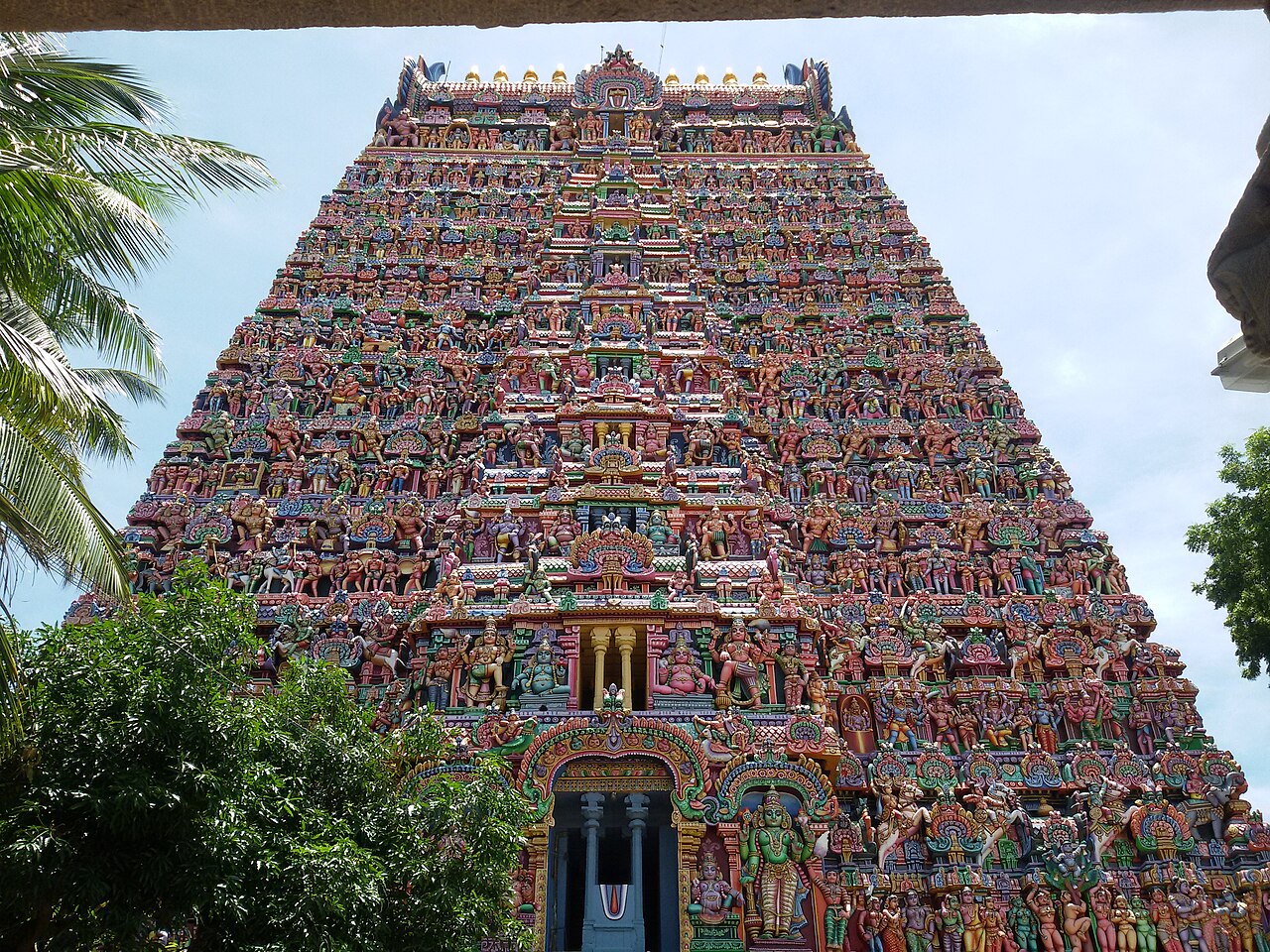
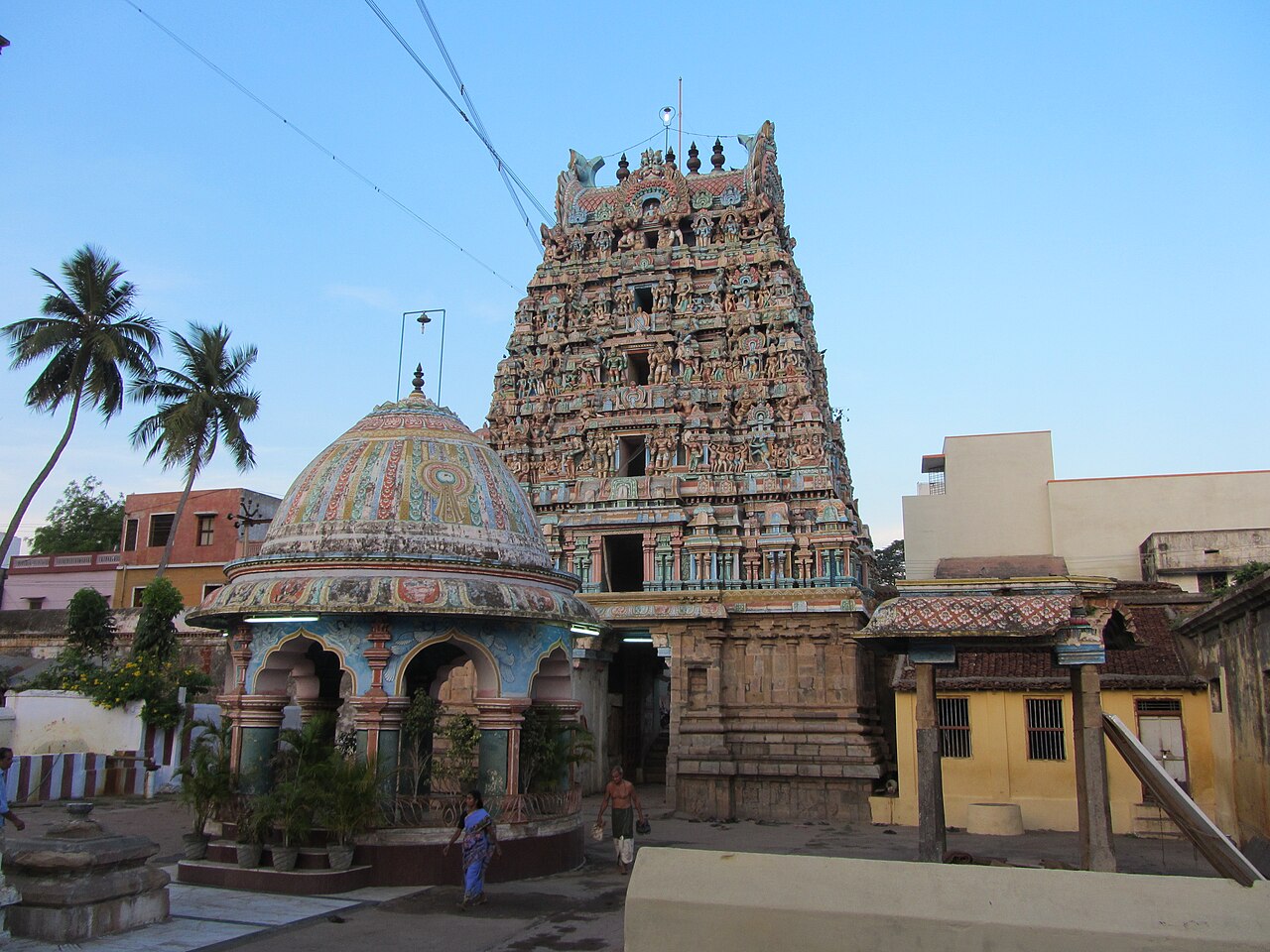
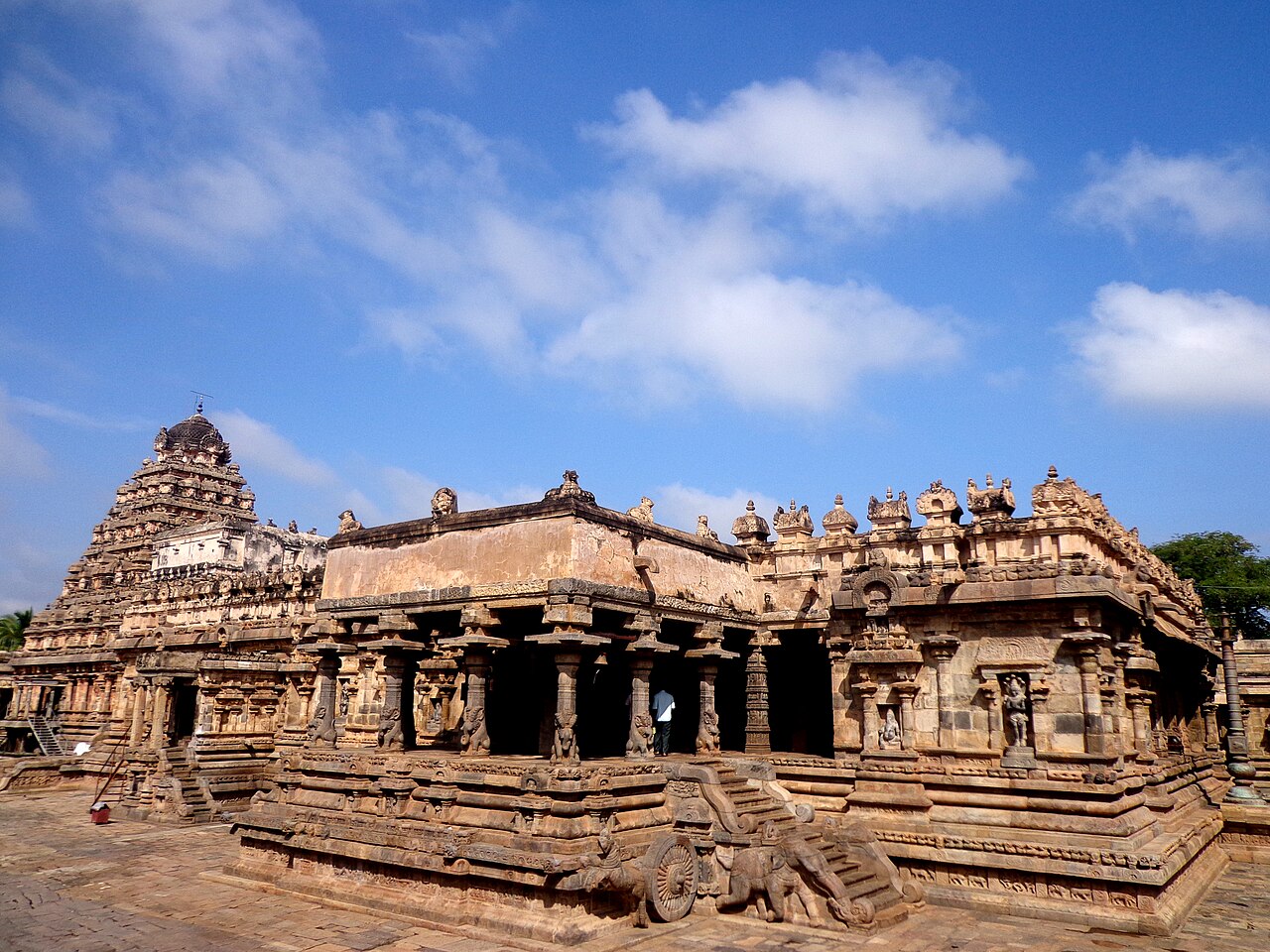
The Kampahareswarar Temple at Thirubuvanam is the last of the great Chola temples, raised by Kulothunga Chola III around 1176 CE as a memorial to a northern campaign. It shares the Chola signature of the other three — the tower over the sanctum stands taller than the gateway tower — but unlike Thanjavur, Gangaikonda Cholapuram and Darasuram it carries no UNESCO listing, which is largely why it is quiet.

Kampahareswarar Temple, Thirubuvanam
Practical guide

Plan Kampahareswarar Temple

Who's going?Tailor Kampahareswarar Temple to your trip
Before you go to Kampahareswarar Temple

Entry rules not verified for this temple. Some Hindu temples admit only Hindus, and most enforce a dress code at the door. We have not verified the rule for this particular temple, so please check before you travel — especially if you are not Hindu or are visiting from outside India.

We report each site's own published rules neutrally, and only where we can source them.

Typetemple
Nearest baseThirubuvanam
DistrictThanjavur
Best timeNovember to February is the comfortable…
Time neededAbout 90 minutes
EntryFree
Places to visit10Listed businesses5

It is also the only temple in India with a shrine to the Sarabha, the winged lion-man form Shiva is said to have taken to calm Narasimha. The name means, roughly, "the Lord who removed the trembling". The temple is run by the Dharmapuram Adheenam, entry is free, and it sits 6.2 km from Kumbakonam on the Mayiladuthurai road.

The story

The last great temple the Cholas built, in a village eight minutes from Kumbakonam that most people drive straight past — and the only temple in India with a shrine to the Sarabha.

The story of Kampahareswarar Temple

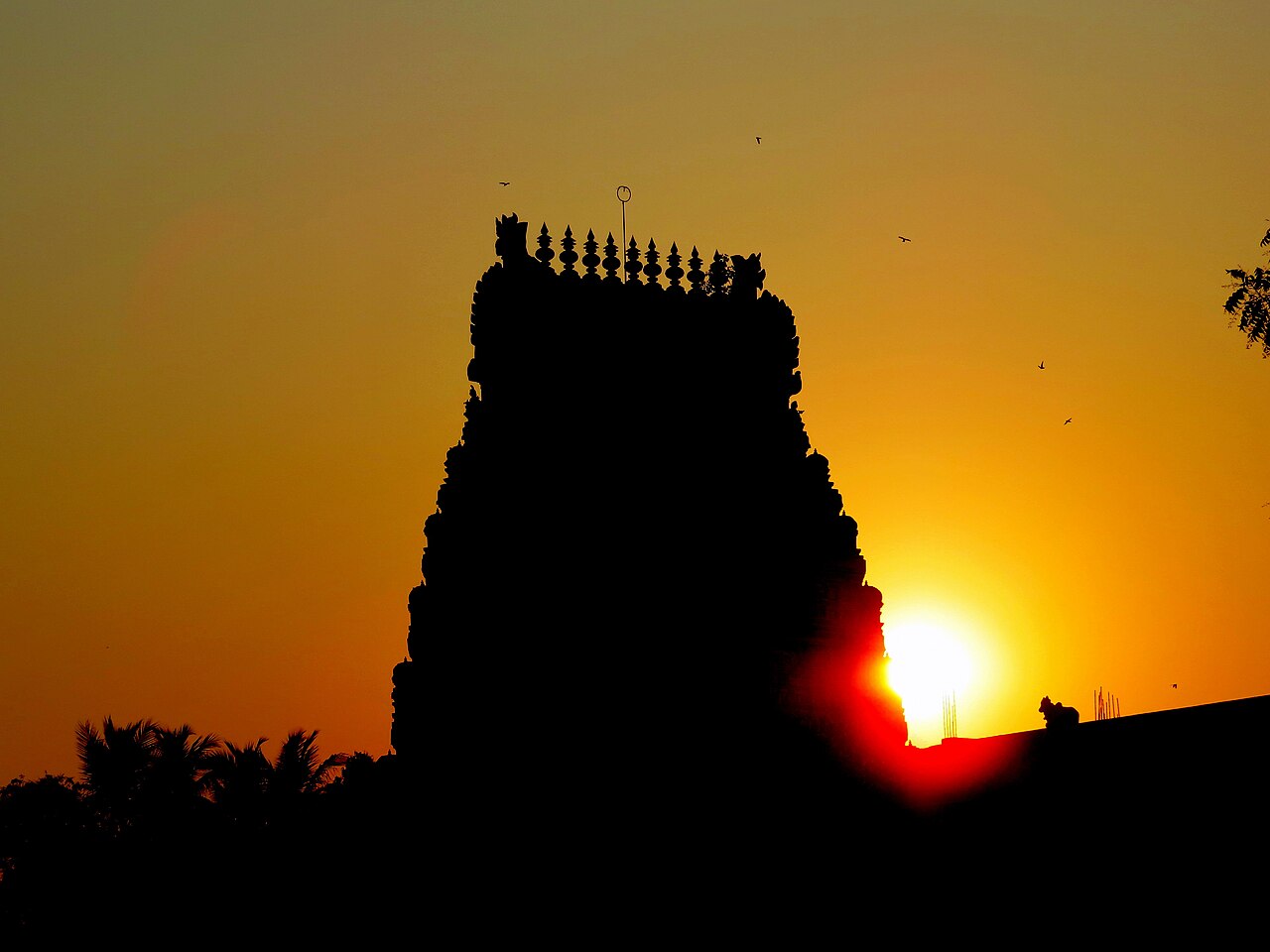
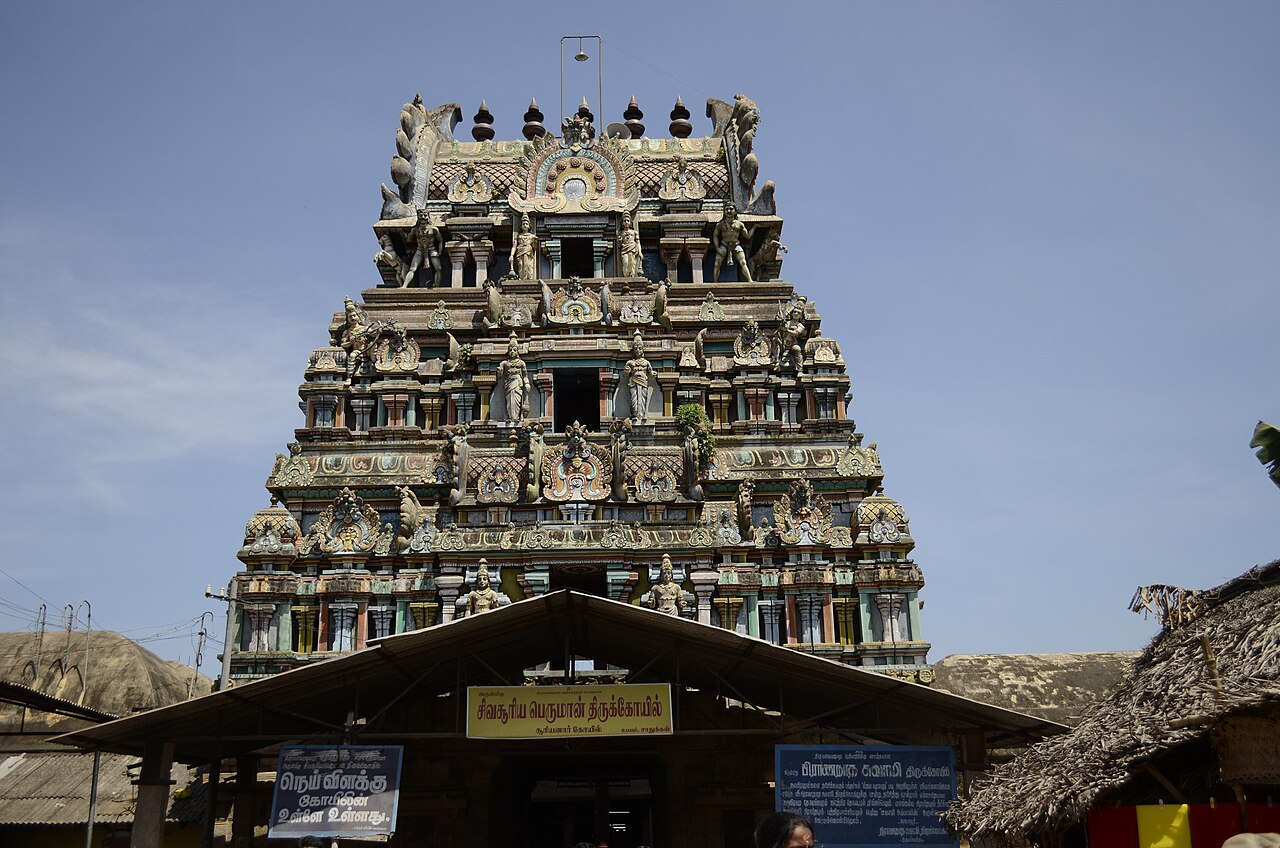
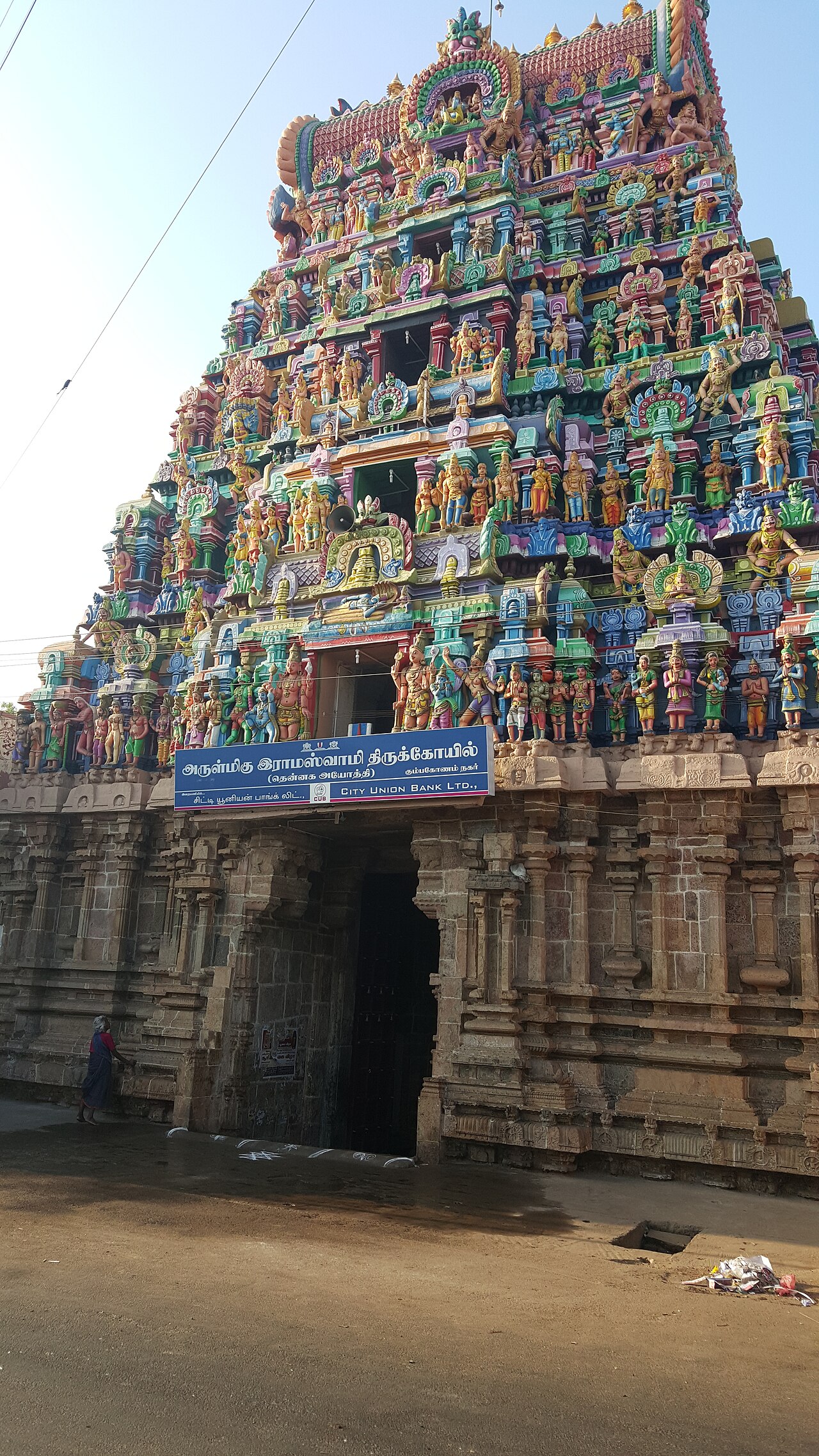
Thirubuvanam sits on the Kumbakonam–Mayiladuthurai road, about 6 km out of Kumbakonam, and from a car window it looks like any other delta village: a strip of shops, a bus stop, houses set back behind them. Then the road bends and a painted tower comes up on the left, seven storeys of stucco figures stacked into a pyramid, and behind it something taller still. That second tower is the point. It stands over the sanctum, and it is higher than the gateway you walk in through.

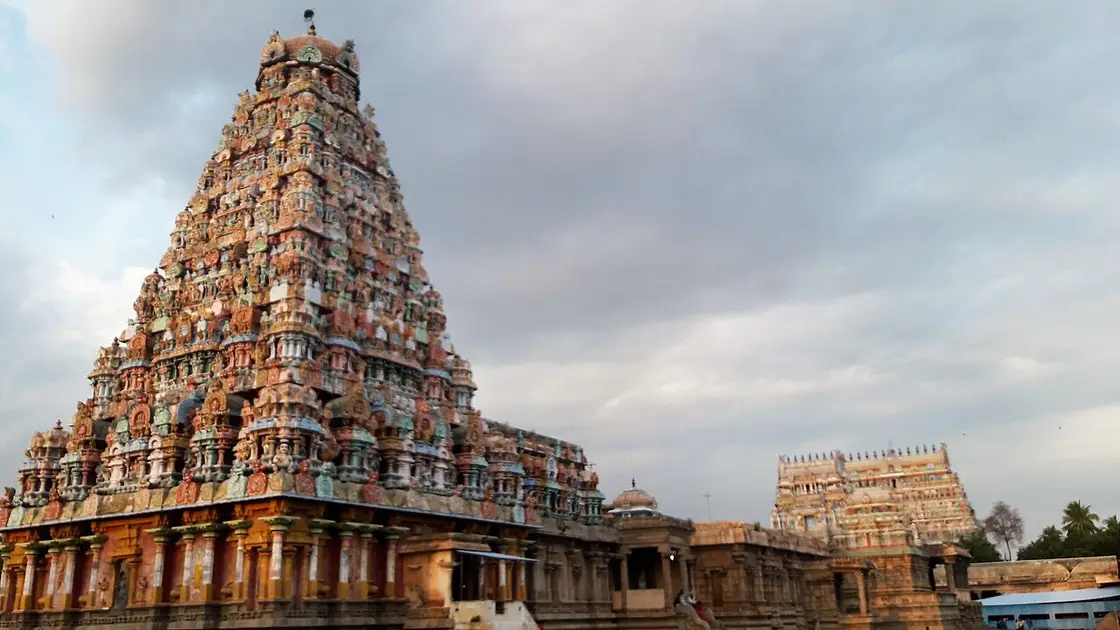
That sounds like a detail and it is actually the whole argument. In almost every Tamil temple the gateway towers grew and grew over the centuries until they dwarfed the shrine at the centre — the gopuram became the thing you photograph, and the sanctum a small dark room somewhere behind it. Four temples in the delta do it the other way round: the sanctum tower is the tallest thing on the site, and the gateway defers to it. Three of them are famous — the Big Temple at Thanjavur, Gangaikonda Cholapuram, and Airavatesvara at Darasuram, all inscribed together by UNESCO as the Great Living Chola Temples. This is the fourth, and it is the last one the dynasty built.

It is also the one nobody put on a list. The UNESCO inscription covers the trio and not this temple, which is why a visitor can stand in a near-empty courtyard here on a weekday morning ten minutes after queuing at Darasuram. Whether that is an injustice or a mercy depends on what you came for.

The name is the strangest thing about it. Kampahareswarar means, roughly, the Lord who removed the trembling — kampa being the shaking, hara the removal. The story attached to it is that a king killed a Brahmin by accident, was haunted for it, and shook uncontrollably until Shiva at this spot stilled him. Whatever one makes of the legend, the naming is unusual: most Shiva temples are named for the god, or the place, or a flower. This one is named after a symptom.

The village has a second life that has nothing to do with the temple. Thirubuvanam weaves silk sarees, and has done since Chola times by local account. The weavers work through a co-operative — the Thirubuvanam Silk Handloom Weavers Co-operative Production and Sale Society, THICO, founded in 1955 — and in 2019 the cloth was given its own Geographical Indication. A Thirubuvanam saree runs about twelve feet by four, weighs around 400 grams before the zari goes in, and is woven on a pit loom. So the village holds two things worth stopping for, and they are unrelated to each other except by postcode.

Read the full history of Kampahareswarar Temple 795 more words

History

The temple was built by Kulothunga Chola III, the last genuinely powerful king of the line, and the inscriptions on the south wall of the central shrine say why: it was raised as a memorial to a successful campaign in the north. Scholars generally place the work at about 1176 CE. Note that the sources are not tidy here — several accounts, including the English Wikipedia article, describe the temple as thirteenth-century while dating Kulothunga III’s reign from 1176 or 1178 to 1218, which puts the building itself in the late twelfth. The safest statement is the one the stones support: it belongs to the last decades of Chola power, and it is the last of the four.

There are four Kulothunga inscriptions here in Grantha script. Inscription 189 of 1907, on the southern wall of the central shrine, is damaged and mentions one Arya Sri-Somanatha. Number 190 on the same wall records Kulothunga’s building works; 191, at the outer gateway, duplicates it; 192 on the same gateway is a further record of the king. Two later Tamil inscriptions, registered by the Epigraphy Department in 1911, date from the Pandya period: one registers a contract between the residents of Tribhuvanavirapuram and the watchmen of Kulamangalanadu, and another records a similar agreement made before the chief Udaiyar Kulasekharadeva. Village watchmen and their terms of service, carved into the wall of a royal temple, alongside the record of a northern conquest.

The inscriptions also name other temples — Chidambaram, Ekambareswarar at Kanchipuram, the Meenakshi temple at Madurai, Mahalingeswarar at Thiruvidaimarudur, the Big Temple at Thanjavur. A temple in a delta village listing itself in that company is not modesty, and it was not meant to be.

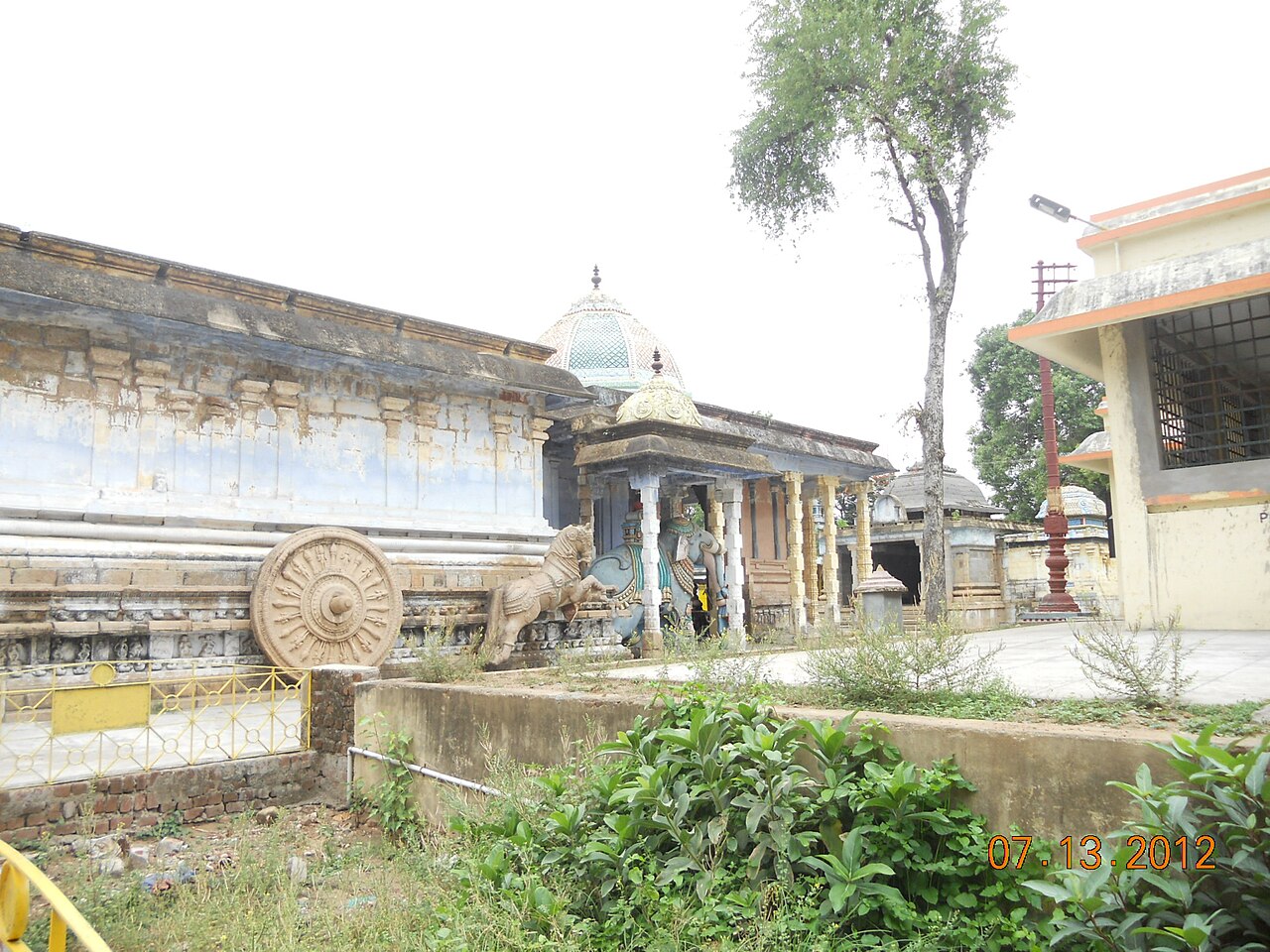
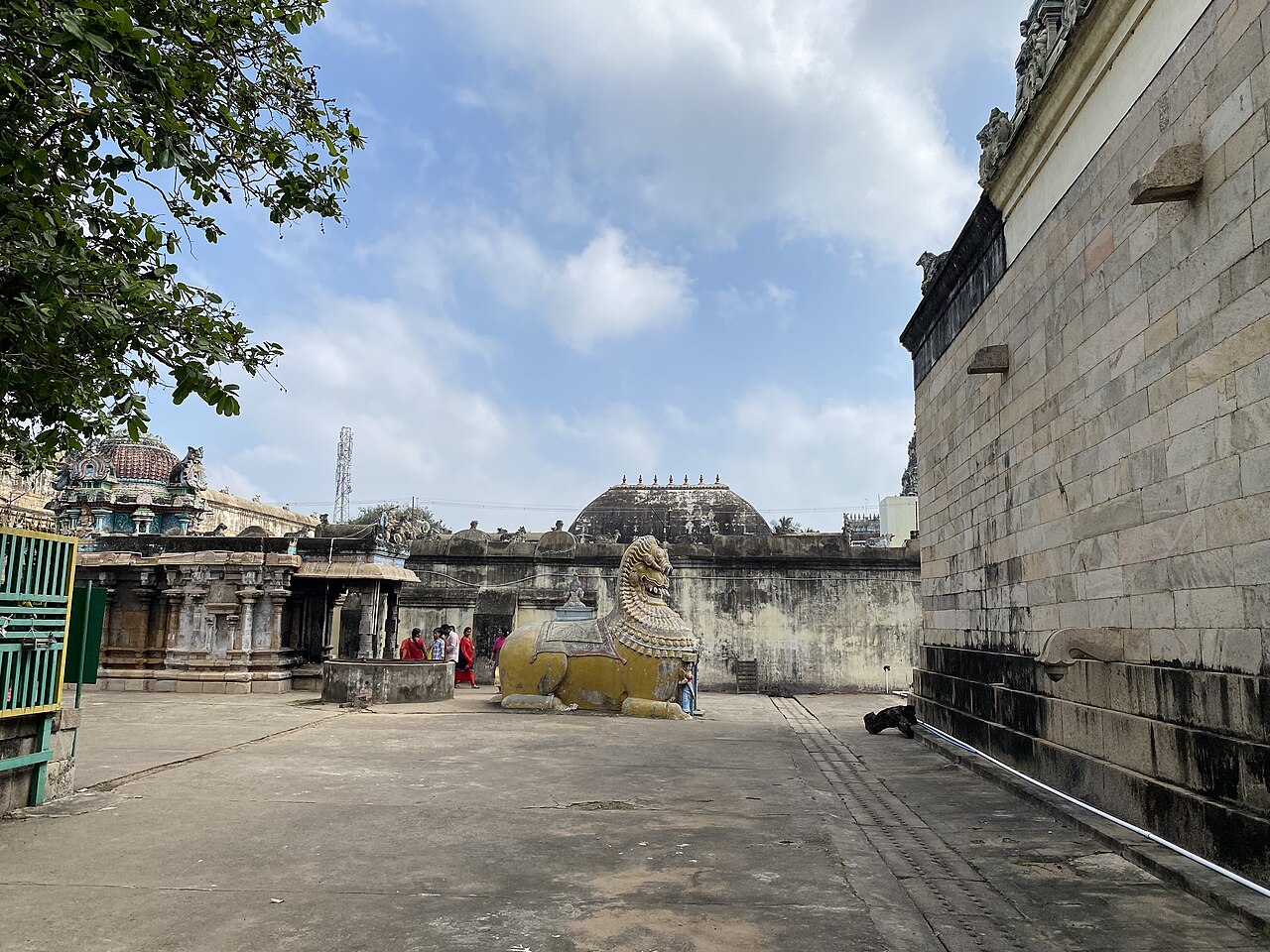
Two architectural details are worth knowing before you look. The first is the yali — the lion-faced mythical beast that later became a signature of Nayak-period building. Its earliest appearance in Chola art is here. The second is a pair of circular pilasters with circular shafts on each of the vimana’s four faces, a form the silpa texts appear to call vrittasputita and one found in only a handful of temples anywhere, among them Vijayalaya Choleeswaram at Narthamalai and the central shrine at Moovar Koil, Kodumbalur. Both are markers of how early and how deliberate this building is.

Its recent history is short and relevant. The temple belongs to the Dharmapuram Adheenam, a Saiva monastic institution, rather than to the state religious endowments department. Its previous consecration was in 2008. A restoration costing about ₹4 crore began in early 2023, and the kumbabhishekam that completed it was held in 2024 — sixteen years after the last one. Photographs taken in late 2023 still show the vimana wrapped in green netting and scaffolding; that work is finished.

Why visit

Come for the vimana, and come knowing what you are looking at. Standing the sanctum tower over the gateway is the thing that puts this temple in the same sentence as Thanjavur and Gangaikonda Cholapuram, and it is visible from the road before you have paid anything or asked anyone. Accounts differ on the numbers — the tower is variously described as five or seven tiered, with one detailed account giving the vimana as seven storeys and about 126 feet — so treat any single figure you read, here included, as approximate.

Come, too, for the Sarabha. This is the only temple in the country with a shrine dedicated to that form: a composite of man, lion and bird, described with six legs, a lion’s body and face, a tail, four human arms holding an axe, a noose, a deer and fire, and shown standing over Narasimha, who flails beneath with eight arms. The legend is that Shiva took this shape to calm Narasimha’s rage after he had killed Hiranyakashipu. There is a metal image of the Sarabha as well as the stone shrine, believed to date from Kulothunga III’s own time. It is a genuinely rare thing to see, and it is the reason a steady stream of people come here specifically to pray about conflicts, disputes and legal trouble.

The best argument for this temple, though, is a practical one. It is 6 km from Kumbakonam and 10 km from Darasuram, so it costs about ten minutes to add to a day already spent on Chola temples — and because it carries no UNESCO plaque it is usually quiet when the others are not. On a weekday morning you may have the outer court largely to yourself.

Then walk out and look at the village. Thirubuvanam’s GI-tagged silk is woven here on pit looms through a co-operative that has been running since 1955, and buying it in the place it is made is a different transaction from buying it in a city showroom.

What to expect

Highlights

  • The vimana over the sanctum, standing taller than the gateway tower — the Chola inversion shared with Thanjavur, Gangaikonda Cholapuram and Darasuram.
  • The Sarabha shrine, the only one in India: a composite of man, lion and bird shown standing over Narasimha, with a metal image of the same form believed to date from Kulothunga Chola III’s reign.
  • Narrative carving running round the sanctum plinth at eye level, which makes this an unusually readable Chola temple.
  • The earliest appearance of the yali — the lion-faced beast later taken up as a Nayak signature — in Chola art.
  • Four Kulothunga inscriptions in Grantha script, plus two later Tamil ones recording contracts with village watchmen.
  • Thirubuvanam’s own GI-tagged silk sarees, woven in the village on pit looms through a co-operative running since 1955.
Getting there

How to visit

  • Base yourself in Kumbakonam, 6.2 km and about ten minutes west, and add this to a Chola-temple day with Darasuram (10.5 km) and Swamimalai (14 km).
  • By train, Kumbakonam Junction (KMU) at 6.8 km is the practical railhead; the closer halts at Tirunageswaram and Tiruvidaimarudur take very few services.
  • Come in the morning, before about ten. The temple normally closes around 12:30 PM and reopens near 4:00 PM, so a late-morning arrival can leave you very little time.
  • Hire an auto or call taxi in Kumbakonam and have it wait — app cabs have effectively no coverage in the village.

Distance by road

  • Tiruchirappalli (Trichy)58 km
  • Madurai190 km
  • Puducherry170 km
  • Coimbatore215 km
  • Chennai350 km

Road km to Thanjavur; ghat roads and traffic vary — allow extra.

Timing

Best time

November to February is the comfortable season in the Cauvery delta, and mornings are best all year — the courts are open to the sky and you walk them barefoot. The eighteen-day Panguni Brahmotsavam in March or April is the big festival: spectacular, and very crowded.

Weather in Kampahareswarar TempleSeasonal guide

Live forecast loads in your browser.

Today at Kampahareswarar Temple
Sunrise6:03 am
Sunset6:23 pm
Golden hour best light5:23 pm–6:23 pm
Blue hour after sunset6:23 pm–6:48 pm
Sun sets toward compass bearingW · 279°
Moon tonight🌖 Waning gibbous · 83%
South-west monsoon. June to September is the south-west monsoon in Tamil Nadu. Expect heavy showers, mostly in bursts rather than all day — carry rain cover, allow extra time for getting around, and note that ferries and open-air sites are the first things affected.

Sun and moon are calculated for this location and shown in IST. Photography windows are the hour around sunrise and sunset; the sunset bearing is degrees clockwise from true north. Moon phase is accurate to about half a day.

Visitor notes

  • Free entry. It is a working temple run by the Dharmapuram Adheenam, not a ticketed monument — no ticket counter, no guide desk, no English interpretation panels.
  • Usual hours are about 6:00 AM to 12:30 PM and 4:00 PM to 8:30 or 9:00 PM, but sources differ on the evening closing and festival days change everything. Confirm locally if your plan depends on it.
  • Footwear comes off at the entrance. There is no dedicated car park; vehicles use the roadside verge.
  • No camera fee is advertised and the towers, courts and outer carving are normally photographed freely; expect restrictions inside the sanctum.
  • The temple is not part of the UNESCO Great Living Chola Temples inscription, which covers Thanjavur, Gangaikonda Cholapuram and Darasuram only.
  • Photographs showing the tower under green scaffolding date from the restoration that ran from 2023 and finished with the 2024 consecration.
Safety

Good to know

  • The gateway opens directly onto State Highway 64 with no forecourt or real pavement — step out with care and keep children close on that side.
  • The open courts are unshaded and walked barefoot; between roughly 11 AM and 4 PM the stone gets genuinely hot. Socks help.
  • The sanctum stands on a raised plinth up steep steps worn smooth by use and slippery when wet. There is no ramp, so the plinth and inner shrine are not step-free.
  • It is an active place of worship. Dress modestly, stay quiet during rituals, and ask before photographing worshippers or priests.
Stay · eat · do · rent · see · shop

Stays, food & things to do near Kampahareswarar Temple

Verified hotels, homestays, restaurants, experiences, sights, shops and rentals around Kampahareswarar Temple — commission-free, with direct contact. Filter by what you need.

S
Sai Tiffin Centre
Where to eat
Top pick
Tiffin centre
Sai Tiffin Centre
210 m · 3 min walk

A tiffin centre about 200 metres south of the temple. Tiffin means the South Indian short-meal repertoire — idli, dosai, pongal, vadai — served morning and again in the evening, with the middle of the day often quiet. We have not eaten here and there is no published menu or timing; treat it as the village's own breakfast counter rather than a destination.

Directions Commission-freeView details
T
Tea Master
Where to eat
Top pick
Tea shop
Tea Master
550 m · 7 min walk

A tea counter at the eastern end of the village, out where the banks and the post office are rather than by the temple. This is the kind of shop the street runs on — tea, coffee and whatever short eats are on the rack that morning — and it is the nearest thing to a cafe in Thirubuvanam. Hours are nobody's published timetable; it opens early and shuts when the trade stops.

Directions Commission-freeView details
R
Roja Mess
Where to eat
Top pick
Mess
Roja Mess
210 m · 3 min walk

A mess on the southern street, a few doors from the tiffin centre. A mess in Tamil Nadu is a plain working eating house that serves a set meal at lunch rather than a menu — you get what is cooked that day. It is the most likely place in Thirubuvanam to find a full midday meal. Timings and rates are unverified.

Directions Commission-freeView details
K
Kaththaayi Amman Temple
Sight
Top pick
Temple
Kaththaayi Amman Temple
1.5 km · 19 min walk

An Amman temple at the western end of the village, roughly 700 metres from the Chola temple and the furthest of the village shrines on that side. Amman temples are the village goddess tradition — older in practice than the royal stone temples and quite separate from them, run by the locality rather than by a devasthanam. Festival dates here are local and we have not verified them.

DirectionsView details
V
Vayumoolai Sri Anjaneyar Temple
Sight
Top pick
Temple
Vayumoolai Sri Anjaneyar Temple
680 m · 8 min walk

A small Anjaneyar — Hanuman — shrine about 200 metres north of the great temple. Vayumoolai names the northwest corner, the quarter of Vayu, the wind god who is Hanuman's father, so the name is really a direction. A neighbourhood shrine kept by the street around it rather than a visitor site; look in as you pass.

DirectionsView details
N
Nandavanam (south garden)
Nature
Temple garden
Nandavanam (south garden)
100 m · 1 min walk

A nandavanam is the flower garden a temple keeps to grow its own offerings — jasmine, nerium, tulsi — rather than a public park, and this is the southern of the two mapped beside the Kampahareswarar temple, immediately behind the compound wall. It is working ground belonging to the temple; look over the wall rather than walk in.

DirectionsView details
N
Nandavanam (north garden)
Nature
Temple garden
Nandavanam (north garden)
360 m · 4 min walk

The second of the temple's two flower gardens, on the northern side of the Kampahareswarar compound and about 50 metres from the sanctum. Between them the two gardens are why the temple's daily garlands do not have to be bought in — the same arrangement most large Tamil temples once had and few still keep.

DirectionsView details
B
Balavinayakar Temple
Sight
Temple
Balavinayakar Temple
1.3 km · 15 min walk

A Vinayakar shrine on the western side of the village, about 600 metres from the great temple. Bala Vinayakar is Ganesha as a child. Like most of the small temples in these streets it is a neighbourhood shrine with its own local following and no published opening hours — the door is open when someone has opened it.

DirectionsView details
B
Bathala Maha Mariyamman Temple
Sight
Temple
Bathala Maha Mariyamman Temple
540 m · 7 min walk

A Mariyamman temple on the northeastern side of the village. Mariyamman is the goddess of rain and of the diseases that come with the heat, and her temples are busiest through Aadi, the Tamil month roughly mid-July to mid-August, when the village festivals fall. Outside that it is a quiet street shrine.

DirectionsView details
V
Vinayagar Temple
Sight
Temple
Vinayagar Temple
790 m · 10 min walk

A Vinayagar shrine on the northern edge of the village, about 270 metres from the great temple. Ganesha shrines sit at entrances and corners by design — you pass them on the way in rather than make a trip to them — and this is one of several in Thirubuvanam's streets.

DirectionsView details
K
Karpaga Vinayagar Temple
Sight
Temple
Karpaga Vinayagar Temple
650 m · 8 min walk

A second Vinayagar shrine, this one about 200 metres northwest of the Chola temple and close enough to fold into the same walk. Karpagam refers to the wish-granting tree of the epics, so the name reads roughly as the Ganesha who gives what is asked. A working neighbourhood shrine.

DirectionsView details
K
Kattumankulam
Nature
Village tank
Kattumankulam
1.3 km · 15 min walk

A tank on the western side of Thirubuvanam, about 600 metres from the temple and the larger of the two the village keeps. Kulam is Tamil for tank; the delta's villages sit in a net of them, filled by the northeast monsoon between October and December and drawn down through the dry months. No visitor path, no railing — a working tank in a working village.

DirectionsView details
S
Shri Prasanna Venkatesa Perumal Temple
Sight
Temple
Shri Prasanna Venkatesa Perumal Temple
2.3 km · 28 min walk

A Perumal — Vishnu — temple recorded about 2 km east of Thirubuvanam, the only Vaishnava shrine on the village's own list among a run of Shiva and Amman temples. ⚠ Its pin is the weakest one we hold here: it sits about 600 metres from the nearest feature of that name we could find in OpenStreetMap, so treat the map position as approximate and ask locally rather than driving to the pin.

DirectionsView details
S
Shri Angala Parameshwari Amman Temple
Sight
Temple
Shri Angala Parameshwari Amman Temple
1.6 km · 19 min walk

An Angala Parameshwari temple about 1.5 km east of the village centre, out past the banks on the Mayiladuthurai side. Angala Parameshwari is a fierce form of the goddess with a strong following across the delta and her own festival cycle, usually in the Tamil month of Panguni. We have not verified this temple's own dates or timings.

DirectionsView details
A
Ammasathiram Kulam
Nature
Village tank
Ammasathiram Kulam
1.4 km · 18 min walk

A kulam — a village tank — on the southwestern edge of Thirubuvanam, about a kilometre from the temple. Delta villages are built around tanks like this one: they hold the monsoon, feed the wells and the fields, and drop through the dry months. There is no path built round it and nothing laid on for visitors; it is a working water body in a working village.

DirectionsView details
T
THICO — Thirubuvanam Silk Handloom Weavers' Co-operative
Shop
Silk shop
THICO — Thirubuvanam Silk Handloom Weavers' Co-operative
180 m · 2 min walk

The society that holds the Geographical Indication for the Thirubuvanam silk saree, selling it from its own counter in the village the cloth is named after. Registered in 1955 as the Thirubuvanam Silk Handloom Weavers Co-operative Production and Sale Society Ltd (society number Z.322) and run from Sannathi Street a couple of hundred metres east of the temple. Its own site gives 8am–10pm Monday to Friday, 9am–8pm Saturday, and says it opens Sundays and holidays through the year — those are the society's hours, not ours, so confirm on the phone before a long drive. ⚠ The society is not mapped in OpenStreetMap and its address gives the street without a number, so the pin is the western end of Sannathi Street, the end nearest the temple.

Directions Commission-freeView details
A
Ayyappa Hot Chips
Where to eat
Bakery
Ayyappa Hot Chips
230 m · 3 min walk

A hot-chips counter on the southern street, about 250 metres from the temple. Hot chips shops fry to order through the day — banana, tapioca, potato — and sell by weight; in a village with no restaurant to speak of this is the practical thing to carry away. Unverified hours.

Directions Commission-freeView details

Book with the place itself. India’s cyber-crime coordination centre warned in April 2025 that convincing copies of hotel and pilgrimage booking sites are being pushed through sponsored search and social ads, taking payment for rooms the property never hears about. Every listing here links to the business’s own contact details and its own Google or Bing profile — we take no commission and sit in nobody’s payment path. If a booking page reached you through an ad, check the address bar against the property’s own site before you pay. Fraud can be reported on cybercrime.gov.in or on 1930.

Ranked

The best of Thirubuvanam, ranked

Kampahareswarar Temple sits in Thirubuvanam, and these rank everything verified across the town rather than this one spot — built from the same listings shown above, ordered by the strength of the source evidence behind each entry rather than by anyone's star score. Every card shows how many places are really on it. Nobody pays to appear.

Nearest to Kampahareswarar Temple, on foot

Ordered by a real routed walk from Kampahareswarar Temple itself — the walking network, not a line on a map, which understates a real walk by about half again. A different question, and a different answer, from the town-wide lists below.

Ranked guides

Top experiences around Thirubuvanam

9 more places around Thirubuvanam, each worth a day of its own.

heritageThirubuvanam Silk Weaving

180 m · 2 min walk

The second reason to stop here, and the one you can walk into. Thirubuvanam weaves silk sarees on pit looms set into the floors of sheds behind ordinary front doors, and the trade runs through one body — the Thirubuvanam Silk Handloom Weavers Co-operative, registered in 1955 and known as THICO — which also holds the Geographical Indication the cloth was granted in March 2019. Its counter is on Sannathi Street a couple of hundred metres east of the temple, which makes this one of the few crafts in Tamil Nadu you can buy from the society that owns its name, in the village the name refers to. What to look at before you buy: the korvai join, where a pallu of a different colour is interlocked thread by thread with the body rather than stitched on.

templeAiravatesvara Temple

A UNESCO-listed Great Living Chola Temple at Darasuram near Kumbakonam, built by Rajaraja Chola II in the 12th century and famous for its stone chariot-form mandapa and “musical” steps. It is a day trip east of Thanjavur.

templeSarangapani Temple

7.3 km · ~18 min by auto

One of the largest Vishnu temples in the Cauvery delta and a Divya Desam, its towering gopuram dominates central Kumbakonam; the sanctum is shaped like a temple chariot drawn by horses and elephants.

templeAdi Kumbeswarar Temple

7.7 km · ~19 min by auto

The principal Shiva temple of Kumbakonam and the town’s namesake, at the heart of the old bazaar; the focus of the 12-yearly Mahamaham festival at the nearby tank.

templeSwamimalai Murugan Temple

The Swaminathaswamy (Murugan) temple at Swamimalai, one of the six sacred “Padai Veedu” abodes of Murugan, reached by a flight of steps; the surrounding town is the living centre of Chola-style lost-wax bronze icon-making. About 7 km west of Kumbakonam.

templeNageswaran Temple

7.0 km · ~18 min by auto

The Nageswaraswamy Temple in Kumbakonam is one of the earliest Chola temples, dedicated to Shiva worshipped as Nagaraja, the serpent king. Founded in the 9th century, it is celebrated for its refined early Chola sculpture and for an astronomical design in which sunlight reaches the sanctum during the Tamil month of Chithirai.

templeOppiliappan Temple

3.2 km · ~8 min by auto

The Oppiliappan (Uppiliappan) Perumal temple at Thirunageswaram near Kumbakonam is one of the 108 Divya Desams, dedicated to Vishnu with his consort Bhumi Devi. By tradition it is the one Divya Desam where the offering (prasadam) is prepared entirely without salt, giving the deity the name Oppiliappan (uppu-illa, without salt), and the site is linked in lore to the sage Markandeya.

templeNaganathaswamy Temple, Thirunageswaram

2.9 km · ~7 min by auto

The Naganathaswamy Shiva temple at Thirunageswaram near Kumbakonam is one of the nine Navagraha (planet) temples of the Cauvery delta and is dedicated to Rahu. It is especially known for the Rahu abhishekam, during which the milk poured over the deity is seen by devotees to take on a bluish tinge before running clear.

templeMahalingaswamy Temple, Thiruvidaimarudur

1.9 km · 24 min walk

The Mahalingeswarar (Mahalingaswamy) temple at Thiruvidaimarudur near Kumbakonam is a large and historically important Shiva temple, traditionally regarded as the central Madhyarjuna among the great Arjuna (Marudur) Shiva temples of the Cauvery delta. It carries extensive Chola-and-later architecture and hosts major festivals.

Roampedia is commission-free — own or know a stay, eatery, guide or shop near Kampahareswarar Temple? List it and it appears here once verified.

Add a nearby business
Before you go

Kampahareswarar Temple — at a glance

TimingsUsually about 6:00 AM to 12:30 PM and 4:00 PM to 8:30 or 9:00 PM. Sources differ on the exact evening closing time and hours shift on festival days, so confirm locally if your day depends on it.
Best timeNovember to February is the comfortable season in the Cauvery delta; mornings year-round. The Panguni Brahmotsavam (March-April) runs eighteen days and is spectacular but crowded.

Entry: Free. This is a working temple run by the Dharmapuram Adheenam, not a ticketed monument - there is no entry counter, no guide desk and no camera fee advertised.

Photography: No camera fee is advertised, and photographing the towers, the courts and the outer carving is normal practice. Inside the sanctum and at the shrines expect restrictions, as at any working Tamil temple. Ask before photographing anyone at prayer, and do not photograph the priests during a ritual without permission.

Parking: No dedicated car park. Vehicles pull up on the roadside verge outside the gateway, which is a state highway carrying through traffic to Mayiladuthurai - park well off the carriageway and take care getting out on the road side. Buses stop on the main road within sight of the entrance.

Getting here

How to reach Kampahareswarar Temple

  • ✈︎ By air Tiruchirappalli International (TRZ) is the nearest airport at 97.2 km, roughly an hour and a half by road via Kumbakonam. Chennai is the alternative if you are flying long-haul, but it is about 280 km away and only makes sense if the delta is one stop on a wider Tamil Nadu trip.
  • 🚆︎ By train Kumbakonam Junction (KMU), 6.8 km away, is the station to aim for - it is on the Thanjavur-Mayiladuthurai line and has far more services than anything closer. Two halts sit nearer the temple, Tirunageswaram (TRM) at 3.1 km and Tiruvidaimarudur (TDR) at 3.4 km, but only a handful of passenger trains stop at them, so do not plan around one without checking. From Kumbakonam station an auto covers the last stretch in about ten minutes.
  • 🚗︎ By road The temple stands directly on the Kumbakonam-Mayiladuthurai road, State Highway 64, with its gateway opening onto the carriageway. From Kumbakonam it is a straight 6.2 km run east. Thanjavur is 46.5 km and about three quarters of an hour; Mayiladuthurai 29 km; Gangaikonda Cholapuram 37.1 km. The turning is easy - the painted tower is visible from the road.
  • 🚌︎ By bus Any bus on the frequent Kumbakonam-Mayiladuthurai route passes the temple, and the stop is on the main road within sight of the gateway. Kumbakonam's bus stand is the interchange for Thanjavur, Darasuram, Swamimalai and the rest of the temple circuit. There is no tourist coach service; these are ordinary town buses and they are the cheapest way to do the circuit.
Do

Things to do

  • Look at the vimana first, from outside the gateway and then from inside the court, and notice that it stands taller than the gateway tower you came through - that inversion is the whole reason this temple is spoken of alongside Thanjavur, Gangaikonda Cholapuram and Darasuram.
  • Find the Sarabha shrine. This is the only temple in India with one: a composite of man, lion and bird, carved with six legs and four arms holding an axe, a noose, a deer and fire, standing over Narasimha. There is a metal image of the same form as well as the stone shrine.
  • Walk one slow lap of the sanctum plinth. The narrative panels sit at eye level here rather than fifty feet up, which makes this an unusually easy Chola temple to actually read.
  • Look for the yali on the carving - the lion-faced beast that later became a Nayak-period signature has its earliest appearance in Chola art in this temple.
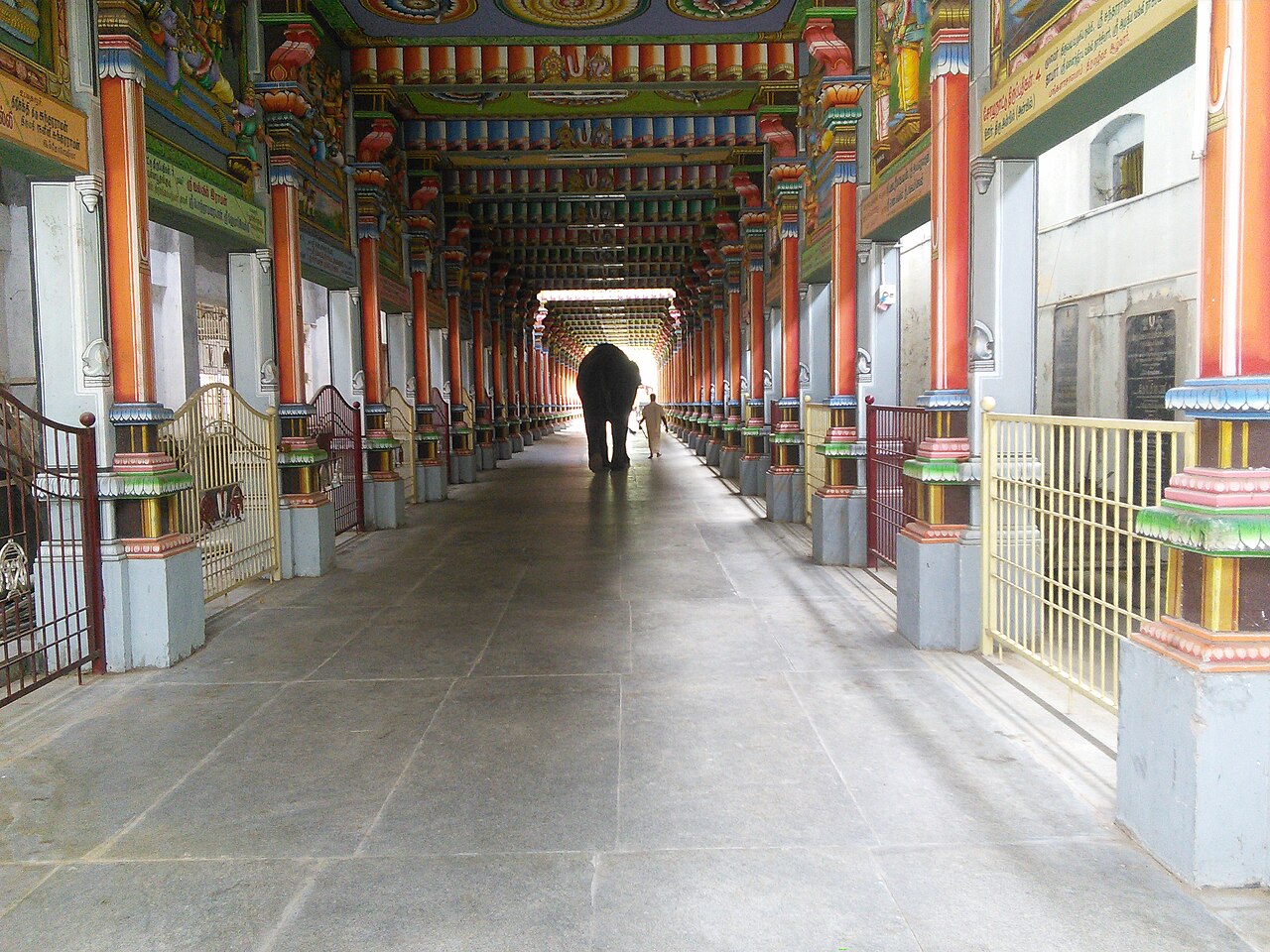
  • Look up in the painted mandapa: the ceiling beams are carved and coloured, and the lotus mandalas were repainted for the 2024 consecration.
  • Buy a Thirubuvanam silk saree in the village that gives it its name. The cloth has held its own Geographical Indication since 2019 and is woven on pit looms through a co-operative founded in 1955.
  • Add Darasuram (10.5 km) and Swamimalai (14 km) to the same morning; both are short hops from here and all three are usually done out of Kumbakonam.
  • Walk down to the Mahalingeswarar temple at Tiruvidaimarudur, 2 km west. It is one of the great Shiva temples of the delta, far larger than this one, with a long painted outer wall and a seven-tier gateway, and almost nobody on the Chola trail stops at it.
  • Take in the navagraha temples while you are here. Thirunageswaram, 3 km away, is the Rahu sthalam of the nine-planet circuit - the temple where milk poured over the deity during Rahu kalam is said to turn blue, which is what the queue outside comes to see. The Ketu temple at Keezhaperumpallam and the Sukran temple at Kanjanur are both within a short drive on the same roads.
  • Look in at Oppiliappan Temple, next to Thirunageswaram. It is a Vaishnava Divya Desam, sung by the Alvars, and the one temple in the country where the offering is made without salt.
Plan

Good to know

  • Come in the morning. The temple is at its quietest on a weekday before about ten, the light on the vimana is better, and the open stone courts have not yet heated up under bare feet.
  • Do not expect a UNESCO plaque or a crowd. This temple is not part of the World Heritage inscription that covers the other three, which is exactly why it is usually empty when Darasuram is not.
  • Time it around the midday closing. The temple normally shuts at about 12:30 PM and reopens around 4:00 PM, so a late-morning arrival can leave you with twenty minutes.
  • Combine it rather than making a special trip. It is ten minutes from Kumbakonam and ten from Darasuram, and slots into a Chola-temple day at almost no cost.
  • Carry socks if you are sensitive to hot stone. Footwear comes off at the entrance and the courts are open to the sky.
  • If a photograph you have seen shows the tower wrapped in green netting, it is out of date - that was the restoration that ran from 2023 and was completed with the 2024 consecration.
  • Base yourself in Kumbakonam, not here. Thirubuvanam is a working weaving village with no hotel of its own; everything on the Stay list below is on the roads between here and Kumbakonam or out at Thirunageswaram, and each card tells you how far it is.
  • Give the Chola four a full day rather than half of one. Thanjavur, Gangaikonda Cholapuram, Darasuram and this temple are spread across about 90 km of the delta, and trying to do all four between a late start and the midday closing is the commonest way visitors end up seeing none of them properly.
  • Buy silk from the co-operative if you want the price without the sales pressure. The Sannathi Street showrooms outside the gateway are private shops and will bargain; the THICO co-operative store sells at fixed prices.
  • Ask at the temple office rather than at the gate if you want to know when the next abhishekam is. There is no notice board in English and the timings move.
  • If you are driving yourself, fill up in Kumbakonam. There is no fuel station in the village and the next one on the Mayiladuthurai road is some distance out.
Facilities

On site

  • Basic temple facilities only - shoe stand at the entrance, drinking water, and a temple office. There is no visitor centre, no interpretation panels in English and no guide desk.
  • Small shops and tea stalls stand along the main road by the gateway; for a proper meal go into Kumbakonam.
  • Kumbakonam, 6.2 km away, is where the banks, ATMs, pharmacies, hotels and hospitals are, and it is the sensible base for the whole Chola-temple circuit.
  • Kumbakonam Junction (6.8 km) has the usual station facilities; the nearer halts at Tirunageswaram and Tiruvidaimarudur are small and have very little.
  • No cloakroom, no lockers and no left-luggage. If you are arriving off a train with bags, leave them at your hotel in Kumbakonam first - there is nowhere here to put them down.
  • Toilets are basic temple facilities rather than public conveniences, and there is no baby-changing space. The nearest reliable clean toilets are in the Kumbakonam hotels.
  • There is no ATM in the village and card acceptance in the silk showrooms is patchy. Draw cash in Kumbakonam before you come out; the shops here take UPI, but the network in the village is not dependable.
Stay safe

Safety

  • The gateway opens straight onto State Highway 64, which carries through traffic between Kumbakonam and Mayiladuthurai. There is no forecourt and no pavement to speak of, so step out of the temple with care and keep children close on that side.
  • Park off the carriageway, not on it, and get out of the vehicle on the verge side.
  • Footwear is removed at the entrance and the open courts are unshaded; between about 11 AM and 4 PM the stone gets genuinely hot underfoot. Socks help.
  • The sanctum is on a raised plinth reached by steep steps worn smooth by use, and they are slippery when wet. There is no ramp or lift, so the plinth and the inner shrine are not step-free.
  • This is an active place of worship, not a monument. Dress modestly, keep quiet during rituals, and ask before photographing worshippers or priests.
  • Hours can change without notice on festival days, and during the eighteen-day Panguni Brahmotsavam in March or April the temple is very crowded.
  • There is no first-aid point at the temple and no pharmacy in the village. The nearest hospitals and chemists are in Kumbakonam, ten minutes away by road.
  • Mobile coverage is patchy inside the stone halls. If you are meeting a driver, agree the pick-up point at the gateway before you go in rather than planning to phone from inside.
  • The delta gets its rain from the north-east monsoon between October and December, and the courts flood in places during a heavy spell. The plinth steps and the polished floors of the mandapas are at their most slippery then.
Getting around Kampahareswarar Temple

We have not assessed physical access at this place yet. Across India, step-free routes, handrails and accessible toilets are the exception rather than the rule, and pavements are often interrupted — if step-free access matters to you, contact the site or a local operator before committing to the trip.

Practical things near Kampahareswarar Temple
What the cash actually costs
  • Withdrawing from a bank that is not your own is free for a set number of times a month, then costs up to ₹23 plus GST — about ₹27 a withdrawal. This is not one of the RBI’s six metro centres, so the allowance here is the higher one: at least five free other-bank withdrawals a month, and at least five at your own bank.
  • That free allowance belongs to Indian bank accounts. On a card issued abroad your own bank’s international withdrawal and exchange charges apply instead. If the machine offers to bill you in your home currency, choose rupees — the conversion rate on that offer is set by the machine, not by your bank.
  • Given a choice, use an ATM inside or attached to a branch: it sits in view of staff and cameras, and there is someone to ask if the machine keeps your card. A machine standing alone on a tourist street is the one to be wary of. Banks are listed here alongside the ATMs, but the map data does not record which ATMs sit inside a branch — check when you get there.

Charge cap and free-transaction limits: Reserve Bank of India, in force since 1 May 2025.

Mapped within about 1.2 km of Kampahareswarar Temple, with real walking routes rather than straight-line distances. Community-mapped data: opening hours are shown only where they are recorded, and this is not a complete list — something unmapped may well be closer. Please confirm on the ground.

If you need help at Kampahareswarar Temple
112All emergencies (police · fire · medical)The single number to call in any emergency (ERSS).

Emergency numbers are verified against official government and state tourism sources. 112 works anywhere in India.

Nearby

What’s near Kampahareswarar Temple

heritageThirubuvanam Silk Weaving 180 m · 2 min walk · straight line
templeMahalingaswamy Temple, Thiruvidaimarudur 1.9 km · 24 min walk · straight line
templeNaganathaswamy Temple, Thirunageswaram 2.9 km · ~7 min by auto · straight line
templeOppiliappan Temple 3.2 km · ~8 min by auto · straight line
templeSuryanar Kovil 6.7 km · ~17 min by auto · straight line
templeNageswaran Temple 7.0 km · ~18 min by auto · straight line
damMahamaham Tank 7.0 km · ~18 min by auto · straight line
templeChakrapani Temple 7.2 km · ~18 min by auto · straight line
templeSarangapani Temple 7.3 km · ~18 min by auto · straight line
templeRamaswamy Temple 7.5 km · ~19 min by auto · straight line
templeAdi Kumbeswarar Temple 7.7 km · ~19 min by auto · straight line
templeAgneeswarar Temple 8.5 km · ~14 min by cab · straight line

All 10 places to visit in Thirubuvanam →

Walking and driving times are real routed distances, except the few marked “straight line”, which are direct-line estimates and will read short. Routing: © openrouteservice.org by HeiGIT | Map data © OpenStreetMap contributors

Nearby toilets, pharmacies, ATMs, seating and vets are community-mapped and may be incomplete or out of date. Map data © OpenStreetMap contributors | Walking times © openrouteservice.org by HeiGIT

On the map

Where Kampahareswarar Temple is

Good to know

Kampahareswarar Temple — frequently asked

Is the Kampahareswarar Temple a UNESCO World Heritage Site?

No, and this is the most common confusion about it. The UNESCO inscription called the Great Living Chola Temples covers three temples — Brihadeeswarar at Thanjavur, the temple at Gangaikonda Cholapuram, and Airavatesvara at Darasuram. Thirubuvanam is very often described as the fourth and last of the great Chola temples, and architecturally it belongs with them, but it is not part of the UNESCO listing.

What does the name Kampahareswarar mean?

Roughly, “the Lord who removed the trembling” — kampa is the shaking, hara the removal. By legend a king who had killed a Brahmin by mistake was haunted and shook uncontrollably, and Shiva stilled him here.

What is the Sarabha, and why does this temple matter for it?

The Sarabha is a composite form of Shiva — part man, part lion, part bird — said in the legend to have been taken in order to calm Narasimha’s fury after he killed Hiranyakashipu. It is carved with six legs, a lion’s body and face, a tail and four human arms holding an axe, a noose, a deer and fire, standing over Narasimha. This is the only temple in India with a shrine dedicated to it, and it also holds a metal image of the Sarabha thought to date from Kulothunga Chola III’s reign.

Who built the temple and when?

Kulothunga Chola III, as a memorial to a successful northern campaign, according to inscriptions on the south wall of the central shrine. Scholars generally place it at about 1176 CE. Sources are inconsistent about the century — several call it thirteenth-century while dating the king’s reign from 1176 or 1178 to 1218 — so the fair statement is that it belongs to the last decades of Chola power.

How far is it from Kumbakonam?

About 6.2 km by road, roughly ten minutes, along the Kumbakonam–Mayiladuthurai road. Darasuram is 10.5 km away, Swamimalai 14 km, Gangaikonda Cholapuram 37 km and Thanjavur 46.5 km. All measured by road rather than in a straight line.

Which railway station is nearest?

Kumbakonam Junction (KMU), 6.8 km away, is the practical railhead — it has by far the most services. Two small halts are closer, Tirunageswaram (TRM) at 3.1 km and Tiruvidaimarudur (TDR) at 3.4 km, but far fewer trains stop at them.

What are the temple timings?

The usual pattern is a morning session from about 6:00 AM to 12:30 PM and an evening one from about 4:00 PM to 8:30 or 9:00 PM. Sources differ on the exact closing time and, as with any working temple, hours shift on festival days — if your day depends on it, confirm locally before travelling.

Is there an entry fee?

No. It is a working temple with free entry, not a ticketed monument. There is no ticket counter and no guide desk.

Who runs the temple?

The Dharmapuram Adheenam, a Saiva monastic institution, rather than the state religious endowments department. That is unusual enough to be worth knowing, and it is why enquiries here go to the temple office rather than to a government counter.

Was the temple under renovation? Can I visit now?

A restoration costing about ₹4 crore ran from early 2023, and the kumbabhishekam completing it was held in 2024 — the first since 2008. Photographs from late 2023 that show the vimana under green scaffolding netting date from that work, which is finished.

When is the main festival?

The principal festival is an eighteen-day Brahmotsavam in the Tamil month of Panguni, which falls across March and April. Pradosham days, twice a month, also draw a large gathering.

How long should I spend here?

About an hour to an hour and a half. That is enough to walk the outer court, go round the sanctum plinth where the narrative carving sits at eye level, see the Sarabha shrine and look at the vimana properly from two or three angles.

What else is there to do in Thirubuvanam?

The village weaves silk sarees, and has its own Geographical Indication for them, granted in 2019. The weavers work through a co-operative founded in 1955 — the Thirubuvanam Silk Handloom Weavers Co-operative Production and Sale Society, or THICO. A saree runs about twelve feet by four and weighs around 400 grams before the zari, woven on a pit loom.

Can I combine it with the other Chola temples in a day?

Easily, and that is the sensible way to do it. Darasuram is 10.5 km, Swamimalai 14 km and Gangaikonda Cholapuram 37 km, all based out of Kumbakonam. Because this temple carries no UNESCO listing it is usually the quietest stop of the set.

Is photography allowed?

Photography of the towers, the courts and the outer carving is normal practice here and no camera fee is advertised. Inside the sanctum and at the shrines is a different matter — as at any working Tamil temple, expect it to be restricted, and ask before pointing a camera at anyone praying.

When is the best time to visit Kampahareswarar Temple?

November to February is the comfortable season in the Cauvery delta, and mornings are best all year — the courts are open to the sky and you walk them barefoot. The eighteen-day Panguni Brahmotsavam in March or April is the big festival: spectacular, and very crowded.

What are the entry fee and timings at Kampahareswarar Temple?

Entry: Free. This is a working temple run by the Dharmapuram Adheenam, not a ticketed monument - there is no entry counter, no guide desk and no camera fee advertised.. Timings: Usually about 6:00 AM to 12:30 PM and 4:00 PM to 8:30 or 9:00 PM. Sources differ on the exact evening closing time and hours shift on festival days, so confirm locally if your day depends on it.

How do I reach Kampahareswarar Temple?

Base yourself in Kumbakonam, 6.2 km and about ten minutes west, and add this to a Chola-temple day with Darasuram (10.5 km) and Swamimalai (14 km). By train, Kumbakonam Junction (KMU) at 6.8 km is the practical railhead; the closer halts at Tirunageswaram and Tiruvidaimarudur take very few services. Come in the morning, before about ten. The temple normally closes around 12:30 PM and reopens near 4:00 PM, so a late-morning arrival can leave you very little time. Hire an auto or call taxi in Kumbakonam and have it wait — app cabs have effectively no coverage in the village.

How much time do I need for Kampahareswarar Temple?

About 90 minutes.

What else is near Kampahareswarar Temple?

Nearby you can pair Thirubuvanam Silk Weaving (180 m), Mahalingaswamy Temple, Thiruvidaimarudur (1.9 km), Naganathaswamy Temple, Thirunageswaram (2.9 km), Oppiliappan Temple (3.2 km).

What should I know before visiting Kampahareswarar Temple?

The gateway opens directly onto State Highway 64 with no forecourt or real pavement — step out with care and keep children close on that side. The open courts are unshaded and walked barefoot; between roughly 11 AM and 4 PM the stone gets genuinely hot. Socks help. The sanctum stands on a raised plinth up steep steps worn smooth by use and slippery when wet. There is no ramp, so the plinth and inner shrine are not step-free. It is an active place of worship. Dress modestly, stay quiet during rituals, and ask before photographing worshippers or priests.

Read before you go

Kampahareswarar Temple guides, stories & itineraries

Stories & history of Kampahareswarar Temple

Written about Kampahareswarar Temple itself — its history, its legends and the arguments about them.

Tamil Nadu-wide guides & itineraries

Route-level itineraries and practical guides for the rest of Tamil Nadu.

See all 25 Thanjavur guides & stories →

Photographs: Ssriram mt, CC BY-SA 4.0, via Wikimedia Commons (CC BY-SA 4.0), Vinayaraj (CC BY-SA 4.0), Ssriram mt (CC BY-SA 4.0), Bhieshma (CC BY-SA 4.0), Saminathan Suresh (CC BY-SA 3.0). Wikimedia Commons.

Image credits