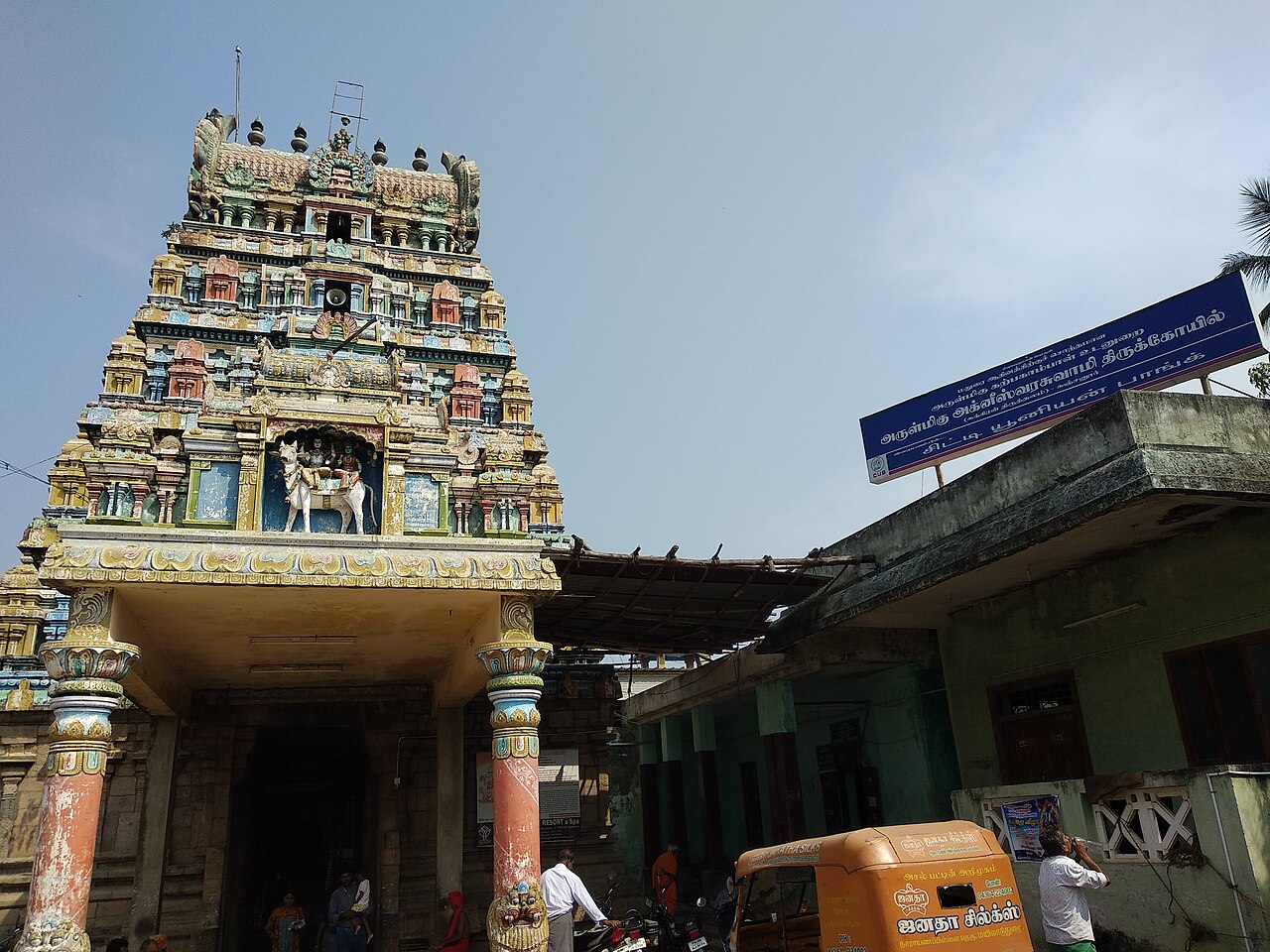
Thirubuvanam Silk Weaving
The second reason to stop here, and the one you can walk into. Thirubuvanam weaves silk sarees on pit looms set into the floors of sheds behind ordinary front doors, and the trade runs through one body — the Thirubuvanam Silk Handloom Weavers Co-operative, registered in 1955 and known as THICO — which also holds the Geographical Indication the cloth was granted in March 2019. Its counter is on Sannathi Street a couple of hundred metres east of the temple, which makes this one of the few crafts in Tamil Nadu you can buy from the society that owns its name, in the village the name refers to. What to look at before you buy: the korvai join, where a pallu of a different colour is interlocked thread by thread with the body rather than stitched on.
Plan Thirubuvanam Silk Weaving
Thirubuvanam Silk Weaving is planned from Thirubuvanam, one of the travel bases in Thanjavur district. Use Thirubuvanam for stays, food and local transport, then plan this place as a focused stop.
How to visit
- Base yourself in Thirubuvanam or nearby in Thanjavur, then confirm the last-mile route locally before travel.
- If access depends on temple, museum or seasonal rules, check on the day before you go.
Distance by road
- Tiruchirappalli (Trichy)58 km
- Madurai190 km
- Puducherry170 km
- Coimbatore215 km
- Chennai350 km
Road km to Thanjavur; ghat roads and traffic vary — allow extra.
Best time
October to March is the cooler, drier season in the Cauvery delta.
Live forecast loads in your browser.
Sun and moon are calculated for this location and shown in IST. Photography windows are the hour around sunrise and sunset; the sunset bearing is degrees clockwise from true north. Moon phase is accurate to about half a day.
Visitor notes
Good to know
Stays, food & things to do near Thirubuvanam Silk Weaving
Verified hotels, homestays, restaurants, experiences, sights, shops and rentals around Thirubuvanam Silk Weaving — commission-free, with direct contact. Filter by what you need.
4 places to eat near Thirubuvanam Silk Weaving
8 sights to see near Thirubuvanam Silk Weaving
1 place to shop near Thirubuvanam Silk Weaving
4 nature spots near Thirubuvanam Silk Weaving
A tiffin centre about 200 metres south of the temple. Tiffin means the South Indian short-meal repertoire — idli, dosai, pongal, vadai — served morning and again in the evening, with the middle of the day often quiet. We have not eaten here and there is no published menu or timing; treat it as the village's own breakfast counter rather than a destination.
A tea counter at the eastern end of the village, out where the banks and the post office are rather than by the temple. This is the kind of shop the street runs on — tea, coffee and whatever short eats are on the rack that morning — and it is the nearest thing to a cafe in Thirubuvanam. Hours are nobody's published timetable; it opens early and shuts when the trade stops.
A mess on the southern street, a few doors from the tiffin centre. A mess in Tamil Nadu is a plain working eating house that serves a set meal at lunch rather than a menu — you get what is cooked that day. It is the most likely place in Thirubuvanam to find a full midday meal. Timings and rates are unverified.
An Amman temple at the western end of the village, roughly 700 metres from the Chola temple and the furthest of the village shrines on that side. Amman temples are the village goddess tradition — older in practice than the royal stone temples and quite separate from them, run by the locality rather than by a devasthanam. Festival dates here are local and we have not verified them.
A small Anjaneyar — Hanuman — shrine about 200 metres north of the great temple. Vayumoolai names the northwest corner, the quarter of Vayu, the wind god who is Hanuman's father, so the name is really a direction. A neighbourhood shrine kept by the street around it rather than a visitor site; look in as you pass.
A nandavanam is the flower garden a temple keeps to grow its own offerings — jasmine, nerium, tulsi — rather than a public park, and this is the southern of the two mapped beside the Kampahareswarar temple, immediately behind the compound wall. It is working ground belonging to the temple; look over the wall rather than walk in.
The second of the temple's two flower gardens, on the northern side of the Kampahareswarar compound and about 50 metres from the sanctum. Between them the two gardens are why the temple's daily garlands do not have to be bought in — the same arrangement most large Tamil temples once had and few still keep.
A Vinayakar shrine on the western side of the village, about 600 metres from the great temple. Bala Vinayakar is Ganesha as a child. Like most of the small temples in these streets it is a neighbourhood shrine with its own local following and no published opening hours — the door is open when someone has opened it.
A Mariyamman temple on the northeastern side of the village. Mariyamman is the goddess of rain and of the diseases that come with the heat, and her temples are busiest through Aadi, the Tamil month roughly mid-July to mid-August, when the village festivals fall. Outside that it is a quiet street shrine.
A Vinayagar shrine on the northern edge of the village, about 270 metres from the great temple. Ganesha shrines sit at entrances and corners by design — you pass them on the way in rather than make a trip to them — and this is one of several in Thirubuvanam's streets.
A second Vinayagar shrine, this one about 200 metres northwest of the Chola temple and close enough to fold into the same walk. Karpagam refers to the wish-granting tree of the epics, so the name reads roughly as the Ganesha who gives what is asked. A working neighbourhood shrine.
A tank on the western side of Thirubuvanam, about 600 metres from the temple and the larger of the two the village keeps. Kulam is Tamil for tank; the delta's villages sit in a net of them, filled by the northeast monsoon between October and December and drawn down through the dry months. No visitor path, no railing — a working tank in a working village.
A Perumal — Vishnu — temple recorded about 2 km east of Thirubuvanam, the only Vaishnava shrine on the village's own list among a run of Shiva and Amman temples. ⚠ Its pin is the weakest one we hold here: it sits about 600 metres from the nearest feature of that name we could find in OpenStreetMap, so treat the map position as approximate and ask locally rather than driving to the pin.
An Angala Parameshwari temple about 1.5 km east of the village centre, out past the banks on the Mayiladuthurai side. Angala Parameshwari is a fierce form of the goddess with a strong following across the delta and her own festival cycle, usually in the Tamil month of Panguni. We have not verified this temple's own dates or timings.
A kulam — a village tank — on the southwestern edge of Thirubuvanam, about a kilometre from the temple. Delta villages are built around tanks like this one: they hold the monsoon, feed the wells and the fields, and drop through the dry months. There is no path built round it and nothing laid on for visitors; it is a working water body in a working village.
The society that holds the Geographical Indication for the Thirubuvanam silk saree, selling it from its own counter in the village the cloth is named after. Registered in 1955 as the Thirubuvanam Silk Handloom Weavers Co-operative Production and Sale Society Ltd (society number Z.322) and run from Sannathi Street a couple of hundred metres east of the temple. Its own site gives 8am–10pm Monday to Friday, 9am–8pm Saturday, and says it opens Sundays and holidays through the year — those are the society's hours, not ours, so confirm on the phone before a long drive. ⚠ The society is not mapped in OpenStreetMap and its address gives the street without a number, so the pin is the western end of Sannathi Street, the end nearest the temple.
A hot-chips counter on the southern street, about 250 metres from the temple. Hot chips shops fry to order through the day — banana, tapioca, potato — and sell by weight; in a village with no restaurant to speak of this is the practical thing to carry away. Unverified hours.
Book with the place itself. India’s cyber-crime coordination centre warned in April 2025 that convincing copies of hotel and pilgrimage booking sites are being pushed through sponsored search and social ads, taking payment for rooms the property never hears about. Every listing here links to the business’s own contact details and its own Google or Bing profile — we take no commission and sit in nobody’s payment path. If a booking page reached you through an ad, check the address bar against the property’s own site before you pay. Fraud can be reported on cybercrime.gov.in or on 1930.
Top experiences around Thirubuvanam
2 more Thirubuvanam experiences worth building a day around, each with a full guide, how to reach it and what sits next to it. Thirubuvanam Silk Weaving is left off — you are already on it — and so is anything already shown in the nearby list further down, so nothing here repeats.

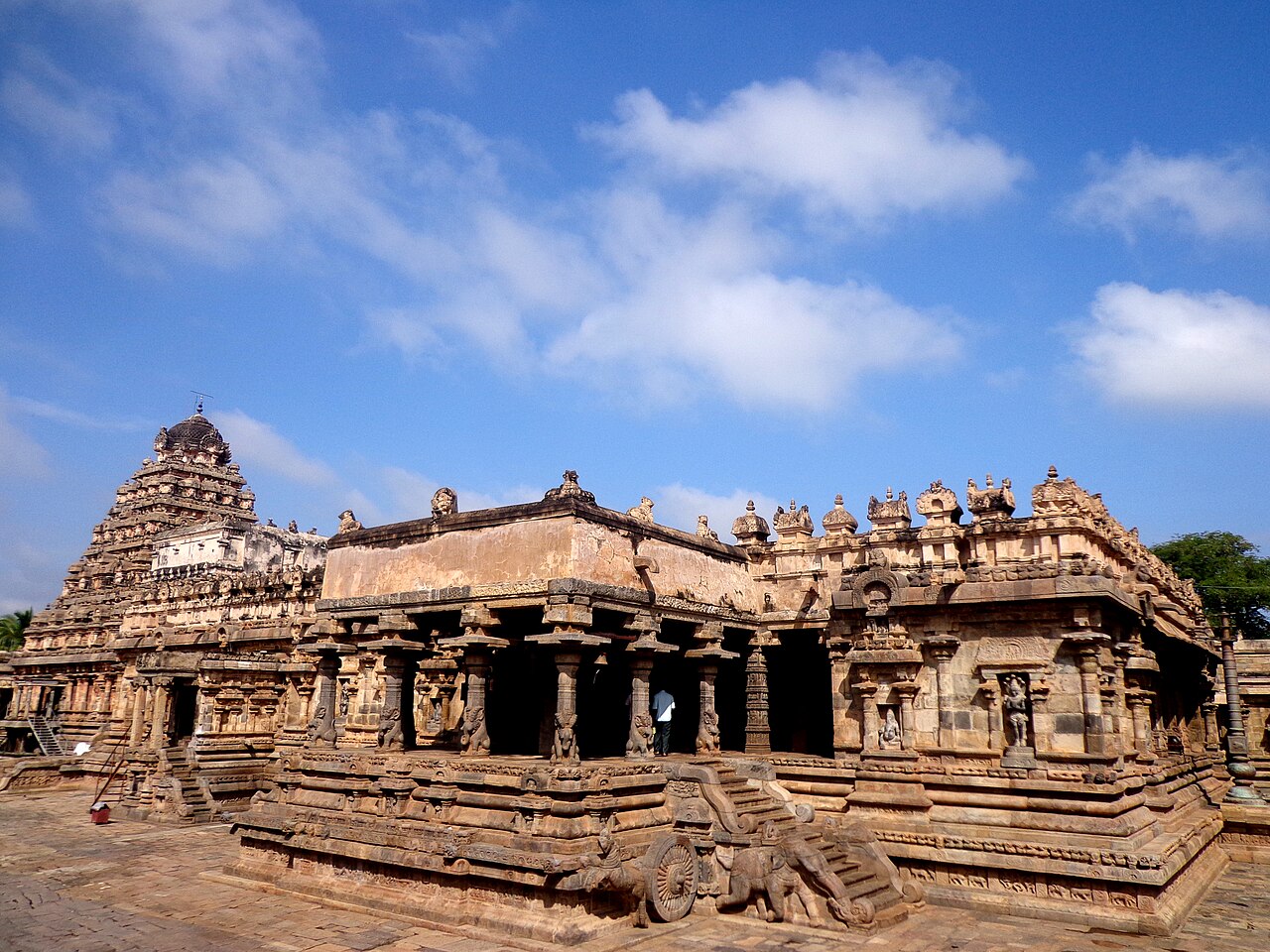
A UNESCO-listed Great Living Chola Temple at Darasuram near Kumbakonam, built by Rajaraja Chola II in the 12th century and famous for its stone chariot-form mandapa and “musical” steps. It is a day trip east of Thanjavur.

The Swaminathaswamy (Murugan) temple at Swamimalai, one of the six sacred “Padai Veedu” abodes of Murugan, reached by a flight of steps; the surrounding town is the living centre of Chola-style lost-wax bronze icon-making. About 7 km west of Kumbakonam.
Roampedia is commission-free — own or know a stay, eatery, guide or shop near Thirubuvanam Silk Weaving? List it and it appears here once verified.
Add a nearby businessWhat’s near Thirubuvanam Silk Weaving


Where Thirubuvanam Silk Weaving is
Thirubuvanam Silk Weaving — frequently asked
When is the best time to visit Thirubuvanam Silk Weaving?
October to March is the cooler, drier season in the Cauvery delta.
How do I reach Thirubuvanam Silk Weaving?
Base yourself in Thirubuvanam or nearby in Thanjavur, then confirm the last-mile route locally before travel. If access depends on temple, museum or seasonal rules, check on the day before you go.
How much time do I need for Thirubuvanam Silk Weaving?
About an hour.
What else is near Thirubuvanam Silk Weaving?
Nearby you can pair Kampahareswarar Temple (180 m), Mahalingaswamy Temple, Thiruvidaimarudur (1.7 km), Naganathaswamy Temple, Thirunageswaram (3.0 km), Oppiliappan Temple (3.2 km).
Thirubuvanam Silk Weaving guides, stories & itineraries
We have not published a story about Thirubuvanam Silk Weaving itself yet. These cover Thirubuvanam, the town it sits in, and the wider district.
Around Thirubuvanam
Thirubuvanam Silk Weaving sits in Thirubuvanam, so these cover the streets, buildings and surroundings around it.
Tamil Nadu-wide guides & itineraries
Route-level itineraries and practical guides for the rest of Tamil Nadu.