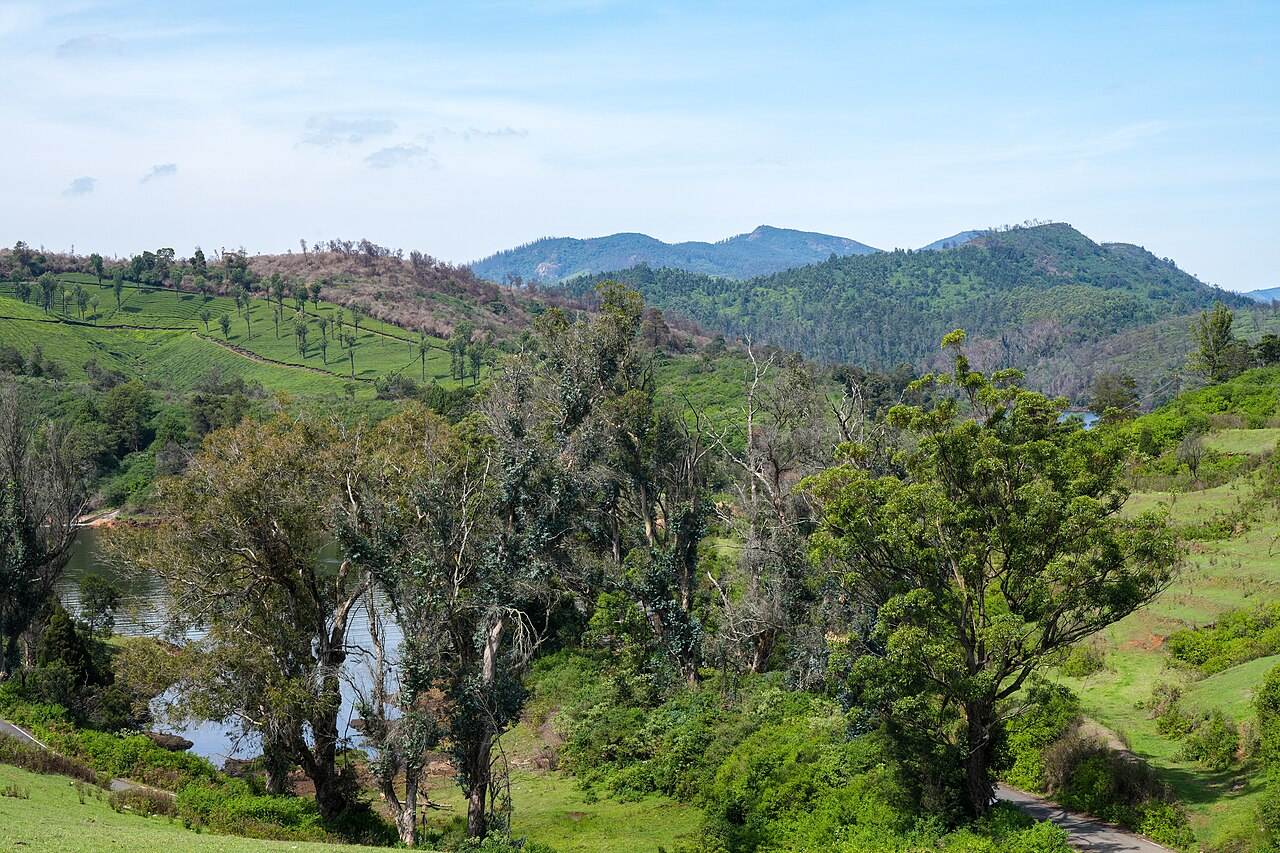
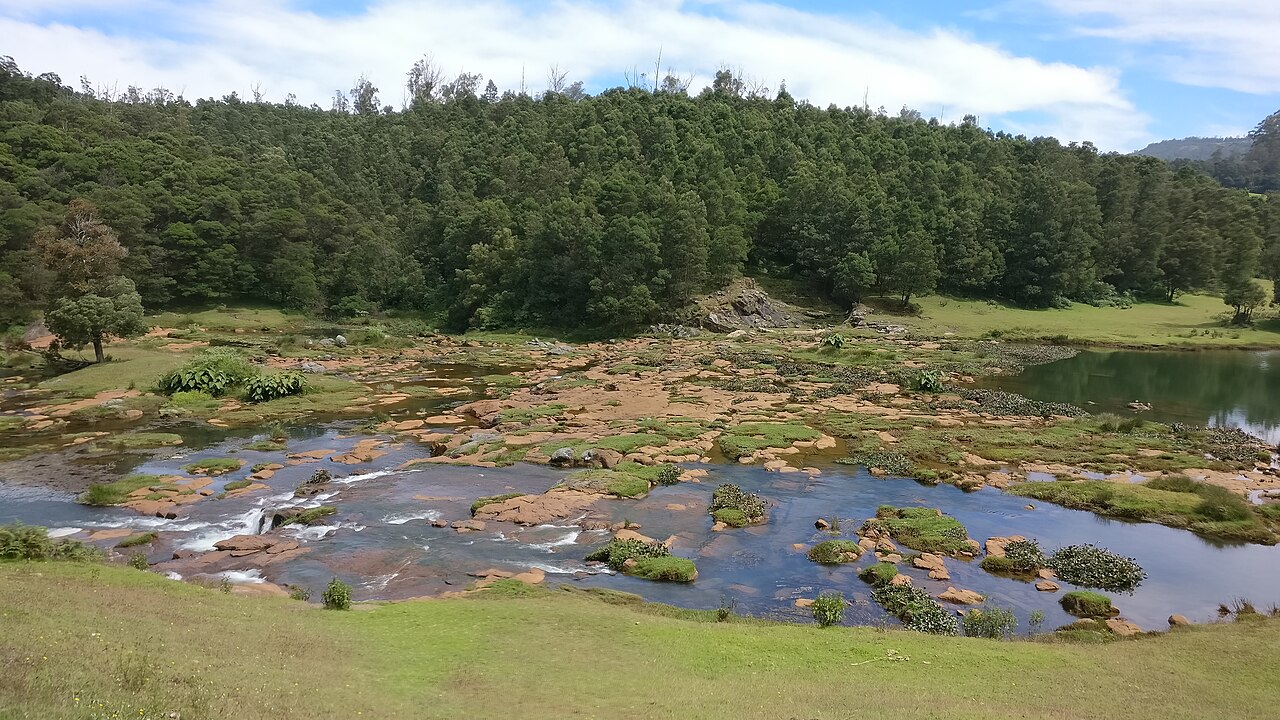
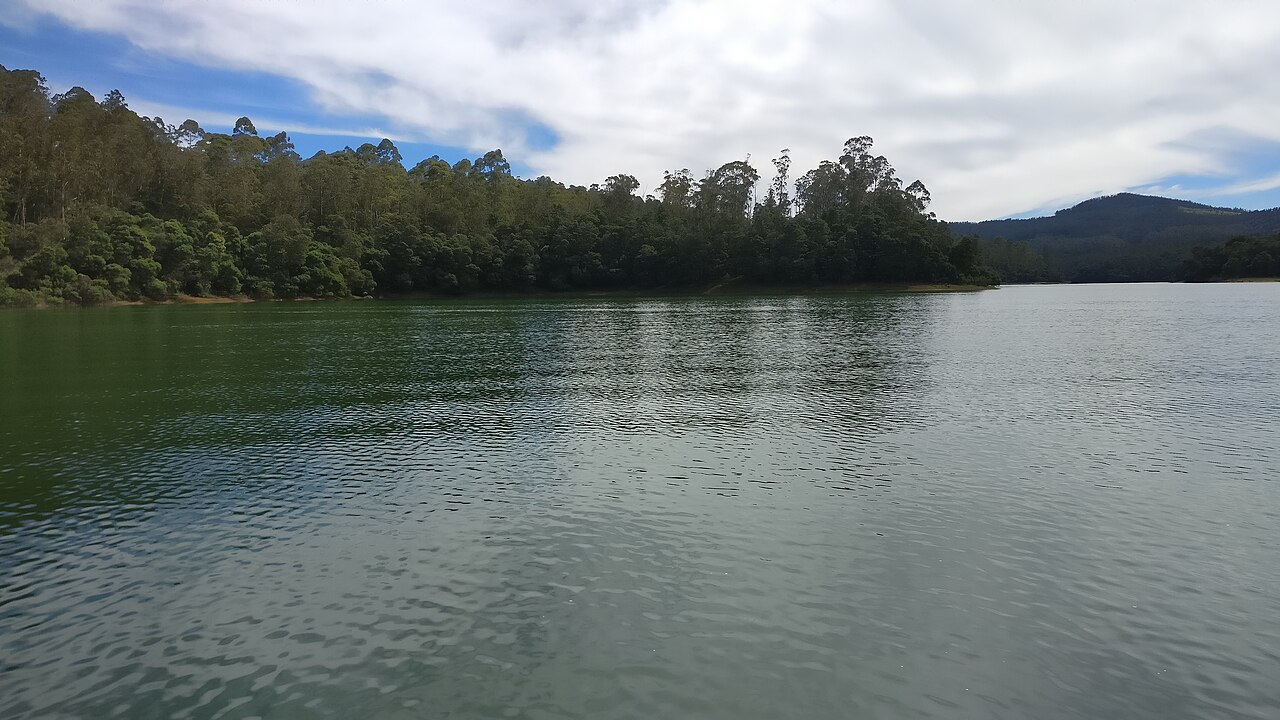
The gorge the Moyar has cut along the northern edge of the plateau, running roughly 85 km east from the reserve towards Sathyamangalam and forming the corridor elephants use between the Western and Eastern Ghats. It matters for something most visitors never hear about: the cliffs and the riverside Terminalia arjuna trees hold the largest nesting colony of Gyps vultures left in peninsular India, and the Forest Department is building its first Vulture Safe Zone around this valley. There is a viewpoint marked on the map north of Masinagudi, but it is inside the reserve and there is no public way to it: one routing engine refuses it outright and the other only reaches it by forest track. In practice you see the gorge from the safari or from the rim on the Sigur side.
The story of Moyar Gorge
For Moyar Gorge, the gorge the Moyar has cut along the northern edge of the plateau, running roughly 85 km east from the reserve towards Sathyamangalam and forming the corridor elephants use between the Western and Eastern Ghats. For Moyar Gorge, it matters for something most visitors never hear about: the cliffs and the riverside Terminalia arjuna trees hold the largest nesting colony of Gyps vultures left in peninsular India, and the Forest Department is building its first Vulture Safe Zone around this valley. For Moyar Gorge, there is a viewpoint marked on the map north of Masinagudi, but it is inside the reserve and there is no public way to it: one routing engine refuses it outright and the other only reaches it by forest track. For Moyar Gorge, in practice you see the gorge from the safari or from the rim on the Sigur side. For Moyar Gorge, the useful visit is built around the specific feature described here, not around promotional superlatives or facilities that have not been verified.
Use Masinagudi as the practical starting point for Moyar Gorge, but verify the final approach before setting out. For Moyar Gorge, roadworks, worship sessions, conservation work and seasonal restrictions can change access even when the map still draws an uninterrupted route.
Spend time at Moyar Gorge separating the documented core from local memory and later alteration. For Moyar Gorge, plaques, inscriptions and official interpretation deserve more weight than repeated online claims, especially when a date, height or “oldest” label lacks a named source.
Understanding Moyar Gorge also means placing it within The Nilgiris: the attraction's identity comes from its own surviving feature, living use and local setting, not from borrowing the fame or story of a better-known site elsewhere in Tamil Nadu.
Keep the rest of the day flexible around Moyar Gorge. For Moyar Gorge, heat, rain and crowds affect small sites disproportionately, so carry drinking water, choose secure footwear and move the visit rather than ignoring a closure or unsafe surface.
Read the full history of Moyar Gorge 365 more words
History
The gorge the Moyar has cut along the northern edge of the plateau, running roughly 85 km east from the reserve towards Sathyamangalam and forming the corridor elephants use between the Western and Eastern Ghats. It matters for something most visitors never hear about: the cliffs and the riverside Terminalia arjuna trees hold the largest nesting colony of Gyps vultures left in peninsular India, and the Forest Department is building its first Vulture Safe Zone around this valley. There is a viewpoint marked on the map north of Masinagudi, but it is inside the reserve and there is no public way to it: one routing engine refuses it outright and the other only reaches it by forest track. In practice you see the gorge from the safari or from the rim on the Sigur side. This documented core is the safest starting point for understanding Moyar Gorge. Dates, dynastic associations and superlatives repeated without a named inscription, conservation record or official interpretation should be treated cautiously rather than added as fact.
Moyar Gorge also belongs to the history of Masinagudi and the wider The Nilgiris district. Its present condition reflects continuing use, repair, environmental exposure or changing settlement around it; the surviving place is not an unchanged remnant of one period.
A useful historical visit compares the defining feature described above with what is visible now. Notice materials, plan, landscape and present use, and allow a locked area, altered structure or living ritual to remain part of the honest account rather than filling the gap with an unsupported reconstruction.
Why visit
Visit Moyar Gorge for the specific feature and local history described on this page, rather than as a generic stop in The Nilgiris.
The most useful visit combines close observation at Moyar Gorge with a realistic return plan through Masinagudi; it does not depend on an unverified ticket, unrestricted access or a promised experience.
Its value is clearest when you give the place enough time to understand the feature named in its story instead of reducing the stop to a photograph.
The surrounding Masinagudi context makes Moyar Gorge practical to combine with verified local food, accommodation and visitor services while keeping the attraction itself in focus.