Highlights
- Large Wayanad waterfall landscape with season-dependent access.
- Pairs with Meppadi, Kalpetta, Banasura-side routes and Wayanad forest/waterfall plans.
- What you arrange on the ground here: drivers, guides, stays and nature operators.
Meenmutty Waterfalls is one of Wayanad's major waterfall names, but access and safety rules have changed over time and can vary by season. It should be described cautiously as a controlled waterfall/forest visit, not an always-open casual stop.

The correct traveller advice is to verify which Meenmutty access point is meant, whether it is open, and what level of walk/trek is currently permitted.
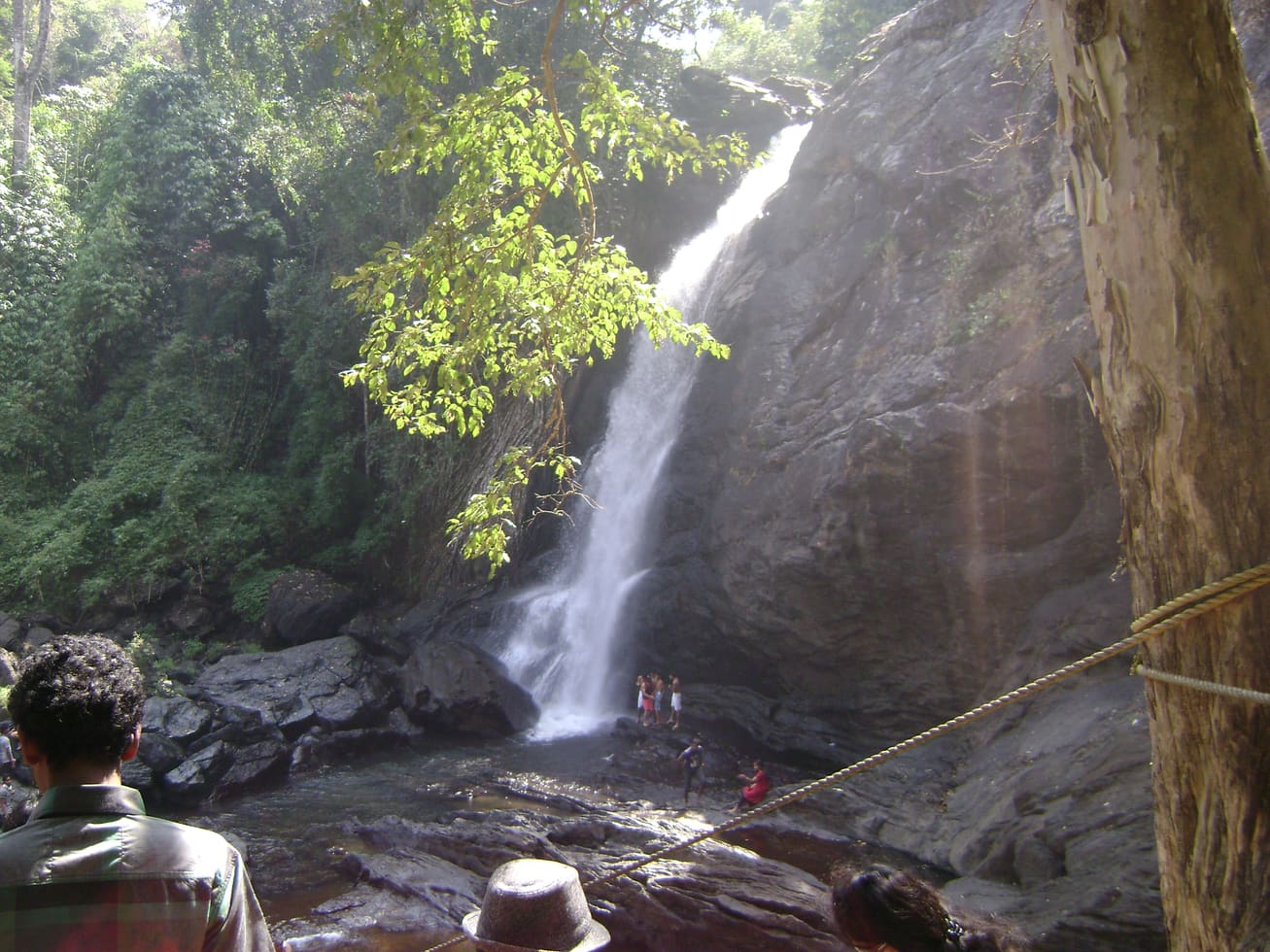
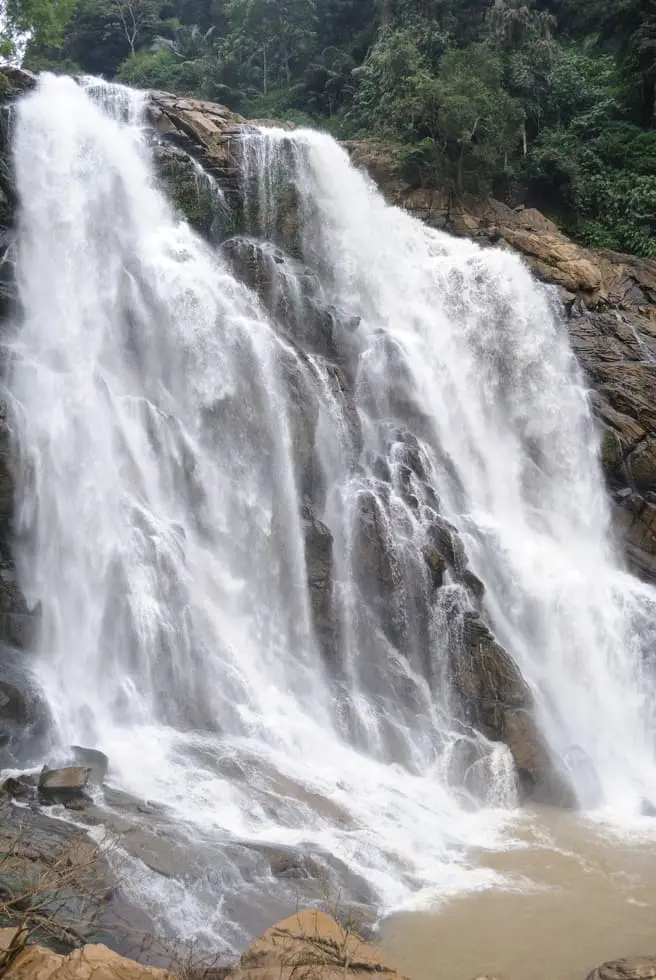
Hidden deep in the deciduous forest east of Meppadi, Meenmutty is Wayanad’s biggest and most dramatic waterfall — a three-tiered giant that spills down a rocky mountain face reached only on foot, by a couple of kilometres of jungle trek off the Kalpetta–Ooty road.
Meenmutty does not reveal itself easily, and that is precisely its appeal. There is no viewpoint you can drive to, no railing to lean on. From the forest gate near Meppadi you set off on foot, following a rough path that climbs through shola forest and old plantation edges, and only after a couple of kilometres of walking does the roar in the distance resolve into water. The reward is one of the largest waterfalls in Wayanad, a broad curtain of white tumbling in three great steps down a dark rock wall — a sight most casual tourists never see, because most casual tourists never make the walk.
The falls are arranged in three distinct tiers, and reaching each one is a small expedition in itself. The first tier comes after roughly half a kilometre of walking, and here the stream pools into a comparatively gentle basin where trekkers stop to cool off. To reach the second tier you climb further, picking your way up boulder steps beside the rushing channel, and the forest closes in around you. The third and highest tier is the toughest of all — a steep scramble over slippery, spray-soaked rock, in places aided by ropes, that many visitors choose not to attempt at all.
Sources disagree on exactly how tall Meenmutty is, and the figures thrown around — anywhere from around three hundred metres of total descent to headline numbers of nearly a thousand feet — should be treated with caution rather than taken as gospel. What is not in dispute is the scale of the thing: the water spreads out across a wide rocky face, the three tiers together running to a considerable spread, and standing at the base you feel very small indeed. It is routinely described as the biggest waterfall in the district, and on a full-flow day it is easy to believe.
The name itself tells a quiet story. In Malayalam, meen means fish and mutty means blocked, and the falls are said to mark the point where migrating fish, swimming up the stream, are finally stopped by the sheer rocky wall and cannot travel any further upstream. It is a plain, practical name given by people who knew this water intimately — the tribal and farming communities of these hills — long before it appeared on any tourist map, and it captures something true about the place: this is where the river turns from a climbable stream into an impassable cliff of falling water.
The trek is as much a part of the experience as the falls. The path runs through a genuine forest, part of the wider Wayanad wilderness on the flank of the Western Ghats, and it is alive — butterflies over the stream, the calls of hornbills and barbets overhead, the constant possibility of larger animals moving unseen through the trees. In the wetter months the same forest brings leeches, and the rocks turn treacherous. This is why a local guide is not a luxury but sensible practice; the route is not always obvious, and the forest does not forgive carelessness.
For all its beauty, Meenmutty carries a sober reputation. During the monsoon the volume of water becomes enormous and the rocks lethally slippery, and the falls have claimed lives over the years — drownings have been recorded here since the early 1990s. The site is frequently closed outright in heavy rain, and even in the dry season the upper tiers demand respect. Those who come in the right season, walk carefully, and treat the water with caution carry away the memory of one of Kerala’s great hidden cascades; those who take it lightly can come to grief. It is a place that rewards effort and punishes complacency in equal measure.
There is no grand temple legend attached to Meenmutty, but the falls do carry a piece of folk naming-lore worth telling. Local tradition holds that this is the spot where fish swimming up the stream are turned back — meen, fish, and mutty, blocked — because the towering, spray-slicked rock face simply cannot be climbed by any creature of the water. Whether or not the fish ever truly gathered here in numbers, the story survives in the name, a small legend of the natural world rather than of gods, passed down by the hill communities who named the place.
Meenmutty belongs to the deep human and natural history of Wayanad, the highland district that sits where Kerala meets the Western Ghats. For centuries these forests were the domain of Adivasi communities — the Paniyar, Kurichiyar, Kattunayakan and others — who lived by and knew every stream and ridge of this country, and it was almost certainly they who first named the falls after the fish that could climb no higher. The plainness of the name, describing exactly what happens at the spot, is itself a marker of that old, intimate, working relationship with the land.
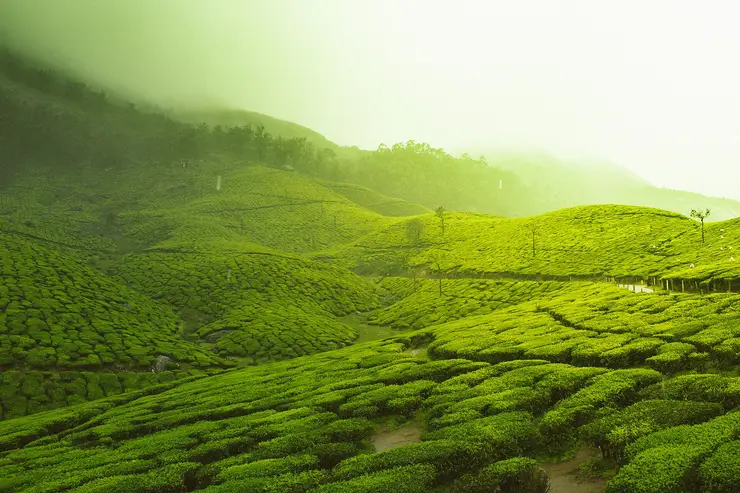
The wider landscape around the falls was reshaped in the nineteenth and twentieth centuries, when British planters opened up the Wayanad highlands for tea, coffee and cardamom. The estates around Meppadi and Chembra date to this plantation era, and the approach to Meenmutty still runs past the green geometry of tea before it plunges into the wilder forest. The Kalpetta–Ooty road along which the falls are approached was itself a product of this opening-up of the hills, linking the plantations of Wayanad to the Nilgiris beyond.
As a destination for outsiders, Meenmutty is a relatively recent arrival. For most of its history it was simply a feature of the forest, known to those who lived and worked nearby but visited by almost no one else. Only as Wayanad grew into one of Kerala’s most popular hill destinations, from the late twentieth century onward, did the falls begin to draw trekkers and adventure-minded travellers willing to make the walk — and even now it remains far less crowded than Wayanad’s roadside attractions precisely because it cannot be reached without effort.
That growing footfall has brought a harder chapter too. The falls have a documented record of fatal accidents, with drownings noted here since the early 1990s, almost always tied to the monsoon and to visitors underestimating the power of the swollen water. In response the Forest Department has brought the site under managed access — with defined timings, entry formalities and closures during dangerous conditions — reflecting a wider shift across Wayanad toward controlling and protecting fragile, and sometimes deadly, wild spaces.
Today Meenmutty sits within the protected forest fabric of Wayanad, and its story is increasingly one of balance: keeping the trek open to those who want the genuine wilderness experience, while guarding both the visitors and the ecosystem. The leech-filled monsoon forest, the elephants and hornbills of the surrounding jungle, and the sheer scale of the three-tiered falls are all reminders that this is a working piece of the Western Ghats — a UNESCO-recognised biodiversity hotspot — and not a manicured tourist set-piece.
It is the biggest waterfall in Wayanad, and one of the largest in Kerala — a genuine three-tiered giant rather than a modest roadside cascade, and seeing it in full flow is a memorable payoff.
The journey is the point: a couple of kilometres of real jungle trek through Western Ghats forest, past tea plantations and along a rushing stream, delivering an adventure that Wayanad’s drive-up attractions simply cannot match.
Because it can only be reached on foot, it stays far quieter and wilder than famous nearby falls — you earn a sense of solitude and discovery that is increasingly rare at popular hill stations.
The three tiers offer three different experiences — a gentler lower pool, a boulder-stepped middle section, and a steep, rope-assisted upper climb — so you can go as far as your fitness and nerve allow.
The surrounding forest is richly alive, with a real chance of spotting hornbills, eagles, langurs, butterflies and the signs of larger wildlife, making the walk a nature outing as much as a waterfall visit.
For fit, prepared travellers who want the authentic wild side of Wayanad — and who respect the trek and the season — Meenmutty is one of the district’s most rewarding and least commercialised experiences.
Road km to Wayanad; ghat roads and traffic vary — allow extra.
Post-monsoon and winter are usually best; heavy monsoon conditions can make access unsafe or closed.
Live forecast loads in your browser.
Check the official alert before you travel. Kerala’s beaches, waterfalls and trekking routes close at short notice during heavy rain, and district alert levels change day to day. We do not publish an alert level of our own — read it from the state authority: Kerala State Disaster Management Authority, or the district control room on 1077.
Sun and moon are calculated for this location and shown in IST. Photography windows are the hour around sunrise and sunset; the sunset bearing is degrees clockwise from true north. Moon phase is accurate to about half a day.
These are official or public-sector eco offerings that match this place, town or forest destination. Confirm availability, permits, tariffs and reporting times with the official operator before travel.

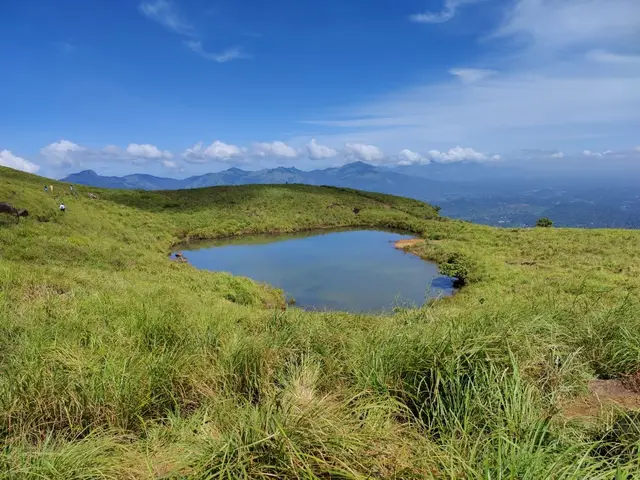
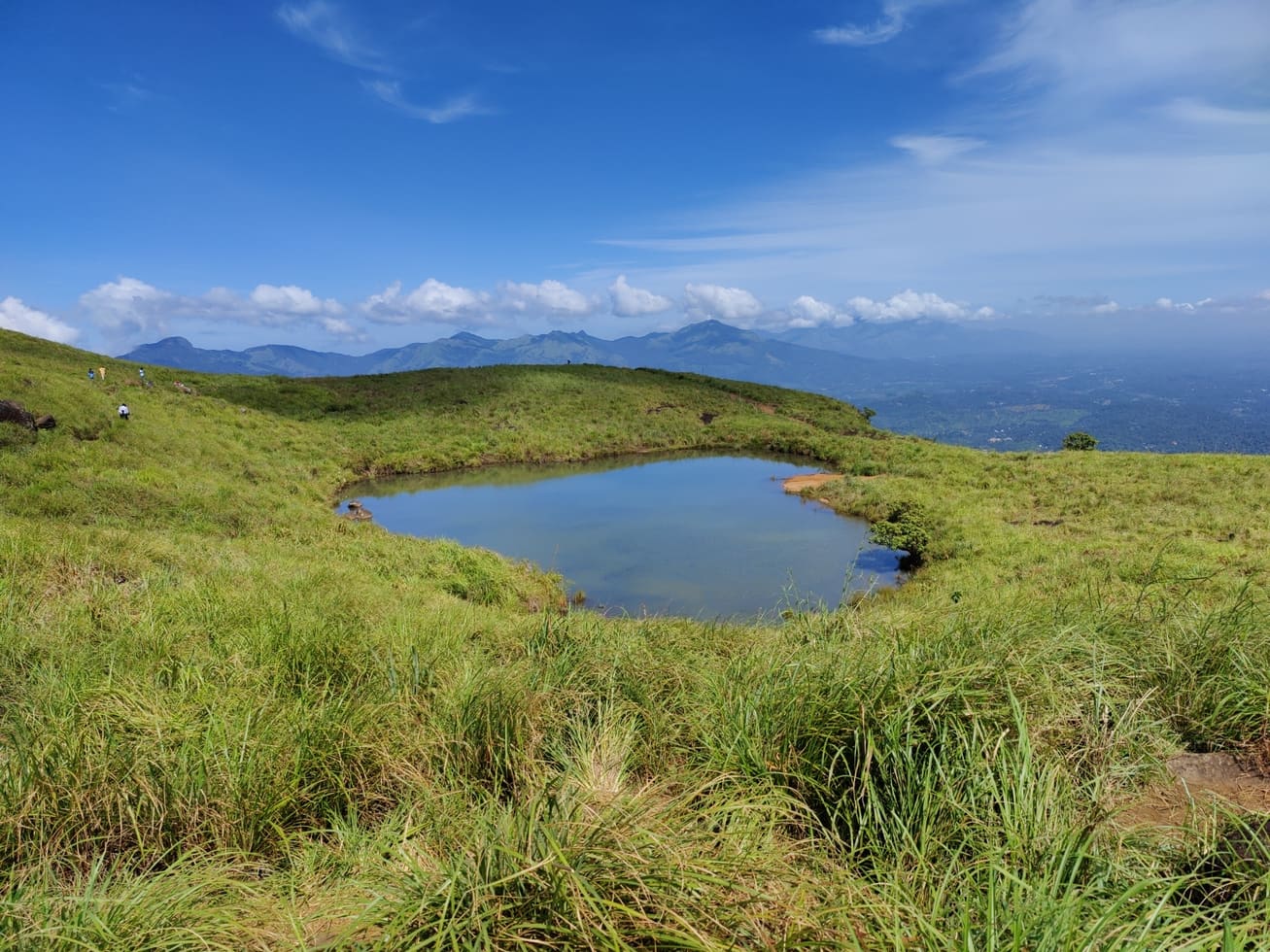
Full-day forest-department trek from Meppadi side to the heart-shaped lake viewpoint area on Chembra Peak.
Official source →Verified hotels, homestays, restaurants, experiences, sights, shops and rentals around Meenmutty Waterfalls — commission-free, with direct contact. Filter by what you need.

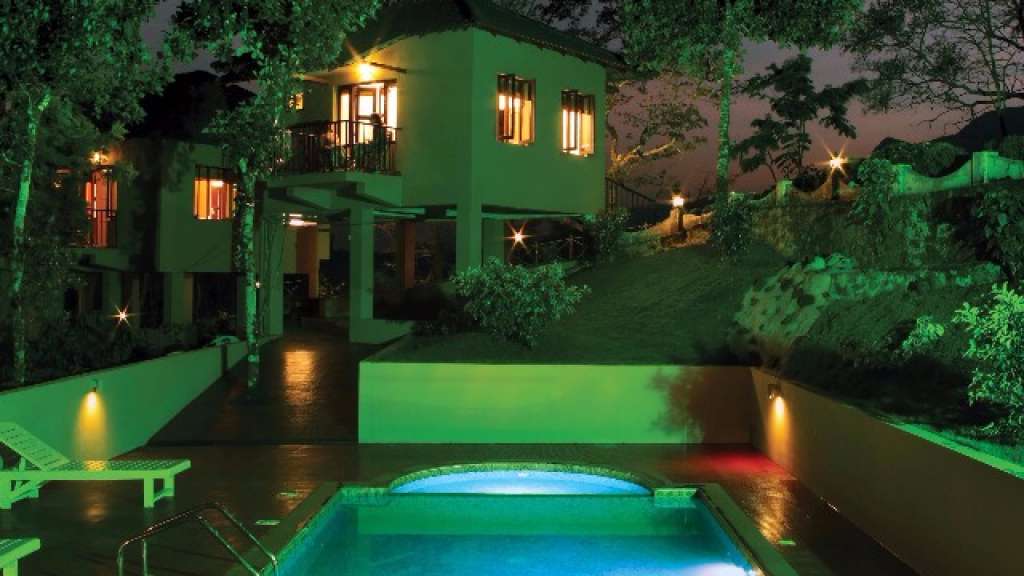
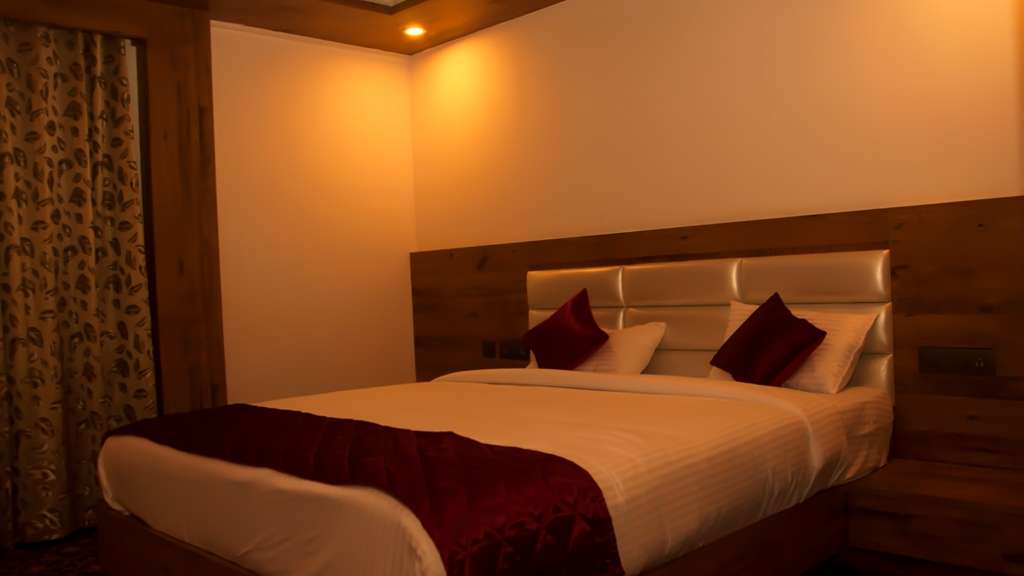
Kerala Tourism-listed Meppadi-side resort record with image-backed provider evidence. Mid-range resort · Resort, Meppadi, Mid-range stay.

900 Kandi-side eco resort with official contact/travel-context evidence near Meppadi. Mid-range eco resort · Resort, Eco resort, 900 Kandi.

Meppadi jungle resort with direct phone, email and address evidence. Mid-range jungle resort · Resort, Jungle resort, Meppadi.

Kerala Tourism-listed Meppadi hotel/resort record for Chembra-side stay planning. Budget to mid-range hotel · Hotel, Meppadi, Chembra side.

Kerala Tourism-listed Meppadi resort with direct reservations evidence. Contact direct · Meppadi, Rainforest lodge, Chembra base.
Luxury hillside resort in the 900 Kandi belt above Meppadi. Balconies open to sweeping views over the plantations near the Vellarimala ranges.
A Diamond-class homestay on the Rippon tea belt near Meppadi. Four king-bed rooms serve traditional Kerala meals amid Western Ghats hills.
Sprawling jungle eco-resort on a forested estate at Kalladi, Meppadi. Soochipara waterfall and the 900 Kandi glass bridge sit a short ride away.
Family homestay wrapped in tea and coffee plantations at Meppadi. Trailheads to Chembra Peak and Soochipara Falls start close by.
Boutique rainforest lodge set in a 16-acre spice garden at Rippon, Meppadi. It overlooks the Nilgiri biosphere and was built without felling a tree.
Diamond-class hilltop homestay above Meppadi with its own private waterfall. A tea-planted ridge frames a 360-degree view of Chembra Peak.
Book with the place itself. India’s cyber-crime coordination centre warned in April 2025 that convincing copies of hotel and pilgrimage booking sites are being pushed through sponsored search and social ads, taking payment for rooms the property never hears about. Every listing here links to the business’s own contact details and its own Google or Bing profile — we take no commission and sit in nobody’s payment path. If a booking page reached you through an ad, check the address bar against the property’s own site before you pay. Fraud can be reported on cybercrime.gov.in or on 1930.
Meenmutty Waterfalls sits in Meppadi and Chembra, and these rank everything verified across the town rather than this one spot — built from the same listings shown above, ordered by the strength of the source evidence behind each entry rather than by anyone's star score. Every card shows how many places are really on it. Nobody pays to appear.
3 more Meppadi and Chembra experiences worth building a day around, each with a full guide, how to reach it and what sits next to it. Meenmutty Waterfalls is left off — you are already on it — and so is anything already shown in the nearby list further down, so nothing here repeats.
Guided two-kilometre jungle trek in the Wayanad Wildlife Sanctuary to the three-tier Meenmutty Falls, the district’s largest waterfall, near Kalpetta.

Waterfall route on the Banasura side of Wayanad; confirm current access before adding it to a dam or hill day.

Tea-estate and plantation landscape used for responsible-tourism and plantation-side Wayanad planning.
Roampedia is commission-free — own or know a stay, eatery, guide or shop near Meenmutty Waterfalls? List it and it appears here once verified.
Add a nearby businessEntry: Nominal forest entry fee, commonly quoted around ₹30 for Indian adults and ₹15 for children, about ₹60 for foreign nationals, and roughly ₹75 for a still camera (all indicative — confirm locally). Guide and any vehicle charges are extra.
Festivals: There is no temple or festival directly associated with the falls; it is a natural forest attraction rather than a place of worship. Visitor numbers rise around Kerala’s peak travel seasons and holidays, roughly October to May.
Photography: Photography is generally allowed and a still-camera fee may apply (indicative — confirm locally). Protect your gear from spray and rain, keep it secured on the steep rope-assisted sections, and take extra care near the water — never risk footing on wet rock for a photograph.
Work out your return before you settle in for the sunset. Public transport here thins out sharply in the evening, and Meenmutty Waterfalls is easier to reach than to leave. We do not publish departure times: there is no official live feed we are permitted to republish, and a wrong time here would strand you. Check the operator directly on the day.
Ask at the bus stand for the time of the last service back, not the next one. If you miss it, an auto or app cab is the fallback — agree the fare before you get in.
We have not assessed physical access at this place yet. Across India, step-free routes, handrails and accessible toilets are the exception rather than the rule, and pavements are often interrupted — if step-free access matters to you, contact the site or a local operator before committing to the trip.
Emergency numbers are verified against official government and state tourism sources. 112 works anywhere in India.


It is a moderate-to-tough forest trek of roughly two kilometres, not a casual walk. The lower tier is reachable with reasonable effort, but the middle and especially the upper tiers involve boulder steps, steep sections and slippery, rope-assisted scrambles. It is not recommended for very young children, the elderly or anyone unfit, and a local guide is strongly advised.
It is a three-tiered waterfall, and it is consistently described as the biggest in Wayanad. The exact height is quoted very differently by different sources — from around three hundred metres of total descent to headline figures of nearly a thousand feet — so treat any single number with caution. What is certain is that it is large, wide and spectacular.
October to May is generally considered the best window (indicative — confirm locally), when the paths are safer and the forest is walkable. Avoid the peak monsoon of roughly June to September: the water becomes dangerous, the rocks lethally slippery, leeches are rife, and the falls are often closed outright.
The lower tier has a comparatively gentle pool where visitors sometimes cool off, but the site has a serious record of drownings, especially in and after the rains. Water levels and currents can be deceptive and dangerous. Take extreme care, never swim in high flow, and follow any instructions from guides and forest staff.
The falls sit within managed forest, so entry formalities and a nominal fee typically apply at the forest gate, and hiring a local guide is strongly recommended — the route is not always obvious and the terrain is demanding. Check current permit rules and any closures with the Forest Department locally before you set out (indicative — confirm locally).
The name Meenmutty attaches to more than one waterfall in Kerala, and even within Wayanad there is potential for confusion. This entry is the large three-tiered falls reached by jungle trek off the Kalpetta–Ooty road east of Meppadi. Distances and details online sometimes mix it up with smaller or differently located falls, so confirm the specific spot when arranging transport.
Post-monsoon and winter are usually best; heavy monsoon conditions can make access unsafe or closed.
Entry: Nominal forest entry fee, commonly quoted around ₹30 for Indian adults and ₹15 for children, about ₹60 for foreign nationals, and roughly ₹75 for a still camera (all indicative — confirm locally). Guide and any vehicle charges are extra.. Timings: Roughly 9.00 am to 5.00–5.30 pm, when open (indicative — confirm locally); last entry is well before closing to allow time for the trek back, and the site is frequently closed during heavy rain.. Fees and timings are indicative — confirm on site before you travel.
Base in Kalpetta, Meppadi or the relevant access-side village and verify current opening before travel. Do not rely on old blogs for route length or entry permissions. Carry shoes with grip, water and rain protection if access is open.
2 to 4 hours depending on current permitted route.
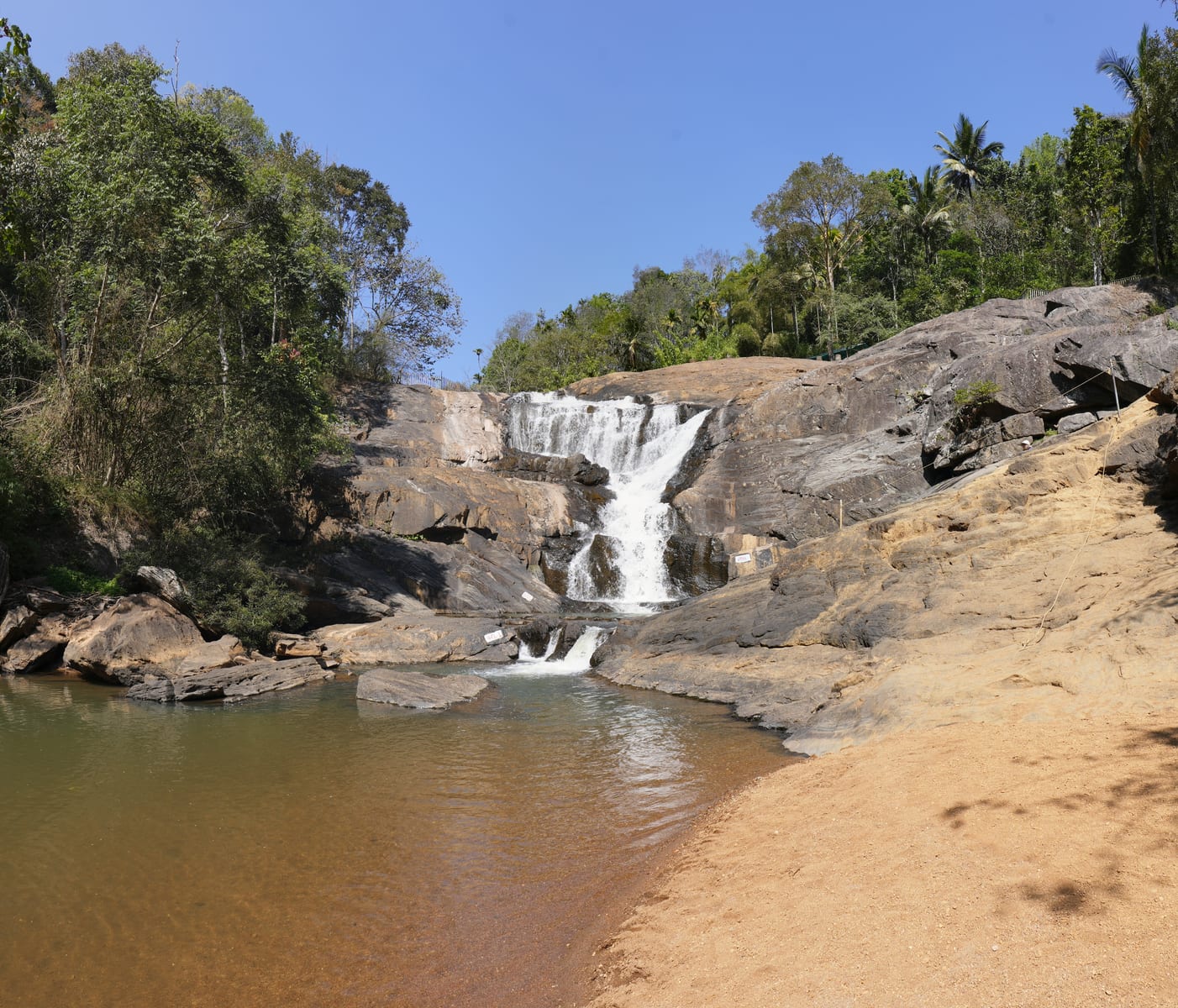
Nearby you can pair Soochipara Waterfalls (2.1 km), Kanthanpara Waterfalls (2.6 km), Neelimala View Point (4.3 km), Sunrise Valley View Point (4.3 km).
Do not bypass closures or enter unauthorised waterfall routes. Avoid strong water, wet rocks and steep paths after rain. Follow forest/local staff instructions.
We have not published a story about Meenmutty Waterfalls itself yet. These cover Meppadi and Chembra, the town it sits in, and the wider district.
Route-level itineraries and practical guides for the rest of Kerala.