What to expect
Atiranachandeswara Cave Temple
A Pallava rock-cut cave temple near Saluvankuppam dedicated to Shiva, notable for its Somaskanda relief panels and inscriptions in Pallava-Grantha and Nagari scripts praising the king Atiranachanda. It sits close to the Tiger Cave and the excavated Subrahmanya shrine.
A
Atiranachandeswara Cave Temple
Place
Practical guide
Plan Atiranachandeswara Cave Temple
Who's going?Tailor Atiranachandeswara Cave Temple to your trip
Typecave
Nearest baseSaluvankuppam
DistrictChengalpattu
Best timeOctober to March is the cooler, drier…
Time neededAbout an hour
EntryFree
Atiranachandeswara Cave Temple is planned from Saluvankuppam, one of the travel bases in Chengalpattu district. Use Saluvankuppam for stays, food and local transport, then plan this place as a focused stop.
Getting there
How to visit
- Base yourself in Saluvankuppam or nearby in Chengalpattu, then confirm the last-mile route locally before travel.
- If access depends on temple, museum or seasonal rules, check on the day before you go.
Distance by road
- Chennai55 km
- Kanchipuram65 km
- Puducherry95 km
- Chengalpattu (town)30 km
- Vellore130 km
Road km to Chengalpattu; ghat roads and traffic vary — allow extra.
Timing
Best time
October to March is the cooler, drier season in the Cauvery delta.
Weather in Atiranachandeswara Cave TempleSeasonal guide
Live forecast loads in your browser.
Today at Atiranachandeswara Cave Temple
Sunrise5:59 am
Sunset5:50 pm
Golden hour best light4:50 pm–5:50 pm
Blue hour after sunset5:50 pm–6:15 pm
Sun sets toward compass bearingW · 261°
Moon tonight🌒 Waxing crescent · 24%
Retreating monsoon. October and November still see spells of rain from the retreating monsoon, though it is usually lighter than mid-year. Conditions are generally good but worth checking.
Sun and moon are calculated for this location and shown in IST. Photography windows are the hour around sunrise and sunset; the sunset bearing is degrees clockwise from true north. Moon phase is accurate to about half a day.
Stay · eat · do · rent · see · shop
Stays, food & things to do near Atiranachandeswara Cave Temple
Verified hotels, homestays, restaurants, experiences, sights, shops and rentals around Atiranachandeswara Cave Temple — commission-free, with direct contact. Filter by what you need.
Verified inventory is being added here.
Verified places are being added. The category filters will fill in as approved stays, restaurants, experiences, sights, shops and nature listings go live.
List your placeRoampedia is commission-free — own or know a stay, eatery, guide or shop near Atiranachandeswara Cave Temple? List it and it appears here once verified.
Add a nearby businessBefore you go
Atiranachandeswara Cave Temple — at a glance
TimingsOpen sunrise to sunset
Best timeNovember to February; mornings
Entry: Free
Getting here
How to reach Atiranachandeswara Cave Temple
At Saluvankuppam, about 5 km north of Mamallapuram on the ECR; Chengalpattu railhead about 65 km from Chennai airport
Getting around Atiranachandeswara Cave Temple
If you need step-free access, contact the site before travelling. Ask about a level entrance, steps along the route, the nearest drop-off point, seating and accessible toilets.
If you need help at Atiranachandeswara Cave Temple
112All emergencies (police · fire · medical)The single number to call in any emergency (ERSS).100Police101Fire108Ambulance (emergency / EMS)1091Women’s helpline (distress)1098Child helpline1363Tourist helpline (India, 24×7, multilingual)
Emergency numbers are verified against official government and state tourism sources. 112 works anywhere in India.
Nearby
What’s near Atiranachandeswara Cave Temple
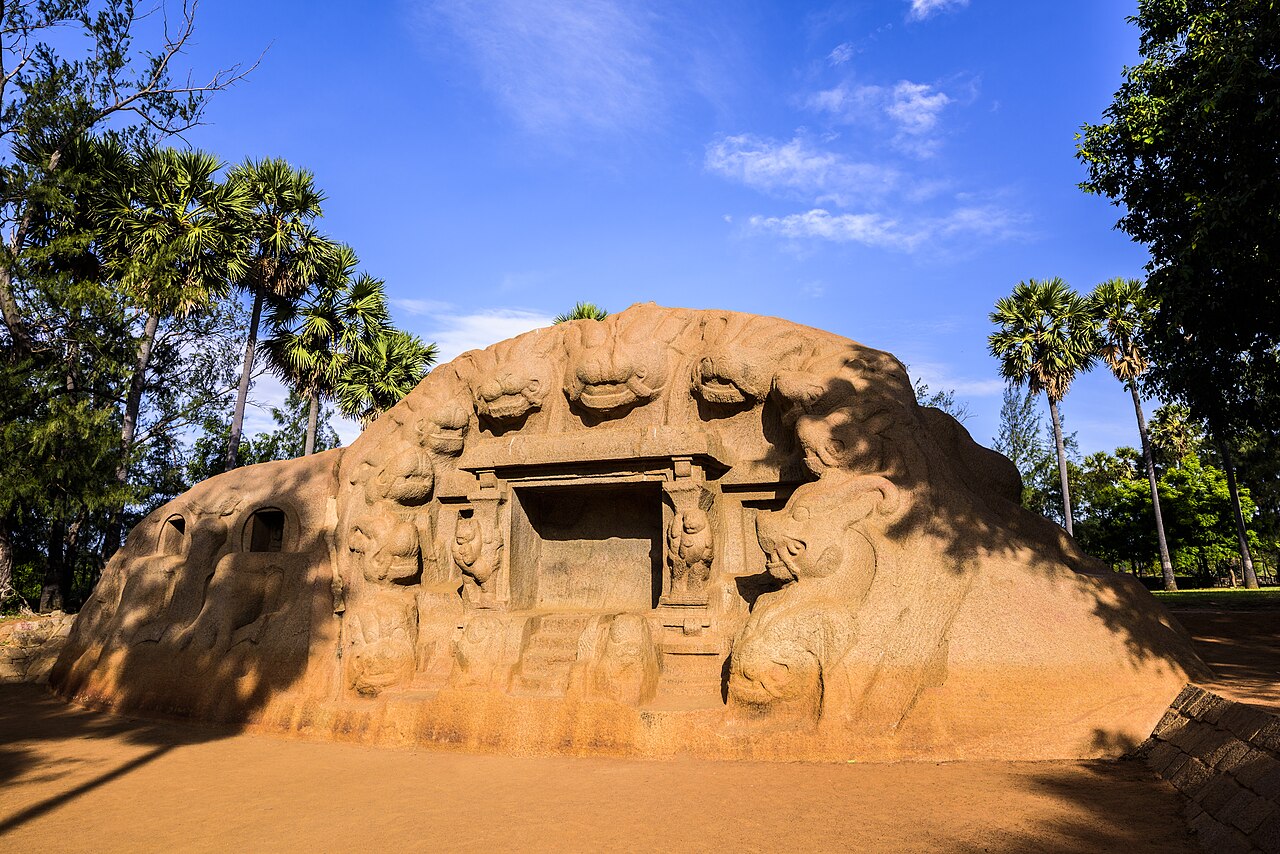
heritageTiger Cave
A striking open-air Pallava rock-cut pavilion at Saluvankuppam, framed by a fan of carved yali (mythical lion-tiger) heads, set in a coastal grove a short drive north of Mamallapuram.
1.8 km · 22 min walk · straight lineM
Mukundanayanar Temple
Place
heritageMukundanayanar Temple
A small, elegant structural Shiva temple in the Mamallapuram group, built in the early 8th century during the reign of Rajasimha Pallava. It stands apart on the northern edge of the town. The shrine shows the transition from rock-cut to structural architecture that later produced the Shore Temple.
3.0 km · ~8 min by auto · straight line
heritageTrimurti Cave Temple
A 7th-century Pallava rock-cut shrine at Mamallapuram carved as three adjacent cells honouring the Hindu trinity, Brahma, Vishnu and Shiva, with the central Shiva shrine given prominence and a striking Durga figure carved on the outer rock.
3.6 km · ~9 min by auto · straight line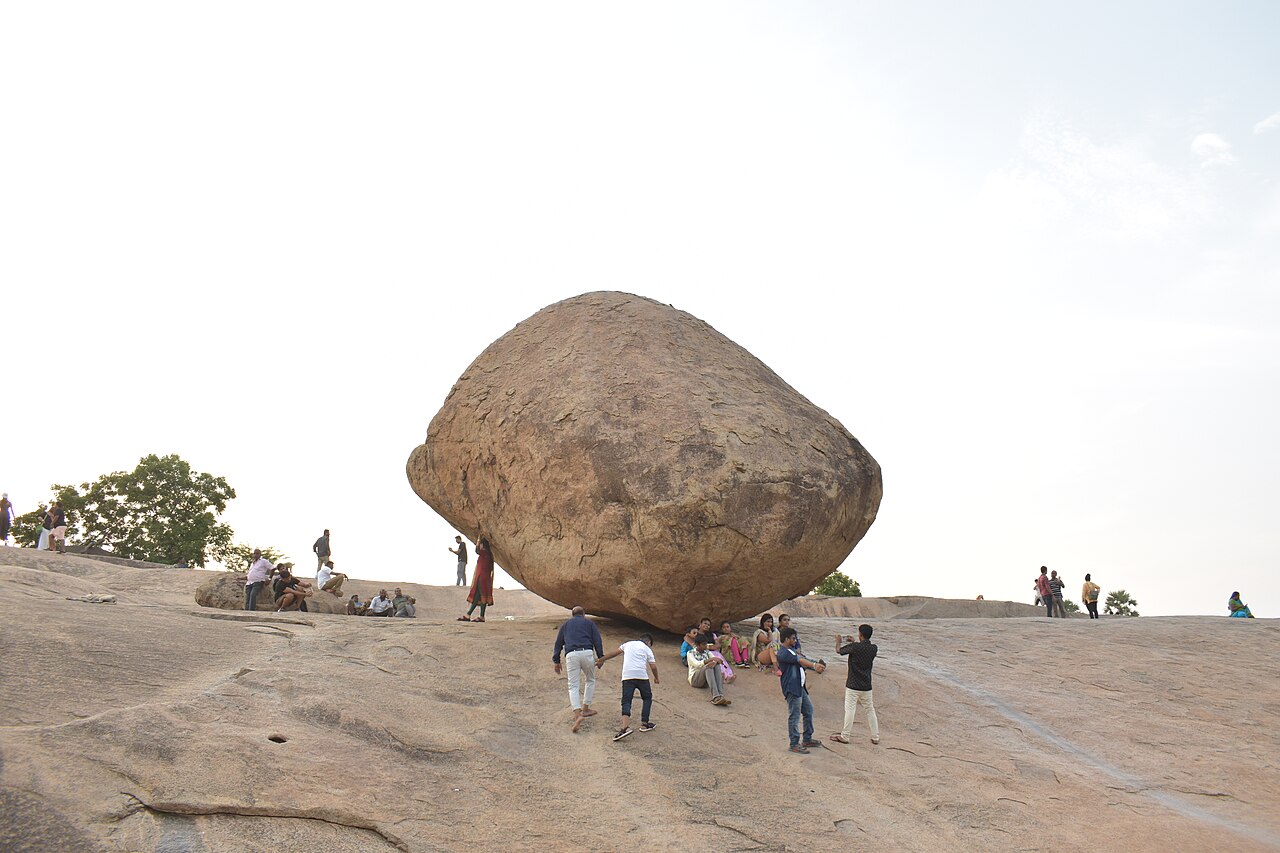
heritageKrishna's Butterball
Known in Tamil as Vaan Irai Kal, this enormous natural boulder rests improbably on a smooth slope of the Mamallapuram hill, a beloved landmark beside the town's Pallava monuments.
3.7 km · ~9 min by auto · straight line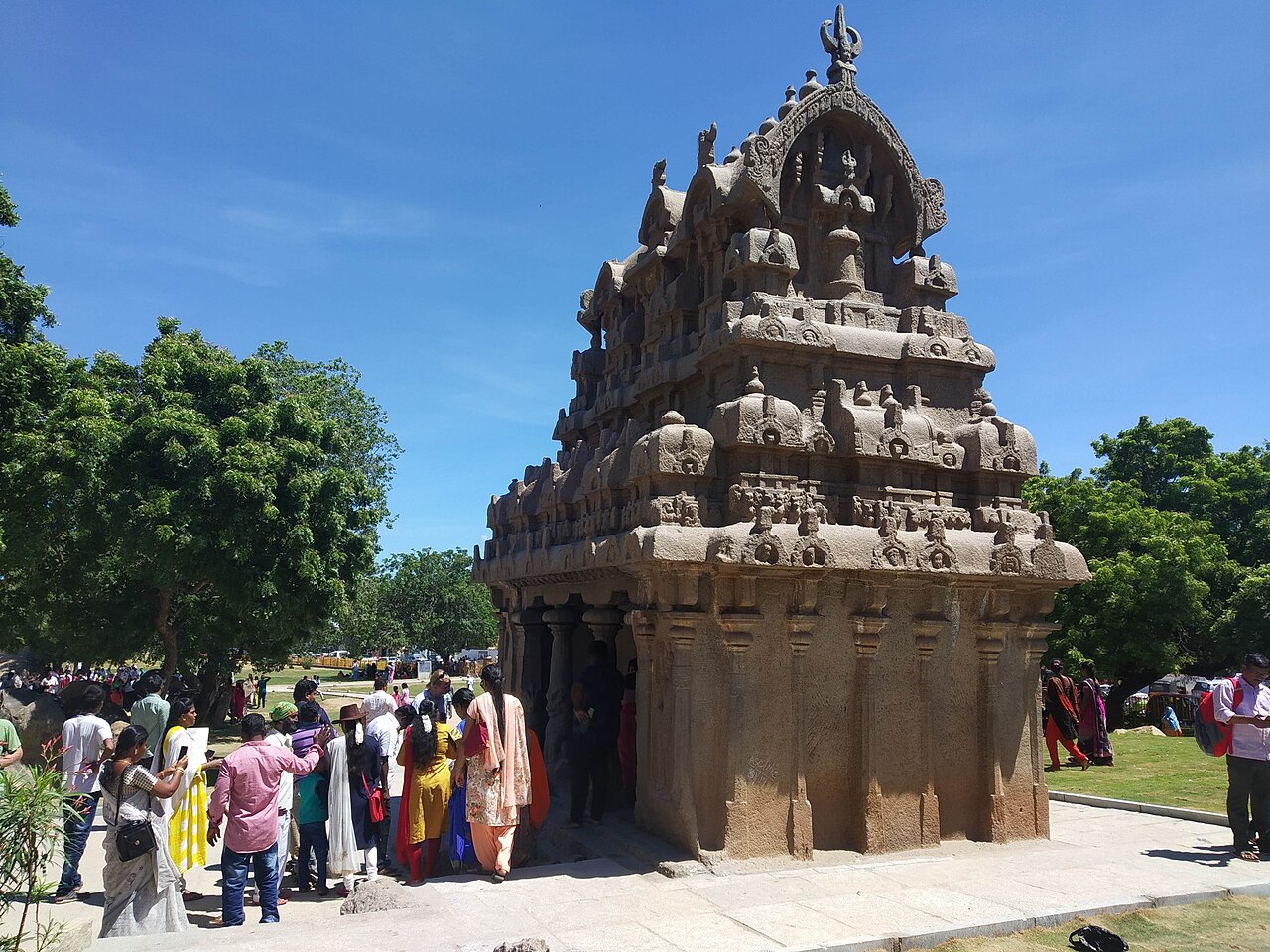
heritageGanesha Ratha
A single-block Pallava rock-cut shrine from the 7th century, carved in the chariot form of the Pancha Rathas and later dedicated to Ganesha. It sits just behind Arjuna's Penance within the UNESCO monument cluster.
3.7 km · ~9 min by auto · straight line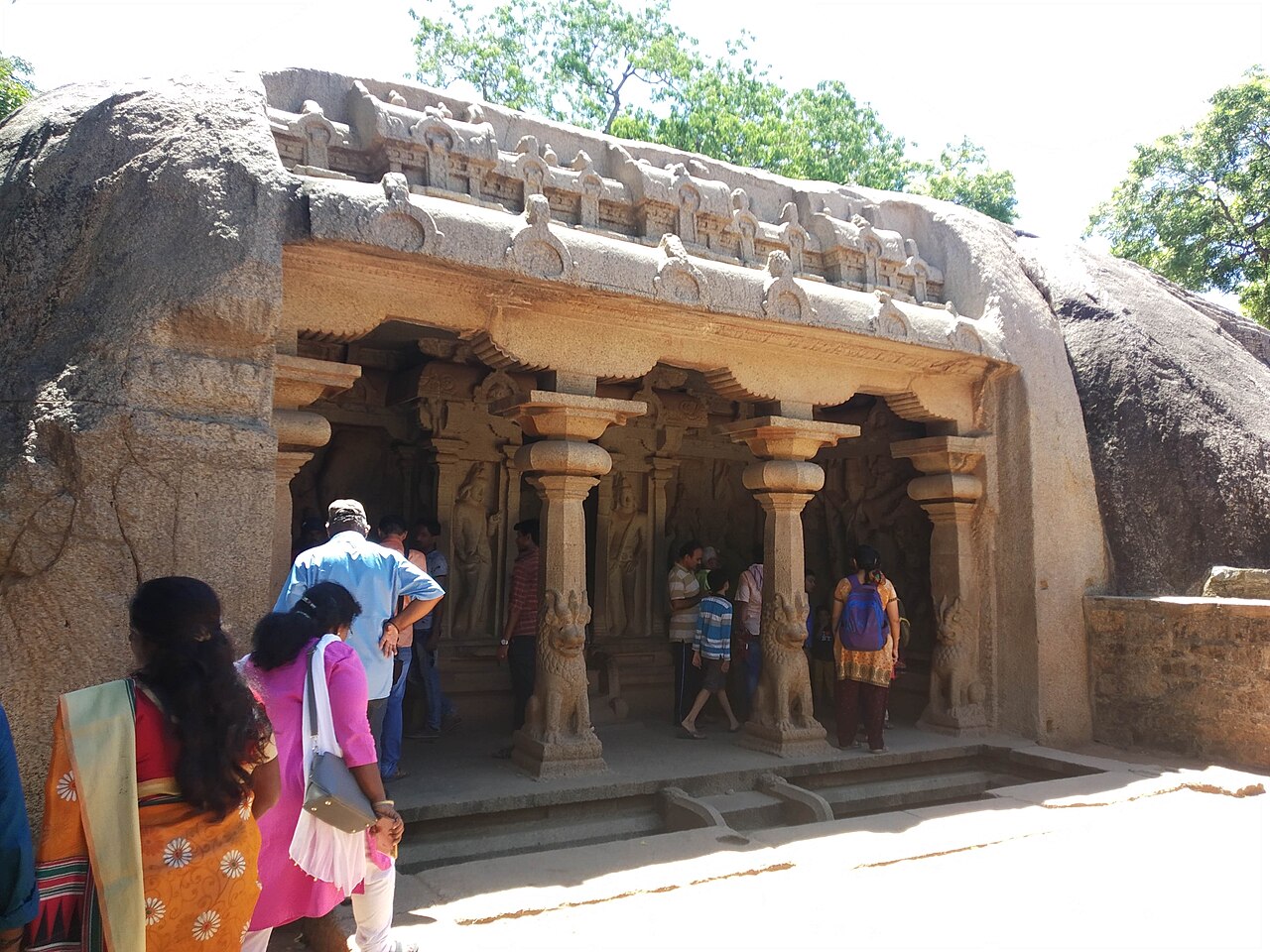
heritageVaraha Cave Temple
Often called the earliest monument at Mamallapuram, this 7th-century Pallava rock-cut mandapa (the Adivaraha Cave) is celebrated for four naturalistic wall panels including Vishnu as the boar Varaha lifting the earth goddess.
3.8 km · ~9 min by auto · straight line
heritageRayar Gopuram
An unfinished Pallava monument of massive pillars and beams, believed to be an incomplete gateway (gopuram) abandoned mid-construction. The exposed, half-carved columns give a rare glimpse into how Mamallapuram's monolithic structures were quarried and shaped in stages.
3.8 km · ~9 min by auto · straight line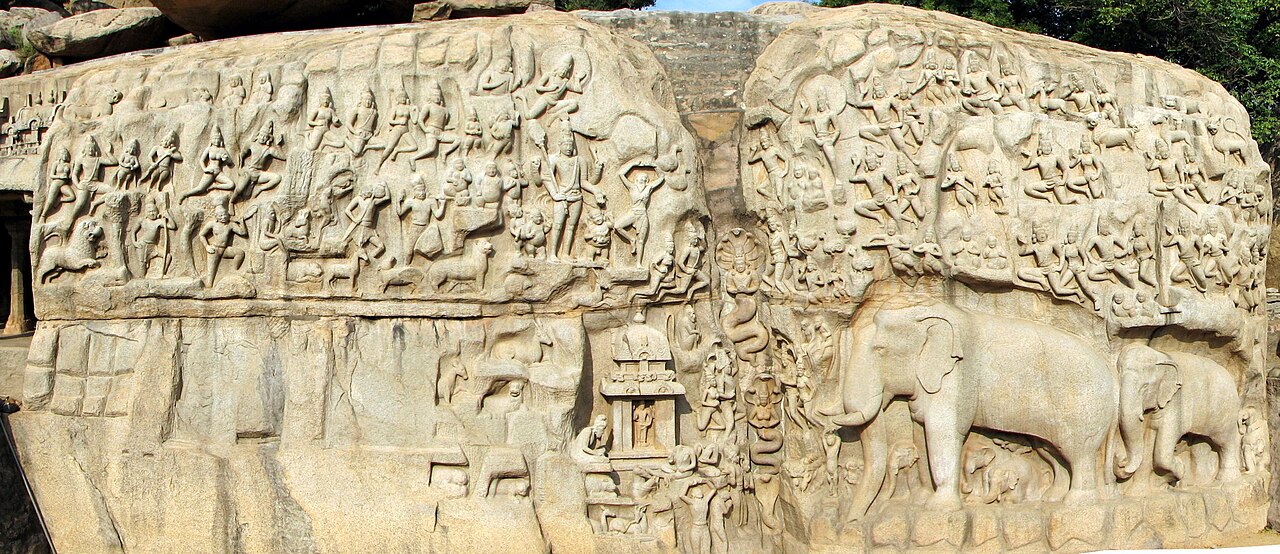
heritageArjuna's Penance
Also called the Descent of the Ganges, this giant 7th-century Pallava open-air bas-relief, among the largest in the world, is carved across two adjoining boulders crowded with gods, sages, and life-size elephants.
3.8 km · ~9 min by auto · straight lineV
Valaiyankuttai and Pidari Rathas
Place
heritageValaiyankuttai and Pidari Rathas
A set of outlying monolithic chariot-shrines carved from single boulders, sculpted like the more famous Pancha Rathas but set apart to the north near a tank. Part of the UNESCO Group of Monuments, they show the same 7th-century Pallava rock-cutting tradition in a less-visited setting.
3.8 km · ~10 min by auto · straight line
heritagePanchapandava Cave Temple
The largest cave temple at Mamallapuram, a spacious but deliberately unfinished late-7th-century Pallava rock-cut mandapa popularly named for the five Pandava brothers of the Mahabharata.
3.8 km · ~10 min by auto · straight line
templeSthalasayana Perumal Temple
The living Vishnu temple in Mamallapuram town, one of the 108 Divya Desams, where the deity Sthalasayana Perumal is worshipped in a reclining, ground-resting form and which tradition links to the Alvar saint Bhutathazhwar.
3.8 km · ~10 min by auto · straight line
heritageKrishna Mandapa
A rock-cut mandapa at Mamallapuram whose great mid-7th-century Pallava bas-relief shows Krishna raising Mount Govardhana on one hand to shelter the cowherds and their cattle from the storm.
3.9 km · ~10 min by auto · straight lineOn the map
Where Atiranachandeswara Cave Temple is
Good to know
Atiranachandeswara Cave Temple — frequently asked
When is the best time to visit Atiranachandeswara Cave Temple?
October to March is the cooler, drier season in the Cauvery delta.
What are the entry fee and timings at Atiranachandeswara Cave Temple?
Entry: Free. Timings: Open sunrise to sunset.
How do I reach Atiranachandeswara Cave Temple?
Base yourself in Saluvankuppam or nearby in Chengalpattu, then confirm the last-mile route locally before travel. If access depends on temple, museum or seasonal rules, check on the day before you go.
How much time do I need for Atiranachandeswara Cave Temple?
About an hour.
What else is near Atiranachandeswara Cave Temple?
Nearby you can pair Tiger Cave (1.8 km), Mukundanayanar Temple (3.0 km), Trimurti Cave Temple (3.6 km), Krishna's Butterball (3.7 km).
Read before you go
Atiranachandeswara Cave Temple guides, stories & itineraries
We have not published a story about Atiranachandeswara Cave Temple itself yet. These cover Saluvankuppam and the wider district, with separate journeys between stops.
Tamil Nadu-wide guides & itineraries
Route-level itineraries and practical guides for the rest of Tamil Nadu.
Melmaruvathur Adhiparasakthi Temple: story and tradition
Story & tradition
Melmaruvathur Adhiparasakthi Temple: story and tradition
4 min read · Read →
Kothandaramaswamy Temple (Eri Katha Ramar): story and tradition
Story & tradition
Kothandaramaswamy Temple (Eri Katha Ramar): story and tradition
4 min read · Read →
The story of Mukundanayanar Temple
Place story
The story of Mukundanayanar Temple
4 min read · Read →
Mukundanayanar Temple: history, architecture and significance
History & significance
Mukundanayanar Temple: history, architecture and significance
4 min read · Read →
The story of Valaiyankuttai and Pidari Rathas
Place story
The story of Valaiyankuttai and Pidari Rathas
4 min read · Read →
Valaiyankuttai and Pidari Rathas: history and local significance
History & significance
Valaiyankuttai and Pidari Rathas: history and local significance
4 min read · Read →