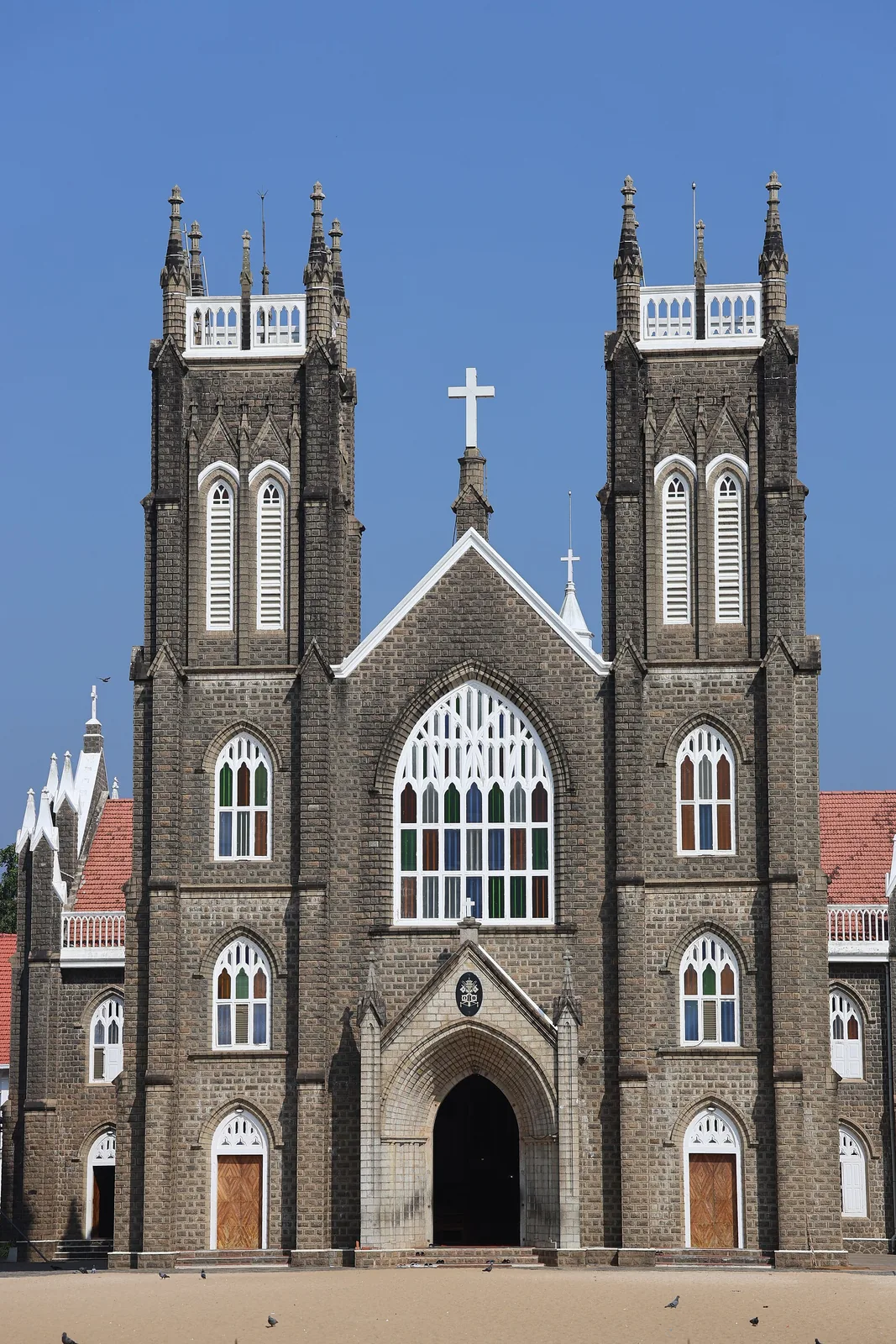
For most of the year Arthunkal Church is a calm parish by the sea. Then January comes. For eighteen days the roads fill, stalls line the approaches and the church never seems to empty. This is the Arthunkal Perunnal, the feast of St Sebastian. Kerala Tourism calls Arthunkal the biggest pilgrim centre in central Kerala, and the feast is the reason.
The feast is easier to enjoy when you know its shape. It is not one day. It is a slow build to a main day, then a second peak a week later. Each day has its own meaning.
The calendar of the feast
The basilica’s own website sets out the dates. The feast runs from 10 to 27 January every year. These dates stay the same each year, so you can plan well ahead.
10 January, the flag. The feast opens with the hoisting of the flag. From this day there are special Masses, prayers and retreats in the church.
18 January, the statue comes out. On this day the basilica gates open and the statue of St Sebastian is placed for the people. The basilica calls it the miraculous statue. It was brought to Arthunkal in 1647 and is kept safe for most of the year. Seeing it in the open is what many pilgrims come for.
20 January, the main feast. This is the day of St Sebastian, and the biggest crowd of the year. The statue is carried in procession from the church to the beach and back. Kerala Tourism notes the music and chants that go with it. The church tradition also holds that eagles fly above the statue during the procession. It recalls the story of eagles caring for the wounded saint.
27 January, Ettamperunnal. Ettam means eighth. This is the octave, the eighth day after the main feast. The basilica explains why it began. The crowds on 20 January grew so large that the church created a second feast day. It is now almost as important as the first.
Midnight, 27 January, the close. The basilica doors are shut at midnight. The great statue goes back into a safe locker. A small statue stays out for forty days after that, and then the feast is truly over.
Why the procession goes to the sea
Arthunkal is a fishing coast. The church itself was turned to face west, towards the sea, centuries ago. So the walk to the beach is a walk to the place where most of the parish has always earned its living. The saint goes out to the shore and comes back to his church.
Many pilgrims make the walk harder on purpose. Kerala Tourism describes devotees crawling on their knees and rolling on the ground on the way to the shore and back. It is a nercha, a vow being kept. People who believe they were healed or saved come to give thanks this way. The story of these vows is told in full in crawling from the sea.
The bow and the arrow
St Sebastian was a Roman soldier who was shot with arrows for his faith. So the offerings at Arthunkal look like nowhere else. Kerala Tourism notes that pilgrims give limbs made of gold and silver. Each limb stands for the part of the body they pray to have healed. Taking out the arrow is one of the main rituals of the feast.
The bow-and-arrow nercha is the most popular vow of all. The basilica records that more than two lakh people made it in 2018 alone. That number tells you how big the feast has grown.
The pilgrims in black
You will also see men with bead chains around their necks. They are Ayyappa devotees on the Sabarimala pilgrimage. Their season begins in the Malayalam month of Vrishchikam, in the middle of November, and runs on into January. So the two great pilgrimages meet here at feast time.
Onmanorama has written about why they come. Many of them visit Arthunkal as part of the pilgrimage. They pray in the church and take off the sacred chain they wore to mark their vow. They also take a dip in the pond outside the church. Onmanorama quoted the rector, Fr Christopher M. Arthaserry, on the preparations. The church cleaned its two ponds well before the Sabarimala season began. The basilica’s own website adds that returning pilgrims remove their bead chains at the altar.
The reason lies in a local belief. People say Lord Ayyappa and the saint of Arthunkal were close friends, even brothers. The parish links the story to Veluthachan, the fair father. That was the name the people gave Fr Jacomo Fenicio, the Italian Jesuit who served as vicar from 1584. His story is told in the Veluthachan story.
Planning your visit
Choose your day first. Come on 20 or 27 January if you want the full crowd and the procession. Come on a weekday between 10 and 18 January for a calmer visit with Masses and prayers. The church is listed as open from 5:30 am to 6:30 pm on normal days.
Arrive early on the big days. Roads near the church fill up by mid-morning, and you will walk the last stretch. Carry water and wear shoes you can walk in on sand. Dress modestly, and keep to the edges when a procession passes. Never photograph a person who is crawling on a vow.
Stay nearby so you can walk or take a short ride in. Marari Beach is about 7 km south by road and has the widest choice of stays. To the north, Andhakaranazhi Beach is a quiet river mouth for the day after. Between them, the coast gives you a few calm days on either side of the crowd.
Arthunkal sits on the same coast as Marari Beach and Andhakaranazhi Beach, and the Cherthala Karthyayani Temple is close inland. Read more about the church’s saint in the Veluthachan story, or plan a lake day at the Thanneermukkom Bund. Most visitors base themselves in Alappuzha town, a short drive south.
Frequently asked questions
When is the Arthunkal Perunnal?
Every year from 10 to 27 January, with the main feast on 20 January.
What is Ettamperunnal at Arthunkal?
The eighth-day feast on 27 January, started because the crowds on 20 January became too large.
When does the procession go to the beach?
On 20 January the statue of St Sebastian is carried from the church to the beach and back.
Why do Sabarimala pilgrims visit Arthunkal?
Many end their vow here, praying in the church and removing the chain they wore, as Onmanorama reports.
What is the bow-and-arrow nercha?
A vow offering to St Sebastian; the basilica records more than two lakh people made it in 2018.