Highlights
- Eastern Kannur forest sanctuary and highland wildlife landscape.
- Good pairing with Paithalmala, Iritty routes and North Malabar hill stays.
- What there is locally: authorised guides, homestays, drivers and forest-edge food stops.
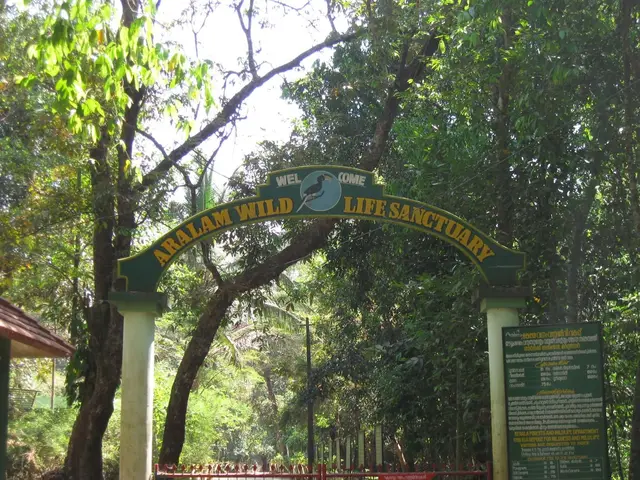
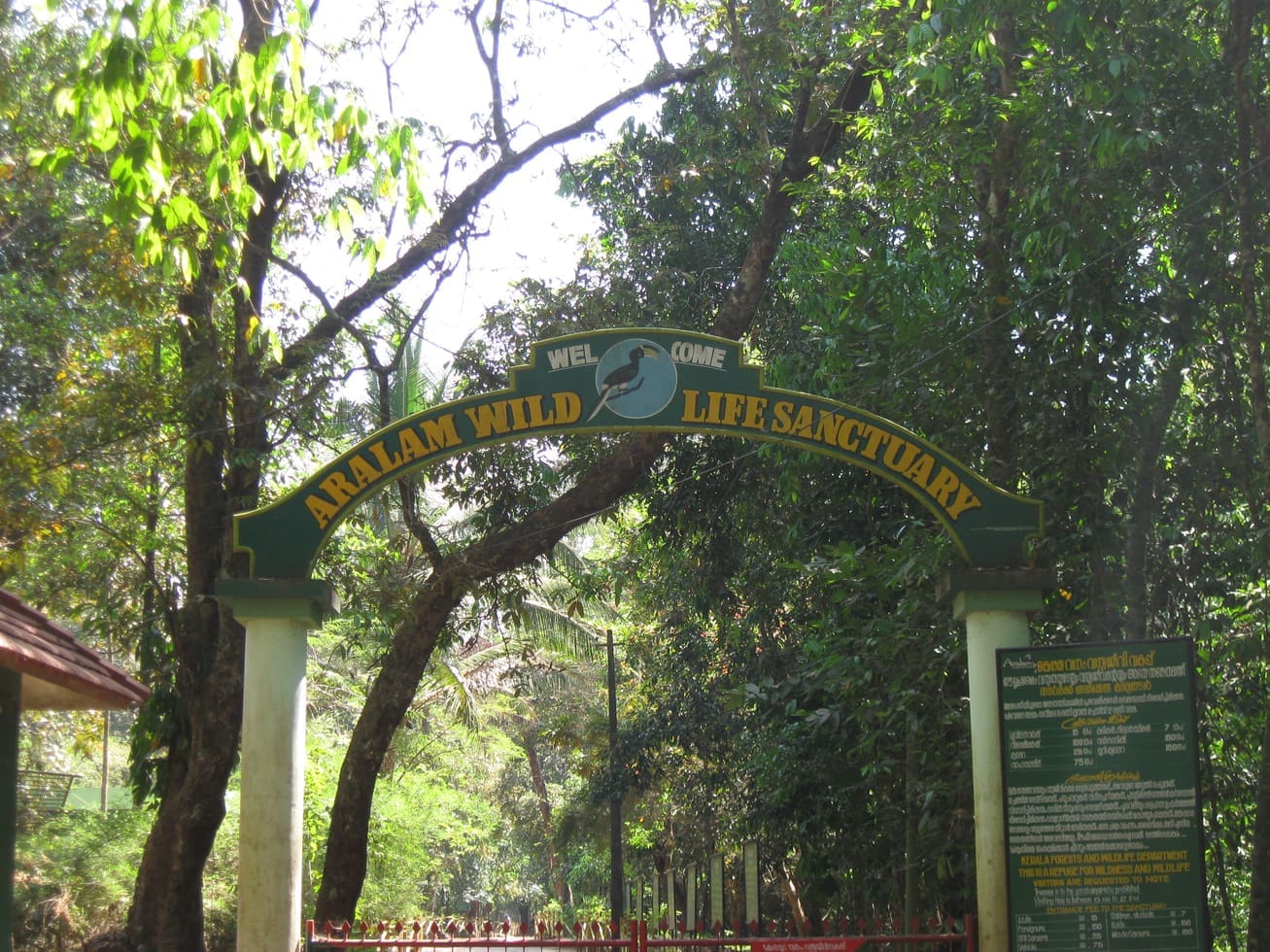
Aralam Wildlife Sanctuary is Kannur district's main protected forest landscape, set in the eastern highlands near Iritty. It gives North Kerala a serious wildlife/forest page beyond the coastal circuit.

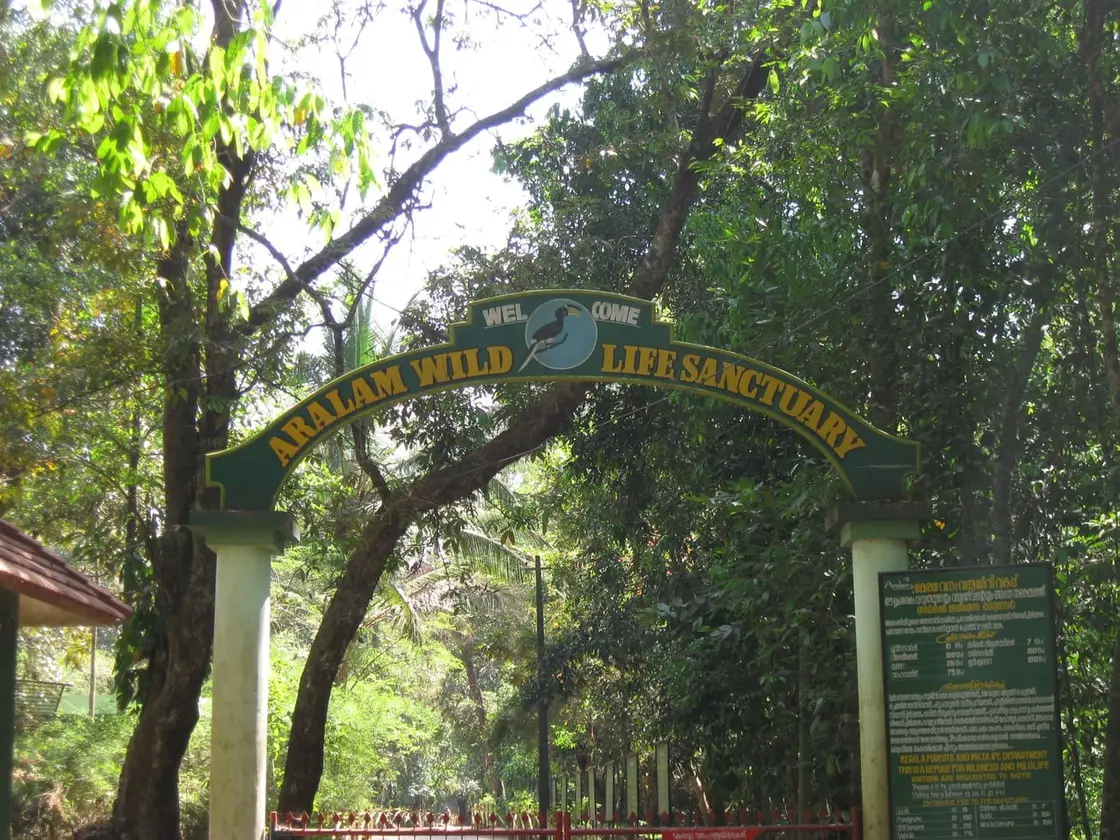
Visits depend on Forest Department rules, the state of the access road and the weather. Go in through the authorised entry rather than taking an informal drive into the forest.
Kerala's northernmost wildlife sanctuary, cradled on the western slopes of the Western Ghats in Kannur district, where rainforest, roaring waterfalls and one of India's greatest butterfly migrations meet the foothills of the Brahmagiri hills.
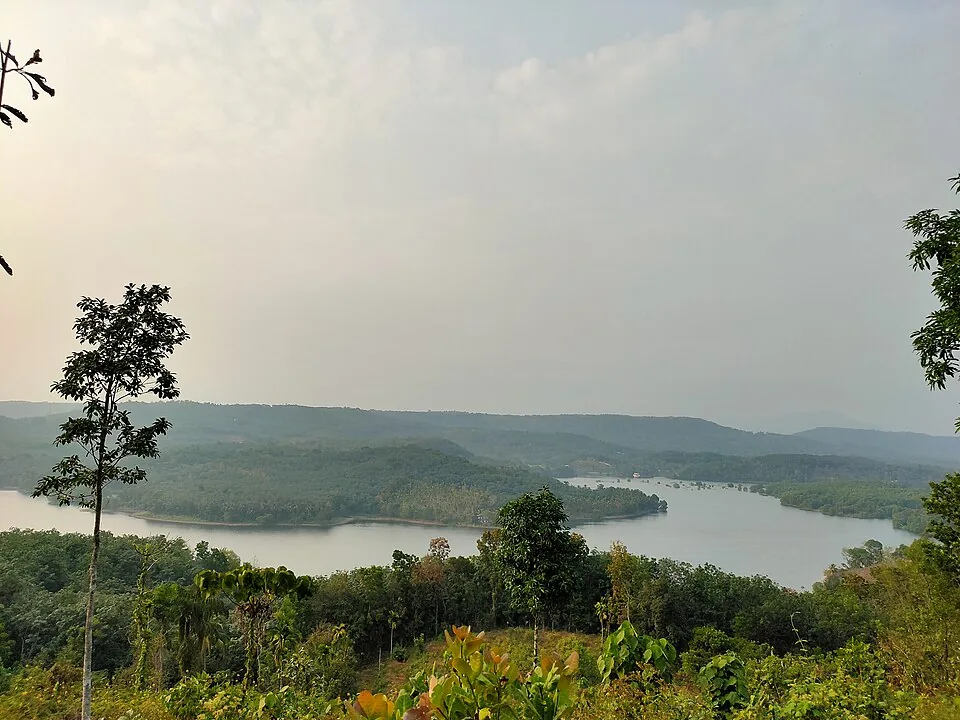
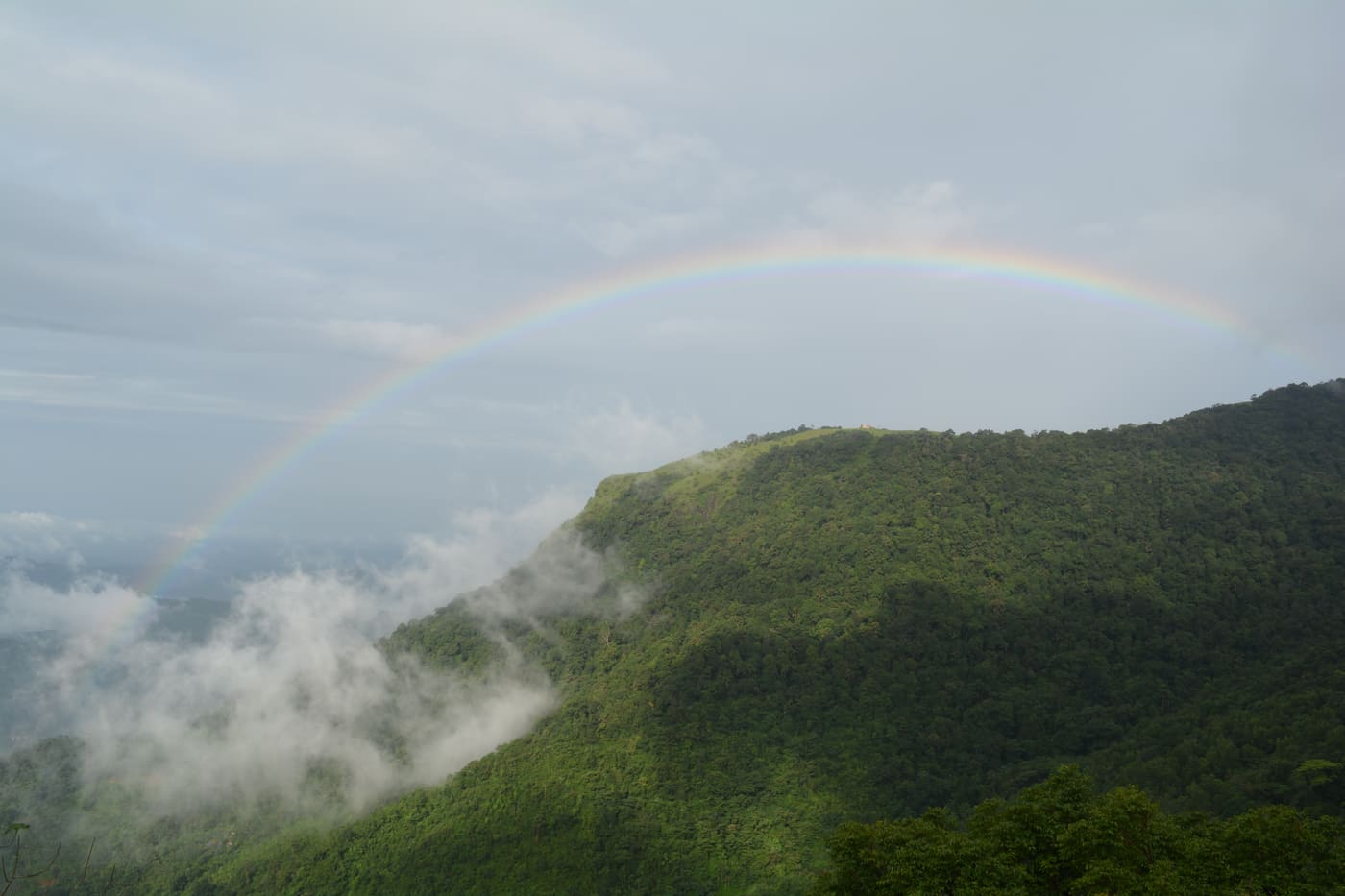
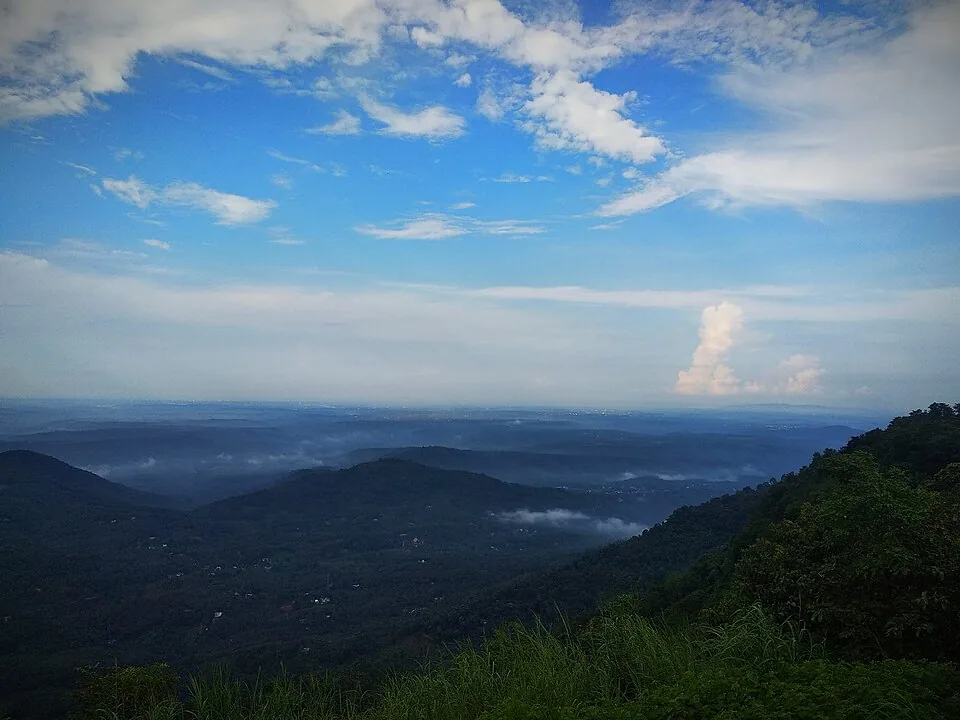
Tucked into the north-eastern corner of Kannur district, Aralam Wildlife Sanctuary is the northernmost of Kerala's sanctuaries, a roughly 55-square-kilometre sweep of evergreen and semi-evergreen forest that climbs from lowland plantations at around 50 metres to the mist-wrapped summit of Katti Betta at 1,145 metres. It sits on the western flank of the Western Ghats, one of the world's biodiversity hotspots, and shares its high eastern boundary with the Brahmagiri range and the Kodagu district of neighbouring Karnataka, so a walk uphill carries you from tropical heat into cool, cloud-brushing shola country in a single day.
The forest is watered by heavy rain — well over 4,000 millimetres a year, most of it hurled down in the south-west monsoon — and that abundance shows in the greenery. Rivers and hill streams such as the Aralam River, the Cheenkannipuzha and the Meenmuttithodu thread the valleys, feeding the sanctuary's signature cascades. The best known is Meenmutty, a spectacular multi-tiered fall reached on the sanctuary's most popular trek; the lesser-seen Katti falls lie deeper in the interior. In the wet months the streams swell alarmingly, which is exactly why the Forest Department controls where and when visitors may walk.
Aralam is quietly one of the richest wildlife pockets in northern Kerala. Herds of elephant and gaur (Indian bison) move through the valleys, alongside sambar deer, wild boar, common langur, Nilgiri langur, Malabar giant squirrel, wild dog and the endangered lion-tailed macaque; leopard and even tiger are recorded but very rarely seen. The birdlife is exceptional too, with roughly 150 or more species including the Nilgiri wood pigeon, Malabar grey hornbill, great hornbill, blue-winged parakeet and the eerie Sri Lanka frogmouth, plus several globally threatened species and winter migrants that fly in from as far as Central Asia and Europe.
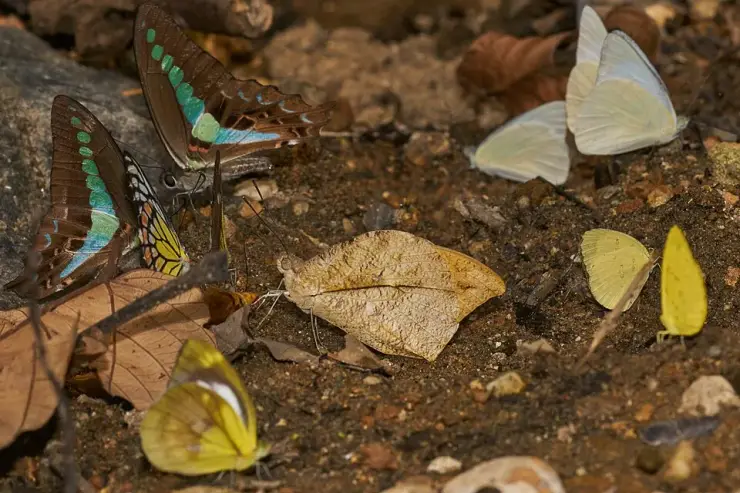
What has made Aralam nationally famous, though, is its butterflies. More than 266 species have been recorded here — over eighty per cent of all the butterfly species found in Kerala — and every year the sanctuary stages one of the subcontinent's most dramatic insect migrations. As the north-east monsoon eases, vast rivers of butterflies, above all the Common Albatross, pour across the hills; survey teams have logged tens of thousands passing in minutes and hundreds of thousands in a single day. On 18 June 2025 the Kerala State Wildlife Board renamed the reserve the Aralam Butterfly Sanctuary, making it India's first sanctuary declared specifically for butterflies, though most maps and locals still call it Aralam Wildlife Sanctuary.
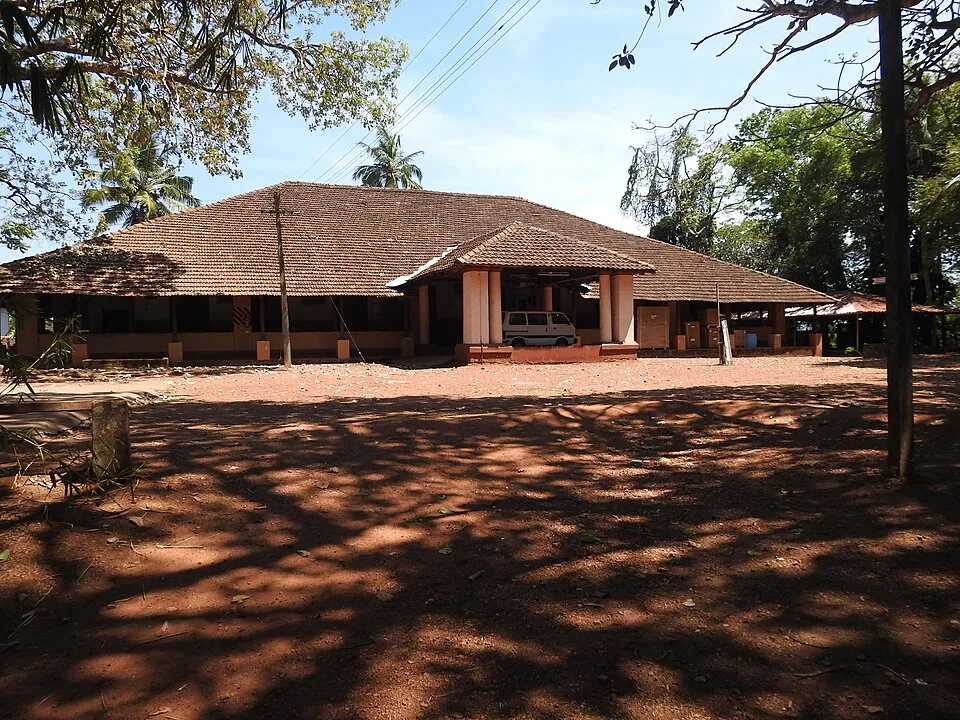
Wrapped around the protected forest lies the Aralam Farm, a large Central State Farm of coconut, cashew and hybrid-seed plantations that today doubles as one of India's biggest tribal rehabilitation settlements. The mosaic of farm, settlement and forest gives Aralam an unusual character — part working landscape, part wilderness — and it also means human-wildlife encounters, especially with crop-raiding elephants, are a real and sometimes tense part of local life.
For the traveller, Aralam rewards those who come slowly and on the forest's terms: a guided dawn walk with an eco-development committee guide, a half-day trek to a thundering waterfall, a patient hour at a mud-puddling patch watching butterflies drink, or a climb toward Katti Betta for long views over the Ghats. It is far less crowded than Kerala's marquee hill parks, and that solitude is much of its charm.
Aralam Wildlife Sanctuary was constituted in 1984, carved from the reserved and vested forests of the Aralam, Kelakam and Kottiyoor revenue villages to protect a slice of the northern Western Ghats and the wildlife corridor linking Kerala's forests with those of Karnataka's Kodagu district. Its roughly 55 square kilometres span an unusually wide altitude band, from around 50 metres in the foothills to 1,145 metres at Katti Betta, which is a large part of why so many different habitats — and so many species — are packed into it.
The land next door has its own distinct story. In 1970 the Government of India established the Central State Farm at Aralam with technical assistance from the erstwhile Soviet Union, clearing forest and plantation land to produce hybrid coconut seedlings, cashew and other crops on a large scale. For decades it operated as a federal agricultural enterprise abutting the sanctuary, and the plantation edge remains a defining feature of the landscape today.
In 2004 the Central State Farm — about 7,500 acres — was transferred to the Government of Kerala, which purchased it using the Scheduled Tribes rehabilitation fund with the aim of resettling landless Adivasi families. Roughly 4,000 acres were earmarked for tribal rehabilitation and the remainder retained for a farming corporation; several thousand tribal families were each allotted around one acre of land. It became one of the largest tribal land-rehabilitation programmes in India, though it has also been dogged by disputes over land, livelihoods and unfulfilled promises, which independent researchers and land-rights groups have documented in detail.
The sanctuary's scientific reputation grew steadily through butterfly and bird surveys, which revealed both the extraordinary species count and the recurring mass migration of butterflies across the hills. Building on this, the Kerala State Wildlife Board formally renamed the reserve the Aralam Butterfly Sanctuary on 18 June 2025 — the first protected area in India designated primarily for butterfly conservation — a status intended to draw research, eco-tourism and protection to the phenomenon.
Alongside conservation, the settled landscape at Aralam Farm has kept human-elephant conflict in the headlines: crop-raiding elephants moving between the sanctuary and the farm have caused deaths and damage, and the Forest Department has repeatedly intervened, including capturing problem animals. It is a sober reminder that Aralam is a lived-in frontier between people and wildlife, not an untouched wilderness.
See Kerala's — and India's — first dedicated butterfly sanctuary, home to 266-plus species and, in season, a spectacular mass migration of Common Albatross and other butterflies across the hills.
Trek through genuine Western Ghats rainforest to Meenmutty, a dramatic multi-tiered waterfall, on the sanctuary's most popular guided walk.
Spot big Western Ghats wildlife — elephant, gaur (bison), sambar, Malabar giant squirrel, lion-tailed macaque and a rich cast of hornbills and endemic birds — in a reserve far quieter than Kerala's famous parks.
Climb toward Katti Betta, at 1,145 metres the highest point in the sanctuary, for sweeping views over forested ridges toward the Brahmagiri hills and Karnataka.
Experience an unusual landscape where protected rainforest meets the historic Aralam Farm plantations and one of India's largest tribal rehabilitation settlements.
Enjoy low-key, Forest-Department-run eco-tourism — guided treks, nature camps and birding — that keeps crowds small and the forest experience authentic.
Road km to Kannur; ghat roads and traffic vary — allow extra.
Dryer post-monsoon and winter months are easiest for access; monsoon can disrupt forest roads and trails.
Live forecast loads in your browser.
Check the official alert before you travel. Kerala’s beaches, waterfalls and trekking routes close at short notice during heavy rain, and district alert levels change day to day. We do not publish an alert level of our own — read it from the state authority: Kerala State Disaster Management Authority, or the district control room on 1077.
Sun and moon are calculated for this location and shown in IST. Photography windows are the hour around sunrise and sunset; the sunset bearing is degrees clockwise from true north. Moon phase is accurate to about half a day.
These are official or public-sector eco offerings that match this place, town or forest destination. Confirm availability, permits, tariffs and reporting times with the official operator before travel.

Eastern Kannur wildlife sanctuary and forest landscape, listed in Kerala Tourism’s ecotourism inventory.
Official source →
North Kerala forest village and waterfall landscape, listed by Kerala Tourism as an ecotourism destination.
Official source →Verified hotels, homestays, restaurants, experiences, sights, shops and rentals around Aralam Wildlife Sanctuary — commission-free, with direct contact. Filter by what you need.
Forest canteen in Aralam. Aralam Wildlife Sanctuary, Kannur district, Kerala · aralam, eat, Forest canteen.
Book with the place itself. India’s cyber-crime coordination centre warned in April 2025 that convincing copies of hotel and pilgrimage booking sites are being pushed through sponsored search and social ads, taking payment for rooms the property never hears about. Every listing here links to the business’s own contact details and its own Google or Bing profile — we take no commission and sit in nobody’s payment path. If a booking page reached you through an ad, check the address bar against the property’s own site before you pay. Fraud can be reported on cybercrime.gov.in or on 1930.
Find food, accommodation and activities across Aralam. Browse the guides for places to eat, stay and explore along your route.
One more place around Aralam worth a day of its own.

8.5 km · ~14 min by cab
Guided forest trekking in the Aralam Wildlife Sanctuary, Kannur’s easternmost highland forest, rich in elephants, gaur and butterflies.
Roampedia is commission-free — own or know a stay, eatery, guide or shop near Aralam Wildlife Sanctuary? List it and it appears here once verified.
Add a nearby businessEntry: The Forest Department's booking system for this centre publishes ₹130 for an Indian adult, ₹10 for a child, ₹360 for a foreign visitor and ₹40 for students, with ₹40 for a still camera, ₹240 for a video camera and ₹110 for a vehicle. Kerala Tourism's page gives ₹115 for the Indian adult and matches on the rest. The ₹15 and ₹150 figures that circulate are the tariff for the department's residential nature camps, which are a different programme.
Dress code: Neutral, covered outdoor clothing (long sleeves and full trousers), sturdy trekking shoes with grip, a hat and rain protection. Carry leech socks or salt and insect repellent, as leeches are common in the wet forest.
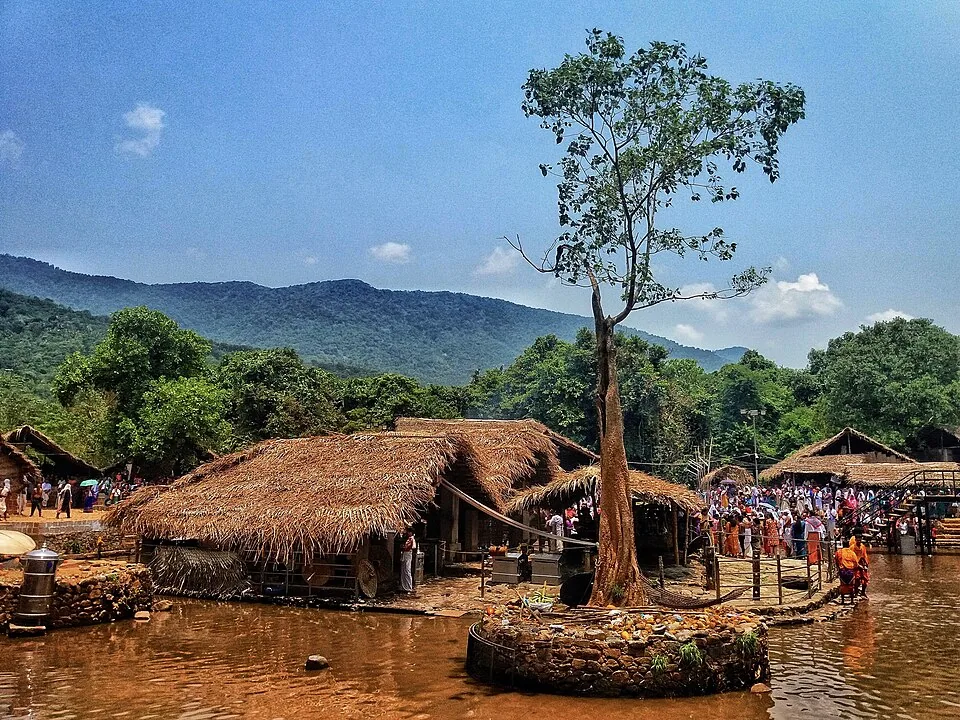
Festivals: Aralam has no temple festival of its own; the draw is natural — the annual butterfly migration (broadly October to February) and, seasonally, the full-flowing waterfalls after the monsoon.
Photography: Photography is allowed, with a camera fee of roughly ₹25; higher charges may apply for professional or video equipment. Keep a safe distance from elephants and other wildlife and follow your guide's instructions.
If you are travelling by bus or ferry, check the return service with the operator before setting out. Leave time to reach the stop or jetty after your visit.
Ask at the bus stand for the time of the last service back, not the next one. If you miss it, an auto or app cab is the fallback — agree the fare before you get in.
If you need step-free access, contact the site before travelling. Ask about a level entrance, steps along the route, the nearest drop-off point, seating and accessible toilets.
Emergency numbers are verified against official government and state tourism sources. 112 works anywhere in India.

Guided forest trekking in the Aralam Wildlife Sanctuary, Kannur’s easternmost highland forest, rich in elephants, gaur and butterflies.
8.5 km · ~14 min by cab · straight line
A remote forest Shiva shrine on the Bavali river, site of the ancient 28-day Kottiyoor Vaisakha Mahotsavam pilgrimage; the Akkare shrine has no permanent roof and is open only during the festival.
8.7 km · ~15 min by cab · straight line
An earthen dam on the Valapattanam river near Mattannur, with a garden, boating and a hanging bridge — named after the freedom-fighter king Pazhassi Raja.
27.6 km · ~46 min by cab · straight line
Hill trek and viewpoint near the Karnataka border.
40.6 km · ~68 min by cab · straight line
A misty grassland hill viewpoint in the Western Ghats near Kolari, ~3,000 ft, known for cloud-touched meadows, a small waterfall and adventure activities.
44.6 km · ~74 min by cab · straight line
At Illikkunnu near Thalassery, the hillside home of the German missionary-scholar Hermann Gundert, who compiled the first Malayalam–English dictionary and grammar here in the mid-1800s.
46.5 km · ~77 min by cab · straight line
A square laterite fort built by the English East India Company in 1708 at Thalassery (Tellicherry), heart of the old Malabar pepper and cricket town, with secret sea tunnels.
47.0 km · ~78 min by cab · straight line
A cliff-top garden viewpoint over the sea at Thalassery, named after E.N. Overbury, a British judge of the 1870s who began but never finished a mansion here.
47.0 km · ~78 min by cab · straight line
A ~4 km hard-sand beach, the longest drive-in beach in India — you can drive along the sand at low tide; Dharmadam Island lies just offshore.
49.1 km · ~82 min by cab · straight line
A small green private island off Muzhappilangad, reachable on foot across the sand at low tide (viewing only; landing is restricted).
49.4 km · ~82 min by cab · straight line
On the Valapattanam river, the temple of Muthappan — where the Muthappan Theyyam is performed morning and evening on nearly every day of the year, and where entry is open to all castes and religions; a snake park is nearby. The exception is the six weeks from the first of Thulam to the fifteenth of Vrischikam, when it stops, and the ritual year begins again with Puthari Thiruvappana around the first of December.
50.4 km · ~84 min by cab · straight line
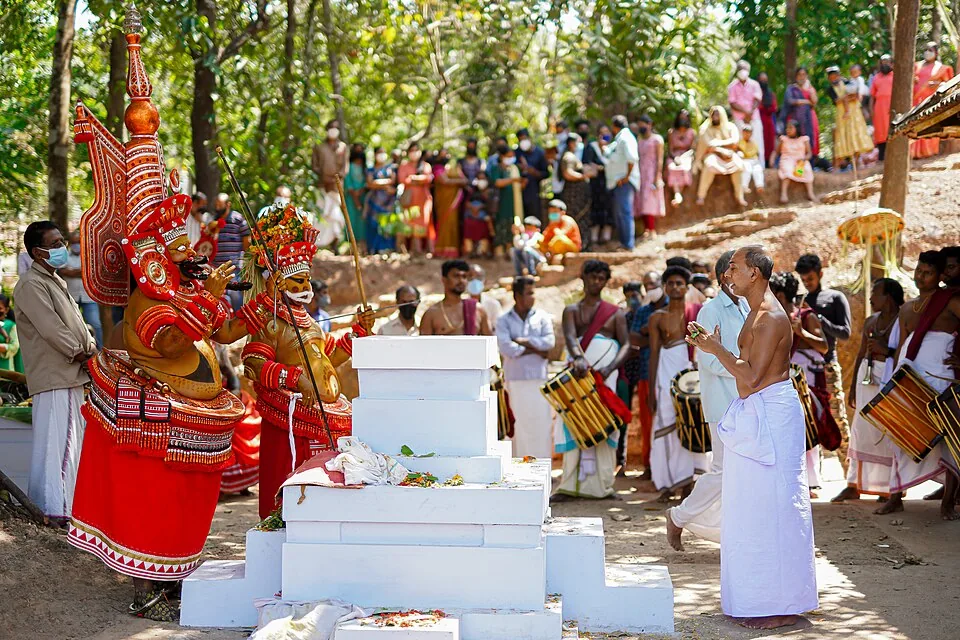
The ritual season of north Malabar, in which a man of the Vannan or Malayan community is dressed, painted and crowned until the shrine treats him as the deity itself. It runs from the tenth of Thulam, about mid-October, to the middle of Edavam at the end of May, at kavus and household shrines rather than on any stage, and the peak is January to April. Outside the season the kavus are quiet — the exception is Parassinikkadavu, north of the city, which performs Muthappan on a fixed daily schedule and is the anchor this page is pinned to.
50.4 km · ~84 min by cab · straight lineOctober to June, when the weather is mildest and trails are open, is generally considered the best window. November and December are especially good for butterflies, and the wider October-to-February period covers the famous butterfly migration. The heavy south-west monsoon (roughly June to September) makes streams dangerous and many trails are restricted or closed.
Reported entry charges are around ₹15 for Indian visitors and ₹150 for foreign nationals, with extra fees such as roughly ₹25 for a camera, about ₹75 for a car and around ₹300 for a guide. Entry, trekking and safaris are managed by the Kerala Forest and Wildlife Department; guided treks and multi-day walks need advance permission, best arranged at the Wildlife Warden's office at Iritty or at the Valayamchal entrance.
Yes. Jeep or SUV rides are the usual way to view wildlife inside the forest, and the Forest Department and local eco-development committees run guided treks and 50-60 nature camps a year. The most popular walk is the half-day trek to Meenmutty waterfalls (around 14 kilometres, roughly four hours, and comparatively easy), while longer routes such as the Ambalappara trail can take up to three days. All activities require a Forest Department permit and a guide; book ahead, especially in peak season.
Aralam is famous for a mass butterfly migration in which huge numbers of butterflies — above all the Common Albatross — move across the hills. Movement from the plains toward the Ghats broadly runs from around October to December, with a return migration toward the plains roughly between April and June before the monsoon. Enormous single-day counts have been recorded. Exact timing shifts year to year with the weather, so check locally before planning a trip around it.
The sanctuary is generally open from about 8:00 am to 4:00 pm, with last entry often around 2:00 pm. A half-day covers a short trek or safari and the waterfalls; allow a full day for the Meenmutty trek plus wildlife viewing, and two to three days if you want to attempt longer treks or a nature camp.
The gate is near Valayamchal, roughly 18 kilometres from Iritty and about 45-58 kilometres east of Kannur town. The nearest airport is Kannur International Airport at Mattannur, and the nearest convenient railheads are Thalassery and Kannur; from any of these you continue by road via Iritty. Buses and taxis run from Kannur and Iritty toward Aralam and Valayamchal.
Dryer post-monsoon and winter months are easiest for access; monsoon can disrupt forest roads and trails.
Entry: The Forest Department's booking system for this centre publishes ₹130 for an Indian adult, ₹10 for a child, ₹360 for a foreign visitor and ₹40 for students, with ₹40 for a still camera, ₹240 for a video camera and ₹110 for a vehicle. Kerala Tourism's page gives ₹115 for the Indian adult and matches on the rest. The ₹15 and ₹150 figures that circulate are the tariff for the department's residential nature camps, which are a different programme. Timings: Kerala Tourism publishes the park's hours as 08:00 to 16:00. The Forest Department's own booking system runs the guided programmes from 08:00 to 15:00, and that earlier close is what governs any trek. Access is closed or heavily restricted during the peak south-west monsoon.
Half to full day depending on current permitted activity.
Nearby you can pair Aralam trek (8.5 km), Kottiyoor Temple (8.7 km), Pazhassi Dam (27.6 km), Paithalmala trek (40.6 km).
Do not enter closed forest routes or move after dark. Do not feed or approach wildlife. Follow forest staff instructions on waste, silence and movement.
We have not published a story about Aralam Wildlife Sanctuary itself yet. These cover Aralam and the wider district, with separate journeys between stops.
These guides explore Aralam and the surrounding area. Choose a visit that fits your interests, allowing separately for travel between stops.


Route-level itineraries and practical guides for the rest of Kerala.
Photographs: Original uploaded by Manojk (Transferred by sreejithk2000 ) (Public domain), Manojk (CC BY-SA 4.0), Nativeplants garden (CC BY-SA 4.0). Wikimedia Commons.