Highlights
- Long hard-sand drive-in beach between Kannur and Thalassery.
- Dharmadam Island views, beach food and easy pairing with Thalassery Fort/food stops.
- Services here come down to stays, cafes, rentals, drivers and family beach services.
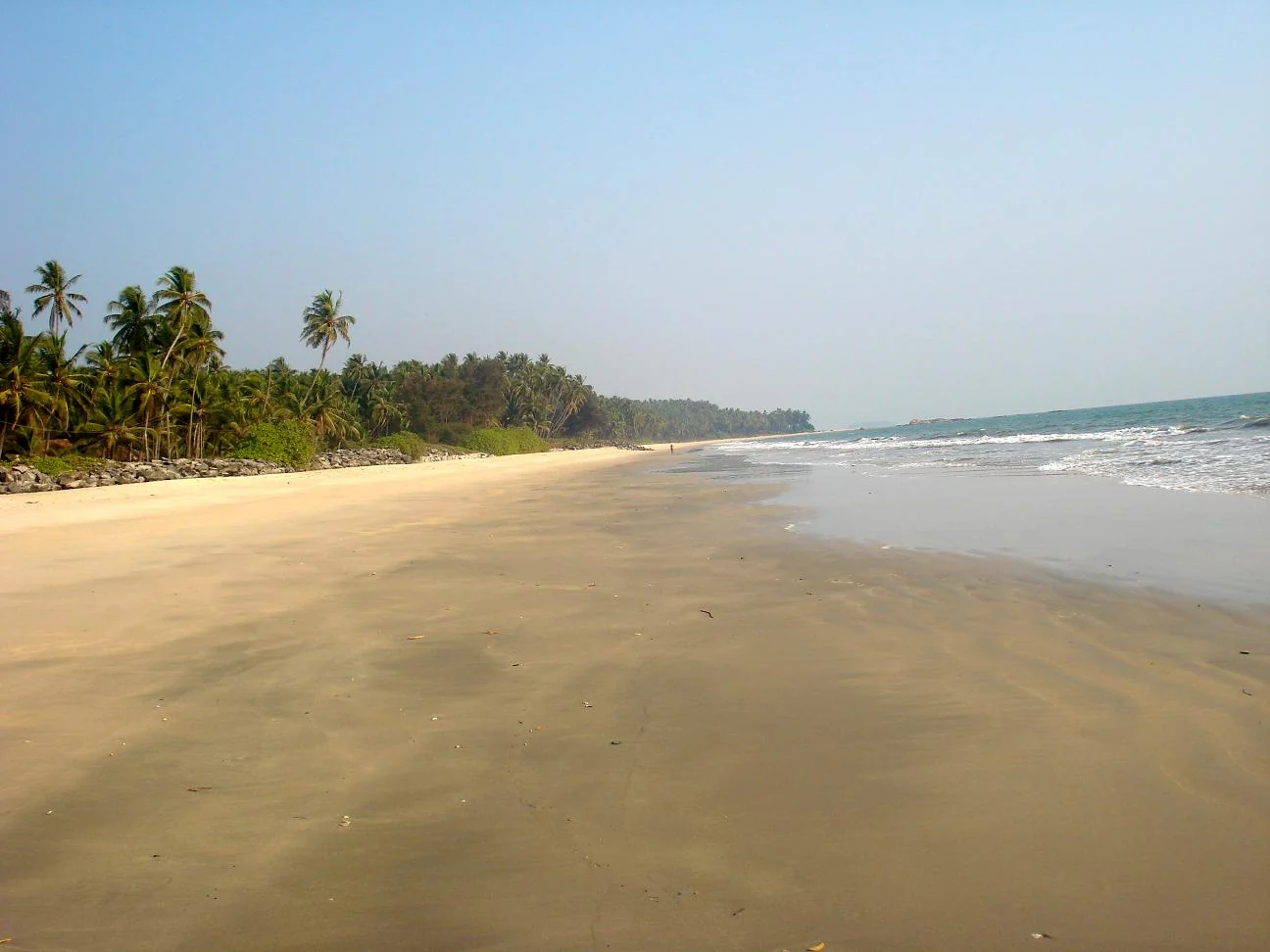
Muzhappilangad is Kerala's famous drive-in beach, a long firm-sand stretch between Kannur and Thalassery where driving on the beach is the headline experience. It also works as a beach-and-food day out with Dharmadam Island views and Thalassery nearby.

Driving is the attraction, but it should be framed with tide, crowd and safety judgement. Publish operators, rentals or food stops only when they can explain parking/access points, current beach rules and responsible driving behaviour.
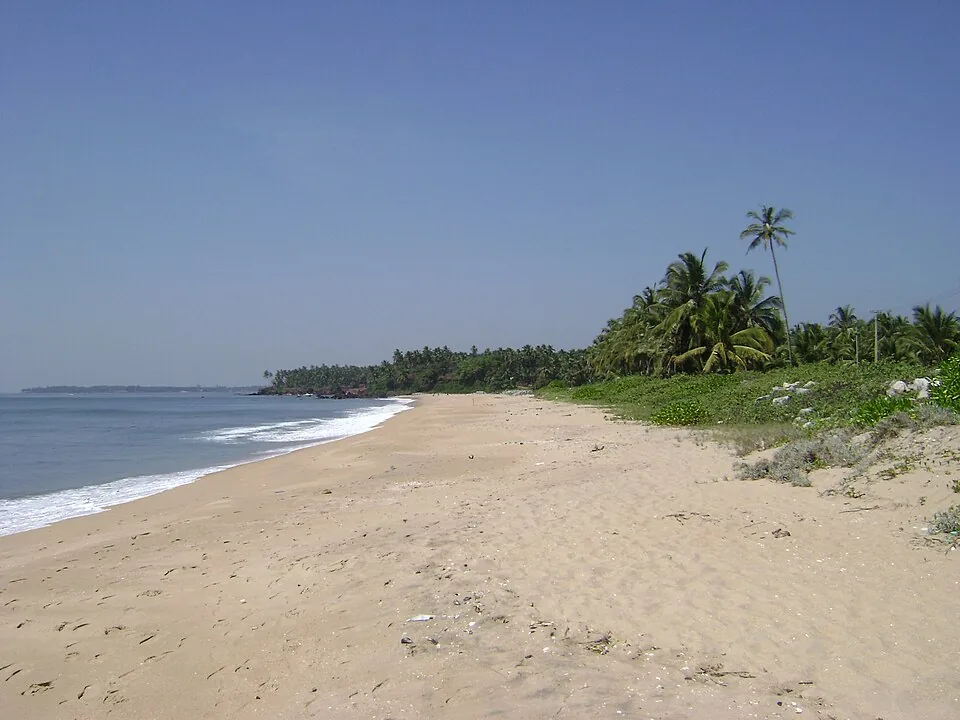
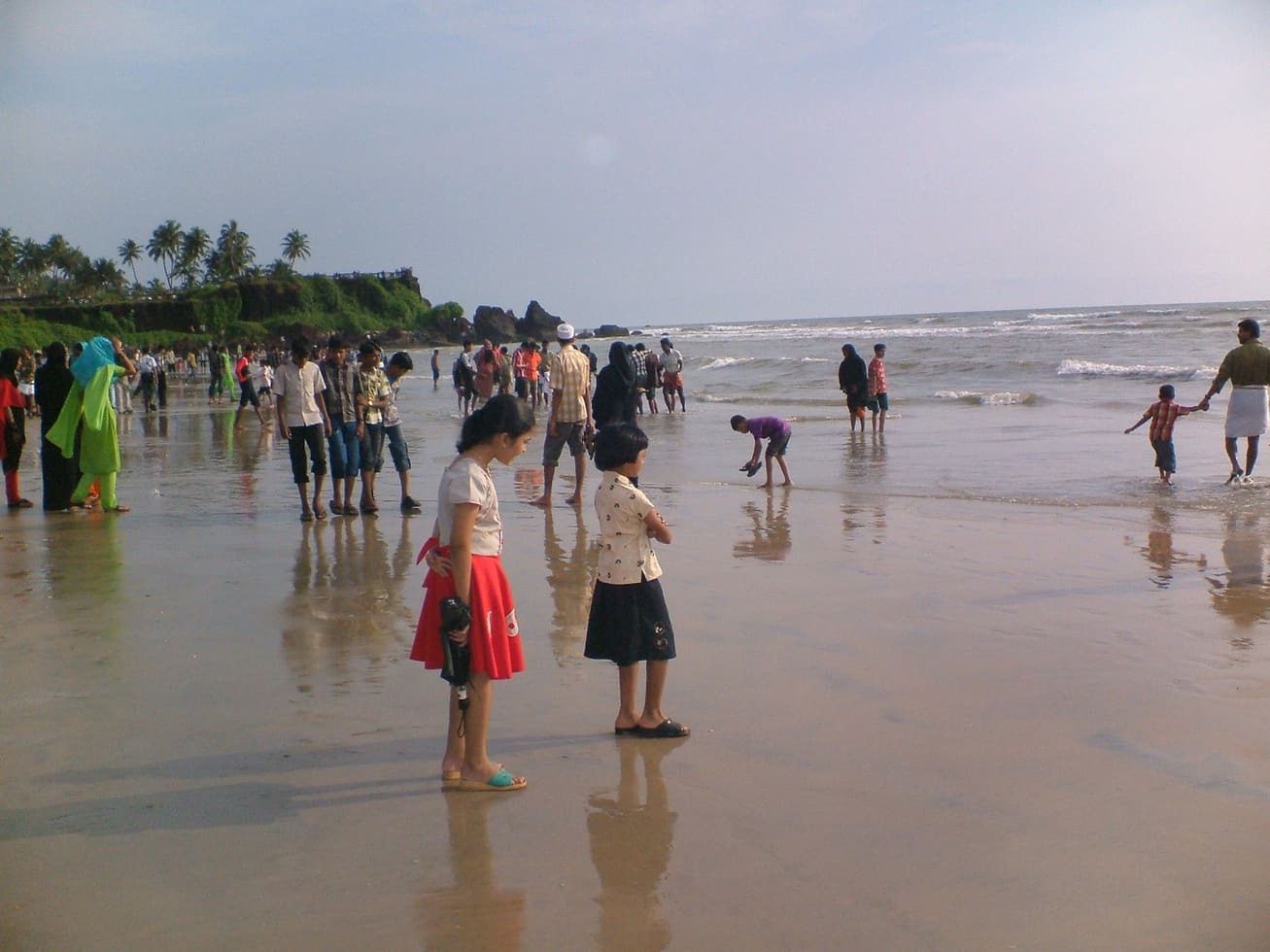
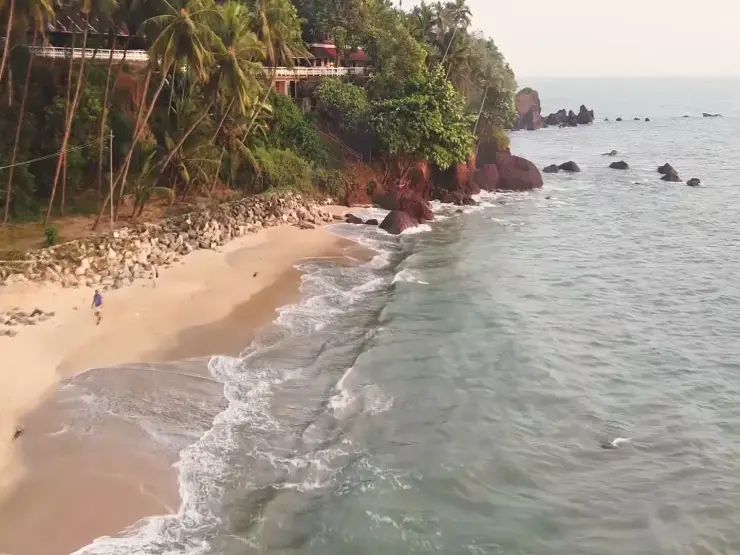
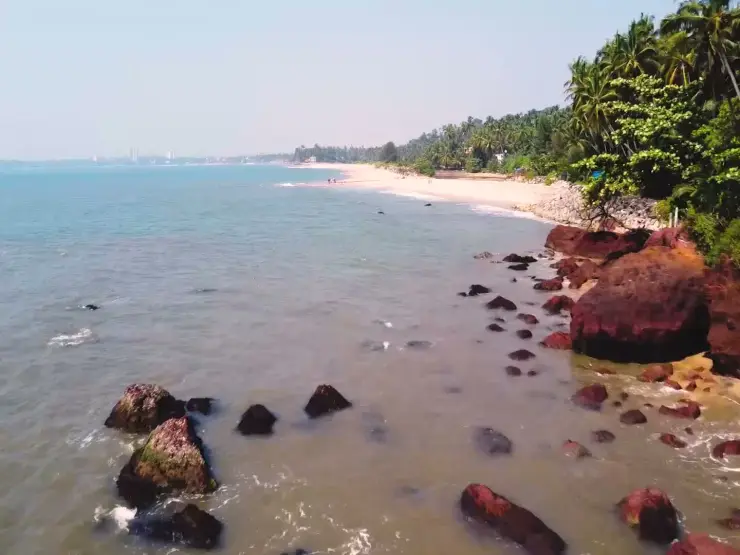
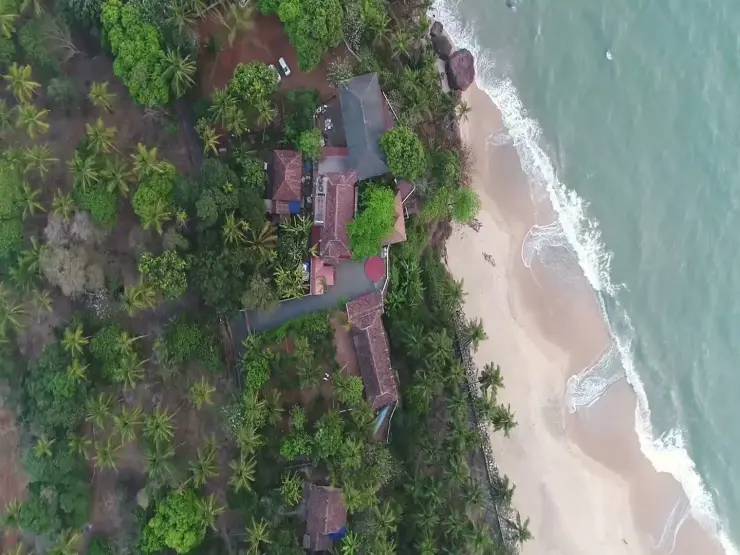
Muzhappilangad is that rare beach where the road runs out and the sand becomes the road. Stretching some 4 km of hard-packed, sun-baked shore along the Malabar Coast between Kannur and Thalassery, it is Asia’s longest drive-in beach — the one place in India where you can legitimately point a car or motorbike down the tideline, wind up the windows against the spray, and drive with the Arabian Sea unspooling beside you. A wall of black volcanic rock tames the surf into a sheltered swimming lagoon, migratory birds pick over the shallows in winter, and the green smudge of Dharmadam Island floats just offshore, close enough to walk to when the tide pulls back.
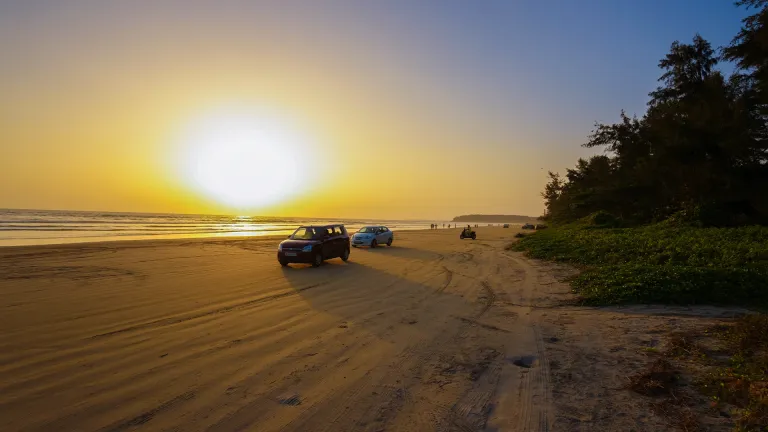
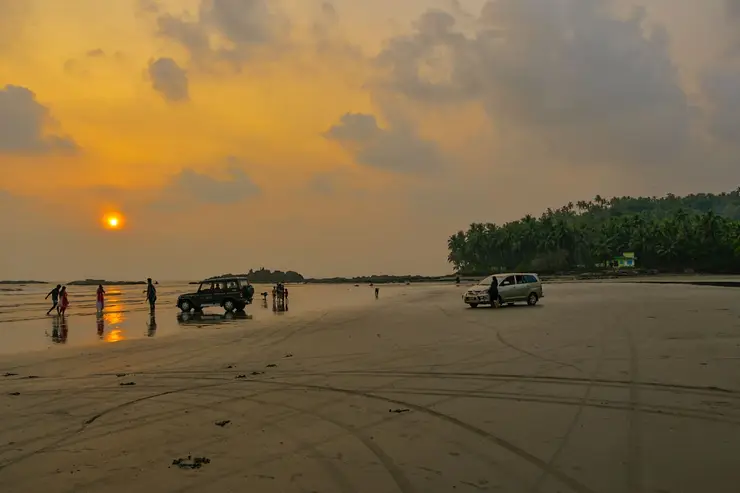
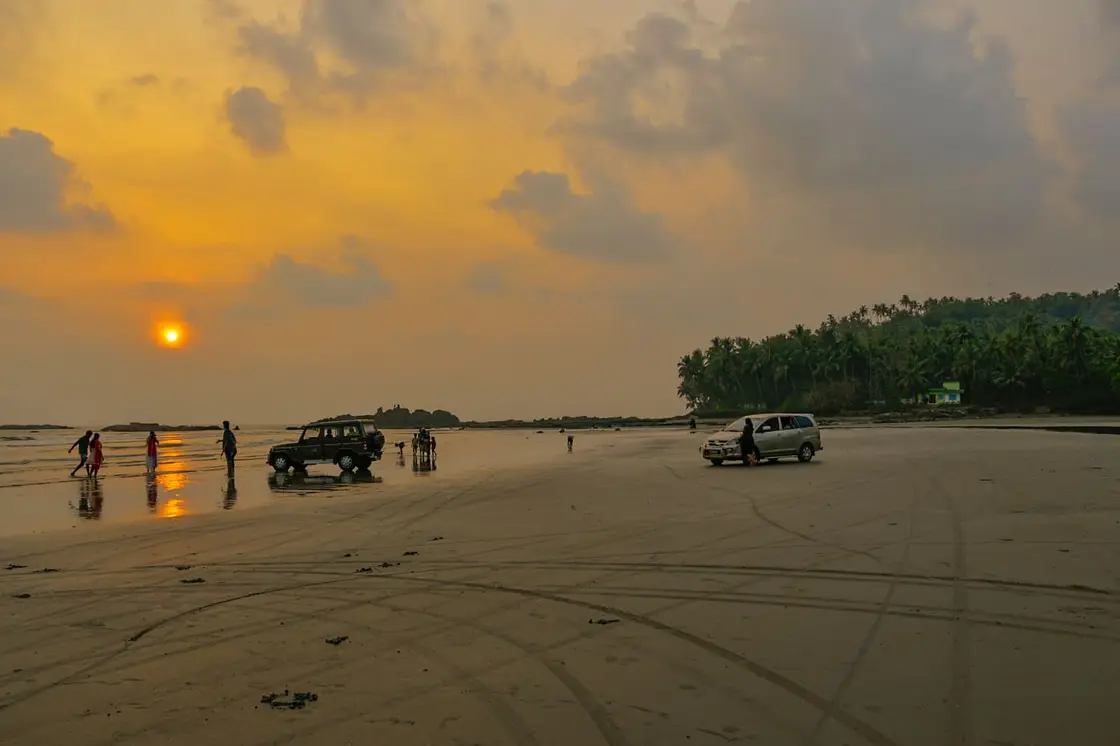
The thing that makes Muzhappilangad unlike any other beach in Kerala is simple: you drive on it. When the tide is out, the sand near the waterline compacts into a firm, glossy ribbon that will carry a hatchback, an SUV or a scooter for roughly 4 km, the longest such run in Asia. There is no substitute for the sensation — the steady hiss of tyres on wet sand, the salt haze on the windscreen, the sea sliding past your door on one side and the palm-fringed shore on the other. Newcomers tend to creep along at first, then grin, then find themselves tracing long lazy arcs across the emptiness. It is less a car park than a four-kilometre open-air driving stage, and it has turned an otherwise quiet Malabar beach into a place people travel across the country to reach.
That thrill peaks each April, when the beach hosts its annual Muzhappilangad Beach Festival. For a few days the sand fills with car and bike stunt riders throwing up rooster-tails of spray, cultural performances, food stalls and dense, cheerful crowds. The festival has done more than anything to fix Muzhappilangad in the national imagination as India’s driving beach — a carnival built entirely around the novelty of a shoreline you are allowed to race along. Off-season it reverts to something gentler: families paddling, a handful of vehicles idling near the water, fishermen and birdwatchers going about their business on the same sand that, months earlier, roared with engines.
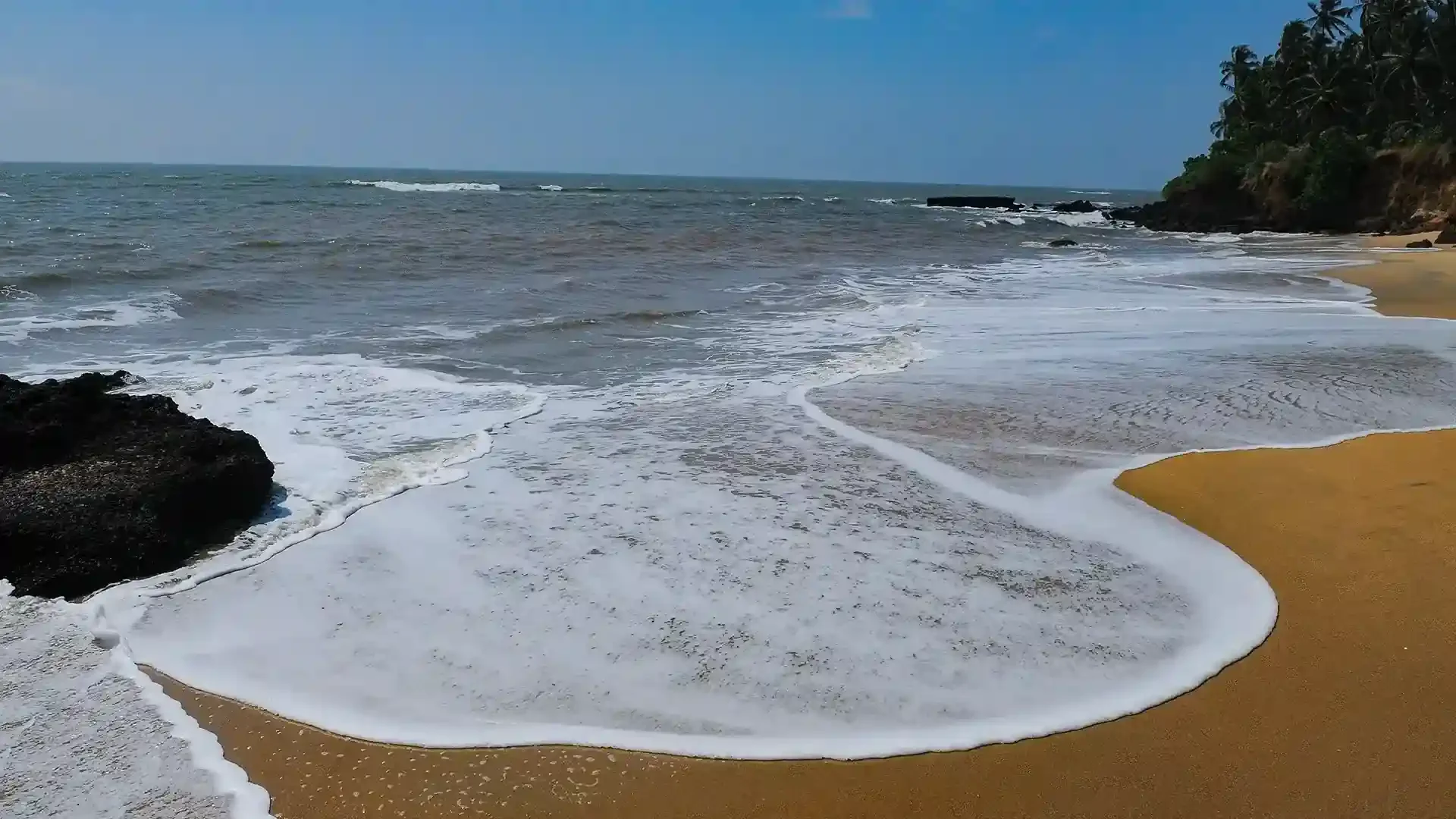
For all the horsepower, the beach’s quieter genius is its lagoon. A natural barrier of black rock runs along part of the shore, breaking the force of the Arabian Sea’s currents before they reach the sand and pooling the water into a calm, crescent-shaped basin. Those same rocks are studded with blue mussels and busy with crabs, and they are the reason Muzhappilangad is one of the few Kerala beaches where swimming feels genuinely relaxed rather than a wrestle with the undertow. The sensible rule is to stay inside the rock-sheltered zone — the calm water is calm precisely because the rocks are doing the work, and beyond them the open sea reasserts itself.
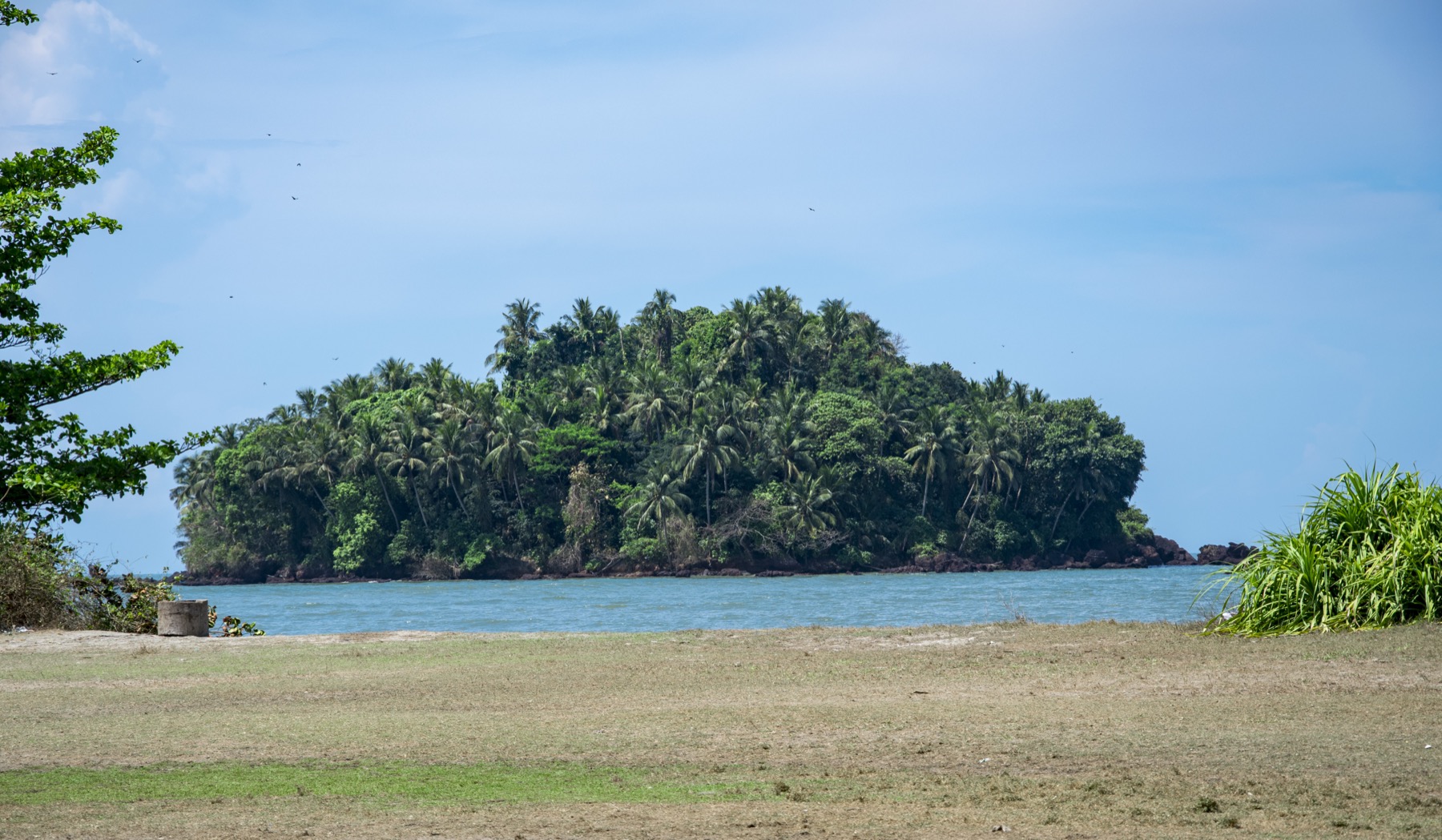
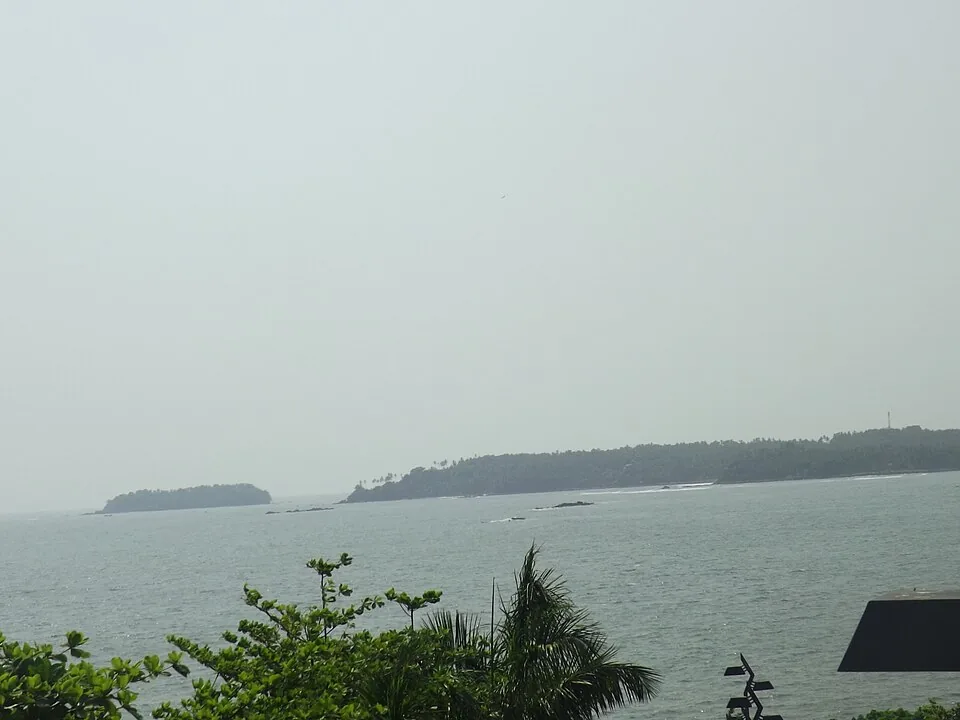
Just offshore lies Dharmadam Island — a mere five acres of coconut palms and dense green bush that the locals simply call Pachathuruth, the Green Island. It sits about 100 m out, cradled between the Anjarakandy and Thalassery rivers where they meet the sea, and at low tide the water drops far enough that you can wade and walk across to it over the exposed sand and shallows. Reaching a small, uninhabited tropical island on foot — no boat, no ticket, just good timing — is one of the strange delights of a Muzhappilangad visit. The window is short and tide-dependent, so it rewards travellers who check the tide tables and time their walk carefully.
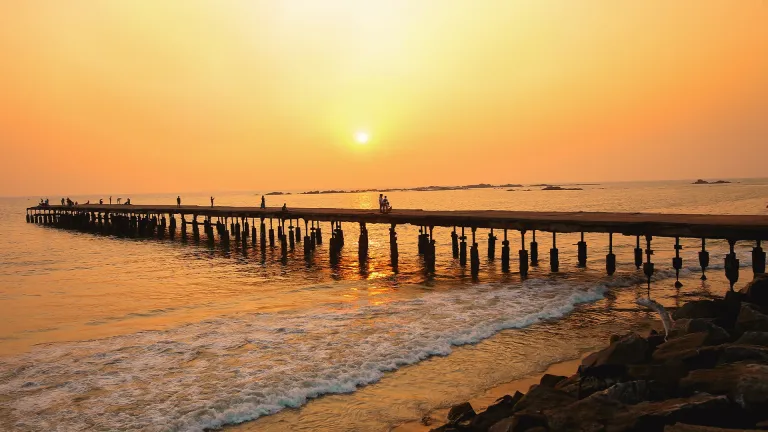
Come evening, the driving winds down and the beach turns its attention west. Muzhappilangad faces the open Arabian Sea, and its sunsets are the unhurried Malabar kind — the sky flaring orange and rose over a flat horizon while the wet sand mirrors the whole show back at itself and the last silhouettes of cars, cyclists and strollers stretch out long across the flats. It is the moment the beach empties of its adrenaline and fills, instead, with light.
There is more here than the drive, too. Accredited operators offer paragliding, parasailing, microlight flights and water sports such as power-boating and catamaran rides for those who want the coast from above or further out, while the local kitchens lean hard into Malabar cuisine — seafood in fragrant coconut-milk gravies, and the beach’s own blue mussels, prised from those black rocks and cooked with herbs and spice. Between the driving, the swimming lagoon, the island walk and the food, Muzhappilangad packs an unusual amount into one strip of sand.
Muzhappilangad’s modern fame rests on one line in an international article: the BBC named it among the world’s top six beaches for driving, the only Asian beach on that list. That single accolade transformed a locally-loved Malabar shore into a destination with a global calling card, and it is still the fact repeated in almost every account of the place — the beach where, unusually and legally, you are permitted to drive on the sand.
The permission itself is what underpins everything. Running parallel to National Highway 66 between Kannur and Thalassery, the beach’s firm, wide sand allowed local authorities to sanction driving along roughly 4 km of its length, making it Asia’s longest drive-in beach. What might elsewhere be an offence became the headline attraction — a shoreline treated, at low tide, almost as an extension of the road network — and word of a beach you could drive on spread far beyond Kerala.
The annual Beach Festival, held each April, formalised that identity. Built around car and bike stunts alongside cultural programmes and food, the festival draws crowds and media each year and has become the calendar fixture that keeps Muzhappilangad’s reputation as India’s driving beach renewed and growing. It is a rare example of a tourism event created entirely around a single, geographically specific quirk — sand you are allowed to race across.
The little island offshore carries the deeper history. Dharmadam — from a root meaning ‘place of dharma’ or ethics — was known in earlier times as Dharmapattanam and is remembered as an old Buddhist stronghold, its name said to come from Buddhist monks who visited to gather medicinal herbs growing there. The five-acre isle has been noted by traders across centuries under a string of names: the Jews and Arabs knew it as Dahfattan, the Portuguese as Darmapatao, the British as Darmapatam. Today it survives as an uninhabited green speck of coconut palm and scrub, reachable on foot from Muzhappilangad only when the tide obliges.
The beach also earns a second reputation each winter as a birdwatching hotspot. When the season turns, more than 30 species of migratory birds — terns, gulls, sandpipers and others — settle onto the shallows and the black rocks, drawing birders to the same sands that, come April, will thunder with engines. Best visited between October and May, Muzhappilangad manages to be several beaches at once: a racetrack, a swimming lagoon, a stepping-stone to an island, and a quiet stage for migrant birds.
Drive on the sand — this is Asia’s longest drive-in beach, roughly 4 km where cars and motorbikes are actually permitted on the shore, an experience you cannot legally have almost anywhere else in India.
Swim in a naturally sheltered lagoon, where a barrier of black rock breaks the Arabian Sea’s currents into calm, crescent-shaped water — one of Kerala’s more relaxed beach swims (inside the sheltered zone only).
Walk to Dharmadam ‘Green’ Island at low tide, a five-acre uninhabited islet of coconut palm and bush reachable on foot when the sea pulls back.
Catch the April Beach Festival, with car and bike stunt riders, cultural events and crowds — the carnival that made Muzhappilangad India’s driving beach.
Watch flat, open-horizon Malabar sunsets mirrored in the wet sand, and eat Malabar seafood and the beach’s own blue mussels at nearby kitchens.
Come in winter for the birds — over 30 species of migratory birds work the shallows and rocks between roughly October and May.
Road km to Kannur; ghat roads and traffic vary — allow extra.
November to February is the easiest beach season. Avoid rough-sea days and crowded peak holiday windows if driving.
Live forecast loads in your browser.
Sunset is in about 3 hours.
Check the official alert before you travel. Kerala’s beaches, waterfalls and trekking routes close at short notice during heavy rain, and district alert levels change day to day. We do not publish an alert level of our own — read it from the state authority: Kerala State Disaster Management Authority, or the district control room on 1077.
Sun and moon are calculated for this location and shown in IST. Photography windows are the hour around sunrise and sunset; the sunset bearing is degrees clockwise from true north. Moon phase is accurate to about half a day.
Verified hotels, homestays, restaurants, experiences, sights, shops and rentals around Muzhappilangad Drive-in Beach — commission-free, with direct contact. Filter by what you need.

Tyndis runs a Thalassery biryani and Malabar cuisine food-tour experience, useful for travellers who want a guided, story-led local food route instead of only restaurant stops. Tyndis Travel, Co Orbit, 10th floor, Noel Focus, Infopark-Kakkanad Road, Kochi 682037; tour operates in Thalassery · Thalassery biryani, Food tour, Malabar cuisine.

Gundert Bungalow is the Kerala Tourism-listed Thalassery heritage museum connected to Hermann Gundert, Malayalam language history and early Malayalam newspapers. Gundert Bungalow, Thalassery heritage, Museum.

Thalassery is Kerala Tourism’s official heritage-town anchor for Kannur coast planning, covering Thalassery Fort, cricket history, food heritage, circus history and cultural landmarks. Public town; check attraction timings locally · Thalassery, Heritage town, Food heritage.

Muzhappilangad Beach is Kerala drive-in beach, best planned with current driving, beach safety, water-sport and Thalassery-route checks. Muzhappilangad, Drive-in beach, Thalassery.
Book with the place itself. India’s cyber-crime coordination centre warned in April 2025 that convincing copies of hotel and pilgrimage booking sites are being pushed through sponsored search and social ads, taking payment for rooms the property never hears about. Every listing here links to the business’s own contact details and its own Google or Bing profile — we take no commission and sit in nobody’s payment path. If a booking page reached you through an ad, check the address bar against the property’s own site before you pay. Fraud can be reported on cybercrime.gov.in or on 1930.
Find food, accommodation and activities across Muzhappilangad and Thalassery. Browse the guides for places to eat, stay and explore along your route.
4 more places around Muzhappilangad and Thalassery. Open a guide to plan the visit and onward journey.

3.1 km · ~8 min by auto
A small green private island off Muzhappilangad, reachable on foot across the sand at low tide (viewing only; landing is restricted).

7.2 km · ~18 min by auto
A square laterite fort built by the English East India Company in 1708 at Thalassery (Tellicherry), heart of the old Malabar pepper and cricket town, with secret sea tunnels.

5.3 km · ~13 min by auto
At Illikkunnu near Thalassery, the hillside home of the German missionary-scholar Hermann Gundert, who compiled the first Malayalam–English dictionary and grammar here in the mid-1800s.

6.9 km · ~17 min by auto
A cliff-top garden viewpoint over the sea at Thalassery, named after E.N. Overbury, a British judge of the 1870s who began but never finished a mansion here.
Roampedia is commission-free — own or know a stay, eatery, guide or shop near Muzhappilangad Drive-in Beach? List it and it appears here once verified.
Add a nearby businessEntry: Free to enter the beach; bringing a vehicle onto the sand and driving is done at your own risk, and any parking or vehicle charge is payable locally
Festivals: Muzhappilangad Beach Festival, held annually in April, with car and bike stunts, cultural programmes and food stalls
Photography: Golden hour is magic here — shoot vehicles at the water’s edge with reflections on the wet sand, the offshore black rocks, and wide Arabian Sea sunsets. Rinse and protect gear from salt spray and blowing sand; low tide opens up the widest photo compositions.
If you are travelling by bus or ferry, check the return service with the operator before setting out. Leave time to reach the stop or jetty after your visit.
Ask at the bus stand for the time of the last service back, not the next one. If you miss it, an auto or app cab is the fallback — agree the fare before you get in.
If you need step-free access, contact the site before travelling. Ask about a level entrance, steps along the route, the nearest drop-off point, seating and accessible toilets.
These services are listed within about 1.2 km of Muzhappilangad Drive-in Beach. Walking distances follow mapped routes; access and opening hours can change. Other services may be closer but are not included here.
Emergency numbers are verified against official government and state tourism sources. 112 works anywhere in India.

A small green private island off Muzhappilangad, reachable on foot across the sand at low tide (viewing only; landing is restricted).
3.1 km · ~8 min by auto · straight line
Kizhunna’s sandy shore lies between Thottada and Ezhara, with palm-backed village edges and the Cherakallu rock formations breaking up the coastline.
5.0 km · ~13 min by auto · straight line
At Illikkunnu near Thalassery, the hillside home of the German missionary-scholar Hermann Gundert, who compiled the first Malayalam–English dictionary and grammar here in the mid-1800s.
5.3 km · ~13 min by auto · straight line
A quiet, unspoilt cove-and-stream beach south of Kannur city, known for its homestays and calm, uncrowded sands.
5.9 km · ~15 min by auto · straight line
A cliff-top garden viewpoint over the sea at Thalassery, named after E.N. Overbury, a British judge of the 1870s who began but never finished a mansion here.
6.9 km · ~17 min by auto · straight line
A square laterite fort built by the English East India Company in 1708 at Thalassery (Tellicherry), heart of the old Malabar pepper and cricket town, with secret sea tunnels.
7.2 km · ~18 min by auto · straight line
Adikadalayi Beach, also called Kadalayi Beach in Kerala’s coastal tourism study, is a Kannur shore with sandy pockets, exposed red coastal rock and palms above the water. It belongs to the Adikadalayi locality, not the separately named Thottada, Kizhunna or Ezhara beaches farther along the coast. Use the mapped public steps from Tippu Sulthan Beach Road as the arrival reference. Nearby cliff-side homestays have their own entrances and facilities, and should not be used as assumed public access.
7.3 km · ~18 min by auto · straight line
Sea-facing laterite fort built by the Portuguese in 1505, later held by the Dutch, the Arakkal royal house and the British — Kannur city’s great coastal landmark overlooking Mappila Bay.
10.0 km · ~17 min by cab · straight line
The Arakkal Kettu (palace museum) of the Arakkal Ali Rajas — Kerala’s only Muslim royal house, matrilineal so ruled at times by a Beevi (queen).
10.1 km · ~17 min by cab · straight line
A small rocky beach in the Kannur cantonment, an extension of Payyambalam and within a few minutes of St Angelo’s Fort and the Kannur lighthouse. Not a swimming beach — the draw is the rocks, the quiet and the lighthouse beam after dark.
11.3 km · ~19 min by cab · straight line
Kannur city’s main beach, with a landscaped garden, the mother-and-child sculpture and long sunset walkways.
12.9 km · ~22 min by cab · straight line
A Bhagavathy temple near Valapattanam regarded as the mother shrine of Kalaripayattu — Kerala’s martial art — where Theyyam is performed; the goddess is guardian of the kalari.
17.3 km · ~29 min by cab · straight lineNearby toilets, pharmacies, ATMs, seating and vets are community-mapped and may be incomplete or out of date. Map data © OpenStreetMap contributors | Walking times © openrouteservice.org by HeiGIT
Yes. This is Asia’s longest drive-in beach, and driving cars and motorbikes is permitted along roughly 4 km of the firm sand near the waterline. It is best and safest at low tide when the sand is hardest and widest — driving is at your own risk, so keep to the packed sand well back from the soft, wet edge and away from the surf.
It is one of Kerala’s calmer beaches for swimming because a barrier of black rocks breaks the ocean currents and creates a sheltered lagoon. Swim only inside that rock-sheltered zone — the water is calm precisely because the rocks are shielding it, and conditions beyond them are open sea. Watch the tide and heed any local warnings.
Dharmadam (Green Island) sits about 100 m offshore and can be reached on foot only at low tide, when the water drops enough to wade and walk across. The window is short and tide-dependent, so check local tide timings before setting out and don’t linger as the tide turns.
The annual Beach Festival is held in April, featuring car and bike stunt shows on the sand, cultural performances, food stalls and large crowds. Exact dates vary year to year.
October to May is the recommended window, avoiding the monsoon. Plan your visit around low tide for the best driving conditions and the walk to Dharmadam Island; winter (roughly November onward) is also prime time for migratory birds.
Swimming in the sheltered lagoon, the low-tide walk to Dharmadam Island, birdwatching in winter (30-plus migratory species), sunset watching, and adventure activities offered by accredited operators such as paragliding, parasailing, microlight flights, power-boating and catamaran rides. Local kitchens serve Malabar seafood and the beach’s own blue mussels.
November to February is the easiest beach season. Avoid rough-sea days and crowded peak holiday windows if driving.
Entry: Free to enter the beach; bringing a vehicle onto the sand and driving is done at your own risk, and any parking or vehicle charge is payable locally. Timings: Open beach; best driven and visited in daylight at low tide, when the sand is firm and the sea is calmest.
Base in Kannur, Thalassery or Muzhappilangad depending on your train/road route. Check tide, beach access and local driving rules before taking a vehicle onto the sand. Drive slowly, avoid crowded sections and keep beach walking/swimming separate from vehicle movement.
1 to 3 hours; half day with Thalassery and Dharmadam add-ons.
Nearby you can pair Dharmadam Island (3.1 km), Kizhunna Beach (5.0 km), Gundert Bungalow (5.3 km), Thottada Beach (5.9 km).
Follow lifeguard and police/local instructions. Drive only where permitted and never near swimmers or dense crowds. Do not enter the sea during rough warnings or after dark.
Written about Muzhappilangad Drive-in Beach itself — its history, its legends and the arguments about them.
Route-level itineraries and practical guides for the rest of Kerala.
Photographs: Shagil Kannur (CC BY 3.0), Gnoeee (CC BY-SA 4.0), Prof tpms (CC BY-SA 4.0), Ranjithsiji (CC BY-SA 3.0). Wikimedia Commons.