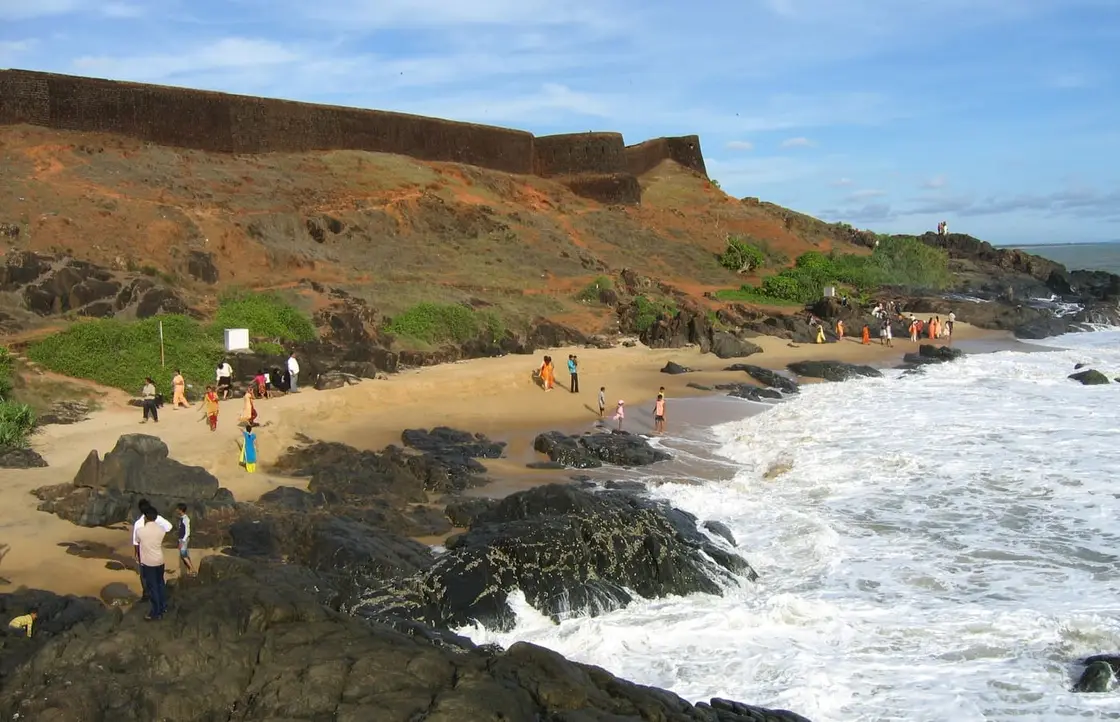
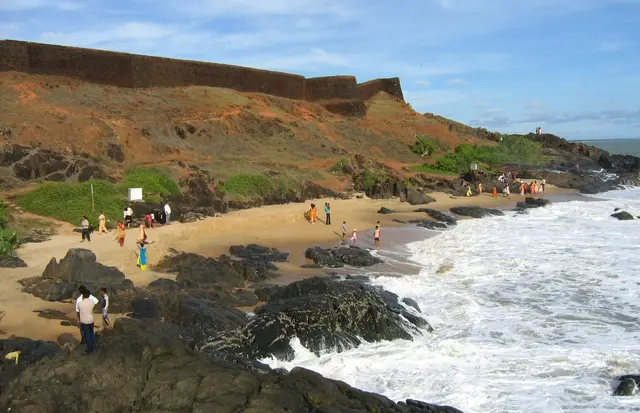
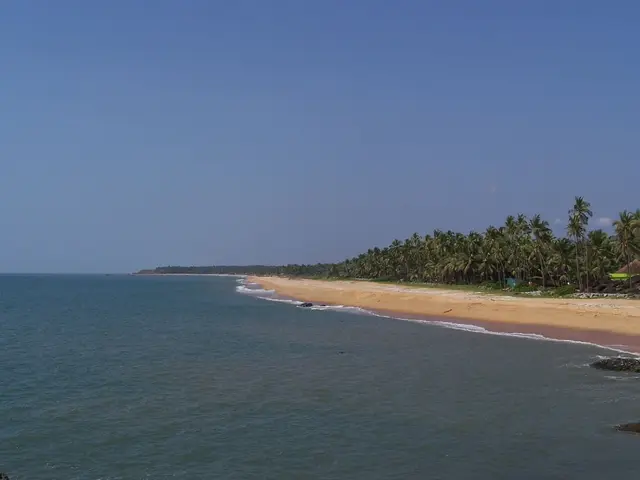
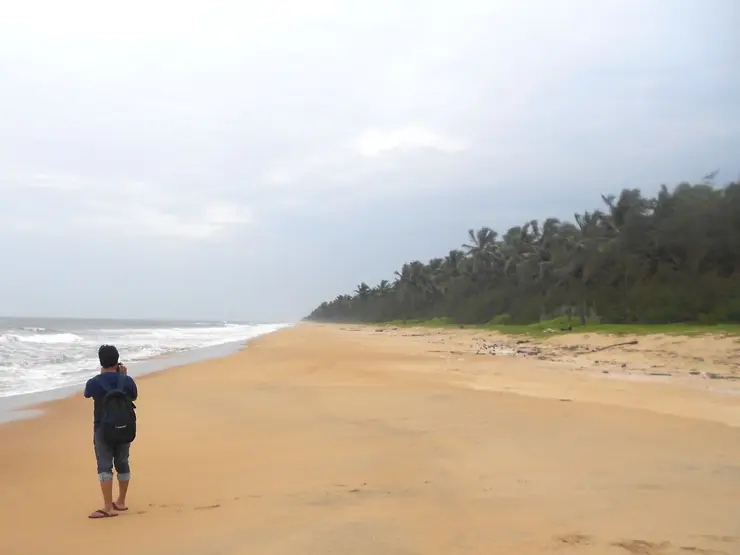
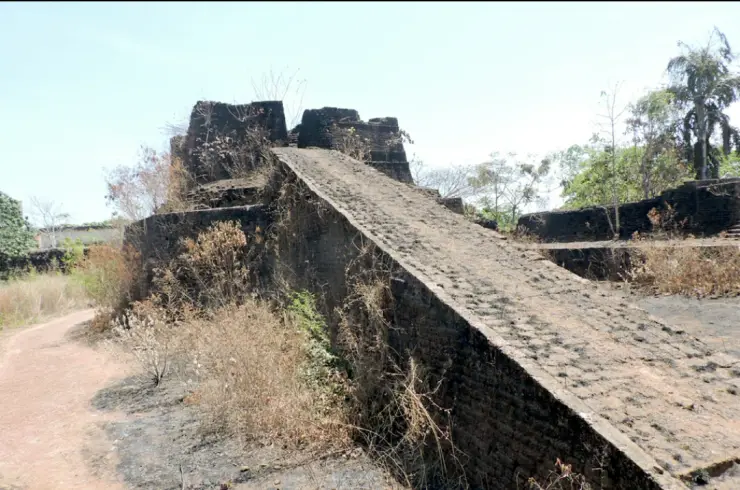
Bekal is a coastal stretch at the north end of Kerala, in Hosdurg taluk of Kasaragod district, about 14 km south of Kasaragod town and 11 to 12 km north of Kanhangad. It is not a municipality and has no council of its own: the name covers ground shared between two grama panchayats, Pallikkara and Udma, with the postcodes 671318 and 671319 and the dialling code 04672. What makes Bekal unusual is that it is also a government project. In 1992 the Government of India named it a Special Tourism Area under the National Action Plan for tourism, and in 1995 Kerala incorporated a state company, the Bekal Resorts Development Corporation, to turn this coast into an international beach destination. Thirty years on, part of that plan stands and a good deal of it does not, and both halves are visible from the road.
Administratively, Bekal barely exists. The fort and the beach sit in Pallikkara grama panchayat, which covers 39.09 square kilometres across three revenue villages — Keekan, Pallikkara and Panayala — and returned 15,540 people at the 2001 census. The resort belt to the north sits in Udma panchayat, formed in 1940, 23.54 square kilometres over twenty wards and three villages, Uduma, Bara and Pallikkara 2, with 32,441 people and 81.62 per cent literacy at the same census. Pallikkara 2 was moved across from Pallikkara to Udma in 1962. We could not source panchayat-level figures from the 2011 census and are not going to guess at them, so the numbers above are two decades old and should be read that way.
Both panchayats are farming country first. Pallikkara is one of the very few places in Kerala where tobacco is grown in quantity — the Malayalam panchayat article calls it the largest concentration in Kasaragod district — and the sandy coastal soil, the coconut smallholdings and the small ponds behind the dunes still set the working rhythm of the place. Malayalam is the first language, but Kannada, Tulu and Urdu are all spoken here, which is what the district means when it advertises itself as the land of seven languages.
The decision that changed Bekal was taken in Delhi and it was taken early. The National Action Plan for tourism of 1992 created the category of Special Tourism Area, meant to concentrate investment on places with real assets and no visitors, and Bekal was picked as one of them. That date is worth holding on to, because Bekal is almost always said to have been discovered by a film. The song sequence that made the fort famous belongs to a 1995 release; the government designation is three years older. The plan did not follow the camera.
The Bekal Resorts Development Corporation Limited was incorporated in 1995 as a Kerala government company with the Chief Secretary as its chairman and senior officials as directors. Its remit was not to run hotels. It was to commission studies, assemble land, put in water, power, sanitation, waste disposal and roads, build the public attractions, and then hand serviced sites to private developers. In effect the state took on the expensive and unglamorous half of a resort economy and invited the market to take the rest.
The land figures deserve care because the published ones do not agree, and they do not agree because they are counting different things. Kerala Tourism’s BRDC page describes a first phase of 76 hectares prepared for handover as six separate resort sites, within a designated area given as 137 square kilometres. The same department’s investment pages say the corporation has acquired about 235 acres — roughly 95 hectares — spread across four panchayats in and around Bekal, all of it allotted to developers through open bidding. One is a notified planning area, the other is land actually bought. Neither page reconciles them, and we print both rather than pick.
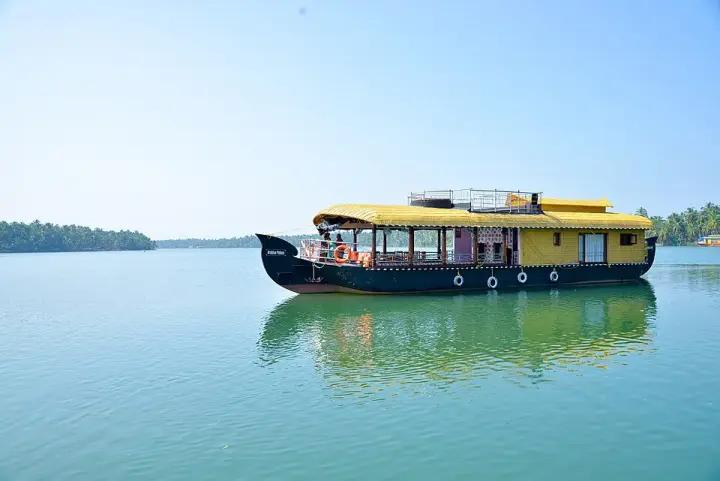
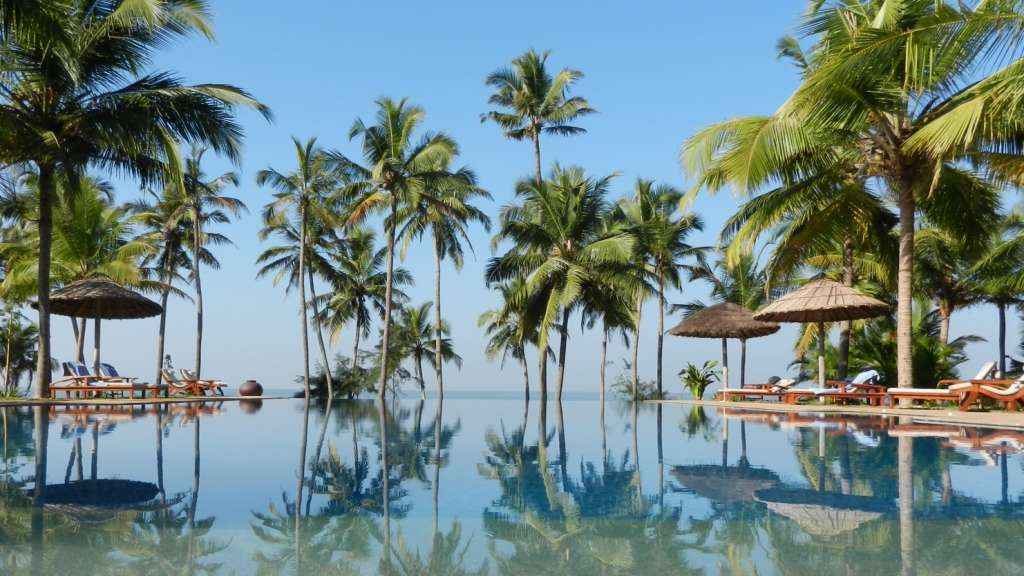
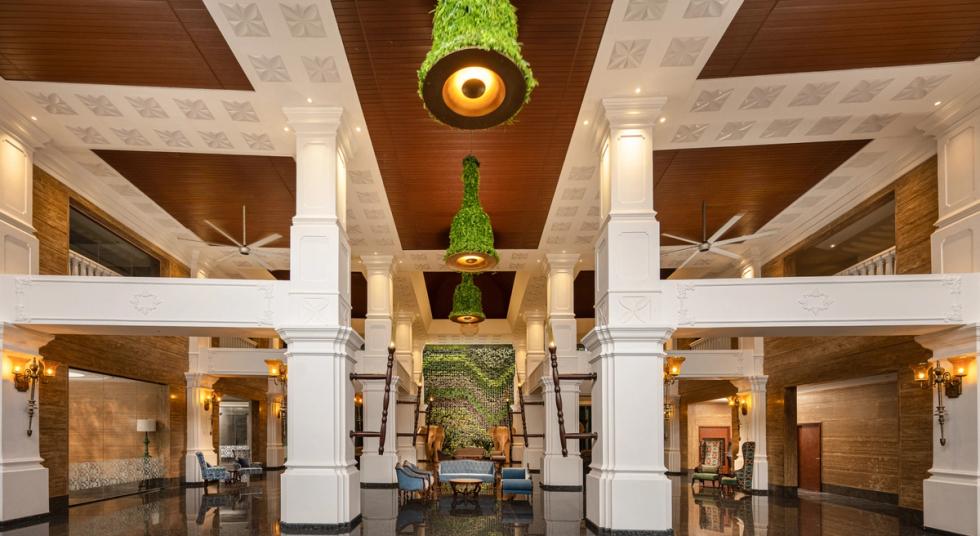
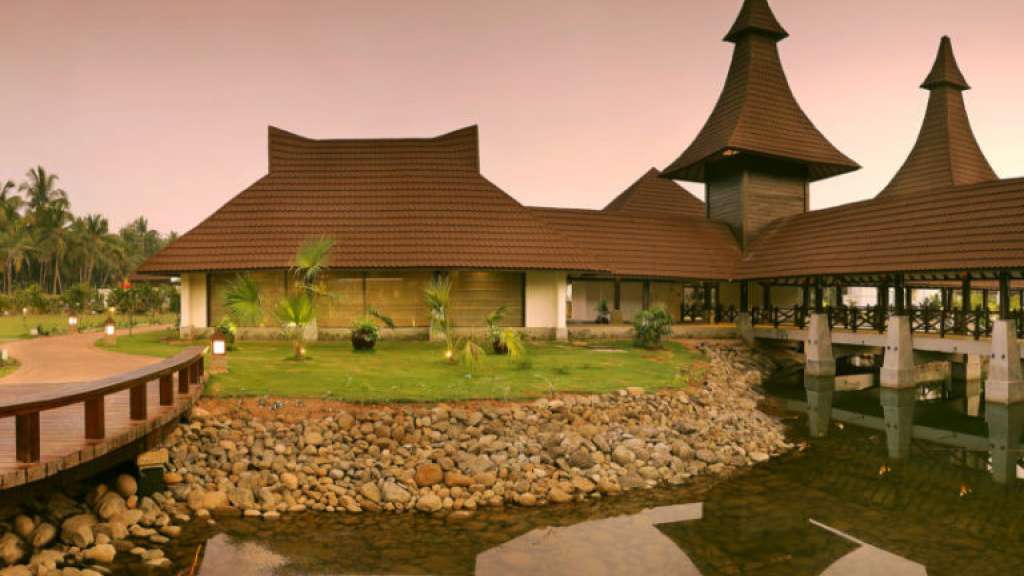
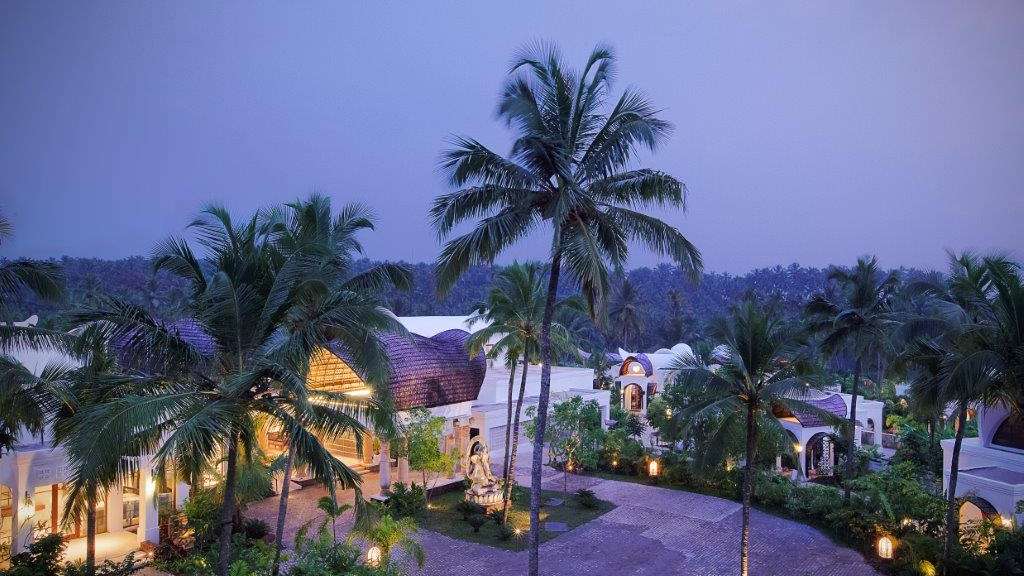
Some of it was built. The Bekal Beach Park, the landscaped seafront with its lawns and tiled pavilions, is BRDC’s work, as is the Bekal Hole Aqua Park at the mouth of the Bekal Hole where pedal boats and water cycles run on sheltered water. Two of the resort sites carry operating hotels: The LaLiT Resort and Spa at Bevoori in Udma, and Taj Bekal — opened under the Vivanta name — described as a roughly 6.5-hectare property of 71 villas and rooms in laterite, their forms taken from kettuvallam houseboats. Both appear in our own listings for this town.
And some of it did not get built at all. In 1996 BRDC bought 33.18 acres at Ajanur, south towards Kanhangad. It was leased to the Thrissur-based Joice Group for a resort, which foundered when Coastal Regulation Zone rules tightened to the point that only 3.5 of the 33 acres could carry construction. The department then re-pitched the site as a Bekal Tourism Village — farm tourism, fishing, adventure activities, destination weddings, exhibition space — and signed the Morex Group for a stated ₹250 crore across two phases. In June 2025 Onmanorama reported that Morex had told a secretary-level meeting it wished to withdraw, the deadline for starting construction having passed with no work begun. Three plans, twenty-nine years, and the plot is still empty.
The corporation’s other headline product has been an event. The Bekal International Beach Festival, billed as Kerala’s first, ran for ten days from 24 December 2022 to 2 January 2023, organised by BRDC with the District Tourism Promotion Council, Kudumbashree, local bodies and a private partner, with participants from eleven countries. A BRDC official put attendance at five lakh across New Year’s Eve and New Year’s Day. In April 2026 Onmanorama reported detailed UDF allegations, based on documents obtained under the Right to Information Act, that a rival bid had been fabricated, that announced footfall of ten lakh a day sat against ticket sales of four lakh, that a society had been created to sidestep GST, and that the Udma MLA C. H. Kunhambu had chaired the organising committee before joining the BRDC board. These are allegations and are reported here as allegations; we have seen no adjudication of them.
The quietest thing in Bekal is also the most useful. Bekal Fort railway station, code BFR, opened in 1910 under the name Pallikkere and was renamed for the monument two or three kilometres away. It has two platforms on the Shoranur–Mangaluru double line in the Palakkad division of Southern Railway, was electrified on 1 May 2016 and rebuilt on 2 March 2023, and handles about ten trains and some five thousand people a day. A second halt serves Kottikulam a little to the north. A village station renamed after a fort is Bekal’s whole story in one signboard: the place kept its work and took the monument’s name.
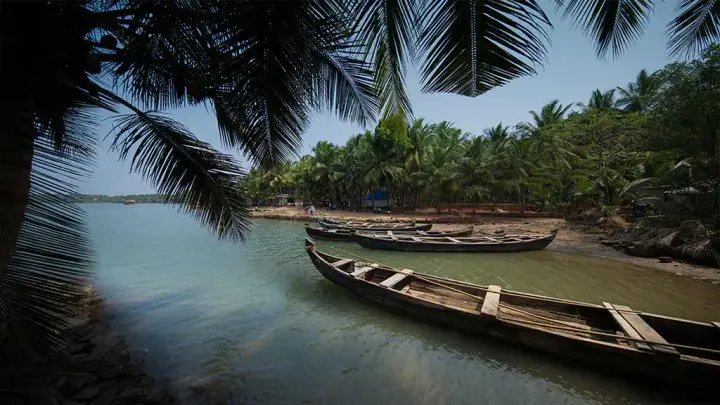
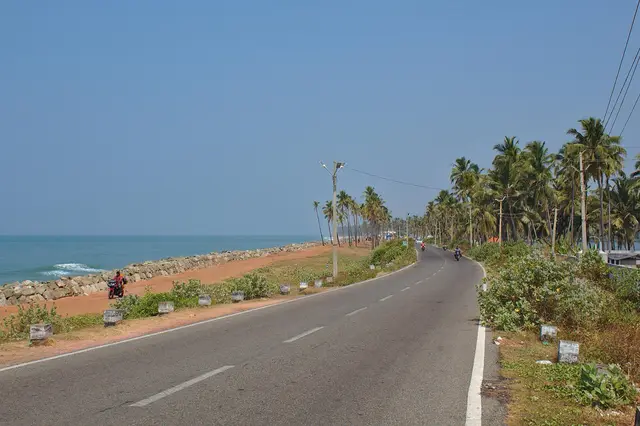
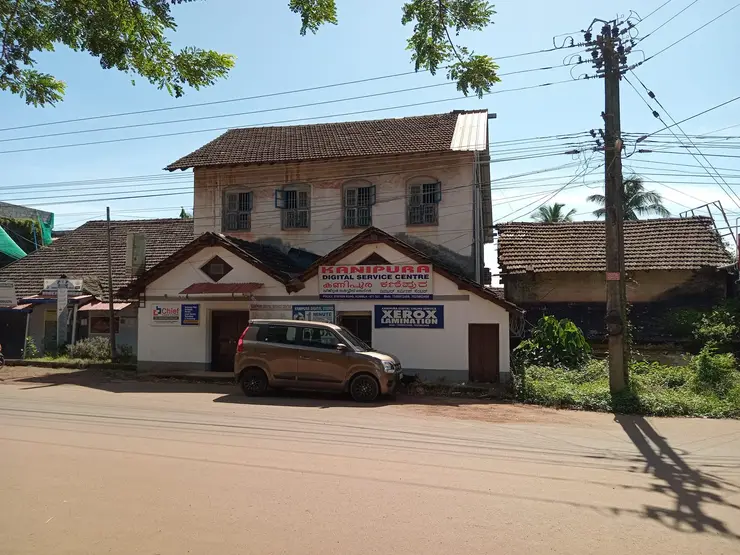
What a visitor actually meets, then, is not a resort city. It is National Highway 66 with a strip of hotels and fried-chicken counters along it, red-laterite lanes running west to the sea past hoardings for homestays and beach parks, two international resorts behind gates, a landscaped seafront, an aqua park, and a great deal of farmland that was drawn into a plan and then left alone. The state has periodically floated bigger ideas — a seaplane link between Bekal and the southern backwaters at Kollam, Kumarakom, Punnamada and Paravur has been under review — and the pattern of the last three decades suggests waiting to see it fly.
Legend & myth
The name itself is the first legend. The Kannada writer Bekal Rama Nayak, who took the place as his own byname, derived Bekal from Baliakulam, meaning a big palace: Baliakulam worn down to Bekulam and then to Bekal, on the strength of a tradition that a great palace once stood on this ground. Kerala Tourism repeats the derivation and credits him with it. It is worth saying plainly that no palace has been found here and there is none inside the fort, whose interior is famously bare. This is a folk etymology recorded by a local scholar, not an archaeological finding, and it is quite possible that the palace exists only in the name that remembers it.
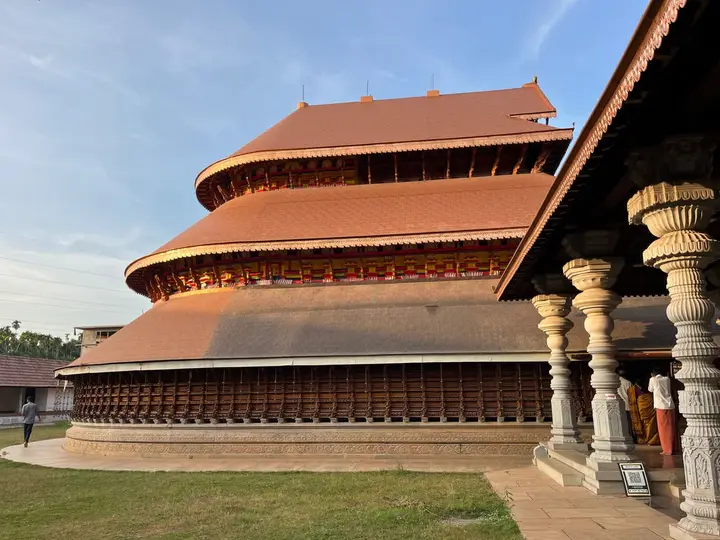
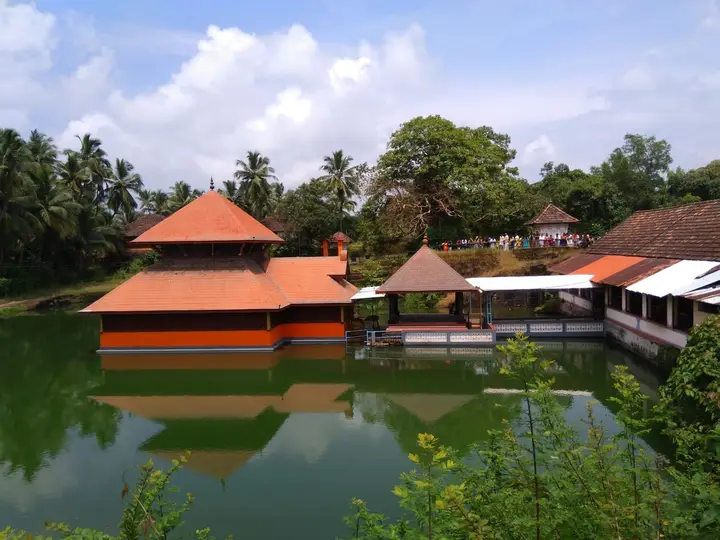
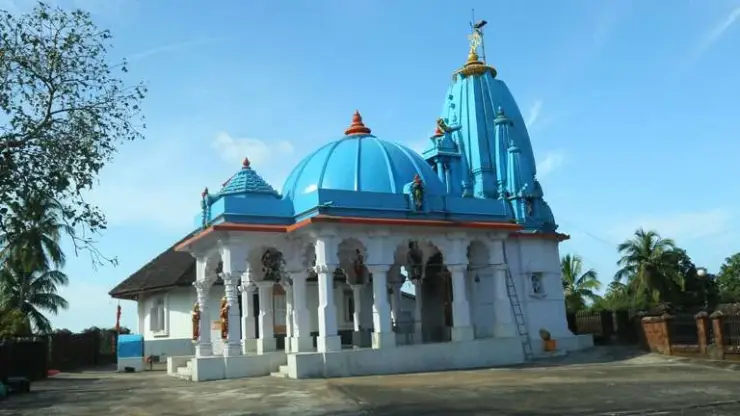
The strongest sacred story on this coast belongs to the Thrikkannad Trayambakeswara temple, about a kilometre from Bekal on the shore, one of the rare Kerala temples that faces west, and counted among the hundred and eight Shiva shrines of the state. Its image is held by tradition to have been consecrated by the sage Kanva; the temple is generally supposed to have existed by the eleventh century, though no firm date is available. Devotees call it Dakshina Kashi, the Kashi of the south — an epithet shared with several other temples in Karnataka and Kerala, and claimed here on the strength of what the temple does for the dead.
The legend attached to it is a story about an attack from the sea, which is exactly what you would expect on a coast that spent three centuries watching the water. A Pandyan ruler is said to have come to plunder the shrine. The deity set fire to his ship, and the king himself was turned to stone. The rock is still pointed out, about two kilometres off, and it is still called Pandian Kallu, the Pandyan’s stone. It is a legend with a physical object at the end of it, which is why it has survived; and it is one of the few in the district in which the sea is the villain rather than the road to wealth.
What draws the largest crowds to Thrikkannad is not the festival but the new moon. On amavasya days thousands come for pithru tarpanam, the offering to the ancestors, made here with small images of gold and silver and completed with a dip in the sea. A temple where the dead are served on every dark moon has a different weight from one that fills once a year, and it explains why a shrine a kilometre from a fully commercialised beach has stayed a working religious site rather than a photograph. The annual festival falls in March or April, opening with kodiyettam, the flag hoisting, carrying Theyyam and Thidambu Nritham — a ritual dance with the deity’s image borne on the head, reckoned more than seven hundred years old — and closing with pallivetta, the ceremonial hunt read as the killing of desire and anger.
The other ritual season here is Pooram, and it produces something Bekal shares with only a narrow band of north Malabar. Poorakkali is danced in the Malayalam month of Meenam, roughly March into April, through the nine days from Karthika to Pooram, in the precincts of Bhagavathi temples and in front of the kavus. Men circle a lighted lamp with clapped hands and stamped steps while a panicker leads the song and the rest answer it, and the form runs to eighteen recognised niram or movements, many of them narrating episodes from the epics. The festival honours Kamadeva, the god of desire whom Shiva burnt to ash, and celebrates his return: a spring rite of rebirth danced by men in a grove. Poorakkali is normally followed by Marathukali, in which the two panickers set each other riddles and points of scholarship until one cannot answer. Both Pallikkara and Udma list Poorakkali, alongside Theyyam, Kolkali, Dafmuttu and Oppana, among their living art forms.
Udma keeps a piece of folk history that explains the sound of the place. The panchayat’s own account is that a Mysorean commander brought families over from Karnataka and settled them here to guard the fort, and that is the reason given locally for the Kannada- and Tulu-speaking households still living within a few kilometres of a Malayalam-speaking coast. The panchayat also traces its name through a chain of wear: Udayamangalam to Odayoth to Uduma. Whether either account would survive a documentary test we cannot say, but they are the stories the place tells about itself, and the first of them at least is consistent with the fort’s Mysore period and with the fact that the first schools in Udma and Pallikkara taught in Kannada before Malayalam took over.
Kerala Tourism’s own history of the district records one further tradition worth repeating carefully: that local legend connects the figures of Theyyam to those who fought the Vijayanagara invasion, with Nileshwaram serving as a Kolathiri capital. That is a large claim about the origin of an entire ritual form and it is offered as legend, not as scholarship, so we pass it on with its label attached rather than as an explanation of Theyyam.
Three stories that circulate near Bekal are not Bekal’s and we refuse them. The Muchilottu Bhagavathi, the young Brahmin scholar of Perinchalloor who was trapped into a forbidden debate, cast out, and who ended her life in the fire at Karivellur before being received as a goddess, belongs to Kannur; the first kavu is there. The temptation to annex her here is real, because the Bekal-born novelist Nalini Bekal, born on 15 October 1954, titled her 1987 novel Muchilottamma and won the Edasseri Award and the SBI Award for it — but a novel written at Bekal does not move a shrine. The tunnel said to run south out of the fort is told on our own Bekal Fort page and is explicitly unverified there; we do not repeat it as fact. And the Anjaneya shrine within the walls and the mosque outside them, which the Malayalam Wikipedia article says was built by a son of Tipu Sultan, are named here as part of the village’s worship and left undressed, because we could find no independent source for the attribution.
More about Bekal
History
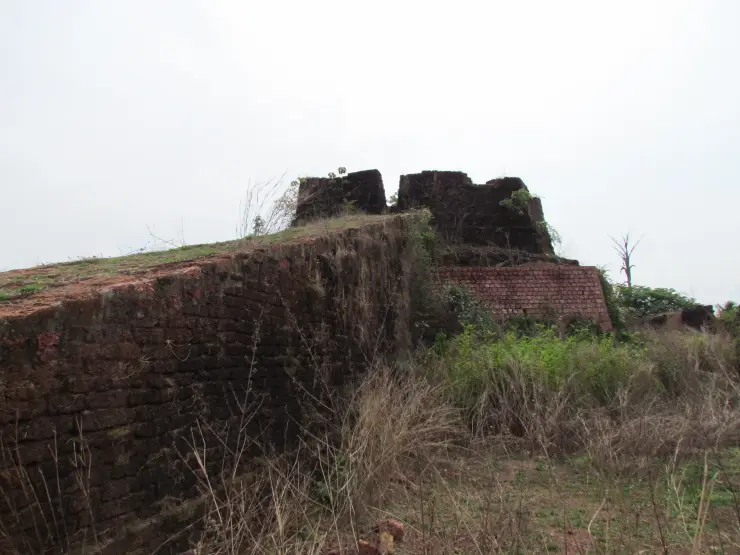
Long before any of this the coast was known and written about. Arab travellers between the ninth and fourteenth centuries recorded the region under the name Harkiwilla; the Portuguese writer Duarte Barbosa described it in 1514 and noted that rice was exported from here to the Maldives; Francis Buchanan set down detailed observations on his journey of 1800. The land belonged in turn to the Kadamba and Mushika lines and then for centuries to the Kolathiri rajas, with Nileshwaram as one of their seats. After the Battle of Talikota in 1565 broke Vijayanagara power, the Ikkeri or Bednur Nayakas moved into this stretch of coast, and it is to them that the fort on the Bekal headland belongs.
The military sequence that follows — the Nayaka construction, Hyder Ali’s capture in 1763, Tipu Sultan’s use of Bekal as a Malabar base and the passage to the East India Company — is told in full on our Bekal Fort page and is not repeated here. Its consequence for the town is administrative rather than architectural: Bekal gave its name to a taluk of South Canara under Company rule, which is the last time this village was the headquarters of anything.
That arrangement did not last, and the region spent the next century and a half being governed from elsewhere. Kasaragod taluk was attached to Madras Presidency in 1882 and stayed outside Kerala altogether until the reorganisation of states in 1956 brought it into the new state. Kasaragod became a district in its own right only on 24 May 1984, formed from the Kasaragod and Hosdurg taluks of the undivided Kannur district. Bekal has therefore been on the edge of four different administrative units within living memory, which goes some way to explaining why it was still, in 1992, a place with a very large fort and almost no visitors.
Two ordinary dates matter more to the village than any of the above. The railway reached here in 1910, when the station now called Bekal Fort opened as Pallikkere. And schooling arrived through the Basel Mission, which opened the first school in the Udma area in 1889; the government lower primary school at Panayala in Pallikkara dates to 1865, and the Udma government lower primary school to 1932. In both panchayats the earliest teaching was in Kannada, brought by migrant families, before Malayalam became the medium.
The modern chronology is short and easily checked. Udma panchayat was constituted in 1940 and Pallikkara reorganised in 1964. Bekal was declared a Special Tourism Area in 1992; BRDC was incorporated in 1995; the Ajanur land was bought in 1996; the station was electrified on 1 May 2016 and rebuilt on 2 March 2023; the first Bekal International Beach Festival ran from 24 December 2022 into 2 January 2023; the Morex withdrawal from the tourism village was reported in June 2025; and the RTI-based allegations over the festival accounts were reported in April 2026. Thirty-four years of official ambition, with two resorts, a beach park, an aqua park and a great deal of unfinished business to show for it.
Why visit
It is the clearest place in Kerala to see what a state-planned tourism zone actually produces: two international resorts, a landscaped seafront, and thirty-three acres still empty after twenty-nine years and three developers.
The Thrikkannad Trayambakeswara temple, a kilometre from the fort, is a west-facing Shiva shrine where thousands come for ancestral offerings on every new moon — a working religious site, not an attraction.
Pandian Kallu, the rock offshore said to be a Pandyan king turned to stone, is a legend you can actually point at from the shore.
Poorakkali in Meenam, March into April, is danced in the Bhagavathi kavus of Pallikkara and Udma and is confined to this narrow band of north Malabar.
Bekal Fort station puts you two or three kilometres from the sea on the Mangaluru–Shoranur line, which makes this one of the few Kerala beaches you can reach without a car.
Two panchayats of tobacco fields, coconut smallholdings and Kannada- and Tulu-speaking households sit immediately behind the resorts, and nobody has tidied them away.