What to expect
Highlights
- Kottakkal Arya Vaidya Sala — The famous Ayurveda institution at Kottakkal, founded in 1902 by Vaidyaratnam P.S. Varier — hospital, medicine-making, herb gardens and the PSV Natyasangham Kathakali academy.
Malappuram wellness town anchored by Arya Vaidya Sala and treatment-stay planning.
October to March for comfortable weather. Meenam (mid-March to mid-April) for the seven-day Kottakkal Pooram and its Kathakali evenings. Karkidakam (mid-July to mid-August) is the traditional Kerala season for Ayurvedic treatment courses and the hospitals are at their busiest.
Live forecast loads in your browser.
Sun and moon are calculated for this location and shown in IST. Photography windows are the hour around sunrise and sunset; the sunset bearing is degrees clockwise from true north. Moon phase is accurate to about half a day.
Kottakkal is a municipality of about 44,000 people in Malappuram district, roughly 12 km from the district headquarters on the highway toward Kozhikode, and it is one of the very few towns in Kerala whose entire working economy is a single trade. That trade is medicine. The Arya Vaidya Sala, founded here on 12 October 1902, runs a hospital campus, a charitable hospital, a medicine factory, a research wing, an Ayurveda college, a museum and a Kathakali academy inside one small town, and the streets around it have arranged themselves accordingly — pharmacies, oil shops, lodges rented by the month, and hotels whose guests are here for six weeks rather than two nights. The name, though, is older than any of it and belongs to something else entirely: kotta, a fort, of which nothing now stands.
Arriving at Kottakkal is not like arriving at a sight. The junction on the old highway is a working small-town crossroads — buses nose in from Tirur, Malappuram, Manjeri and Kozhikode, autorickshaws stack up three deep, and the shopfronts read as a list: medicals, medicals, supermarket, medicals. What marks the town out is who is walking around in it. A high proportion of the people on the pavement are patients or their attendants, in town for a course of treatment measured in weeks, and the shops, lodges and tea stalls are pitched at exactly that. Kottakkal is a place people come to and stay in, which is rarer in Kerala than it sounds.
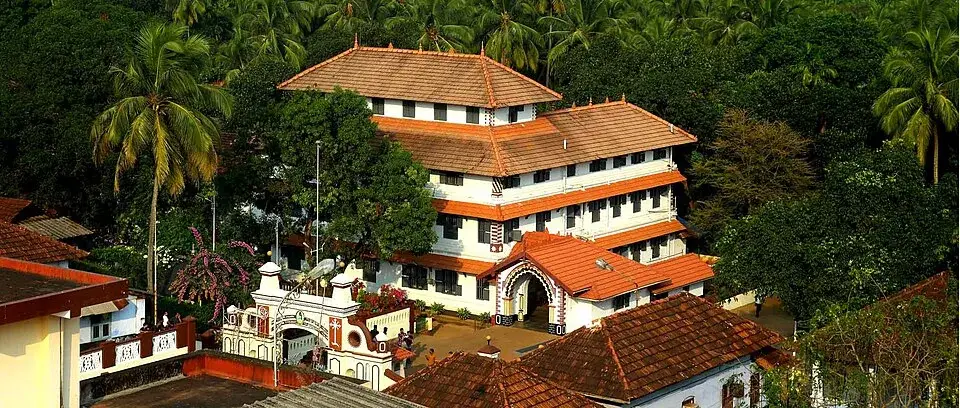
The centre of it is the Arya Vaidya Sala campus on the eastern side of town. The main residential hospital, the Ayurvedic Hospital & Research Centre, was established in 1954 during the institution’s golden jubilee and now runs to around 300 beds; there is an outpatient block, a temple, gardens and staff quarters within the same compound. Alongside it stands the older Charitable Hospital, which the institution dates to 1924 and which treats free of charge — its own published account gives roughly 800 outpatients a day and inpatient space for about 160 people at a time, with outpatient consultation, basic lab, X-ray and ECG investigations, medicines, inpatient treatment and food all provided at no cost.
One department there is worth naming because it is unusual. The Charitable Hospital has run a dedicated free outpatient clinic for cancer patients for more than thirty years, drawing people from well outside Kerala; the institution reports 7,179 cancer patients seen in a recent year, 5,601 of them returning and 1,578 new. Those are the institution’s own figures and we print them as such. What Ayurvedic care can and cannot do for any given condition is a clinical question this page does not answer — what is documented is the scale of the service and that it is free, and anyone considering treatment should take medical advice on their own condition rather than take a travel page’s word for anything.
The manufacturing side is the part visitors rarely see and the part that makes the town’s economy work. Arya Vaidya Sala runs three medicine-making units — at Kottakkal itself, at Kanjikode near Palakkad, and at Nanjangud in Karnataka — producing, by its own count, more than 550 classical and newer formulations. Distribution runs through 27 branches and around 2,000 authorised dealers across India; the Kerala Tourism write-up gives a figure of over 1,600 authorised dealers, and the two counts do not agree, so treat the order of magnitude rather than the number as the fact. English Wikipedia additionally cites an annual manufacturing turnover of about US$19 million and more than 800,000 patients treated a year across the group; those are secondary figures and we attribute them rather than assert them.
The teaching arm has a longer and more tangled history than the town’s shorthand suggests. The Aryavaidya Patasala was started in 1917 — and it was started at Calicut, not here — financed by the Arya Vaidya Sala and run by the Arya Vaidya Samajam, offering a four-year course leading to the qualification “Arya Vaidyan”. It moved to Kottakkal in 1924 so that students could train on the wards of the Charitable Hospital. The Arya Vaidyan course was abolished in 1958 and replaced by a Diploma in Ayurvedic Medicine; the Patasala was upgraded to a full Ayurveda college in 1959; it was affiliated to the University of Calicut in 1972 with a new Bachelor of Ayurvedic Medicine degree; and since 2010 the Vaidyaratnam P. S. Varier Ayurveda College has come under the Kerala University of Health Sciences.
The thing most visitors miss entirely is that Kottakkal is also a Kathakali town. P. S. Varier had earlier run a troupe performing musical drama, and in 1939 he turned it into the P. S. V. Natyasangham, a Kathakali company and training school attached to the institution at a moment when the art form’s audience was shrinking. It recruited teachers of the first rank — Pattikkanthodi Ravunni Menon, Guru Kunju Kurup, Kavalappara Narayanan Nair, Kalamandalam Neelakanthan Nambissan, Kottakkal Krishnankutty Nair — and it is the reason so many senior Kathakali artists carry “Kottakkal” in front of their names, the same way Kalamandalam graduates carry theirs. The troupe has toured Germany, Switzerland, France, China, Korea and Indonesia, and it is known within Kerala for a conservative, strictly classical style rather than for experiment.
The Vaidyaratnam P. S. Varier Ayurveda Museum opened in 2002, in the institution’s centenary year, and it is housed in the double-storeyed building that held the Arya Vaidya Chikitsasala — the charitable hospital — from 1924. Eight galleries carry photographs, graphics and drawings alongside the physical apparatus of the trade: medicine-making vessels, pottery, wooden barrels, therapy equipment and teaching models of eighteenth- and nineteenth-century Ayurvedic practice. It is open 8.30 a.m. to 12.30 p.m. and 2 p.m. to 4.30 p.m. and closed on Sundays. For a town with no fort left and no beach, it is the one place where Kottakkal’s history is laid out to be looked at.
Raw material is the other half of the operation. There is a herb garden in the town itself, on the western side toward the Ayurveda college, and the institution has been growing and conserving medicinal plants at scale for a long time: it records acquiring 120 acres of forest land in the Western Ghats in 1934 for cultivation and conservation, and opened a Centre for Medicinal Plants Research in 2003. English Wikipedia describes four herb gardens totalling about 220 acres supplying 44 varieties of herb; the institution’s own page leads with the 1934 Western Ghats holding. The two accounts describe overlapping but not identical things and we have not been able to reconcile them into one number.
Today Kottakkal functions as a medical-stay town well beyond the one institution. Arya Vaidya Sala opened a further 120-bed hospital, Susrutam, at Kavathikalam in Kottakkal East in July 2023. Independently owned Ayurveda hospitals cluster along the highway — Dr. P. Alikutty’s integrated Ayurveda-and-modern hospital at Changuvetty and Kottakkal Ayurgarden among them — and the town’s hotel stock at Changuvetty, Edarikode, Parambilangadi and Puthur exists largely to house patients, attendants and the families who come with them. It is worth being plain that “Ayurveda town” here means clinical care sold by the course, not spa treatments sold by the hour, and the two are priced and conducted very differently.
Kottakkal has a civic life that has nothing to do with any of this. Girls’ schooling arrived with a government lower-primary school in 1914 and the Rajas High School followed in 1920, founded by Manathevan Raja; the Government Rajah’s Higher Secondary School still occupies the ground. The town also had a moment of national political visibility when the Kerala Congress session was held at Parappoor in 1939, in the middle of a decade of agitation by agricultural workers against eviction by the janmi landholding families. Furniture and household-goods manufacture is the other trade of any size. It is an unglamorous, busy, well-off small town that happens to be famous.
The town is named after a fort that is not there. Kottakkal is kotta, a fort, plus kal — the place of the fort — and Malayalam sources describe the fort, its moat and its ramparts as the work of a military commander of the Valluvanad ruler, whose name appears in the sources as Karuvarai Moossath, Karuvarayur Mussath and Karuvayoor Moosad in three different transliterations of the same man. In Sanskrit the place was Sweta Durgam, the White Fort, and in Malayalam it was called Venkalikotta or Venkita Kotta. None of the walls survive above ground, and no ruin in Kottakkal today can honestly be shown to a visitor as the fort. The name has outlived its object by several centuries, which is the most Kerala thing about it.
How the fort was lost is told as a quarrel rather than as a campaign. In the version carried by the English sources, the Valluvanad chief marshal stationed here killed a minister of the Zamorin of Calicut; the Zamorin sent a force under a royal kinsman remembered as Moonnarpadu Thampuran, and the fort at Kottakkal passed to Calicut. That is a satisfying story and it is also where the sources part company. English Wikipedia places the Zamorin’s seizure of the Valluvanad fort in the fourteenth century; the Malayalam article says the place remained a small garrison of the Valluvanad ruler until the early eighteenth century. Those two datings cannot both be right and we have not found a source that settles between them, so the record carries both and claims neither. What is not disputed is the outcome: the Kizhakke Kovilakam, the eastern house of the Zamorin’s family, ended up at Kottakkal, and it is still there.
One physical fragment complicates the whole thing pleasantly. In 2013 two swords were recovered from a well at Kottakkal, medieval and European in style and finish, and the obvious reading is contact with the Portuguese. It is an object that fits the story of a garrison town on a contested frontier — but two swords in a well prove that two swords ended up in a well. They are not a dated stratum, and nothing about them fixes the century in which the fort changed hands. It is the kind of find that deserves to be reported and not leaned on.
The oldest sacred story in the town has nothing to do with medicine. Tradition at the Venkittathevar Mahadeva temple, about 700 metres south of the Arya Vaidya Sala campus, holds that a Brahmin newly arrived in the area saw a cow standing at a place called Venkilangu and letting down her milk over a bare stone. He read the stone as self-manifested and built a Shiva temple on the spot, and the deity took the name Venkittathevar — vengitangil kudikonda bhagavan, the lord who took up residence at Venkilangu. The cow-and-the-stone is one of the standard Kerala foundation motifs and turns up at dozens of shrines, which is exactly why it is worth saying that here it also does explanatory work: it accounts for a name that is otherwise opaque. The temple is recorded as having belonged first to a family remembered as Karuppath Moosa and later to the Kovilakam, and it is administered today by a committee under the Kovilakam’s guidance. Its presiding form of Paramasiva is described as a fierce one, with Ganapathi, Ayyappan and the nagas in the subsidiary shrines, and the tank sits at the north-eastern corner in the orthodox position.
There is also a Vettaikkaran shrine near the town, and the deity behind it is one of Malabar’s most particular. Vettakkorumakan — literally “the hunter’s son” — is held to be the son born to Shiva and Parvathi when Shiva took the form of a Kirata, a tribal hunter, in the episode in which he fights Arjuna and then gives him the Pashupatastra. He is worshipped almost exclusively in northern Kerala, he was the god hunters made offerings to before going out, and he is the family deity of several Malabar ruling houses, the Kottakkal line among them. That is the connection worth making here. What does not belong to Kottakkal is the six-day Pattu Utsavam that people usually mean when they say Vettakkorumakan festival — that is Nilambur’s, at the Nilambur Kovilakam temple, and it should not be borrowed onto this town.
The medical town has its own myth, and it is a good one. The seven-day Kottakkal Pooram, held at the Sree Viswambhara temple inside the Arya Vaidya Sala compound in the Malayalam month of Meenam — mid-March to mid-April — is celebrated in honour of Dhanvantari. In the Puranic account, when the gods and the asuras churned the ocean of milk, the last thing to rise from it was Dhanvantari, physician of the gods, carrying the pot of amrita. He is the figure Ayurvedic physicians invoke, and a festival honouring him at a hospital’s temple is not decoration; it is the institution stating what tradition it belongs to. The pooram runs to a caparisoned elephant carrying the deity, panchavadyam and chenda ensembles, and evenings of Kathakali by the P. S. V. Natyasangham alongside Carnatic and Hindustani concerts — a temple festival whose cultural programme is unusually serious because the troupe is in-house.
The temple itself is modern and its founding story is documented rather than legendary, which is worth saying plainly instead of dressing it up. P. S. Varier consecrated the Viswambhara temple in 1932, next to the house he had built in 1929, Kailasamandiram. The image is a four-armed figure of Viswambhara, a form of Vishnu, carrying conch, discus, mace and lotus, carved in white marble and commissioned from Agra; by the institution’s account Varier anointed it and performed the daily worship himself for a full year before it was installed in the sanctum. The institution also records that caste and creed were never a bar to entry, from the temple’s inception — that is the institution’s own statement about its own history, and we report it as such, but it is a pointed claim to make about a Kerala temple built in 1932, eight years after the Vaikom Satyagraha and four years before the Temple Entry Proclamation.
Behind all of it sits the legend Kerala Ayurveda tells about itself. The tradition holds that Vagbhata, author of the Ashtangahridaya, came to Kerala and taught the eight branches of Ayurveda to eighteen Nambudiri families, from whom the Ashtavaidya houses descend. P. S. Varier’s own training belongs to that line — from the age of eighteen he studied at the Kuttancheri gurukula under Vasudevan Mooss, of one of the eight families. The sting in the story is that the Kuttancheri house is now counted among those with no practising vaidyan left, while the institution its student founded at Kottakkal has outlived every one of them. And the legend’s own geography points away from here: Vagbhata is said to have spent his last days at Pulamanthol Illam, elsewhere in Malappuram district, not at Kottakkal. This town’s claim on Ayurveda is entirely a modern one, and it is stronger for being honest about that.
The earliest firm date attached to the neighbourhood is an Old Malayalam inscription of 932 CE found at Indianoor, which names Goda Ravi of the Chera line. That places settled, recorded authority here a thousand years before anything the town is now known for, and it is the only pre-medieval anchor Kottakkal has.
Through the medieval centuries the place was a military position rather than a market — a garrison of the Valluvanad ruler holding a frontier that Calicut wanted. It passed to the Zamorin of Calicut after the killing of a Zamorin minister by the Valluvanad commander stationed here, though the century in which that happened is disputed in the sources between the 1300s and the early 1700s. The Kizhakke Kovilakam, the eastern branch house of the Zamorin’s family, established itself at Kottakkal and remains associated with the town’s temples.
The eighteenth century brought Mysorean invasion to this part of Malabar under Tipu Sultan, and the nineteenth brought the settled landlord order that shaped the town until independence: a janmi–naduvazhi system in which the Kizhakke Kovilakam, the Samoothiri Kovilakam and the Azhvanchery family held very large holdings and the working population held tenancies. Kottakkal’s twentieth-century politics is mostly the story of that arrangement coming apart.
The modern town dates from 12 October 1902 — Vijayadashami that year — when Vaidyaratnam P. S. Varier opened the Arya Vaidya Sala as a small outpatient clinic selling Ayurvedic medicines. Within four months he had also founded the Arya Vaidya Samajam, an association of physicians, and in 1903 he launched Dhanwantari, a Malayalam health journal generally described as the first science periodical in the language; it ran for twenty-three years. Sources disagree on where Varier himself was born: English Wikipedia gives Kottakkal on 10 April 1869, while the CCRAS biographical profile gives Mezhathur in Palakkad district on 16 March 1869. Both his birthplace and his birth date are therefore unsettled, and we say so rather than pick one.
Institution-building followed in a steady sequence: the Patasala in 1917, the Chikitsasala or charitable hospital in 1924, the 120 acres of Western Ghats forest for herb cultivation in 1934, the Viswambhara temple in 1932, the Kathakali academy in 1939. The Viceroy conferred the title Vaidyaratnam on Varier in 1933. He died on 30 January 1944, and the institution passed to a charitable trust — the institution dates the trust to his will of 1939, while English Wikipedia dates its establishment to 1944, which is the year it took effect; both are describing the same instrument at different moments.
Politically, the 1930s brought organised anti-colonial and anti-landlord activity, and the Kerala Congress session held at Parappoor in 1939 put Kottakkal briefly on the national map. In the modern era the town’s own status changed late: Kottakkal became a municipality with elections held in October 2010, governed by a council of 32 wards. The 2011 census recorded 44,382 people across 20.45 square kilometres.
It is the one town in Kerala built entirely around a single medical tradition, and that is visible from the pavement rather than only in a brochure.
The Ayurveda museum, in the 1924 charitable-hospital building, lays out eight galleries of the actual apparatus of medicine-making rather than a display of products.
The P. S. V. Natyasangham makes Kottakkal one of Kerala’s genuine Kathakali centres, and the Viswambhara temple festival in Meenam is when you are most likely to see it.
The Venkittathevar Mahadeva temple south of the campus is an unaltered classical Kerala temple with a good tank, and almost nobody visiting Kottakkal goes to look at it.
It sits within a short drive of Kadampuzha, Thirunavaya and Tirur, so it works as a practical base for the interior Malappuram temple and river country.
If you are here for treatment rather than sightseeing, the town is set up for long stays in a way almost no other Kerala small town is.
Entry: The town costs nothing; the Arya Vaidya Sala campus, its temple and its gardens are free to walk through. Consultations and treatments are paid and are booked ahead. The Ayurveda museum charges a nominal fee — confirm at the desk.
On National Highway 66, about 12 km from Malappuram town toward Kozhikode. Frequent KSRTC and private buses from Malappuram, Manjeri, Tirur, Perinthalmanna and Kozhikode. Nearest railway station Tirur, about 14–15 km; Calicut International Airport at Karipur about 25 km.
Check your return bus or ferry with the operator before setting out. Leave time to reach the stop or jetty after your visit, and arrange a return vehicle in advance for a remote outing.
Ask at the jetty or the stand for the time of the last service back, not the next one. If you miss it, an auto or a taxi is the fallback — agree the fare before you get in.
If you need step-free access, contact the site before travelling. Ask about a level entrance, steps along the route, the nearest drop-off point, seating and accessible toilets.
Emergency numbers are verified against official government and state tourism sources. 112 works anywhere in India.
 District base
Hill garden, mosques and Malabar food base.
 Forest base
Teak heritage, forest edges and river landscapes.
 Literary heritage base
Thunchan Parambu, temple routes and Tirur-side Malabar heritage planning.
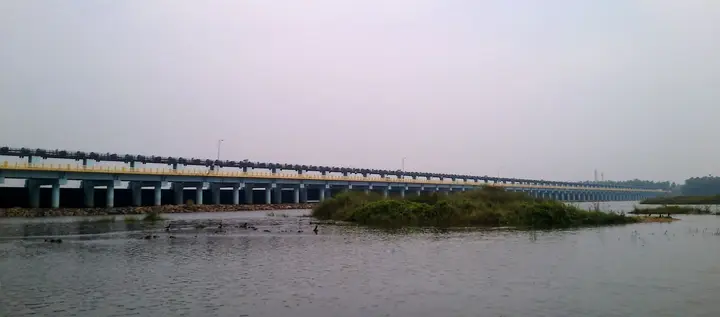 Coastal heritage base
Historic port, mosque traditions and estuary beaches.
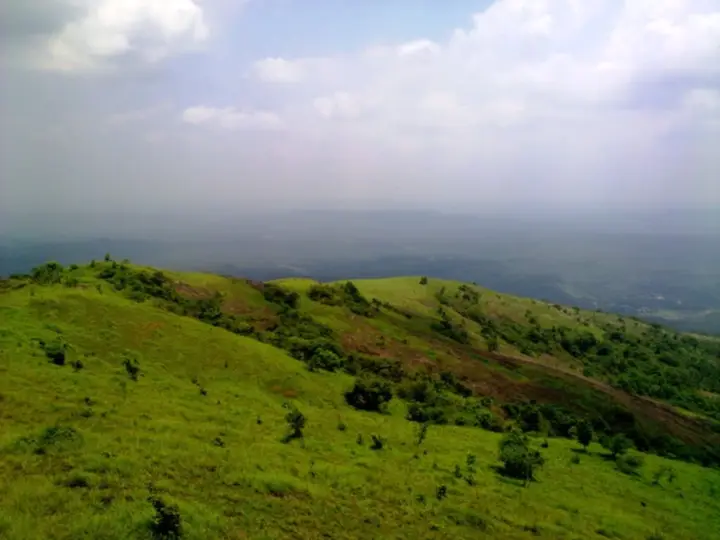 Viewpoint base
Foothill town with high viewpoints and short hikes.
 Birding coast base
Estuary bird sanctuary shared with the Kozhikode coast.
Malappuram district is known for: Malabar culture, Nilambur teak country, Ponnani coast and hill viewpoints.
Every verified place in Kottakkal — filter by what you’re after.
The multi-cuisine restaurant inside Hotel Virad at Edarikode. It serves international buffets alongside an a la carte menu and coffee shop.
Rydges Inn's all-day multi-cuisine restaurant in Kottakkal. It plates Indian, Chinese and Continental dishes with some fusion options.
Vegetarian restaurant in Kottakkal. Kottakkal, Malappuram district, Kerala · kottakkal, eat, Vegetarian restaurant.
Book with the place itself. India’s cyber-crime coordination centre warned in April 2025 that convincing copies of hotel and pilgrimage booking sites are being pushed through sponsored search and social ads, taking payment for rooms the property never hears about. Every listing here links to the business’s own contact details and its own Google or Bing profile — we take no commission and sit in nobody’s payment path. If a booking page reached you through an ad, check the address bar against the property’s own site before you pay. Fraud can be reported on cybercrime.gov.in or on 1930.
The best tourist places to visit in Kottakkal — temples, viewpoints, lakes, heritage and nature, each with a full guide, how to reach it and what to see nearby.
Arya Vaidya Sala Kottakkal is a tourist place in Kottakkal used for route planning, visit timing, and nearby stays, food, transport and local services across Kottakkal, Malappuram, Kerala, India. Use this guide to plan the route, check access context and find relevant local options as verified listings are added.
Open guide →Kottakkal Ayurveda town is a tourist place in Kottakkal used for route planning, visit timing, and nearby stays, food, transport and local services across Kottakkal, Malappuram, Kerala, India. Use this guide to plan the route, check access context and find relevant local options as verified listings are added.
Open guide →Changuvetty stays is a tourist place in Kottakkal used for route planning, visit timing, and nearby stays, food, transport and local services across Kottakkal, Malappuram, Kerala, India. Use this guide to plan the route, check access context and find relevant local options as verified listings are added.
Open guide →Roampedia is commission-free. Travellers discover your business, book directly and contact you through official details. Basic listings are free, while Gold and Platinum package upgrades can be requested from the owner dashboard after approval.
We have not published a story about Kottakkal itself yet. These cover Malappuram, the district it sits in, and travel in Kerala generally.
We have not published a story about a place in Kottakkal itself yet. These are the nearest things we have written.
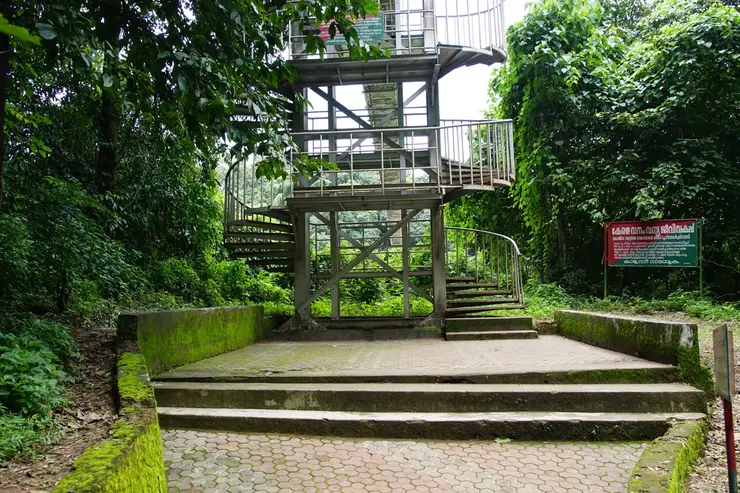
Nilambur is where India’s teak story begins: the world’s oldest teak plantation, a museum devoted entirely to the tree, and rainforest all around. Here’s how to plan a day in the teak country.
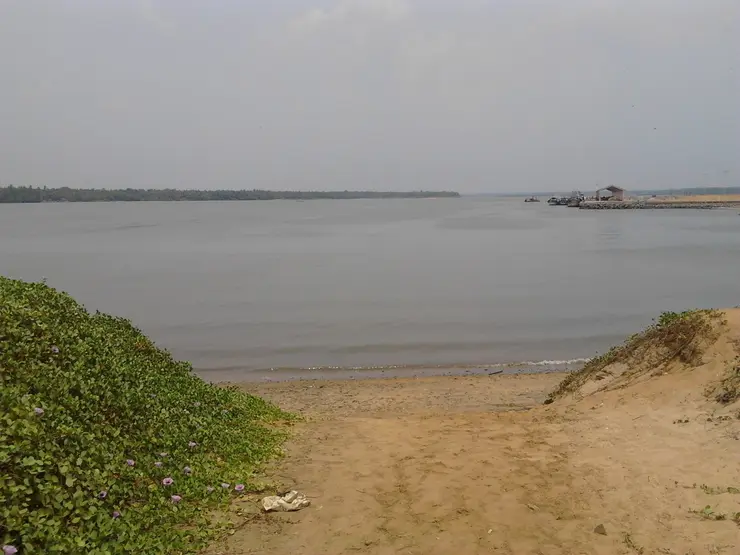
Every twelve years, on the sands of the Bharathapuzha at Tirunavaya, Kerala staged a vast fair shadowed by ritual assassins. The Mamankam is one of history’s strangest spectacles — and it happened here.

The Malayalam language has a birthplace, and it’s in Malappuram. At Tirur, a quiet memorial marks the home of the poet who gave Kerala its modern tongue — and where children still write their first letters in the sand.
Route-level itineraries and practical guides for the rest of the state.

Two days is enough to pair the teak forests of Nilambur with the river heritage and birdlife of the coast. Here’s a route that makes sense of a spread-out district.

Understand the early plantation experiment through the practical challenge of raising teak, rather than treating the surviving grove as untouched forest.

A dated label at Conolly’s Plot shows why tree number, girth and height must be read together with the year of measurement.
For the Arya Vaidya Sala, the Ayurveda institution founded in the town on 12 October 1902, which today runs a hospital campus, a free charitable hospital, three medicine-manufacturing units, a research centre, an Ayurveda college, a museum and a Kathakali academy. The town’s shops, lodges and hotels are built around patients who come for treatment courses lasting weeks. Kottakkal is a municipality of about 44,000 people in Malappuram district, roughly 12 km from the district headquarters.
There is nothing left to see. The name means “place of the fort”, and Malayalam sources credit the fort, moat and ramparts to a commander of the Valluvanad ruler; the place was called Sweta Durgam in Sanskrit and Venkalikotta or Venkita Kotta in Malayalam. The fort passed to the Zamorin of Calicut, though sources disagree on whether that happened in the fourteenth century or as late as the early eighteenth. No standing structure in the town can be identified as it today.
The campus, its temple and its gardens are open to walk through and there is no ticket, but it is a working hospital and not an attraction — the wards and treatment areas are for patients. Consultations and treatments are paid and normally booked in advance. The museum is the part actually set up for visitors: eight galleries, open 8.30 a.m. to 12.30 p.m. and 2 p.m. to 4.30 p.m., closed Sundays.
Yes, if you time it. The P. S. V. Natyasangham, founded in 1939, is one of the most conservative and highly regarded Kathakali companies in Kerala, and its teachers have included Pattikkanthodi Ravunni Menon, Guru Kunju Kurup and Kottakkal Krishnankutty Nair. Performances are not nightly. The reliable window is the seven-day Viswambhara temple festival in the Malayalam month of Meenam, mid-March to mid-April, when the troupe performs across the festival evenings alongside Carnatic and Hindustani concerts.
Because Dhanvantari is the physician of the gods in Puranic tradition — the figure who rose from the churning of the ocean of milk carrying the pot of amrita — and he is the deity Ayurvedic physicians invoke. The Kottakkal Pooram at the Sree Viswambhara temple, inside the Arya Vaidya Sala compound, is celebrated in his honour. The temple itself was consecrated by P. S. Varier in 1932, with a four-armed white marble image commissioned from Agra, and the annual festival began in 1934.
It is on National Highway 66, about 12 km from Malappuram town toward Kozhikode, and it is well served by KSRTC and private buses from Malappuram, Manjeri, Tirur, Perinthalmanna and Kozhikode. The nearest railway station is Tirur, about 14 to 15 km west; Calicut International Airport at Karipur is roughly 25 km away. The town is compact enough to walk, though the highway junctions are busy.
Kottakkal is set up for it — the hospitals take bookings well in advance and the town’s hotels and lodges are geared to long stays with attendants. What this page will not do is tell you that a particular treatment will work for a particular condition; the institutions describe their own practice and results, and clinical claims are for a doctor to assess with you, not for a travel page. Book ahead, budget by the course rather than by the night, and get medical advice on your own case before committing.
Top places to visit in Kottakkal include Arya Vaidya Sala Kottakkal, Kottakkal Ayurveda town, Changuvetty stays — each has a full guide with how to reach it and what to see nearby on this page.
October to March is the driest and most comfortable season to visit Kottakkal and the rest of Kerala. The June–September monsoon is lush and green but wet, and often brings lower low-season prices.
Photographs: Sapsree97 (CC0), Sree1959 (CC BY-SA 4.0), Dvellakat (CC BY-SA 4.0), Mutyalarao (CC BY-SA 3.0), மைதா கோந்து (CC BY 2.0). Wikimedia Commons.