What to expect
Highlights
- Heritage experience at Aranmula Parthasarathy Temple
- Architecture, local stories and old trade/cultural routes
- Good fit for guided walks and nearby cafes/shops
Aranmula Parthasarathy Temple is one of the guidebook places to plan around Aranmula, with practical planning organized from the nearest town/base and verified local listings when available.

On a green bend of the Pamba in Pathanamthitta stands a temple to the god who took up the reins but not the sword — Vishnu as Parthasarathy, the charioteer of Arjuna — a Divya Desam whose sacred snake-boats still glide upriver each Onam to feed him.
The Aranmula Sree Parthasarathy Temple is dedicated to Vishnu in the form of Parthasarathy — literally ‘the charioteer (sarathy) of Partha’, Partha being a name of Arjuna, the third Pandava. It is the same aspect of Krishna who, in the Mahabharata, drove Arjuna’s chariot at the Kurukshetra war and, on that battlefield, is remembered as delivering the Bhagavad Gita. Here he is worshipped not as a warrior but as the divine friend and guide who held the horses while Arjuna fought. The presiding image is enshrined in the classic Kerala style, and in most local descriptions the deity is shown holding the conch (shankha); some traditions instead picture him with the charioteer’s whip in hand, the mark of his role at Partha’s side.
The temple is counted among the 108 Divya Desams, the abodes of Vishnu hymned by the Alvar poet-saints of the Tamil devotional tradition, which places Aranmula in an all-India network of Vaishnava shrines revered for well over a thousand years (attributed). It is simultaneously one of the five great Pandava temples of Kerala — a group in which each of the five brothers is said to have installed a form of Vishnu along the Pamba and its neighbouring rivers, with Aranmula linked specifically to Arjuna. This double identity, at once pan-Indian Divya Desam and intensely local Pandava shrine, gives the temple an unusual standing in Kerala’s sacred geography.
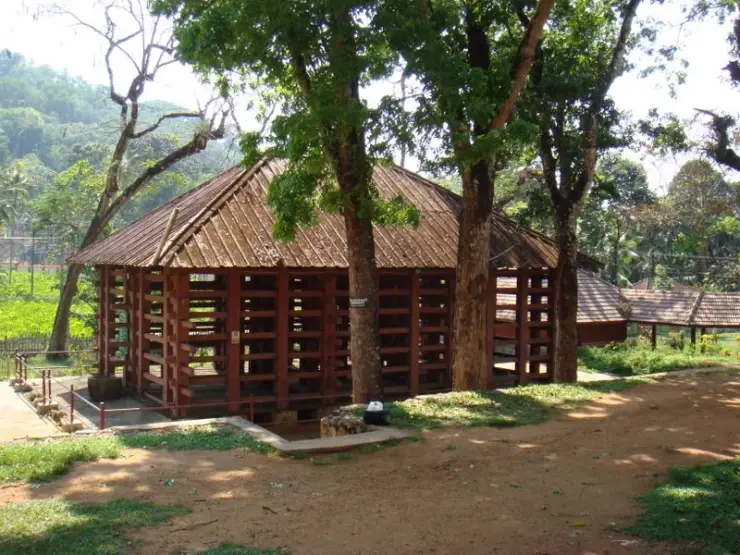
Architecturally the shrine follows the Kerala temple idiom — sloping tiled roofs, carved wooden panels and pillars, and a walled precinct — but it is distinguished by having four gopuram (tower) entrances facing the cardinal directions. The eastern gateway is reached by a flight of eighteen sacred steps, while the northern gateway descends by a long flight of stone steps directly to the Pamba river, so that worship and water are physically joined. Those northern steps are the stage on which much of Aranmula’s riverine ritual life plays out.
The temple’s festival calendar is bound to the river and to the Mahabharata. During the annual ten-day festival, generally in the Malayalam season around January–February, the deity is carried in procession mounted on the Garuda vahana, the eagle mount of Vishnu. In the month of Dhanu the temple observes Khandavana Dahanam, a fire ritual that re-enacts the burning of the Khandava forest from the Mahabharata, dried plant matter being gathered and set alight in symbolic remembrance.
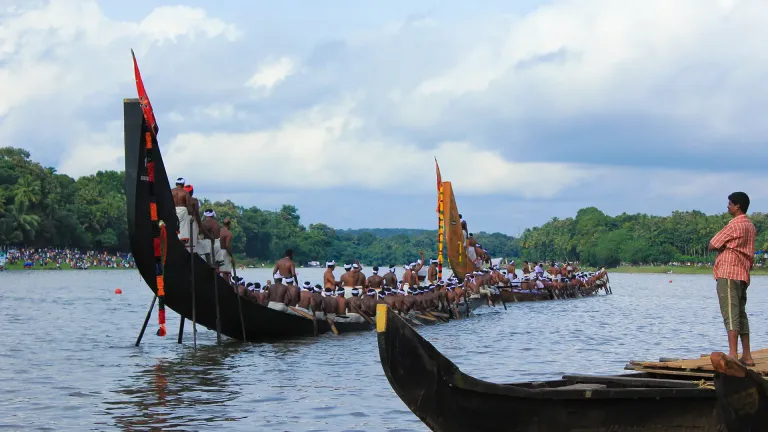
But the event that makes Aranmula famous beyond Kerala is the Uthrattathi Vallamkali, the sacred snake-boat regatta held on the Pamba as part of the Onam season, typically in the Malayalam month of Chingam (around late August to September). Unlike the competitive spectacle of the Nehru Trophy at Alappuzha, Aranmula’s race is first of all an act of temple service: the long, low palliyodam boats — ‘temple boats’ belonging to riverside village churches of the deity — carry oarsmen who row not for a prize but as an offering to Parthasarathy, singing the vanchipattu boat-songs as they come. Each palliyodam is treated as sacred to the temple, and the fleet is associated in tradition with the deity himself.
Aranmula’s other great gift to the world sits just outside the sanctum’s ritual life but is inseparable from the town: the Aranmula Kannadi, a handmade metal-alloy mirror polished to reflect from its front surface rather than through glass. It was the first product from Kerala to receive a Geographical Indication tag, and its making is held as a closely guarded craft secret of a few Aranmula families — a small, gleaming emblem of the same town whose temple gives it its name.
Legend tells that Arjuna, seeking to atone, undertook a long penance and was rewarded with an image of Krishna. To bring the idol to its resting place he is said to have floated it downriver on a simple raft lashed together from six lengths of bamboo — aaru mula in Malayalam, ‘six pieces of bamboo’ — and from that raft, the story holds, the place took its name: Aranmula. The tradition of the idol arriving by water is remembered as the Thiruvona Thoni, the sacred Onam boat.
A second, much-loved legend explains the snake-boats. It is said that a devout Brahmin vowed to supply everything needed for the Thiruvona Sadya, the great Onam feast offered to Parthasarathy, and to send it upriver in the Thiruvona Thoni. On its voyage the boat was set upon by hostile factions — and the snake-boats of the surrounding villages rowed out to escort and protect it, delivering the offerings safely to the temple. From that rescue, tradition says, the grand custom of the palliyodam regatta was born, which is why the boats row to the temple to this day rather than merely against one another.
These accounts are cherished sacred legend rather than documented history; the Divya Desam and Pandava-temple identities are matters of long attributed tradition, while the Uthrattathi Vallamkali and the Aranmula Kannadi are living, well-documented realities.
The temple’s antiquity is anchored by its inclusion among the 108 Divya Desams, the Vishnu shrines praised in the Tamil hymns of the Alvars, a corpus generally dated to the early medieval period; this places veneration at Aranmula within a devotional tradition many centuries old (attributed — precise foundation date is not securely documented). Its identity as one of the five Pandava temples of Kerala, each linked to a Pandava brother and strung along the Pamba region, is likewise a long-standing attributed tradition rather than a dated historical event.
The presiding deity’s name, Parthasarathy, ties the shrine directly to the Mahabharata narrative of Krishna as Arjuna’s charioteer, and much of the temple’s ritual — the Garuda vahana processions and the Khandavana Dahanam fire ritual re-enacting the burning of the Khandava forest — draws on that epic frame.
The Uthrattathi Vallamkali is among the oldest and most revered of Kerala’s boat traditions. It is held on the day of the Uthrattathi (Uthrittathi) asterism in the month of Chingam, within the Onam season, and is documented as a temple-linked religious regatta rather than a purely sporting one; the palliyodam snake-boats, roughly a hundred feet long with a high tapering stern, are regarded as sacred to the Parthasarathy temple and are maintained by the riverside village communities.
Aranmula also holds a firm place in India’s craft history through the Aranmula Kannadi. In 2005 the Government of India granted it a Geographical Indication tag — reported as the first such GI recognition for a product of Kerala — reserving its making to Aranmula. The mirror is a front-surface (first-surface) metal-alloy mirror, distinct from ordinary silvered glass, and its exact composition and casting method are kept as a hereditary family secret of a handful of local artisan families (documented).
Taken together, the temple’s layered heritage — a hymned Divya Desam, a Pandava shrine to the charioteer-god, the guardian of a centuries-old sacred regatta, and the home of a GI-tagged mirror — makes Aranmula one of the most storied riverside sanctuaries in central Travancore.
Darshan of Vishnu as Parthasarathy — the rare charioteer-form of Krishna from the Mahabharata — in one of the 108 Divya Desams.
A Kerala-style temple with four cardinal gopurams and steps running straight down to the Pamba river.
The Uthrattathi Vallamkali, an Onam-season sacred snake-boat regatta unlike any competitive race, if timing allows.
Its standing as one of the five Pandava temples of Kerala, tied by tradition to Arjuna.
The chance to see and buy the GI-tagged Aranmula Kannadi metal mirror in the town that alone makes it.
A tranquil riverside setting on the Pamba, on the pilgrim route associated with Sabarimala and central Travancore.
Road km to Pathanamthitta; ghat roads and traffic vary — allow extra.
November to February and early mornings are best for walking; avoid midday heat where possible.
Verified hotels, homestays, restaurants, experiences, sights, shops and rentals around Aranmula Parthasarathy Temple — commission-free, with direct contact. Filter by what you need.
Aranmula Palliyoda Seva Sangam Visit is a researched snake-boat heritage support listing added to improve section balance on the aranmula guide while keeping existing useful records intact. Aranmula, do, Snake-boat heritage support.
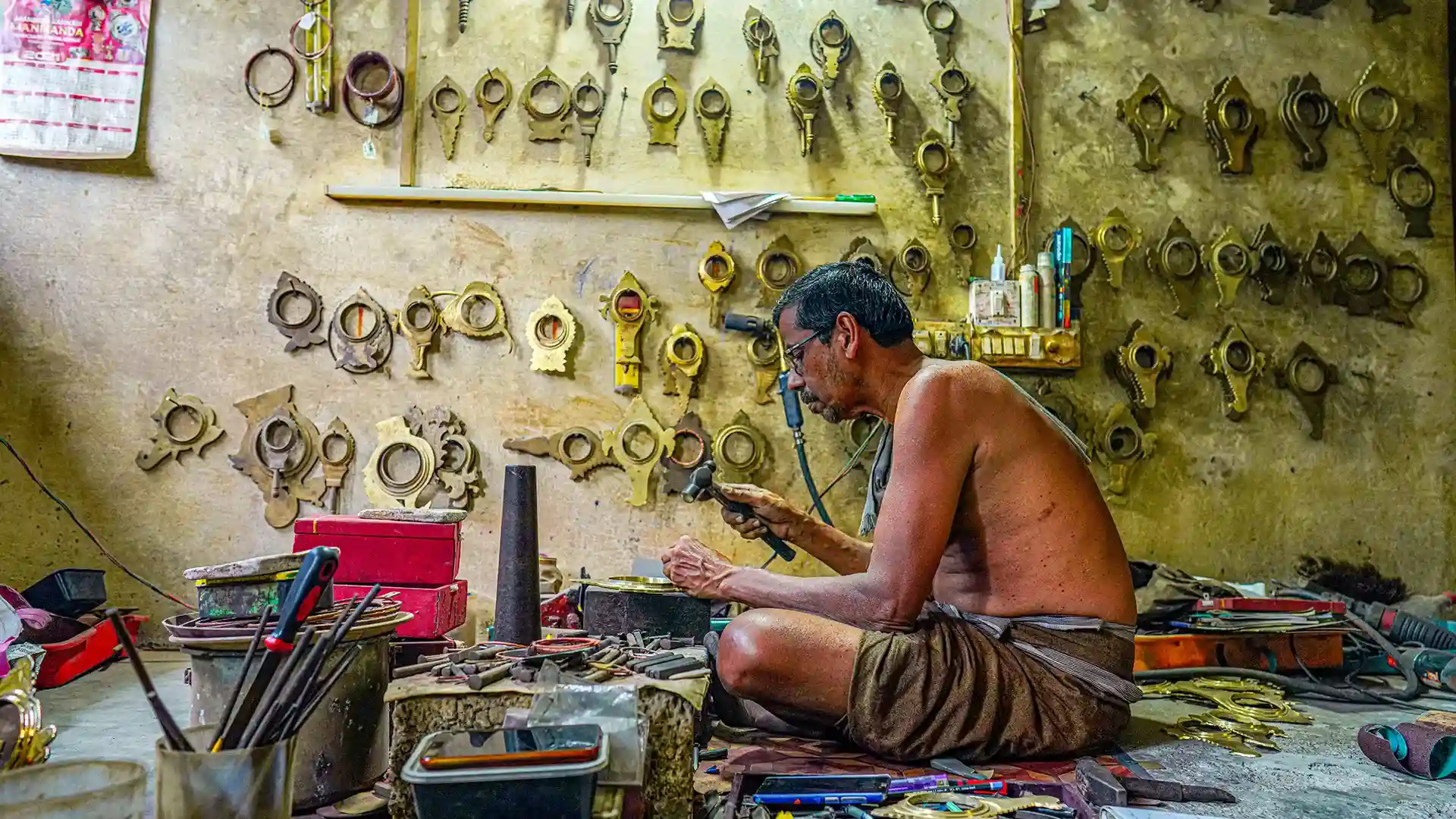
Aranmula Heritage Village is the official tourism anchor for Parthasarathy Temple context, mirror craft, boat-race traditions and Pamba river heritage. Public destination · Aranmula, Heritage village, Pamba River.
Book with the place itself. India’s cyber-crime coordination centre warned in April 2025 that convincing copies of hotel and pilgrimage booking sites are being pushed through sponsored search and social ads, taking payment for rooms the property never hears about. Every listing here links to the business’s own contact details and its own Google or Bing profile — we take no commission and sit in nobody’s payment path. If a booking page reached you through an ad, check the address bar against the property’s own site before you pay. Fraud can be reported on cybercrime.gov.in or on 1930.
Find food, accommodation and activities across Aranmula. Browse the guides for places to eat, stay and explore along your route.
2 more places around Aranmula. Open a guide to plan the visit and onward journey.
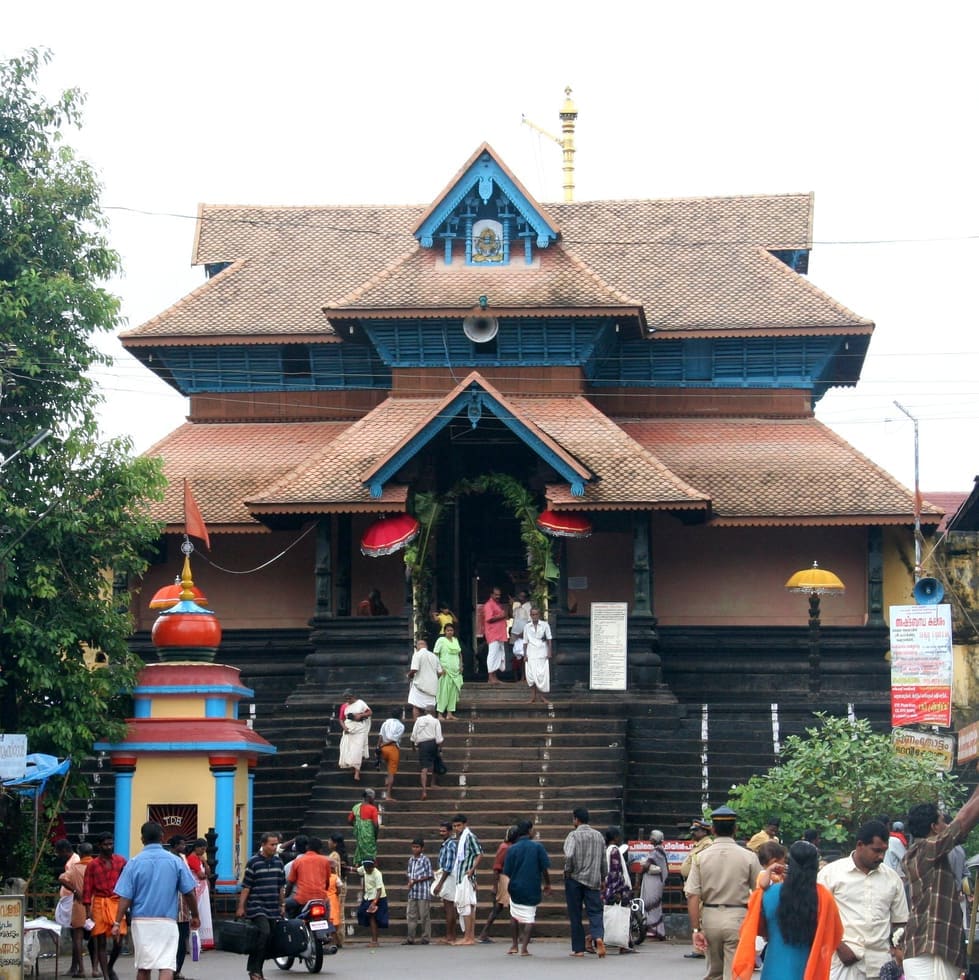
Temple town on the Pamba, known for the Parthasarathy Temple, the Uthrattathi snake-boat race and the famous Aranmula Kannadi metal mirror.

The site of Asia’s largest Christian convention, held for about eight days each February on the vast Pamba river sand-bed beside the Kozhencherry bridge; organised by the Mar Thoma church since 1895, the tent seats well over a hundred thousand.
Roampedia is commission-free — own or know a stay, eatery, guide or shop near Aranmula Parthasarathy Temple? List it and it appears here once verified.
Add a nearby businessEntry: Darshan is generally free; specific poojas, offerings (vazhipadu) and the annual feasts may carry their own charges.
Dress code: Traditional temple dress is expected — commonly a mundu/dhoti for men (often bare-chested) and a sari or modest cover for women; conservative attire is advisable and specific norms should be confirmed at the temple.
Festivals: Key observances include the Uthrattathi Vallamkali snake-boat regatta during the Onam season (around August–September), the Khandavana Dahanam fire ritual in the month of Dhanu, and the annual ten-day temple festival with Garuda vahana processions around January–February.
Photography: Photography is typically restricted inside the shrine and around the sanctum; outdoor and river-step photography is more often permitted, but visitors should follow posted rules and staff guidance.
If you are travelling by bus or ferry, check the return service with the operator before setting out. Leave time to reach the stop or jetty after your visit.
Ask at the bus stand for the time of the last service back, not the next one. If you miss it, an auto or app cab is the fallback — agree the fare before you get in.
If you need step-free access, contact the site before travelling. Ask about a level entrance, steps along the route, the nearest drop-off point, seating and accessible toilets.
Emergency numbers are verified against official government and state tourism sources. 112 works anywhere in India.
Vishnu worshipped as Parthasarathy — Krishna in his role as the charioteer of Partha (Arjuna) in the Mahabharata. The image is generally described as holding a conch, though some traditions depict him with the charioteer’s whip.
By tradition the name comes from ‘aaru mula’, meaning six pieces of bamboo — the raft on which Arjuna is said to have floated the idol of Krishna downriver, remembered as the Thiruvona Thoni (this is sacred legend rather than documented history).
It is Aranmula’s sacred snake-boat regatta on the Pamba, held on the Uthrattathi asterism in the Onam season (around late August to September). The long palliyodam boats row as an offering to Parthasarathy rather than purely for a prize.
Yes — it is counted among the 108 Divya Desams, the abodes of Vishnu glorified in the hymns of the Alvar saints, and is also regarded as one of the five Pandava temples of Kerala, linked by tradition to Arjuna (attributed tradition).
The Aranmula Kannadi is a handmade metal-alloy mirror made only in Aranmula, reflecting from its front surface rather than through glass. It received a Geographical Indication tag in 2005, reported as the first for a Kerala product, and its making is a guarded family craft (documented).
As with many traditional Kerala temples, entry to the inner shrine may be reserved for Hindus and a traditional dress code applies; visitors should check current customs and any restrictions with the temple authorities before planning a visit.
November to February and early mornings are best for walking; avoid midday heat where possible.
Entry: Darshan is generally free; specific poojas, offerings (vazhipadu) and the annual feasts may carry their own charges. Timings: Temples of this kind usually open for darshan in the early morning and again in the evening, with a midday closure; typical timings are broadly around 04:00–11:00 and 17:00–20:00.
Base yourself in Aranmula or a nearby town in Pathanamthitta, then confirm the last-mile route locally before leaving. Walkable heritage areas are best done slowly; combine nearby streets, museums, markets and food stops. If the visit depends on forest, temple, boat, ferry, weather or seasonal access, check the official/local rule on the day before travel.
1 to 3 hours.
Watch traffic on narrow heritage streets. Keep valuables close in crowded markets.
We have not published a story about Aranmula Parthasarathy Temple itself yet. These cover Aranmula and the wider district, with separate journeys between stops.
These guides explore Aranmula and the surrounding area. Choose a visit that fits your interests, allowing separately for travel between stops.
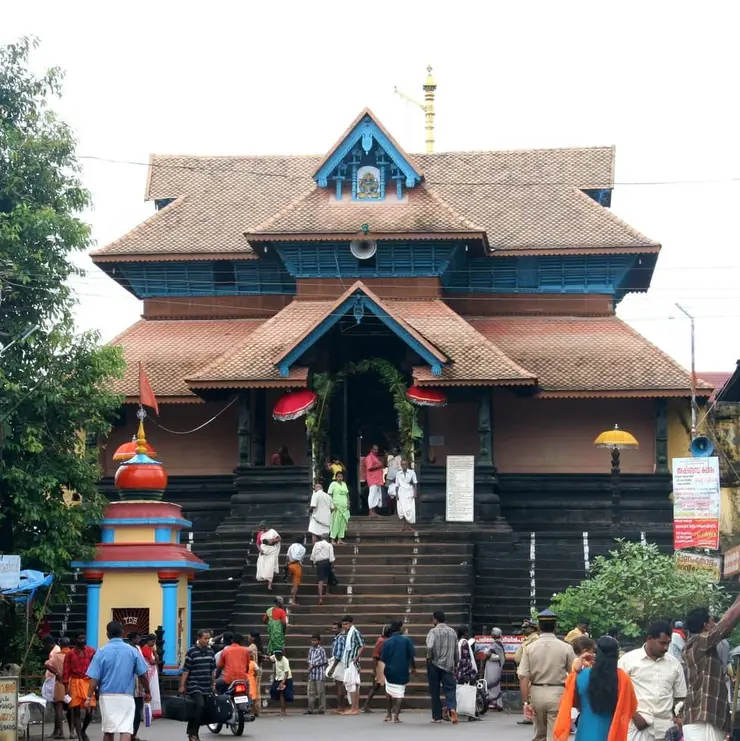
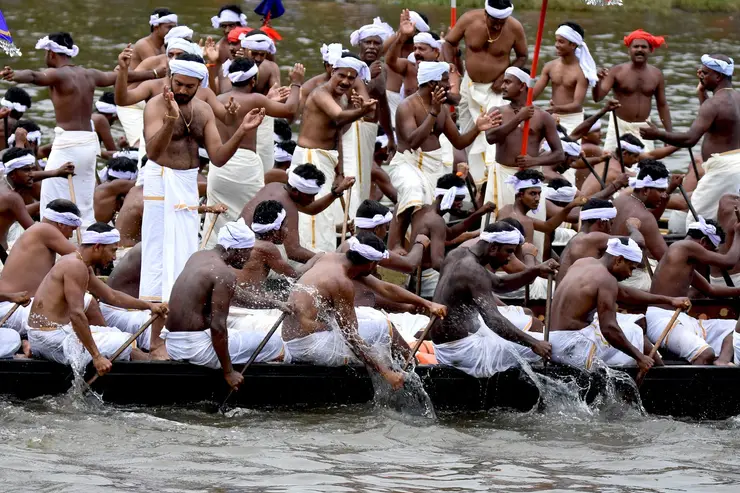
Route-level itineraries and practical guides for the rest of Kerala.
Photographs: Pradeep717 at Malayalam Wikipedia (Public domain). Wikimedia Commons.