Gavi trekking is a full day assembled from several landscapes rather than one path: cardamom shade, a reservoir edge, a boat crossing and two high viewpoints inside the Periyar Tiger Reserve country. KFDC controls the movement and a trained guide holds the pieces together, which is why arriving at Gavi is not the same thing as being free to walk it.
The story of Gavi trekking
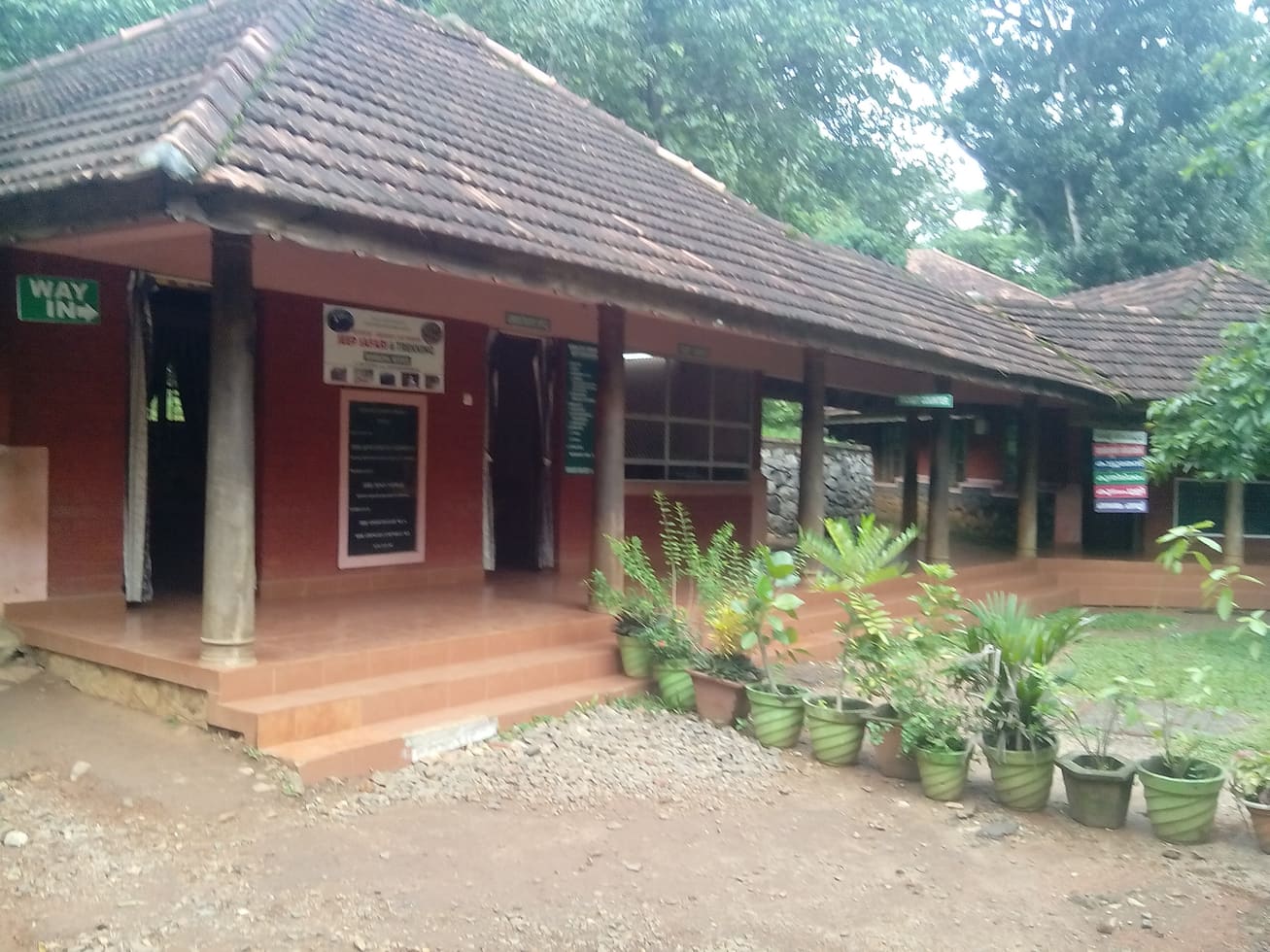
The day starts by making one distinction clear. Gavi is the forest settlement and ecotourism base; “Gavi trekking” is the named Kerala Forest Development Corporation programme. The official itinerary begins at about 08:30 and combines walking, food, boating and viewpoint visits. It is not a marked long-distance route, and the Gavi pin cannot stand in for every place the guide takes a group.
The first ground underfoot is a cardamom plantation. Cardamom is grown under a tall shade canopy, so the transition between cultivated land and forest can be visually subtle: trunks rise through damp leaf litter, the spice plants occupy the lower layer and the path stays cool long after open ground has warmed. A trained guide matters here because plantation, working access track and protected forest lie close together without behaving as interchangeable public space.
This cultivated layer is part of Gavi’s history as well as its scenery. The high rainfall and shaded valleys of the southern Western Ghats support cardamom, while the surrounding evergreen and semi-evergreen forest holds a much larger living system. The programme does not pretend the plantation is untouched wilderness. It lets visitors read the border between production and conservation, including the labour that maintains the spice crop and the canopy retained above it.
After the morning walk the itinerary returns for lunch before moving to the water. That pause is structural, not filler: there are no independent cafes distributed along a trail and no sensible way to leave the group for supplies. The official package includes breakfast, lunch and snacks because the visitor day operates as one controlled circuit within a remote forest complex.
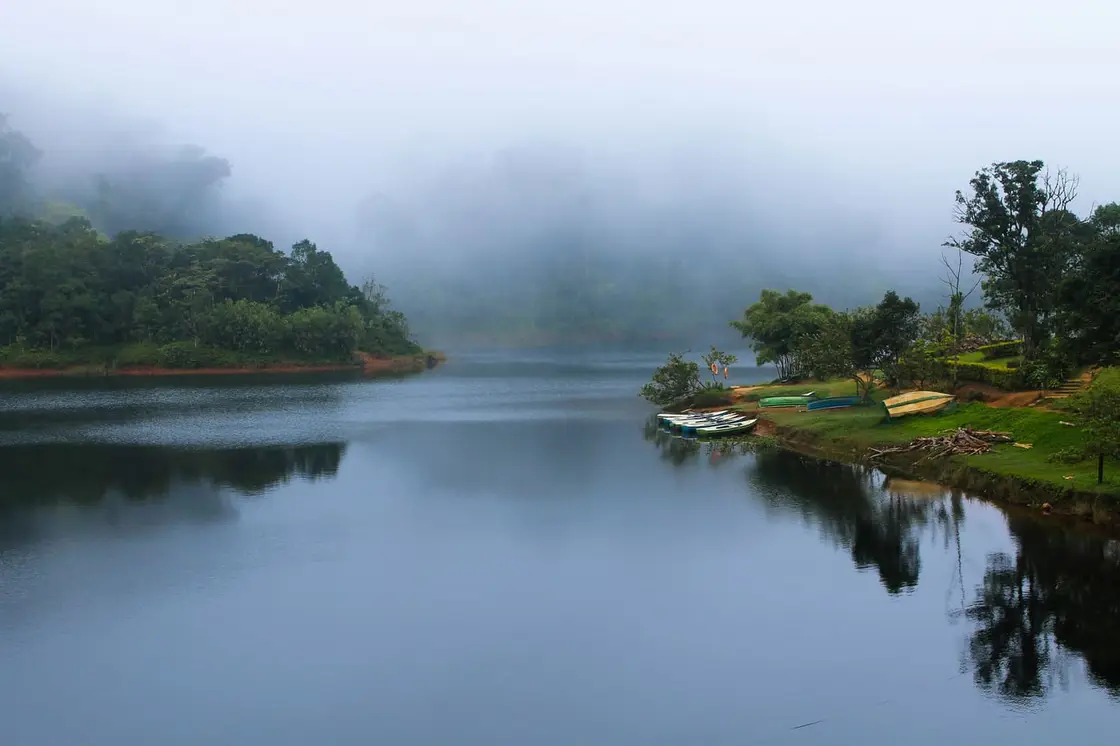
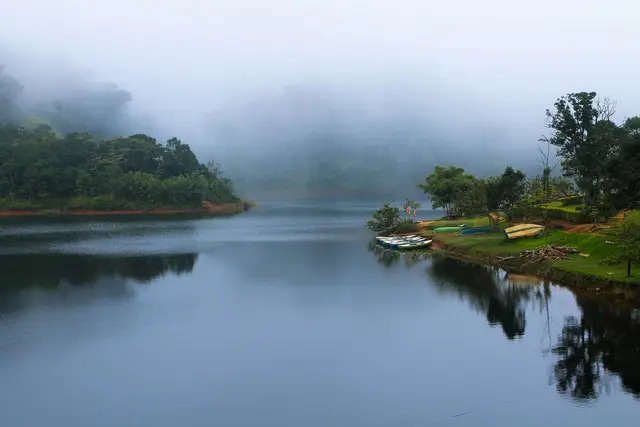
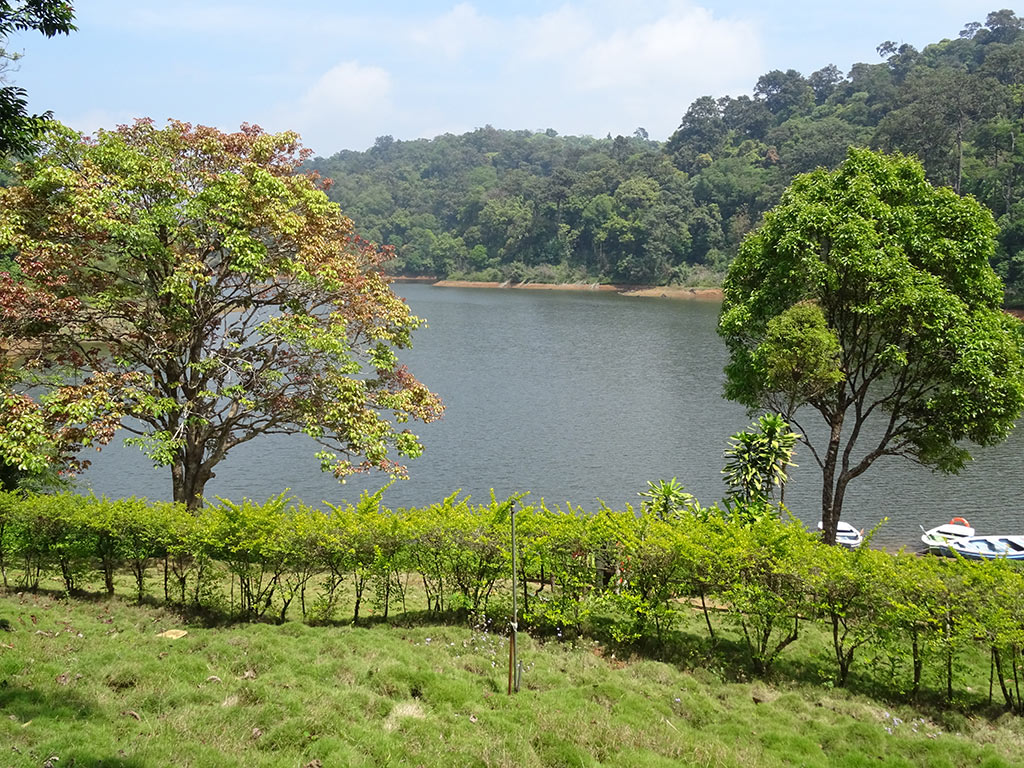
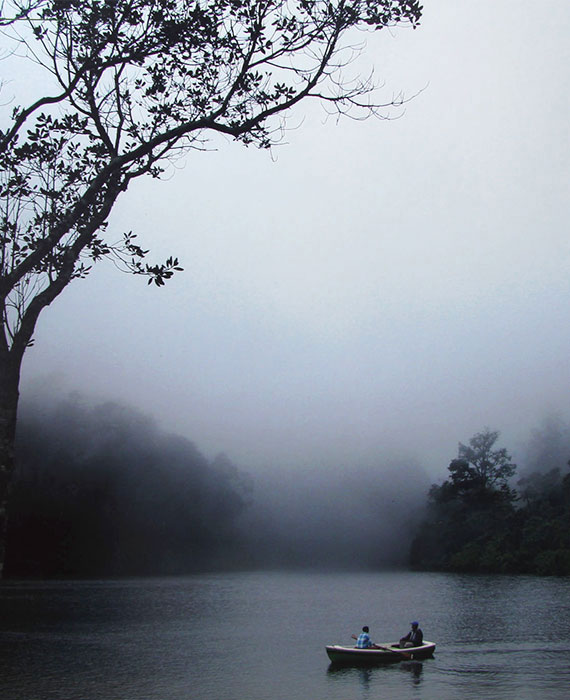
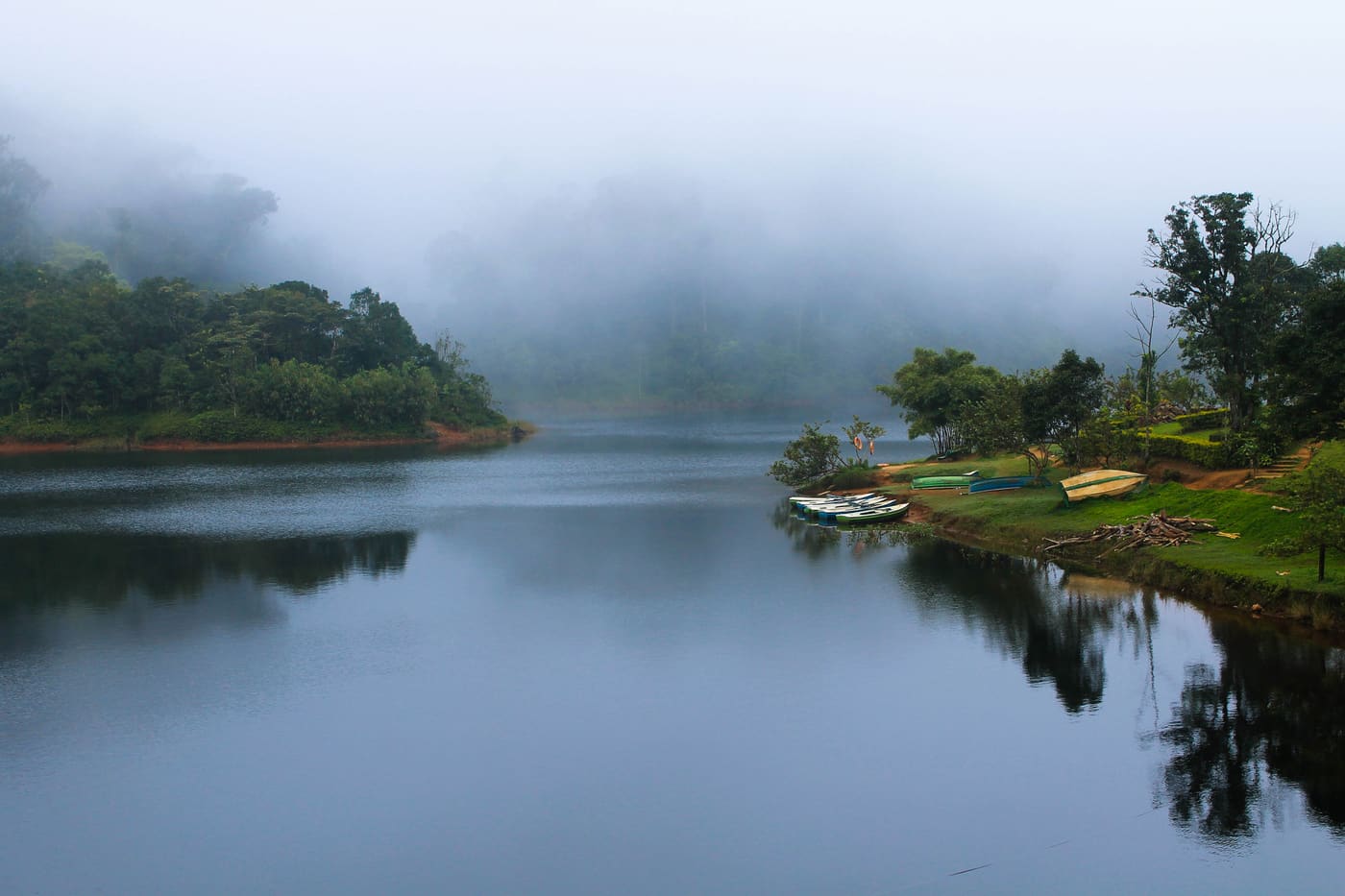
The boat segment changes the scale. From the bank, Gavi water can look like a small quiet lake folded between trees. From a boat, side valleys open, forest reflections break with the oars and the reservoir engineering behind the scenery becomes easier to notice. The official programme separately calls the Kochupamba outing a row-boating product, while the full-day trek includes boating as one part of its sequence.
The water is not a natural alpine lake. Gavi and Kochu Pamba belong to the reservoir-and-weir landscape tied to the Sabarigiri hydroelectric system. Concrete structures, fluctuating margins and drowned contours sit beside rainforest and grassland. That meeting is not a blemish to crop out of the story; it explains why a calm reach of water exists here and why roads, workers and forest controls converge in such remote terrain.
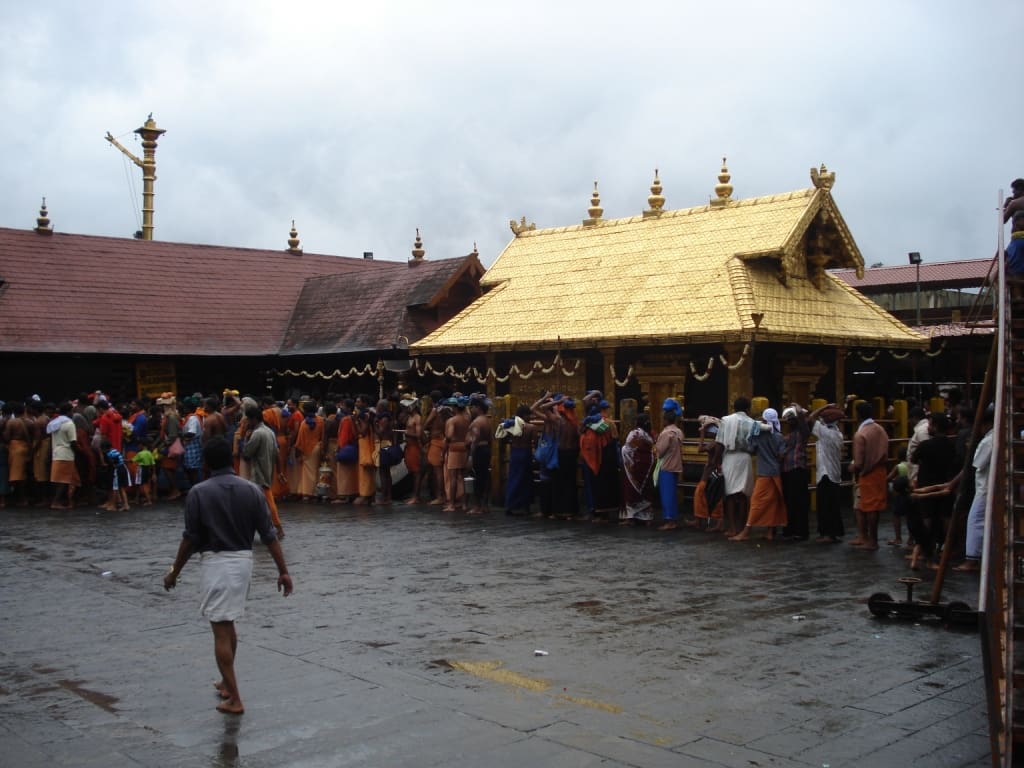
Sabarimala viewpoint comes later in the published day. The name often causes confusion because the famous shrine is elsewhere across the protected hills. This is a distant view towards the Sabarimala landscape, not a visitor entrance or a short route to the temple. The intervening forest, ridges and pilgrimage geography are the subject of the stop.
The viewpoint also puts two kinds of movement in one frame. Gavi visitors travel in small managed groups through a conservation programme; the Sabarimala season draws an immense pilgrimage system towards Pamba and the shrine. Roads, check-post rules and wildlife management across these hills change with that season, even though a person looking from Gavi remains far outside the temple approach.
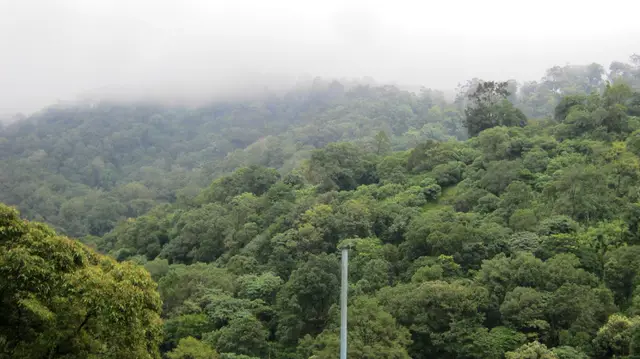
Valley View has a different job. Instead of naming a destination beyond the ridge, it reveals the depth of the ravine and the closed forest below. It is the place to understand why a flat map understates Gavi. Short horizontal distances can conceal steep drops, folded drainage and long road curves. A guide-controlled stop is safer and more truthful than describing the ravine as an independent trail anybody can descend.
The surrounding vegetation changes again on exposed high ground. Rolling grassland can sit above dense shola or evergreen forest, producing the broad green horizons seen in Gavi photographs. Mist crosses those ridges quickly. When it closes the view, it also changes road visibility and makes wet edges harder to read; waiting with the group is part of the visit rather than lost sightseeing time.
Wildlife belongs to the landscape but not to the itinerary as a guarantee. Kerala Tourism names elephants, gaur, lion-tailed macaques, Nilgiri tahr and rich birdlife in its Gavi account. Their presence explains the controlled road and the trained guides. It does not mean every species is equally likely at every stop, or that a distant dark shape should be pursued off the authorised ground.
Birds are often the more continuous reward. Canopy, open water, plantation shade and grassland edge create several listening zones in a single day. Great hornbills are among the species associated with Gavi, but the useful approach is broader: watch how kingfishers use the water margin, how mixed flocks move through shade and how a large forest bird can be heard before it is seen. The day works even when no headline mammal appears.
Local involvement is one of the stated foundations of the ecotourism project. Kerala Tourism describes residents working as guides, gardeners and cooks, with traditional forest knowledge contributing to both livelihoods and conservation awareness. That makes the programme more than a ticket inserted into protected land. Food, interpretation and controlled movement are the operating system by which a visit is allowed to happen.
The small museum near the end of the published itinerary can feel modest after the ravine and lake, but it changes the register from looking to identification. Animal skeletons make anatomy and scale legible without needing a close encounter in the forest. Read it as an interpretation stop, not a trophy room, and ask the guide what the display says about the species living across the reserve.
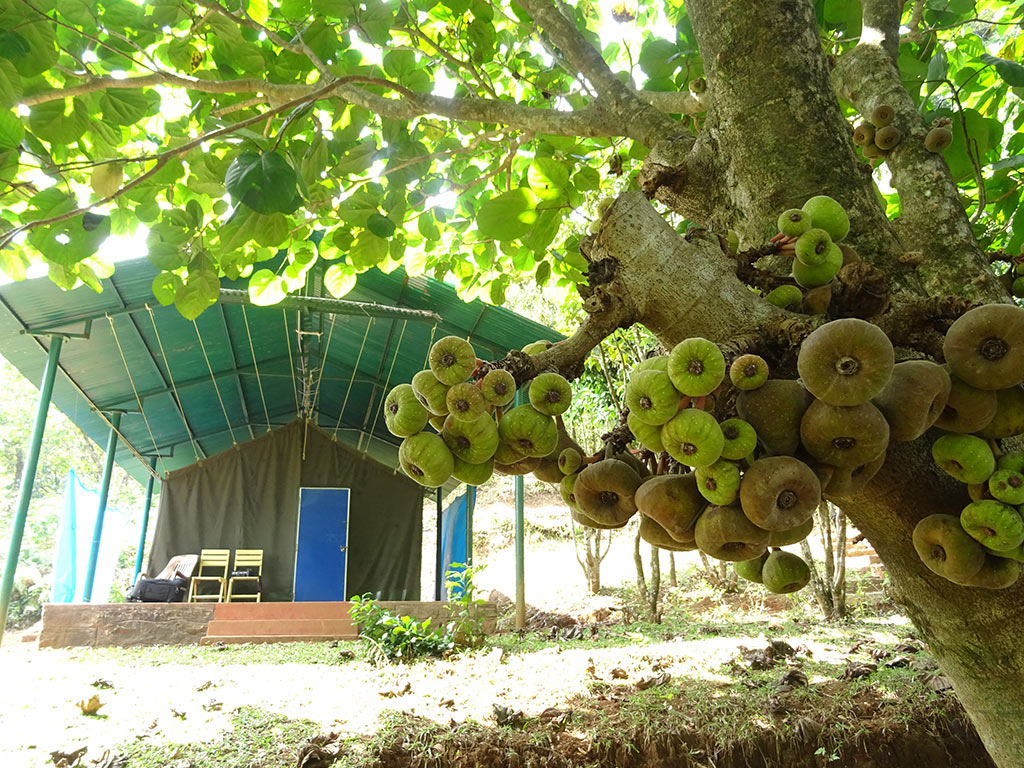
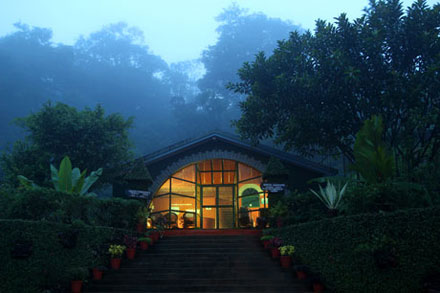
An overnight at Green Mansion, a Swiss Cottage Tent or the separate Jungle Camping product creates a different programme. The lodge and cottage packages include their own combination of boating, plantation visit, trekking and a vehicle safari; portable-tent camping has a different group structure and suitability statement. They cannot be collapsed into the full-day trekking ticket simply because all use the Gavi name.
The journey in is part of the constraint. The usual approach leaves the settled Vandiperiyar road and continues for roughly 28 km through controlled forest country. The surface, check-post time and animal movement matter more than the kilometre number. A booking is therefore not only a reservation for activities after arrival; it is the document that makes the approach intelligible to the people controlling access.
There is also a Pathanamthitta-side road through Angamoozhy, Moozhiyar, Kakki and Kochu Pamba, used by scheduled buses and organised forest journeys. It proves that Gavi is not geographically an Idukki destination, even though Vandiperiyar and Kumily are the usual tourism approach. It does not create a casual self-drive shortcut: road permissions, timings and the programme booking remain separate questions.
The small wildlife museum near the close of the published itinerary changes the register from looking to identification. Its animal skeletons make proportion, joints and scale readable without requiring a close encounter in the forest. That matters after a day in which dense canopy often turns animals into calls, movement or a brief shape at the edge of vision. Read the room as an interpretation stop rather than a trophy display, and ask the guide which living species each structure helps explain.
The gaps between named activities also belong to the experience. A group may wait while mist clears a viewpoint, while staff judge the water, or while an animal uses the road ahead. Those pauses are not failed itinerary time: they reveal that access remains conditional after a booking has been made. Gavi works at the pace of a managed reserve, not an attraction circuit in which every stop begins on demand. The guide’s decision to hold, reroute or leave a view unseen is part of the conservation system visitors have entered.
By late afternoon the full-day circuit has placed cultivated spice ground, managed water, pilgrimage-facing ridge and protected ravine in one sequence. That is the real Gavi trek. Its coherence comes from the guide and the order of the day, not from a single line on a map. Anyone wanting an independent forest hike is asking Gavi to be a different place from the one conservation has allowed it to become.