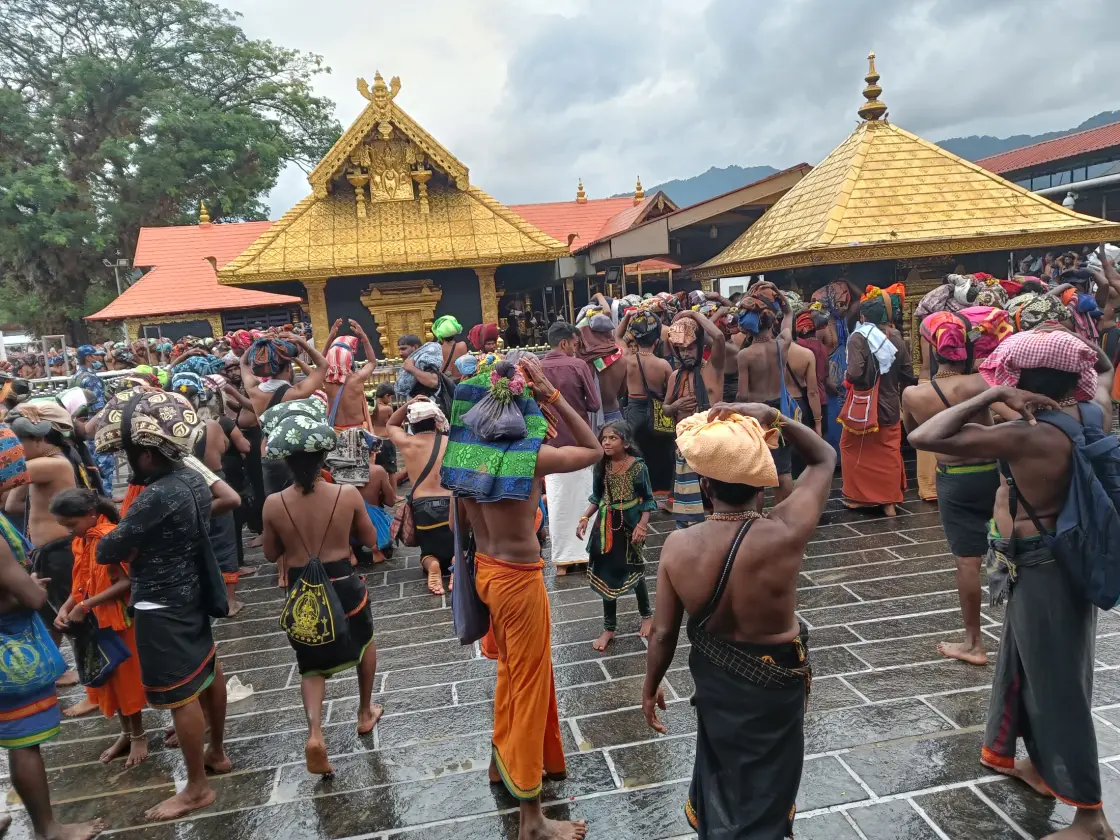
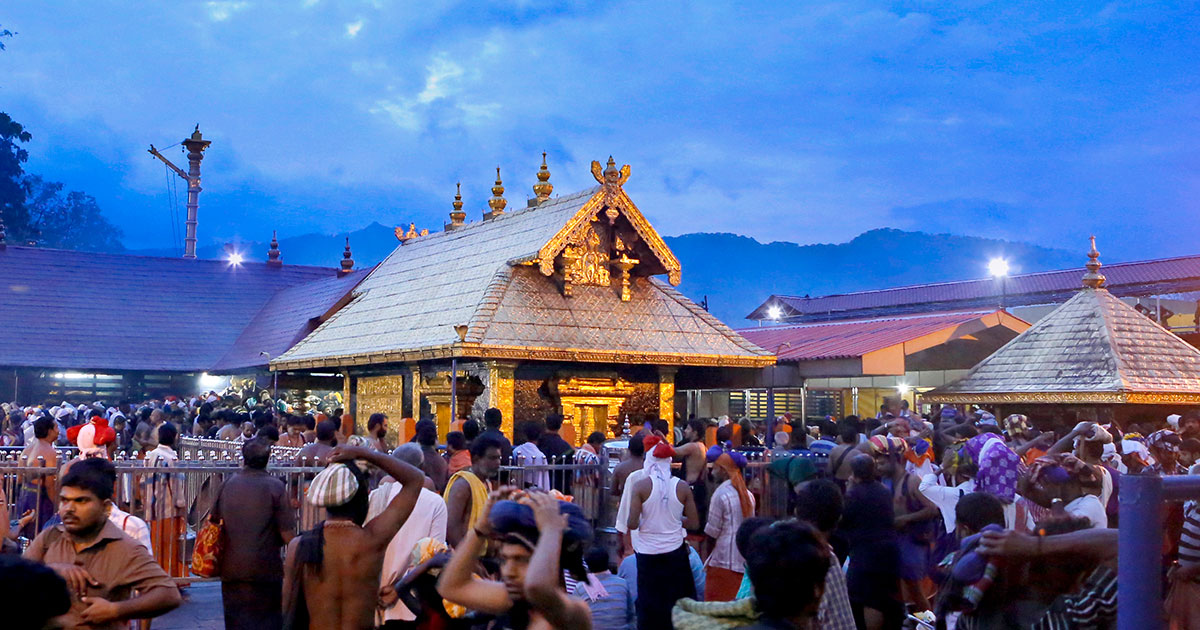
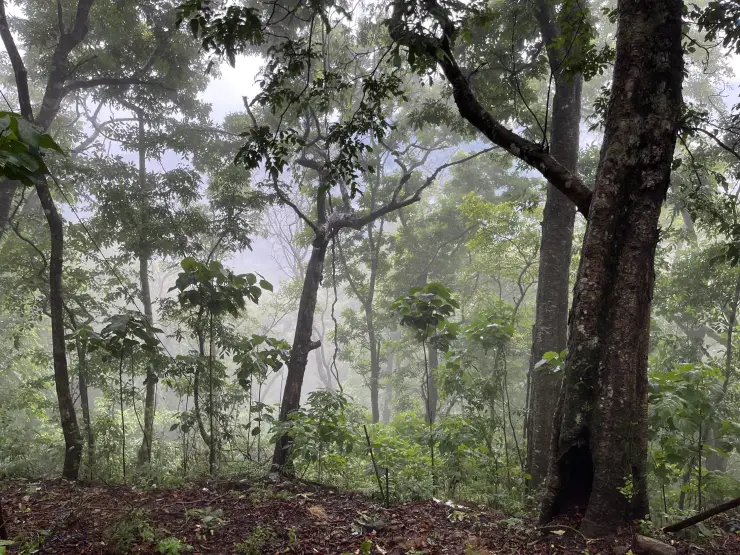
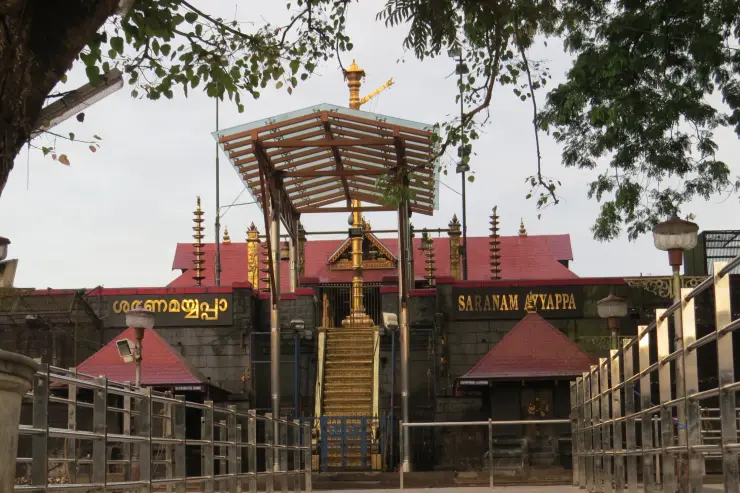
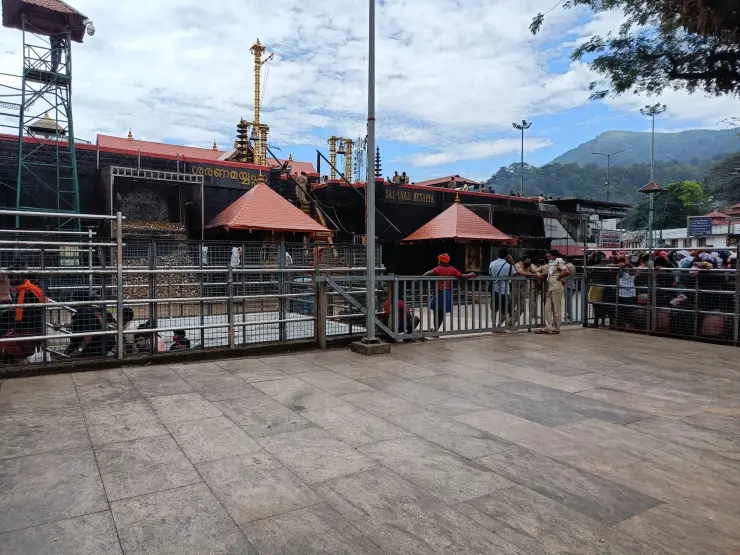
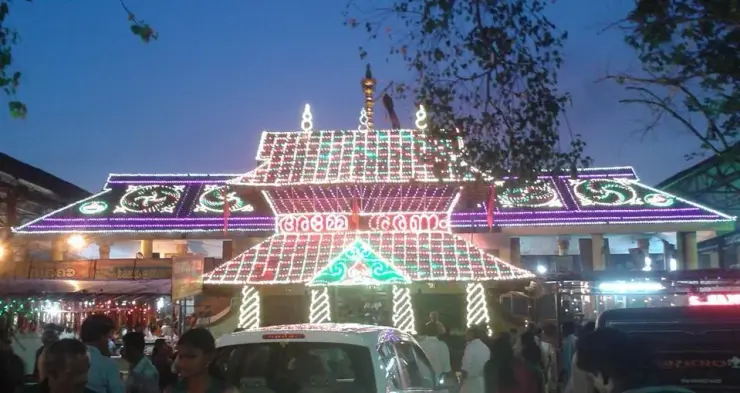
At Sabarimala, the approach is part of the place. The river base, uphill movement, gathering queues and final temple frontage form successive stages of the pilgrimage. Photographs of rain capes, forested paths and the gold-toned shrine show different moments within that sequence, rather than separate attractions connected by a casual walk.
The story of Sabarimala
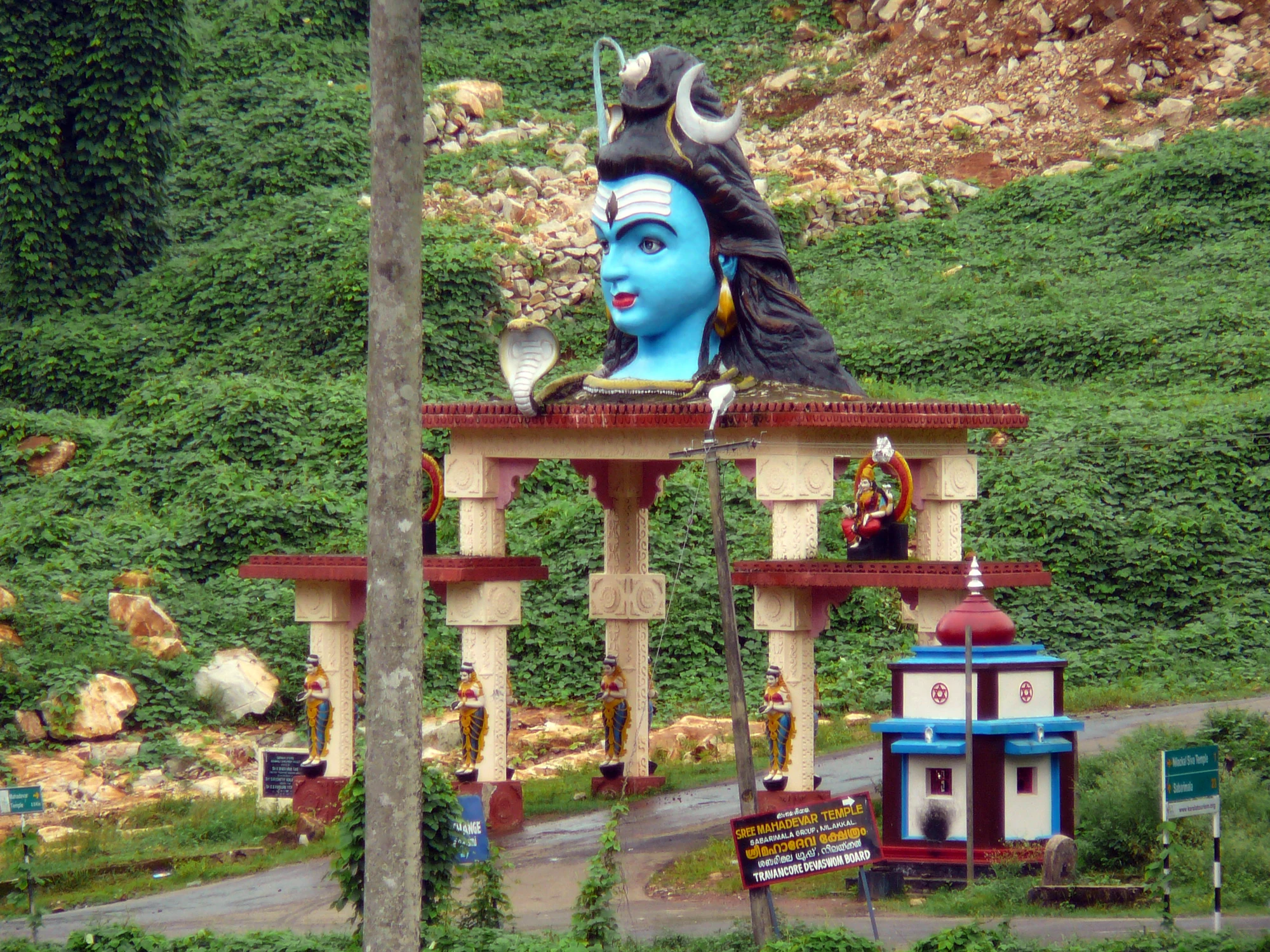
The first useful distinction is geographical. Nilackal handles the vehicle and transfer stage; Pamba marks the river valley and the change to the walking approach; Sannidhanam is the hilltop temple precinct. Confusing these names creates practical mistakes, such as treating a parking location as the temple entrance or assuming that a taxi can complete the ascent.
The forested approach gives the pilgrimage a changing scale. At the base, roads and buses organise large groups. Higher up, the path, rest spaces and regulated queue determine movement. The government guidance identifies locations such as Neelimala, Appachimedu and Saramkuthi in the approach geography. Which path is in use for a particular opening is an operational decision, not something a historic route description can settle.
The religious preparation begins before that ascent. Mandala Vrutham is described as forty-one days of disciplined living and prayer, marked by wearing the mala. Its purpose in the official ritual account is sustained self-control. The pilgrimage’s physical effort therefore belongs within a devotional practice, rather than being promoted simply as a challenging forest hike.
Irumudi is prepared through Kettunirakkal under the guidance of a Guruswamy. The government account describes a two-compartment bundle carrying sacred offerings and other ritual items. A ghee-filled coconut, neyy-thenga, has a particular symbolic meaning: emptying and refilling the coconut represents turning from worldly attachment towards spiritual aspiration. This is an explanation of a rite, not an instruction to improvise the preparation independently.
Pathinettampadi, the eighteen sacred steps, is one of the clearest thresholds in the temple’s approach. The official ritual guidance connects climbing those steps with carrying Irumudi. It also states that other devotees use a different passage to reach the worship area. The steps should therefore not be described as the only physical way into the entire temple precinct.
Pandalam belongs to the shrine’s wider sacred narrative. In the Ayyappa tradition, King Rajasekhara finds the infant at the Pamba and raises him at Pandalam. The ornaments associated with the Makaravilakku season travel from Pandalam towards Sabarimala. These connections explain why a palace and a river base appear in the same pilgrimage geography without making them parts of the hilltop temple compound.
Erumely provides another connection. The traditional route begins with worship at the Dharma Sastha and Vavar-associated shrines and continues through a named forest itinerary. Petta Thullal, described in the government ritual account, brings the Ambalappuzha and Alangad groups into a distinctive ceremonial sequence. It is associated with particular pilgrimage traditions and dates, rather than a performance available whenever a visitor arrives.
The main pilgrimage season should also be separated from the annual Meenam Ulsavam. The latter begins with flag hoisting and includes Pallivetta followed by Aarattu at the Pamba. Understanding that distinction prevents different processions and festivals from being compressed into a single generic Sabarimala celebration. Each needs its own current programme.
The built facilities support this movement of pilgrims. The government describes medical centres at Pamba, Neelimala, Appachimedu and Sannidhanam, along with water, sanitation and annadanam arrangements. Their presence matters, but it does not make the steep journey effortless or guarantee a particular service outside the relevant opening period. The practical decision is whether the route and current assistance suit the individual pilgrim.
After darshan, circulation continues rather than ending at the shrine door. The official rules direct pilgrims along the return arrangement and ask them to use rest spaces without obstructing movement. That final stage deserves time in the plan: the descent, onward bus and recovery before a long road journey are part of completing the visit responsibly.
The traditional Erumely itinerary is best understood as a sequence of devotional places. Perur Thodu marks an early stage after the Erumely shrines; Kaalaketti follows in the account before the crossing of the Azhutha. The names are meaningful to pilgrims because the route is narrated through Ayyappa’s journey. They are not interchangeable shortcuts to Pamba, and a first-time pilgrim should take the current permitted route under the guidance of an experienced group.
At Kaalaketti, the government ritual account tells of Shiva tying his ox while witnessing Ayyappa’s encounter with Mahishi. At the Azhutha, the collection of a pebble and its later casting at Kallidumkunnu form another part of that sacred narrative. These are beliefs expressed through acts at particular places. Reading them as a sequence explains the importance of the route without treating the legend as a documented military expedition.
The terrain changes again through Inchipparakota and Karimala. The government account describes repeated ascent and descent before reaching the Pamba valley, with Valiyaanavattam and Cheriyaanavattam appearing towards the end. This longer forest itinerary requires a different commitment from starting the hill approach at Pamba. Historic distance descriptions are useful for understanding its scale, but current route permissions and the authorised opening determine whether it can form part of a particular pilgrimage.
The name Poongavanam, used in the ritual account for Ayyappa’s forest garden, gives the wooded route a devotional character. The forest is both the physical setting of the journey and a place held sacred by pilgrims. Leaving waste, straying away from the permitted way or disrupting wildlife would therefore work against both purposes of the journey. Use the current pilgrim facilities and the regulated route rather than treating open forest beside it as a campsite.
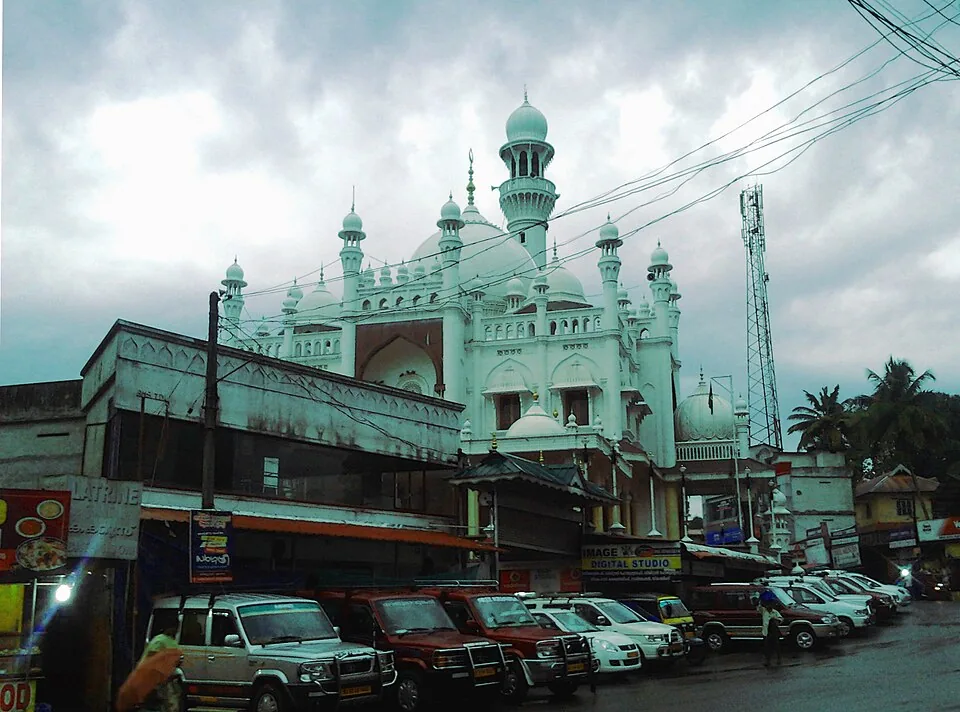
Erumely’s Petta Thullal has a recognisable order. The government describes the Ambalappuzha group beginning from the Kochambalam at Petta junction, visiting the Nainar mosque and proceeding to the larger Dharma Sastha shrine with members of the local Jamaat. The Alangad group’s ceremony follows its own sequence later. The welcome between institutions belongs to the ritual itself, giving the pilgrimage a social geography as well as a succession of shrines.
The ceremonial sightings associated with those groups are presented in the official account as religious tradition. They should not be made into a guaranteed wildlife spectacle or an astronomical event for spectators to book. For a visitor attending the ceremony, the practical focus is the announced gathering place, the procession’s route and the space left for the participating pilgrims. Erumely needs a separate stop in the journey, not a hurried detour during a tightly timed Pamba transfer.
The annual Meenam festival has a different progression from Petta Thullal and the Makaravilakku journey. The government ritual description begins with Kodiyettam, the raising of the flag, followed over the festival by special observances including Ulsavabali and Sree Bhootha Bali. Pallivetta is associated with Saramkuthi, and Aarattu with the Pamba. These names describe ceremonies at specific places; the current festival programme supplies the date and movement arrangements for attending them.
The distinction between a sacred step and a circulation route is particularly useful at Sannidhanam. A pilgrim’s preparation and Irumudi determine the ritual relationship with Pathinettampadi. The queue arrangement determines how that pilgrim moves through the precinct on the day. Treat both seriously: follow the group’s ritual guidance before departure, then follow the officials managing the live queue even if an older photograph shows people entering another way.
Plan the departure from the hill as a complete stage of the pilgrimage. A group may finish darshan at different times, and the descent still leads to a bus transfer and an onward road journey. Agree on a permitted meeting place and avoid gathering across the movement of other pilgrims. A reservation for distant accommodation or a train should leave room for the actual descent and transfer rather than assuming that reaching the shrine completes the travel day.
The names of offerings describe different forms of worship. Neyyabhishekam centres on ghee offered to Ayyappa, with a portion returned as prasadam. Udayasthamana Pooja describes worship extending from dawn to dusk, while Pushpabhishekam is a floral offering. Understanding these distinctions helps a pilgrim discuss the intended observance with the authorised booking counter instead of treating every pooja name as a different kind of entry ticket.
The floral offering has its own material vocabulary. The government’s pooja description names lotus, chrysanthemum and jasmine among the flowers, alongside sacred leaves. That variety is part of the ritual’s character. The account also describes advance booking for Pushpabhishekam; arrange an offering through the official service and follow its current conditions rather than arriving with an independently assembled substitute.
An offering reservation, an accommodation reservation and Virtual Q serve separate purposes. Keep the confirmations identifiable within the group, particularly when one person organises several arrangements. A pilgrim accompanying relatives may need only the darshan arrangement, while another has an additional offering to collect or attend. Decide how the party will regroup without occupying an active queue or assuming that every booked service is handled at the same counter.
Malikappuram and the Manimandapam carry a further sequence of observances within the Makaravilakku festival. Kerala Tourism describes evening ceremonial movement towards Pathinettampadi over the first four days and towards Sharamkuthi on the fifth. The sequence adds a changing ritual geography after the best-known arrival of the ornaments. A pilgrim attending several days encounters different movements and meanings, rather than one ceremony repeated unchanged each evening.
The fifth-day account describes a warrior representation of Ayyappa and Nayattu Vili at Sharamkuthi, followed by a return without musical accompaniment. The contrast between an outward procession and a silent return is part of its devotional character. The explanation involving mountain deities belongs to sacred tradition. Observe the ceremony through the arrangements made for pilgrims, without turning its narrated forest associations into an independent night excursion beyond the permitted route.
Guruthi follows in the festival's closing sequence. Kerala Tourism places it in front of the Manimandapam behind Malikappuram and associates the observance there with Bhadrakali. Its account identifies Kalamezhuthu, the making of a coloured floor image, together with song and offerings. The Kuruppans of the Ranni Kunnakad family have the traditional ritual role described in that account. This gives the ceremony named custodians and a particular place, rather than treating it as a generic temple performance.
The floor image is temporary ritual work, unlike the permanent stone or timber of the surrounding buildings. Its meaning lies in the ceremony, the singing and the offerings made around it. Someone interested in the visual arts can learn from that relationship without expecting the image to remain as an exhibit after the observance. Keep viewing and photography within the directions given for that occasion; the presence of an artistic form does not turn a restricted rite into a public demonstration.
These closing observances are another reason to choose the pilgrimage date according to its purpose. An ordinary opening, the main Makaravilakku gathering and the later Malikappuram ceremonies are different opportunities within Sabarimala's calendar. Use the announced programme for the specific rite and allow its actual completion and return arrangements to guide the onward journey. The historical description explains what the names mean; it cannot reserve a viewing position or a place in the live circulation of pilgrims.