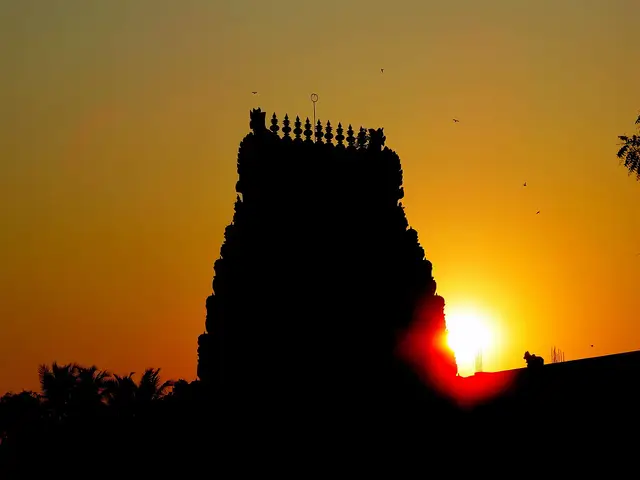
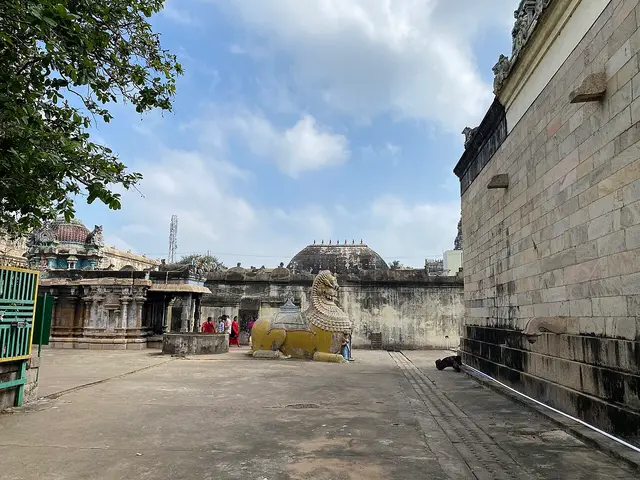
Places to Visit in Kumbakonam

The temple-town base east of Thanjavur for the Darasuram and wider Chola-country temple circuit.

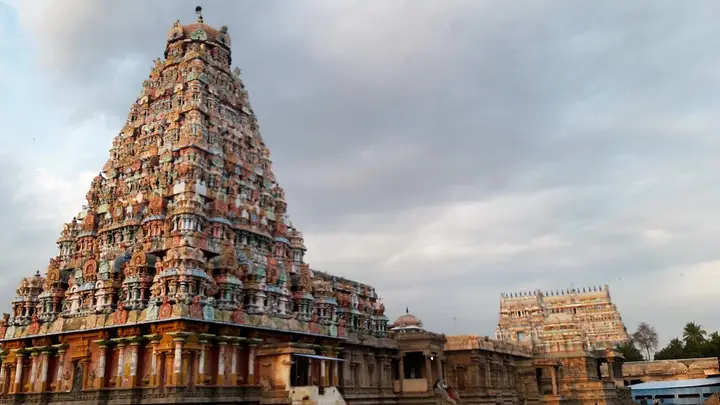
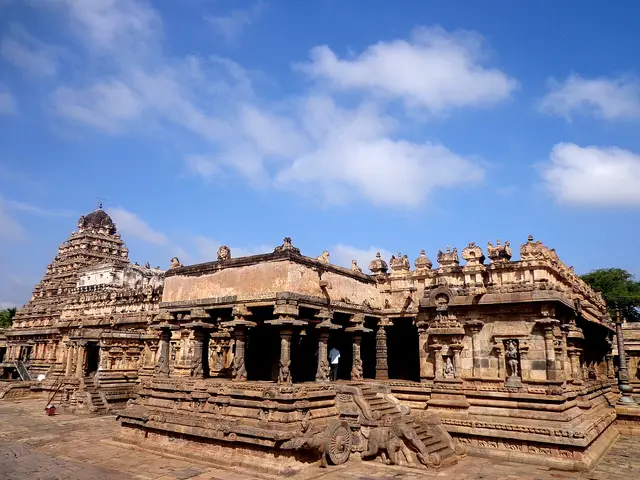
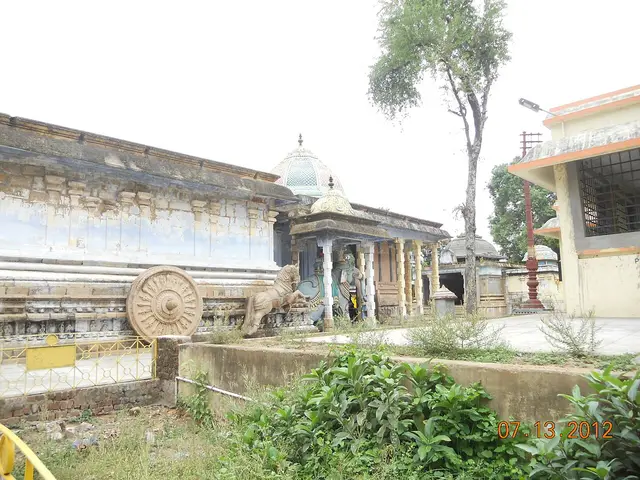
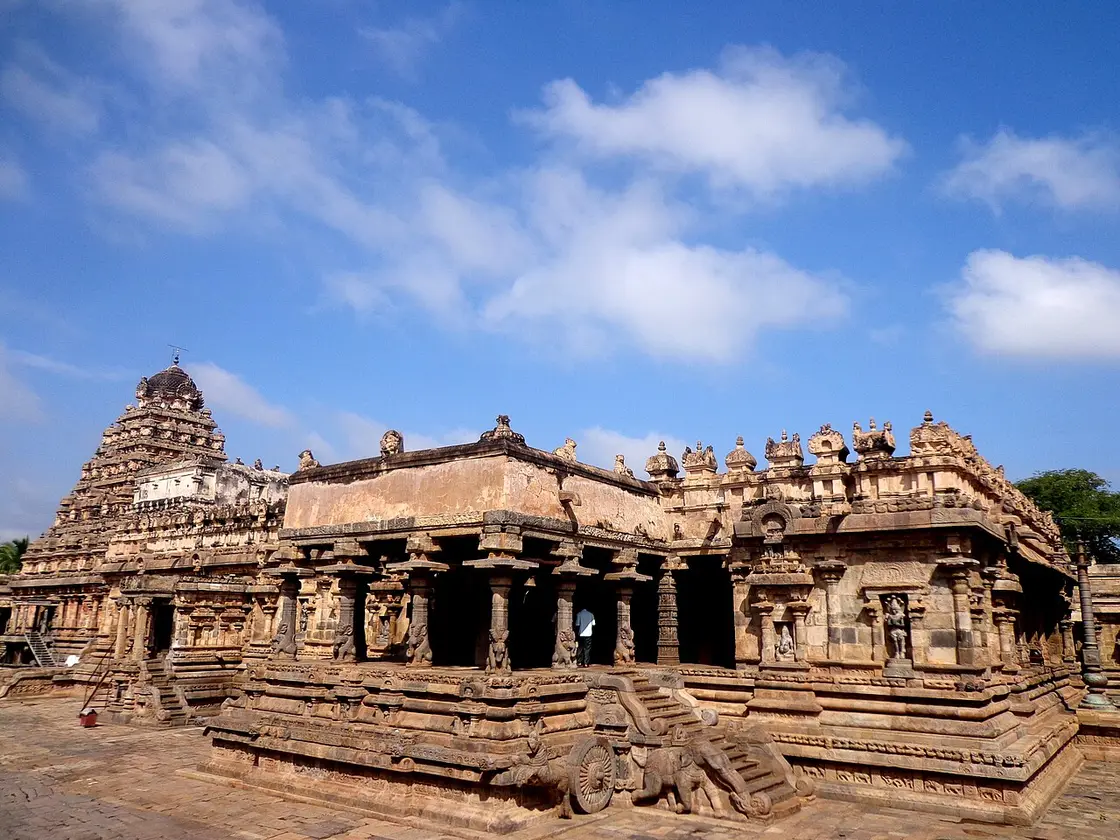
Airavatesvara Temple, Kumbakonam
Practical guide

Plan Kumbakonam

Who's going?Tailor Kumbakonam to your trip
DistrictThanjavur
RoleTemple-town base
Time neededA full day for the town
Places to visit12Listed businesses115
What to expect

Highlights

  • Airavatesvara Temple — A UNESCO-listed Great Living Chola Temple at Darasuram near Kumbakonam, built by Rajaraja Chola II in the 12th century and famous for its stone chariot-form mandapa and “musical” steps. It is a day trip east of Thanjavur.
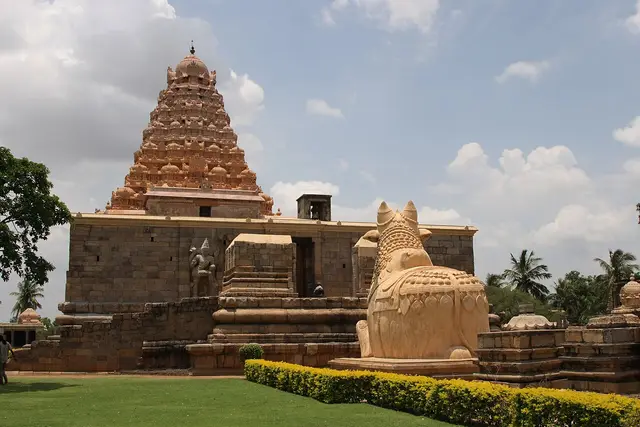
  • Gangaikonda Cholapuram — A UNESCO-listed Great Living Chola Temple raised by Rajendra Chola I around 1035 CE to mark his Ganges campaign. It lies in Ariyalur district, on the Chola circuit north-east of Kumbakonam, and is maintained by the Archaeological Survey of India.
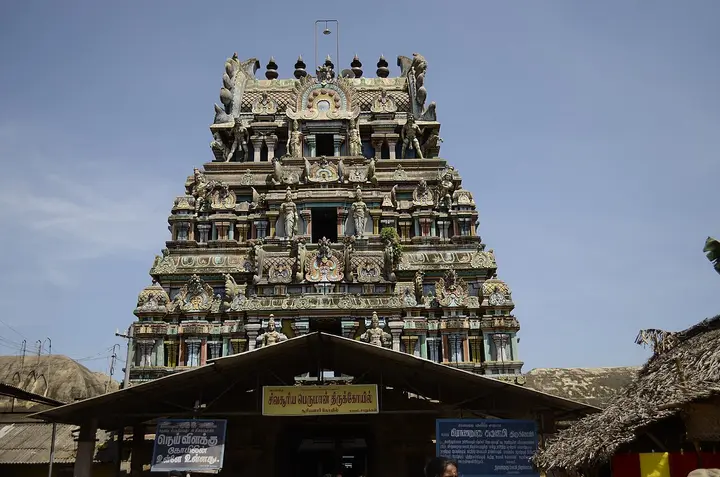
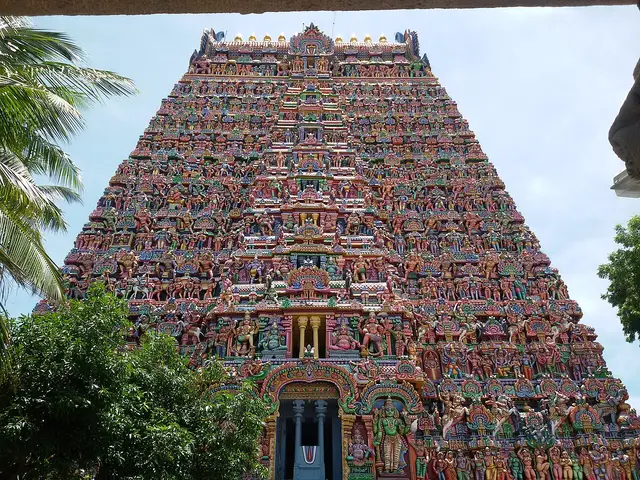
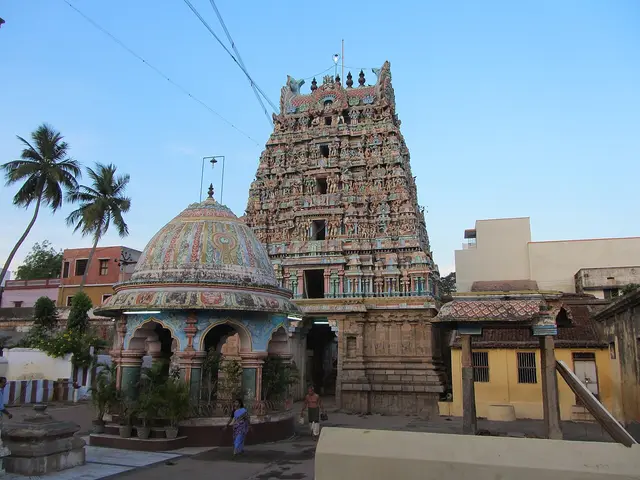
  • Sarangapani Temple — One of the largest Vishnu temples in the Cauvery delta and a Divya Desam, its towering gopuram dominates central Kumbakonam; the sanctum is shaped like a temple chariot drawn by horses and elephants.
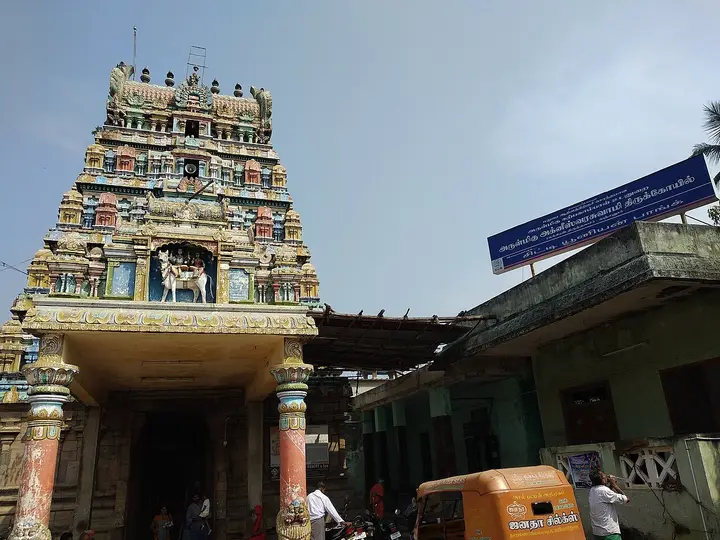
  • Adi Kumbeswarar Temple — The principal Shiva temple of Kumbakonam and the town’s namesake, at the heart of the old bazaar; the focus of the 12-yearly Mahamaham festival at the nearby tank.
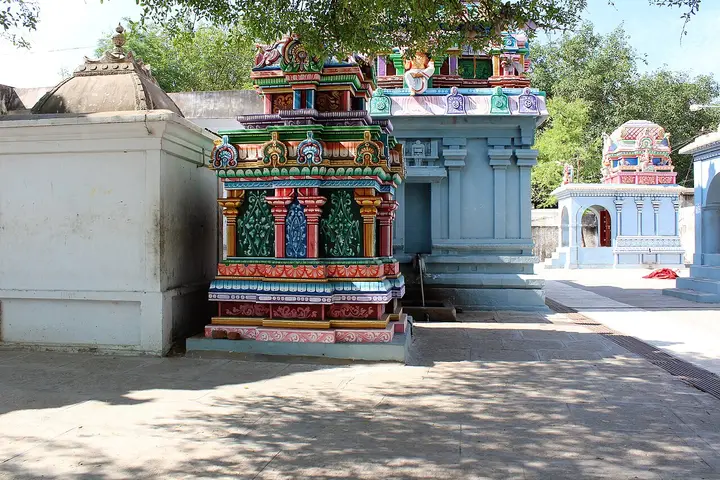
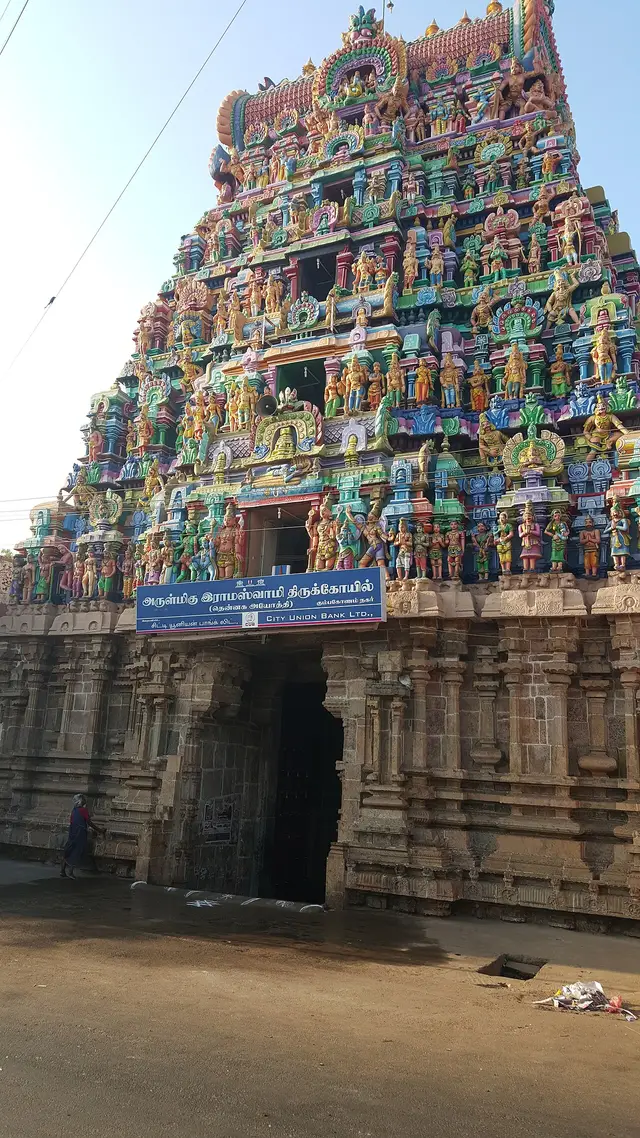
  • Ramaswamy Temple — A 16th-century Nayak-era Rama temple in Kumbakonam, famous for its sculpted pillars and painted mandapa panels illustrating scenes from the Ramayana.
  • Swamimalai Murugan Temple — The Swaminathaswamy (Murugan) temple at Swamimalai, one of the six sacred “Padai Veedu” abodes of Murugan, reached by a flight of steps; the surrounding town is the living centre of Chola-style lost-wax bronze icon-making. About 7 km west of Kumbakonam.
Getting there

How to visit

  • Nearest airport: Tiruchirappalli International (TRZ), 96.4 km by road — about an hour and three quarters. Published figures cluster around 90–91 km, so allow the longer one. Chennai (MAA) is 293.5 km and has the full network.
  • Rail gateway: Kumbakonam station (KMU) is in the town itself, on Kamaraj Road, three platforms, on the Chennai Egmore–Thanjavur main line — 800 metres from the Mahamaham tank. There is no reason to route through Thanjavur Junction, 40 km away.
  • The Central Bus Station (Arignar Anna Moffusil Bus Station) at John Selvaraj Nagar is about a kilometre from the railway station and 200 metres from the town bus stand, with TNSTC, SETC, KSRTC and PRTC services to Chennai, Bengaluru, Puducherry, Madurai and Kerala. Thanjavur is 40.4 km, Mayiladuthurai 36.3 km and Gangaikonda Cholapuram 35.1 km by road.
Timing

Best time to visit Kumbakonam

November to February. Those are the cool, dry months, and April to June on the delta is genuinely hard work — flat country, no elevation, and temple courtyards you cross barefoot. The north-east monsoon runs roughly October to December and brings the delta its main rain. Two dates are worth planning around rather than avoiding: Masi Magam every February–March, when the tank has its annual bathing day, and the Mahamaham itself, which falls once in about twelve years and is next due in 2028.

Weather in KumbakonamSeasonal guide

Live forecast loads in your browser.

Today at Kumbakonam
Sunrise6:03 am
Sunset6:23 pm
Golden hour best light5:23 pm–6:23 pm
Blue hour after sunset6:23 pm–6:48 pm
Sun sets toward compass bearingW · 279°
Moon tonight🌖 Waning gibbous · 83%
South-west monsoon. June to September is the south-west monsoon in Tamil Nadu. Expect heavy showers, mostly in bursts rather than all day — carry rain cover, allow extra time for getting around, and note that ferries and open-air sites are the first things affected.

Sun and moon are calculated for this location and shown in IST. Photography windows are the hour around sunrise and sunset; the sunset bearing is degrees clockwise from true north. Moon phase is accurate to about half a day.

Visitor notes

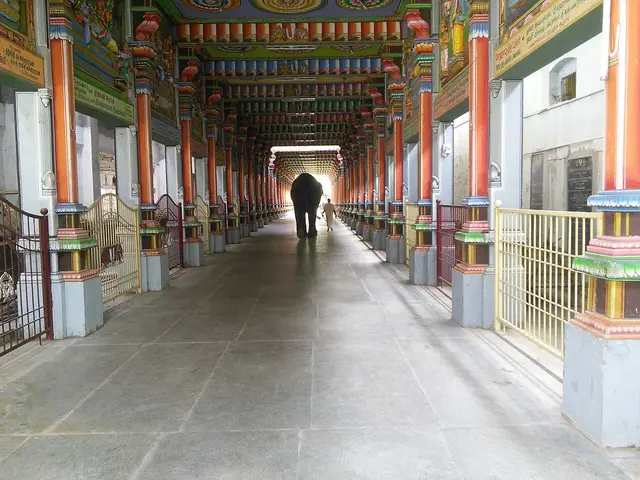
  • These are working temples, not monuments with worship attached. Dress accordingly, leave your shoes at the stand, and expect the sanctum queue to move on the temple’s schedule rather than yours.
  • Non-Hindus are not admitted to the inner sanctum of some Tamil temples, and practice varies from temple to temple. Ask at the door rather than assuming either way.
  • The middle of the day is dead. Most temples shut roughly between noon and four, and planning to see three of them at two in the afternoon does not work.
  • Deliberately not guessed, because published figures conflict or are visibly stale: camera and video permit charges at individual temples, the opening hours of Ramanujan’s house, and the exact dates of the 2028 Mahamaham. Every one of those is quoted differently across travel sites.
The story

The story of Kumbakonam

A delta town of narrow streets and stacked gopurams, built round a tank that fills with pilgrims once in about twelve years and sits quiet for the rest of them.

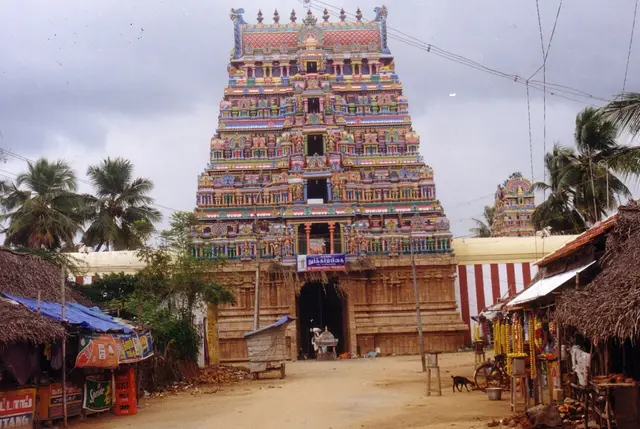
Kumbakonam is a town you arrive inside rather than approach. There is no skyline to see it by: the Cauvery country is flat, the roads in run between paddy and coconut, and the first thing that tells you the town has begun is that the streets narrow and the traffic thickens. Then you notice the towers. They come up over the rooftops in ones and twos — painted, tiered, crowded with figures — and once you have seen three of them you understand the shape of the place. About 140,156 people (2011 census) live across 42.95 square kilometres at 53 metres above sea level, between the Cauvery on one side and the Arasalar on the other, and the temples are not set apart from that. They are on the shopping streets, between the lodges and the silk showrooms, with autos parked against their walls.

The centre of it is not a temple but a tank. The Mahamaham tank covers about 21 acres, is trapezoidal rather than square, and is ringed by sixteen small mandapams built by Govinda Dikshitar, chieftain to the Thanjavur Nayak ruler Ragunatha. Twenty-one wells are sunk inside the tank itself, named for deities and for rivers — Ganges, Yamuna, Godavari, Narmada, Saraswathi, Cauvery among them — with a central one called the sixty-six-crore theertham held to be the most sacred of all. On an ordinary morning it is a broad sheet of green water with a few people on the steps, a gopuram behind the far bank, and the well-heads standing out of the surface like small stone islands. It looks like municipal infrastructure with a long memory, which is roughly what it is.

Once in about twelve years it stops looking like that. When Jupiter enters Leo and the Magha star meets the full moon of the Tamil month of Masi, the Mahamaham falls, and the belief is that on that day the sacred rivers of India come to the tank to wash away what they have absorbed from everyone else. Then the water disappears entirely under people. The oldest photograph we can show you of it was published by the National Geographic Society in 1909 and it is the clearest possible statement of scale: no water visible, the mandapams islanded in a solid field of heads, the ghats packed to the top step. The last Mahamaham ran in February 2016; the next is due in 2028.

That density has a history the town does not hide. On 18 February 1992, during the main bathing day, a crush around the tank killed about fifty pilgrims and injured scores more; reported tolls vary between forty-seven and fifty, and the crowd that day is usually estimated in the millions. Arrangements have been reworked since — including sprinkling the sanctified water over the crowd so that not everyone needs to get down to the steps — but if you are planning to be here in 2028 it is worth knowing that this is a mass-gathering event in a town built for a fraction of it.

For the rest of the twelve years the town belongs to its own temples, and the practical fact about them is that they are walkable. Adi Kumbeswarar, Sarangapani, Ramaswamy, Chakrapani and Nageswaran all stand within a short grid of streets, and the railway station is 800 metres from the tank. Adi Kumbeswarar is the town’s namesake — about four acres in the middle of the streets, an eastern gopuram of eleven storeys and 128 feet, six rituals a day, and a lingam that tradition says Shiva shaped himself out of sand and spilled nectar. Sarangapani is the Vaishnavite counterweight, a Divya Desam sung by the Alvars, its gopuram eleven tiers and 173 feet, and its sanctum built as a stone chariot with two doors: the Uttarayana door open from 15 January to 15 July, the Dakshinayana door for the other half of the year. Which one you walk through is decided by your calendar, not your choice.

Outside the town the temples keep going, and this is the real argument for staying here. Darasuram and the Airavatesvara Temple are 4.0 km away by road — Rajaraja II’s temple, completed in 1166, inscribed by UNESCO in 2004 as one of the Great Living Chola Temples, with a mandapa cut in the shape of a chariot and carved steps that are said to sound. Thirunageswaram is 6.5 km, Patteeswaram 7.0, Oppiliappan 7.1, Swamimalai 7.8, Thiruvidaimarudur 9.5, and Gangaikonda Cholapuram 35.1. Thanjavur, which most visitors treat as the base for all of this, is 40.4 km and about forty-three minutes away — which is to say it is the day trip, not the centre.

And then there is the other Kumbakonam, the one that has nothing to do with temples. Government Arts College was founded here in 1867 and affiliated to Madras University in 1877, and the town became a centre of both Sanskrit learning and English education at the same time, which is where the old nickname the Cambridge of South India comes from. Porter Town Hall on the main road carries the name of William Archer Porter, the college’s first principal. And on Sarangapani Sannidhi Street, a few minutes from the temple that gives the street its name, there is a small tiled house with a raised tinnai where Srinivasa Ramanujan grew up. He went to Town Higher Secondary School here and on to the Arts College, and failed out of it. SASTRA owns the house now; A. P. J. Abdul Kalam dedicated it as a monument on 20 December 2003 and entry is free.

The trades are the last layer, and they are still working ones. The town is known across South India for brass, bronze and copper vessels, and Swamimalai up the road still casts icons by the lost-wax method the Chola bronze-casters used, under its own Geographical Indication. Silk is woven here and at Thirubuvanam, about six kilometres out. Betel leaf grown in this stretch of the Cauvery basin was granted a Geographical Indication on 31 March 2025 — the first agricultural product from this part of the delta to get one. And the town’s name is on a drink in every South Indian city: Kumbakonam degree coffee, made with undiluted milk and no water, poured back and forth between tumbler and dabarah until it stands up in froth.

Legend & myth

The name is a story about a pot. At the end of an age, when the world was to be dissolved in flood, Brahma’s kumbha — the vessel holding the seeds of all living things, sealed with the nectar of immortality — was set adrift so that creation could begin again afterwards. It came to rest here. Shiva, taking the form of a hunter, broke it with an arrow; the nectar spilled, and where it settled it made two tanks, the Mahamaham and the Potramarai. Out of the sand and the spilled nectar Shiva then shaped a lingam with his own hands, and that lingam is the one in the sanctum of the Adi Kumbeswarar Temple. Kumbakonam — kumbha and konam, the pot and the corner or bend — is the town that grew round the spot.

We tell that as the town tells it, and not as history. What it explains rather well is the geography: a settlement built around a tank rather than a temple, with the temple named for the vessel rather than the god, and a festival whose whole logic is that water arrives from elsewhere and is holier for it. The belief that the rivers of India come to bathe in the tank on the Mahamaham day is the same idea in a different form — sanctity carried in, not generated here.

More about Kumbakonam

History

The town’s antiquity is genuine, though its earliest identifications are argued. Kumbakonam is commonly identified with the ancient Kudavayil, where the Early Chola king Karikala is said to have held court, and Pazhaiyarai — about eight kilometres away — served as a Chola capital in the ninth century. Whatever the precise sequence, the town spent the Chola period at the administrative centre of the empire rather than at its edge, which is why the temple-building around it is so dense and so early.

The present buildings are mostly later than the dynasty at its height. Adi Kumbeswarar’s masonry structure dates to the Chola period in the ninth century with substantial Vijayanagara expansion afterwards; Sarangapani’s earliest inscriptions are late Chola, tenth to twelfth century, with the great gopuram and much of what you see added under the Vijayanagara and Nayak rulers in the fifteenth to seventeenth. The Mahamaham tank’s sixteen mandapams are Nayak-period work, Govinda Dikshitar’s, and Krishnadevaraya’s visit in 1445 is recorded in inscriptions elsewhere. The town, in other words, kept being invested in for six or seven centuries by successive powers, which is not true of most places that were important once.

The nineteenth century added a different institution. Government Arts College opened in 1867 and was affiliated to Madras University ten years later, and Kumbakonam became simultaneously a stronghold of traditional Sanskrit scholarship and one of the earliest centres of Western higher education in the Tamil country. Porter Town Hall, its rotunda still carrying the name in painted letters, dates from that period. The two systems produced, among others, a clerk’s son who filled notebooks with results nobody in the town could check and who is now the reason a good many visitors come here at all.

Why visit

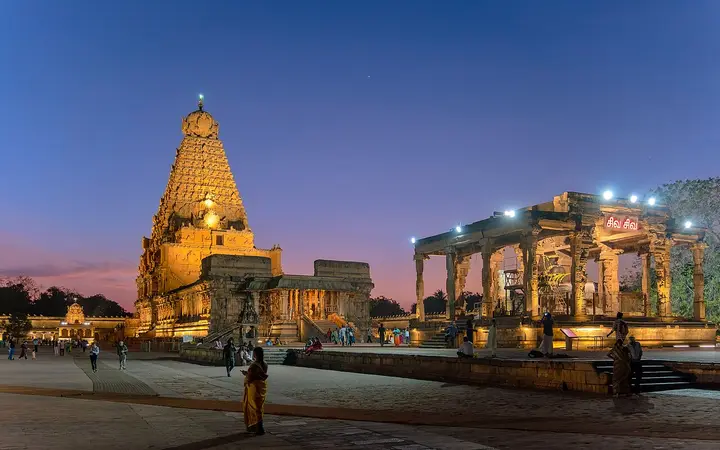
Because it is the better base, and most itineraries get this the wrong way round. Thanjavur has the single greatest Chola temple and it deserves its day — but it has one, and Kumbakonam has a dozen inside eight kilometres, with the UNESCO temple at Darasuram four kilometres out and Gangaikonda Cholapuram thirty-five. Staying here removes an eighty-kilometre round trip from a delta itinerary and puts the walkable half of it outside your hotel door.

Because the town is compact in a way that rewards walking. Five significant temples, a twenty-one-acre tank, a bazaar and the railway station all sit inside a grid you can cross on foot in twenty minutes, and none of it has been cleared or landscaped into a heritage precinct. You see the temples the way the town uses them, which is as part of the street.

Because of the two dates. Sarangapani’s sanctum doors swap on 15 January and 15 July, and the Mahamaham comes round in 2028. Very few places let you plan a visit around a twelve-year clock and a six-month one at the same time.

And because of the house on Sarangapani Sannidhi Street. It is small, it is free, and it takes twenty minutes. If the temples are why you came, this is the thing you will find yourself telling people about afterwards.
Before you go

Kumbakonam — at a glance

HoursThe town keeps no hours; its temples do, and they close in the middle of the day. Adi Kumbeswarar performs six daily rituals at 05:30, 08:00, 10:00, 17:00, 19:00 and 20:00, and Sarangapani six between 05:30 and 21:00. In practice that means a morning session and an evening one with a long shut middle — which is also the hottest part of the day, so the closure and the sensible visiting window happen to agree. Ramanujan’s house keeps its own hours and is not always open; ask at the gate or at SASTRA rather than making a special trip on a whim.

Entry: Nothing to enter the town, and nothing to enter its temples — Adi Kumbeswarar, Sarangapani, Nageswaran, Chakrapani and Ramaswamy are working Hindu temples with no admission ticket. Ramanujan’s house on Sarangapani Sannidhi Street is free as well; SASTRA maintains it. What does cost money is a camera permit at some temples and the shoe stand, both small and both paid at the door.

Getting here

How to reach Kumbakonam

  • ✈︎ By air Tiruchirappalli International (TRZ) is the airport and it is not close. Routed from the town centre it is 96.4 km and about an hour and three quarters — Wikipedia’s article on the town says 91 km, and travel sites round it to 90; treat any of them as “the better part of two hours” and you will not be caught out. Chennai (MAA) has the full network at 293.5 km, roughly four hours by road, and the honest way to use it is to fly into Chennai and take a train rather than drive the last leg.
  • 🚆︎ By train Kumbakonam has its own station in the middle of the town — code KMU, on Kamaraj Road, three platforms, Tiruchirappalli division of Southern Railway, on the Chennai Egmore–Thanjavur main line. It is 800 metres from the Mahamaham tank, which is about a ten-minute walk or a two-minute auto, and that proximity is the single best argument for arriving by train. Services run to Chennai, Thanjavur, Tiruchirappalli, Mayiladuthurai, Coimbatore and Madurai.
  • 🚗︎ By road The town sits in flat delta country and everything near it is a short drive. Measured by road from the town centre: Darasuram and the Airavatesvara Temple 4.0 km, Thirunageswaram 6.5 km, Patteeswaram 7.0 km, Oppiliappan 7.1 km, Swamimalai 7.8 km, Thiruvidaimarudur 9.5 km, Gangaikonda Cholapuram 35.1 km, Mayiladuthurai 36.3 km, Thanjavur 40.4 km (about 43 minutes), Thiruvarur 42.8 km. Chennai is about 282 km on the town’s own Wikipedia article and 293.5 km by the route we measured to the airport — a four-to-five hour drive either way.
  • 🚌︎ By bus The Central Bus Station, formally the Arignar Anna Moffusil Bus Station, is at John Selvaraj Nagar and it is unusually convenient for a moffusil stand: about 200 metres from the town bus stand and about a kilometre from the railway station, rather than the several kilometres out of town that Thanjavur puts its long-distance stand. Four platforms, sixty bays, and on the operator’s own account something like 2,500 bus trips a day, with TNSTC, SETC, KSRTC and PRTC services to Chennai, Bengaluru, Puducherry, Madurai and into Kerala. Its opening date is given as both 1989 and 1992 in the same source; we do not know which is right.
  • ⛴︎ By boat None. The Cauvery and the Arasalar run through the town but they are irrigation rivers, not navigable ones, and there is no passenger boat service of any kind.
Getting around

Getting around Kumbakonam

Walk the old town. The five temples most visitors come for — Adi Kumbeswarar, Sarangapani, Ramaswamy, Chakrapani and Nageswaran — and the Mahamaham tank all sit within a compact grid of narrow streets, and the railway station is 800 metres from the tank, so a day in the centre needs no vehicle at all. Autos are the workhorse for anything further and there is a rank outside the station and around the tank; agree the fare first, because meters are not the norm. For the ring of temples outside the town the working pattern is a car and driver for the day, hired through your hotel or a local operator: Darasuram, Swamimalai, Thirunageswaram, Oppiliappan and Patteeswaram are all within 8 km but strung out in different directions, and bus-hopping between them eats the day.

  • 🚕︎ Online taxis Treat app cabs as a bonus, not a plan. Ola and Uber both publish Kumbakonam city pages, and both list car and auto categories on them — but an operator city page is marketing collateral, not evidence of supply, and we have not confirmed real driver availability here from any primary source. That is the same trap we walked into in Kerala. What is certain is the offline trade: autos at the station, the tank and the bus stand, and call-taxi and tour operators running fixed-price airport transfers and temple-circuit days, several of which hold listings on this page. Where an app does respond the fare is set in-app; we print no app fares.
Do

Things to do in Kumbakonam

  • Walk round the Mahamaham tank early, before the heat. It is about 21 acres, trapezoidal rather than square, ringed by sixteen mandapams built by Govinda Dikshitar, and it has twenty-one wells sunk inside it, each named for a river or a deity.
  • Go into Adi Kumbeswarar at opening. It is the temple the town is named for — four acres in the middle of the streets, an eastern gopuram of eleven storeys and 128 feet, and a lingam that by tradition Shiva made himself from sand and spilled nectar.
  • Look for the two doors at Sarangapani. The sanctum is built as a stone chariot with a northern and a southern entrance, and only one is open at a time: the Uttarayana door from 15 January to 15 July, the Dakshinayana door for the other half of the year. Which one you walk through depends entirely on when you come.
  • Drive the 4 km to Darasuram for the Airavatesvara Temple — Rajaraja II’s, completed in 1166, inscribed by UNESCO in 2004 as one of the Great Living Chola Temples, with a mandapa cut as a chariot and the carved steps that are said to ring.
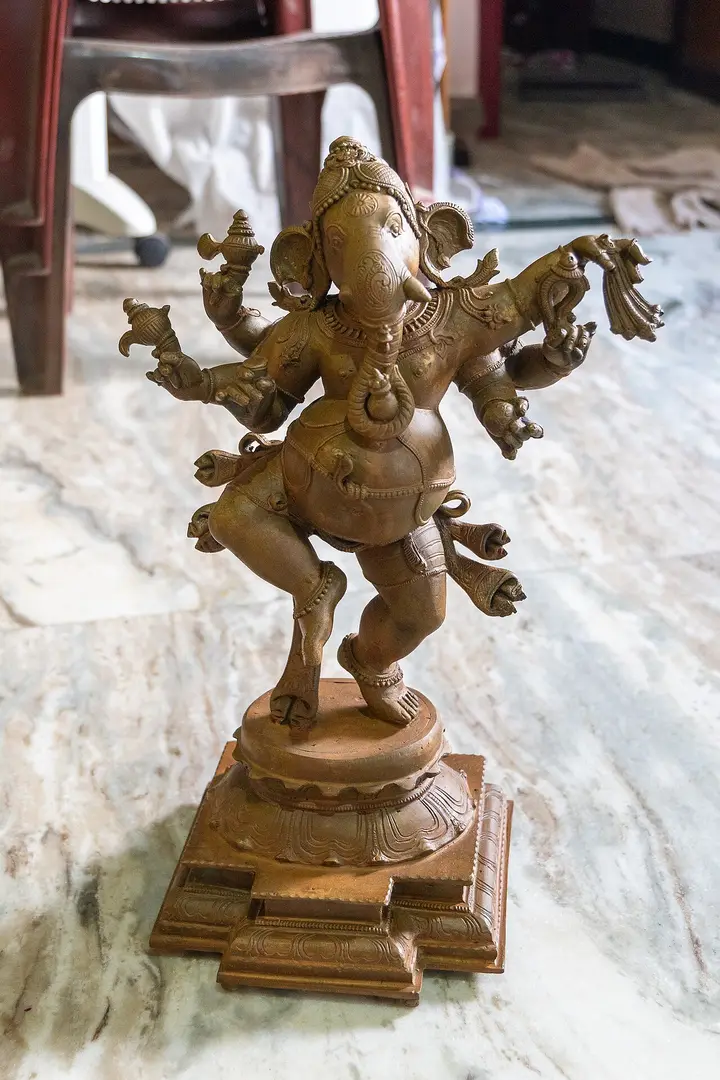
  • Watch a bronze being cast at Swamimalai, 7.8 km out, where sthapathi families still work the lost-wax method the Cholas used. The icons carry their own Geographical Indication.
  • Sit down for a degree coffee. The town’s name is on the drink across South India — undiluted milk, no water, poured back and forth between tumbler and dabarah until it froths.
  • Buy betel leaves in the market if only to see them sold properly. Kumbakonam betel leaf was granted a Geographical Indication on 31 March 2025, the first agricultural product from this part of the delta to get one.
  • Find Ramanujan’s house on Sarangapani Sannidhi Street. It is a small tiled house with a raised tinnai, kept by SASTRA, dedicated as a monument by A. P. J. Abdul Kalam on 20 December 2003, and free to enter.
Plan

Good to know

  • Arrive by train. The station is 800 metres from the tank and in the middle of everything — a rare thing, and the opposite of Thanjavur, where the long-distance bus stand strands you 4–5 km out on the Trichy road.
  • Base here rather than in Thanjavur if temples are what you came for. Thanjavur has the one great temple; Kumbakonam has a dozen within 8 km, and the drive between the two towns is 40 km each way you would otherwise repeat.
  • Check the calendar before you fix dates. Sarangapani’s two sanctum doors swap on 15 January and 15 July, Masi Magam falls in February or March each year, and the Mahamaham comes round in 2028 — any of the three changes what you will actually see.
  • Do not try to do the Navagraha circuit from here in a day unless you mean it. Thirunageswaram is 6.5 km away, but the nine temples are strung out as far as Thiruvenkadu and Keezhperumpallam some 60 km off, and pilgrims give it two days.
  • The airport is further than the internet says. Published figures cluster around 90–91 km to Tiruchirappalli; the route measures 96.4 km and about an hour and three quarters, so book the transfer with that in mind rather than the round number.
Facilities

On site

  • Kumbakonam railway station (KMU) in the town centre on Kamaraj Road — three platforms, on the Chennai Egmore–Thanjavur main line, 800 metres from the Mahamaham tank
  • Central Bus Station (Arignar Anna Moffusil Bus Station), John Selvaraj Nagar — four platforms, sixty bays, long-distance services to Chennai, Bengaluru, Puducherry, Madurai and Kerala, about a kilometre from the station
  • A town bus stand about 200 metres from the moffusil stand for local and delta routes
  • Government and private hospitals, banks and ATMs, post offices and chemists — this is a taluk town with the services to match
  • A real stay range from lodges around the station and the tank up to hotels and heritage properties; several hundred stay, eat and shop records hold listings on this page
  • Brass, bronze and copper vessel shops, silk showrooms and the betel-leaf market in the bazaar streets
Stay safe

Safety

  • Heat is the real hazard here, not crime. April to June on the delta is severe, temple courtyards offer little shade, and you cross them barefoot — carry water, cover your head, and treat the midday closure as sound advice.
  • The Mahamaham draws crowds on a scale the town is not otherwise built for. On 18 February 1992 a crush around the tank on the main bathing day killed about fifty pilgrims and injured scores; reported death tolls vary between 47 and 50. Crowd management has been reworked since, including sprinkling the sacred water over the throng so that not everyone needs to reach the steps, but if you are here for the 2028 festival treat it as a mass-gathering event and plan accordingly.
  • The old town’s streets are narrow, busy and shared with buses and two-wheelers, and pavements give out without warning. Walking is the right way to see it and it still wants your attention.
  • The north-east monsoon between roughly October and December can flood delta roads and low-lying streets; if you are driving out to Gangaikonda Cholapuram or the coast on a wet day, check the road rather than the forecast.
Getting around Kumbakonam

We have not assessed physical access at this place yet. Across India, step-free routes, handrails and accessible toilets are the exception rather than the rule, and pavements are often interrupted — if step-free access matters to you, contact the site or a local operator before committing to the trip.

If you need help at Kumbakonam
112All emergencies (police · fire · medical)The single number to call in any emergency (ERSS).

Emergency numbers are verified against official government and state tourism sources. 112 works anywhere in India.

Practical things near Kumbakonam
Bus stopsBus station 807 m · 10 min walkMapped Oct 2021DirectionsFuelBharat Petroleum Fuel station127 m · 2 min walkSurveyed Sept 2024DirectionsPharmacyPharmacy 1.0 km · 12 min walkSurveyed Sept 2024DirectionsHospitalVejaiyea Hospital 136 m · 2 min walkMapped Oct 2021DirectionsClinicVasan Eye Care Clinic200 m · 2 min walkMapped Oct 2021DirectionsPolice stationWest Police Station 957 m · 11 min walkMapped Feb 2020DirectionsATMIOB ATM 432 m · 5 min walkMapped Jan 2024DirectionsBankState Bank of India 748 m · 9 min walkSurveyed Sept 2024DirectionsWater & snacksMetro Bazaar Supermarket256 m · 3 min walkSurveyed Sept 2024DirectionsBookshopSri Balaji Books & Stationeries Bookshop761 m · 9 min walkSurveyed Sept 2024DirectionsSomewhere to prayThirumigu Kasi Vishwanathar Koil Place of worship517 m · 6 min walkMapped Dec 2018Directions
What the cash actually costs
  • Withdrawing from a bank that is not your own is free for a set number of times a month, then costs up to ₹23 plus GST — about ₹27 a withdrawal. This is not one of the RBI’s six metro centres, so the allowance here is the higher one: at least five free other-bank withdrawals a month, and at least five at your own bank.
  • That free allowance belongs to Indian bank accounts. On a card issued abroad your own bank’s international withdrawal and exchange charges apply instead. If the machine offers to bill you in your home currency, choose rupees — the conversion rate on that offer is set by the machine, not by your bank.
  • Given a choice, use an ATM inside or attached to a branch: it sits in view of staff and cameras, and there is someone to ask if the machine keeps your card. A machine standing alone on a tourist street is the one to be wary of. Banks are listed here alongside the ATMs, but the map data does not record which ATMs sit inside a branch — check when you get there.

Charge cap and free-transaction limits: Reserve Bank of India, in force since 1 May 2025.

Mapped within about 1.2 km of Kumbakonam, with real walking routes rather than straight-line distances. Community-mapped data: opening hours are shown only where they are recorded, and this is not a complete list — something unmapped may well be closer. Please confirm on the ground.

Nearby bases

Where to go from Kumbakonam

Brihadeeswarar Temple, ThanjavurFeatured: Brihadeeswarar Temple
Town / base

Thanjavur

The delta city base for the Big Temple, the Maratha palace, the art gallery and Saraswathi Mahal Library.

Brihadeeswarar TempleThanjavur Maratha PalaceThanjavur Art GallerySaraswathi Mahal Library
Open Thanjavur guide →
Mahamaham Tank, ThiruppurambiyamFeatured: Mahamaham Tank
Town / base

Thiruppurambiyam

A village 10.5 km north-west of Kumbakonam, a quarter of an hour by road, where in about 879 CE a confederacy of Pallavas, Western Gangas and Cholas met the Pandya king Varagunavarman II. The battle broke Pandya power and began the Chola rise that built Thanjavur and Gangaikonda Cholapuram, and the Shiva temple standing beside the old battlefield is sung in the seventh-century Tevaram.

Mahamaham TankThiruppurambiyam Sakshinatheswarar Temple
Open Thiruppurambiyam guide →
Kampahareswarar Temple, ThirubuvanamFeatured: Kampahareswarar Temple
Town / base

Thirubuvanam

A silk-weaving village between Kumbakonam and Mayiladuthurai, holding the last great Chola temple and the co-operative that owns the Thirubuvanam saree's GI — and sitting inside a 15 km circle of the delta's best-known temples.

Kampahareswarar TempleThirubuvanam Silk WeavingMahalingaswamy Temple, ThiruvidaimarudurNaganathaswamy Temple, Thirunageswaram
Open Thirubuvanam guide →
Suryanar Kovil, Suryanar KoilFeatured: Suryanar Kovil
Town / base

Suryanar Koil

A village 15.7 km north-east of Kumbakonam, about a quarter of an hour by road, whose temple is the only one in Tamil Nadu with a separate shrine for every one of the nine planetary deities — and one of very few anywhere given to the Sun himself. The masonry temple standing today was raised under Kulottunga Chola between 1060 and 1118, with Vijayanagara-period additions and a five-tier gateway tower.

Suryanar Kovil
Open Suryanar Koil guide →
Agneeswarar Temple, KanjanurFeatured: Agneeswarar Temple
Town / base

Kanjanur

A village on the northern bank of the Kaveri 18.5 km north-east of Kumbakonam, one of the delta's nine planet temples, where the Agneeswarar temple holds the shrine for Shukra, Venus. Low hills of 30 to 45 m rise immediately north of the village, and magnesite has been found in them.

Agneeswarar Temple
Open Kanjanur guide →
Chandranar Temple, ThingalurFeatured: Chandranar Temple
Town / base

Thingalur

A village 21.3 km north of Thanjavur, twenty-five minutes by road, where the Moon — Chandra — is enshrined in the Kailasanathar temple, making it the delta's moon stop among the nine planet temples. It was the home of Apputhi Adigal, one of the sixty-three Nayanar saints, who named his sons, his cattle and everything in his house after the saint Appar, a man he had never met.

Chandranar Temple
Open Thingalur guide →
The lingam that leaned
Town / base

Thiruppanandal

A town of some ten thousand people 22.7 km north-east of Kumbakonam, built around a Chola-period Shiva temple whose lingam stands at a tilt. The story told is that Shiva bent so a woman could garland him one-handed while she held her slipping sari with the other, and that the Nayanar Kungiliya Kalaya later tied a rope from his own neck to the shaft and pulled. The town is also the seat of a Shaiva adheenam, a monastic order with its own head.

Arunajadeswarar Temple, Thiruppanandal
Open Thiruppanandal guide →
Destruction of sins
Town / base

Papanasam

A panchayat town 14.7 km west of Kumbakonam on the Kumbakonam–Thanjavur road, its name meaning the destruction of sins. A Nayak-period granary here measures about 26 m across and 11 m high, and 7 km further south at Thirukarukavur stands the Garbarakshambigai temple, where women come to pray through a difficult pregnancy.

Garbarakshambigai Temple, Thirukarukavur
Open Papanasam guide →
Thyagaraja Aradhana Samadhi, ThiruvaiyaruFeatured: Thyagaraja Aradhana Samadhi
Town / base

Thiruvaiyaru

A town 17.2 km north of Thanjavur whose name means five rivers, and the road up from Thanjavur crosses all five in turn — the Vadavar, the Vettar, the Vennar, the Kudamurutti and the Kaveri. Its Shiva temple, known as the Southern Kailasam, covers some 60,000 square metres in five enclosures, and the northern half of it was built by Rajaraja Chola's chief queen Lokamahadevi in the late tenth century. The composer Thyagaraja's samadhi is here, and every year musicians gather at it to sing his five gem songs together.

Kandiyur Brahma Sirakandeeswarar TempleThirupazhanam Apathsahayeswarar TempleThyagaraja Aradhana Samadhi
Open Thiruvaiyaru guide →
Grand Anicut, KallanaiFeatured: Grand Anicut
Town / base

Kallanai

The Grand Anicut, 40.3 km west of Thanjavur, a dam of stone laid across the Kaveri by the Chola king Karikala and dated to about 150 CE. It is the oldest water-diversion structure in India still in use and the fourth oldest anywhere; the paddy country of the delta downstream is both the reason it was built and the reason it has been kept in repair ever since.

Grand Anicut
Open Kallanai guide →
Thanjavur Bronze Icon Craft, SwamimalaiFeatured: Thanjavur Bronze Icon Craft
Town / base

Swamimalai

A town on the Kaveri 8 km west of Kumbakonam, nine minutes by road, holding the fourth of Murugan's six houses — the shrine sits on an 18 m hillock reached by sixty steps, one named for each year of the Tamil cycle. The town also casts bronze icons by the lost-wax method, a craft given its own geographical indication in 2008-09 and traced back to the sculptors Rajaraja Chola brought in for the Thanjavur temple, who stayed on when the work was done.

Thanjavur Bronze Icon Craft
Open Swamimalai guide →
In the district

Where Kumbakonam sits in Thanjavur district

District HQThanjavur
LandscapeCauvery delta — the historic rice bowl of Tamil Nadu

Thanjavur district is known for: the UNESCO Brihadeeswarar (Big) Temple, Chola bronzes, the Maratha palace and the Tanjore painting tradition.

Brihadeeswarar TempleThanjavur Maratha PalaceTanjore painting & Chola bronzes
Stay · eat · do · rent · see · shop

Places in Kumbakonam

Every verified place in Kumbakonam — filter by what you’re after.

21 places to eat in Kumbakonam

K
Kesar by Rae
Where to eat
Restaurant
Kesar by Rae
South Indian vegetarian

The pure vegetarian restaurant inside Rae by Tamara, open for breakfast, lunch and dinner. The centrepiece is a traditional Kumbakonam thali; the kitchen also runs a mini-tiffin, a morning buffet timed for pilgrims setting out on the Navagraha circuit, and South Indian staples — kuzhambu, kootu, pongal, rasam and payasam.

Commission-freeView details
A
Anandha Bhavan
Where to eat
Restaurant
Anandha Bhavan
South Indian, North Indian, Chinese - vegetarian

The pure vegetarian restaurant at Hotel Sri Balaji Grand on T.S.R. Big Street, opened as the hotel's own dining room. The kitchen runs traditional South Indian alongside North Indian and Chinese dishes, and the hotel's banquet hall sits on the same premises.

Commission-freeView details
M
Moshika Bhavan
Where to eat
Restaurant
Moshika Bhavan
South Indian vegetarian

Hotel ARK's vegetarian restaurant on TSR Big Street in the centre of Kumbakonam, serving hotel guests and walk-ins from the surrounding temple streets. The hotel's two banquet halls and terrace garden are on the same site.

Commission-freeView details
K
KFC Kumbakonam
Where to eat
Fast food
KFC Kumbakonam
Fast food

The KFC outlet on Thiruvidaimaruthur Main Road, the only international fast-food chain in the town. Listed on KFC India's own restaurant locator as store 295645, serving the standard fried chicken, wings and burger menu.

Commission-freeView details
M
Mangalambiga Coffee & Tiffin Centre
Where to eat
Cafe
Mangalambiga Coffee & Tiffin Centre
South Indian vegetarian

A long-standing tiffin shop on Kumbeswarar North Street serving pure vegetarian tiffin and filter coffee, and selling its own kitchen goods over the counter — 80:20 filter coffee powder, poondu milagu kuzhambu, tamarind rice paste and mor milagai.

Commission-freeView details
T
The Grand Navarasa
Where to eat
Restaurant
The Grand Navarasa
South Indian vegetarian

A vegetarian restaurant at Nachiyarkoil, in business since 1995 and still run as a dine-in room while online takeaway is being set up. It also caters across Kumbakonam for weddings, temple events, office functions and housewarmings, with a separate number for the catering team.

Commission-freeView details
M
Murari Sweets
Where to eat
Sweet shop
Murari Sweets
Sweets and savouries

A sweet and savoury shop on Big Bazaar Street near the Ramasamy temple, trading since 1915 and describing itself as the original Murari. Orders are taken by phone for collection.

Commission-freeView details
A
Ayaz Restaurant
Where to eat
Restaurant
Ayaz Restaurant
Biryani, tandoor, Indo-Chinese

A family restaurant on National Highway 36 at the Asoor bypass near TS Mahal, on the way in and out of Kumbakonam. The kitchen runs biryani, shawarma, tandoor and grills, Indo-Chinese and parottas, and the place is set up as a highway stop as much as a town restaurant.

Commission-freeView details
A
Aathurar Biryani
Where to eat
Restaurant
Aathurar Biryani
Chettinad

A Chettinad kitchen in Kumbakonam serving traditional Tamil Nadu cooking, in business since 2009. Its own site carries little beyond that, so check opening hours before making a journey for it.

Commission-freeView details
O
Only Coffee
Where to eat
Cafe
Only Coffee
South Indian vegetarian, filter coffee

The Kumbakonam branch of Only Coffee, which began in 2009 as a rented shop on the Chennai–Trichy highway and has grown into a chain. Filter coffee is the point, alongside steam-cooked food, tea and hot drinks; the shops keep books on the shelves for customers and mark poojas and festivals with lamps and snacks. No-onion no-garlic food is available.

Commission-freeView details
N
Narasu's Coffee
Where to eat
Coffee shop
Narasu's Coffee
Closed now Coffee

The Narasu's outlet on Big Bazaar Street at Valayapettai Agraharam, selling the brand's filter coffee, tea and food products over the counter. It is one of two Kumbakonam shops listed on Narasu's own store locator.

Commission-freeView details
S
Shri Navadhanya
Where to eat
Restaurant
Shri Navadhanya
indian

The best-documented eating house in this list, and the only one where a surveyor wrote down what is actually on offer: a pure-vegetarian Indian restaurant, air-conditioned, with takeaway, toilets, and cash, credit and debit cards all accepted, no bar and no smoking, recorded in April 2024. It is on the ground floor of the DSR Madhanam Residency at 75/3 on the Kumbakonam bypass, about 5 km from the bus stand, which our own survey confirms by the shared street address. That makes it a stop for people driving the Navagraha circuit rather than a town restaurant — there is parking, and it is on the way in and out. ⚠ We have not eaten here, and no menu or prices are published.

Directions Commission-freeView details
S
Sri Annamalaiyar Palcova
Where to eat
Restaurant
Sri Annamalaiyar Palcova
Milk Foods

A palkova counter 110 metres from the bus stand — the nearest food to the buses in Kumbakonam, and the right thing to buy there. Palkova is milk boiled down for hours with sugar until it turns to a soft grainy fudge; the delta's dairy country makes it in quantity and it travels, which is why these counters cluster at bus stands and railway stations across Tamil Nadu. This one is recorded as a takeaway shop selling milk sweets, with two telephone numbers, 94436 77808 and 95972 60380, though the surveyor entered them in the wrong field. ⚠ No hours or prices published; buy it fresh and eat it the same day.

Directions Commission-freeView details
V
Venkataramana Hotel
Where to eat
Restaurant
Venkataramana Hotel
indian

A South Indian eating house on the Thanjavur road at Velakudi, 1.5 km from the bus stand. In Tamil Nadu a board reading “hotel” over a street front is an eating house, not a place to sleep, and this is one of the old ones — the same name appears on a lodging house a few hundred metres away, which suggests one family's two businesses. ⚠ One thing worth planning around, and it comes from a surveyor's note rather than from the house itself: it is recorded as closed on Sundays. Check before you walk out there on a weekend. No hours, menu or telephone published.

Directions Commission-freeView details
S
Sri Gowrikkrishna
Where to eat
Restaurant
Sri Gowrikkrishna

A pure-vegetarian restaurant on the Sirkali road at Chekkankanni, 870 metres from the bus stand, surveyed as trading in September 2024 and recorded as vegetarian only. That last word is the useful one: on a temple circuit a good many people want a kitchen where the question does not arise, and this is one. ⚠ No hours, no menu, no telephone; we have not eaten here.

Directions Commission-freeView details
R
Rifa Restaurant
Where to eat
Restaurant
Rifa Restaurant

A restaurant 400 metres from the bus stand, tucked in the lane running towards the ARK Inn. Being that close to the terminus is the reason to know it — bus arrivals in Kumbakonam are at all hours and most of the town's eating houses keep tiffin times. ⚠ We have no hours, no menu and no telephone for it, and we have not eaten here; this is a survey record, not a recommendation.

Directions Commission-freeView details
C
Chikin and Muton Biriyani
Where to eat
Restaurant
Chikin and Muton Biriyani

A biryani shop on the Mannargudi road, 640 metres from the bus stand — the name is spelled exactly as it is painted on the board, and it tells you the whole menu. Kumbakonam's eating is overwhelmingly vegetarian, tied to the temples; the handful of chicken-and-mutton biryani counters near the bus stand are where the town's non-vegetarian trade actually happens, and they run to their own hours rather than tiffin hours. ⚠ No telephone, no published hours and no menu beyond the sign.

Directions Commission-freeView details
M
Meeting spot - tea and snack shop
Where to eat
Café
Meeting spot - tea and snack shop

A tea and snack shop on the Thanjavur road at Velakudi, 1.2 km from the bus stand — the name is its own description, and the name is what the sign says. A Tamil tea shop is a standing counter rather than a café: tea poured from a height, a glass case of vadai and bonda, and no seating to speak of. It is how the working town takes its breaks. ⚠ No hours, no telephone, no menu published.

Directions Commission-freeView details
J
Juice mac
Where to eat
Café
Juice mac

A juice and cold-drinks café on Bharathiyar Street, 880 metres from the bus stand and a few minutes from the Mahamaham tank. Worth a line for one practical reason: the delta is punishingly hot from March to June, the temples shut through the middle of the day, and a juice counter is one of the few things that stays open through it. ⚠ Hours, prices and telephone all unrecorded.

Directions Commission-freeView details
A
Alif Restaurant
Where to eat
Restaurant
Alif Restaurant

A restaurant on the Sirkali road at Chekkankanni, 890 metres from the bus stand, confirmed as trading by a survey in September 2024. Alif is the first letter of the Arabic alphabet and the name marks a Muslim-run kitchen, which in this part of the delta generally means biryani, and means somewhere open on the days a vegetarian house is not. ⚠ We have no menu, no hours and no telephone for it, and we have not eaten here.

Directions Commission-freeView details
S
SASTRA Canteen
Where to eat
Café
SASTRA Canteen

The canteen on SASTRA University's Srinivasa Ramanujan Centre campus at Banadurai, 900 metres from the bus stand. It is here for what stands around it rather than for the food. The centre was founded in 2002 for the mathematician who spent his formative years in this town, and SASTRA bought and restored the house Srinivasa Ramanujan lived in on Sarangapani Sannidhi Street; President A. P. J. Abdul Kalam declared it an international monument in 2003 and it is open as the House of Ramanujan museum. ⚠ The canteen itself serves a college campus and is not a public restaurant — do not assume you can walk in and be served. No hours or menu are published.

Directions Commission-freeView details

Book with the place itself. India’s cyber-crime coordination centre warned in April 2025 that convincing copies of hotel and pilgrimage booking sites are being pushed through sponsored search and social ads, taking payment for rooms the property never hears about. Every listing here links to the business’s own contact details and its own Google or Bing profile — we take no commission and sit in nobody’s payment path. If a booking page reached you through an ad, check the address bar against the property’s own site before you pay. Fraud can be reported on cybercrime.gov.in or on 1930.

Ranked

The best of Kumbakonam, ranked

Nearest to the centre of Kumbakonam, on foot

Ordered by a real routed walk from the town centre — a different question, and the one that decides what you can do before lunch. Straight-line distance understates a real walk by about half again, so these are walking-network figures, not lines on a map.

Everything around Kumbakonam, by distance

Every place we hold for Kumbakonam, ordered by a real routed drive from the town centre. Times are free-flow and a real road rarely is, so read them as the floor rather than the estimate — anything that routed over ninety minutes is left out rather than published as a number we do not trust.

Places to visit

The places themselves, around Kumbakonam

The best tourist places to visit in Kumbakonam — temples, viewpoints, lakes, heritage and nature, each with a full guide, how to reach it and what to see nearby.

Airavatesvara Temple, Kumbakonam
PlaceAiravatesvara Temple

A UNESCO-listed Great Living Chola Temple at Darasuram near Kumbakonam, built by Rajaraja Chola II in the 12th century and famous for its stone chariot-form mandapa and “musical” steps. It is a day trip east of Thanjavur.

Open guide →
Gangaikonda Cholapuram, Kumbakonam
PlaceGangaikonda Cholapuram

A UNESCO-listed Great Living Chola Temple raised by Rajendra Chola I around 1035 CE to mark his Ganges campaign. It lies in Ariyalur district, on the Chola circuit north-east of Kumbakonam, and is maintained by the Archaeological Survey of India.

Open guide →
Sarangapani Temple, Kumbakonam
PlaceSarangapani Temple

One of the largest Vishnu temples in the Cauvery delta and a Divya Desam, its towering gopuram dominates central Kumbakonam; the sanctum is shaped like a temple chariot drawn by horses and elephants.

Open guide →
Adi Kumbeswarar Temple, Kumbakonam
PlaceAdi Kumbeswarar Temple

The principal Shiva temple of Kumbakonam and the town’s namesake, at the heart of the old bazaar; the focus of the 12-yearly Mahamaham festival at the nearby tank.

Open guide →
Ramaswamy Temple, Kumbakonam
PlaceRamaswamy Temple

A 16th-century Nayak-era Rama temple in Kumbakonam, famous for its sculpted pillars and painted mandapa panels illustrating scenes from the Ramayana.

Open guide →
Swamimalai Murugan Temple, Kumbakonam
PlaceSwamimalai Murugan Temple

The Swaminathaswamy (Murugan) temple at Swamimalai, one of the six sacred “Padai Veedu” abodes of Murugan, reached by a flight of steps; the surrounding town is the living centre of Chola-style lost-wax bronze icon-making. About 7 km west of Kumbakonam.

Open guide →
Nageswaran Temple, Kumbakonam
PlaceNageswaran Temple

The Nageswaraswamy Temple in Kumbakonam is one of the earliest Chola temples, dedicated to Shiva worshipped as Nagaraja, the serpent king. Founded in the 9th century, it is celebrated for its refined early Chola sculpture and for an astronomical design in which sunlight reaches the sanctum during the Tamil month of Chithirai.

Open guide →
Chakrapani Temple, Kumbakonam
PlaceChakrapani Temple

The Chakrapani Temple in Kumbakonam is a Vishnu temple on the bank of the Cauvery, where Vishnu is worshipped as Chakrapani, the Sudarshana or discus form. By legend the discus emerged from the river and, having humbled Surya the sun god, gave Vishnu the name Chakrapani; the present temple is generally dated to the Nayaka period.

Open guide →
Patteeswaram Durga Temple, Kumbakonam
PlacePatteeswaram Durga Temple

The Dhenupureeswarar (Shiva) temple at Patteeswaram near Kumbakonam is best known for its graceful, benevolent Durga (Durgai) shrine, where the goddess is shown in a calm, gentle form rather than a fierce one. By tradition the Cholas revered this Durga and are said to have sought her blessing before going into battle.

Open guide →
Oppiliappan Temple, Kumbakonam
PlaceOppiliappan Temple

The Oppiliappan (Uppiliappan) Perumal temple at Thirunageswaram near Kumbakonam is one of the 108 Divya Desams, dedicated to Vishnu with his consort Bhumi Devi. By tradition it is the one Divya Desam where the offering (prasadam) is prepared entirely without salt, giving the deity the name Oppiliappan (uppu-illa, without salt), and the site is linked in lore to the sage Markandeya.

Open guide →
Naganathaswamy Temple, Thirunageswaram, Kumbakonam
PlaceNaganathaswamy Temple, Thirunageswaram

The Naganathaswamy Shiva temple at Thirunageswaram near Kumbakonam is one of the nine Navagraha (planet) temples of the Cauvery delta and is dedicated to Rahu. It is especially known for the Rahu abhishekam, during which the milk poured over the deity is seen by devotees to take on a bluish tinge before running clear.

Open guide →
Mahalingaswamy Temple, Thiruvidaimarudur, Kumbakonam
PlaceMahalingaswamy Temple, Thiruvidaimarudur

The Mahalingeswarar (Mahalingaswamy) temple at Thiruvidaimarudur near Kumbakonam is a large and historically important Shiva temple, traditionally regarded as the central Madhyarjuna among the great Arjuna (Marudur) Shiva temples of the Cauvery delta. It carries extensive Chola-and-later architecture and hosts major festivals.

Open guide →
For hotels, homestays and local businesses

Get listed in Kumbakonam for free

Roampedia is commission-free. Travellers discover your business, book directly and contact you through official details. Basic listings are free, while Gold and Platinum package upgrades can be requested from the owner dashboard after approval.

List your business — free
Ranked guide modules

Top Kumbakonam experiences

10 picks

The places that sit in and around Kumbakonam itself, each with its own guide page.

Airavatesvara Temple, Kumbakonam#1
Kumbakonam · temple

Airavatesvara Temple

A day trip to Darasuram for the most finely carved of the Chola temples, with its stone chariot and “musical” steps.

KumbakonamtempleThanjavur
Gangaikonda Cholapuram, Kumbakonam#2
Kumbakonam · temple

Gangaikonda Cholapuram

The great temple Rajendra Chola raised to mark his march to the Ganges — quieter than Thanjavur, worth the drive.

KumbakonamtempleThanjavur
Sarangapani Temple, Kumbakonam#3
Kumbakonam · temple

Sarangapani Temple

The tallest gopuram in Kumbakonam and a Divya Desam — anchor of the walkable old-town temple circuit.

KumbakonamtempleThanjavur
Adi Kumbeswarar Temple, Kumbakonam#4
Kumbakonam · temple

Adi Kumbeswarar Temple

The temple Kumbakonam is named for — four acres in the middle of the streets, an eleven-storey gopuram, and a lingam tradition says Shiva made from sand and spilled nectar.

KumbakonamtempleThanjavur
Ramaswamy Temple, Kumbakonam#5
Kumbakonam · temple

Ramaswamy Temple

A Nayak-period Rama temple built under Govinda Dikshitar — sixty-four pillars carved with episodes of the Ramayana, and the epic painted round the prakaram walls in three parts.

KumbakonamtempleThanjavur
Swamimalai Murugan Temple, Kumbakonam#6
Kumbakonam · temple

Swamimalai Murugan Temple

A hill-top Murugan shrine in the town that still casts Chola-style bronzes — pair the temple with a sthapathi workshop.

KumbakonamtempleThanjavur
Nageswaran Temple, Kumbakonam#7
Kumbakonam · temple

Nageswaran Temple

One of the earliest Chola temples, famed for peerless sculpture and sunlight that strikes the sanctum in Chithirai.

KumbakonamtempleThanjavur
Chakrapani Temple, Kumbakonam#8
Kumbakonam · temple

Chakrapani Temple

A rare temple to Vishnu as the Sudarshana discus, risen from the Cauvery to humble the sun.

KumbakonamtempleThanjavur
Patteeswaram Durga Temple, Kumbakonam#9
Kumbakonam · temple

Patteeswaram Durga Temple

See the rare gentle, benevolent Durga the Cholas are said to have honoured before battle.

KumbakonamtempleThanjavur
Oppiliappan Temple, Kumbakonam#10
Kumbakonam · temple

Oppiliappan Temple

The one Divya Desam where every offering is made without salt, hence the name Oppiliappan.

KumbakonamtempleThanjavur
Read before you go

Kumbakonam guides, stories & itineraries

Stories & history of Kumbakonam

Written about Kumbakonam itself — its history, its legends and the arguments about them.

Around Kumbakonam

The town itself and the places around it — each written about one subject rather than as a general guide.

Tamil Nadu-wide guides & itineraries

Route-level itineraries and practical guides for the rest of the state.

See all 25 Thanjavur guides & stories →

Map

Where things are in Kumbakonam

FAQ

Kumbakonam travel FAQs

Why is the town called Kumbakonam?

From the kumbha — the pot. The legend is that Brahma’s vessel of nectar and creation-seed came to rest here at the end of an age, that Shiva broke it with an arrow, and that the spilled nectar made the Mahamaham and Potramarai tanks. The lingam in the Adi Kumbeswarar Temple is said to be the one Shiva then made from sand and nectar. That is the town’s own account of itself, not a historical record.

When is the next Mahamaham festival?

2028. It falls once in about twelve years, when Jupiter enters Leo and the Magha star coincides with the full moon of the Tamil month of Masi — February or March. The last one ran in February 2016. Exact 2028 dates are quoted differently in different places and are worth confirming closer to the time. There is also an annual Masi Magam bathing day at the same tank every February or March, which is far more manageable if you simply want to see the tank in use.

Is it worth staying here rather than in Thanjavur?

For temples, yes. Thanjavur is 40.4 km away, about forty-three minutes, and it has one great temple plus the palace. Kumbakonam has five walkable temples in the town and Darasuram at 4.0 km, Thirunageswaram at 6.5, Patteeswaram at 7.0, Oppiliappan at 7.1, Swamimalai at 7.8 and Thiruvidaimarudur at 9.5. Basing here saves you a long daily round trip. Thanjavur has the wider hotel range, so it is a genuine trade-off rather than an obvious answer.

How many temples does the town actually have?

We are not going to give you a number. Travel writing quotes everything from a dozen to several hundred, the figures are copied between sites without a source, and much depends on whether you count small neighbourhood shrines. What is solid is that five substantial temples stand within the walkable centre — Adi Kumbeswarar, Sarangapani, Ramaswamy, Chakrapani and Nageswaran — and that another six or seven of real significance sit within ten kilometres.

Can Darasuram and Swamimalai both be done in one day?

Comfortably, with a car. Darasuram is 4.0 km from the town centre and Swamimalai 7.8, and the two are close to each other, so a morning covers both with time to watch bronze being cast at a Swamimalai workshop. Adding Thirunageswaram, Oppiliappan and Patteeswaram makes a full but reasonable day. Doing it by bus does not work well — the sites are in different directions and the waiting eats the day.

Is Ramanujan’s house open to visitors?

Yes, and it is free. It stands on Sarangapani Sannidhi Street near the Sarangapani Temple, SASTRA maintains it, and A. P. J. Abdul Kalam dedicated it as an international monument on 20 December 2003. Inside are his handwritten notes and photographs in cases, and a bust in the courtyard. Opening hours are quoted inconsistently online, so ask locally rather than making it the first stop of the day.

Which months are comfortable here?

November to February. The delta is flat and hot, April to June is severe, and you cross temple courtyards barefoot. The north-east monsoon runs roughly October to December and brings the main rain, which can flood low-lying streets and delta roads. Whatever the month, do the temples early — most shut around midday and open again in the late afternoon.

What is Kumbakonam known for besides temples?

Brass, bronze and copper vessels; silk woven here and at Thirubuvanam, six kilometres out; betel leaf, which was granted a Geographical Indication on 31 March 2025; and degree coffee — filter coffee made with undiluted milk and no water, poured between tumbler and dabarah until it froths. The town also gave its name to a strand of South Indian education: Government Arts College dates from 1867, and Srinivasa Ramanujan grew up and went to school here.

What are the best places to visit in Kumbakonam?

Top places to visit in Kumbakonam include Airavatesvara Temple, Gangaikonda Cholapuram, Sarangapani Temple, Adi Kumbeswarar Temple, Ramaswamy Temple, Swamimalai Murugan Temple, and more — each has a full guide with how to reach it and what to see nearby on this page.

How do I reach Kumbakonam?

The nearest airport to Kumbakonam is Tiruchirappalli (TRZ), ~55–60 km. The rail gateway is Thanjavur Junction (TJ). Frequent TNSTC and private buses link Thanjavur with Tiruchirappalli, Kumbakonam, Madurai and Chennai; confirm current timings before travel.

What is the best time to visit Kumbakonam?

November to February is the coolest, most comfortable season to visit Kumbakonam and the rest of Tamil Nadu. April to June is very hot, and the October–December north-east monsoon brings the delta its main rains.

Photographs: Ssriram mt (CC BY-SA 4.0), National Geographic Society, “Scenes from Every Land” (1909) (Public domain), Adiswini at English Wikipedia (Public domain), Onyxon (CC BY-SA 3.0), The Enforcer (CC BY 3.0), Matthew T Rader (CC BY-SA 4.0), rajaraman sundaram (CC BY 3.0), Ramesh NG (CC BY-SA 2.0). Wikimedia Commons.

Image credits